Results

Writer launches Action Agent as it scales enterprise platform

Writer released Action Agent, an "autonomous AI superagent," that's designed to carry out multi-step work using deep research, computer use and tools with enterprise controls.

Action Agent is in open beta and available for Writer customers with no extra cost. Writer has been building its platform for specialized agents for multiple industries and has a foundational model family called Palmyra.

For enterprise agentic AI, Writer is a company worth following since its models are outperforming generalist large language models. The company, which has a Model Context Protocol (MCP) gateway, has integrations across 80 enterprise systems including Salesforce, Google Workspace and third party data platforms. It has been busy of late. A quick recap:

  • The company named Dan Bikel its first Head of AI. Bikel, an alum at Meta, Google and LinkedIn, will oversee Writer's in-house lab. In his most recent role, Bikel led applied research for AI agents at Meta.
  • Writer released its adaptive reasoning LLM Palmyra X5 model with a 1M context window.
  • The company launched AI HQ, a centralized hub designed to enable enterprises or orchestrate AI agents and workflows. The platform includes Agent Builder. Early beta users include Uber, Salesforce and Franklin Templeton.
  • Writer raised $200 million in Series C capital for a $1.9 billion valuation.

Key points about Action Agent include:

  • Action Agent browses and interacts with web pages, connects to data providers and builds and deploys software.
  • It executes on multi-step plans.
  • Action Agent generates images, visualizations and structured files.
  • It also provides an audit trail.

Holger Mueller, an analyst at Constellation Research, said:

"Writer is nicely evolving its architecture suite going with the evolution of enterprise adoption from specific tools to the ability to connect multiple agents to achieve higher automation levels with an uber agent."

Writer's platform and what you need to know

Action Agent is the latest installment of the Writer platform. Here's what you need to know.

Writer is focused on enterprise AI agents. The company's platform goes from prototype to build to deployment.

Palmyra LLMs. Writer has a family of Palmyra models including X5, its latest reasoning model, and a set of specialized ones focused on medical, finance and creative.

Knowledge Graph, Writer's approach to RAG. Knowledge Graph automatically syncs and updates from data sources.

The ecosystem. Writer has a large ecosystem of systems integrators, cloud, and technology partners including Accenture, KPMG, AWS, and Google Cloud. Its Action Agent will soon be able to connect to over 80+ enterprise apps and third party data sources via a secure MCP server, enabling IT-governed access to 600+ agent tools in total.

Customers. Writer counts multiple Fortune 500 companies as customers including Ally Financial, Uber, Prudential, Kenvue, Marriott and others.

The roadmap. Writer is aiming to develop self-evolving models that can learn from experiences and adjust to feedback from people.

Data to Decisions Future of Work Innovation & Product-led Growth Tech Optimization Next-Generation Customer Experience Digital Safety, Privacy & Cybersecurity ML Machine Learning LLMs Agentic AI Generative AI Robotics AI Analytics Automation Quantum Computing Cloud Digital Transformation Disruptive Technology Enterprise IT Enterprise Acceleration Enterprise Software Next Gen Apps IoT Blockchain Leadership VR Chief Information Officer Chief Executive Officer Chief Technology Officer Chief AI Officer Chief Data Officer Chief Analytics Officer Chief Information Security Officer Chief Product Officer

Figma files for IPO: What you need to know

Figma filed for an initial public offering, named ServiceNow CEO Bill McDermott to its board and highlighted its revenue growth as investors got to see why Adobe wanted to buy the company for $20 billion.

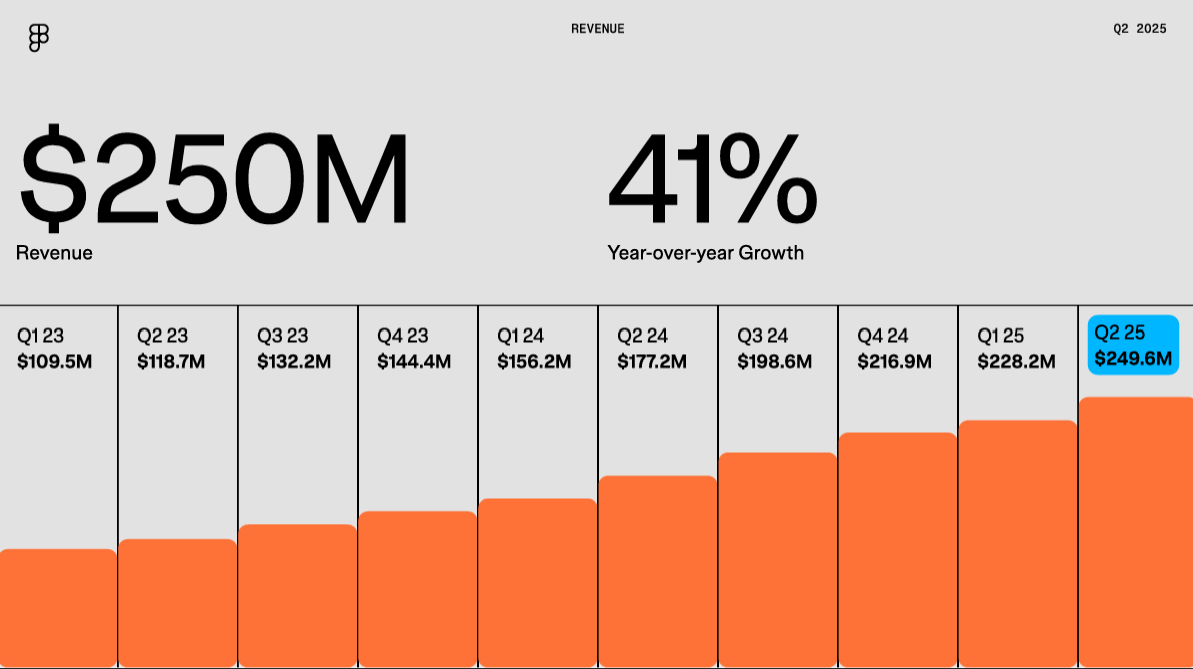
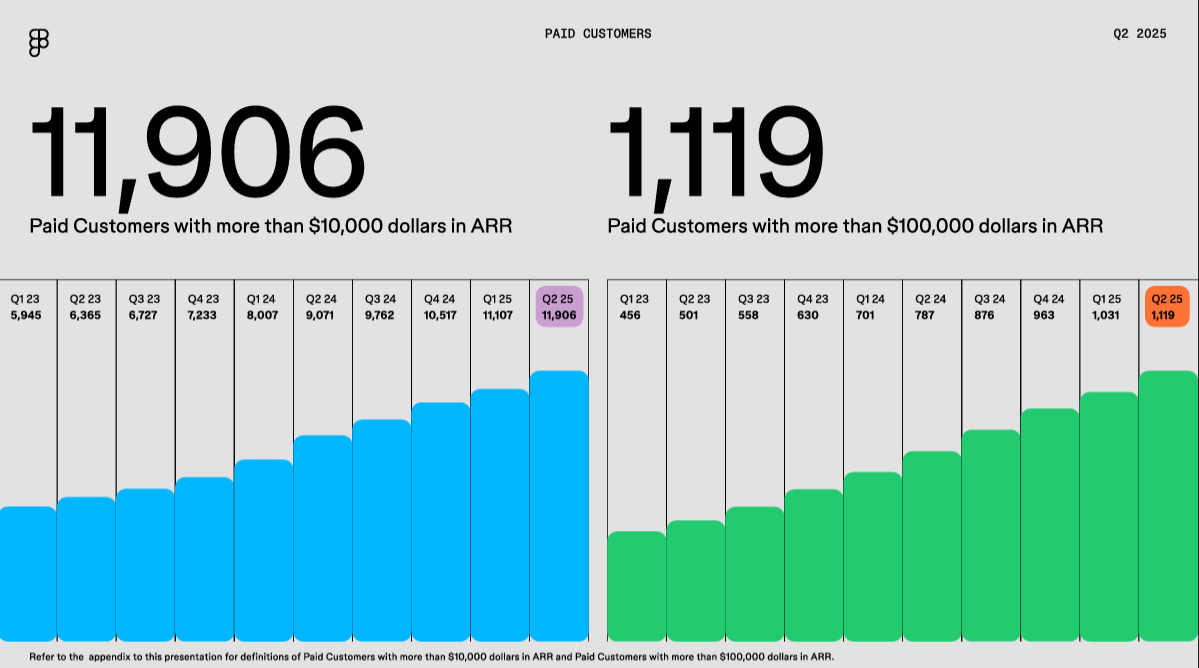
According to a filing with the Securities and Exchange Commission, Figma reported first quarter net income of $44.9 million on revenue of $228.2 million, up 46% from a year ago. As of March 31, Figma had 1,031 customers contributing at least $100,000 per year in revenue. The company announced the IPO filing and McDermott joining the Figma board on its blog.

Figma, which saw a $20 billion acquisition by Adobe fall apart due to regulatory concerns, said it is targeting the teams that bring together applications, websites and digital experiences. What remains to be seen is how Figma winds up competing with Adobe, the company that tried to acquire it.

One thing is clear: Figma, which will trade under the ticker "FIG," is hitting the IPO market at a good time. Coreweave and Circle have had strong debuts. CEO Dylan Field has 56.6 million Class B shares and 51.1% voting power ahead of the IPO. 

Constellation Research analyst Liz Miller said:

"The S-1 is truly the first step in the next chapter for Figma’s growth and diversification as the player to beat in design software, capturing the hearts and minds of users and increasingly, the ecosystems that are dependent on digital product optimization. With this new direction in mind, the IPO and the growth of their board with industry icons like Bill McDermott add to the sheen of Figma’s pride in disruption. This is a team that is focused on bringing disruption to the design market by delivering the modern, digital, collaborative tools that their users dream of, not the tools their users have to learn and muddle through. Take introductions of tools like Figma Slides. On paper, investors may look and say, OK, yeah…slides. But it got users out of their seats craving the innovation, the ease of use and the disruption.

Figma has grown its partnerships and integrations to extend the very idea of creation and collaboration to seamlessly work beyond the confines of Figma. The partnership and native integrations with UserTesting are a great example of this where products can gather realtime user feedback and investigate with a customer panel, update product and push directly to Figma. The integration turns to struggle resolution into an optimization opportunity without pain, friction and multiple team handoffs and timely approval rounds. Other recently unveiled partnerships include folks like HCL TX portfolios. That HCL TX partnership allows web and mobile designers to directly address web and application appearance from within Figma while integrating with HCL Software’s Customer Data Platform to deliver personalized experiences. I’d expect to see more opportunities to extend Figma design and collaboration through partnerships in the future."

Here's what you need to know about Figma.

The price. Figma priced at $33. The range was 37 million shares priced between $30 and $32 each. That range was raised July 28 from $25 and $28 each.

The target market. Figma targets cross-functional teams behind products including designers, product managers, researchers, marketers, writers and a bevy of non-designers. Figma has 13 million active monthly users with 95% of the Fortune 500 using the company's platform.

Revenue growth. Figma said 2024 revenue was $749 million, up 48% from a year ago, with a net loss of $732.1 million.

The product. Figma started as a browser-based design system and has evolved into a broad platform to move products from idea to design to production.

The AI strategy. Figma said in its IPO filing that AI is transforming the product development process. Figma said:

"We believe AI is fundamentally transforming the product development process by making it possible for anyone to quickly turn an idea into a functional prototype, or in some cases, a working product. Figma Make is our product for this new paradigm. Instead of going from idea to wireframe to mock-up to prototype iteratively, Figma Make lets users go directly from prompt to working prototype, at which point they can immediately validate an idea and choose to iterate on it, or discard it altogether. While it’s possible for AI to get to working software with a simple prompt, we believe that the most important differentiator is craft — ensuring that the product looks, feels, and works 'just right.'"

The model. Figma is a software subscription business where access is sold annually or monthly per seat with options for viewers, collaborators, content creators and developers. The sales process is automated and self-serve with starter plans to move users down the funnel. A direct sales team is focused on businesses. Figma said over time it will consider add-on pricing and models based on feature usage.

According to Figma, the seat model is a risk factor as AI is integrated into its software. New pricing and packaging launched in March are another risk factor.

Employees. Figma said it has 1,646 employees as of March 31, up from 1,014 at the end of 2022.

Cloud infrastructure. Figma runs on AWS and the company noted that its hosting costs are expected to increase as its customer base grows.

Named customers. Figma's named customers in the IPO filing includes ServiceNow, Netflix, Stripe and Duolingo among others.


Data to Decisions Future of Work Innovation & Product-led Growth Marketing Transformation Next-Generation Customer Experience Tech Optimization New C-Suite Sales Marketing Digital Safety, Privacy & Cybersecurity Chief Information Officer Chief Marketing Officer Chief Product Officer

HOT TAKE: NiCE Calls their Shot to the CX Stands with Cognigy Pickup

When Babe Ruth “called his shot”, the confidence and intention shown captivates fans generations after the Great Bambino gestured to center field. It could be argued that in the NiCE pickup of conversational AI darling Cognigy, the CCaaS leader has called its shot that it intends to soar well beyond the current field of contact center and service. Where the ball lands is still a question, but that isn’t stopping NiCE from taking that swing.

For well over a year, pressure has been building in two distinct directions for both NiCE and Cognigy to make a move. First, CCaaS watchers have been questioning who would pick up the Cognigy jewel for their own service crown. In every analyst summit or event, at least one analyst would muse if NOW was the time to put in a bid for Cognigy. With customers as diverse as Adidas, Lufthansa, Mercedes-Benz, DHL and Bosch, more than one big brain has wondered who could entice Cognigy to make an exit through acquisition.

But more recently, those watching the growth of the AI market have questioned when and if Cognigy would be able break beyond contact center to deliver AI-driven self-service agents for other front line customer experience hot spots like Sales, Commerce and Marketing. But, before we get into that, here’s what we know about the deal so far.

What We Know About the Deal: NiCE has announced a definitive agreement to acquire the German-based AI leader, Cognigy, in a reported $955 Million deal which is expected to close by Q4 2025. NiCE is eager to retain the robust talent base at Cognigy and has an included time-bound hold back and additional depository notes. The deal will be funded with cash on hand and will be subject to standard regulatory approvals in the United States and Germany. While the just-under-a-billion price tag may be eye popping to some, others who have watched Cognigy grow in these past few years will note their healthy revenue growth, with a reported $36 million revenue and 1 thousand global customers in 2024.

What Makes Cognigy so Interesting: Cognigy has long been on Constellation Research’s radar, appearing on the shortlist for Conversational AI Platforms thanks to its low-code agent builder and capacity to develop and deploy automated workflows that integrate quickly into existing systems within the contact center. It also doesn't hurt that Cognigy customers tend to rave about being Cognigy customers. But perhaps more importantly for the future, Cognigy has demonstrated a flexibility and scale, intentionally connecting with number of core systems across the stack.

While the AI model and agent capabilities of Cognigy are wildly interesting, it is actually the data innovation that Cognigy brings to the table that could prove to be the greatest differentiator as the age of Agentic AI moves from experimentation to scale and continuous improvement. As data scarcity takes hold across CX…as agentic AI scales and demands new data structures to feed new knowledge graph centers…technical leaders will be demanding more available, immediately accessible and flexible data . With its Kubernetes based architecture and a flexible data schema on MongoDB, Cognigy has been able to move and scale quickly, seemingly unbothered by document models, data storage structure or rigidity of platform alignments. This is the exact flexibility and scalability that NiCE will need to reshape the data that powers its customer’s AI ambitions.

What makes NiCE so interesting: The acquisition also expands the conversation horizon for partnerships and friends in high places for NiCE who, under the new leadership of CEO Scott Russell, has appeared to be far more vocal and aggressive about its forward looking agenda that picks up and accelerates what Barry Cooper, President of NiCE’s CX Division, et al have long been driving and growing across both CX presence and enterprise recognition. With this move, NiCE arguably solidifies its footing in the enterprise stack, understanding that sometimes you will own the stack, but more often you will need to integrate into and around existing solutions that feel competitive in isolation, but must be aligned and integrated as part of a much, much larger whole. This is, from this vantage point, where others in the contact center market have stumbled in an attempt to own what they not fully be in a position to understand. This acquisition opens the door for NiCE to stand behind that goal of openness as a means to drive enterprise value regardless of stack, tools or competition.

For CX and Strategy Leaders: There are two separated “CX” conversations that will emerge from this acquisition. First is the CX in Contact Center space that will likely feel the impact of this deal first. Like most players in the space, NiCE will need to rise above the functional stack ownership squabbles that can plague vendors and trap them in a cycle of contact center navel gazing. Call it co-opetition, frenemies or best of breed stack building, NiCE and Cognigy will exist in a space where they will thrive through collaboration and coexistence with partners and competitors. For contact center leaders currently leveraging Cognigy in another ACD, WEM or even CCaaS environment, NiCE has committed to continued support and continued investment into Cognigy innovation in a stand-alone offering customers know, trust and rely on for conversational AI demands. The clear message for that customer is that this is not a moment to panic, but rather to scope where and how Cognigy can continue to integrate and connect.

For NiCE customers not currently leveraging Cognigy, the combined offering is on the way that fully integrates Cognigy into the footprint of NiCE CX One and MPower, potentially providing enterprises ready for a more flexible agentic studio to build to their own needs and demands in a low code environment.

Outside of the contact center is where this acquisition gets really interesting…especially for those organizations that are, say, ServiceNow customers or on AWS. With the flurry of partnership expansions and announcements that have come from NiCE since the start of the year, it isn’t hard to see where teamwork makes the dream work for expanded CX applications beyond contact center and support. Cognigy brings existing use cases in sales and revenue, envisioning unified customer engagement that spans the entirety of the CX landscape from sales, marketing and commerce back to service and contact center. Customers have already started to build connected and smart automations, workflows and self-service agentic flows. The challenge will be introducing solutions like NiCE to a new C-Suite buyer not aware of contact center tools and solutions.

Parting Thoughts: The fact that both organizations feel this wasn’t just a technology fit but a joining of two cultures where both teams see extreme value in the other (in a private analyst-only briefing involving NiCE and Cognigy executives, Philipp Heltewig, Cognigy’s co-founder and CEO, noted that the culture fit is so strong, that he believes no other offer “even at 20% more” could have unseated NiCE) speaks more to a clear understanding from both leaders that the status quo in contact center is changing. As noted in blogs and random rantings and ravings made before, this analyst firmly believes that a convergence is afoot that will quickly separate the functional tools (as excellent as they may be) from the solutions that become core to a much more comprehensive and growth-driving experience stack that worries less about ownership, control and functional isolation and far more about the ability to deliver on the enterprisewide strategy known as customer experience.

At Constellation we clearly define CX as the intentional enterprisewide team sport that purposefully builds, grows and proactively maintains durable, profitable relationships with its customers. In this age of agentic AI, there is a new imperative to ensure that this cross functional team sport called CX is underpinned by an enterprisewide capability to deliver proactive, reactive and ambient experiences. This will require different systems of data, knowledge and engagement to win the day. NiCE has just shown us where they intend to lead and head. And who knows where this development and partnership journey could shift next…perhaps announcements with more enterprise level CX players like Adobe or Oracle? The combinations and permutations are endless, but to stake their claim in enterprise CX, understanding the power of openness, data and connected workflows and autonomous agents is one heck of a way to say you have arrived.

Data to Decisions Future of Work Marketing Transformation New C-Suite Next-Generation Customer Experience Revenue & Growth Effectiveness Innovation & Product-led Growth Tech Optimization Digital Safety, Privacy & Cybersecurity ML Machine Learning LLMs Agentic AI Generative AI Robotics AI Analytics Automation Quantum Computing Cloud Digital Transformation Disruptive Technology Enterprise IT Enterprise Acceleration Enterprise Software Next Gen Apps IoT Blockchain Leadership VR Chief Customer Officer Chief Information Officer Chief Digital Officer Chief Executive Officer Chief Technology Officer Chief AI Officer Chief Data Officer Chief Analytics Officer Chief Information Security Officer Chief Product Officer

DigitalOcean CEO Paddy Srinivasan on AI natives, inferencing, agentic AI adoption

DigitalOcean CEO Paddy Srinivasan said AI inferencing is becoming the dominant workload at the cloud provider, AI native companies have the potential to scale faster and leaner than ever before and agentic AI is in the early innings with a lot of loose ends to tie up.

Those are some of the takeaways from my conversation with Srinivasan. DigitalOcean has more than 640,000 paying customers and most of them are developers. In terms of enterprise reach, Srinivasan said the company is focused on digital native enterprises as well as AI native startups.

Srinivasan said the goal is to make AI infrastructure simple with transparent pricing.

Here are some of the takeaways from our chat.

The DigitalOcean stack. Srinivasan said the company has three layers with infrastructure featuring AMD and Nvidia GPUs, its Gradient AI Platform that provides middleware and building blocks for AI and a set of agents to provide an automated experience.

Focus on AI inferencing. "DigitalOcean focuses on inferencing, which requires a different configuration of GPUs, networking, storage, and compute resources compared to training," said Srinivasan. The CEO noted that the "half-life of GPUs for inferencing is longer, allowing for more diversity in GPU types."

The customer base. Srinivasan said there are two types of companies--AI native and digitally native. "AI natives are being born in AI to solve a problem using AI as the centerpiece," he said. "Everyone else is digital native trying to use AI as part of an existing application stack."

The needs of these two types of customers are quite different. AI natives are looking to build models or extend them or optimizing them for use cases and to solve business problems. "AI natives need inferencing at scale. They'll take a model, optimize it, run it on an infrastructure that is optimized for AI," said Srinivasan.

Digital natives have an existing business that's viable and are now trying to add AI. These companies are looking to introduce agents and use AI in workflows.

Srinivasan said:

"Digital natives need a platform that not only has LLMs, but also a variety of different ways to inject the data, build agents and evaluate them. They need the ability to version these agents and so forth. When the agents are running, you need the ability to have direct insights on how the agent is working. That's the platform layer."

AI native companies and scale. Srinivasan said AI native companies are scaling rapidly with far fewer developers and humans required. AI natives can also be disruptive in that they think different and are likely to upend traditional user interfaces. "They're scaling faster and they're scaling leaner in as an AI native company," he said.

Agentic AI implementations. DigitalOcean has released an SRE agent that "can triangulate logs, identify the source of issues, and even pinpoint the specific line of code causing problems." Srinivasan explained how this is "reimagining the developer's interaction with the cloud." In the end, DigitalOcean is trying to eliminate complexity for itself and the customer.

AI agent adoption. Srinivasan said the current stage of agentic AI is "between the top of the first inning and bottom of the second inning." Adoption will happen faster than previous technology cycles, but there's a lot of key parts still being defined in the enterprise.

LLM commoditization. Srinivasan views "the commoditization of LLMs as a catalyst for the industry, driving down the total cost of ownership and increasing adoption." He noted that "open-source LLMs have caught up with closed-source models for general-purpose inferencing needs." More: The rise of good enough LLMs


Data to Decisions Tech Optimization Big Data Chief Information Officer Chief Technology Officer Chief Information Security Officer Chief Data Officer

How Dexcom leverages AI to tackle diabetes

Dexcom, which makes glucose monitoring equipment and technology, is betting that it can dramatically expand its total addressable market for people with diabetes with a big assist from generative AI.

The company historically has been best known for its monitoring devices for type 1 diabetics, which need insulin injections. With the launch of an AI-powered app and biosensor called Stelo, Dexcom is looking to expand its total addressable market by targeting prediabetics as well as consumers with type 2 diabetes that don't need insulin. Stelo doesn't require a prescription, but is often covered by insurance.

Dexcom's G7 Continuous Glucose Monitoring (CGM) System is for adults with type 1 or type 2 diabetes on insulin or medications. Health insurance usually covers G7 CGM System.

Dexcom's growth is expected to come from Stelo, which has the potential to be new category of consumer wearable device. Stelo comes in a two-pack of biosensors for $99. A one-month subscription plan that includes two Stelo biosensors delivered monthly is $89. A three-month subscription with six Stelo biosensors with refills every 3 months is $252. Stelo biosensors have a 15-day life-span are worn on the back of your upper arm and transmit data to an app available on Apple iOS or Android.

In 2024, 589 million adults aged 20 to 79 were diagnosed with diabetes globally, according to International Diabetes Federation Atlas. In the US, more than 1 in 4 US healthcare dollars are spent on people with diabetes, according to the American Diabetes Association. In 2050, 853 million adults will be diagnosed with diabetes.

Meanwhile, research has shown that continuous glucose monitoring has reduced risks for type 2 diabetes patients not on insulin therapy.

Health insurers also are on board with Dexcom's strategy as Stelo is getting broader coverage.

"As we continue to advocate for broader type 2 coverage, we have already greatly simplified access to Dexcom technology through the launch of our over-the-counter biosensor Stelo," said Dexcom CEO Kevin Sayer speaking on the company's first quarter earnings call in May. "Stelo continues to attract a wide range of new customers across the type 2 diabetes, prediabetes and health and wellness landscapes."

When Dexcom reports its second quarter earnings July 30, Wall Street will be closely watching traction for Stelo. Dexcom has been expanding sales capacity and distribution and went live with an Amazon storefront.

Girish Naganathan, CTO of Dexcom, said the company's AI strategy rolls up to a broader growth plan that features AI for product features as well as efficiency. "We start with a patient and customer first approach, and when we look at transformation plans, AI is a tool," he explained. "Technology is pervasive and we generate data that's used to solve problems and helps us bring innovation faster to patients, improve our product and deliver our solutions."

Dexcom's financial performance has been lumpy as it expands its market. Revenue growth has ranged from 3% to 25% in the last five quarters. Sayer said Dexcom is on its way to returning to growth on a steady basis as it has expanded its sales coverage and now has the largest Pharmacy Benefit Managers (PBMs) covering Stelo.

The company is projecting fiscal 2025 annual revenue of $4.6 billion. For fiscal 2024, Dexcom had to cut its outlook as products for type 1 diabetes fell short of expectations. A year ago, Dexcom shares fell 41% in one day.

Sayer said Dexcom is laying the foundation for reaccelerating revenue growth. The company has had to manage through a lot of disruption. In the first quarter, Dexcom faced supply chain disruptions when a shipment of sensors were damaged in the fourth quarter.

Dexcom CFO Jereme Sylvain said the company charted its direct flights and retooled processes to bring its supply chain back up to speed in the first quarter.

"As we continue to rebuild our inventory levels while addressing increasing demand, we have factored in an additional 100 basis point impact to our global freight costs to support expedited shipping," said Sylvain, speaking on Dexcom's first quarter earnings call in May. "We expect that this impact will lessen as we move throughout the year. We have also built into this gross margin guidance a 50 basis point impact of inflationary pressures from tariffs in the supply chain."

In addition, Dexcom is currently an FDA recall of more than 700,000 devices after as receivers may not provide audible alerts due to a manufacturing problem.

To comply with the recall, Dexcom is replacing Dexcom's G7, G6, One and One+ CGMs.

Data, AI, partnership with Google Cloud

In December 2024, Dexcom launched its generative AI platform for glucose monitoring that would combine its Stelo application with its biosensing technology.

The company also was a headliner at CES 2025 with a session on the future of health AI. Dexcom's generative AI technology is built on Google Cloud Vertex AI and Gemini models.

Naganathan said on a Google Cloud webinar that the company pivoted to focusing on glucose monitoring for diabetes 2 patients and is focused on transforming healthcare delivery.

The bet is that Dexcom can change health, patient habits and outcomes by enabling them to connect the dots between lifestyle choices and glucose outcomes. Dexcom began integrating generative AI into its products and Stelo in 2024.

"We believe that AI will play a transformative role within diabetes management and healthcare by significantly providing a more personalized experience, sharing more actionable insights and eventually empowering people to make decisions to improve their health outcomes," said Naganathan.

For Dexcom, generative AI and data insights could be a differentiator in a competitive market. Dexcom competes with Abbott Labs, Medtronic, LifeScan and others. In regulatory filings, Dexcom noted that it could compete with large publicly traded companies that operate outside of the traditional medical device sector.

Dexcom is using AI tools such as Google Cloud Vertex and Gemini models to synthesize complex data into actionable insights for healthcare providers and patients. The plan for Dexcom is to develop personalized offerings for Stelo for type 2 diabetes patients.

Going forward, Naganathan said AI is becoming more intuitive and combines voice, video, text and images. "You can envision AI in different aspects of the business in development to manufacturing to customer service," he said. "We're also seeing improvements in device performance with AI. Devices can also adapt to user behavior in real time. We see AI evolving from a tool to a true partner in tech, health and lifestyle."

The strategy and stack

Dexcom's AI and machine learning layer is fed by a data flywheel and technology stack that includes the following:

  • Dexcom's stack for continuous glucose monitoring is integrated between hardware and software.
  • Sensors. Dexcom's sensors include biomaterials, membrane systems and low-power electronics designed to track glucose.
  • Receiver and transmitters. Dexcom devices wireless transmit information from the transmitter to receivers to a compatible mobile device.
  • Dexcom Real-Time API. The Dexcom Real-Time API gives authorized third-party software developers the ability to integrate real-time CGM data into health apps and devices for permitted use cases.

Various applications including ones that share a patient's glucose data with wearable devices.

For good measure, Dexcom also has a collaboration agreement and exclusive license for patents and intellectual property with Verily Life Science, which is a unit of Alphabet, owner of Google Cloud.

The data provided by Stelo is what will drive biosensor subscriptions.

Sayer said: "The type 2 patients who are purchasing Stelo are reordering quite regularly and staying on their subscription patterns and are much more likely to sign up for subscriptions. When we have reimbursement and even just those having the experience who are paying cash, we're seeing good retention and good utilization in these populations because the information is incredibly valuable."

In addition, Naganathan said Dexcom is focused on being thoughtful with implementing AI to build trust in the long run. Naganathan said by leveraging AI and data from its devices to power Stelo, Dexcom is hoping to change patient behavior.

"Changing consumer behavior is really challenging," said Naganathan, adding that Dexcom is working to "arm users with more personalized insights based on their health and habits."

With Stelo, Dexcom said in regulatory filings that it will also pursue development partnerships with consumer technology partnerships to bring metabolic health insights to more customers.

Naganathan said Dexcom strategy with AI and its patients has the following tenets.

  • Target type 2 diabetics and Americans with prediabetic conditions.
  • Connect lifestyle choices for sleep, activity and nutrition and connect it to glucose outcomes.
  • Use insights to "nudge not judge" to encourage change.
  • Derive insights from multiple data points including sleep, food and how it connects to glucose.
  • Provide education, resources and tools to enable patients to take care of their health.
  • Provide data to healthcare providers with connections to electronic health record systems. The general idea is that glucose data over time can give primary care physicians a better view of the patient.

Naganathan said that Dexcom's AI journey started with Stelo but is expanding throughout the company's product portfolio.

Dexcom is also deriving internal benefits with AI. Naganathan said Dexcom has used genAI for automating documentation and multiple administrative activities to improve engineering processes. "AI has not only improved efficiency, but also our product development velocity," Naganathan said.

Indeed, Dexcom has been adding features to Stelo including updates for 180-day lookback feature. Sayer said Stelo's customer experience metrics are improving due to the updates. Dexcom also recently received FDA clearance for its 15-day Dexcom G7 system that will roll out later this year.

He added that Dexcom will take a step-by-step approach to adoption of AI. "We're taking a very thoughtful, step-wise approach, starting with retrospective insights and then moving eventually to real time coaching, progressively building confidence and trust as the technology matures. We're also working very closely with the regulatory bodies on this front as we add these insights," said Naganathan.

According to Naganathan, Dexcom is looking at agentic AI, but said it won't happen in one big bang. "I see it happening in sequence as the technology matures and as problems get solved in different parts of the organization," he said.

Data to Decisions Next-Generation Customer Experience Innovation & Product-led Growth Future of Work Tech Optimization AR Chief Information Officer

Enterprise technology projects we’re watching in July 2025

The latest batch of enterprise technology projects we’re watching include a ransomware recovery, SAP clean core implementation, supply chain optimizations, using enterprise AI over genAI and choosing to build instead of buy.

Without further ado, here are the projects we’re watching in July.

Ingram Micro’s ransomware recovery. The company just head of the July 4th long weekend was hit with a ransomware outage. After a few days, Ingram Micro recovered. Now it’s time for those confessions to turn up in regulatory filings and Ingram Micro’s earnings report. How much revenue was derailed in July? How much did Ingram Micro pay? How much did insurance cover? Ingram Micro’s communication strategy was lacking when it was hit by the attack. Now we’ll see what the tab looks like.

Clorox’s SAP ERP upgrade. After a multi-year journey. Clorox has gone live with its upgrade to SAP S4/HANA cloud. The total tab is north of $500 million. Clorox has defended the SAP overhaul and said it encompasses process reinvention, digital transformation and an overhaul of its data infrastructure. The working theory is that now the SAP system is in place Clorox will start seeing margin improvements, AI use cases and efficiency gains.

Clorox now has a clean data core. Here’s what’s next.

  • Clorox will go live in July with order fulfillment and order management.
  • Manufacturing facilities will move to the new ERP system over the next six months.
  • The cadence is transition period for the first half of fiscal 2026 and then optimization.
  • Productivity gains will really accrue in fiscal 2027 and fiscal 2028.

Procter & Gamble’s supply chain 3.0 initiatives. P&G, like most consumer product goods companies has a lot to deal with these days. Consumers are fickle, inflation hurts and tariffs are on, off and then on again. P&G’s coping mechanism largely revolves around what it calls Supply Chain 3.0.

The company is looking at its supply chain as part of the overall value mix that is connected to everything from marketing to in-store inventory. P&G’s KPIs go like this:

  • 98% on-shelf and online availability.
  • Up to $1.5 billion before tax in gross productivity.
  • And 90% of free cash flow productivity.

FedEx’s supply chain efforts. FedEx is wielding its scale and data to essentially retool its network as conditions warrant. FedEx has a digital twin of its logistics network so it can model changes as manufacturing moves from China to Vietnam or when customers reroute to mitigate tariffs. To FedEx every day is a referendum on supply chains. Luckily it has data on every commodity and country.

JPMorgan Chase’s ongoing AI projects. JPMorgan Chase spends about $18 billion a year on IT so rest assured that there’s a good bit of AI. At its recent investment day, JPMorgan Chase talked about the returns on AI. The company is leveraging code assistance and LLMs designed to unlock employee productivity. But what stuck out to me is what executives were saying about the returns on regular enterprise AI . The company noted that it is continually improving its data so it is efficiently consumed by machines and as a result is getting a lot of mileage out of inexpensive AI models that aren’t necessarily genAI.

Netflix’s ad stack returns. When Netflix launched ads on its platform it initially partnered on its ad stack. It quickly decided that it needed to build its own. Netflix has rolled out its ad stack globally and is starting to see the results. "We're fully on our own stack around the world at this point. That rollout was generally smooth across all countries," said Netflix co-CEO Gregory Peters. "We see good performance metrics across all countries and the early results are in line with our expectations. Now we're in this phase of learning and improving quickly based on the fact that being live everywhere means that you get a bunch of feedback about what we can do better."

Data to Decisions Digital Safety, Privacy & Cybersecurity Future of Work Innovation & Product-led Growth Tech Optimization New C-Suite Leadership Chief Executive Officer Chief Information Officer Chief Experience Officer

Infosys sees good demand for AI agents

Infosys CEO Salil Parekh said the company is "seeing good demand for AI agents" for vertical and horizontal use cases. Infosys is also deploying AI agents within its own business process management unit.

Speaking on Infosys' fiscal first quarter results conference call, Parekh gave some color on AI agent adoption. Services providers, which specialize in horizontal and vertical applications and connecting multiple systems and processes, have been among the more successful vendors deploying AI agents.

Parekh said:

"The main drivers of our growth were our leadership in enterprise AI and our continued success in clients selecting us for consolidation. We are seeing good demand for AI agents. We built 300 agents across business operations and IT areas. Our horizontal and vertical agents are helping our clients drive faster decisions, improve customer experience and improve operational efficiency."

The Infosys CEO didn't name specific customers, but did deliver a bevy of use cases by industry. Here are a few:

  • An oil and gas major is using Infosys AI agents to enhance production quality, orchestrate dynamic pricing in retail stores and automating contract management for trading.
  • A manufacturing company is using Infosys AI agents are being used across the supply chain to resolve issues with malfunctioning equipment.
  • In logistics, a company is using Infosys AI agents in customer care, operations and accounting.
  • A North American retailer is using AI agents to enhance in-store shopping by combining physical AI, automation and computer vision at the edge.

Jayesh Sanghrajka, CFO of Infosys, said the company is seeing customers delay spending over uncertainty, but agentic AI is becoming a priority.

For Infosys, AI agents give the company the ability to potentially consolidate accounts, land customers and make its own operations more efficient.

The company's first quarter was in line with expectations. Infosys reported first quarter earnings of $809 million, or 19 cents a share, on revenue of $4.94 billion, up 4% from a year ago.

Infosys' outlook for fiscal 2026 was cautious given its industries and economic uncertainty. The company projected revenue growth of 1% to 3% in constant currency.

Data to Decisions Future of Work Next-Generation Customer Experience Innovation & Product-led Growth Tech Optimization Digital Safety, Privacy & Cybersecurity infosys ML Machine Learning LLMs Agentic AI Generative AI Robotics AI Analytics Automation Quantum Computing Cloud Digital Transformation Disruptive Technology Enterprise IT Enterprise Acceleration Enterprise Software Next Gen Apps IoT Blockchain Leadership VR Chief Information Officer Chief Executive Officer Chief Technology Officer Chief AI Officer Chief Data Officer Chief Analytics Officer Chief Information Security Officer Chief Product Officer

IBM Q2 strong across AI, software, infrastructure

IBM reported strong second quarter results, a revenue pop for its infrastructure business due to its new mainframe system and a growing backlog for its AI business.

Big Blue reported second quarter earnings of $2.2 billion, or $2.31 a share, on revenue of $17 billion, up 8% from a year ago. Non-GAAP earnings were $2.80 a share.

Wall Street was looking for IBM to report non-GAAP second quarter earnings of $2.65 a share on revenue of $16.59 billion.

During the quarter, IBM outlined a bevy of quantum computing advances and the launch of its latest Power server processor.

IBM unveiled Power11, a major update to its data center CPUs, with a focus on power and easier IT management. Power11 will power a line of high-end, mid-range and entry-level servers from IBM. IBM also said Power11 will be the first to support IBM Spyre Accelerator, which is built for AI inference workloads. Big Blue added that Power11 will be able to detect a ransomware threat in less than one minute with IBM Power Cyber Vault.

In the second quarter, IBM saw a pop in its infrastructure business and strong AI demand. CEO Arvind Krishna said:

"Our generative AI book of business continues to accelerate and now stands at more than $7.5 billion. With our strong first-half performance, we are raising our full-year outlook for free cash flow, which we expect to exceed $13.5 billion."

IBM said second quarter software revenue was up 10% compared to a year ago, consulting revenue was up 3% and infrastructure was up 14%.

Key takeaways:

  • Red Hat revenue was up 16% in the second quarter.
  • Automation revenue was up 16%.
  • IBM Z revenue was up 70%.
  • Hybrid infrastructure revenue was up 21%.

As for the outlook, IBM said it expects constant currency growth to be at least 5%. IBM has benefited from a weaker US dollar.

On a conference call, Krishna said:

  • "Technology continues to serve as a key competitive advantage, allowing businesses to scale, drive efficiencies and fuel growth and we saw this play out in the quarter. While not a major factor overall, geopolitical tensions are prompting a few clients to move cautiously. US federal spending was also somewhat constrained in the first half, but we do not expect it to create long-term headwinds."
  • "HashiCorp is also off to a great start, accelerating performance in our first full quarter since closing, and seeing early wins."
  • "Infrastructure was up 11%, driven by a very strong start to z17. The new IBM Z is an embodiment of the hybrid cloud and AI capabilities we bring to clients."
  • "We are transforming our enterprise operations using technology and embedding AI across more than 70 workflows, leveraging our own IBM software solutions across hybrid cloud, automation, and AI."
  • "We’re seeing strong demand for our AI agents and assistants, RHEL AI, Granite models, as well as an accelerating need for our consulting services to deploy AI."


Data to Decisions Tech Optimization IBM Chief Information Officer

ServiceNow posts strong Q2 as McDermott reiterates CRM ambition

ServiceNow handily topped expectations in the second quarter and said it is gaining traction in CRM as it expands its footprint.

The company reported second quarter net income of $385 million, or $1.84 a share, on revenue of $3.22 billion, up 22.5% from a year ago. Non-GAAP earnings were $4.09 a share.

Wall Street was looking for non-GAAP second quarter earnings of $3.57 a share on revenue of $3.12 billion.

ServiceNow also saw current remaining performance obligation growth of 24.5% in the second quarter compared to a year ago.

CEO Bill McDermott said the company delivered across all metrics and saw traction in CRM.

In the second quarter, ServiceNow had 89 transactions of more than $1 million in annual contract value and ended the quarter with more than 528 customers with more than $5 million in ACV.

As for the outlook, ServiceNow projected subscription revenue growth between 20% and 20.5% in the third quarter. For 2025, ServiceNow projected revenue growth of 20%.

On a conference call with analysts, McDermott said:

  • "Enterprises in every industry and every region of the world have AI transformation as priority number one, I see budgets are highly resilient and increasingly focused on strategic, mission critical AI."
  • "We run the real risk of a new generation of teams, this time with AI agents scattered around like spare parts. We have no intention, ladies and gentlemen, of allowing that to happen."
  • ServiceNow is focusing on deploying its engineering teams to get customers live quickly.
  • Data Fabric was included in 17 of ServiceNow's top 20 largest deals.
  • "All of our workflows are growing, especially CRM front office workflows. The CRM opportunity for ServiceNow could render traditional CRM obsolete. We secured several notable wins with strong momentum."

Separately, ServiceNow said it launched an extension to its AI agent orchestration platform so enterprises can better manage digital workers. The extension aims to enable AI agents to learn from past experiences, curtail sprawl and optimize processes and provisioning.

In addition, ServiceNow said it would partner with CapZone Impact Investments to develop a national network of digital tools for manufacturing facilities.


Data to Decisions Future of Work Marketing Transformation Next-Generation Customer Experience servicenow Chief Information Officer

Google Cloud tops $50 billion annual revenue run rate in Q2

Google Cloud revenue in the second quarter surged 32% to $13.6 billion as Alphabet parent of Google, delivered better-than-expected results.

Alphabet reported second quarter earnings of $2.31 a share on revenue of $96.4 billion, up 14% from a year ago. The company said it saw strong growth across YouTube, Google Cloud, search and subscriptions.
Wall Street was looking for Alphabet to report non-GAAP earnings of $2.19 a share on revenue of $93.96 billion.

CEO Sundar Pichai said the second quarter was a "standout" that was fueled across its unit.

Referring to Google Cloud specifically, Pichai said the company had "strong growth in revenues, backlog and profitability. Its annual revenue run-rate is now more than $50 billion."

Pichai added that it will spend more on building out its Google cloud infrastructure with capital expenditures of $85 billion in 2025.

As expected, Google Services delivered most of Alphabet's operating income with $33.06 billion on revenue of $82.5 billion. Google Cloud operating income was $2.83 billion.

Pichai said on the earnings conference call:

  • "Nearly all Gen AI unicorns use Google Cloud, and it's why a growing number including leading AI research labs use TPU specifically."
  • "Our AI infrastructure investments are crucial to meeting the growth and demand from Google Cloud customers."
  • "Our 2.5 models have been a catalyst for growth, and 9 million developers have now built with Gemini."
  • "The number of Google Cloud deals worth more than $250 million doubled year over year."
  • "We also saw strong growth in the use of multimodal search, particularly the combination of Lens of Circle and Research together with AI overviews. This growth was most pronounced among younger users our new end to end AI search experience. AI mode continues to receive very positive feedback, particularly for longer and more complex questions. It's still rolling out, but already has over 100 million monthly active users in the US and India."

Constellation Research analyst Holger Mueller said:

"Google Cloud is doing well as it looks like enterprises are finally understanding that Google has a 3- to 4-year lead when it comes to putting custom algorithm (Tensorflow) on custom hardware (TPUs). It now has also a 1+ year lead for operating multimodal models. All that results in better and cheaper AI, a powerful formula that seems to be turbocharging Google Cloud."

Data to Decisions Google Chief Information Officer