Results

The State of Identity

The State of Identity

Steve Wilson discusses the state of identity with respect to borderless identity, user experience, and the role of the security officer in the digital age. 

Digital Safety, Privacy & Cybersecurity Chief Information Officer On <iframe src="https://player.vimeo.com/video/135076575" width="500" height="281" frameborder="0" webkitallowfullscreen mozallowfullscreen allowfullscreen></iframe>
Media Name: swilson-state-identity-thumb.png

My Recap of SEAT 2015

My Recap of SEAT 2015

1

SEATlogo_website

Last week, I attended the 9th Annual SEAT Conference (Sports & Entertainment Alliance in Technology), which is always one of my favorite events of the year. I’ve been an active member of the CRM/Analytics Track Steering Committee since that track was added back in 2012, so every year we have 2-3 days of “geeking out” around all sorts of data and digital related topics.

Sometimes at these events, it’s hard to keep track of all the great examples and insights being shared, but I try to use some of my “live-tweeting” as a digital notebook. So I’m going to pull out some of my tweets from last week to use as the basis for my conference recap!

The conference kicked off (pun intended) at Levi’s Stadium, with three different technology related tours. I went to the Fan Engagement themed tour and came away very impressed with what the team has done with their gameday programming, mobile experience and fan loyalty program. It was clear that technology was on everyone’s mind as that venue was being developed. They also did an incredible job with their team museum, providing another way to deliver a great fan experience independent of what happens on the field each game.


A big theme this year was collaboration, which can take all forms: across different departments, between seniority levels, and even between partners on behalf of a team’s overall goals. The first tweet shows how technology partners can all interact within a single team’s ecosystem, and the second tweet (both the original content and my RT notes) emphasizes how open communication by the Golden State Warriors helped them take full advantage of the team’s success via digital, sponsorship, media and more.


This is VERY important advice and another important theme. Before you focus on the data itself, you need to identify what your goals are. This way you can collect the RIGHT data that can answer the RIGHT questions. Otherwise you end up with lots of data and lots of questions without many answers. (To hear more about this, make sure to download the upcoming Sports Geek podcast I recorded with Sean Callanan.)


I put these two tweets together because they address the same fundamental issue – who owns the data and do our fans want us to use it? Clearly we have more ways to learn about fans than ever before, but just because you can do something doesn’t mean you should. We always need to keep the fans’ interests in mind – find out if the benefits to them are worth what they have to share to get them. Transparency and permission are key!


It is absolutely critical that we focus not just on collecting data, but how we report on and communicate that data so we can make better decisions about it. In this sessions, the panelists were able to show how they took key questions from management and designed visualizations that made the relevant data easier to consume and understand.

Finally, I couldn’t tweet during the panel I moderated on CRM Best Practices, but in that session we talked about the “Crawl, Walk, Run” approach to how your CRM strategy evolves over time within an organization. We had great examples such as how one team documented every part of the sales process and identified how some steps could be streamlined as a way to improve adoption, and another team pre-populated simple, key customer data points in the optimal locations so that the right data was used in the right conversations.

Big thanks to Christine Stoffel and the entire SEAT Conference team for all their hard work last week!

Next-Generation Customer Experience Data to Decisions Future of Work Innovation & Product-led Growth New C-Suite Sales Marketing Digital Safety, Privacy & Cybersecurity Event Report Executive Events Chief Customer Officer

Jive Software Introduces Circle, Mobile Corporate Directory Application

Jive Software Introduces Circle, Mobile Corporate Directory Application

Today Jive Software announced Jive Circle (Circle), the latest edition to their portfolio of single purpose mobile applications, named Jive-w, for â€œwork-style” applications. Circle is a corporate directory application that allows iOS and Android users to quickly lookup information about their colleagues. Circle joins Jive Chime (Chime), a mobile messaging application that was launched earlier this year, and Jive Daily, a future application focused on sharing content and conversations. Early Access to Jive Circle begins August 31.
Pricing information is currently not available.


Getting To Know You

Circle has an attractive mobile interface, filled with the common “circle avatars” found in most of today’s applications. Clicking on a person’s picture brings up their profile page, filled with standard contact information that can be pulled from active directory. From there you can see where a person fits into the corporate organizational chart, initiate a conversation with them via Jive Chime (if you have it installed) or email, or phone them. Long pressing on an avatar pulls up shortcut icons for each of those actions saving you a few clicks. These features make it simple to discover and connect with colleagues, something that is often a challenge in companies today.

One of the most useful features of Circle is the ability to filter the directory based on several different faccets, allowing you to easily find the people you are looking for.

While Circle’s contact features are useful, I’d like to see it provide more detailed contextual relationship information such as a history of messages, phone calls or meetings, groups you have in common, content you’ve shared, etc. Circle is also limited to internal colleagues, it does not import/sync with connections in other tools the way a product like Nimble does. I’d also like to see integration within device’s native applications like email, phone and contacts, but that is limited by what the OS allows, not something Jive can control.


Expanding Jive’s Reach

Jive has been one of the leaders in social business for many years, providing community software to over 1000 customers. However, that success has created an image for the company that they (and their shareholders) don’t want to be restricted to. To help remove the typecast of â€œweb based community software”, the Jive-w line of applications are designed to help Jive reach new customers thus providing additional revenue streams.  Jive Chime, Circle and (the upcoming) Daily are designed for the mobile centric world, and don’t require users to be existing customers of Jive-n or Jive-x.


Don’t Forget Your Base

While the Jive-w applications are designed to reach new customers, Jive needs to be careful not to alienate their existing (paying) customers. The features of Jive Chime and Circle are ones that existing customers may also want, so I’m unsure of why Jive created them as separate applications versus deconstructing the existing product into smaller (mobile) components. For example, conversations in Chime do not carry over to Jive-n or Jive-x communities and profile information from Circle such as favourites and groups are not carried over to the full Jive directory. Compare that to Facebook, where they removed messaging functionality from the core Facebook mobile application and created a separate FB Messenger. This allows people to quickly and easily send chat messages without having to look at the entire Facebook stream… but if you access the full Facebook experience on the web, the FB Messenger conversations are there, it’s not a separate expereince. 

Not Standing Still

Jive is doing the right thing embracing mobile and expanding their portfolio. Jive Chime provides the short, causal messaging style that is gaining popularity as a communiation channel at work. Circle provides a nice set of features that will allow people to easily engage with their colleagues while on the go from their mobile devices. Long term, I believe Jive needs to reconcile the current divide between the Jive-w applications and their Jive-n/x community software or they will face several challenges with data integration, licensing, business partner eco-system and more.
 

Future of Work

Shifting from Products to Services; Technology Vendors and IT may have a different path to the next generation use of Technology in the Enterprise

Shifting from Products to Services; Technology Vendors and IT may have a different path to the next generation use of Technology in the Enterprise

Astute CEOs, with their Boards, are increasingly recognizing, re organizing and transforming their Enterprises in response to new competitors and markets emerging from ongoing Digital Disruption. Competitive survival is becoming the issue; as Internet based technology disrupts traditional customer, and market, relationships. At the heart of this is the ‘Services’ based Business model, but it is unlikely to mean Services provided on the basis IT recognises.

Research report now available: The Foundational Elements for the Internet of Things (IoT)

The new Enterprise business model may be built on Internet provided ‘Services’, but in a wholly different manner, in the type and use of ‘Services’ than the deploy and operate model of IT. The sheer numbers involved, the granularity of consumption introduce new management requirements both by Business and Technology management. Operating a true ‘Services’ based Enterprise is a new game to be mastered by both sides!

Currently Internet connected Services, or Cloud based Applications, are now an established method to deploy/deliver current IT Applications and Infrastructure, offering cost challenged CIOs some excellent opportunities to ‘do more for less’. The major Enterprise Technology Vendors have at various speeds moved to answer this demand by converting their previous generation of enterprise application products into Software as a Service, Infrastructure as a Service, etc. However, moving to support the enterprise through these ‘Services’ does not fundamentally change the use and management of traditional IT capabilities by the Enterprise.

Running traditional Applications, SaaS, or Infrastructure, IaaS, ‘as a Service’ certainly helps the costs of the IT department, but it’s not the Business game changer in the manner that Clouds, Apps, Mobility and Social Tools, have combined  to become Digital Disruptors of Business models.

For the Enterprise IT vendor shifting their existing Applications from a License agreement to Services agreements maintains the revenues from their current products and installed base. Whilst for the IT department the knowledge and expertise in the Business use, the stability of operations, even the management tools and reporting metrics remain broadly similar as well. In reality the adoption of Services to support the existing IT model has been more of a budgetary and risk management issue than a true innovation in the business capabilities provided by Technology.

The Digital Disruption to Business markets that is driving Enterprise reorganization is based on using new technologies as Services/Apps in areas not covered by existing IT operations.  The new Business requirements need a very different ‘Services’ model, one that is alien to most IT operational practices. In fact its key deploy and operate model is directly contra to traditional IT best practices, and is directly aligned to new transformed Business organization model.

It pays to remind ourselves that the existing IT model was developed to support the internal transformation of Business models introduced by Business Process Re-Engineering, BPR. All of this came together to make for the last great transformation of Business in the early nineties as Business organization models required the creation of the CIO role, and the IT department itself, with an aligned mission to support the transformed Enterprise. (It may surprise some readers to know that IT, as we define it today, only dates from around 1993, prior to this Enterprise Computing Services provided the then Business organizational structures with a very different set of Computing Services).

The advent of a further change in Business organizational models to take competitive advantage of the new generation of technology   moves operations into new external areas. Introducing, as before, an entirely new Business organizational structures with a new aligned, and different, Technology deploy and operate model. Yes, it’s based on Internet connected and provided Services, but not in a similar manner to those Services that support the existing IT model.

De centralization, with end user empowerment, are key factors at the heart of the new competitive Business organization designed for the fast moving online, well informed, marketplace. Add the massive use/scale of small Services, or Apps, applied in an infinite number of combinations, on multiple devices used by both employees and customers, or suppliers. In contrast to carefully created best practices IT organizations around controlled, optimized, processes with strictly managed data, and it’s a picture of their worse nightmare.

Relax, this isn’t about replacing the enterprise applications and existing IT operations, the fulfillment operations of an Enterprise with the tight control for compliance etc. remain vital. Instead it’s about extending, the use of technology into new areas supporting new Business organizational structures targeting interacting with the external market. The requirement is to support techno Savvy workers in ‘choosing and using’ a wide range of capabilities to turn their current market or customer opportunity into a successful business ‘outcome’. The Business organizational model reflects, therefore the technology deployment and management requirement has to change as well to align.

To understand what is required to deploy and operate Technology in support of ‘Digital Disruption’ its necessary to grasp why business models are themselves becoming de centralized and dynamically driven into frequent change.

This month The McKinsey Review republished the article ‘Unbundling the Corporation’ written by the well-respected Business Management expert John Hagel with Marc Singer as co-author. Though written in June 2000 in response to the foreseeable impact of the Internet and its technologies on business, it’s an absolutely valid definition of the organizational drivers and changes taking place today. Around the same date Roger Camrass published his book ‘The Atomic Corporation’, since revised and updated, but again a remarkably clear definition of the new Internet enable Enterprise organizational model using of Services. Both should be on the recommended reading list of CIOs and IT people to grasp the new business drivers, and for a practical example of a large Enterprise Business re-organization of this type see the example of Philips Industries in the previous blog.

Today the factors quoted in ‘Unbundling the Corporation’, or the ‘Atomic Corporation’ have become powerful forces that are driving, more than merely than enabling, change as we individually, and collectively, adopt Internet based technology and tools. Both cite the challenge of constraining internal Enterprise optimization processes that the current business models based on BPR and ERP inevitably create, versus the external market opportunity factors that innovative use of Internet based Business is creating.

The themes of both ‘Unbundling the Enterprise’ and ‘Atomic Corporation’ is the identification of how Internet based technology allows an Enterprise to selectively choose where, and how, to organize its response to operational opportunities. The granularity of the organizational elements being large enough to for business management to access the bigger, less constrained set of opportunities found by a new generation of real time data analysis; versus the granularity of the resulting actions being supported by Technology providing small enough ‘elements’ to allow optimized assembly of the right response to the right opportunity.

The granularity of actions that these new Business models require needs the assembly of Services, with the use of Apps, at a previously unimagined scale. Simultaneously with user driven selection of the appropriate tools for their manipulation of the insight into a successful business outcome.

In the Smart Business organizational model Technology deployment and Business management shifts from controlled access via the supply side of a finite number of enterprise applications delivered in a ring fenced environment to the management of a massive number of ‘Services’ and Apps used by the Enterprise employees in an infinite number of ways that are defined by their business role.

This represents an inversion of what, and how, Technology is deployed and managed to the new Business objectives of an Enterprise from current IT, hence the title of this blog. The management of these new organizational business models, incorporating many more end points of connectivity, (IoT, etc.), and functionality, (Services and Apps), is a complex challenge complete unlike the first generation of ‘Services’ in use by IT today.

It lies at the heart of CIO versus CMO debate about the difference between the two roles, and solving it by understanding how the two sides must work coherently in support of the Enterprise is key to successful navigating through Digital Disruption. This blog series will explore this topic in more detail over the coming months to endeavor to assist all parties in understanding the full picture and nature of the changes.

Innovation & Product-led Growth Tech Optimization Future of Work AI ML Machine Learning LLMs Agentic AI Generative AI Analytics Automation B2B B2C CX EX Employee Experience HR HCM business Marketing SaaS PaaS IaaS Supply Chain Growth Cloud Digital Transformation Disruptive Technology eCommerce Enterprise IT Enterprise Acceleration Enterprise Software Next Gen Apps IoT Blockchain CRM ERP Leadership finance Customer Service Content Management Collaboration M&A Enterprise Service Chief Information Officer Chief Technology Officer Chief Digital Officer Chief Data Officer Chief Analytics Officer Chief Information Security Officer Chief Executive Officer Chief Operating Officer

How to Make a Privacy Complaint

How to Make a Privacy Complaint

1
When Disruptor’s Handbook and Constellation Research hosted an evening meetup recently for the Australian launch of Ray Wang’s Disrupting Digital Business book, we were hoping to get some conversation going amongst the audience. We talked all manner of disruption – from innovation to technology, big data to marketing – and everywhere in between. But it wasn’t until we hit the topic of Privacy that debate really kicked off.

It was all in. Twenty or thirty of Australia’s leading business innovators held forth in open debate. And after an hour or so, we realised we’d only scratched the surface. There was plenty more work to be done.

And while there were contrasting views and concerns, one thing was clear. We are all now subject to much greater openness – and therefore at risk of some part of our privacy being compromised. So what are we to do?

The Office of the Australian Information Commissioner has created a great video to explain.

Next-Generation Customer Experience Innovation & Product-led Growth Tech Optimization Future of Work Digital Safety, Privacy & Cybersecurity Security Zero Trust AI ML Machine Learning LLMs Agentic AI Generative AI Analytics Automation B2B B2C CX EX Employee Experience HR HCM business Marketing SaaS PaaS IaaS Supply Chain Growth Cloud Digital Transformation Disruptive Technology eCommerce Enterprise IT Enterprise Acceleration Enterprise Software Next Gen Apps IoT Blockchain CRM ERP Leadership finance Customer Service Content Management Collaboration M&A Enterprise Service Chief Customer Officer Chief Information Officer Chief Technology Officer Chief Digital Officer Chief Data Officer Chief Analytics Officer Chief Information Security Officer Chief Executive Officer Chief Operating Officer Chief Privacy Officer

Sage Summit 2015 Shows A Refocus On The Future Of The SMB Customer

Sage Summit 2015 Shows A Refocus On The Future Of The SMB Customer

A New CEO And A New Outlook

Over 7000 people waded through the humidity of New Orleans in August to hear what new CEO Stephen Kelly had in mind for Sage.  Over the past three years, Sage has faced changes in product road maps, leadership changes, and partner programs.  As the company refocuses back to its core mission of serving the small and medium sized businesses, customers left with a stronger impression that the organization may be headed in the right direction. Five key points anchor the new strategy  see Video 1):

  1. Golden triangle of accounting, payroll, and payments drive the core.  1:1 conversations with CTO Himanshu Palsule confirmed that a significant technology investment is going to revitalizing accounting, payroll, and payments.  In demos during the keynote, users could sense the innovation and emphasis on mobile, analytics, and the future of digital business models.

    Point of view (POV): The recent investment to rationalize product lines, centralize development, and streamline innovation is key to Sage’s revitalization.  Partners remain miffed on which platforms in the cloud (i.e. Amazon, Salesforce, Microsoft) will win, but the re emphasis on innovation has reassured concerned partners about the future of Sage’s product road map for now.
  2. Payments embedded everywhere.  In speaking with Paul Bridgewater, CEO of Sage Payment Solutions, he reemphasized the integration of payments throughout the Sage franchise.

    (POV):  In discussions with customers, many applauded the announced integration to Magento.  In Constellation’s conversations with SMBs, the ability to complete commerce and go direct to customers remains a key priority for 2015 to 2016 initiatives.

  3. Death of ERP.  The introduction of an the new SageX3 Cloud brings all the on-premises functionality to a cloud deployment option for cusotmers.

    (POV): Industry observers have wondered when Sage would bring the full suite into the cloud.  The announcement and launch showed the commitment to cloud that Sage has made but also reemphasized the challenges faced in making a full transition.  Early customer sentiment shows an excitement of what the cloud can do to help lead digital transformation.
  4. Choice of deployment options. CEO Stephen Kelly publicly acclaimed his love for on-premises, hybrid, and cloud all at once.  Sage made a commitment to support all deployment approaches for its products.

    (POV): An informal survey of 71 customers indicate broad support for multiple deployment options.  Customers expected their maintenance dollars to fund innovation to enable on-premises as well as cloud transition at their own pace.

  5. Re brand and re-launch of Sage Live.  Built on the salesforce 1 platform, Sage Live brings the Sage accounting platform onto the Salesforce platform.  The solution takes advantage of the full salesforce platform with analytics, collaboration, and mobile capabilities available to customers and partners.

    (POV): Constellation believes this is a smart move to bring financials at the SMB level and the power of the Salesforce ecosystem to create new products and spawn greater partner innovation.  As a technology company, Constellation does find it a bit strange that Sage did not deliver this capability on its own platform and chose to partner instead of build.

Vide1 1. Live Update On The Sage Summit Event

20150728 Event Report #SageSummit from Constellation Research on Vimeo.

The Bottom Line: Change Is In The Air

Sage customers have seen the changes over the past two to three years as the software vendor makes the transition to the cloud as well as to new business models.  As a key technology partner for small and medium sized businesses, the new outlook is refreshing.  As Sage makes a continued reinvestment in new technologies for accounting, payments, and payroll, customers should push hard to make sure that delivery of the new products meets the new requirements to run a digital business and that Sage remains focused on innovation with the maintenance dollars customers have entrusted with them.  Overall the outlook has improved, but there is more work ahead.  How Sage executes in the next 24 months will determine whether or not Sage will grow into the next transition or not.

Your POV.

Are you ready to try out the new Sage products?  Do you think there’s real change or this is just cosmetic?  If you are a partner, what do you think?

Add your comments to the blog or reach me via email: R (at) ConstellationR (dot) com or R (at) SoftwareInsider (dot) org.

Please let us know if you need help with your Digital Business transformation efforts. Here’s how we can assist:

  • Developing your digital business strategy
  • Connecting with other pioneers
  • Sharing best practices
  • Vendor selection
  • Implementation partner selection
  • Providing contract negotiations and software licensing support
  • Demystifying software licensing

Disclosure

Although we work closely with many mega software vendors, we want you to trust us. For the full disclosure policy,stay tuned for the full client list on the Constellation Research website.

* Not responsible for any factual errors or omissions.  However, happy to correct any errors upon email receipt.

Copyright © 2001 -2015 R Wang and Insider Associates, LLC All rights reserved.
Contact the Sales team to purchase this report on a a la carte basis or join the Constellation Customer Experience

The post Event Report: Sage Summit 2015 Shows A Refocus On The Future Of The SMB Customer appeared first on A Software Insider's Point of View.

Tech Optimization Innovation & Product-led Growth Data to Decisions Future of Work New C-Suite SoftwareInsider ML Machine Learning LLMs Agentic AI Generative AI Robotics AI Analytics Automation B2B B2C CX EX Employee Experience HR HCM business Marketing Metaverse developer SaaS PaaS IaaS Supply Chain Quantum Computing Growth Cloud Digital Transformation Disruptive Technology eCommerce Enterprise IT Enterprise Acceleration Enterprise Software Next Gen Apps IoT Blockchain CRM ERP Leadership finance Social Healthcare VR CCaaS UCaaS Customer Service Content Management Collaboration M&A Enterprise Service Chief Customer Officer Chief Information Officer Chief Executive Officer Chief Technology Officer Chief Data Officer Chief Digital Officer Chief Analytics Officer Chief Financial Officer Chief Operating Officer Chief Marketing Officer Chief Revenue Officer Chief Information Security Officer Chief Experience Officer

Self-Service Data Prep Options Proliferate

Self-Service Data Prep Options Proliferate

SnapLogic and Logi Analytics are the latest to embrace the self-service data-prep trend. But should your choice be an integration vendor, a BI/analytics player or a stand-alone offering?

It seems 2015 is shaping up as the emergent year for self-service data-preparation capabilities. Thus far we’ve seen announcements from Informatica (Informatica Rev), Qlik (Smart Data Load) and independents including Paxata, Trifacta and Tamr. The latest to join the bandwagon are SnapLogic and Logi Analytics. As options proliferate, the question for buyers is, which type of vendor is your best choice for self-service data preparation?

The three vendor types bringing self-service data prep to the market include BI and analytics vendors (like Qlik and Logi), integration vendors (like Informatica and SnapLogic) and stand-alone-vendors (like Paxata and Trifacta) that are most often associated with big data work.

SnapLogic hides the messy details of integration inside reusable "Snaps" and sub-pipelines that non-experts can assemble into new data pipelines. A sub-pipeline preview feature lets admins inspect the steps inside a larger data pipeline.

SnapLogic hides the messy details of integration inside reusable “Snaps” and sub-pipelines that non-experts can assemble into new data pipelines. A sub-pipeline preview feature lets admins inspect the steps inside a larger data pipeline.

BI and analytics vendors have long been purveyors of data-integration modules, most typically conventional extract-transform-load (ETL) technologies serving basic data-integration needs. The idea was to be a one-stop shop for customers seeking to bring data warehouses and other sources into the BI and analytics environment. These same vendors have seen their customers demanding self-service data exploration and data visualization capabilities in recent years, so the rise in self-service data prep should be no shock.

Logi Analytics fits the pattern. It responded to the self-service data exploration and data visualization craze by introducing Logi Vision in early 2014. Last week it added Logi DataHub, designed to give data professionals as well as analyst types a logical data view for self-service data prep, data access and data enrichment. The short list of integration-ready sources includes cloud-app sources like Salesforce and Marketo, cloud-platform sources from the likes of Amazon and Google, and on-premises sources including HP Vertica, PostgreSQL, and ODBC-standard databases.

Dedicated data-integration vendors have always prided themselves on broader, deeper and generally more sophisticated capabilities than what you’d typically get in an optional module from a BI or analytics vendor. These specialists span service-bus-style application integration and ETL-style data integration, and most have developed robust capabilities for integrating cloud-based apps and data sources.

SnapLogic joined the self-service trend last week with its Summer 2015 release of the cloud-based SnapLogic Elastic Integration Platform. SnapLogic takes a componentized approach in which the data experts handle the messy details of data-access, transformation and processing by preconfiguring reusable Snaps and Sub-pipelines. The non-experts can then assemble new data pipelines by snapping together these components. New features supporting self-service include a Sub-pipeline preview, which lets admins and non-integration experts drill down and see the Snaps and processing steps within a reusable sub-pipeline.

Safeguards built into SnapLogic’s self-service approach include a Lifecycle Management feature that lets the experts create, compare and test Snaps and sub-pipelines before sharing them with business users. They can also test pipelines developed by the non-experts before moving them into production. A schedule task view is designed to help admins coordinate integration workloads, spot potential performance bottlenecks and schedule lower-priority tasks for off-peak periods.

MyPOV On Self-Service Data Prep

When it comes to choosing one of these vendors, I expect the prevailing selection patterns will live on. So companies focused on BI and analytics will first turn to those vendors to meet their data-integration needs. If needs span application integration and data integration, customers very likely already work with a dedicated integration vendor (or a suite from the likes of IBM or Oracle). There’s good reason to leverage these products and the expertise of your data-integration experts. Beyond this general rule of thumb, I’d investigate the relative user-friendliness of the candidates you’re considering; some are “easy to use” for business users while others are really geared to data-savvy analyst types.

I like the self-service offerings that embed the data-integration experts into self-service capabilities in an oversight capacity. The danger in ungoverned self-service is that not-so-data-savvy users will mashup and interpret data in inconsistent ways. Look for features whereby IT can ensure consistent data definitions and data modeling, providing guard rails around the use of data so that the non-experts don’t end up going off track.

As for that third set of vendors – that stand-alone self-service players focused on big data — they’ve been getting a lot of attention this year, with Trifacta and Paxata in particular getting a lot of buzz. For practitioners who are in thick of big data analysis, these specialists are filling a void the platform players have yet to address.

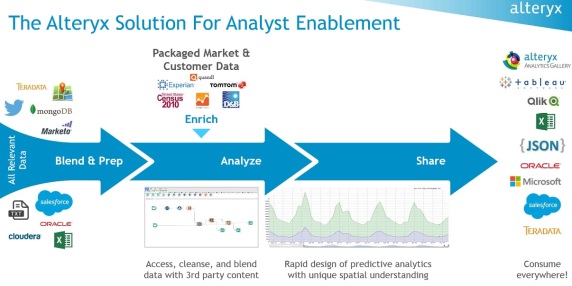
As the big data world matures, I suspect niche players will be good candidates for acquisition. Alteryx and Datameer are two vendors I can think of that are often tapped for self-service data prep, but these features are part of larger analytics offerings. It strikes me that self-service data prep is a feature we’re going to see inside many products and platforms.

Related resources:

Informatica Sets New Goals For Its Growing Data Platform
Qlik Morphs Into A Platform Vendor
Alteryx Pioneers Self-Service Data-Prep and Analytics


Data to Decisions Future of Work Chief Information Officer Chief Digital Officer

Salesforce Delivers Salesforce1 Lightning Components - An App Builder for Non-Coders

Salesforce Delivers Salesforce1 Lightning Components - An App Builder for Non-Coders

Earlier today Salesforce announced that it was extending its PaaS capabilities of the Salesforce1 platform with the addition of Lightning Components, a faster way to build apps by users who don’t code (the AppBuilder) and adding components as a section to the Salesforce Marketplace (“AppExchange for Components).


Let’s dissect the press release in our customary way (it can be found here):

SAN FRANCISCO—July 28, 2015—Salesforce (NYSE: CRM), the Customer Success Platform and world’s #1 CRM, today announced general availability of Salesforce1 Lightning Components and App Builder, allowing anyone to visually assemble apps with drag-and-drop ease using pre-built, reusable components. Salesforce also announced AppExchange for Components, expanding the world’s leading marketplace for enterprise apps to include components developed by Salesforce and its partner ecosystem. AppExchange for Components is launching with the fifty components that have been most requested by customers. Salesforce customers like CROSSMARK, Ocado, and The Financial Times are using the new Salesforce1 Lightning tools to build apps for every part of their business.


MyPOV – This is a major step forward for the Salesforce1 Platform, as it extends beyond users who know how to code to users that are ‘reasonably technical’ – but don’t have to have programming skills. In the Salesforce lingo these are the Admins, the Administrators, so the App Builder and the underlying components are a key step to make these users more independent of developers.

Comments on the News

● “Salesforce1, the #1 PaaS, is transforming app development for the enterprise,” said Tod Nielsen, executive vice president, Salesforce1 Platform. “We’re creating the tools and ecosystem that IT needs to build user-centric apps so that companies can innovate faster and succeed.”


MyPOV – True that the move empowers IT. 

● “At CROSSMARK, we are creating a new generation of app builders with Salesforce Lightning,” said Mike Anderson, chief information officer, CROSSMARK. “Components, from both Salesforce and its partners, will be critical to our app development strategy moving forward.”

● “Components represent the future of enterprise app development,” said Hideya Sato, chief executive officer, TerraSky, a Salesforce partner. “AppExchange for Components is a great channel for us to engage with Salesforce customers and enable their innovation.” […]

MyPOV – Good quote from TerraSky – on the one side components are a business opportunity for partners, on the flipside they will also replace some low hanging consultant / SI work gradually, as Admins get more empowered.

Overcoming The “App Gap”: Leveraging Components to Build Engaging Apps Fast
Businesses want the connectivity, immediacy and ease of use that consumers experience using apps on their phones every day. But delivering compelling business apps has become a bottleneck for enterprises. Gartner reports that “through 2017, the market demand for mobile app development services will grow at least five times faster than internal IT organization capacity to deliver them."[1]


MyPOV – No question mobile apps are growing, but Salesforce needs to be careful at not getting into the confusion of Salesforce1 (the mobile app container) and Salesforce1 Platform as its PaaS. A ‘mobilefirst’ paradigm should be a good approach here.

Today, Salesforce is unleashing innovation in IT departments by delivering component-based app development, a faster way to develop engaging apps. While traditional app development requires developers to write code and create features from scratch, component-based app development lets business users, not just developers, compose and build apps by dragging and dropping components, like snapping together LEGO blocks. Components democratize app development, allowing anyone to create enterprise apps faster.
MyPOV –Very good point how components improve productivity all around –for IT, developers, admins, partner etc. What Salesforce is not mentioning here (and should) is that by lowering the technical hurdle to build applications beyond coding skills the risk of a ‘lost in requirement translation’ outcome of IT projects gets drastically reduced. When end users (or Admins) can build applications directly knowing the end user requirements, those applications will be a better fit and ultimately help an enterprise to become more productive.

Salesforce is accelerating the shift to component-based app development for the enterprise with the delivery of Salesforce1 Lightning Components, Lightning AppBuilder and AppExchange for Components.
Lightning Components: Lightning Components, which are based on JavaScript, are the reusable building blocks of apps. Components can be as simple as single UI elements, or as robust as microservices with embedded data and logic. Examples of components include e-signature, compensation calculators, maps, calendars, buttons, and number entry forms. Developers can share components so that anyone can easily build sophisticated user experiences that are dynamic, mobile, and work for any screen. Businesses can save time and development resources, as well as reduce redundancy, by reusing components across different apps. Lightning Components include standard components built by Salesforce and custom components developed by customers, as well as partner components created by third-party developers, ISVs and system integrators.
MyPOV – The components approach is not new at building applications, it is a proven productivity booster for building applications (remember e.g. the Microsoft Foundation Classes of last century). So it is a key step to add the capability to the Salesforce1 Platform, something we are sure was planned all along. And it is always good to see when platform vendors ad ecosystem lure to their platforms, the same is happening here with Salesforce.

Salesforce Salesforce1 AppBuilder Lightning PaaS
The App Builder aspect - most important in my view
Lightning App Builder: Businesses no longer have to build apps from scratch. Using Lightning App Builder, anyone, not just developers, can draw from an extensive library of reusable, well-defined components to compose apps in a drag-and-drop visual interface. Salesforce components are pre-installed in the App Builder, and partner components can be integrated directly from the AppExchange for Components.
MyPOV – This is the key part of the press release in my view – as mentioned above. Lowering the technical skills required to build new applications will only help to create the application challenge that Salesforce describes well. We expect some backlash as the end users / Admins need to learn – but ultimately end user empowerment is the answer for many business applications needs for the future.

AppExchange for Components: An entirely new category on the AppExchange, AppExchange for Components makes it easy for developers, partners, and customers to find and use components in order to accelerate the building of apps. Components are put through the same rigorous reviews as apps listed on the AppExchange, ensuring they can be trusted. And for developers who create components, they can list them on the AppExchange either for free or monetize them.
MyPOV – Good move by Salesforce as mentioned before. Compared to the AppBuilder capability and effects on the ecosystem, even over stressed in this press release.

 
Leading Global Companies Build Apps Faster with the Salesforce1 Platform, the World’s #1 PaaS
With the Salesforce1 Platform, the world’s #1 PaaS, companies can transform IT departments into centers of innovation and leapfrog the competition. With more than four million apps and two million developers, the Salesforce1 Platform is the trusted and proven platform for innovative companies around the world. Companies like CROSSMARK, Ocado, and The Financial Times are building apps faster on Salesforce1 Lightning to help every user move at the speed of business. The more than 4,100 customers who participated in a recent study conducted by a third party on behalf of Salesforce reported 52 percent faster application deployment, 50 percent faster new application design, 52 percent faster application configuration and 42 percent decrease in IT cost using the Salesforce1 Platform.

MyPOV – Nice showcase for the power of the Salesforce1 Platform. But then of course the survey talks to the ecosystem that has bought into the Salesforce vision.

Pricing and Availability

● Salesforce1 Lightning Components and App Builder are generally available with the current release of Salesforce and are included in all CRM and Force.com admin licenses.

MyPOV – Key move by Salesforce NOT to add a price tag to this capability. If you want to let a lot of flowers bloom, make it easy – and that often starts with the licensing. Effectively Salesforce has made every Salesforce Admin into a potential App Builder. Smart and good move that will drive adoption to Salesforce1. If you have an ecosystem, leverage it to build the next ecosystem. The question is of course – what do enterprises do that want to use Salesforce1 – but don’t use any of its CRM products.

● The AppExchange for Components is live and available for everyone to access. Partner components on the AppExchange are priced individually on a per user or per Salesforce instance basis.
MyPOV – Good for Salesforce to have a marketplace already – and now it can be leveraged for components, too. Pricing is often tricky, so adoption will show if Salesforce and partners / component builders get that right.

My Overall POV

A good move by Salesforce adding the AppBuilder and Component capabilities to the Salesforce1 Platform. Making it easier for more users to build apps is a good move. In later phases we will hear of the concerns around ‘crapware’, end user programming errors (remember the spreadsheets that cost Millions) – but that will all come later.

On the concern side Salesforce has not (yet) stressed the end user aspect – something competitors have done for mobile app development (see e.g. Oracle, IBM and SAP), but that’s only a logical next step. Salesforce will also have to address some ripples in the ecosystem – as lower value, easy custom work should disappear over time. But that was not scalable business for partners (and many freelancers) anyway, so that’s a good move by Salesforce to keep overall TCO for its customers down.

Overall a good move by Salesforce adding more users, partners to its Salesforce1 Platform, creating more value for customers. And revenue / utilization for Salesforce. It will be interesting to see what the Salesforce has left in store for Dreamforce later in the year on the PaaS / Salesforce1 Platform side. Stay tuned. 

 
Next-Generation Customer Experience Tech Optimization Data to Decisions Digital Safety, Privacy & Cybersecurity Innovation & Product-led Growth Future of Work New C-Suite salesforce PaaS Chief Information Officer

Amy Cuddy Speaking at Constellation's Connected Enterprise

Amy Cuddy Speaking at Constellation's Connected Enterprise

Amy Cuddy Constellation is pleased to announce social psychologist and body language researcher, Amy Cuddy, is speaking at Connected Enterprise

Join Amy Cuddy at Connected Enterprise to learn how to channel nonverbal behavior into persuasive leadership.

About Amy Cuddy

Cuddy's work on power posing — brief, nonverbal expressions of competence and power — has won praise worldwide. Her TED talk, “Your Body Language Shapes Who You Are”, posted in October 2012, has been streamed over 26 million times and is the second-most viewed video on the TED site. Mashable.com chose it as one of 15 TED Talks That Will Change Your Life. The Guardian calls it one of 20 Online Talks That Could Change Your Life.

Cuddy's work shows that your physical posture not only affects how others see you, but also how you see yourself, your own hormone levels, and your performance and important life outcomes. Power posing — even for as little as two minutes before as stressful social evaluation, like a job interview — can actually alter an individual at the biological level and prepare the brain for stressful, high-stakes situations.

In 2014, Cuddy was named a Young Global Leader by the World Economic Forum. TIME magazine named her one of 2012’s “Game Changers” and Business Insider chose her as one of the 50 Women Who Are Changing The World, 2013. Her article “Connect, Then Lead” was one of Harvard Business Review’s Ideas that Shaped Management in 2013.

Cuddy's groundbreaking research has been published in top academic journals and she has received numerous accolades and academic awards. Her work was featured in Harvard Business Review’s Top 20 Breakthrough Ideas for 2009 (“Just because I’m nice, don’t assume I’m dumb”), Scientific American Mind in 2010 (“Mixed impressions: How we judge others on multiple levels”), and as one of the Top 10 Psychology Studies of 2010 by Psychology Today. She writes and blogs for Harvard Business Review.

Amy holds a PhD in Psychology from Princeton University and BA in Psychology from the University of Colorado. Prior to joining HBS, she was an Assistant Professor at the Kellogg School of Management at Northwestern University. At Harvard, Amy teaches MBA, executive education, and doctoral courses on influence & persuasion, leadership, and decision making. She is also a classically trained (and still practicing) ballet dancer, which informs her research on nonverbal communication.

Session Information

November 5, 2015 8:00 p.m.

Presence - An Evening With Amy Cuddy
Amy Cuddy’s research on body language reveals that we can change other people’s perceptions — and even our own body chemistry — simply by changing body positions.
 

REGISTER

Marketing Transformation Chief Customer Officer

#Socbiz #FutureOfWork News - week ending July 24 2015

#Socbiz #FutureOfWork News - week ending July 24 2015

Below is my video recap of a few of the key social business stories of the week.

Here are links to the stories mentioned:


If I missed something, please leave a link in the comments.


Future of Work Sales Marketing Next-Generation Customer Experience Revenue & Growth Effectiveness Data to Decisions Innovation & Product-led Growth New C-Suite Digital Safety, Privacy & Cybersecurity Tech Optimization Chief Marketing Officer Chief People Officer Chief Revenue Officer Chief Experience Officer