Results

Hosting Events Amidst A Coronavirus

Hosting Events Amidst A Coronavirus

Get best practice tips on how to mitigate transmission, reduce risk and exposure, and keep your live event. Learn best practices and apply public health principles from the WHO, CDD, and Johns Hopkins Public Health.

Hosted by R “Ray” Wang

Digital Safety, Privacy & Cybersecurity Future of Work Marketing Transformation New C-Suite Next-Generation Customer Experience Tech Optimization On <iframe src="https://player.vimeo.com/video/397280607?badge=0&amp;autopause=0&amp;player_id=0&amp;app_id=75194" width="1280" height="720" frameborder="0" allow="autoplay; fullscreen" allowfullscreen title="Hosting Events Amidst A Coronavirus"></iframe>

A Guide to Remote Work During COVID-19

A Guide to Remote Work During COVID-19

Get a comprehensive overview of the more effective strategies, tools, and techniques to help workers stay productive remotely. Learn how to set up a high-quality remote work program or significantly improve an existing one. Aimed at both IT and businesses.

Hosted by Dion Hinchcliffe

New C-Suite Future of Work Tech Optimization On <iframe src="https://player.vimeo.com/video/397028954?badge=0&amp;autopause=0&amp;player_id=0&amp;app_id=75194" width="1280" height="720" frameborder="0" allow="autoplay; fullscreen" allowfullscreen title="A Guide to Remote Work During COVID-19"></iframe>

Personal Log: Understanding Case Fatality Rates For #COVID19 #CoronaVirus

Personal Log: Understanding Case Fatality Rates For #COVID19 #CoronaVirus

Data In Early Case Fatality Rates Are Naturally Biased To Show Massive Fatality

While there’s nothing wrong with an abundance of caution for high case fatality rates we are seeing for the COVID-19 coronavirus, the data is not accurate. We keep hearing 3.5% or 4% of the population is going to die. Why is the rate so high? The denominator is inaccurate. Most countries have not done broad testing to know how many cases are prevalent in the general population. So, let’s start with the definition of Case Fatality Rate.

Case fatality rate is calculated by dividing the number of deaths from a specified disease over a defined period of time by the number of individuals diagnosed with the disease during that time; the resulting ratio is then multiplied by 100 to yield a percentage.

1. Case Fatality Rate or Mortality Rate = Number of Deaths / by Total Number of Cases X 100

2. Total Number of Cases = Prevalence 

3. Prevalence is all the reported cases AND the estimated cases in the environment

The denominator here is very important. What makes up the total number or cases is all the reported cases that we know of in the hospital and the broad sample of what's in the environments

A good example of why the rates look so scary at first, can be shown in South Korea in early reporting. The early cases were only the sick ones or those who fell ill. After broad testing in South Korea, the case fatality results were 0.6%, much lower than earlier results of 3 or 4% of case fatality rates in early reporting.

https://www.scmp.com/week-asia/health-environment/article/3065187/coronavirus-south-koreas-aggressive-testing-gives
 

Public Response To Date Fails To Account For Accurate Prevalence In Case Fatality Rates

After broader testing, you could see how fast the virus had spread and how much lower the number of deaths were. Don't get me wrong, this virus is very contagious but the good thing is the virus is not as deadly as some may have first believed. Moreover, it’s not from watching the media and folks on social media going nuts, screaming, “Oh my god, this is the Bill Gates 100 year Spanish Flu pandemic!”

Understand how case fatality rates are studied, then we can figure out the appropriate proportionality of response. IN THE US, WE HAVE NOT DONE BROAD TESTING. WE COULD ALL BE CARRIERS AND NOT SHOW IT.
 

The Bottom Line: Understand Proportionality Of Response Before We Do More Self-Inflicted Damage To The Economy

Let’s take another way to look at our response to this outbreak:

In the US, prevalence of a specific type of flu was 15M as of Jan 2020.  We had:

  • 140k hospitalizations
  • 8200 deaths, 
  • 54 pediatric deaths

What would you do in that situation? 

  • quarantine everyone?
  • cancel events? 
  • stop sports?
  • hunker down?
  • close schools? 

That’s Influeza B. A known flu which we even have vaccines for, albeit they don’t always work so well.

We don't go crazy on the flu because we're accustomed to the risk and have factored for it. Right now we're going ape $sh!t because of imperfect data and taking a massive abundance of caution (nothing wrong with that).

However, the response to this crisis is 10X of what we do for the normal flu. Either we step up when the regular flu shows up in the same manner and shut down everything and self-inflict wounds on 0.5% to 1.0% of global GDP, or let’s get a grip on the panic.

One more note though, in a regular flu season, we may see 140k hospitalizations over 6 months, Covid-19 is compressed over 6 weeks and our systems are not ready for this.

Proportionality of response is key here.  Stop going crazy folks!  Put in precautions and watch a little less TV during the election year.
 

Disclosures

Although we work closely with many mega software vendors, we want you to trust us. For the full disclosure policy,stay tuned for the full client list on the Constellation Research website. * Not responsible for any factual errors or omissions.  However, happy to correct any errors upon email receipt.

Constellation Research recommends that readers consult a stock professional for their investment guidance. Investors should understand the potential conflicts of interest analysts might face. Constellation does not underwrite or own the securities of the companies the analysts cover. Analysts themselves sometimes own stocks in the companies they cover—either directly or indirectly, such as through employee stock-purchase pools in which they and their colleagues participate.

As a general matter, investors should not rely solely on an analyst’s recommendation when deciding whether to buy, hold, or sell a stock. Instead, they should also do their own research—such as reading the prospectus for new companies or for public companies, the quarterly and annual reports filed with the SEC—to confirm whether a particular investment is appropriate for them in light of their individual financial circumstances.

Copyright © 2001 – 2020 R Wang and Insider Associates, LLC All rights reserved.

Contact the Sales team to purchase this report on a a la carte basis or join the Constellation Executive Network

Data to Decisions Digital Safety, Privacy & Cybersecurity Future of Work Marketing Transformation Matrix Commerce New C-Suite Next-Generation Customer Experience Tech Optimization Innovation & Product-led Growth Revenue & Growth Effectiveness Distillation Aftershots World Economic Forum infor SoftwareInsider Innovation Leadership CX Customer Service AI Analytics Automation EX Employee Experience HCM Machine Learning ML SaaS PaaS Cloud Digital Transformation Enterprise Software Enterprise IT HR Security Zero Trust Marketing B2B B2C Customer Experience Generative AI Disruptive Technology Growth eCommerce Next Gen Apps Social Content Management Collaboration LLMs Agentic AI Robotics IaaS Quantum Computing Enterprise Acceleration IoT Blockchain CRM ERP CCaaS UCaaS Enterprise Service developer Metaverse VR Healthcare Supply Chain business finance M&A AR Chief Customer Officer Chief Digital Officer Chief Executive Officer Chief Financial Officer Chief Information Officer Chief Marketing Officer Chief People Officer Chief Procurement Officer Chief Revenue Officer Chief Supply Chain Officer Chief Experience Officer Chief Human Resources Officer Chief Information Security Officer Chief Technology Officer Chief Data Officer Chief Analytics Officer Chief Operating Officer Chief Privacy Officer Chief AI Officer Chief Product Officer

Forging Innovation, Enterprise Agility & Leadership Growth | DisrupTV Ep. 180

Forging Innovation, Enterprise Agility & Leadership Growth | DisrupTV Ep. 180

Forging Innovation, Enterprise Agility & Leadership Growth | DisrupTV Ep. 180

In DisrupTV Episode 180, hosts R “Ray” Wang and Vala Afshar are joined by three influential leaders:

  • Lauren Cooney — Founder & CEO at Spark Labs, a creative innovation firm empowering organizations to lead through transformative strategies.
  • Pat Garrehy — Founder, President & CEO at Rootstock, a respected enterprise software company enhancing business agility and operational performance.
  • Terri Griffith — Professor, author, keynote speaker, and consultant, renowned for her research on leadership, especially in competitive and change environments.

Together, they explore how innovation, resilience, and leadership intersect to shape sustainable success in hyper-competitive markets.

Key Topics Covered:

  • Building innovation as a capability, not just a one-time event (Lauren Cooney)
  • How cloud ERP and operational tools help organizations become responsive and adaptable (Pat Garrehy)
  • Strategies for leading through disruption, balancing resilience with growth (Terri Griffith)

The importance of aligning organizational systems, innovation mindsets, and leadership styles for sustainable transformation

Why Watch?

This episode offers valuable frameworks and real-world advice—ideal for business leaders, innovators, and change-makers looking to navigate today’s rapidly shifting enterprise landscape.

Related Episodes


On DisrupTV <iframe width="560" height="315" src="https://www.youtube.com/embed/Q1QTwDasG3M?si=lRdHef8q42DOYHns" title="YouTube video player" frameborder="0" allow="accelerometer; autoplay; clipboard-write; encrypted-media; gyroscope; picture-in-picture; web-share" referrerpolicy="strict-origin-when-cross-origin" allowfullscreen></iframe>

Brand Trust in an Age of Fear and Virus #coronavirusbizhacks

Brand Trust in an Age of Fear and Virus #coronavirusbizhacks

We live in an age where misinformation spreads faster than a pandemic. How do we face the virulent nature of rumors, lies and misinformation when brand trust is at stake? This webinar takes aim at the responsibilities brand leaders have in the age of Coronavirus, from the need to protect customers and employees to the role we will all play in spreading truth faster than fear.

Hosted by Liz Miller, VP & Principal Analyst at Constellation Research. Special guest: Nicole France, VP and Principal Analyst at Constellation Research.

Data to Decisions Digital Safety, Privacy & Cybersecurity Future of Work Marketing Transformation Matrix Commerce New C-Suite Next-Generation Customer Experience Tech Optimization Chief Customer Officer Chief Digital Officer Chief Executive Officer Chief Information Officer Chief Marketing Officer Chief People Officer Chief Procurement Officer Chief Revenue Officer Chief Supply Chain Officer On <iframe src="https://player.vimeo.com/video/395829147?badge=0&amp;autopause=0&amp;player_id=0&amp;app_id=75194" width="1280" height="720" frameborder="0" allow="autoplay; fullscreen" allowfullscreen title="Brand Trust in an Age of Fear and Virus"></iframe>

The CIO Must Lead Business Strategy Now

The CIO Must Lead Business Strategy Now

2020 has ushered in yet another definitive shift in the role of the top technology leader in most organizations. While I have been discussing the steadily changing responsibilities of the Chief Information Officer (CIO) for quite a few years now, we now see that this is finally the moment that the CIO becomes a business leader, first and foremost.

While the title of this post may be provocative for some, from my vantage point it's simply stating the reality today. Whether or not the CIO wants to or is ready to -- and regardless of what the rest of the C-Suite or board believes -- the CIO role is now critical to the business strategy of almost every organization.

The reason is simple: Technology now drives the global economy. Because digital infuses and pervades almost every aspect of the our organizations today, as well creating virtually all the major new markets-- and consequently, vital growth -- it makes technology a top driver of business strategy today.

The Legacy/Traditional CIO and the Modern CIO in 2020 and Beyond

This is not to say that the CIO will lead all business strategy. Far from it. But only those who are deeply familiar with both the technology landscape and have long experience with the profound challenges and difficulties of actually realizing digital solutions, will be able to successfully navigate the complex onrushing pathways that give access to the future for the business.

This ability to map out, articulate, and rally the organization around the digital art-of-the-possible can only be done by what is increasingly called the Qualified Technology Executive (QTE). A QTE is a leader wbo posseses a significant amount of current technology-relevant domain experience. As a QTE personally, I have a pretty clear sense of how long it takes to become one, even if one is determined. At least 10 years. This includes both study as well as previous hands-on experience with multiple large scale business/technology transformaitons.

The result is that most organizations lack sufficient QTEs to successfully undergo digital transformation. Yet such transformations are a top five CEO priority around the globe right now as most companies realize they now are also tech companies. The current consensus in the industry that it is only a matter of time before QTEs are mandatory on boards (it is very surprisingly to me frankly, that this is not already the case.) In other words, sufficient digital experience is lacking at the top in the majority of organizations to step in and drive the overall go-forward strategy of the business.

The result of all this is that there is no one else that can completely lead business strategy at the executive level. The answer has sometimes been that the Chief Digital Officer (CDO) or even the Chief Marketing Officer (CMO) could also potentially be a top-level QTE. To this I'd observe that the first simply doesn't have control of the IT systems, the data, and the majority of the technology budget like the CIO has. Most CDOs also don't have a big enough purview, a sufficiently large or coherent staff, or a big enough budget to transform the business. The CIO usually does.

These are the reasons why so many CIOs have recently been given the CDO role too. It is part of an overall digital restructuring of the C-Suite, which will likely become nearly total and profound in the next few years as enterprises become fundamentally experience-driven organizations. As to the CMO, they usually are not QTEs, though in organizations where they are, it's certainly a possibility they will help lead business strategy too.

An aside: Worryingly to me, even the CIO barely has the resources in many organizations to succeed at delivering the full range of digital change required today (my current analysis is that IT has been underfunded for years in the typical enterprise by about 30-50%.) 

The reason this has come to a head in 2020 is that there is no more digital runway. From my research and conversations, the clock has clearly run out for most enterprises. The proverbial can cannot be kicked down the road (though some will no doubt try.) There is no time to make other executives into QTEs, or even enough time to to replace enough executives with QTEs, although this last part is perhaps debatable, although a non-starter in most organizations. The CIO is the last role standing that can deliver on the full end-to-end job of sustainable business strategy and execution, albeit in close conjunction with the rest of the "top table."

Executable Imagination of the Future

Many of us have used the line that the CIO used to be a Chief Infrastructure Officer and is now slowly turning into a Chief Innovation Officer. What's called for now is more than just innovation. It's a far-ranging rethink of our businesses, markets, products, partners, supply chains, and even our customers. The CIO in 2020 and beyond must become the Chief Imagination Officer, in a way that thinks broadly, widely, and deeply well into the future, understands the various chess moves that must be made to pathfind -- then supercharge -- the right way forward. They must be able to articulate all this to the organization and marshal them around the changes.

This is part of what all the talk is about digital transformation not being about technology (despite it also being about technology.) It's about the people, the talent, a willingness to change, and an actionable and clear vision forward into the future. The old CIO as a largely technology role is officially over (though zombies will of course continue to exist for some time.) Long live the new CIO.

Additional Reading

CIO Predictions Going Into 2020

The evolving role of the CIO and CMO in customer experience

Six Trends Affecting the Innovation-Led CIO

Our List of Top Industry QTEs: The Business Transformation 150 for 2020

New C-Suite Innovation & Product-led Growth Data to Decisions Revenue & Growth Effectiveness Future of Work Tech Optimization Leadership Chief Information Officer Chief Experience Officer

New Webcast Series: Coping with Covid-19 For Your Business & Communities #CoronaVirusBizHacks

New Webcast Series: Coping with Covid-19 For Your Business & Communities #CoronaVirusBizHacks

Big business decisions are being made as the Coronavirus wreaks havoc on the health of our families, teams, customers and communities. With all the fear and concern, many executives have started looking for best practices, insights and straight talk on the potential response and impact. Join us for three different discussions on how Constellation Research sees this global threat and thinking around how to make sure business keeps moving post-COVID-19. Hosting a conference? Extending remote work policies? Employee health concerns? Loss of  trust and increased fear? We’ve got some answers.

Join us for our new webinar series hosted today and two more next week. These topics should help allieviate some stress and keep your business moving smoothly and the health of your communities top of mind. 

Brand Trust in an Age of Fear and Virus

We live in an age where misinformation spreads faster than a pandemic. How do we face the virulent nature of rumors, lies and misinformation when brand trust is at stake? This webinar will take aim at the responsibilities brand leaders have in the age of Coronavirus, from the need to protect customers and employees to the role we will all play in spreading truth faster than fear.

Hosted by Liz Miller
Thursday, March 5 at Noon PT/3 PM ET
REGISTER HERE
 

A Guide to Remote Work During COVID-19

Get a comprehensive overview of the more effective strategies, tools, and techniques to help workers stay productive remotely. Learn how to set up a high-quality remote work program or significantly improve an existing one. Aimed at both IT and businesses.

Hosted by Dion Hinchcliffe
Wednesday, March 11 at 11 AM PT/ 2 PM ET
REGISTER HERE 
 

Hosting Events Amidst A Coronavirus

Get best practice tips on how to mitigate transmission, reduce risk and exposure, and keep your live event. Learn best practices and apply public health principles from the WHO, CDD, and Johns Hopkins Public Health.  

Hosted by R “Ray” Wang
Thursday, March 12 10 AM PT/1 PM ET
REGISTER HERE

Join the hashtag: #coronavirusbizhacks 

Be sure to register and join us live for these discussions to prepare for the impacts of Coronavirus on business. Let’s be proactive and prepare for what’s to come.


Data to Decisions Digital Safety, Privacy & Cybersecurity Future of Work Marketing Transformation Matrix Commerce New C-Suite Next-Generation Customer Experience Tech Optimization Chief Customer Officer Chief Digital Officer Chief Executive Officer Chief Financial Officer Chief Information Officer Chief Marketing Officer Chief People Officer Chief Procurement Officer Chief Revenue Officer Chief Supply Chain Officer

What Joe Coulombe Is Still Teaching Us About Customer Experience

What Joe Coulombe Is Still Teaching Us About Customer Experience

Hot on the heels of a rousingly successful first-ever AXS in Atlanta last week (thanks to all who attended!) came the news: Joe Coulombe, founder of Trader Joe’s, died February 28 at the age of 89.

It’s been decades since Trader Joe himself retired (1988), even longer since he sold the company to Aldi Nord (1979), but he remains a retailing legend to this day. His clarity of vision gave rise to what continues to be the leading U.S. grocery retailer in sales per square foot. If there were an objective measure of customer loyalty and zeal, TJ’s would top that chart as well. One of the most frequent subjects its customer service team fields is people lobbying to have a Trader Joe’s open in their area.

You need not be a Southern Californian, a wine buff, or a Hawaiian shirt fan to find TJ’s an appealing place to shop. Or to be impressed by the company’s ongoing success. At AXS, our discussions covered both the advanced technologies and customer-centric fundamentals that shape customer experiences today. In light of that scope, it’s particularly instructive to analyze what makes Trader Joe’s the compelling case study it is.

For too many businesses today, technology tools and digital channels seem to be the main priority, with customers themselves almost an afterthought. Trader Joe’s, from the founding principles defined by Joe Coulombe up to the present day, focuses first and foremost on customers. It’s a living thought experiment in evaluating whether technology and customer data collection are even necessary to build durable, profitable customer relationships. In the digital age, that is an essential, if counter-intuitive, question.

How can we learn from the shop that Joe built? What are those indelible features that have made Trader Joe’s a long-running success, throughout changes like acquisition, the founder’s retirement, industry strikes, continued expansion, and changing buyer expectations?

Here are my four key lessons from Joe Coulombe:

1. Understand Your Customers

Start by doing your research. Joe had experience in convenience retail before he started the business. Maybe it was the Stanford BA and MBA, but he also looked at a series of broader trends and anticipated the needs of his audience. The number of college graduates was rising. The 747 had just been introduced. People were traveling more, expanding their horizons, and coming home with a taste for foreign food and quality liquor. Years later, Joe would famously describe his customer base as “over educated and underpaid”. No matter the label, he understood what appealed to them. Cue the staff in Hawaiian shirts, nautical theme, and limited-run product lines. Along with your French cheese, Italian wine, strange new condiment, and health foods you could have a conversation on philosophy, current events, or local history with your checker at the register.

2. Elevate Your Employees

If today we’re obsessed with the question of how to build enduring company culture, Joe just did it. He hired employees who liked people, because he knew that if his employees were interacting with customers, they’d always know what customers liked and what they didn’t. They’d also serve them better. Long before Starbucks gained social street cred for its benefits, Trader Joe’s was paying competitive salaries with full benefits. To this day, the company promotes mainly from within. Company executives also work on the shop floor. No one is removed or insulated from interacting directly with customers on a regular basis. When it comes to understanding customers' needs—and sensing when or how they may be changing—everyone does. It’s part of the company’s DNA.

3. Use Technology as a Means, Not an End

Notably, Trader Joe’s does not collect any customer data. They have no loyalty card, no customer database, and don’t even ask for your ZIP code when you check out. They have a website, but do not sell online. Even the Fearless Flyers they send out (which still look much as they did in the 80’s and 90’s) are bulk mailed to people within close proximity of their stores. I’m not sure if they even have a mailing list. They did finally introduce a POS system in the early 2000’s. I suspect (but can’t confirm) that they’ve got a pretty streamlined supply chain and logistics system. The critical distinction here is that TJ’s has a LOT of quantitative data on its products. Including how many people complain that they’ve discontinued something that they loved. Or when something turns out to be a dud. When it comes to information about customers, however, that is direct, qualitative, and, in the best possible way, tribal knowledge.

The company has recently started using digital media as a way of engaging its customer, but not in a conventional way. Rather than trying to build an online community, say, TJ’s has been producing an “Inside Trader Joe’s” podcast. It's like the Mickey Mouse Club for grown-ups, with less singing. If you have feedback  about stores or products, you can provide it online. You can just as easily call a store and talk to a person.

4. Never Stop Innovating and Adapting

For the apparent dearth of digital communication channels or customer data collection, Trader Joe’s is still one of the most prescient in identifying emerging trends and profiting from them. Whether it was identifying growing interest in frozen seafood, moving into fresh produce, introducing organic products, or reducing the amount of plastic packaging on its food, the company continues to innovate and change. It is continuosly seeking out and testing new products. In a 2010 interview, quoted in his LA Times obituary, Joe said this: “My successors at Trader Joe’s have taken a 30-store chain nationwide with remarkable adherence to the basic concepts we started out with. Though it’s certainly a different store than I left in 1989, I changed it so many times, I can’t argue with what they’ve done.”

There are industry observers who suggest that Trader Joe’s must eventually adapt to ecommerce and digital channels in order to survive. That may someday be true, but it’s worth noting that the biggest gorilla in the business, Amazon, has been the one to adapt first. It moved into brick and mortar stores through Whole Foods.

One thing is certain. Trader Joe’s is a business that has personality, from its corporate culture to individual stores and employees. Each one is itself, but part of a larger whole. Trader Joe’s is a business built for people. If the captains and crew members ever decide they need to move more fully online, I’m confident they’ll translate that personality into digital media as well.

Which brings me to my biggest lesson—and perhaps our biggest challenge as businesses: how can we improve our ability to interact with, engage, and unobtrusively observe our customers without being invasive, opaque, or disingenuous in doing so? We must continue to find ways of doing in digital channels what we are so innately good at in person as humans. We also need to recognize that it’s the qualitative insights, not just quantitative data, that are often the most important indicators of what’s next. And finally, there’s a whole lot of insight we can generate from the right data—we just have to know where to look for it, and not bother with the rest.

Marketing Transformation Next-Generation Customer Experience Tech Optimization Chief Customer Officer Chief Executive Officer Chief People Officer Chief Information Officer Chief Marketing Officer Chief Digital Officer

Best Practices: Hosting Events In The Age Of #Coronavirus (COVID-19)

Best Practices: Hosting Events In The Age Of #Coronavirus (COVID-19)

Event Organizers Must Exercise An Abundance Of Caution

5CES5889.jpg

Source: Constellation Research, Inc. Ambient Experience Summit 2020 Atlanta

Amidst the backdrop of coronavirus fears and the spread of COVID-19, event organizers must make the tough decisions on whether or not to host their events or cancel.  The decisions are not easy to make  Given the lack of good information on how the virus is transmitted and how contaigous the virus can be, most event organizers have opted for an abundance of caution.  A few have declared cancellations given their business models or the spread of outbreak among their core demographic.  In fact, a few mega events such as Mobile World Congress (large number of chinese based vendors) and Italy’s Carnival and the Greek Aporkies (recent country specific outbreaks) have been cancelled.

The fears and realities of hosting events amidst a rising epidemic and a potential global pandemic require new guidelines and procedures for all event organizers.  Once the fears subside, business must continue and events will continues, but short of hosting virtual rooms and zero human contact, organizers will have to consider rules based on a number of factors:

1. Apply Pre-Event Pre-Cautions

  • Develope strict and precautionary attendance policies and restrictions.  Use the latest trackers to determine whom to limit attendance from.  At the time of this blog post, most event organizers suggest a limitaion for potential attendees whom have visited within the past 60 days the coutnries of China, Italy, UK, UAE, Iran, South Korea, and Hong Kong.  However, targeting individual countries may become futile.  Use the Johns Hopkins live-tracker to determine which countries may pose the greatest risk as these changes happen in real-time.
  • Screen guests based on where they have visited.  Ask international attendees to produce their passports.  Any guests that have visited the targeted list of high risk countries in the past 60 days should not be cleared for entry into the event venues.   US based events should adhere to the travel restrictions and guidance of the U.S. Department of State
  • Apply generous cancellation policies given the current situation. Most event organizers have provided attendees the ability to apply their fees to the next year’s event. Some have provided refunds.  A very few have not provided any refunds.
  • Discourage attendees who have any flu-like symptons to attend.  Attendees who have a runny or stuffy nose, fever, cough, sore throate, symptoms of diahrreha, and symtoms of vomittting within the previous two weeks of the event should not attend the event.  Event organizers should make no exceptions.  Keep in mind with spring allergy seasons ahead of us, this will be a tough call.
  • Establish data collection waivers  in order to enable public health tracking.  Secure waivers for global privacy regulations to track any incidents.  Most organizers are implementing GDPR and PDPA waivers.
  • Partner with local authorites and health agencies.  Closely monitor World Health Organization (WHO) and Centers for Disease Control (CDC) guidelines and all new developments.  Apply new policies based on disease transmission etiologiies. 
  • Update all attendees on the latest developments.  Send frequent updates to attendees on attenendance criteria and  on site health and safety rules.  Most send a notice two-weeks in advance, one-week prior, three-days prior, one day prior, and throughout each event day.

2. Enforce Day Of Event Pro-Active and Cautionary Measures

5CES5742.jpg

Source: Constellation Research, Inc. Ambient Experience Summit 2020 Atlanta

  • Conduct temperature screenings at the event venue.  Most event venue operators or event organizers will screen using thermal scanners outside the venue.  All attendees will be subject to passive temperature screening measures.  Indiviuduals with temperaturs higher than 100 F (38 C) should be escorted to an isolation holding room.  Medical personnell will interview and quarantine the person if necessary.
  • Establish an isolation holding room with local public health authorities.  Event organizers should work with health agencies to staff a isolation holding room for supsected cases and implemention of standard operating procedures for disinfection.  The isolation room should be staffed with trained medical professionals and follow proper infectious disease protocols.
  • Require rigorus physical cleaning of the venue.  Require wipe-downs for all microphones and speaker monitors.  Increased frequency of physical cleaning and usage of appropriate disinfectant agents for door knbos, lecturns, escalator hand rails, trash recepticles, water stations, elevator bottons, chairs, registration tables, and bathrooms.  Prepare for a provision of personal protective equipment (PPE) and roll out restricted entry and exit plans as needed.
  • Provide hand sanitiers and masks.  Ask all visitors to use hand sanitizers before entering the event and make sanitizer available throughout the event.  Make face masks available for all attendees if they feel unwell.
  • Display of health advisories at event venue. Remind attendees to keep personal hygiene high, provide notices on hand washing and also minimizing physical contact.
  • Implement a “No Hand-Shake: policy at the event.  Use fist bumps, elbow bumps, virtual hugs, waves, and other mechanims to replace the handshake during the crisis.   Wash all hands with soap and water for at least 20 seconds, especially after any eating, blowing of the nose, coughing, sneezing, and using the bathroom.
  • Reques all attendees and exhibitors evaluate their own health and that of those they're in close contact with.  Feel free to report to any event organizers anyone that feels unwell you come in contact with.  Encourage attendees whoa re sick or showing symptoms of illness to stay home.
  • Increase medical personnel and security on-site.  Staff up to handle medical emergencies, provide on-site diagnosis, prepare the event venues, and oversee event medical operations.

3. Follow-up Post Event

  • Ask health outcomes in the post event surveys to attendees.  Use these surveys to monitor post event for diseases transmisision.  See if any attendees are feeling unwell to prevent the spread of future transmission.
  • Prepare event attendee data in case an outbreak occurs. Expect health authorities to ask for event attendee data should an outbreak be traced back to the event.  Apply data collection for tracking of attendees post event.
     

4. Use These Resources To Track The Coronavirus Spread


Digital Safety, Privacy & Cybersecurity Future of Work Marketing Transformation New C-Suite Next-Generation Customer Experience Tech Optimization Distillation Aftershots Data to Decisions Innovation & Product-led Growth Security Zero Trust ML Machine Learning LLMs Agentic AI Generative AI AI Analytics Automation business Marketing SaaS PaaS IaaS Digital Transformation Disruptive Technology Enterprise IT Enterprise Acceleration Enterprise Software Next Gen Apps IoT Blockchain CRM ERP finance Healthcare Customer Service Content Management Collaboration Leadership Chief Customer Officer Chief Digital Officer Chief Executive Officer Chief Financial Officer Chief Information Officer Chief Marketing Officer Chief People Officer Chief Information Security Officer Chief Privacy Officer Chief Technology Officer Chief AI Officer Chief Data Officer Chief Analytics Officer Chief Product Officer Chief Experience Officer

The Rise of Work Coordination Platforms in the Digital Workplace

The Rise of Work Coordination Platforms in the Digital Workplace

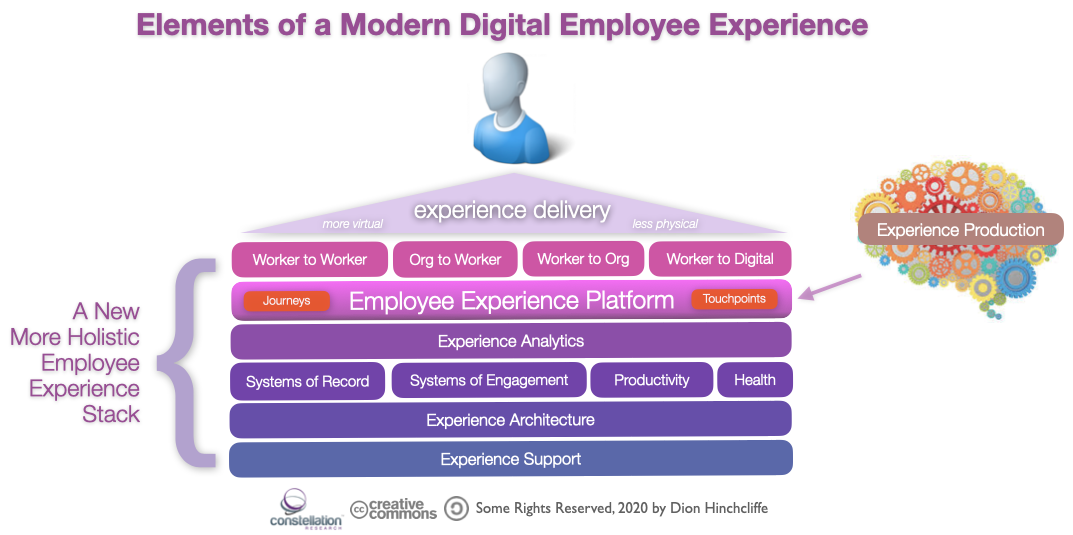
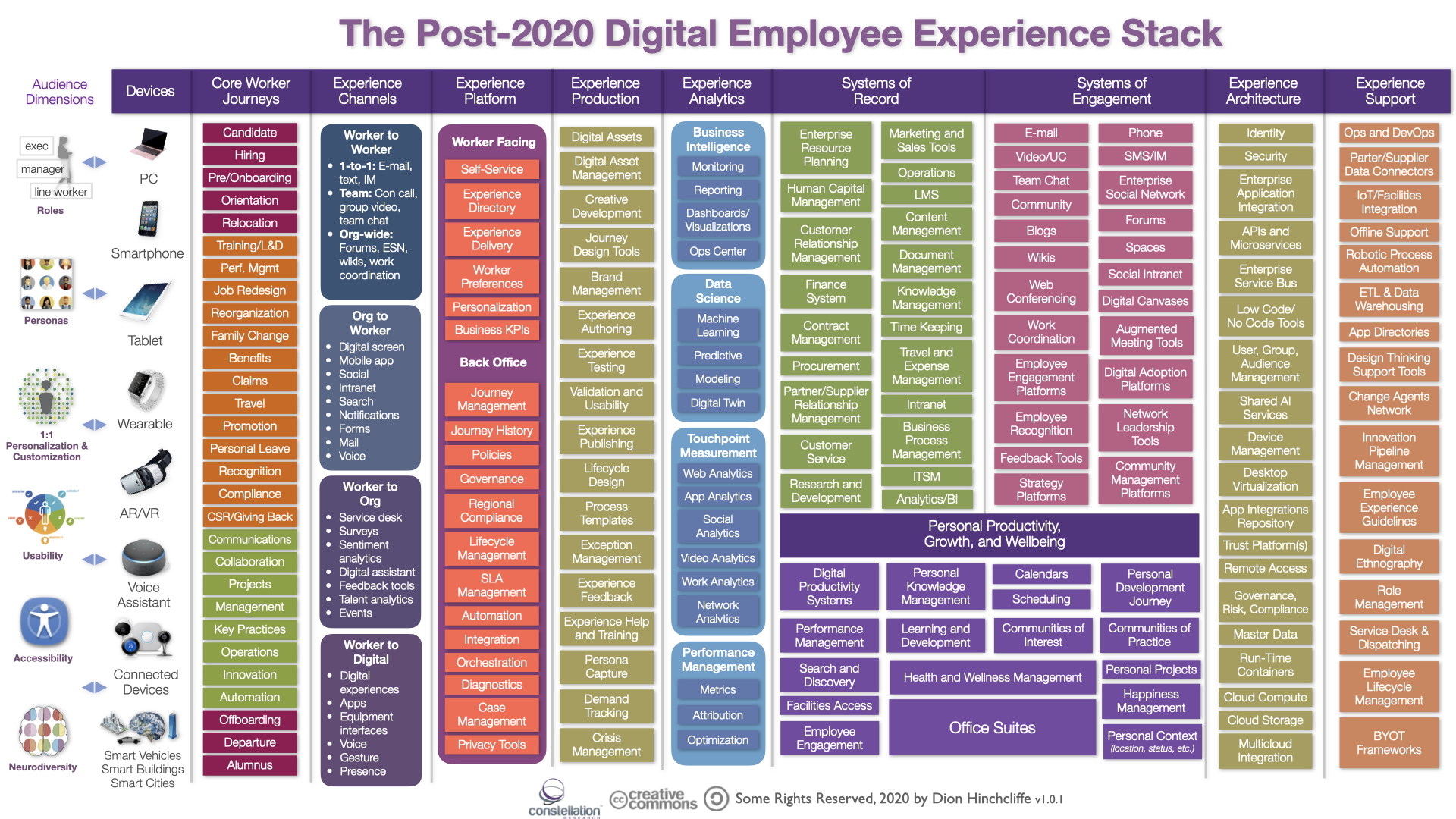
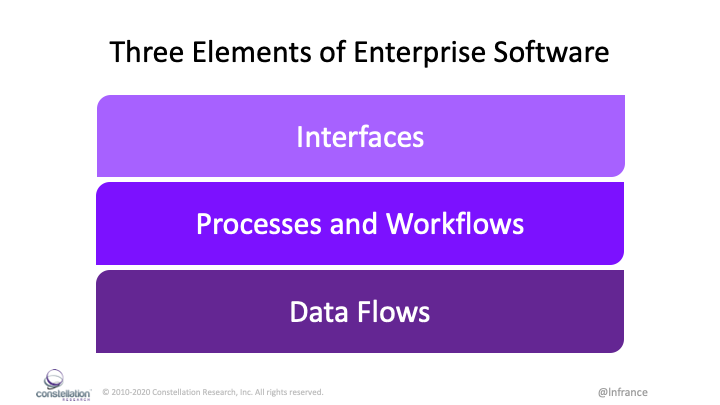
The world of the digital workplace has long been dominated by two major divisions of applications. The first is the system of record, such as ERP and CRM platforms, which have had a long and storied history, only now reaching robust maturity in the cloud. The second are systems of engagement, which have seen a tremendous blossoming and growth in the Internet era. These started off as relatively general purpose communications and collaboration tools that we still use to work together today as teams and organizations, but have since branched into countless niches.

This second category of application has seen long and sustained evolution over the last 30 years, starting with e-mail, groupware, and content/document management, then exploding into social media and enterprise social networks, and then finally re-emerging downstream and smaller scale, first as enterprise instant messaging and now team chat, like Slack or Microsoft Teams.
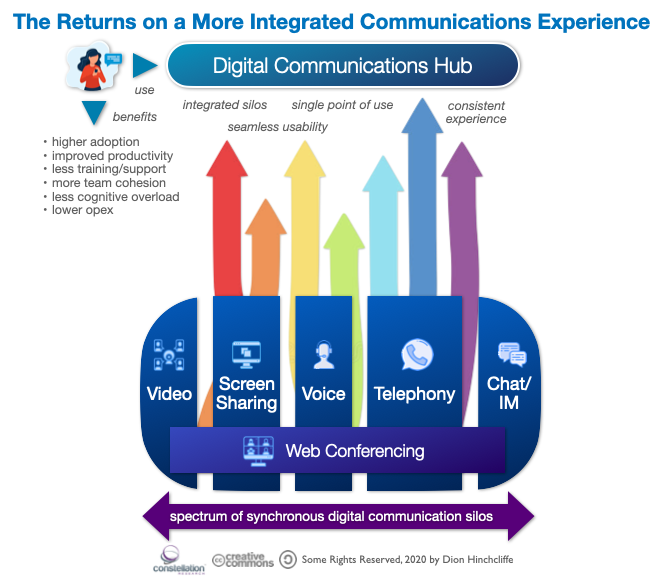
However, one of the most serious and long-standing criticisms of the often less than transformative impact of systems of engagement -- which were supposed to literally revolutionize how we function as enterprises --  is that they were too often put off to the side of the actual work and unconnected from core applications. The systems of record then took the resulting data describing the outcome of a collaborative activity and thus the credit, even though much of the actual work was carried out -- in fact most of it -- in the systems of engagement.

How Work Coordination Platforms Create Business Value

This is not a new realization, and we've been discussing ad nauseum in the industry for years that most collaboration and communications tool were too generic and disconnected to get into the specifics of our work and business data, despite that they're being general purpose is what make it possible to use them in the largest number of situations. Instead, there was an artificial gap between the structured world of systems of record and these potentially highly useful collaborative systems. But try as we might to resolve over the years, we ultimately could not contextually connect the whole picture together into a single source of truth or place to work.

Now a major new category of collaboration software is actually making substantial progress in enabling a more integrated and connected collaboration ecosystem, one with more profound impact. This is accomplished by situating lightweight structure and business process templates around coordination systems that rapidly gets us working together on the details of important business process, while keeping all (or at least many) of the dots connected in underlying systems.

Known as Work Coordination Platforms, or occasionally Work Management Sofware, this category of digital workplace application has steadily grown as it has become more effective at connecting the people, application, and data silos of our organizations into a more coordinated work model. Constellation has been tracking the category closely in recent years, and we now observe an inflection point in growth and maturity, as leading players like Smartsheet have gone on to become full blown industry unicorns with successful debuts on the stock market and several of the players have become unicorns (Silicon Valley-speak for reaching billion dollar valuations.)

Work Coordination Now a Top Level Digital Workplace Category

The result is that I have determined that the category has moved from a powerful niche that some departments will use (typically marketing, operations, or project management), to one that has general applicabilty for most workers. The heart of a business is teamwork, and we've either had too focused and specific vertical or industry solutions to help us, or far too generic and broad communication and collaboration tools to aid our work.

What work coordination tools have gotten right at last is coming in at the right level of complexity, while riding on a revolution in composability, customizability, and easy integrations that make Work Coordination Platforms an example of what I call a true digital workplace hub, albeit not always the primary center of gravity that I've been talking about for a while now.

Who then are the top vendors in the space? What's happening with them and how do they break down? This brings us to my just-released new ShortList of the top nine Work Coordination Platforms:

Work Coordination Platforms Shortlist | Airtable Asana Citrix Microsoft Planner Monday.com Trello Workfront

As we considerably expand coverage of this space throughout 2020, here is a recap of the latest developments with each of these companies, to get a sense of how the Work Coordination Platform segment is evolving and maturing today:

Airtable Logo

Billed as part spreadsheet and part database, one of the most compelling aspects of Airtable is its ability to organize a cumbersome list of to-dos in different ways for specific uses or for the way individual members of the team work best. Now a unicorn in its own right, the product has seen steady evolution including ever more improved integrated digital workplace apps like Google Drive, Dropbox, Box, and OneDrive. The mobile app is frequently updated and is one of the stand-out features of the platform. Customers use Airtable for everything from career devleopment tracking to UPC scanning for retail scenarios and editorial planning.

Asana Logo

Aimed at more robust, process-centric work coodination in the enterprise, Asana has been making inroads at the high end of the market. A third member of the unicorn ranks of the segment (and considering a direct listing like Slack instead of an IPO), the firm has lately added features that help with the automation of rote tasks including a new rules builder to avoid reptitive tasks, as well as voice transcription to speed information input. Smart project templates are also a new addition that builds on top of Asana’s robust templates library. When using a template, like an event plan or campaign launch, a complete work schedule will be instantly layered on. When a conflict arises between tasks, Asana will now automatically resolve the issues. This helps teams to spend less time managing projects and processes and more time getting work done.

Citrix Podio Logo

Podio focuses on task management with content, conversations, and processes structured and together into a single tool. Its highly-rated mobile app gets excellent marks and is updated fairly regularly. Notable features including automated workflows, data visualization, connected CRM, and project management. One of the platform's notable features is it very level of uptime and strong security, designed to appeal to customers where those needs are paramount.

Microsoft Planner Logo

More of a team-based tool as part of Office 365, Microsoft Planner has nevertheless grown in popularity as it has evolved and added features. It provides collaboration around tasks and visual mapping of them into buckets. Charting features were recently added to the popular mobile app for the service, which is routinely updated. New prioritization and content integration features round out recent additions.

Monday.com Logo

Designed expressly for managing  your projects, workflows, and everyday work, Monday.com bills itself as a "Work OS." The company offers work templates for a variety of use cases and business functions. It also offers a robust and growing set of application integrations that connect various work systems together. One of the more recent additions is a new beta program that lets you build your custom widgets, workflows, integrations, and apps right on top of the Monday.com service. The mobile app is very frequently updated and adds important new features regularly.

Smartsheet Logo

One of the most extensive and enteprise-grade work coordination offerings, Smartsheet has a dedicated fan base and an excellent set of case studies. Using the spreadsheet as the model, the company rapidly evolves the product and most recently has incorporated new navigation experiences, new integrations such as with Microsoft Teams, contextual conversations, accelerators for GDPR, powerful new formula features, and much more. The mobile app is the most highly rated of its competitors and is regularly updated.

Trello Logo

More consumer-focused than some of the others on this list, Trello is well-known for its boards, lists, and cards that enable users to organize and prioritize projects in a flexible and visual manner. The product offers a robust set of templates, and it has a mobile app that routinely offers significant new features including document scanning, bulk item creation, new board organization features, and a continuous stream of improved usability features.

Workfront Logo

Taking the integrated digital workplace concept to heart, Workfront advertises that it is "the one place for all enterprise work." Users can automate workflows across teams and departments, integrate their applications into one place, and streamline activities like digital asset management. The mobile application is update regularly and has received a recent complete overhaul that includes special features for the iPad as well as the addition of custom conditions.

Wrike Logo

Aimed specfically at enhancing enterprise-wide productivity, improving team collaboration, and focusing work with a more integrated workspace, Wrike addresses most of the top organization functions and industry verticals such marketing, creative, and operations teams, professional services, and project management, among others. Wrike also has over 400 application integrations, make it leading class in this vital feature category. These integrations make it easy to bring in information from systems of record and organize processes and projects around up-to-date data.  The mobile app receives regularly updates and has added features like customized navigation, new dashboards, and project widgets.

A Deeper Story Coming Soon

To help enterprises select the right Work Coordination Platform for their needs, I am developing a comprehensive new market overview with key features and differentiations that will be published in the second quarter of 2020. It will delve into the complex but powerful new features, templates, integrations, and use cases of this important new digital workplace category with an eye towards each platform's strengths and value proposition. Please contact me if you believe you have a Work Coordination Platform that should be included.

Additional Reading

2020 Predictions for the Future of Work

RPA Evolves into End-to-End Intelligent Automation

Creating the Modern Digital Workplace and Employee Experience

Transforming the Abilities of Workers with Online Learning Platforms

Future of Work Tech Optimization Chief Information Officer