Results

The Internet of Customers - Are You Ready?

The Internet of Customers - Are You Ready?

Below is my review of the Salesforce Dreamforce 2013 keynote.

Topics include:
- Salesforce - more than just technology... philanthropy is at the heart of the company's core values
- Introducing Salesforce1, the platform for the Internet of Customers
- The impact of connected devices - Demonstrations of Salesforce1 Service Cloud, Sales Cloud, ExactTarget Marketing Cloud

MyPOV:
- Salesforce focused on providing business outcomes versus focusing on the technology
- I would have liked more focus on internal topics, ex: what connected devices like office doors, meeting rooms, furniture could do to help employees collaborate
- Vision is great, but execution is what matters. Pricing, packaging, support, etc.

Future of Work Matrix Commerce New C-Suite Next-Generation Customer Experience Data to Decisions Innovation & Product-led Growth Tech Optimization salesforce Chief Executive Officer Chief People Officer Chief Marketing Officer

Salesforce Dreamforce Day 1

Salesforce Dreamforce Day 1

Here is a four minute video with my thoughts on the Salesforce Dreamforce Day 1 keynote, which focused on Salesforce as a platform for applications, how customers can leverage this to improve their businesses and the opportunity available for applications developers and ISVs.

Some highlights:
- Two million applications have been installed from the AppExchange
- Salesforce (and their partner ecosystems) next stage of growth will come from vertical focus solutions such as healthcare, finance and manufacturing.
- The introduction of the new Salesforce1 platform, which Salesforce hopes will be the backbone for the next generation of applications in the "Internet of Things" era.

Future of Work Matrix Commerce New C-Suite Next-Generation Customer Experience Tech Optimization Data to Decisions Innovation & Product-led Growth Sales Marketing Digital Safety, Privacy & Cybersecurity salesforce AI Analytics Automation CX EX Employee Experience HCM Machine Learning ML SaaS PaaS Cloud Digital Transformation Enterprise Software Enterprise IT Leadership HR Chief Customer Officer Chief Executive Officer Chief People Officer Chief Information Officer Chief Marketing Officer Chief Human Resources Officer

Platform ecosystems are hard: Salesforce grows it - FinancialForce shrinks it

Platform ecosystems are hard: Salesforce grows it - FinancialForce shrinks it

The yearly Dreamforce conference kicked off today in full swing, well it hasn't even kicked off as the official start is only tomorrow. But we had a chance to attend the partner keynote - which was so full, attendees had to wait outside before it could get started.


Platform, platform and platform

It seems to be the message these days - see our takeaways from SAP TechEd and Amazon AWS reinvent - and of course now Salesforce has the same message. To be fair - Salesforce has had force.com since a while - but the new messaging and positioning of the company around Salesforce1 the platform gets more and more important (again). If you have missed it - here is the latest pitch video on youtube - leaked before the Tuesday keynote:


The ecosystem matters

And consequentially in the partner keynote this morning at dreamforce in San Francisco - apart from more a vertical focus, the ecosystem mattered. So it was time for the partner and plattform treams to show the successes of ISVs who have build on the force.com platform. And it was a well delivered and smooth pitch - build on force.com and be successul. Not only with the platform - but also with supporting programs - e.g. the launch of the AppExchange Accelerate program - that provides help to startups and even more mature ISVs to be successful in every stage of their growth.
 
 
But the best reference turned out to be recently gone public CRM vendor Veeva - which has built its life science focused CRM suite on the force.com platform. To a certain point Veeva is for Salesforce what NetFlix is for AWS - a competitor building on the platform. 
 
Nothing gives a platform vendor more credibility than competitors building on your platform - it means that you have made a strong enough commitment to the platform to attract ISVs and dissuade competitive concerns.


But then... Financialforce acquires...

So right after we learnt how well Salesforce has been growing the ecosystems - over 1000 partners, over 2 million downloads in 2013 - we learn that one of the major ecosystems players - FinancialForce.com - has acquired force.com vendors Vana Workforce and (the assets of) Less Software. Certainly a good move by FinancialForce.com - pursuing a complete ERP strategy - but what does it mean for the force.com platform or ecosystem?
 
Here are a few perceptions Salesforce does not want to happen around force.com
  • Force.com is a vehicle to be acquired by larger vendors or Salesforce itself. - This would imply no lasting stay on the platform

  • Or Force.com is a vehicle to get easier funding fromt he VC community. - This maybe risky as funding may not be as abundant and not available.

  • Or Force.com is a great platform to go public - see Veevo. - This maybe risky as one cannot predict the IPO market.

  • Salesforce remains a key application vendor by itself, who also has an investment in many players like in this case interestingly in FinancialForce. So Salesforce can play many roles in the ecosystem - but needs to remain above the distrust line. 

On the flipside this could be just a blimp on the radar screen - as long as Salesforce manages to show growth in numbers of vendors and partners building on force.com. The next 12 months will tell. 
 

MyPOV

Salesforce has done a very good job promoting its platform and making it attractive to ISVs. Other vendors in the business should take note. 

But then the ecosystems is still relative small - so acquisitions like the ones from FinancialForce.com today will be watched with a weary eye for players inside and outside the ecosystem. 
 
New C-Suite Tech Optimization Dreamforce salesforce Chief Executive Officer Chief Information Officer

News Analysis: Salesforce 1 Signals Support For Digital Business at #DF13

News Analysis: Salesforce 1 Signals Support For Digital Business at #DF13

Salesforce Seeks To Tackle Digital Business At Dreamforce

Over 125,000 virtual and physical registrants descend on San Francisco the week of November 17th for Dreamforce 13, a future of technology meets SXSW event.  One day in advance of the largest enterprise software event of its kind, Salesforce.com announces Salesforce 1 (see Figure 1).  The Salesforce 1 customer platform seeks to address a cadre of emerging digital business requirements that customer centric companies face.

Figure 1. Salesforce 1 Customer Platform Intends to Support The Internet Of Customers

Source: Salesforce.com

SalesForce 1 Reflects Much Needed Refresh Of Existing Platform

The new customer platform includes platform services, platform APIs, and the Apps created from the platform.  Salesforce 1 platform services includes refreshes in Force.com, updates in Heroku, and adds Exact Target Fuel.  As expected, Sales Cloud, Service Cloud, Exact Target Marketing Cloud, and Apps Exchange sit on top of the salesforce1.com platform.

The key analysis of this release include:

  • Internet of Customers support. Salesforce includes social, mobile, cloud, and connected as the key components for The Internet of Things.  In order to meet the requirements of a third wave of computing that moves from Internet of Things to what Salesforce calls the Internet of Customers, the new platform is designed to support this customer centricity convergence.

    Point of View (POV): Constellation sees more than 50B connected devices and at least 150B connected endpoints by 2020.  The opportunity is huge.  While Salesforce.com addresses 3 out of the 5 key components of digital business, the vendor still needs to provide video/unified communications and big data/analytics.  Constellation believes the big data and analytics opportunity is critical to enhancing customer experiences, to benchmarking and brokering data servcies, and to buildoing new business models around big data and analytics.  Customers should encourage Salesforce.com to consider how to enable big data business models in digital business in the next iteration.  Meanwhile, most customers can wait until future releases for video and UC requirements to be met.
  • Next generation apps developer platform. The PaaS layer adds a mobile first orientation that enables a write once and deploy anywhere platform. Developers can now deploy to a range of social, mobile, and connected devices.  The platform services include 10X more API functionality.   Developers can build customer apps, wearable apps, product apps, and salesforce apps.

    (POV): Salesforce hopes that its customers and partners will turn to the Salesforce 1 platform to build the next generation of apps.  The new approach through Visual Force reflects today’s responsive design and connected enterprise requirements.  Customers and partners will take advantage of the new data APIs improve queries to core CRM object data.  Metadata and UI APIs improve ability to create new user experiences.  Visual force also allows developers to build to any user interface through a responsive design approach.
  • New mobile apps exchange apps. Salesforce adds 16 new mobile apps from partners.  Partners include Box, Concur, Docusign, Dropbox, eVariant, Evernote, FinancialForce, FileBoard, HP,  Kenandy, LinkedIn, ScanBizCards, ServiceMax, TAS group, Workday, and Xactly.

    (POV): AppExchange set the standard for how cloud apps could be marketed and sold inside a vendor ecosystem. Salesforce intends to replicate this success with mobile apps.  Customers will benefit from a vibrant ecosystem of paid, free, and custom developed apps.  There is a huge opportunity to expand out this ecosystem.  The mobile apps exchange catapults  Salesforce.com in direct competition with IBM and SAP for mobile dominance among customers.

Figure 2. The Internet of Customers

Source: Salesforce.com

The Bottom Line: The Digital Business Era is Upon Us.

Salesforce is upping the game on what it means for customers and their things.  The platform and messaging expands their addressable market while provides customers an entry point into the digital age.  This digital age must address five generations of workers and customers where age has no impact on digital proficiency.  Moreover, this shift to a digital business world reflects the trends Constellation Research sees in the market where organizations:

  1. Recognize that they no longer sell products and services, as buyers seek experiences and outcomes.
  2. Democratize the data to decisions pathway to enable innovation.
  3. Realize that B2B and B2C are dead. It’s a P2P and M2M world or Internet of Customers
  4. Focus on context as right time relevancy beats real time information overload.
  5. Shift from engagement to mass personalization at scale.

The digital business age is upon us.  Those who fail to adapt will fall behind.

Your POV.

Are you ready to incorporate digital business transformation in your organization’s strategy?  Are you embarking on a digital business transformation?  Let us know how it’s going!  Add your comments to the blog or reach me via email: R (at) ConstellationR (dot) com or R (at) SoftwareInsider (dot) com.

Please let us know if you need help with your Customer Centricity and Digital Business transformation efforts.  Here’s how we can assist:

  • Assessing customer centricity readiness
  • Developing your digital business strategy
  • Connecting with other pioneers
  • Sharing best practices
  • Vendor selection
  • Implementation partner selection
  • Providing contract negotiations and software licensing support
  • Demystifying software licensing

Related Research:

Reprints

Reprints can be purchased through Constellation Research, Inc. To request official reprints in PDF format, please contact Sales .

Disclosure

Although we work closely with many mega software vendors, we want you to trust us. For the full disclosure policy, stay tuned for the full client list on the Constellation Research website.

* Not responsible for any factual errors or omissions.  However, happy to correct any errors upon email receipt.

Copyright © 2001 – 2013 R Wang and Insider Associates, LLC All rights reserved.
Contact the Sales team to purchase this report on a a la carte basis or join the Constellation Customer Experience!


Data to Decisions Future of Work Marketing Transformation Matrix Commerce New C-Suite Next-Generation Customer Experience Sales Marketing Innovation & Product-led Growth Tech Optimization Revenue & Growth Effectiveness Dreamforce User Conference salesforce SoftwareInsider B2C CX Marketing B2B Customer Experience EX Employee Experience AI ML Generative AI Analytics Automation Cloud Digital Transformation Disruptive Technology Growth eCommerce Enterprise Software Next Gen Apps Social Customer Service Content Management Collaboration Machine Learning LLMs Agentic AI HR HCM business SaaS PaaS IaaS Supply Chain Enterprise IT Enterprise Acceleration IoT Blockchain CRM ERP Leadership finance M&A Enterprise Service Robotics Quantum Computing CCaaS UCaaS developer Metaverse VR Healthcare Chief Customer Officer Chief Executive Officer Chief Information Officer Chief Marketing Officer Chief Technology Officer Chief Data Officer Chief Digital Officer Chief Analytics Officer Chief Financial Officer Chief Operating Officer Chief Revenue Officer Chief People Officer Chief Information Security Officer Chief Experience Officer

AWS moves the yardstick - Day 2 reinvent takeaways

AWS moves the yardstick - Day 2 reinvent takeaways

Sticking with tradition the day 2 keynote of the AWS reinvent conference was done by the AWS CTO, Werner Vogels. Vogels - or as referred to by his Twittter handle by a devoted developer community as @Werner - was once again at his best leading through the 100 minute keynote in front of 9000 clouderati.


As with any day 2 keynote it was interesting to see how Vogels built on what we learnt from Jassy yesterday. And he kicked off consistently with pointing at AWS' pace of innovation - a slide that was consistently seen throughout the conference. And to give AWS credit - it has been innovative and adding features at a rapid path - even though it has been growing and getting more complex as a technology platform and organization. 


With so far 243 functions and features delivered throughout 2013 AWS is at a record pace of innovation even for their own standard. And Vogels tied things back to the Amazon WorkSpaces and Amazon AppStream from yesterday's keynote as key product deliverables of 2013. It was good to see that Vogels acknowledged that the amount of new features can also be overwhelming, but this will not stop AWS as rapid delivery is in the DNA of the division.


Philosophy Part 4 - Retro engineer starting with the customer

(Part 1 - 3 are in yestereday's post here). As we have heard from Jassy (and every other session we attended at reinvent) AWS is customer focused and customers drive the innovation agenda. Vogels now went into how the development teams achieve this, which is almost like a retro engineering, starting with the customer requirements. 


So Vogels said, that the AWS teams start with a pseudo press release - that describes what the new product / feature is all about. From there they write the FAQ on the product / feature. Next are the use cases and then the user documentation. The goal of the process is, that the desired features are delivered and not lost in the traditional, e.g. waterfall approach of product development. At Constellation we advise customer to start with the end in mind - this is pretty much the same philosophy applied to product development.


Philosophy Part 5 - Keep it small 

The other key success factor of the AWS development philosophy is to keep the teams small - Vogels introduced the 2 Pizza rule, which postulates that the team should be so small, that two pizze will feed it for dinner. Additionally the AWS teams work autonomously, own their product's road map and work decoupled from product launch schedules.


The other noticeable practice is, that the product teams are in constant contact with customers, working with them on product direction and requirements. Speed is the most important factor for AWS, so the teams work autonomously next to each other. They release their products when they are ready - as fast as possible. The sooner customers have the product in their hands, the sooner AWS can start improving the product is a key benefit AWS goes after.

In our view that is a laudable approach, but AWS needs to take account of the fact that their customers use multiple of their products, and often these need to work well together. With the AWS teams siloed and working on getting their products delivered as fast as possible, it is possible that the customer becomes the AWS system architect. A scenario we think AWS management will want to avoid.


Vogels' showcase for this was the RDS team, that has continuously innovated based on customer requirements - and the key feature released at invent for RDS has now been - PostgreSQL. And with that we were at one of the two major product announcements of Day 2.


The announcement drew spontaneous applause from the crowd and Vogels was visibly happy about the new product.

And Vogels took a stab at the competition, too - the old guard, as AWS management describes them, as being technology and not customer driven, and that the guard adds technology as wished, which leads to unnecessary complexity vs. AWS that only adds features that are customer requested.


Vogels even went so far to refer to lean principles in the AWS development process - ensured by only focussing on what the customers request. So AWS and customers form an epic collaboration relationship.


Netflix awards winners

Next it was the Netflix Chief Product Officer Neil Hunt with Chief Cloud Architect Adrian Cockcroft on stage, talking about how Netflix has been building its platform on top of AWS. And to Netflix credit it has contributed many of its platform components to open source.


Netflix has realized that the developer community is key and created the NetflixOSS cloud prize, that awards a winner $10k in cash, $5k AWS credit and a trip to reinvent. And the 10 winners have truly build innovative software. Remarkably this was completely merit based and not political - as e.g. gentlemen from IBM and eucalyptus won 2 of the 10 prices.


Philosophy Part 6 - The Power of Innovation

Vogels made clear that all innovations that AWS provides are there to be around forever. They can't be  lost and need to be maintained. And Vogels postulated 5 principles around which AWS Innovation anchors:


  1. Performance
  2. Security (interesting that was #1 for Jassy yesterday)
  3. Reliability 
  4. Cost (noone has ever said I wish AWS would be a little more expensive)
  5. Scale


And Vogels believes that if AWS works hard on all these 5 dimensions, then AWS customers will do well. And the rest of the keynote was structured along these 5 principles.


It is all about IO, stupid (or performance)

Interestingly Vogels then mentioned, that it is all around storing and serving the data of the AWS applications that matters to customers, and with that it matters to the division. And for storage the most important KPI is IO performance , and IO needs to be consistent. He then quoted the famoust statement that disks are becoming the new tape. But random IO makes it very hard to get consistent performance out of these systems. So AWS is moving to SSD to provide consistent, random IO.

Instagram is the example that by moving to SSD they were able to move data 20 times faster between middle tiers and backend servers. So now AWS uses SSD, too - and announced the new I2 instances, that on the lower specs are cheaper than the  H1 (those gave 120k IOPS) instances.


Not surprisingly AWS uses these instances themselves, and the example of Vogels was to illustrate consistent performance with was of course DynamoDB. Consequently we saw a flat performance chart for average DynamoDB latency. And to aid performance consistency further, AWS announced the avalaibility of secondary indexes on a global level for DynamoDB.


And then it was to Parse CEO and co-founder Ilya Sukher to provide a showcase for consistent performance. Parse markets itself as a cloud on its own - with key mobile, push, storage and analytical capabilities.  Sukhar showed lines of ObjectiveC code - first code seen this reinvent - certainly welcome by the audience. The business event that created the showcase for AWS that Parse represents, happened when Parse went on Facebook and its apps volume jumped from a few hundred to 160k.


And AWS also helped Parse to make MongoDB performance consistent using PIOPS - which dropped the base line latency to half, spikes disappeared and overall Parse is now scaling much better as memory warm up time has been cut down by 80%. And finally one of the main benefits for Parse was, that its developers could focus completely on the customer and did not have to worry about infrastructure. And lastly Sukher mentioned the peace of mind for him as a CEO - knowing that the infrastructure can scale with AWS and is no longer something he has to worry about.


Philosophy Part 6 - Flip the Security Model

In the past it was up to customers to increase security on their data by e.g. turning on encryption. Vogels wants to turn this around and said that in the near future AWS customers will have to explicitly request not to have their data e.g. encrypted. Encryption and other security measures will be the new normal - getting less will be something customers will have to request. Vogels example was that a few years ago there was the discussion that https would be to expensive - but today it's standard. Along the same lines he thinks that security standards that are under cost and performance scrutiny today will be standard sooner than later. And AWS maybe an active change agent in this process.

Specifically for AWS this means that IAM and IAM roles get more important. And it has been achieved pretty well for S3 said Vogels. But how to do this in real databases - which data is accessible for who remained a challenge, for that fine grained access control of DynamoDB is the showcase. For instance mobile applications can access DynamoDB directly - no longer requiring a separation of customers by proxies needed. And then there is now support for SAML 2.0. Only now - which surprised me a bit - but better late than never.

Along these lines Redshift gets encrypted and thanks to a dual key system only the customer and not AWS (or other partners) have access to the encrypted data.


Reliability

And of course reliability is achieved by the availability zones. And AWS sees the usage maturing, with customers even using different regions for their availability zones. The Japanese earthquakes and hurricane Sandy are the recent events that make businesses consider moving availability zones across regions.


And with AWS adding snapshot copy for Redshift, customers get the capability to secure their data warehouse easily across regions. And even more importantly, RDS will allow cross region replicas. This makes migration between regions easier by allowing to spread copies across regions. This gives customers many options for backup - starting from simple backup to a pilot light approach, to a warm stand by solution and ultimately to a multi-site solution like the one Netflix is pursuing.


Cost

As storage and database usage are a key cost driver for AWS customers, Vogels went over the tiered capabilities of AWS for both storage and IO.


Equally compute needs to be part of the cost optimization component - and there Vogels stresses how important the spot market is. Customers that are shrewdly taking advantage of the spot market are hungama for transcoding, Pinterest that manages front end operation and was able to reduce cost by 75% and finally vimeo, where the company differs between free and paid accounts. And vimeo free accounts are transposed in the spot market, and paid accounts are transposed in dedicated instances. And the final example was Cycle Computing - which can use all of AWS compute capacity - and they procured 1.21 PFlops with over 16k instances and 264 years of compute to calculate compound formulas.


And the stunning revelation by Vogels in this case was, that the cost for running that massive compute was $33k - versus procuring the compute in a traditional on premise delivery, which would have cost the client $68M.

And Vogels announced also the G2 instances that leverage the NVIDIA 'Kepler' GPUs, have 1536 CUDA cores and are great at encoding and streaming video.


Vogels confirmed that these G2 instances are the backbone for the Amazon AppStream product, that Jassy announced yesterday. But AWS does not stop there - it also announced a new flagship compute instance, the C3. It runs Ivy Bridge and is an SSD based platform.


And AWS would not be AWS, if it would not offer a range of different configuration options.


Scale 

The showcase for scale was the Dutch company We Transfer, that transfers artist wall papers and other attachments that are too large to send via email. And the success of the company is creating a massive scaling problem as a week in 2013 is the same amount of transfers for a month in 2012. And needless to say - they solved that with AWS.


Next up was Mike Curtis, VP of Engineering of Airbnb. Not surprisingly Airbnb is experiencing massive subscriber growth, reaching 4M subscribers in January 2013. And about 150k people are Airbnb hosts at any given night. Again AWS solved the scalability problems for the company. Even  more convincing Curtis said, that anytime AWS has something that they could use - Airbnb uses it and does not look further.

Airbnb went from 24 EC instances in 2010 to over 1000 in 2013. Photos are key for guests as they pick their host property through these - and the usage of photos has gone from 294GB in 2010 to 50TB in 2013.


Most amazingly Airbnb can run all this infrastructure with a 5 FTE operations team.


AWS and the Internet of Things

Next Vogels went over all the many applications of sensor data and real world machines that AWS is enabling customers to work in. Starting with the Nest thermostat, Illumina dumping sequencing data into S3, Tata Motors instrumenting trucks and to predict preventive maintenance, over collaborating with GE on the inudstrial cloud, to helping catching sensor device data from smartphones with startups like e.g. Human, that motivates to be active for 30 minutes a day - it's all happening with AWS.


The combination of the offline with the  online world is the common thread of these applications said Vogels. And then he got a little geeky and social showing a life logging application coming from Sweden - presenting his narrative of his last 72 hours in Las Vegas - as the device takes a picture every x minutes.


The showcase for massive real world to AWS connection then was dropcam, with their CEO and co-founder Gret Duffy on stage. And Duffy made the great point that it was not about the hardware, but the software - so dropcam did not have to build the camera - but a camera web service. And interesting dropcam is the largest video service on the web - with more data uploads per minute than Youtube.


And as expected - when moving to AWS usage started to go massively up - main reason was the free inbound of data into AWS - which was a key reason for dropcam to move to AWS. Then Duffy walked the audience through the dropcam architecture - as expected compression starts on the camera and dropcam makes uses of Scala, Python and PostgreSQL heavily using DynamoDB.


Where dropcam gets really powerful - and a little bit of a concern from a privacy persective (1984 anyone?), too - is that they are enabling real time video analysis - of course using AWS EC2 to process the massive video load. 
 
Then it was back to Vogels to go over some interesting AWS built products that connect the real world with AWS. And the examples came from the transport world with Moovit and One bus away
 
 
One more was mBuilder, that puts sensors into construction sites to monitor e.g. temperaturs and other sensrs that are put on construction site - and then their data gets streamed back to AWS and allow efficient managing of the construction site.
 
All that data creates logging challenge and data storage challenging - as you cannot afford loss of data. Vogels quoted Netflix's Cockcroft, that Netflix is actually a log generating application  that just happens to stream movies. And that queued up the net topic - and last but key announcement - around realtime.
 

AWS gets serious with realtime

Vogels did a good job about talking that it matters less and less what happened yesterday or even 15 minutes ago (AWS CloutTrail maybe?) and it all comes back to find out what happens right now, to drive real time insights. 
 
Next he went in a smart way through the deficiencies of the current technology at hand with Hadoop, Storm, Kafka, AMPQ et al - that all work - but are hard to maintain at scale and tough to configure. 
 
 
The show case was echo that helps resolving URLs and detect spam with massive inputs of 1000 average and 13k peak and outputs of 1100 average and 7000 peak per second. 
 
But AWS wants to make it easier - and launches Kinesis (Greek - a movement as reaction to a stimulus):
 
 
And of course AWS makes it massively scalable, allowing to processs TBs, while staying reliable and most importantly - being simple to use. In a later session we learnt that AWS provides a Java based client library - called KCL - that makes it easy to administer and ramp up and down these complex system.
 
 
As to be expected, Kinesis ramps up and down gracefully, being able to increment the system throughput on a 1 MB/s in and 2 MB/s out base and a unit (later we learnt they are shards) being able to process 1000 transactions per second. 
 
 
Streams into Kinesis can be scaled and so can backend Kinesis applications. What is most important is, that AWS plays more and more on the synergistic platform field with building and integrating new offerings like Kinesis into the overall AWS platform. So Kinesis can leverage DynamoDB, RedShift, Storm, S3, EMR and RDS - and Kinesis Apps can be deployed to EC2, Autoscale is enabled and Kinesis streams can even be combined.
 
 
Kinesis was the only Amazon product demoed in the keynote - showing how important AWS sees this new capability. And the demo was really impressive - done by AWS's Khawaya Shams - analysing the Twitter firehose, making each tweet persistent and analyzing it for content and popularity perspective. Persistence was achieved by DynamoDB and analysis done in Redshift. The demo was all about looking up Mars as a planet, but Mars is a popular term on Twitter not as a planet but as the last name of an artist whose first name is ... Bruno. A funny way to demo the very powerful Kinesis capabilities.
 
Next Shams showed where people are tweeting from about Mars and of course this was a good demo of the new PostgreSQL ability with its inherent GIS capabilities, showing a US map with the tweet activity.
 
But the most important takeaway from the Kinesis demo was all about being able to build this application in around 5 days (of course 2 very smart people involved) - and the cost to run it in production was.... 5$.
 
And then it was up to Vogels to close out the keynote - going over all the announcements quickly - PostgreSQL support in RDS, Amazon Kinesis, cross region replicas, Redshift snapshot copies, global secondary indexes and the new C3 and I2 instances.


As it had to be - the most applause was garnered by Vogels announcing Deadmau5 as musical guest for the AWS party.
 

MyPOV

AWS keeps innovating at a very fast pace - no doubt. The good news - and that was abundantly made clear - AWS does so with the customer in mind. And it keeps providing new value from innovation to all its constituents - AWS CloudTrail caters to security concerns shared across the client side, the PostgreSQL support in RDS caters to developers, Amazon AppStream is geared towards developers building compute intensive apps and Amazon Kinesis towards real time analysis needs of both enterprises and ISVs. Only Amazon WorkSpaces is a new market entry. 
 
All that happens while Amazon makes the backbone of its infrastructure stronger. We noted in our takeaways from yesterday, that AWS has not added any regions - but there must have been a ton of fiber being put in these existing data centers. And you need some physical stability on the data center side to achieve this - as we think these are the backbone to new services such as the cross region reads and replicas, RedShift snapshot copy and global secondary indexes. Even if the competition wants these - it just takes time on the calendar to put all that fiber in the ground and connected to their data centers to replicate similar features on their infrastructure.
 
Lastly AWS was very proud of their new hardware instances, and while the new C3 and I2 instances are very powerful - this is the area where AWS is less strong in regards of the competition. But they are probably fine with it - as its not high end hardware that wins the cloud wars - but value added capabilities and real word network speeds at attractive prices.
 
Overall we think AWS has moved the yardstick further out for the competition to catch up - it will be interesting to see how the real word actions of the usual suspects will materialize as a reaction to this years reinvent announcements. 
 
Lastly the new Amazon Kinesis offering is the most exciting product in our view - as it moves the realization of the real world much closer into software, at a fraction of the cost previously imaginable. Can't wait to see Kinesis apps being build. 

-------------
A collection of key tweets from the keynote can be found in Storify here.

And you can watch the replay of the keynote here:


New C-Suite Tech Optimization User Conference amazon SaaS PaaS IaaS Cloud Digital Transformation Disruptive Technology Enterprise IT Enterprise Acceleration Enterprise Software Next Gen Apps IoT Blockchain CRM ERP CCaaS UCaaS Collaboration Enterprise Service Chief Customer Officer Chief Executive Officer Chief Information Officer Chief Technology Officer Chief Information Security Officer Chief Data Officer

Safyr 6.1 Released

Safyr 6.1 Released

Silwood-logo

Silwood Technology has released new version of Safyr a tool for data model analysis of SAP and Oracle applications. Safyr 6.1 offers improved user search and navigation of the complex data models. Among the improvements in this release: Safyr now incorporates tile based navigation to make it easier for new and occasional users to be productive. From the tile screen, users accesss any part of the Safyr product and initiate an extraction from a source system. The tile screen also contains a link to a multi-object search feature. The user can find Tables, Views, Domains, Data Elements, and Application Hierarchies using a single search term. By returning all the results as a unified picture of nodes categorised by object type, Safyr makes database objects easier to find.
 

"The goals for Safyr 6.1 were to accelerate time to value for customers and further improve its value in Enterprise scale data management projects such as data warehouse, big data, application rationalisation and migration, master data management and enterprise architecture.

We have made Safyr easier and quicker to use by adding new comparison features and incorporating support for SAP systems running on the SAP HANA platform," said Graham Simpson Managing Director of Silwood Technology. "We will continue to develop Safyr futher to help cusomter gain more value from their investment in SAP and ORACLE applications."

Based in Berkshire in the UK, Silwood Technology supplies enterprise modeling & metadata management tools. The company pioneered the use of metadata extraction and analysis for the purpose of building accurate data models of Enterprise Applications including SAP, SAP BW, Siebel, PeopleSoft Enterprise, JDEdwards Enterprise.

The new release is immediately available to customers with current support contracts.

Data to Decisions Tech Optimization Digital Safety, Privacy & Cybersecurity Innovation & Product-led Growth Future of Work SAP Oracle Chief Information Officer Chief Technology Officer Chief Information Security Officer Chief Data Officer

AWS powers on, into new markets - Day 1 reinvent takeaways

AWS powers on, into new markets - Day 1 reinvent takeaways

The AWS reinvent conference is in full swing in Las Vegas, attended by about 9000 clouderati, so it's time to look at the key statements and our takeaways of day 1 are.


The usual conference statistics first - almost 9000 attendees from 97 countries, evenly split across startups, SMBs, and large enterprises. reinvent is an educational event with more than 175 sessions, often run by customers and partners. And with 196 exhibitors this is a proof of a thriving AWS ecosystem at hand. 


AWS has come a long way

Andy Jassy, SVP of AWS, kicked off with walking the audience through what AWS has achieved in the little more than 10 years it is around - available for customers for about 7 and a half years with the first launch of S3 (it was March 14th 2006). Jassy - in our view rightfully - can be proud about the breadth and depth of the offering. 


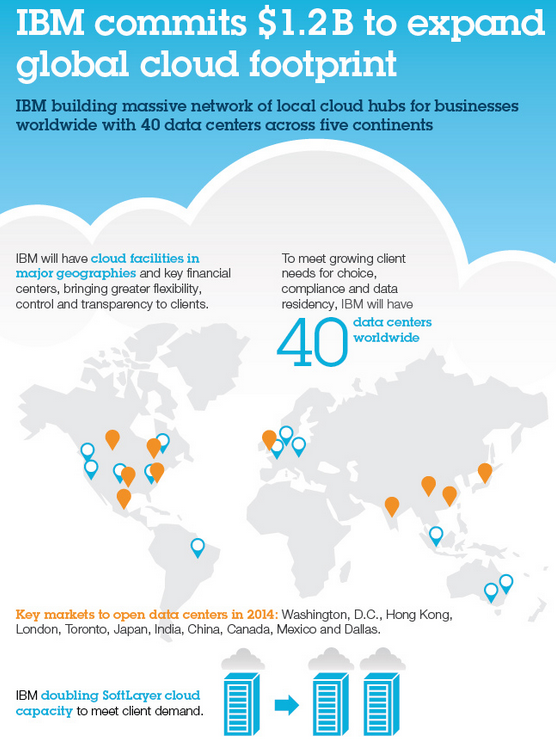
Comparing my notes with November 2012 reinvent though, I was surprised to see that AWS still has the 9 data centers like back then - but has added one more availability zone (now 26) and and 4 Edge locations (now 42). While competitors are adding data centers (e.g. Oracle this week) or moving data centers (e.g. IBM moving to SoftLayer data centers) - the AWS topology seems to be stable - a sign of the maturity of coverage the division has achieved. 

And AWS always likes to talk about how much capacity it adds on a daily basis and what size of Amazon business that would support. And that KPI has moved from an Amazon 5.2B business to an Amazon 7B business in 2013, a more than 30% increase year over year. 


Customer growth is equally impressive and Jassy not surprisingly pointed out the progress in the public sector space. AWS never gets tired to stress that it cares for security and given the enhanced security requirements of the public sector that AWS fulfills - all customers benefit from the progress made there. More on that below.       


Marketplace rocks

The AWS marketplace - only shortly introduced - seems to be doing very well these days - with the number of products up 71% and 1100 products listed. A good proof point of a mature platform. 


But then with the AWS business not publishing any numbers overall and for the marketplace in specific - it all remains speculation how much revenue flows through this market place. This is an area the division is well advised to think about publishing revenue numbers. Or vague indications - like the e.g. the marketplace is as big as Amazon was in year so and so.


Security, Security

And of course the fear of the cloud is still present for many enterprises today - and with that remains a key concern that AWS is addressing. On the one side it's good to see Jassy acknowledging security as concern number 1 for AWS, on the flip side it would be good to see the market maturing and graduating from that fear.


But that's not AWS fault - and AWS works on making it less of a concern with the new AWS Cloudtrail feature that was announced today. And Cloudtrail gives customers insight into what is happening in their AWS instance. The good news is how AWS re-uses it's own technology - the log files get dumped into S3. Equally AWS gets kudos from us to allow partners to analyze the log - and 5 of them (Splunk among them) do support this. 


As with any new service it does not cover everything and is not available everywhere. AWS Cloudtrail is no exception with only 8 services support (key ones though like EC2, EBS and RDS) and 2 regions live (US East and West (Oregon)). 

Our largest concern in this early stage is, that logs will only be available around 15 minutes after the event thats logged. That is certainly fine for most events - but for some critical ones a lot of damage and harm can be done during that time. We think AWS has and will address this - maybe sooner than later. 


Philosophy Part 1 - The AWS pricing flywheel

Next Jassy gave some insight on what is the dynamics - he called it a flywheel - behind the numerous price reductions that has AWS has seen. And the wheel starts with external infrastructure innovation that drives to lower infrastructure costs, that allow AWS to reduce prices, that makes AWS attractive to more customers, which then use AWS more, that then needs to buy more infrastructure, enabling economies of scale and the whole process repeats.


And we certainly believe in the economies of scale, especially after fellow analyst colleagues from Gartner have published, that AWS has more than 5 times the compute capacity of the competition combined. 


Along the same lines Jassy repeated that famous Bezos quote that he yet has to meet the customer that wants to pay more. And according to Jassy AWS listens to customers but also does not want them to spend money unnecessarily - so AWS monitors system usage and has so far told customer over 700k times through its trusted advisor program that they can save money by stopping not used - but paid services. The savings the customer have combined achieved - following the advice - are 140M. Truly unique, impressive and we have to trust AWS that the number is valid.


Philosophy Part II - Cloud means everybody can innovate


In this interesting part of the keynote - Jassy broke a lance for employees at large corporations. Basically he said that these employees want to be and are innovative, too - but an outdated infrastructure holds them back. By using cloud infrastructure - even large corporations can become dynamic again. It can be ramped up quickly, with little investment and can disappear equally quickly when no longer needed. The cloud brings agility to the large enterprise is the new tagline. And these can now try innovative things quickly - and fail fast - with little investment. 


All that of course gets more relevant with more disruptions happening to traditional businesses from cloud businesses - `the examples being (of course all AWS customers) airbnb, spotifiy, Dropbox, Instagram and Uber). 

Next up was Jeff Smith, the CEO of Australian finance giant Suncorp, giving an example for such an approach.
 

Philiophy Part III - Cloud Benefits

Not sure why - but Jassy felt he needed to remind the audience of the basic cloud benefits. And that these - not surprisingly - cannot be leveraged in a private cloud. 


But then Jassy acknowledged, that enterprises will not move overnight from on premise to the cloud. The world isn't black and white - but grey - and AWS helps customers to bridge the gap between on premise and the AWS public cloud. 

Where AWS differentiates themselves from the competition (AWS calls them somewhat cute the old guard) is that AWS sees the on premise part ultimately close to 10% of overall load. The old guard in contrast sees public cloud only as 25% of the future load in an enterprise. 


It's a nice way to differentiate - but we think ultimately customers will do what it's best - so probably the old guard pacman is a temporary state of the overall cloud vs on premise load balancing.


And now something completely different - VDI

Not a small surprise that AWS now wants to be in the virtual desktop business. Which is a business that has never really taken off in our view - despite a lot of promise. But maybe 2013 is the fall of VDI afterall with VMWare acquiring Desktone and now AWS launching its offering. 


Not surprisingly Amazon right out of the gate says, that it will take it's stab from another direction, from the public cloud. So all the cloud benefits of being fully managed, being a pay as you go service, no CAPEX required, are given. And AWS can provide the license or it can be BYOL - which is a good start. Moreover the integration with Microsoft Active Directory makes it easy to deploy as users can keep their credentials. And Amazon WorkSpaces supports PCs and Macs as well as iOS and Android tablets. Lastly AWS claims that by avoiding usual on premise cost such as sever hardware, storage and administration - it can provide VDI at half the cost than in premise VDI can be deployed. 


Finally Jassy also unveiled the pricing - depending on hardware chosen and need for software - a VDI user will cost between $35 and $75 a month. A good price point, that certainly isn't - as we know AWS - its last one. 

We had the chance to speak with executives from VMware in the aftermath of the keynote and they said that they can be equally - if not more - attractive on price - and with Desktone have a mature product and significant more functionality than Amazon WorkSpaces. Certainly a valid point. But never underestimate AWS as a competitor. We asked from some reaction by the other incumbent, Citrix - but haven't heard back yet. 
 

Cloud strategies as seen by AWS

Next Jassy went over six different cloud deployment scenarios - as AWS sees them. The six are as folllows...

  • Use the cloud for development and test environments - examples were Lionsgate (SAP), Tokyo (Oracle) and Galata Chemicals (SAP again)

  • Use the cloud to build brand new Apps

  • Use the cloud to make existing on premise apps better (e.g. use Redhift for analysis)

  • Use the cloud to tie new cloud Apps back to existing on premise Apps

  • Use the cloud as destination where you applications to opportunistically - examples were Unilever (web sites) and Bristol-Myers Squibb (Simulations)

  • Use the cloud to move all on premise Apps to it, to go all in as AWS calls it (examples were Netflix and DowJones)


More Mobile with Amazon AppStream 

AWS has taken care of the  mobile market for a while, with offering out of the box mobile capabilities for developers who build mobile applications. And now AWS wants to help with tackling a key problem - the rendering of highly interactive and compute intensive applications across devices, as seen in gaming, engineering, events etc. with a new service called Amazon Appstream.


The good news is, that AWS does have the computing resources in the cloud to make this happen - and then the connections to the endpoints where these apps will be consumed. So it was an almost natural step for AWS to provide the streaming support of compute intensive apps.

Interesting enough, AWS developed its own protocol for the streaming with STX - not sure if this was necessary - look forward to learn more about it from AWS. 

Next up was Tradeworx President Arzhang Kamarei - the company built software for the SEC. The most interesting takeaway was that with only 5 FTE Tradeworx manages to monitor 5% of the stock market. 

And finally Keven Baillie of Atomic Fiction showed how AWS can help create CGI animations - a perfect example for an elastic showcase. Huge compute demand during production and rendering and then close to nothing when Atomic Fiction puts the whole project into... AWS Glacier. And the content and demo shown satisfied the geeky part of the audience, and probably the developer side in the audience, too - which did not have too much from the Jassy keynote .... which - no surprise - was all about the enterprise. 


MyPOV

A good start of reinvent for AWS. Significant three product announcements - two that add value for two key areas for AWS - security and mobile. And a new market entry, for the first time AWS will reach end users directly - with Amazon WorkPlaces. 

It will be interesting to see how all three new offerings will do - with WorkPlaces coming into the most entrenched market space. And AWS clearly has the enterprise in mind - as all three new offerings are key to make enterprises more comfortable and more productive with AWS.

What was interesting to note is how AWS uses its streaming dominance for further product innovation. This maybe only high level - but if you stream video content (of Netflix) to the volume of one third of US internet traffic to a number of different devices and form factors - then rendering game and app information for the same devices and streaming it (Amazon Appstream) is not a completely new challenge. When you than consider that running a user's desktop is a less challenging compute load than rendering high resolution apps and games - and then stream that - then the entry into VDI with Amazon Workspaces - is not such a big step either. And both server compute loads for Appstream and Workspaces are ... highly elastic. And the delivery of streams is something AWS has already mastered.

Looking forward to day 2...


-------------------------------------------

A collection of key tweets from the keynote can be found in Storify here


New C-Suite Tech Optimization Innovation & Product-led Growth Data to Decisions Future of Work User Conference HP IBM amazon Oracle SaaS PaaS IaaS Cloud Digital Transformation Disruptive Technology Enterprise IT Enterprise Acceleration Enterprise Software Next Gen Apps IoT Blockchain CRM ERP CCaaS UCaaS Collaboration Enterprise Service Chief Executive Officer Chief Information Officer Chief Technology Officer Chief Information Security Officer Chief Data Officer

What I Learned at CCE 2013: Reality is Broken

What I Learned at CCE 2013: Reality is Broken

CCE-Talk-Gamification

The opposite of play isn't work, it's depression

Jane McGonigal

At Constellation's Connected Enterprise 2013  author, academic, and designer Jane McGonigal shared her passion for games. Not only does she think the hours and hours people worldwide  spend playing them are beneficial, she also thinks the techniques used to create multiplayer, on-line games can be applied to real world problems. 

McGonigal gave her talk at Constellation Research's annual Connected Enterprise event at the Ritz Carlton on Miramontes Point in Half Moon Bay. The event attracts about 250 senior business leaders interested in using innovation  to impact their businesses. Some of the people there included Charles Philips of Infor,  Tim Sullivan of the Harvard Business Review, Shawn Price of SuccessFactors, and Jay Vijayan of Telsa Motors. 

The setting for the event is a hotel was built like a castle on a high bluff above the rugged, foggy, brooding coast line of Northern California and its romantic atmosphere which provided a strong contrast to McGonigal's rational, futuristic and contrarian talk.

What is Game? 

As a trained academic, McGonigal takes a discplined approach to games. She defines them as having four traits: goals, rules, a feedback system, and voluntary participation. However she does make a distinction between real world and on-line games. According to McGonigal:

  • goal is a specific outcome all players work to achieve. For example, in soccer the goal is move the ball past the goal line between the goalposts and the crossbar more times than your opponents,
  • The rules place limitations on how players are allowed to achieve the game's goal. In soccer scoring with your hands, even unintentionally, does not count as a goal,
  • A formal feedback system informs players how well they are achieving the goal. In soccer the score provides a feedback system as do the referees. 
  • Voluntary participation requires everyone playing to knowingly accept the goals, the rules, and the feedback of the game.

McGonigal's criterial is fairly rigorous and many activities commonly called games would fall outside of it. Roman gladitorial contests would not be considered a game by her definition because participation in them was not voluntary. Pyschologist Eric Berne's transactional analysis theories of human behavior such as "See What You Made Me Do" or "Let's You and Him Fight" would not be considered games either under his definition not all the players are aware of the rules.

What Good Do Games Do?

Where McGonigal sees the good in games as the positive emotions then evoke in the players. At CCE she listed ten common emotions gamers experience:  

  1. joy
  2. relief
  3. love
  4. surprise
  5. pride
  6. curiosity
  7. excitement
  8. awe & wonder
  9. contentment
  10. creativity

According to her research gaming activates motivation, will power, overcoming difficulties and are more powerful than morphine at pain relief. She has created a web site called Show Me the Science to silence haters and doubters and much of the research is convincing.

Gamification

McGonigal's talk was based on her best selling book "Reality is Broken" and her research at the Institute for the Future. Although her ideas are hardly new, her work in the field makes her the poster child for the process of gamification - using game thinking and game mechanics to organize people into solving real world problems. 

She gave an example gamers playing against a supercomputer to predict protein structures - and the gamers won! The audience also provided another example of Ground Crew which is a real life FarmVille, recruiting volunteers for help in community gardens.

Although gamification may have started in Ancient Egypt with the game of Pyramid building,  the ability of computer systems to give feedback is unparalleled in human history. Hunger has always been a powerful motivator, but how do you keep people, especially knowledge workers motivated when there is no hunger?  The answer may be motivating people  by making them feel engaged. Perhaps the future of work, or at least knowledge work will depend to some extent on the games we play. 


Data to Decisions Future of Work Marketing Transformation Matrix Commerce New C-Suite Next-Generation Customer Experience Tech Optimization Innovation & Product-led Growth cce Connected Enterprise Leadership Chief Customer Officer Chief Executive Officer Chief Financial Officer Chief Information Officer Chief Marketing Officer Chief People Officer Chief Procurement Officer Chief Supply Chain Officer Chief Experience Officer

Does the Future of Software Dev belong to Twitter or Oracle? Well Oracle of Course!

Does the Future of Software Dev belong to Twitter or Oracle? Well Oracle of Course!

Dead-twitter

Open source advocate Matt Asay makes a case for the future domination of open source software in his article "In The Age Of Twitter, Do We Need Oracle? Larry Ellison Isn't Sure". He argues that while traditional software companies, such as Oracle, can claim as major clients traditional companies, they can't claim the major web companies. Therefore Asay concludes, companies like Oracle are being left behind by the future of software development. He writes:

"Twitter has given us Storm and a range of other great open-source software....Such data infrastructure was born on the web, hatched in the bowels of web giants like Google, Facebook and Twitter. Each of these companies depends upon commodity servers running open-source technology, some of which they build, some of which they download and modify. None of it comes from a legacy technology vendor. "

Later on he concludes:

"We're likely to see the legacy vendors take an increasingly peripheral role in an age of Twitter"

Leaving aside Salesforce.com which is standarizing on the Oracle stack, Asay's claim is specious because it assumes the unique data problems web companies face are similar to problems most businesses face.  It also overlooks the fact that the major web companies are customers for common business applications.

To make this claim is a little like saying because Richard Petty Motorsports, Stewart Haas Racing, and Automobiles Gonfaronnaises Sportives have all build their own automobiles John Q. Public and Suzie S.Soccermom should start building their own Minivans. NASCAR and Formula 1 racers are engineered and build for some very specific uses - to go as fast as they possibly can and for the driver to survive fiery high speed collisions.

So too do the major web companies have a number of unique problems not faced by the majority of businesses:

  • They give product away,
  • The number of users this attracts creates enormous scaleability issues,
  • The have to manage energy costs carefully,
  • They can optimize their entire infrastructure, including data centers, around a narrow set of computations, like online search.

Although at Constellation Research's Connected Enterprise Event, Tesla Motors CIO Jay Vijayan did describe his company as developing its own purpose built ERP system from scratch  (and in three months no less) the major web giants turn to traditional vendors for traditional business systems like General Ledger, Accounts Payable, and CRM.

Formula 1 and NASCAR races are entertaining. Twitter is entertaining (recently one of its most popular tags was #AddBoobsToTvTitles -really?).  But when it comes to the heavy lifting in either transportation or computing that work will be done with the tools the Fords and Oracles of the world provide and not the tools used by the NASCARs or the Twitters.

New C-Suite Tech Optimization Sales Marketing X Oracle Chief Executive Officer Chief Information Officer