Results

IBM Quantum Partner Innovation Forum | Event Recap

Constellation analyst Holger Mueller gives key takeaways from day 3 of #IBM's #quantum Partner Innovation Forum in Paris, including 2023 announcements, making quantum #skills training accessible & bringing quantum into different fields, such as #healthcare.

On ConstellationTV <iframe width="560" height="315" src="https://www.youtube.com/embed/WbCxlC1OjIc" title="YouTube video player" frameborder="0" allow="accelerometer; autoplay; clipboard-write; encrypted-media; gyroscope; picture-in-picture; web-share" allowfullscreen></iframe>

5 Things CEOs are saying about Generative AI

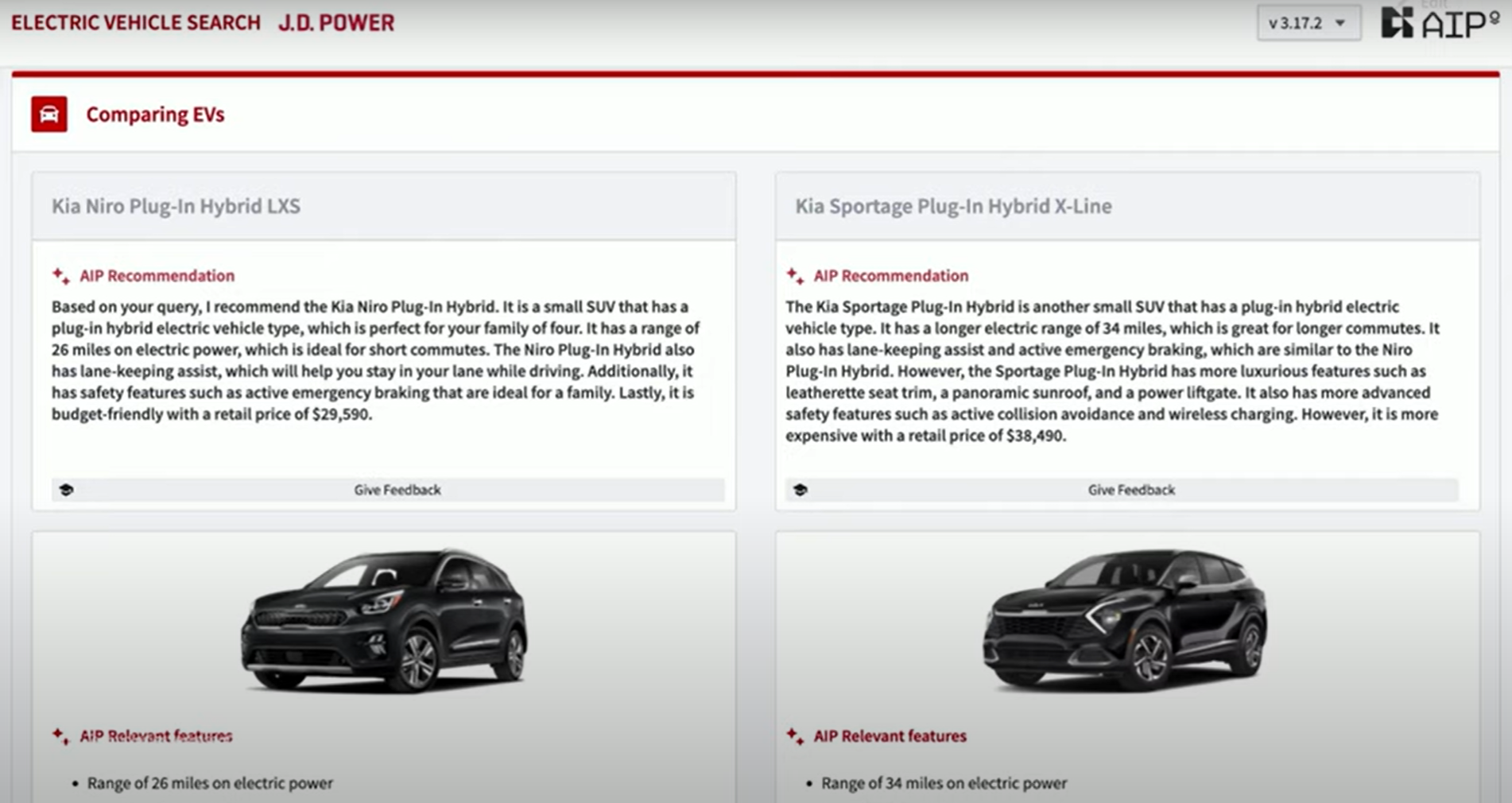
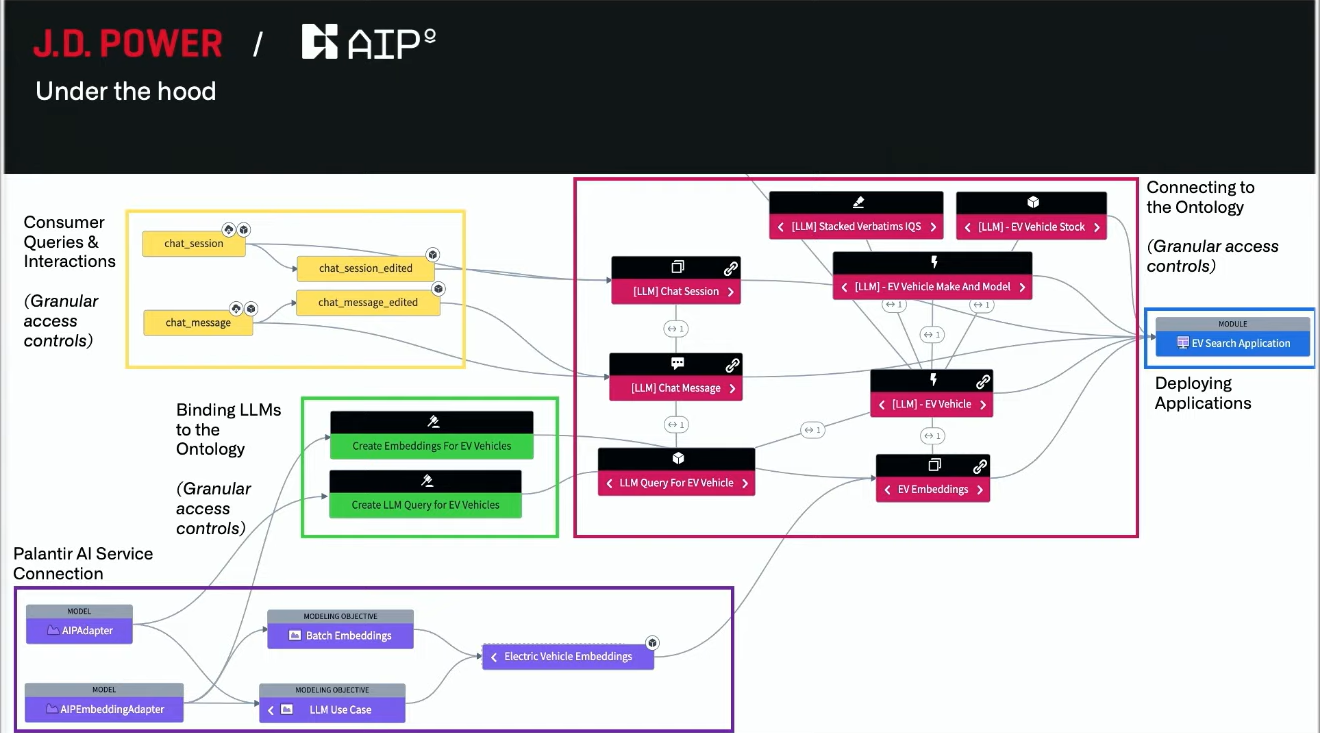
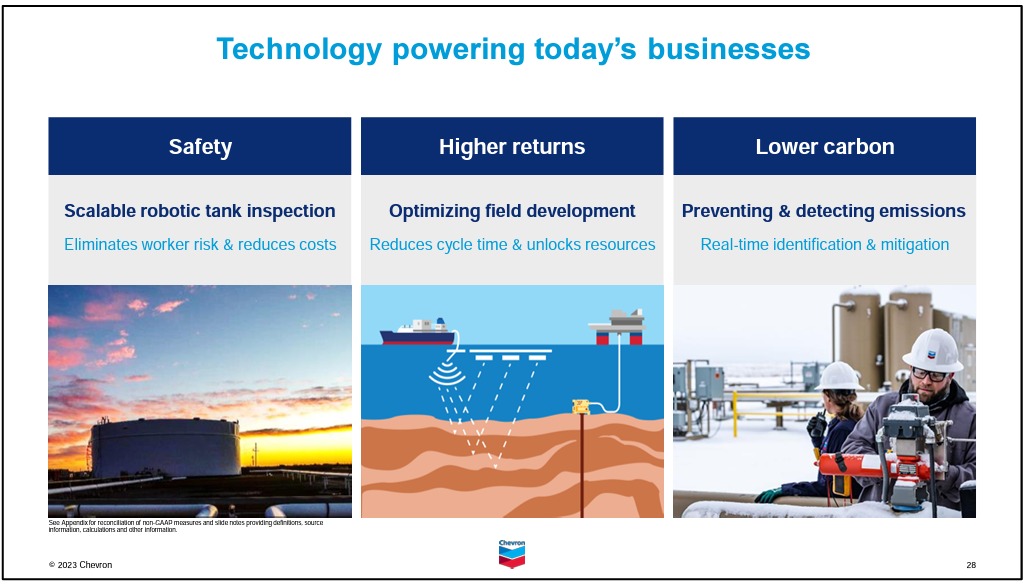
Generative AI is a topic du jour among companies reporting #earnings, launching #products and holding court with customers.

Here are a few themes that seem to be popping up.

1. We've been doing this for ages and #generativeai is just one more tool. You'll hear this from technology vendors often trying to sell you stuff. The general idea is that these companies are #ai savvy and just layering in a new engine. In some cases, tech vendors are accurate.

Sometimes, vendors are just generative AI washing. How can you tell? If there's a launch in late 2023 or even 2024 chances are vendors were caught flat-footed.

The buy side will also have some version of generative AI washing. 2. Generative AI looks great, but we need more #transparency before adding our #data. This theme has emerged frequently among buy-side #ceos.

For instance, Bank of America CEO Brian Moynihan sees the promise, but the bank already has AI and conversational bots trained on just its data. His exact quote: https://newsroom.bankofamerica.com/co...

"We have to understand how the decisions are made, and, frankly, follow the laws and rules and regulations on lending."

3. We can save on headcount. OK no CEO says this directly, but sure do hint about it. CEOs say things like they can hold headcount flat, become more productive, do less with more, and other subtle ways to say there's no hiring boom ahead.

4. My #customer data is the differentiator. CEOs are looking to take base models and then tune them with their #enterprise data. What remains to be seen is what companies actually have the data to properly tune the base model.

Here's a quote from Airbnb CEO Brian Chesky: https://news.airbnb.com/wp-content/up... "Instead of asking you questions like where are you going and when are you going, I want us to build a robust profile about you, learn more about you and ask you 2 bigger and more fundamental questions: who are you? And what do you want? Think of us building the ultimate AI concierge that could understand you."

5. Holy @#$#@$#! OK, CEOs aren't dropping the F-bomb yet. But there will be a bevy of companies that don't have their data game down, lack the AI know-how, and don't have the stack and architecture that can simply integrate new models.

Insurance company Lemonade said it has already added #chatgpt to its AI stack because has been using models to predict losses and risk down to the house since inception. Lemonade co-CEO Shai Wininger, said: https://twitter.com/shai_wininger/photo

"This #technology will help us better anticipate customer needs, respond to more claims instantly, and ultimately provide better coverage at lower costs," he said. "For our competitors, though, adapting to this change will not be easy. A traditional insurance company depends on hundreds of disparate software tools to run its business. many of which are outdated legacy systems built decades ago by third-party vendors."

Rest assured a lot of companies aren't in the same camp.

On Insights <iframe width="560" height="315" src="https://www.youtube.com/embed/xfRIAJ4Ev8A" title="YouTube video player" frameborder="0" allow="accelerometer; autoplay; clipboard-write; encrypted-media; gyroscope; picture-in-picture; web-share" allowfullscreen></iframe>
Media Name: YouTube Video Thumbnails (1).png

Generative AI at Adobe | An Interview Between R "Ray" Wang and Adobe’s Ely Greenfield

Get the latest interview with Adobe's Ely Greenfield and Constellation Research founder R "Ray" Wang on Adobe Firefly, the Generative AI release from Adobe launched at Adobe Summit on March 21, 2023.

On <iframe width="560" height="315" src="https://www.youtube.com/embed/gK5PblvrBjM" title="YouTube video player" frameborder="0" allow="accelerometer; autoplay; clipboard-write; encrypted-media; gyroscope; picture-in-picture; web-share" allowfullscreen></iframe>

Humanizing Generative AI - Creating Technology For People By People | Impact TV Episode 1

Co-hosts R "Ray" Wang, founder of Constellation Research and Teresa Barreira, CMO of Publicis Sapient discuss the impact of #generativeai on people and businesses, and hear how the following industry leaders are using technology to empower their people:

  • 00:00 - Introduction
  • 02:50 - Sheldon Monteiro, EVP & Chief Product Officer of Publicis Sapient
  • 17:14 - Nikhil Krishnan, CTO of Product, C3 AI
  • 32:00 - Ely Greenfield, CTO of #adobe

🗓️ Keep an eye out for episode 2 of Impact TV, coming down the pipeline in the coming weeks! https://lnkd.in/gKeg-7_C

On <iframe width="560" height="315" src="https://www.youtube.com/embed/TM94MMMvEBk" title="YouTube video player" frameborder="0" allow="accelerometer; autoplay; clipboard-write; encrypted-media; gyroscope; picture-in-picture; web-share" allowfullscreen></iframe>
Media Name: Screenshot 2023-05-23 at 12.18.28.png

Event Report: IBM Quantum Partner Forum 2023 - Quantum is Alive and Well at IBM

IBM invited its partners for three days to the IBM Innovation Lab in Paris, to share progress in quantum as well as provide partners the chance to educate each other, share the progress and state of their projects as well as ample network opportunities.

Here are my four key takeaways from the event:

IBM makes good progress on the innovation of its platform / hardware.

IBM’s VP of Quantum Jay Gambetta was in Paris and re-confirmed that IBM is on track with its goal of reaching 4000+ qubits by 2025, based on the IBM Quantum System Two. For now, the Osprey chip is available with its 433 qubits, later this year Condor (1121 qubits) is slated to become available. At Think 2023 IBM also launched new offerings for quantum, with the IBM Quantum Safe technology getting the most attention.

Figure 1 – The IBM Quantum Development Roadmap

Source: IBM

Most importantly, partners see progress and are confident that IBM is the right partner to provide the underlying hardware platform for their quantum computing projects.

Figure 2 – Jay Gambetta in Paris, May 15th, 2023

Source: Constellation Research

A wide variety of use cases are happening today.

IBM sees five large use cases where quantum is being implemented today, IBM’s Jamie Garcia walked us through the five use cases:

  • Aerospace and automotive. Prominent use cases here are customer experience (CX), materials design, structural design and optimization of processes like in manufacturing.
  • Financial Services. The popular use cases are evidently fraud detection, pricing of derivatives and options, portfolio optimization and risk analysis.  
  • Hight Tech. IBM sees seismic imaging, catalysts, supply chain planning and manufacturing scheduling as key quantum use cases.
  • Energy, environment, and utilities. Portfolio optimization, grid optimization, risk analysis and options pricing as well as battery design are key use cases for quantum in these verticals.
  • Healthcare and life sciences. IBM sees the prediction of disease risk, drug discovery and design as well as protein folding predictions as the most prominent uses cases in these industries.

Figure 3 – Jamie Garcia presenting in Paris, May 16th, 2023.

Source: Constellation Research

Quantum education remains challenging but is making progress.

Education on what quantum computing is, and what its benefits are in academia, government and enterprise is a major challenge. More than one time I heard from attendees referring to the session and saying that they need to explain what quantum is over and over. The challenge is the novelty of quantum and that requires education of executives but also requires education of the workforce. As of today, most attendees held degrees in physics, something not surprising given the nature of quantum. But that needs to change, and other disciplines will have to play a role here. It was also good to see the first quantum education courses coming into place in Canada. The challenge is real and vital for the industry, as for quantum to grow it needs skilled people who can use, explain, and advance quantum technology.

Figure 4 – Rafa-Martin Cuevas presenting in Paris May 17th, 2023.

Source: Constellation

The partner network approach is delivering.

With over 100+  attendees across the whole partner ecosystem – from clients, prospects, services partners, academic partners, and IBM, it was good to see how the network is delivering value for the attendees. On such an innovative and fast pacing technology like quantum, it is key to bring together users, implementors and makers, so they can align on what is feasible and what needs to be done. The learning across the use cases is substantial, even if they come from very different vertical use cases. This is critical at the relatively early phase quantum is still in its adoption across enterprises, governments, and academia. More than a few times attendees said they learned from other industry use cases, partners, enterprises in other countries and regions, and even from academia. It is good for IBM to bring it all together as synergistic learning is substantial. As quantum grows, this approach may not be feasible anymore but for now and the next years to come this is the right approach and IBM deserves kudos for inviting and hosting the forum. With just around 100 attendees, the event is small-scale enough for a lot of networking to happen, as anyone who wants to speak to another attendee has the chance to do so. Additionally, a unique atmosphere is created at an event where almost every attendee is a moderator or panelist, as it breaks the attendee vs presenter barrier effectively – encouraging networking and information exchange on a peer-to-peer basis.

Also checkout the multimedia deliverables, the Wakelet of the event here, the 1Slide summary here and the event video below (and don't miss the Day #1 and Day #2 (with a bonus on how Arizona State is using quantum) summaries here and here). 


Palo Alto Networks CEO Arora: Generative AI will favor those with strong data sets

Palo Alto Networks CEO Nikesh Arora said generative AI has boosted productivity but also can present security risks.

Speaking on Palo Alto Networks' third quarter earnings conference call, Arora said:

“AI is a data problem and security is a data problem and has an interesting role to play in security, both for its ability to help deliver superior security outcomes in near real-time and unfortunately the potential threat associated with AI being used to generate attacks. “

Arora added that there's "significant opportunity" to embed generative AI into Palo Alto Networks' security platform, products and workflows. These opportunities include:

  • Improving detection and prevention efficacy by advancing the company's AI and machine learning models in products today.
  • Providing more accessible ways to enable customers to engage and comprehend data sets and telemetry. Generative AI can also provide a more natural-language driven interface to products.
  • Bolster productivity throughout the Palo Alto Networks organization and save money on support costs, headcount and other costs that add up at scale. On CNBC, Arora noted that his company used generative AI to create marketing narratives in four hours compared to two weeks.

"We intend to deploy proprietary Palo Alto Networks security LLM in the coming year and are actively pursuing multiple efforts to realize these three outcomes," said Arora.

Nevertheless, Palo Alto Networks executives acknowledge that generative AI is also a security risk. Arora said that Lee Klarich, Chief Product Officer and team, have been researching ways that generative AI can more efficiently produce malware. "There's a lot of work we're doing as well to make sure we are able to protect our customers against any such activity that is conducted using generative AI," said Arora.

Overall, Arora was upbeat about generative AI's impact on security and its business. Generative AI will likely favor the companies that have strong data sets. "I think it favors the people who have a lot of data already as part of their strategy, and they have built a business on the back of a data-led strategy," said Arora. "It favors companies that have a tremendous amount of data."

Palo Alto Networks delivered a strong third quarter with net income of $107.8 million, or 31 cents a share, non-GAAP earnings of $1.10 a share, and revenue of $1.72 billion, up 24% from a year ago. For the fourth quarter, Palo Alto Networks projected revenue between $1.94 billion and $1.97 billion with non-GAAP earnings of $1.26 a share to $1.30 a share. For fiscal 2023, Palo Alto Networks is expecting revenue of $6.88 billion to $6.91 billion.

Digital Safety, Privacy & Cybersecurity Data to Decisions Innovation & Product-led Growth Future of Work Tech Optimization Next-Generation Customer Experience Security Zero Trust AI GenerativeAI ML Machine Learning LLMs Agentic AI Analytics Automation Disruptive Technology Chief Information Security Officer Chief Privacy Officer Chief Executive Officer Chief Information Officer Chief Technology Officer Chief AI Officer Chief Data Officer Chief Analytics Officer Chief Product Officer

Why firing is more important than hiring when building a startup

Learning to fire is way more important than hiring, according to Uri Levine, a two-time unicorn builder with Waze & Moovit and author of "Fall in Love with the Problem, Not the Solution."

Speaking on the latest edition of DisrupTV, Levine outlined how it's critical for entrepreneurs to bring the right people into an organization. "Firing is more important. Hiring is the easy decision, and you have to learn how to make hard decisions," said Levine.

When Levine talked to entrepreneurs about why teams weren't performing, he would hear communication, performance, and ego management issues. "When I asked, 'when did you know the team was not right, all of them said within the first month," explained Levine. "So, they knew within the first month that the team was not right and didn't do anything. The problem is that you weren't making the hard decision. If you're not making those decisions two things happen. No. 1 is you're stuck with people that shouldn't be there. The other is even worse in that the top performing people leave because they don't want to be in an organization that is unable to make the hard decisions."

Levine added that if a startup has two choices of hiring someone awesome or firing an underperformer it's more important to fire.

"If you hire a new person mark your calendars for 30 days down the road and ask yourself one question: 'Knowing what I know today would I hire this person?' If the answer is no, then fire them immediately because they're not going to be successful. If the answer is yes, tell that person they are exceeding your expectations and give them more options or equity."


Other takeaways from Levine:

  • Entrepreneurship is about value creation. Levine said when he had an idea as a child, his dad would always ask why. The question was meant to focus Levine on solving a problem.
  • Startups are about the roller coaster. "This journey is going to be very challenging. This is going to be a long roller coaster of failures and each of them is important," said Levine. "If you tell me all the businesses in the world have ups and downs I'd agree, but the frequency of those are way higher when you're building startups."
  • Failures matter. Given the entrepreneurship journey and frequent failures it's critical you learn from them. "It's a journey of failures so we try one thing and then another," he said. "If you're afraid to fail you already failed. You need to teach your kids to fail."
  • Keep going. The sooner an entrepreneur knows it's a journey of failures, she has to fail fast. "When you fail fast you still have plenty of time to make another attempt and try different things until you find one thing that does work. If you have more attempts than anyone else you are way more likely to be successful," said Levine.
New C-Suite Chief Executive Officer

OpenAI's Brockman: Industry use cases, developers next stage for generative AI, ChatGPT

OpenAI President and Co-Founder Greg Brockman said industry specific use cases as well as developers adding on top of models will drive more value from generative AI.

Brockman, speaking at Microsoft Build, said "the technology (ChatGPT, generative AI) is getting better and better, but the value is going into specific domains and understand how they work there." Brockman referenced the legal industry as one area where developers can add a lot of value.

"There's a huge amount of value that can be added," said Brockman.

Microsoft unveils Microsoft Fabric at Build 2023, pitches integration, simplified pricing

Kevin Scott, Chief Technology Officer and Executive Vice President of AI at Microsoft, followed up on a barrage of announcements for Copilots across the software giant's product line. Roughly speaking, a Copilot application uses AI, has a conversational interface and helps you do common tasks.

While Microsoft launched a series of Copilots by product line--Dynamics 365, Windows, Bing, Power Platform etc.--the company urged developers to leverage plug-ins, open source and foundational models to focus on solving problems. According to Mary Jo Foley, there are 20 customers currently in the M365 Copilot Early Access program.

Scott said the generative AI model is not the product and developers need to focus on creating good products that address problems.

"It is up to you all to build great experiences," said Scott. He told developers to focus on what problem the Copilot to address. For instance, UX flows are less important since there's natural language processing. The focus is really figuring out how to keep the Copilot on point.

To date, generative AI has been aimed mostly at functions and horizontal productivity tasks. Think social media posts for Scott’s podcast. Scott noted he wasn’t good at social media posting so he built a Copilot to help. Here’s how it broke down.

Going forward, Brockman's legal use case is just the beginning. Once vendors launch a series of generative AI tools and product integrations, the next step will be focused on industries such as CPG, manufacturing, transportation and health care to name a few. These industry use cases will likely be deployed as software vendors, AWS, Azure and Google Cloud all duel. 

More:

Media Name: social post with gen ai.png
Data to Decisions Innovation & Product-led Growth Future of Work Tech Optimization Next-Generation Customer Experience Digital Safety, Privacy & Cybersecurity Microsoft AI GenerativeAI ML Machine Learning LLMs Agentic AI Analytics Automation Disruptive Technology Chief Information Officer Chief Technology Officer Chief Executive Officer Chief AI Officer Chief Data Officer Chief Analytics Officer Chief Information Security Officer Chief Product Officer

Accenture's Paul Daugherty: Generative AI today, but watch what's next

Generative AI will have a tremendous impact on workers and likely impact 40 of the working hours across industries, but that doesn't mean 40% of jobs will go away, said Accenture CTO Paul Daugherty, who was the 1,000th guest on Constellation Research's DisrupTV.

Daugherty also said on the show that generative AI is just the first installment of what's likely to be a set of innovations that'll change business. "As exciting as generative AI is, it's not the last and probably not the biggest breakthrough we'll see in AI. There will be other bigger breakthroughs coming with common sense AI," said Daugherty.

He added that shared reality and the merger of the physical world and digital bits will be another advance. "The next stage of digital is digital plus physical," said Daugherty, who also said metaverse has potential even though it's being panned on multiple fronts.

Other technologies to watch include:

  • Computational chemistry.
  • Synthetic biology.
  • Generative AI in pharmaceutical and drug discovery.
  • Operational technology with new forms of computing like quantum computing.

Daugherty said his team at Accenture is already working on its next Tech Vision Report. In the meantime, here are some generative AI takeaways from Daugherty.

  • Generative AI will create automation that can replace some jobs, but the bigger impact will be human augmentation. "Every worker will have a co-pilot or multiple co-pilots that help us do things more effectively," said Daugherty. "AI will give people superpowers in the form of these co-pilots that could allow us to do more things."
  • Think of generative AI as a bit of Moore's Law for people where it can help us know more and extend skills.
  • Enterprises need to step back and get perspective on generative AI. For instance, companies can't assume generative AI will solve everything. Instead, businesses need to look holistically and see where to apply the technology.
  • Figure out what models you want to consume and then tune. "For enterprises there is going to be an array of models to just consume or in some cases fine tune and customize," explained Daugherty. "In other cases, you'll want to develop your own models for unique domains."
  • Companies will need to change processes. "Processes are so different with co-pilots," said Daugherty. "There's also the change management and training around it."
 
Data to Decisions Future of Work Next-Generation Customer Experience Innovation & Product-led Growth Tech Optimization Digital Safety, Privacy & Cybersecurity Quantum Computing AI GenerativeAI ML Machine Learning LLMs Agentic AI Analytics Automation Disruptive Technology Chief Information Officer Chief Executive Officer Chief Technology Officer Chief AI Officer Chief Data Officer Chief Analytics Officer Chief Information Security Officer Chief Product Officer

Microsoft unveils Microsoft Fabric at Build 2023, pitches integration, simplified pricing

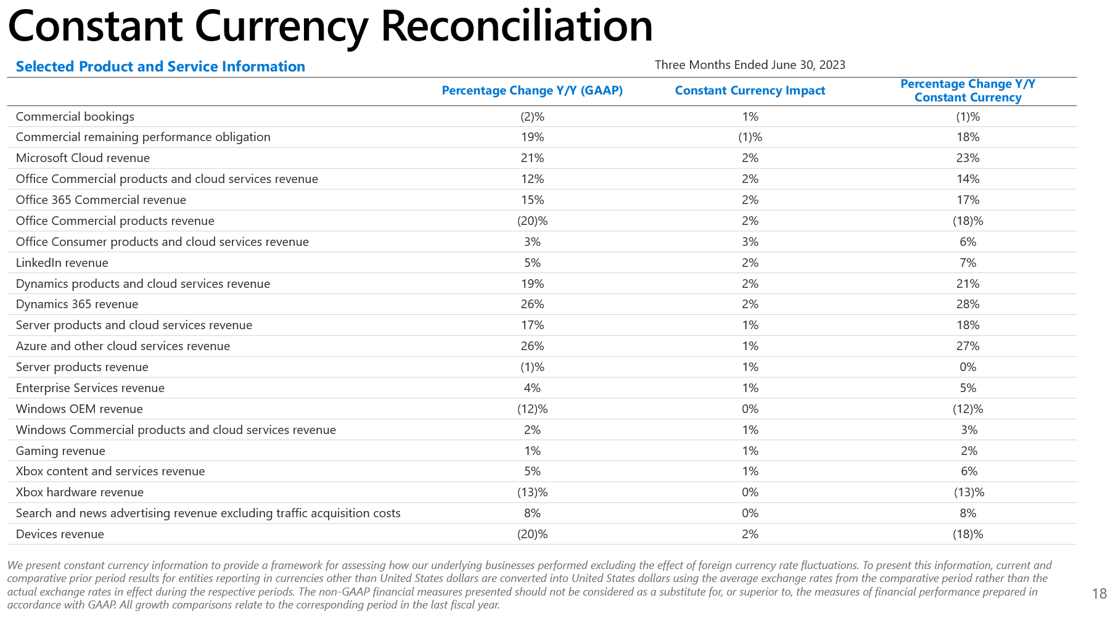
Microsoft launched Microsoft Fabric, a unified analytics platform that combines technologies like Data Factory, Synapse and PowerBI. Microsoft's pitch: Convince enterprises to go with one integrated AI-powered analytics platform instead of integrating multiple vendors and services.

The news, launched at Microsoft's Build conference, is the headliner, but there was a bevy of other Copilot announcements. Microsoft also announced Copilot in Power BI, Power BI Direct Lake, a new storage mode, and Power BI Desktop Developer Mode. Speaking during the Build 2023 keynote, Microsoft CEO Satya Nadella said "platform shifts are in the air." Speaking about generative AI, Nadella said "every piece of the stack has been impacted" and there were 50 announcements related to ChatGPT on deck. 

Regarding Microsoft Fabric, Nadella said:

"This is a product we've been working hard on over multiple years. This is the biggest data product launch since the launch of SQL Server. It unifies the business model across all analytics workloads. This unification will fuel the next generation of AI applications." 

Constellation Research analyst Doug Henschen put Microsoft Fabric in context:

"We’ve seen a bunch of fabric-type offerings and customers seem to be keen on the idea of having one platform that provides access to all data – even if, in actuality, it’s about distributed data access layer on top of multiple repositories and capabilities, as is clearly the case with Microsoft Fabric. Other examples recently in the news include IBM Data Fabric and its acquisition of Ahana and SAP Datasphere. Other incumbents include Dremio, Starburst, and various “lakehouse” offerings, though Microsoft is combining a huge breadth of workload types and is promising generative AI interfaces on top of them all."

Microsoft Data Fabric also lands as multiple vendors are aiming to be the business process automation platform of choice.

The bet here is that Microsoft's pricing strategy can make Fabric compelling and more economical for CXOs. Customers can buy one pool of compute to power Fabric workloads. That pricing strategy could be compelling. Henschen said:

"One of the most compelling aspects of this announcement, in my view, was the prospect of buying a single pool of credits that can be used across all workload types: data engineering, data integration, data science, data warehousing, BI and analytics. That’s a unique offering and gives a sense of a single platform, even if it’s, technically, a unified layer on top of a bunch of existing offerings. This is classic suite versus best-of-breed marketing. The complication is that these budgets are owned by different groups today, and they’d have to get together to make decisions about how many credits each group needs and so on."

Ferguson, T-Mobile and AON were named customers looking to consolidate their analytics footprints on Fabric. Informatica is one of the first design partners for Fabric and the company said customers can enroll in a private preview starting in June 2023. 

Related researchAnalytics and Business Intelligence Evolve for Cloud, Embedding, and Generative AI | Analytics and Business Intelligence Trends in Cloud, Embedding, and Generative AI | Constellation ShortList™ Multicloud Analytics and Business Intelligence Platforms

Key points about Microsoft Fabric include:

  • Fabric will have a single unified experience and architecture via a SaaS delivery model. It will also integrate with Microsoft 365 applications.
  • Each team in the analytics process including data engineers, data warehousing pros, data scientists, data analysts and business users will have a role-specific experience.
  • Fabric is data-lake friendly and open. Microsoft Fabric includes OneLake, a multi-cloud data lake that is built-in. The model for OneLake rhymes with the OneDrive approach. OneLake is built on Azure Data Lake Storage Gen2 and fully compatible. OneLake also has shortcuts to data lake storage from Azure, AWS S3 and Google Storage coming in the near future.
  • OneLake supports structured data of any format and unstructured data. OneLake will also be discoverable and accessible in Microsoft 365.
  • Microsoft Fabric will include Azure OpenAI Service at multiple layers. Generative AI and Copilot in Microsoft Fabric will be available and work with various models. Copilot in Microsoft Fabric will be coming soon.

Henschen noted that natural language (NL) can be the interface of Fabric. he said:

"I think we can expect to see Co-Pilot interfaces proving NL interaction based on the Azure OpenAI service for every type of user. Data engineers will have options to use NL to generate code and drive Spark Workloads. Data integrators and analysts will use NL to generate SQL data transformations and SQL queries. Analysts and business users will ask questions to generate visualizations and dashboards. The workloads and platform are basically the same, but the generative AI lets you, it is promised, work more efficiently and productively without all the coding and drudgery that was previously required."

The workloads

Microsoft said Fabric comes with seven workloads in preview.

  • Data Factory has more than 150 connectors to cloud and on-prem data sources and the ability to transform data and orchestrate pipelines.
  • Synapse Data Engineering enables authoring in Spark, instant start with live pools, collaboration tools.
  • Synapse Data Science provides workflows for building models, collaborating, training and deploying them.
  • Synapse Data Warehousing provides a converged lake house and data warehouse experience SQL performance on open data formats.
  • Synapse Real-Time Analytics analyzes streaming data from IoT and edge devices, telemetry, logs with low latency.
  • Power BI in Microsoft Fabric provides visualization and analytics. Power BI in Fabric is also integrated into Microsoft 365 apps.
  • Data Activator monitors data and can trigger notifications and actions.

Finally, there's the caveat: Everything announced is still in preview. Henschen said:

"I think we’ll see a lot of wait-and-see reactions from customers and a lot of competitive responses. Changing data platforms is akin to turning a super tanker: It’s not something that happens quickly, and I would not expect a lot of market movement overnight."


Data to Decisions Innovation & Product-led Growth Future of Work Tech Optimization Next-Generation Customer Experience Digital Safety, Privacy & Cybersecurity ML Machine Learning LLMs Agentic AI Generative AI AI Analytics Automation business Marketing SaaS PaaS IaaS Digital Transformation Disruptive Technology Enterprise IT Enterprise Acceleration Enterprise Software Next Gen Apps IoT Blockchain CRM ERP finance Healthcare Customer Service Content Management Collaboration Chief Executive Officer Chief Information Officer Chief Analytics Officer Chief Data Officer Chief Technology Officer Chief AI Officer Chief Information Security Officer Chief Product Officer