


SaaS: Apocalypse over, sorting winners and losers just starting
The SaaS apocalypse appears to be over, but the process of sorting out winners from losers is just starting.
In February, March and April, shares of enterprise software stocks took turns being taken to the woodshed. The common storyline at the time was that Anthropic was going to kill the SaaS industry. The reality was much more nuanced.
A refresher timeline:
- SaaS under the microscope: How to evaluate your vendor
- How to avoid vendor lock-in in the AI age
- AI value metrics and vendors need better pricing models
- Enterprise AI grows up, vendors are noticing
Keep that reality in mind as a batch of SaaS vendors, led by Salesforce, report earnings in the next two weeks or so. The iShares Expanded Tech-Software Sector ETF (IGV) shows the round-trip for SaaS stocks. Welcome back to flat on the year.
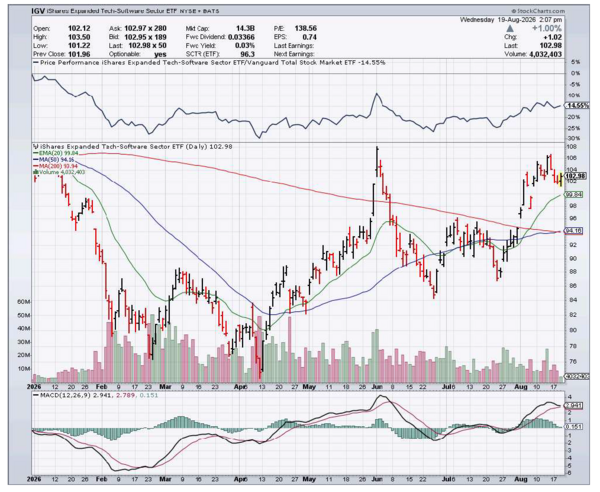
Within that ETF, the volatility was extreme. Microsoft, Palantir and Oracle to name a few crashed and bounced. Simply put, IGV had a lot of churn and went nowhere.
The stock market doesn't necessarily reflect what enterprises are doing with their IT budget but in many cases they rhyme. After all, boards of directors are more likely to note big moves down in a SaaS stock and start asking questions. The recoveries in shares of Palantir, ServiceNow and Microsoft happened to coincide with revenue growth presumably from enterprise buyers.
Another big event also saved SaaS: Token and AI budget shocks. Once enterprises blew through AI budgets without a lot of return, the relative predictability of SaaS vendor spending looked a bit better. Anthropic and OpenAI weren't going to replace SaaS vendors as much as simply mark up their own offerings once they took share. There's a reason open weight models have become so popular--they deliver better performance and returns for enterprises in many use cases. There are costs associated with open weight models, but the ability to customize can drive returns.
Now what? The SaaS recession is over, but Wall Street is still repricing the sector. The recovery will be selective and the SaaS vendors that can navigate usage-based demand, deliver outcomes, preserve your proprietary data and deliver mission-critical value will do well. Another item to watch will be how many enterprises choose to consume their AI and LLMs through their SaaS vendor. Salesforce, Microsoft, SAP, Zoho and others have said they are using their own models.
Your job will be to make sure you're not stuck with a future zombie vendor. You'll also want to avoid naming a vendor strategic just because the migration is painful.
SaaS volatility aside, here are some things to consider as you navigate the field.
- Business differentiation. Does the SaaS vendor provide distinctive experiences, operating models, speed or proprietary workflows? If not, you may have a replace or build signal. Palantir has thrived because it provides business differentiation.
- Mission critical workloads. Systems of record often fall into this category especially in regulated industries. SAP, Workday, Microsoft and Oracle along with Salesforce may fall into this category.
- Data and intelligence. Does the enterprise software vendor serve as your data engine? Databricks along with Snowflake may turn out to be the most disruptive enterprise software players as they eye new categories.
- Innovation cadence. Does the SaaS vendor's roadmap add new capabilities that drive returns quickly?
- Time-to-value. The SaaS vendor has to deliver time to value. The metrics for the foreseeable future are likely to be wonky--especially if vendors start pricing for outcomes.
- Risk absorption. One perk of SaaS is that risk shifts to the vendor. Security, compliance and availability as well as increasingly AI cost management falls on the vendor.
Not all of the SaaS field is going to do well enough for Wall Street even if they have solid cash flow generating businesses. There are certainly vendors in your portfolio where the capability doesn't differentiate, reinvent processes and deliver a must-have platform. If you're only getting returns from 20% of what a vendor provides you may want to build.
Vendors in the winner’s circle
- Palantir is obviously in the winner’s circle and is likely to be more disruptive to SaaS than the AI labs. See: Palantir's Q2 shines, CEO Karp says it's benefiting from LLM economics revolt | Palantir: Worst nightmare for OpenAI, Anthropic?
- ServiceNow's second quarter earnings growth and current remaining performance obligations also puts it in the winner’s circle.
- Snowflake's second quarter results are on tap, but it's hard to argue that it's not gaining wallet share due to its first quarter results.
- Hyperscalers. Microsoft obviously has a massive enterprise software business, but it's worth noting that Google Cloud via its Wiz acquisition and Workspace and Amazon Web Services via Connect and Quick are eyeing more of the enterprise software market in addition to being a large SaaS sales channel.
- There are plenty of vendors on the bubble and it remains to be seen whether CIOs merely gripe about leaving or stick around.
A word about the midmarket
The vendors previously mentioned are focused on large enterprises. The midmarket SaaS market is going to be different. Why? Midmarket companies are likely to use these vendors to consume AI because they lack the resources to build their own applications. Here are three to note:
- You'd never know it by looking at HubSpot's most recent earnings, but pricing by outcome makes sense in the long run. There will be challenges to get midmarket enterprises to buy software in a consumption model.
- Freshworks is another midmarket player to watch. The company's AI is being consumed and there are many companies on the midmarket and large enterprise border looking to get more value from the big guns with more complicated implementations.
- And if you move downstream, Intuit customers are going to consume a lot of AI through the company's various offerings, notably QuickBooks Online Advanced and Intuit Enterprise.
Larry Dignan is Editor in Chief of Constellation Insights at Constellation Research, where he leads editorial coverage focused on enterprise technology, digital transformation, and emerging trends shaping the future of business. He oversees research-driven news, analysis, interviews, and event coverage designed to help technology buyers and vendors navigate complex markets with clarity and context. ...
Read morePublished
Author
