


Enterprises need better AI value metrics and vendors need better pricing models
There is an AI pricing revolt underway and it’s unclear whether vendors are going to be in a position ease the pain at the expense of short-term results. These issues are going to be front and center for the remainder of 2026 and the answers will be found in better metrics, more visibility and pricing models that make sense for customers.
Palantir CEO Alex Karp typically has a lot to say, but he's not wrong when it comes to the LLM revolt even if he is just talking his game. Karp has a full campaign going against frontier model companies and their token-happy models. Karp argued that enterprises need a way to control their own destiny and that means using your own models tailored to your business.
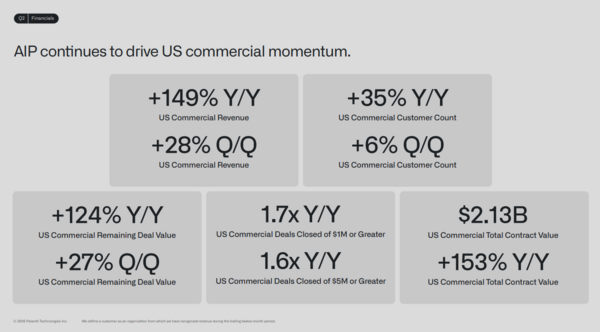
"People understand that they need a way of controlling their alpha. They understand broadly that tokenmaxxing is at their own cost, and they certainly understand that tokenmaxxing is leading to them transferring their data, their prompts, the way they run their business, their expertise to a third party. They need education on what they can do about that with us, preferably, but also without us," said Karp.
Indeed, Karp said Palantir's second quarter earnings show how the company is benefiting from the LLM revolt.
Blustery? Yep. Wrong? Nope.
Uber, one of the poster companies of blowing through AI budgets, noted that it has its token budget under control.
Call it the quiet tokenmaxxing revolt. Uber CFO Balaji Krishnamurthy said:
"On AI, we are optimizing token spend by setting better defaults for different use cases, moving certain tasks to lower-cost or open-weight models, and letting employees more clearly understand and manage their spend. As a result, cost per token has declined over the past several months, even as adoption has continued to increase, allowing us to keep overall AI spend broadly stable."
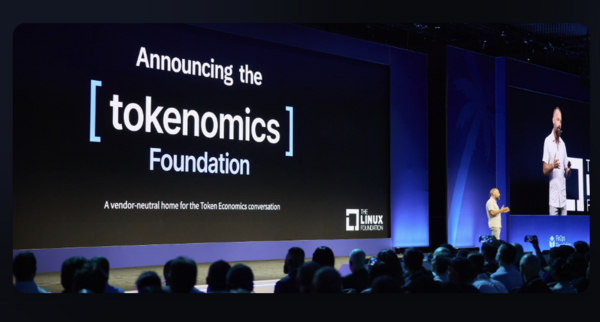
And in a sign of how enterprises need to better measure AI value, The Linux Foundation launched the Tokenomics Foundation. Aside from a horrible name and the fact that maybe some executives should have been thinking about ROI in the first place, the group will define metrics to measure AI value and total cost of ownership. The effort aims to look at the entire supply chain including the energy and capital used to create tokens, AI servers, consumption and outcomes. Adjacent costs to AI include compute, storage, databases and engineers as well as tokens.
This mild token-meets-overthinking-LLM revolt even has reached Anthropic. The company released a guide to help IT admins control Claude Enterprise costs. Anthropic helpfully notes in a blog:
"It’s helpful to measure AI’s cost-per-outcome instead of token consumption as the primary metric of value. Here are two questions to ask about a project:
- What would this work have cost without AI, whether in resources, time, or never attempting the project at all?
- Is a model completing a task that is hard and requires judgment and reasoning, or is it just large, meaning a high volume of straightforward work? “
Not surprisingly, Anthropic didn't exactly tell you to use your own tailored open-weight models and focused on its portfolio of offerings. It also didn’t tell you that its model depends on you being an idiot about your token spending.
Simply put, questions about AI value are being asked everywhere. Finding the answers is going to require a few things to fall in line. Here's a look at the big three items needed for grown-up AI:
Metrics. The Linux Foundation is addressing the AI value issue because metrics today have been defined by enterprise vendors that are making value barometers up on the fly. Constellation Research's Esteban Kolsky recently noted in his CEO AI Dashboard Series:
"The first problem is that most AI economics are still being discussed in the vendor’s language. Token prices, usage-based pricing, and outcome-based pricing all matter, but they are still supply-side metrics. They describe how the providers want to charge for intelligence. They do not answer how the enterprise should think about value. As novelty phase of AI is fading, boards and CEOs are left with a familiar problem: significant spending, unclear payback timing, and little agreement on what should count as return."
Transparency. Enterprises want the transparency into budgets provided by the cloud hyperscalers. Most of the vendors rolling out agentic AI aren't used to offering transparency due to seat-based pricing. For instance, enterprise software vendors are just catching up to the observability dashboards needed to manage the AI budget.
CxOs will need tools to show what they're using, where and by whom as well as the business value provided. From there, enterprises need to be able to budget, optimize and avoid overspending. Should enterprise vendors fail to provide this transparency, procurement departments will move to hyperscalers, notably AWS Marketplace.
Vendor pricing models. Enterprise vendor pricing models are in flux and keeping up is exhausting. Consumption, credits and licensing models are being combined into hybrid approaches. Since these models change almost quarterly, customers are confused and fatigued. Toss in your friendly neighborhood forward deployed engineer (real or sales-ish) and budget surprises abound.
- Salesforce takes a run at outcome-based Help Agent pricing
- Pegasystem's Ken Stillwell on Tokenomics and Outcome-Based AI
- Oracle eyes outcome-based pricing: Does it stand a chance?
- HubSpot to price Breeze Customer Agent, Breeze Prospecting Agent on outcomes
Vendor pricing model shifts are likely to be at the expense of short-term gains. HubSpot cited a shift to outcome-based pricing and longer sales cycles due to the tokenmaxxing hangover for its disappointing third quarter outlook. Three quotes from HubSpot CEO Yamini Rangan tell the tale:
- “On pricing, predictability has become a defining theme in AI adoption. Businesses have been hit with unpredictable token costs. And they want pricing that is transparent and tied to value.”
- “Purchase decisions are facing greater scrutiny, buying committees are larger and more deals require C-suite and Board approval, leading to longer sales cycles.”
- “We introduced outcome-based pricing so that we could tie the agent value to the value that they're getting and we gave customers much better visibility and spend control. They can set thresholds for what they want to spend. Now these decisions create a near-term headwind, and the decision we made is we'd rather remove friction and build customer confidence at the beginning of the AI journey and then help them drive much more adoption as they continue.”
Constellation Research has monitored these pricing model changes and you can expect more. Vendors are throwing a little bit of everything at the wall. Outcomes, consumption and upfront credit purchases are becoming the norm. Some of these pricing schemes will resonate with customers and others will bomb spectacularly. The only certainty is that tokens aren't going to be in the mix. The anti-token sentiment is brewing big time.
Larry Dignan is Editor in Chief of Constellation Insights at Constellation Research, where he leads editorial coverage focused on enterprise technology, digital transformation, and emerging trends shaping the future of business. He oversees research-driven news, analysis, interviews, and event coverage designed to help technology buyers and vendors navigate complex markets with clarity and context. ...
Read morePublished
Author
