Results

Dominating Digital Business

Dominating Digital Business

There's a big difference between "improvement" and "innovation". R "Ray" Wang explains why businesses must innovate or become obsolete. Presented at Constellation's Connected Enterprise.

Data to Decisions Future of Work Marketing Transformation Matrix Commerce New C-Suite Next-Generation Customer Experience Tech Optimization Chief Customer Officer Chief Digital Officer Chief Executive Officer Chief Financial Officer Chief Information Officer Chief Marketing Officer Chief People Officer Chief Procurement Officer Chief Supply Chain Officer On <iframe src="https://player.vimeo.com/video/92476780" width="500" height="313" frameborder="0" webkitallowfullscreen mozallowfullscreen allowfullscreen></iframe>

Panel Discussion at #CNX15: Social Customer Care with Honeywell, Aetna, and ALEX AND ANI

Panel Discussion at #CNX15: Social Customer Care with Honeywell, Aetna, and ALEX AND ANI

Social Customer Care has become an expectation among consumers. Telling your community that you’re accessible on social channels delivers a strong message. Your community and supporters are online, and it is fundamentally changing how and where constituents look for support, and how they engage with you today.

For organizations of any size, listening to constituents online doesn’t only present the opportunity to uncover and address complaints and issues, but the opportunity to learn, improve, and engage your audience in new ways to strengthen – or build new – relationships over time.

In this session learn how HP, ALEX AND ANI and Honeywell not only provide exceptional service to their customers through social channels, but how they capitalize on these interactions as a marketing opportunity.

Salesforce connections

You’ll get to hear real-world stories of how brands are looking at marketing and customer service and how they are bringing those to functional departments together to create better customer experiences and drive enhanced marketing conversion rates. Remember – you can’t sell something to someone (or market to them) if they are mad.

Taking care of customer service issues means your customers will be more receptive to your marketing campaigns. Don’t waste the time, energy, money on creative, content and campaigns without taking into consideration if you are solving your customer care issues . There is nothing worse than launching a campaign and then having unhappy customers use the campaign to complain about the brand, its products and services. Be proactive and get your organization to be proactive in their strategy around social customer care and marketing.

Speakers:
Jessica Woodbury, Sr. Manager, Social Media & Customer Engagement for ALEX AND ANI
Dane Hartzell, Director of ePresence for Honeywell
Dr. Natalie Petouhoff, Vice President and Principal Analyst for Constellation Research
Waladeen Norwood, Global Social Media Manager for HP

Breakout Session: Wed June 17th, 8:30 AM EST  #CNX15

See you there! Come say hello!

@drnatalie VP and Principal Analyst, Constellation Research, Covering Marketing, Sales and Customer Service to Deliver Amazing Customer Experiences

Next-Generation Customer Experience Tech Optimization Marketing Transformation Data to Decisions Digital Safety, Privacy & Cybersecurity Innovation & Product-led Growth Future of Work New C-Suite Distillation Aftershots Revenue & Growth Effectiveness salesforce Marketing B2B B2C CX Customer Experience EX Employee Experience AI ML Generative AI Analytics Automation Cloud Digital Transformation Disruptive Technology Growth eCommerce Enterprise Software Next Gen Apps Social Customer Service Content Management Collaboration Chief Customer Officer Chief Marketing Officer Chief People Officer Chief Revenue Officer

Microsoft Dynamics and LinkedIn Sales Navigator Make Strong Connections

Microsoft Dynamics and LinkedIn Sales Navigator Make Strong Connections

LinkedIn is building deeper integration between LinkedIn Sales Navigator and Microsoft Dynamics CRM, enabling companies to easily connect their social selling activities to their customer engagement efforts. LinkedIn’s  information embedded right into Dynamics CRM, sellers can better identify and build relationships with new and existing customers.

With the LinkedIn Sales Navigator integration, sellers can send connection requests, view the latest lead and account updates, discover similar decision makers, and send InMail messages directly from Microsoft Dynamics CRM. This is important because LinkedIn is the world’s largest online professional network, with more than 364 million members worldwide.

Sales Navigator is now on iPhone and Android. Access Sales Navigator’s key features where you need them most: everywhere. Learn more and download the Sales Navigator Mobile App.

Here’s links to the paper I wrote on Social Selling – how to build a personal brand, focus on the right prospects and build trusted relationships! Whether you are in sales or not, this is a very important integration. It connects a large social network to a CRM system…

@DrNatalie, VP and Principal Analyst, Constellation Research Covering Marketing, Sales and Service to Deliver Amazing Customer Experiences

Next-Generation Customer Experience Chief Customer Officer Chief Marketing Officer

Four Steps in the Creation of a Customer e-Commerce Engagement Organization

Four Steps in the Creation of a Customer e-Commerce Engagement Organization

In our new research on e-commerce customer engagement and its effect on driving revenue, we discovered four steps necessary for the creation of a fully engaged customer experience. Download an excerpt of the report here

DOWNLOAD EXCERPT

 Four steps to create engaging ecommerce customer experiences

Four Steps in the Creation of a Customer e-Commerce Engagement Organization

Step 1. Choose the technology that enables top e-commerce customer engagement.

  • It must be easy to start the buying process in one channel and finish in another.
  • And customers must able be able to switch from one device to another and not lose the context of where they are in the purchasing process.
  • Make sure the technology you choose allows you to proactively deliver contextual agent assistance during the purchase process.
  • And in addition, the technology must have the ability to detect if customers need pre-purchase help and support.
  • And then you must be able to send help to any channel and any device.
  • Lastly, make sure that the technology has the capability to create performance reports viewable as a dashboard or downloadable as a report for analysis.

Step 2. Create content that delivers high closure rates.

  • Whether you are creating knowledge base articles or marketing and advertising content, make sure that you know what works and what doesn’t work.
  • This information will help to inform you so that you continually improve the content so that it drives purchases as well as self-service.
  • Make sure you have the staff to deliver on this capability.

Step 3. Train staff to use the technology’s capabilities to proactively assist customers.

  • While it is important to obtain technology that can assist customers in any channel and on any device, when human assistance is needed, make sure to train your agents or marketers so that they know how to use the technology and seamlessly provide the proactive help customers need to make purchasing decisions.
  • This will not only help increase the lead conversion rates but also help increase customer loyalty, advocacy and long-term customer lifetime value and referrals.
  • You want to be known as the company that provides help anytime, anywhere.

Step 4. Design self-service that delivers on the promise.

  • Often, customers can help themselves if the technology or content is designed to anticipate customer issues and help solve them before the customer needs to reach out to the brand.
  • Focusing on self-service capabilities is always a must for 80 percent of requests.

MYPOV:

Evaluate your organization. Does your organization follow at least a few of the four steps detailed above? Which ones do you need to implement and which ones do you need to improve on?

@drnatalie, VP and Principal Analyst, Constellation Research Covering Marketing, Sales and Customer Service to Deliver Amazing Customer Experiences

References:
Harris Poll Research and Primary Constellation Research

Matrix Commerce Next-Generation Customer Experience B2C CX Chief Customer Officer Chief Marketing Officer

Infographic Friday: Sports Loyalty Scoreboard

Infographic Friday: Sports Loyalty Scoreboard

1

It’s time for another edition of Infographic Friday. Today’s content comes to us from Deloitte who created this Loyalty Scoreboard analyzing fan affinity and engagement. There are some very interesting statistics on the primary reason for team loyalty, fan tenure, and impact on spending, including key differences between professional leagues.

Check out the full infographic below (there is an expand button on the bottom right to view it in full-screen mode) or click here to see the original version at Deloitte.com.


Next-Generation Customer Experience Marketing Transformation Innovation & Product-led Growth Chief Customer Officer

Microsoft Is Now Taking Orders For Surface Hub

Microsoft Is Now Taking Orders For Surface Hub

On June 10th Microsoft announced that Surface Hub, their large screen interactive display device, will be available for ordering on July 1st. There are two models, 55” for $6,999 USD and the statement making 84” model for $19,999. Surface Hub will be available for pre-order on July 1 in 24 markets worldwide, and will begin shipping in September.

Surface Hub is the evolution of the technology Microsoft acquired when they purchased Perceptive Pixel in July 2012. Since that time, Microsoft has been working on ways they could use these large displays to improve the way people collaborate. Last week I had the opportunity to meet with the Surface team and get an overview of the device and discuss the roadmap going forward.

So what is Surface Hub?

At first glance one may think it’s just a large conference room display. However, spend a few minutes with one and you quickly come to understand it is much more. On the hardware side yes it’s a large touch screen, but it also includes microphones, speakers and cameras on each side that come into play as soon as you start collaborating. It’s also a computer, so you don’t need to connect a PC to it in order to run applications.

As attractive as the device is, it’s the software that makes Surface Hub shine. As soon as you touch the screen you can either load an application, or instantly start a Skype for Business meeting. The core of that meeting experience is an infinite canvas whiteboard, allowing people to draw on the screen for brainstorming, event planning, content creation, story telling and hundreds of other scenarios. People not in the room can join the meeting and see what’s happening on the screen in real time. Disappointingly, remote participants currently can only view the whiteboard, they can not add their own markup to it, but that is planned for a future release. The whiteboard is actually a Surface Hub specific extension of Microsoft OneNote, so I’m optimistic that a lot more functionality will be coming to the white boarding experience, as OneNote offers several great note taking and brainstorming features.

The power of this type of immersive collaboration is not limited to simple whiteboards. Below you can see two video where I try out native applications. Here is a video where I work on a PowerPoint presentation, including copy and pasting images from Bing.

The next two videos showcase business partner applications. The first is 3D design software JT2Go from Siemens:

The second is brainstorming application Mura.ly


MyPOV

There are three critical elements Microsoft needs to get right to help keep the Surface Hub out of the conference room hardware graveyard.

1) Ease of Use: The experience needs to be extremely simple. Conference rooms, shared team spaces, executive offices and briefing centers are littered with old equipment like projectors, speaker phones and smart boards that no one uses. In my limited time with the Surface Hub, I found it intuitive and interestingly enough, actually fun. Touching the screen to move things around or using pens to draw (called Inking) felt natural. In just a few minutes I understood how to start applications, join meetings, and create content on screen. I would like to see more onscreen navigational aides that popup and help teach people the basics plus tips and tricks.

2) Partner Ecosystem: It can’t just be a large screen display for slides. As shown above, even before launch Microsoft has been busy working with business partners to make sure several applications are available. Microsoft has a huge business partner ecosystem, and it’s these 3rd party products that will make or break the success of the device.

3) Help People Get Work Done: Collaboration needs to be seamless and amazing. These devices are really designed to allow teams to work together. While the first release does have Skype meeting integration and OneNote whiteboards, there is a lot of room for improvement on the collaboration front. As mentioned above, remote participants need to be able to do more than just view content. I’d like to see a lot more Yammer integration, allowing people to attach conversations to objects anywhere on the screen. I’d like to see Microsoft rethink the entire meetings experience, changing the way people plan and prepare for the meeting, participate while it is going on, and then follow up and take action one the meeting is over. With the massive immersive experience I can picture a variety of ways to drag and drop participants, tasks, emails, attachments, and more to create an effective and entertaining meeting experience.

At $20,000 the Surface Hub seems very reasonable for an office that is updating their conference rooms or modernizing their meeting facilities. Customers need to consider all the hardware the Surface Hub replaces, and then think of the creative scenarios that it can be used for.

At a time where everyone is talking about mobile and wearable devices, what role does an 84” screen play in collaboration? If you’re just wanting to look at some PowerPoint slides that works just fine with everyone staring at their own laptops, tablets or even phones. But when it comes to true collaborative work in product design, engineering, manufacturing, architecture, social media monitoring, or brainstorming and creative content creation… the large screen and it's infinite canvas experience is quite impressive.


Smarter Meeting Rooms

Microsoft is not the only company thinking about the meeting room experience. Telepresence vendors like Avaya, Cisco and IBM are working on their next generation products as well. IBM is going beyond just thinking about how people can collaborate, they are working on ways the room itself can become a “smart" participant in meetings. They call these meeting rooms of the future Cognitive Environments. Below are a few videos about what IBM is working on.


Future of Work

Book Summary: Lesson 6 From Disrupting Digital Business: Win With Network Economies

Book Summary: Lesson 6 From Disrupting Digital Business: Win With Network Economies

Get All 10 Lessons Learned From Disrupting Digital Business

As with the beginning of every revolution, those in the midst of it can feel it, sense it, and realize that something big is happening. Yet it’s hard to quantify the shift. The data isn’t clear. It’s hard to measure. Pace of change is accelerating. Old rules seem not to apply.

Sometimes when you are in the thick of it, it’s hard to describe what’s happening.  In the case of digital business, these models have progressed over the past 20 years.  However, non-traditional competitors have each exploited a few patterns with massive success. However, as the models evolved, winners realize there are more than a handful of patterns.

Lesson 1 – Transform Business Models And Engagement

Lesson 2 – Keep The Brand Promise

Lesson 3 – Sell The Smallest Unit You Can

Lesson 4 – Know That Data Is The Foundation Of Digital Business

Lesson 5 – Build For Insight Streams

Lesson 6 – Win With Network Economies

In fact, the impact is significant and now quantifiable with 52% of the Fortune 500 gone since 2000 and the average age of the S&P 500 company in 1960 is down from 60 years to a little more than 12 projected in 2020.  That is a 500% compression that has changed the market landscape forever in almost every industry.

Over the course of the next 10 weeks, I’ll be sharing one lesson per week.  For traditional businesses to succeed, they will have to apply all 10 lessons from Disrupting Digital Business in order to not only survive, but also relearn how to thrive.

Win With Network Economies

Lesson 6: Win With Network Economies

The new winners of the digital era have built business models that aggregate components of network economies.  The three distinct components of the network economy include:

  1. Content (value):  whether a product, service, experience, outcome, or business model, the content is the value.  How that content’s value is exchanged is the core tenet of the business model.
  2. Network (sourcing and distribution):  how the content is sourced and distributed is the foundation of the network.  The network is only as strong as the content and the enablers.
  3. Arms dealer (enablers):  the technologies and enablers to reduce friction between content and network or improve the experience between content and network is the mission of the arms dealer.

Most organizations choose one of these components as the primary business models and partner with the others to create a network economy.  However over time, organizations realize they need to build business models that include two or even all three of these components.

In fact, successful winners of the digital era have created an asymmetrical advantage by taking over all three components.  For example, in the consumer world, four companies have the ability to deliver on these network economy: Apple, Amazon, Google, and Microsoft.  These companies have the content, the network, and the arms dealer capabilities to trade on trust and identity.

Homework

The network economy concept is one of the hardest to master in digital transformation efforts.  For most organizations, this involves tough decisions in partnering, acquiring, or ceding certain markets and capabilities.  Digital masters start by understanding the brand promise.  From there, use the following questions as a starting point for design:

  • What is the value of the content?
  • Do you have the highest margin content?
  • What is the lowest unit cost of content to be delivered?
  • Have you stripped transaction costs in the network?
  • When will you go direct or partner for network?
  • How much influence do you need for your network?
  • What technologies create game changers?
  • Do you have at digital business architecture to support the network economy?

The Complete 10 Lessons Learned From Disrupting Digital Business

For those attending the full keynotes and book tours, you’ll get the complete session and in many cases a copied of a signed booked.   For those following virtually, I’ve provided the slimmed down slide share deck for your use.

You now have the 10 lessons learned to disrupt digital business in your hands. You can take this information and change the world in front of you or choose to sit on the knowledge as the world passes you by and digital darwinism consumes your organization.

I trust you will do the right thing. And when you want some company, come join us as a client at Constellation Research where we’re not afraid of the future and the art of the possible.

Get The Book Now Before Digital Darwinism Impacts You

Purchase on Amazon
Bulk Orders: contact [email protected]
About Disrupting Digital Business

Join the Digital Disruption Tour. Events in San Francisco, Atlanta, London, and Amsterdam!

Your POV.

Are you ready to disrupt digital business?  Have you ordered the book?

Add your comments to the blog or reach me via email: R (at) ConstellationR (dot) com or R (at) SoftwareInsider (dot) org.

Please let us know if you need help with your Digital Business transformation efforts. Here’s how we can assist:

  • Developing your digital business strategy
  • Connecting with other pioneers
  • Sharing best practices
  • Vendor selection
  • Implementation partner selection
  • Providing contract negotiations and software licensing support
  • Demystifying software licensing


Data to Decisions Digital Safety, Privacy & Cybersecurity Future of Work Marketing Transformation Matrix Commerce New C-Suite Next-Generation Customer Experience Tech Optimization Innovation & Product-led Growth AI ML Machine Learning LLMs Agentic AI Generative AI Analytics Automation B2B B2C CX EX Employee Experience HR HCM business Marketing SaaS PaaS IaaS Supply Chain Growth Cloud Digital Transformation Disruptive Technology eCommerce Enterprise IT Enterprise Acceleration Enterprise Software Next Gen Apps IoT Blockchain CRM ERP Leadership finance Customer Service Content Management Collaboration M&A Enterprise Service Chief Customer Officer Chief Digital Officer Chief Executive Officer Chief Financial Officer Chief Information Officer Chief Marketing Officer Chief People Officer Chief Procurement Officer Chief Supply Chain Officer Chief Technology Officer Chief Data Officer Chief Analytics Officer Chief Information Security Officer Chief Operating Officer Chief Experience Officer

Progress Report - Unit4 lays out a big vision - now it needs to execute

Progress Report - Unit4 lays out a big vision - now it needs to execute

I had the opportunity to attend Unit4’s North America analyst summit in Boston this week.

We learned many things – here are my Top 3 takeaways:

A compelling Strategy – In the general overview on the company, CEO Duarte admitted that Unit4 has gone quiet for the most of the last two years and used the time to reposition the company for growth on both the product side and the go to market side. Duarte ran us through the 4 pillars of the Unit4 strategy – vertical solutions for services enterprises, applications for people, an agile architecture and native, authentic cloud solutions. All good strategy pillars and it was good to see that Unit4 could show the first deliverable son the product side at the end of the day. On the go to market side Unit4 wants to grow its salesforce by 20%, and has a focus on North America, the UK and France / Germany. Unit4 intends to grow the partner channel, with unusual openness the vendor shared that right now the service relationship between Unit4 doing implementation in-house vs a partners implementing is close to 1:1 – the intention is to freeze Unit4’s internal portion of services and grow the partner side. Duarte shared the ambition to create a 1B partner ecosystem in the next years. Certainly a good strategy to get the attention of service partners. 
 
A great overview slide on Unit4
A new Architecture – Unit4 shared its new product architecture, articulated across 4 layers. No surprise, the vendor wants to provide an attractive, consumer grade UI on top of competitive vertical capabilities. So far pretty common objectives across enterprise software players. What sets Unit4 apart are the next two layers, where the vendor stresses a smart context layer and asks for an elastic foundation. With dynamic context Unit4 can create richer and more powerful user interactions, enriched by ‘true’ analytics. The elastic foundation basically asks for a cloud deployment, basically an elastic cloud infrastructure that can run the application but also provide the compute power to create the context and analytics. Unit4 has some concrete plans here, stay tuned as the vendor will unveil them soon. Overall an attractive architecture, Unit4 showed some early demos in the area of Professional Services Automation (PSA), Sentiment Analysis and likeliness for invoices to be paid. All three encouraging first examples, but the vendor will have to cover significantly more ground to get more of them built and achieve release grade for later in the year.
The Unit4 People Platform
Vertical Focus backed up – Earlier this week Unit4 announced the acquisition of Three Rivers Systems, a vendor specialized on the Higher Education market with its CAMS product (I covered the acquisition in a News Analysis blog post that can be found here.). So a good proof point that Unit4 is serious both about vertical focus and growth in North America. The CEO of Three Rivers Systems, Tajkarimi was at hand to give us an update on the vendor and the products. Three Rivers has over 50 employees, over 200 customers in Higher Ed, based all over the world and of all sizes of student body. Its CAMS product is being rebuilt for cloud, in a very encouraging, declarative and open for self-service setup way. A graphical editors allow to design system behavior. No detailed deliver time lines were shared (yet), but the demo showed an attractive system. With the acquisition Unit4 leadership thinks they are well ahead of Workday for Higher Education, and the vendor is probably for now (but let’s see what Workday unveils later this year). Overall a strong vertical commitment is certainly welcomed and as long as executed right, will help Unit4 to differentiate in the markets where it operates. 
The Unit4 view on the Higher Ed Market

MyPOV

The vendor shows some interesting approaches for the product, with a dynamic context layer, the inclusion of ‘true’ analytics and cloud deployments. Equally the plans on the go to market side are plausible and realistic, something never to oversee and underestimate.

On the concern side Unit4 has the luxury that it ‘only’ needs to execute. Cloud bookings are growing 70+, and the vendor needs to maintain that momentum. Equally it needs to deliver on the product side – a compelling roadmap was offered, now the vendor will need to deliver and execute. Getting all that done, carefully orchestrated internally, with partners and customers is no easy task. But Unit4 has an experienced management team that should be able to pull this off.

Overall Unit4 was able to put down a differentiated and innovative vision for a next generation ERP application with a strong vertical focus on services industries. The markets are vast an enterprises looking for new and modern enterprise software. So a promising future for Unit4, its customers, prospects and partners, but the vendor needs to deliver. We will be watching.
 
Tech Optimization Innovation & Product-led Growth Next-Generation Customer Experience Data to Decisions Future of Work SaaS PaaS IaaS Cloud Digital Transformation Disruptive Technology Enterprise IT Enterprise Acceleration Enterprise Software Next Gen Apps IoT Blockchain CRM ERP CCaaS UCaaS Collaboration Enterprise Service Chief Information Officer Chief Technology Officer Chief Information Security Officer Chief Data Officer Chief Executive Officer

The 5 Interconnected Internet of Things Business Models

The 5 Interconnected Internet of Things Business Models

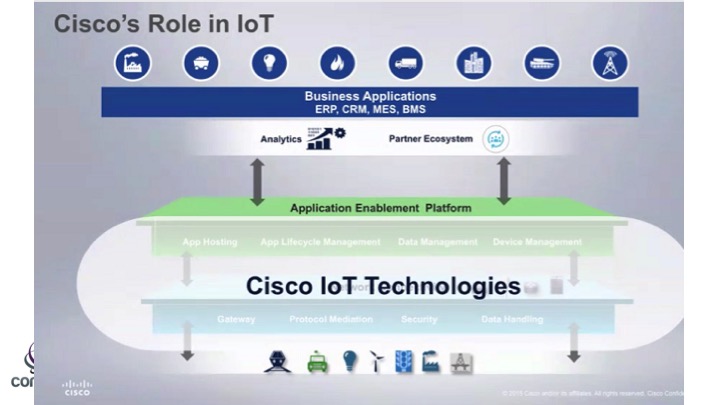
The Internet of Things (IoT) landscape appears confusing to those just entering the market. From hardware to software and even networks, IoT plays a major role in business model transformation. Market leaders see IoT as a means of enabling devices to provide insight and improve context in interactions. The goal is to take the real-time data stream and apply right-time contextual relevancy. In my latest report, The Five Interconnected Internet of Things Business Models, I identify the five business models emerging out of the Internet of Things. 

Constellation expects providers of IoT products and services to enter the market in one (or multiple) of the following business models.

CXOs entering the IoT should start solidifying the partnerships required for their businesses to thrive in IoT.   

5 Internet of Things Business Models

An excerpt of this report along with the table of contents is available to download

DOWNLOAD EXCERPT

Level 1: Sensors and Connectors Provide the Hardware Required to Start the Revolution

IoT requires a layer of hardware to actually connect devices and data sources. Large capital expenditures and traditional manufacturing processes characterize this space. Constellation anticipates the connected vehicle space to drive demand in this area of IoT.

Level 2: Engineered Stacks Emerge as the Norm

Moving forward companies will design their products with IoT connectivity embedded. Stacks inclusive of all the technology required for a product to operate in IoT will emerge. Think of the smart vehicle and all the technology required to operate in IoT as a 'stack'. The biggest challenge for these stacks will be creating alliances and partnerships between the network service providers and the vertical technology providers. 

Level 3:Insight Platforms Bring Relevant Context to IoT

The much of value of IoT derives from the ability to connect data sources. Insight platforms will be able to quickly deliver insights derived from data pools. Working alliances must be forged across different data sources. 

Level 4: Brokers Create New Markets for IoT Insights

IoT Data merchants will soon emerge to sell data derived from IoT much in the same way Bloomberg, Thompson Reuters, and Nielsen sell data about information such as point-of-sale data. 

Level 5: Networked Ecosystems Bring Diverse Stacks Together to Create Massive Opportunities

Large corporations such as General Electric and Siemens are striving to create and monetize large ecosystems built on IoT. Think of a connected city where the power grid, water, roads, communications, and public services are all connected.

This is the zenith of the IoT business model ecosystem as the feasibility of the networked ecosystem relies on the operation of the four other IoT business models. Look for players in this space to be large corporations that align closely with governments. 

Download an excerpt of this report 

DOWNLOAD EXCERPT

Matrix Commerce Data to Decisions Future of Work Innovation & Product-led Growth New C-Suite Tech Optimization Chief Information Officer

JDA Software Announces Cloud Collaboration with Google

JDA Software Announces Cloud Collaboration with Google

This morning Google and JDA software surprised the markets with a press release announcing Google Cloud Platform (GCP) as JDA’s public cloud infrastructure. This is obviously a first for JDA and Google, but not for the market (see below).
 
Let’s dissect the news release (it can be found here):

Scottsdale, Ariz. – June 10, 2015 –JDA Software Group, Inc. today announced an innovative new collaboration with Google aimed at leveraging the core strengths of both companies to deliver JDA’s next generation cloud-based omni-channel and supply chain solutions via Google Cloud Platform, a powerful public cloud offering. Through this collaboration, Google will provide a uniquely scalable and flexible technology platform via the cloud to support JDA’s future application development and delivery.


MyPOV – Good move by JDA, as choosing a public cloud provider saves substantial CAPEX that would have gone into data center build-out. Now JDA can invest those savings into product. For Google it means more load for GCP, more enterprise exposure and likely the start of a number of ISVs signing up for Google as cloud provider. Load is essential for all IaaS vendors, as it ensure the economies of scale they need to procure attractive supply chain prices and rates. The untapped potential of on premises enterprise software is one of the largest growth potentials for public cloud vendors overall. Take JDA with 4000 customers, ultimately they will all have to go to public cloud solutions. That is a lot of server capacity. And finally a lot of customers to cross sekk Google Apps and Google for Work to.

“Google Cloud Platform offers the unparalleled speed, performance, scalability and reliability we need to launch truly differentiated solutions. After thoroughly evaluating potential Platform as a Service (PaaS) providers, JDA chose to work with Google due to its unsurpassed technology platform, investments and deep culture of innovation,” said Serge Massicotte, executive vice president and chief technology officer at JDA Software.


MyPOV – There is little doubt GCP outperforms other clouds on the performance side of the overall infrastructure. My recommended simple test is to monitor the speed of email provisioning when travelling internationally. I do that a lot and still have to find the place on earth where my Gmail account does not beat e.g. my Office account. And it is no surprise – the core business model of Google, advertisement, needs very, very fast servers and networks. More surprising is that the JDA statement refers to Google as a PaaS, likely meaning Google App Engine (GAE), which has been a less popular choice by enterprise software vendors. We need to learn more about JDA’s plans and use case to understand this better.

This collaboration, which will significantly accelerate the development of JDA’s next generation cloud solutions, is JDA’s most recent initiative aimed at delivering innovative products and services for its customers. With an unmatched R&D investment in supply chain and omni-channel solutions, the company recently formed JDA Labs – a dedicated research and development group committed to delivering patents, best practices and entirely new products to the market. Google Cloud Platform initiatives will be developed out of the JDA Labs in Montreal. JDA’s work with Google also complements JDA’s newly announced FLEX platform strategy, which easily connects JDA’s existing cloud-based solutions and on-premise solutions with next generation solutions built on Google Cloud Platform.


MyPOV – Two good moves by JDA. Forming a lab for more innovative work has been a proven approach in enterprise software, see e.g. also the SAP Lab network. The FLEX platform is an interesting approach bringing together more traditional JDA platforms with its next generation cloud strategy.

“With thousands of successful customers — including 21 customers named as part of the Gartner Supply Chain Top 25 for 2015 — JDA has clearly established its leadership in delivering world-class retail and supply chain solutions,” said Massicotte. “To maintain and expand that leadership, JDA is focused on developing new innovative products and services that will truly change the supply chain landscape. By working with Google — an established innovation leader — JDA will concentrate on working with our customers to co-develop these groundbreaking solutions with Google Cloud Platform, providing an unmatched foundation. It’s a huge win-win for JDA customers, who will benefit from best-in-class solutions, delivered rapidly, from two proven market leaders working together.”

"We're thrilled that JDA has chosen to work with Google Cloud Platform to develop their next generation of products and services that will change the supply chain landscape," said Dan Powers, director, Google Cloud Platform. "The supply chain and omni-channel industry is ripe to benefit from the innovation, scale and flexibility of our public cloud offering, and by betting on Google, JDA can now focus on creating high impact business solutions while quickly adapting to meet customer needs." […]


MyPOV – The usual quotes – no commentary needed.

This month, JDA will be part of the keynote at a series of Google Cloud Platform Next events worldwide that highlights our work together. JDA executives will be featured speakers at Next events in New York on June 12, San Francisco on June 16, London on June 23 and Amsterdam on June 25. Learn more about the Google Next event series here.


MyPOV – Well good to be able to promote the new offering at Google events. I would not be surprised to hear a repeat of ‘Infor – who?’ (like at AWS Cloud event in March 2014 in San Francisco) in the form of ‘JDA – who?’ – at these events – but that is all part of becoming known as a vendor build on the public cloud.

Overall MyPOV

It is a Win / Win / Win for the partners and JDA customers. JDA customers should see a better return of R&D given the choice JDA has made for GCP. Let’s not underestimate the TCO aspect in this partnership, too – as Google has recently lowered prices (again – read here) – and many JDA customers turn the penny twice before they spend it. JDA saves CAPEX that it can put into its product organization and roadmap. Google gets load that helps it to scale better.

On the concern side, JDA is the first enterprise vendor to opt for Google. Certainly JDA has done good due diligence and Google is motivated to make it a success, but being first has risks – but also rewards when done right and successfully. And it is clear for JDA customers that the bulk of R&D going forward will be on public cloud platforms. Like it or not, customers should prepare and accommodate for that.

But in the meantime congrats to both vendors for a synergistic partnership, very likely many more to follow.

 
Tech Optimization Matrix Commerce Marketing Transformation Revenue & Growth Effectiveness Next-Generation Customer Experience Data to Decisions Innovation & Product-led Growth Future of Work Google SaaS PaaS IaaS Cloud Digital Transformation Disruptive Technology Enterprise IT Enterprise Acceleration Enterprise Software Next Gen Apps IoT Blockchain CRM ERP CCaaS UCaaS Collaboration Enterprise Service Supply Chain Automation Leadership M&A Chief Information Officer Chief Technology Officer Chief Supply Chain Officer Chief Experience Officer Chief Information Security Officer Chief Data Officer Chief Digital Officer Chief Analytics Officer Chief Executive Officer Chief Operating Officer