Results

Nilofer Merchant’s The Power of Onlyness Launches Today

Nilofer Merchant’s The Power of Onlyness Launches Today

1

"Great book." "Perfect time."  I expect these are the phrases I'm going to hear a lot about Nilofer Merchant's new book, The Power Of Onlyness: Make Your Wild Ideas Mighty Enough To Dent The World. "Great book,"  because it is. This is an actionable book filled with stories that would have made you glad to read them even if they didn't teach you something. "Perfect time,"  because of all the conflict in the world and how we need to deepen our discussions around many of the things we may have let slide before. Perhaps, perfect timing for me as I embark upon a new set of adventures around my research, speaking, and consulting.

The image of onlyness resonated with me from the very beginning. On page 2, Merchant says:

You’re standing in the spot in the world that only you stand in, a function of your history and experiences, visions, and hopes. From this spot where only you stand, you offer a distinct point of view, novel insights, and even groundbreaking ideas.

http://amzn.to/2wQ7Jtf

My research is about the mixing of human, technical, and organizational dimensions of work. This book is a deep dive into the human -- and particularly, your own -- contributions. Until talking with Nilofer about the idea of onlyness, I’d never thought as deeply about the unique contribution that each one of us can make. Only I can stand in this particular spot at this particular moment. Yes, my science fiction loving-self could challenge that, but even there we could have some interesting insights about that.

Onlyness is more than finding your passion. It’s about exploring your opportunities to contribute. The book offers examples big and small. It also helps you focus on the evolution of onlyness. My first goal is to assess how I can further develop my onlyness. I want my place in the world to be more than happenstance.

For Santa Clara University Readers

We have an extra gift in Chapter 3. Merchant, an MBA alumna (and now my colleague and friend), chronicles Prof. André Delbecq’s story of onlyness. Though I’d been honored to know André for more than 16 years (we lost him to cancer this year), I did not know how much work it took for him to stand in his particular place in the world. André was one of the wisest people I’ve known and this chapter is a unique view into the evolution and enactment of that wisdom.

For all of us: “Don’t Be a Lonely Only” (p. 53)

Like most great books, this is a call to action. It's a call to collaborate. The quote from p. 2 continues, “Now that you can grow and realize those ideas through the power of networks, you have a new lever to move the world.” More than ever before we have the chance to find and work with others to make dents in the world. As I write this, it seems that more than ever before the world needs us to make positive contributions. Make your ideas mighty!

Disclaimer: I received a free galley copy from the publisher and a gift copy from Nilofer. My purchased copy from Amazon arrives today.

What Top CMO's Care About Part 1 of 4

What Top CMO's Care About Part 1 of 4

Trends Surfacing Highlight Greater Orchestration

In March 2016, Constellation introduced four personas of the modern CMO (see Figure 1).  This framework provided CMO’s with a model to think about the role of strategy versus execution and audience development versus audience acquisition.   Over the past eight weeks, conversations with demand generation focused CMO’s have indicated a set of priorities for the next 12 to 18 months.

Figure 1. The Four Personas Of The Modern CMO

Four personas of the Modern CMO

Top CMO’s have voiced these seven concerns:

  1. Dealing with convergence of marketing ops and sales ops.  As new business models emerge and B2B and B2C models converge to P2P approaches, the traditional functional fiefdoms of marketing and sales seem quite antiquated.  Organizations must decide if inside sales should belong in marketing or customer success reside with sales.  This convergence and orchestration creates havoc on traditional structures but ultimately provide a customer centric approach.
  2. Preparing for more privacy regulations.  The pending GDPR requirements that levy fines up to 4% of annual revenue will transform demand gen practices.  Organizations must move from today’s Canary Islands approach (at least in the US) to a full permission based model to meet compliance.  In addition, governments must respond to the growing calls for more data security and individual control of personal data.
  3. Battling for key talent.  Skills in digital marketing, data analytics, and mar tech remain the hot areas.   CMO’s constantly struggle between re-skilling existing employees and finding new talent.  Digital savvy marketers power the future of demand generation and organizations can barely retain talent.
  4. Improving market segmentation while maximizing resource allocation.   The push for conversion rate optimization and ad clicks continue to drive new campaigns.   Successful marketing leaders balance speed, quality, costs, and effectiveness.   In addition, leaders need to expand audience marketing from department heads to CXO’s.
  5. Crafting new models of engagement.  Contextual relevancy drives the success of open rates, response rates, and conversion rate optimization.  Setting the stage for meaningful engagement requires context, relevant choices, and value exchange.   Organizations must prepare for mass personalization at scale in an AI driven smart services world.  Success requires augmenting next best actions and crafting guided journeys.
  6. Incorporating a hodge podge of martech solutions.  The average marketing organization must deal with 23 categories of solutions (see Figure 2).  Many of these solutions purchased by departments do not integrate with each other.  More importantly, these solutions often lack a common orchestration architecture.
  7. Investing in foundational demand gen infrastructure for scale. The future of marketing tech require massive compute power and logic to support a world of AI and streaming data.  Unifying marketing automation with CRM, Finance, ERP, and other systems not only remains a challenge, but also requires access to scalable infrastructure.

Figure 2. Over 23 Components Form Marketing Clouds

Marketing clouds in the engagement economy

Bottom Line: Demand Gen CMO’s Seek Simplification

Demand generation CMO’s can no longer support the massive complexity and spend required to support today’s challenges.  CMO’s seek simplification and scale from technology while improving the efficacy of existing staff.  Leading CMO’s expect more staff augmentation for scarce skills.  The continued onslaught of regulation will lead to a greater reliance on technology solutions to achieve scale.   As technology improves, demand generation CMO’s can apply the creative aspects of the Brand CMO and improve engagement in campaigns that reflect the brand and deliver contextual relevancy.   CMO’s can expect this market to transform in the next 24 to 36 months.

Your POV.

What are your top priorities as a demand gen orientated CMO?  Are you leaning to more sales ops and marketing ops coordination?  Learn how non-digital organizations can disrupt digital businesses in the best-selling Harvard Business Review Press book Disrupting Digital. 

Add your comments to the blog or reach me via email: R (at) ConstellationR (dot) com.

Please let us know if you need help with your Digital Business transformation efforts. Here’s how we can assist:

  • Developing your digital business strategy
  • Connecting with other pioneers
  • Sharing best practices
  • Vendor selection
  • Implementation partner selection
  • Providing contract negotiations and software licensing support
  • Demystifying software licensing

Reprints

Reprints can be purchased through Constellation Research, Inc. To request official reprints in PDF format, please contact Sales .

The post Monday’s Musings: Part 1 of 4 – What Top CMO’s Care About (Demand Gen Persona) appeared first on A Software Insider's Point of View.

Marketing Transformation Innovation & Product-led Growth Leadership Chief Customer Officer Chief Marketing Officer Chief Experience Officer

Digital Transformation Digest: VMWare Now Live on AWS, Oracle's Cloud Hiring Spree, and More

Digital Transformation Digest: VMWare Now Live on AWS, Oracle's Cloud Hiring Spree, and More

Constellation Insights

VMWare launches on Amazon Web Services: After shuttering its own public cloud plans, VMWare inked a deal last year with AWS to implement its software-defined data center computing fabric on the cloud giant's server farms. Now the first delivery of that plan has arrived:

VMware Cloud on AWS is powered by VMware Cloud Foundation, the unified SDDC platform that integrates vSphere, VMware VSAN, and VMware NSX® virtualization technologies with VMware vCenter management. This means customers can use familiar VMware tools to manage their applications, without having to purchase any new or custom hardware, rewrite applications, or modify their operating model. With VMware Cloud on AWS, customers can leverage AWS's breadth of services, including compute, databases, analytics, Internet of Things (IoT), security, mobile, deployment, application services, and more.

VMWare made the announcement at its VMWorld conference in Las Vegas. Initially, the new service will be available in AWS's US West region with more to follow during 2018, according to a statement. Early customers include Cerner, MIT, Sysco and Moody.

POV: Along with full global availability, VMWare is still working out its pricing model for the service, which means many initial deals will be on the smaller side until enterprises get a better sense of both its robustness and how term pricing could benefit. Right now, it's priced hourly according to active usage, with one and three-year subscription options coming later. Customers would realize significant savings over on-demand pricing, with up to a 50 percent discount for a three-year deal, according to VMWare's pricing page. VMWare also wants to incentivize existing on-premises customers, as it will offer discounts to those with on-premises vSphere, NSX or vSAN licenses.

What enterprises should watch for now are the experiences of early adopters, says Constellation VP and principal analyst Holger Mueller. "If this fully works, CIOs have no excuse in regard to moving VMWare loads to the cloud," he says. "But let's see if this works." After all, he notes, customers weren't eager to adopt VMWare's failed attempt at public cloud, vCloud Air.

Oracle hiring up for the cloud: When it comes to accelerating cloud revenue growth, the best answer is attracting the right talent, and lots of it. That's what Oracle believes, in any case. The company said this week it will hire more than 5,000 engineers, consultants, sales and support personnel into its cloud business.

Under the direction of CEO Mark Hurd, Oracle had already been hiring and training new college graduates as cloud salespeople. That will continue, but the hiring push is also targeting experiences sales staff and engineers, Oracle EVP Joyce Westerdahl said in a statement.

POV: Cloud revenue shot up 58 percent to $1.4 billion in Oracle's most recent quarter. That represented 13 percent of Oracle's overall revenue. In contrast, new on-premises license sales were down 5 percent to $2.6 billion, but maintenance revenue actually rose 2 percent to $4.9 billion—46 percent of overall revenue.

In short, while Oracle is keen on growing cloud sales, on-premises licenses and maintenance remain lucrative and substantial businesses. Oracle has crafted its new-hire training program carefully, with seasoned account executives skilled at negotiating complex, multimillion-dollar on-premises deals essentially mentoring green salespeople while sharing in their success.

Constellation believes, however, that the best sales tool is the ability to point to successful customers. With Oracle's massive OpenWorld conference coming up in about a month, it will present an opportunity for the company to do just that.

Panelists resign from Trump's cybersecurity council: Eight members of the U.S. National Infrasructure Advisory Council have resigned, saying that recent actions by President Donald Trump have threatened the nation's cybersecurity. In a group letter obtained by Nextgov, the departing panelists explained their rationale:

Your actions have threatened the security of the homeland I took an oath to protect. These actions include your remarks given at a press conference on infrastructure reform on August 15,2017. When asked about the horrific violence in Charlottesville, you failed to denounce the intolerance and violence of hate groups, instead offering false equivalences and attacking the motives of the CEOs who had resigned from their advisory roles in protest. You have given insufficient attention to the growing threats to the cybersecurity of the critical systems upon which all Americans depend.

POV: The departures represent more than 25 percent of the panel's membership, but are to some degree partisan in nature. At least three Obama-era officials are among the ones leaving. Trump has also taken recent steps to highlight cybersecurity as a priority, elevating the Pentagon's Cyber Command to a more prominent organizational status. Still, with cybersecurity being a more important topic by the day, any sort of political turmoil is counterproductive to the mission. Here's to hoping the panel can be restaffed quickly with a bipartisan mix of officials capable of working well together. 


Digital Safety, Privacy & Cybersecurity Marketing Transformation Next-Generation Customer Experience Tech Optimization Chief Information Officer Chief Digital Officer Chief Revenue Officer

Digital Transformation Digest: Amazon Details Whole Foods Integration Plans, Marketo Teams Up with Google Cloud, VMWorld 2017 Preview

Digital Transformation Digest: Amazon Details Whole Foods Integration Plans, Marketo Teams Up with Google Cloud, VMWorld 2017 Preview

Constellation Insights

Amazon-Whole Foods integration plans revealed: One of the highest-profile retail and e-commerce-related acquisitions in years, Amazon's $13.7 billion purchase of Whole Foods Market, is set to close on Monday. In advance of that date, the companies have released some details of their integration plans.

Much attention has been paid to discounts that will be immediately applied to some best-selling Whole Foods grocery items, such as salmon, eggs, bananas and ground beef. This is an effort to shed Whole Foods' longtime, disparaging nickname, "Whole Paycheck." These price cuts and future ones will be enabled by the technology integration timeline, which the companies describe as the following:

In addition, Amazon and Whole Foods Market technology teams will begin to integrate Amazon Prime into the Whole Foods Market point-of-sale system, and when this work is complete, Prime members will receive special savings and in-store benefits. The two companies will invent in additional areas over time, including in merchandising and logistics, to enable lower prices for Whole Foods Market customers.

“We’re determined to make healthy and organic food affordable for everyone. Everybody should be able to eat Whole Foods Market quality – we will lower prices without compromising Whole Foods Market’s long-held commitment to the highest standards,” said Jeff Wilke, CEO of Amazon Worldwide Consumer. ... And this is just the beginning – we will make Amazon Prime the customer rewards program at Whole Foods Market and continuously lower prices as we invent together. There is significant work and opportunity ahead, and we’re thrilled to get started.”

A bit further down the road, Amazon Prime will actually become Whole Foods' customer rewards program.

POV: There are few surprises in the joint announcement. Amazon has long been prized for its competitive pricing and there was never any question it would seek to lower the cost of shopping at Whole Foods. However, it is also clearly going to take pains to preserve Whole Foods' culture, wanting to retain its valuable pool of higher-end shoppers. 

Whole Foods' brick-and-mortar presence in hundreds of heavily populated areas was another big reason for Amazon's decision to buy it, as the locations provide additional density to its supply chain footprint. To that end, the companies announced that "select" Whole Foods stores will have Amazon lockers, where they can pick up Amazon.com items ordered online or return them. Constellation believes that this is just a start, and over time more real estate within Whole Foods stores will be devoted to Amazon.com-related purchasing and returns.

Marketo teams up with Google Cloud: Another SaaS vendor has decided to rely on a public cloud provider rather than run its own infrastructure. Marketing software vendor Marketo has signed a multi-year deal with Google Cloud Platform that will also see an integration between Marketo's tools and Google G Suite and data analytics.

Marketo's marketing automation software will "run end-to-end" on Google Cloud, and Google, an existing Marketo customer, will also expand its usage of the product. Moving its infrastructure will give Marketo, which was acquired last year by Vista Equity Partners for $1.79 billion, more resources to focus on product innovation. In addition, Marketo plans to leverage GCP's machine learning capabilities.

POV: The integration of Marketo and Google's ad analytics will have some strong synergies, says Constellation VP and principal analyst Cindy Zhou. "This provides customers a unified view of marketing campaign and advertising ROI," she says. "Historically, customers have bought ads separately through an ad network, or through Google directly, and it has been a siloed process of ad data and marketing campaign data. There has been no easy way to look at holistic campaign ROI. Companies either manually try to consolidate the data or rely on agency reporting."

Examining VMWorld 2017: In just a few days, VMWare's WMWorld conference will kick off in Las Vegas. The show comes days after the company reported strong second-quarter results, with revenue up 12 percent to $1.9 billion and net income rising 30 percent to $334 million. Here are some of the things you can expect VMWare to discuss at the event.

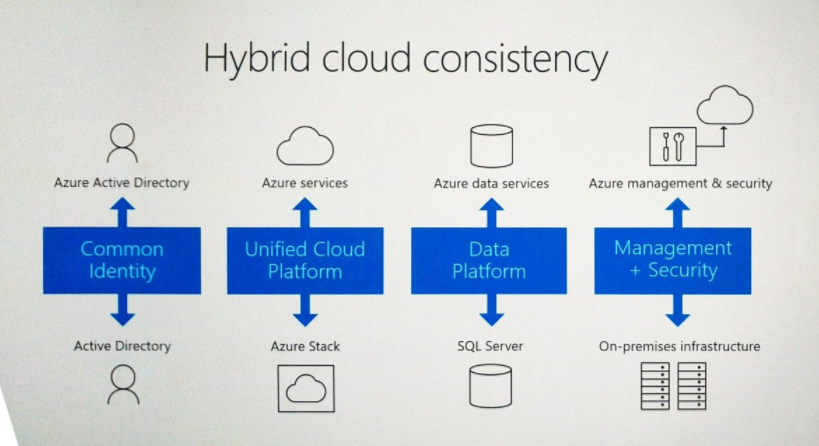
  • VMware and Amazon Web Services: Last October, VMware announced that it had chosen AWS as its public cloud provider, with the intention of creating a hybrid cloud offering that spans on-premises VMWare deployments and AWS, without having to rewrite applications. (Go here for Constellation VP and principal analyst Holger Mueller's deep-dive on the announcement.) At the time, VMWare said the offering would be generally available in the middle of this year; during the earnings conference call, CEO Pat Gelsinger didn't provide many specifics, but indicated the AWS deal will be a big focus at VMWorld. In response to a question, Gelsinger also characterized Microsoft's Azure Stack, which stands to provide stiff competition for VMWare in hybrid cloud, as taking a less customer-friendly approach. 

    VMware's AWS integration will allow customers to "seamlessly extend their position to the AWS environment as well as to be able to consume additional AWS services in a very effective manner," he said. "In contrast Azure Stack is about bringing Azure on premise, so it's really many respects the opposite and it's asking customers to fork or create a heterogenity in their on-premise environment just to take advantage of some services that they may want to consume from Microsoft."
     
  • Cloud customers in abundance: Thirty VMWare cloud management software customers will appear at VMWorld next week and at its companion event next month in Barcelona. They include Credit Suisse, Box and Polaris Alpha. Topics to be covered include operations monitoring, capacity planning and network management. While vendor executives and product managers are highly knowledgable about their products, customer stories told in their own words are crucial fodder for any enterprise conference. It appears that VMWare has done a solid job of pulling together a lineup.
     
  • Future directions: On the earnings call, Gelsinger noted the introduction in May of Pulse IoT Center, for managing, securing and monitoring IoT devices. "IoT and edge specific solutions are being developed with key strategic partners including Fujitsu, HARMAN and EuroTech, as customers look to VMware to help extend the capabilities of the datacenter to the edges of their businesses," he said. Gelsinger also revealed that VMWare and Fujitsu are helping Toyota create a "next-generation in-car platform." He didn't offer any specifics, but those could come during VMWorld keynotes and sessions next week.


Marketing Transformation Matrix Commerce Next-Generation Customer Experience Tech Optimization Chief Customer Officer Chief Information Officer Chief Marketing Officer Chief Supply Chain Officer

The Gig Is Up. Microsoft Sunsets GigJam

The Gig Is Up. Microsoft Sunsets GigJam

I still remember the phone call. I was in Paris attending a Capgemini event when a Microsoft executive called me...
Microsoft: "We need you in Redmond within the next few days."
Me: "Well, I'm going to be at your Worldwide Partner Conference in a few weeks, can we talk then?"
Microsoft: "No, we need to show you something."
Me: "Can we do it via Skype?"
Microsoft: "No, you have to come here and see it."

That was the start of my journey with what came to be known as Microsoft GigJam. For those not familiar with GigJam, here is my initial report on it: Has Microsoft just redefined collaboration?

That journey came to a bit of a conclusion this week, as Microsoft announced "After careful consideration, we’ve decided to retire the GigJam Preview on September 22, 2017." - Ambient Computing Team

MyPOV:

This is a very good decision. GigJam was an incredibly bold and powerful idea. It's rare that a software vendor takes a chance and completely redefines the way people do things. I applaud Microsoft for this, and wish more vendors would do this. The problem is, GigJam didn't have a metaphor that people could easily relate to. It was not file sharing, web conferencing, or social networking. It was a new way to divvy up small chunks of work. The problem of "what is it" is very reminiscent to the early day struggles we had with Lotus Notes. I can't tell you how much time we spent just trying to explain to customers what it was.

While Microsoft is shutting down GigJam as a standalone application, I'm confident that many of its concepts will live on in future versions of the core Office 365 apps. Features like sharing just small bits of data (versus an entire document or application), using natural language input (Cortana) to create views, crossing out confidential information to redact it, and linking together objects for filtering are all extremely useful. However, these features are better off inside existing applications, people don't need another tool. If you want to share a few cells of a spreadsheet, you should easily be able to do that from within Excel. If you want to link an mail to a Dynamics CRM record, you should do that right inside Outlook. Etcetera. 

I believe Microsoft's primary focus going forward will be on enhancing Microsoft Teams. Teams aggregates together functionality from across various apps in Office 365. This goes well beyond the standard Word-PowerPoint-Excel trio to include apps like OneNote, Planner, Flow, PowerApps and more. This robust portfolio enables Teams to be the perfect place to add some of the GigJam concepts into. Stay tuned, with Microsoft Ignite coming up in just a few weeks, Microsoft may have some surprises for you in the personal productivity and team collaboration space.

Rest well GigJam, you were a good soul.


Future of Work

Summer 2017 News Analysis - Workday announces its PaaS

Summer 2017 News Analysis - Workday announces its PaaS

What's the news: Workday did a soft launch of its new PaaS capabilities at its partners conference earlier in the year. The announcement was short of details, as Workday likely did not want to steal any thunder from its major yearly event, Workday Rising, to be held later this fall (see the blog here).


Why it matters: Workday has long held the record of most closed major SaaS property in the market. The moniker was something along the lines that “SaaS knows no customization”. A valid point, but only to the degree that enterprises must be able to run their business. At the moment enterprises can’t run their business anymore the pressure on vendors grows very quickly to provide better extension, customization and sometimes even stand-alone software building options. With Workday now offering the beginnings of a PaaS strategy, enterprises will gain more flexibility to make sure their Workday system fits with the specific, sometimes even unique needs. Moreover, hence it was announced at the partner conference, partners can undertake more extensions, potentially even build their own assets that can / could be re-used over their client’s boundaries.


MyPOV – Workday has been the longest hold out in regards of PaaS of all major SaaS players. May it be for the lack of customer pressure, may it be for the extensive customization past of Peoplesoft, Workday executives only saw the need for PaaS enough to make it a product offering in … 2017. Any industry observer may remember 2014, when Oracle made it the ‘fall of PaaS’, and I asked CEO Bhusri back ten if Workday had any plans…. And the answer was no plans, and then – if ever – only for a PaaS with a little ‘p’. I interpreted the little ‘p’ PaaS as a PaaS platform with the focus on integration and extension – versus the capital ‘P’ PaaS that allows to build stand-alone applications. Probably a valid separation and good for Workday to tackle the first two use case for an enterprise vendor’s past first.

Overall this was a key move by Workday, as we currently see enterprises operate in the era of business process uncertainty: Previously well-established best practices are being challenged by new technology capabilities, that empower the competition for the new best practices of the 21st century. But that’s a time for experimentation, that is challenge for all SaaS vendors – who prefer to build the same software for 1000s of customers. But when the best practices is not clearly defined, PaaS is the life insurance both for a vendor and an enterprise: When the solution does not fully fit, or is even missing, then the vendor’s PaaS is a welcome alternative for both sides to get what they want: The enterprise the fitting and needed software, the vendor the license and usage of the rest of its SaaS software.


CxO Advice – This is good news for CHROs, who previously may have had a challenging time to convince their CTO and CIO colleagues that they could use Workday for Finance, HCM etc. – no matter what the future holds. Now the ‘PaaS safety blanket’ gives the needed flexibility and peace of mind to CxOs when it comes to extending Workday, and potentially building individual pieces of automation. As with all new offerings, Constellation recommends to wait for the announcement dust to settle, understand the first capabilities of the product, see which enterprises are adopting it, learn from experiences, ask for the roadmap and then chart your enterprise course – where uptake and usage may be at a certain point. As with all enterprise software based PaaS vendors, considerations also need to be take in regards of an overall PaaS strategy for the enterprise and how many different PaaS an enterprise is willing (and required) to use.


Next-Generation Customer Experience Digital Safety, Privacy & Cybersecurity Data to Decisions Future of Work Tech Optimization AI Analytics Automation CX EX Employee Experience HCM Machine Learning ML SaaS PaaS Cloud Digital Transformation Enterprise Software Enterprise IT Leadership HR Chief Customer Officer Chief People Officer Chief Human Resources Officer

Digital Transformation Digest: Google Cloud Platform's New Premium Tier, Walmart's Latest Move Against Amazon, Apple Reveals Siri R&D

Digital Transformation Digest: Google Cloud Platform's New Premium Tier, Walmart's Latest Move Against Amazon, Apple Reveals Siri R&D

Constellation Insights

Google looks to differentiate with premium cloud tier: The public cloud market is dominated by Amazon, Microsoft, Google and IBM. While all offer general-purpose and specialized compute power for increasingly lower cost, Google is betting that its proprietary fiber network can give it a competitive edge.

The company has been building out its private fiber network for nearly 20 years, and it now has more than 100 POPs (points of presence) around the world. That translates to low latency and high availability. Current customers already benefit from this private network, but going forward, Google will also offer a lower-cost standard tier, which runs on ISP networks and has comparable performance to competing clouds, it said in a blog post. In this sense, Google isn't offering a higher-powered option than previously but can be more cost-competitive with other clouds.

Once generally available, Standard Tier will be priced up to 33 percent lower than Premium Tier in North America and Europe. While Premium Tier will remain the "default tier for your workloads," Standard will be preferable for some scenarios, Google says. It has certain limitations as well, such as regional versus global load balancing capabilities.

POV: "It's good to offer customers choices, and Google has realized that the best solution doesn't have to be the right solution for all," says Constellation VP and principal analyst Holger Mueller. "But the ramifications go deeper, as with all network changes. Minutes, hours, or days of downtime can quickly become magnitudes more expensive than a higher-quality network that costs enterprises more money."

Walmart fires another e-commerce arrow at Amazon: The world's largest company has been in an e-commerce dogfight against Amazon, and in its latest move to fend off the online giant is teaming up with Google. Walmart customers will be able to shop for products via voice Google Assistant or through the Google Express website and application:

If you’re an existing Walmart customer, you can choose to link your Walmart account to Google and receive personalized shopping results based on your online and in-store Walmart purchases.  For example, if you order Tide PODS or Gatorade, your Google Assistant will let you know which size and type you previously ordered from Walmart, making it easy for you to buy the right product again.

POV: Google had already signed up for similar partnerships with Costco and other retailers, but the Walmart deal will certainly move the needle. The partnership has benefits for both sides; Google Express is a small fish in the e-commerce pond right now, but access to Walmart's massive customer pool—and related historical data that will help improve Google Assistant's accuracy—will be a boon. In turn, Walmart will benefit from the large ecosystem that exists for Google Assistant across Android devices. While it's far from a killing blow against Amazon, this is one partnership that should make a mark on the matrix commerce landscape.

Apple opens up (a little) about Siri's R&D: Speaking of digital assistants and speech recognition technology, this week is the occasion of the preeminent academic conference covering those topics. Many industry mega-vendors, such as IBM and Microsoft, will have researchers on hand presenting papers, but one surprising participant is notoriously secretive Apple.

During the Interspeech conference this week in Stockholm, representatives from Cupertino will present a paper titled "Siri On-Device Deep Learning-Guided Unit Selection Text-to-Speech System. It describes "Apple’s hybrid unit selection speech synthesis system, which provides the voices for Siri with the requirement of naturalness, personality and expressivity."

While the paper is as technically dense as its kind tend to be, Apple has also released a blog post that provides a more accessible summary of the methodology behing Siri's development.

POV: A H/T goes to the Register for spotting Apple's paper on the Interspeech conference's website. Its release follows a pledge made last year by Apple's head of AI research that the company would be more open about AI going forward. It made good on that promise in December, releasing an initial academic paper focused on image recognition, which is an important AI capability for technologies such as driverless cars and security. 

As we wrote at the time, Apple's motivations for opening up about AI are likely driven in part by a desire to attract top talent. It's good to see Apple continue to live up to its AI openness pledge, but expect it to understandably hold back on sharing its juiciest research.

Data to Decisions Marketing Transformation Matrix Commerce Tech Optimization Chief Customer Officer Chief Information Officer Chief Marketing Officer Chief Supply Chain Officer Chief Revenue Officer

Digital Transformation Digest: Salesforce's Big Q2, Google Unveils Chrome Enterprise, and Microsoft's Project Brainwave

Digital Transformation Digest: Salesforce's Big Q2, Google Unveils Chrome Enterprise, and Microsoft's Project Brainwave

Constellation Insights

Key takeaways from Salesforce's Q2: Salesforce had a strong second quarter, with revenue up 26 percent to $2.56 billion and the company on track for more than a $10 billion revenue run rate for the fiscal year. Its growth numbers aren't that surprising, of course; what's of more utility for Salesforce observers and customers is the color and context provided during the quarterly conference call. Here's a look at the highlights.

  • While Salesforce has many product categories today, its core CRM is still running strong, with revenue up about 14 percent in the quarter. On the call, CEO Marc Benioff predicted that CRM will one day be a $1 trillion market opportunity. Whether that's a reflection of his taste for the bombastic or a sure thing remains to be seen.
  • Salesforce is synonymous with Silicon Valley, but has been investing in growing its global footprint. More than 40 percent of new hires in the year to date have been outside the United States, said president Keith Block.
  • Benioff said Salesforce is now focusing on reaching $20 billion in revenue, and in "fairly short order." And it will get there how? Here's Benioff's explanation:
    I think a lot of mistakes that the other entrepreneurs have made and I can go through each one. In enterprise software specifically, it’s not to really double down at this point, again on the customer. Get absorbed in your own myopia, get absorbed in your corporate politics, get absorbed in your corporate bureaucracies and yourselves, and try to break out of yourself and recognize the most important thing, continues to be the customer.

Salesforce's AI technology Einstein "has hugely exceeded our expectations," Benioff said. He teased "exciting news" about Einstein coming at the Dreamforce event in early November, and referred to breakthroughs for AI in financial services and healthcare. It will be interesting to see how much wood Salesforce puts behind the Einstein arrow at Dreamforce: Will it have live customers telling their success stories, or only some demos and future direction?

Microsoft's Project Brainwave seeks to democratize deep learning: A new Microsoft deep learning platform codenamed Project Brainwave is heading to the company's Azure cloud in the near future. Brainwave is focused on delivering real-time AI derived from streaming data, such as from videos, sensors and search queries, according to a blog post from Microsoft Research:

The Project Brainwave system is built with three main layers: A high-performance, distributed system architecture; a hardware DNN engine synthesized onto FPGAs; and a compiler and runtime for low-friction deployment of trained models.

First, Project Brainwave leverages the massive FPGA infrastructure that Microsoft has been deploying over the past few years.  By attaching high-performance FPGAs directly to our datacenter network, we can serve DNNs as hardware microservices, where a DNN can be mapped to a pool of remote FPGAs and called by a server with no software in the loop.  This system architecture both reduces latency, since the CPU does not need to process incoming requests, and allows very high throughput, with the FPGA processing requests as fast as the network can stream them.

Second, Project Brainwave uses a powerful “soft” DNN processing unit (or DPU), synthesized onto commercially available FPGAs. ... Although some of these chips have high peak performance, they must choose their operators and data types at design time, which limits their flexibility.  Project Brainwave takes a different approach, providing a design that scales across a range of data types, with the desired data type being a synthesis-time decision. ...  As a result, we achieve performance comparable to – or greater than – many of these hard-coded DPU chips but are delivering the promised performance today.

Microsoft is working to bring Brainwave to Azure and will detail availability in "the near future," according to the blog.

POV: Brainwave is about finding practical ways to bring high-performance deep neural net capabilities to a broad market through Azure, says Constellation VP and principal analyst Doug Henschen. That's because FPGAs (field programmable gate arrays) offer a comparatively low-tech way to apply dedicated, hardware-based computing power to AI challenges without turning to more exotic hardware, such as GPU-based servers, he adds. "Rather than chasing records under controlled lab conditions, the focus is on bringing general purpose AI acceleration into commercial use as soon as possible," Henschen says.

In short, Project Brainwave is "not about conducted elite AI research in an ivory tower," he adds. "It's about bringing responsive deep neural-net capabilities to a broad community of developers that will pursue breakthrough, real-world applications of AI."

Google rolls out Chrome Enterprise: When VMWare founder and CEO Diane Green joined Google in 2015 to lead its cloud business, the prevailing view was that she would spark a wave of activity around generating more business from enterprise IT shops. Google is taking a big step in that direction with the introduction of Chrome Enterprise, a new version of the cloud-centric Chrome OS that adds on many enterprise-friendly—if not mandatory—features, such as deeper security, around-the-clock support and integration with Microsoft Active Directory.

The last feature is especially key, as it means administrators at companies can use familiar on-premises tools to manage both Windows and Chrome devices.

POV: Google made an enterprise push for Chrome devices in 2014, with the introduction of Chromebooks for Work. Chrome Enterprise builds substantially on that idea, but preserves the $50 per device/year price point, which could prove quite attractive to companies, particularly ones already invested in Google Apps. Chromebooks remain highly price-competitive as well. Google is planning to reveal more details about Chrome Enterprise during a webcast, for which registration is available at this link.

Data to Decisions Future of Work Marketing Transformation Tech Optimization Chief Customer Officer Chief People Officer Chief Information Officer Chief Digital Officer

Systems of Engagement and Enterprise Business Architecture Including a point on the Architectural challenge of Blockchain!

Systems of Engagement and Enterprise Business Architecture Including a point on the Architectural challenge of Blockchain!

It’s taken some time to catch on since Geoffrey Moore first outlined the concept of Systems of Engagement and Systems of Record as two separate Enterprise functions back around 2010, but now the term is increasingly used in blogs and presentations. Unfortunately, increasing usage doesn’t necessary equate to increased understanding, particularly as technology vendors naturally apply the term to the aspects that correspond to their product focus. The full Enterprise functionality lies in the word ‘Systems’ meaning an interlocking cohesive integrated environment, in the same manner as IT is understood to be an across Enterprise cohesive integration of Systems.

Digital Enterprise Business architecture, as with any business architecture defines the specific roles and functions for Systems of Engagement. More recently under the title of Systems of Intelligence the functionality relating to applying various new forms of Intelligent Analytics, (AI), within the Enterprise has been added. It is tempting to define these respectively as the Front Office, Middle Office and Back Office, but this categorization trivializes the hugely important role of Systems of Engagement, (and indeed that of Systems on Intelligence). in a Digital Business model.

Constellation Research reports and blogs have long positioned the need for, and role of, the Middle Office as the new intelligence hub of Digital Enterprise operations. (see Appendix for details). These reports were specifically focused on an emergent requirement in Digital Business Architecture, and accordingly Constellation’s use of the term Middle Office is interchangeable with the recent introduction of the term Systems of Intelligence.

However, the same is decidedly not the fact when comparing the role and functionality of Systems of Engagement in a Digital Business versus the generally understood view of Front Office in current Enterprises business models. Originally a large part of the definition came from describing the activities that Enterprise IT did not support, latterly the arrival of sophisticated CRM systems, brought a sharp focus on direct revenue creating activities associated with Sales and Marketing.

More recently technology has introduced the need for specialized skills in the use of Social Media and Apps as business tools suggesting the possible need for a Chief Digital Officer; now IoT adds yet a further set of Internet based technologies that enable yet another set of business values. The point to grasp is that Digital Business is Internet Connected Business, with the Web merely one of the ways that a Digital Enterprise is engaged with Business activities.

The only reason it is possible to shift from selling Products, the transaction orientated Business model of the past, to an Outcome, or Services, Business model of Digital Business is because a raft of new technologies that support a myriad of methods of engagement is now driving transformation.

This could be, and indeed can be, an extension of capabilities to still further empower the Sales and Marketing functions of a Front Office in the current Business model, but a Digital Business model has very different requirements.

Outcomes, or Services, are inherently a market/customer pull model based on continuous satisfaction to obtain reoccurring revenue, and a public reputation spread by social media as the principle methods of customer acquisition, and retention. In contrast Product sales is a push model concentrated on an opportune moment, created by Marketing, and with a strong probability of no further relationship. While it is true that Social Media, and after sales services can, and are playing an increasing part in extending product sales relationships, there is a fundamental shift between the two business models.

Product centric sales are based on ‘push’ activities to create a transaction, whilst revenue from Digital Outcome Services comes through alignment with market and customers ‘pull’ activities. Systems of Engagement refers to any and all technologies, capabilities and functions that play a part in ensuring that the Enterprise is fully engaged, embedded even, in its market.

When reading the following consider as a illustrative point the challenges of customer churn that mobile phone operators face as they are measured by their customers on their satisfaction in the ‘outcome’ of calls, web browsing, Apps, etc. rather than traditional fixed phone telephone provision of a connection.

The following are all important elements in the make-up of an Enterprise System of Engagement;

Engagement across Markets; Digital Markets are continuously dynamic as factors ranging from demand levels, and events, combine with supply and pricing, to change competitive positions. As an example, consider how traders in Financial markets use market feeds, (and Intelligence from their Middle Office/Systems of Intelligence), to successfully trade.

Engagement with People; A great deal of market shaping now occurs through engaged, or involved, people creating, sharing and exchanging views and opinions. Never before has so much information as to factors that influence decisions, and create Markets been available.

Engagement with Buyers; Events and circumstances create revenue opportunities that engagement capabilities must recognize and provide a contextual aligned optimized response. Buyers expect recognition of significant factors as part of the engagement process interactions.

Engagement with Customers; Successful reoccurring revenue from the provision of Digital Business Outcomes extends relationship management into a much broader engagement around recognition of continual satisfaction in the provision of the agreed Outcome.

Engagement with Machines; The first level of Service provisioning will be dependent on using ever increasing amounts of IoT sensing either added to existing equipment, or built into new equipment. This presents a new challenge in establishing connecting and acquiring the data, but into full-fledged engagement with each machine to ensure continuous operational efficiency and effectiveness.

Engagement with Outcomes; The Services management of individual machines, (Air Conditioners, Heating plant, etc.) has to be consolidated with the bigger picture of an Outcome, (Maintenance of a selected Temperature in a Building). Outcome Management is at the heart of the Digital Business model and represents a completely new manner of engagement to produce and maintain revenues.

Engagement with Ecosystems; Ecosystems of specialist providers have long been a feature of sophisticated Service Management provision, (a full Building Management Service contract provider would use different companies for different elements). The shift from providing a ‘break fix’ maintenance Service through orchestrating responses to breakdowns to the management of a high-level outcome requires new levels of engagement and interaction across supporting Ecosystems.

Engagement across the Enterprise; Systems of Engagement do not exclude the need for internal engagement across the Digital Enterprise, as it too represents a similar dynamic environment to any of the above. Internal Enterprise engagement to monitor the availability of resources, capacity, capability, etc. is as important as the external engagement factors above.

Blockchain part of Systems of Engagement or Systems of Record? Functionally and architecturally this question is unresolvable at this time simply because the answer depends on the functionality of individual Blockchain solutions. If a Blockchain solution is deployed as a Transaction settlement system directly related to Book to Bill processes then it is architecturally required to integrate with Systems of Record. An alternatively type of deployment distributing data within an Ecosystem of specialist maintenance providers to maintain dynamic availability of spares and Engineer availability. This type of functionality provides data for Systems of Engagement to make available to Systems of Intelligence in the event or circumstances, require this input.

Systems of Engagement functionally and architecturally require a very different approach around ensuring the dynamics of data flows are maintained to make the latest data available if it is required, rather than the recording and holding of data for historic analytics as in Systems of Record.

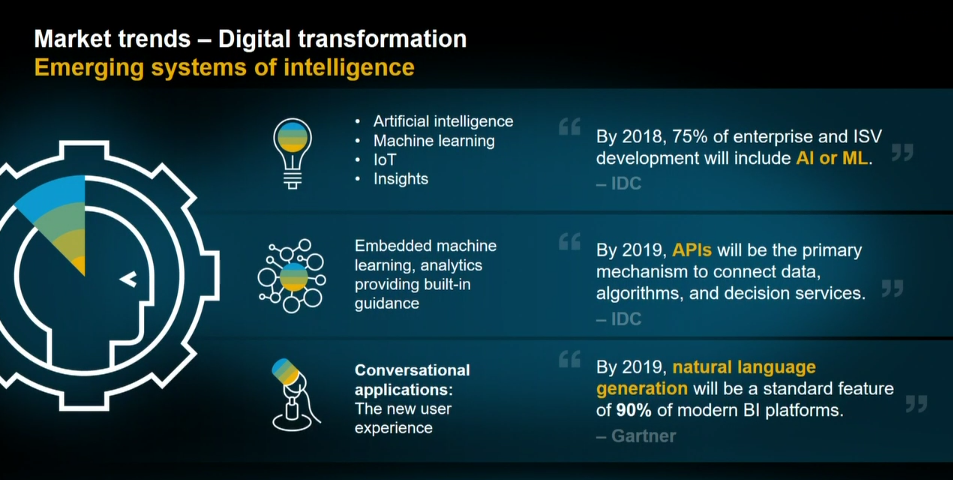
The sheer scale of the data that Systems of Engagement provides makes the case for Systems of Intelligence. Process and Rule based systems lack the flexibility to continually adjust to the ever-changing circumstances that lie outside the control of the Enterprise. Equally Systems of Intelligence cannot function without the data derived from Systems of Engagement, as such the two together form the backbone of a Digital Business model. A very important point to grasp as the better Systems of Engagement function in the provision of data, the better Systems of Intelligence can operate to maximize operational actions.

Systems of Engagement READ and Systems of Intelligence REACT to dynamic Data Flows

Systems of Engagement and Intelligence are architecturally most likely to be Loose Coupled and Stateless whereas Systems of Record are Tight Coupled and statefull.


Appendixes;

Report; The Case for the Middle Office; Dec 2016

Report; The CxO Guide to Digital Business

Report; Blockchain explained in plain English

Blog; Blockchain or Distributed Ledger? – requirement definition

Blog; Digital Business Distributed Business Models


New C-Suite Innovation & Product-led Growth Tech Optimization Future of Work AI ML Machine Learning LLMs Agentic AI Generative AI Analytics Automation B2B B2C CX EX Employee Experience HR HCM business Marketing SaaS PaaS IaaS Supply Chain Growth Cloud Digital Transformation Disruptive Technology eCommerce Enterprise IT Enterprise Acceleration Enterprise Software Next Gen Apps IoT Blockchain CRM ERP Leadership finance Customer Service Content Management Collaboration M&A Enterprise Service Chief Information Officer Chief Technology Officer Chief Digital Officer Chief Data Officer Chief Analytics Officer Chief Information Security Officer Chief Executive Officer Chief Operating Officer
Digital Transformation Digest: Microsoft Claims Speech Recognition Lead, IBM Aims Blockchain at Food Safety, Databricks and Skytap Nab Major Funding

Digital Transformation Digest: Microsoft Claims Speech Recognition Lead, IBM Aims Blockchain at Food Safety, Databricks and Skytap Nab Major Funding

Constellation Insights

Microsoft claims lead in AI speech recognition: Redmond's research group has managed to reach human parity for speech recognition, edging out IBM, in the latest stage of one of the more active battlefronts in AI development. Microsoft used the Switchboard data set, a large collection of recorded telephone conversations that's a standard tool in the speech recognition community's toolbox, to achieve its results, according to a blog post:

After our transcription system reached the 5.9 percent word error rate that we had measured for humans, other researchers conducted their own study, employing a more involved multi-transcriber process, which yielded a 5.1 human parity word error rate. This was consistent with prior research that showed that humans achieve higher levels of agreement on the precise words spoken as they expend more care and effort. Today, I’m excited to announce that our research team reached that 5.1 percent error rate with our speech recognition system, a new industry milestone, substantially surpassing the accuracy we achieved last year. A technical report published this weekend documents the details of our system.

Last year, Microsoft said it had managed a 6.3 percent error rate, but in March IBM said it had achieved a 5.5 percent rate. Microsoft attributed its latest gains to improvements in its neural net-based acoustic and language models, its Cognitive Toolkit 2.1, and GPU-powered infrastructure on Azure.

POV: Constellation expects speech recognition to play an increasingly important role not only in consumer but enterprise contexts, as a means of interaction with applications.

But it's important to place Microsoft's achievement in the proper context, which the company notably does itself in the blog. The Switchboard test only goes so far—challenges remain in training systems to understand speech in noisy environments, or accented speech, for example.

Moreover, Microsoft has "much work to do in teaching computers not just to transcribe the words spoken, but also to understand their meaning and intent," the blog notes. "Moving from recognizing to understanding speech is the next major frontier for speech technology."

IBM targets food safety with its blockchain tech: Big Blue has formed a pact with some of the world's largest food sellers and producers around using blockchain to promote food safety. It's the latest move by IBM to apply blockchain in verticals beyond its origins in finance. (Note: While blockchain is the term most commonly used in the industry, Constellation believes that synchronous ledger technology may be a more appropriate term. Go here for Constellation VP and principal analyst Steve Wilson's deep-dive on the topic.  

The companies working with IBM on the new initiative are Dole, Driscoll’s, Golden State Foods, Kroger, McCormick and Company, McLane Company, Nestlé, Tyson Foods, Unilever and Walmart, according to a statement.

Contaminated food is responsible for 420,000 deaths per year, according to the World Health Organization, and it can be very difficult and time-consuming to trace the source of the problem.  That's where blockchain comes in, IBM says:

Blockchain is ideally suited to help address these challenges because it establishes a trusted environment for all transactions. In the case of the global food supply chain, all participants - growers, suppliers, processors, distributors, retailers, regulators and consumers - can gain permissioned access to known and trusted information regarding the origin and state of food for their transactions. This can enable food providers and other members of the ecosystem to use a blockchain network to trace contaminated product to its source in a short amount of time to ensure safe removal from store shelves and stem the spread of illnesses.

POV: IBM also announced the general availability of its Blockchain V1 platform, which builds on the work done by the open-source Hyperledger project. Big Blue is one of Hyperledger's most prominent contributors. 

As for the food safety announcement, IBM has put together a very impressive list of launch partners to say the least, as all are major players in the increasingly complex global food supply chain.

But that complexity is related to more than logistical matters; traceability in the food supply chain isn't just about figuring out the source of contamination after the fact. Factors such as food fraud—a problem that costs producers billions per year—and consumer demand for concrete provenance of the food they purchase are just two other key factors. If blockchain's principal underlying value proposition is trust, food safety is an excellent area for IBM to target its resources.

Databricks, Skytap land sizable funding rounds for big data analytics and specialized cloud: Investors are opening up their pocketbooks for a couple of the hotter enterprise startups. First up, big data analytics vendor Databricks has landed $140 million in a Series D funding round led by Andreesen Horowitz. That brings its total funding to date—it was founded in 2013—to $247 million.

Meanwhile, Skytap has received a $45 million investment from Goldman Sachs. The Seattle startup's product is a cloud infrastructure service aimed at migrating legacy on-premises applications to the cloud quickly by essentially containerizing the customer's existing deployment model, from networking to storage to middleware and so on. 

POV: Databricks' funding round is a substantial one, says Constellation VP and principal analyst Doug Henschen. The company was founded by the creators of Apache Spark and is a leader of that community, but is far from the only one provided cloud-based Spark services, he adds. Spark has the most active open-source big data community, with more than 1,000 contributors in 2015. 

"But Databricks is holding the proverbial tiger by the tail," Henschen says. While the company says it has more than 500 organizations using its hosted Spark service, it's likely that the bulk of mainstream Spark adoption is being driven by Amazon first and foremost, as well as IBM, Microsoft, Google and others, he adds.

Databricks touts the fact that it tends to be the first to deliver new Apache Spark releases and features, but a key appeal of broader public cloud providers of Spark services is their ability to offer extensive infrastructure and developer services, as well as Hadoop and database services along with Spark's analytical capabilities, Henschen says: "Blending services from multiple cloud providers isn't difficult, but I think the broad market will be attracted to cloud providers that can offer more of a one-stop shop for data management, big data analysis and cloud application development services."

As for Skytap, "there is plenty of opportunity in moving to the public cloud and it's good to see startups going after that opportunity, not just the large IT titans," says Constellation VP and principal analyst Holger Mueller. Goldman's backing is of interest as well, since it shows the overall investment opportunity in the cloud infrastructure market, he adds.
 

Data to Decisions Digital Safety, Privacy & Cybersecurity Next-Generation Customer Experience Tech Optimization Chief Customer Officer Chief Digital Officer Chief Executive Officer Chief Financial Officer Chief Information Officer Chief Procurement Officer Chief Supply Chain Officer