Actionable Intelligence: The Next Era for BI, Analytics and Apps
Self-Service is a given. The next big wave in BI and analytics is about making insights actionable within the context of day-to-day work.
Ten years ago, many organizations were drowning in data; today many organizations are drowning in insights.
The freedom of self-service BI led, in many cases, to redundant, overlapping and sometimes contradictory reports and dashboards. Governance and certification features and collaborative catalogs emerged to help address these problems, but self-service has taken us only so far. Cost and complexity remain obstacles to broad adoption, and many mainstream business users just aren't interested in searching for and interpreting reports and dashboards. They want to act, not analyze.
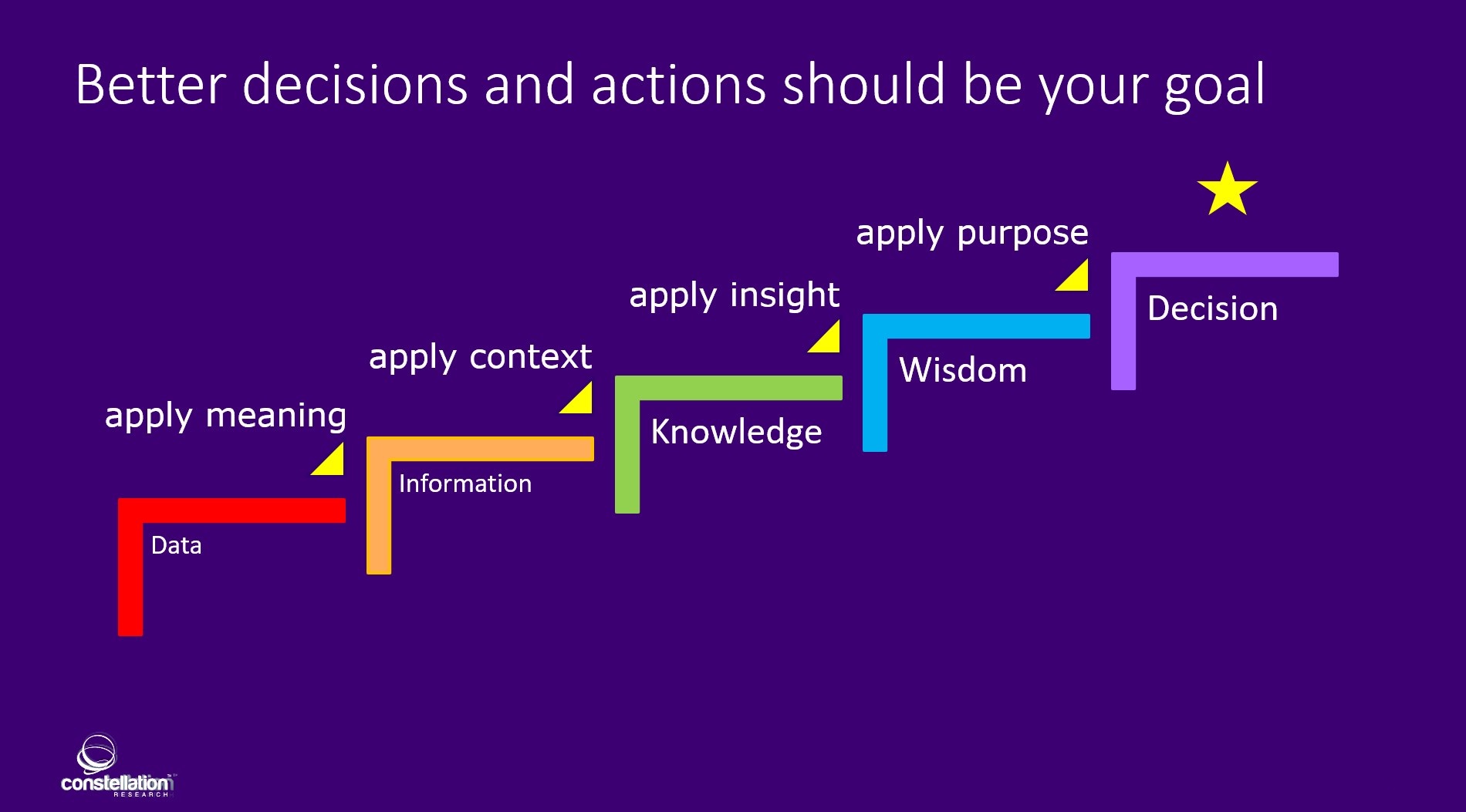
I'm happy to report that the focus has shifted to delivering concise, actionable insights in the context of work. I'm seeing this shift not only in the BI and analytics arena, but also in enterprise applications, where embedded analytics and, in some cases, data-science-powered recommendations are becoming increasingly prevalent.
I’ve been writing about this shift for nearly two years, but I've seen new proof points over the last four months.
In February, MicroStrategy World highlighted the progress of its HyperIntelligence offering, which is designed to surface contextually relevant insights from MicroStrategy within enterprise applications (such as Salesforce or Workday), custom applications, or personal productivity applications (such as Microsoft 365).
In March, Domo highlighted its Domo Everywhere and Intelligent Apps initiatives, which also aim to deliver relevant insights within applications and business processes. As CEO Josh James put it, modern BI doesn't live in charts and graphs; it lives where the work gets done.
In April, Workday's Innovation Summit highlighted data-infused apps. In this case, data means contextually relevant insights and recommendations that drive better, smarter decisions and actions. Similarly, Oracle Fusion CX presentations in recent months have emphasized real-time personalization and intelligent recommendations built into customer journeys and internal workflows.
In May, the Qlik World Online event recapped the company's progress on its ongoing Active Intelligence push. Active Intelligence seeks to embed analytics directly into applications and business processes, so actions are immediately driven by insights.
This is just a sampling of the examples I've seen. Key enablers include cloud computing, microservices architectures, and fine-grained application programming interfaces (APIs). I'm hearing the terms embedded and embedding in connection with many of these initiatives, but the examples aren't limited to what independent software developers and SaaS application providers can do for you. Indeed, innovative end-user organizations are embedding analytics and developing data- and insight-driven services that are creating new revenue streams. In some cases, low-code/no-code and declarative development options enable embedding analytics without the need for professional developers.
There is still a place for conventional reports and dashboards, and we won't see actionable insights pervasively anytime soon. It takes more effort to expose the right insight at the right spot to drive action. Even with prebuilt vendor offerings and self-service enabled through low-code/no-code options, we're going to see actionable insights emerge selectively, starting at crucial decision points where contextual insight makes a big difference. Built-in recommendations (let alone self-tuning recommendations) are even harder to deliver, so application vendors will lead the way on this front.
We'll see how far this trend takes us and how quickly it evolves, but the trend toward delivering concise, actionable insights in context is good news for all those interested in helping more people to drive better, data-driven decisions and actions.
Doug Henschen is former Vice President and Principal Analyst where he focused on data-driven decision making. Henschen’s Data-to-Decisions research examines how organizations employ data analysis to reimagine their business models and gain a deeper understanding of their customers. Henschen's research acknowledges the fact that innovative applications of data analysis requires a multi-disciplinary approach starting with information and orchestration technologies, continuing through business intelligence, data-visualization, and analytics, and moving into NoSQL and big-data analysis, third-party data enrichment, and decision-management technologies. Insight-driven business models are of interest to the entire C-suite, but most particularly chief executive officers, chief digital officers,…...
Read morePublished
Author