Results

Can Microsoft Spark the Next Generation of Collaboration

Can Microsoft Spark the Next Generation of Collaboration

Today's Microsoft is vastly different from just a few years ago. Collaboration is now central to their OS, applications and even devices.

Download The State of Collaboration in 2015

DOWNLOAD SNAPSHOT

This week in Chicago Microsoft held their innagural Ignite conference. This event combines previous conferences that were focused on SharePoint, Exchange and Lync into a single "mega-event".  The result is an conference that includes topics ranging from Windows 10, to Office 365, to Azure and SQL server all in a single event. While on the surface (pun intended) it's a good idea to bring together the various IT teams that now must work together to deliver the complete portfolio, the reality remains that these different groups are not interested in the other side's information. While the breakout topics were divided into seperate tracks, unfortuantely the keynote was a single session, meaning that at any given time a portion of the audience was not interested in what was being shown. I'd recommend keeping the combined event, but next year having two keynotes: one for front end including Windows and Office 365, and a second for infrastructure like Azure, security, SQL server, etc.  You can watch the keynote here.

My focus at this event was obviously on Microsoft's vision around the future of collaboration. It was not so long ago that for most employees Microsoft simply meant "Outlook and Office." But Microsoft has been on quite a tear over the last few years, starting with the aquisition of Yammer for enterprise social networking to the shift from (on-premises) SharePoint to their cloud-based Office 365 suite. Not content to just bring out new versions of it's core products, Microsoft is rapidly expanding their portfolio via a strategy that includes build, buy and partner.

Build:

- Office 365 Groups: Groups bring people together around a common goal, interest or theme. Groups provide a forum for communicating (rather than email), a way to share files and a shared calendar. Groups are available today in Outlook, OneDrive, OneNote, Skype and just announced Dynamics CRM. In the future Groups will be in Delve and Yammer.

- Delve: to discover the people and content across your organization

- Sway: for creating highly visual presentations that are more like web pages that PowerPoint slides.  (see Picture 2)

- OfficeLens: for capturing content from your mobile device and moving it into applications

- OfficeMix: for creating interactive PowerPoint presentations for traning and education

- OfficeVideo: internal media library, like a private Youtube for your company.

Buy:

They have also been on quite the buying spree, recently aquiring:

- Accompli: this has become the new mobile Outlook email client

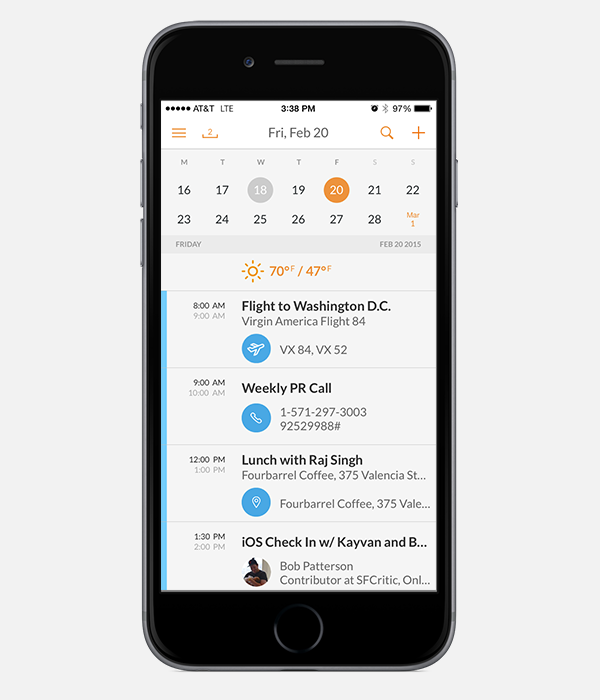
- Sunrise: the has become the new mobile Outlook calendar client

- LiveLoop: real time document collaboration on Office documents

Partner:

- Cloud Storage Partner Program: enabled companies like DropBox and Box to integrate with Office 365

MyPOV:

On thing is very clear, Microsoft is vastly different today than they were just a few years ago. I am impressed with their vision of collaboration and productivity which starts right at the core of the Windows OS (ex: Cortana in Windows 10 will help with business processes such as scheduling meetings or finding slides, see Picture 3), continues into their new collaboration tools and extends into devices including their own Windows phones, Surface tablets and Surface Hub (giant confernce room screens) and even into competitive products such as Android and iOS devices. Microsoft has had over 100 million downloads of Office applications on iOS and Android in less than one year.

While new applications like Sway and Delve are interesting, the most signifigant thing Microsoft has done is link together their tools (behind the scenes at the API level) via what they call the OfficeGraph.

Picture 1: The Microsoft Office Graph

OfficeGraph maps the relationships between people, content and actions. It provides the links between what people create, who they work with and the actions that are taken. OfficeGraph provides the foundation for Microsoft (and recently announced, partners and 3rd party developers) to create their next generation applications like Office Groups and Delve. In a seperate blog post I will dive into more detail on OfficeGraph and Delve.

From Vision To Reality

Three of the main challenges facing Microsoft are:

1) Not everyone is ready for the cloud: Speaking with several customers and business partners this week, the most recurring concern was that the new products are focused on cloud (Office 365) and not on-premises. This is not just a problem for Microsoft, as most collaboration vendors today are focused on the cloud.

2) Change is difficult and costly: The introduction of new tools such as Office Groups, Delve and Sway, and even increased usage of existing tools like Yammer and OneNote, require training for employees who today primarily use Outlook and the standard Office applications.

3) The portfolio needs simplification: As mentioned above, the Office 365 portfolio is rapidly expanding. This sometimes creates overlap, such as Yammer Groups vs. Office 365 Groups and PowerPoint vs. Sway. Perhaps the biggest problem at the moment is multiple user profiles. Microsoft has already started taking steps towards simplification, for example the combining of Lync and Skype. However, more work needs to be done here moving forward, especially as it related to collaboration tools such as Yammer. Microsoft needs to have a single profile, a single filesharing service, a single chat service, etc.

Recommended Actions

Existing Microsoft customers: Evaluate your plans for moving their collaboration tools to the cloud. While each tool offers benefits of their own, the Microsoft Office 365 platform provides the greatest return when the suite of products are used together. 

Customers on competitive platforms: Evaluate the short term and long term vision of their current provider. Migration is never easy; technically, financially or culturally, but changes are coming in the way people work together. Organizations need to feel confident their vendor of choice will provide the right tools, with the right infrastructure and the right business partner ecosystem.

Business Partners: Microsoft is putting a great deal of resources and marketing into ensuring the openness of their platform.  From cloud storage access to APIs for Delve, there is a clear direction to ensure partners have the access they require. Partners should evaluate the new business opportunities that Office 365 will provide, as well as the opportunities that will be created due to Microsoft's cloud focus, which will perhaps leave gaps to be filled for customers that remain on-premises.

Download The State of Collaboration in 2015

DOWNLOAD SNAPSHOT 

********************************************************************************************************

Picture 2: Microsoft Sway - a new tool for creating visual presentations

Picture 3: Windows 10 with Cortana integration. In this case Cortana is locating all the files for a specific topic that are located on the person's local drive as well as OneDrive cloud storage.


Future of Work Sales Marketing Next-Generation Customer Experience Revenue & Growth Effectiveness Chief People Officer Chief Marketing Officer Chief Revenue Officer

Meet me in Atlanta to discuss digital disruption

Meet me in Atlanta to discuss digital disruption

Digital disruption is all around us, how is that for a bold statement! But the reality is we are in the midst of a business and supply chain world that is being transformed, in ways we could never imagine, by the digital revolution that is underway.

We are all aware of these changes in our personal live – Uber, Facebook, Airbnb, Twitter, Amazon are a few examples of how digital has impacted our daily lives. But what about in our businesses and supply chains? In these areas we are also seeing disruptors emerge – 3D printing and IoT are the latest to capture the headlines. But we have already seen mobile, social, big data and the cloud have major impacts on our businesses and supply chains. These forces are both disrupting but also empowering the supply chains of today to move forward.

Slide1


Join my colleagues Ray Wang and Alan Lepofsky in Atlanta on May 14th as we discuss how digital is impacting business. Ray will highlight and delve into his recent book – Disrupting Digital Business. While Alan will lead discussions on how the intersection of analytics and collaboration tools will power the next generation of productivity software.

I am excited for the event which will undoubtedly be a smashing success. If you are in the area and want to join us for what will be a lively discussion and enjoyable event click here to register.

The is open to VP or C-level executives and is free of charge.

The team at Consteallation Research and our sponsors from WiPro and Adobe look forward to seeing you there.

>>>REGISTER NOW!<<<


Matrix Commerce Chief Information Officer

NetSuite announces Cloud Alliance with Microsoft

NetSuite announces Cloud Alliance with Microsoft

At NetSuite’s user conference SuiteWorld in San Jose, CEO Zach Nelson announced a partnership with Microsoft. Satya Nadella was on hand (via pre-recorded video, I guess he is busy in Chicago at Microsoft Ignite) to comment on the partnership. The announcement came as a surprise, as in general NetSuite has been seen (maybe wrongely) to be in Oracle’s’ back pocket technology wise.
 
Let’s dissect the press release in our customary comment style (you can find the press release here):
 
NETSUITE SUITEWORLD 2015, SAN JOSE, Calif.—May 5, 2015—NetSuite Inc. (NYSE: N), the industry's leading provider of cloud-based financials / ERP and omnichannel commerce software suites, today announced it has entered into a strategic cloud alliance with Microsoft to create new, innovative and future-proof solutions that connect NetSuite's cloud ERP to Microsoft Office 365, Windows and Microsoft Azure, delivering high-impact value, productivity and simplicity for mutual markets and customers. NetSuite continues to make life easier for its customers by forging new and exciting partnerships to help companies deal with the ever-increasing rate of change and a multitude of disruptive factors impacting each and every industry.
 
MyPOV – Always good to see vendors listening to customer and making their lives easier. Though NetSuitte does not state it explicitly, this may well be a customer driven parntnership. Good to see. And the scope of the partnership is something that NetSuite needs to work on anyway – as Office365 is a given for its customers. Same for Windows. Azure is more interesting – more below.
 
"We're at the 'end of the beginning' of the cloud, in that the cloud business model that NetSuite pioneered in 1998 is becoming the de facto standard for how fast-growth businesses are run," said Zach Nelson, NetSuite CEO. "We're thrilled to work with Microsoft to deliver a fluid cloud environment across the key NetSuite and Microsoft applications that companies and their employees rely on to continually improve their day-to-day operations and run their business better and more efficiently."
 
MyPOV –Good quote for Nelson, the ‘fluid cloud environment’ is indeed something customers want to see – the seamless integration across the cloud properties they are using.
 
"I'm excited about NetSuite's support for Azure Active Directory for single sign-on, cloud-to-cloud integration and increasing our collaboration across mobile and cloud solutions," said Steve Guggenheimer, Corporate Vice President of Developer Platform & Evangelism and Chief Evangelist for Microsoft. "Our joint vision is all about giving people the freedom to get more done through the broadening set of devices they interact with that in turn helps businesses innovate and grow."
 
MyPOV – Good quote by ‘Guggs’ – Microsoft partner enablement executive. NetSuite is a great partner addition for Microsoft overall partner portfolio. Kudos to Guggenheimer to be specific on what the partnership is all about. More below.
 
The collaboration pairs NetSuite's cloud ERP suite with Microsoft cloud technology in both the near and short term.
Available immediately, an integration between NetSuite and Azure Active Directory that enables single sign-on (SSO) for customers using NetSuite together with Azure Active Directory, eliminating the need for users to manage and use multiple passwords. The integration also gives administrators centralized control of user authentication and password management while enabling organizations to strengthen role-based approaches to business management. Built using Security Assertion Markup Language (SAML) 2.0, the integration reduces the security risks of user-managed passwords while providing additional protection against phishing and other threats.
 
MyPOV – Using Azure Active Directory is probably the low hanging fruit here – but it creates value for customers. NetSuite administration cost goes down, and Microsoft gets more enterprises to use Azure Active Directory, which is doing well, but can always use one more customer push. And Microsoft know that ones AD is in Azure, all things get easier from there.
 
In the coming months NetSuite and Microsoft will start cloud-to-cloud integration between NetSuite and Office 365, providing seamless access to both technologies from within a single interface and improving productivity and collaboration across a variety of roles, from financials to shipping, marketing, ecommerce, business analytics, retail store associates and more. Through integration with Microsoft Excel, customers will be able to connect NetSuite data to Excel and Power BI for Office 365 to visualize information and discover new insights into their business. Additionally, NetSuite will migrate its entire employee base to Office 365, realizing significant value in alignment between the world's leading productivity system and NetSuite's cloud business management suite.
 
MyPOV – NeSuite cannot avoiding productivity gains and demands of its customers using Office365. And when you have to do something, always better to it sooner than later. Last week atits Build (my event report here), Microsoft showed more and easier ways to integrate business applications with Office365. The examples were Salesforce.com and SAP. The usage of PowerBI and Excel is a good move for both vendors, too, creating BI value for their joint customers. Microsoft wants content for PowerBI and NetSuite needs compelling visualization as its reporting track record is not the smoothest. And a nice cherry on top with NetSuite moving to Office365 for its employee base. Always good to drink your own champagne, too.
 
By the end of 2015, NetSuite will migrate from AWS and on-premise deployments to leverage Azure as its preferred cloud infrastructure platform and take full advantage of the capabilities of Azure for testing and for developers, independent software vendors (ISVs) and customers to build new software applications and integrations that leverage NetSuite's cloud business management suite and the powerful storage and compute capabilities of Azure offering businesses the significant advantages that are becoming synonymous with world-class cloud computing — efficiency and flexibility, large productivity gains and dramatic IT cost reduction.
 
MyPOV – Having some understanding challenges on this sentence – but my gist is: NetSuite is moving off test and development environments that customers and partners have used on AWS over to Azure. That is a key win for Azure, giving the catch up Azure is playing with AWS. It does not mention where NetSuite runs production – which is a larger and harder engineering problem to address. But Azure runs Oracle, so what is not happening today is something that could happen tomorrow. If NetSuite can offload its Capex spending into datacenters to a partner like Microsoft, it will only be a good find for overall investment into product at NetSuite. We see Infor playing this card successfully (only with AWS)
 

Overall MyPOV

A good win / win for both vendor’s customers. Given the more SMB nature of NetSuite customers and the high distribution of Microsoft in the enterprise, certainly a help for NetSuite and Microsoft customers. What is missing is how NetSuite and Microsoft will cooperate around Windows (10 we can assume), more to come here soon I guess.  So for Microsoft we see more AD usage and more Azure load with the NetSuite move and for NetSuite it may mean an easier path to test and development environments for tis customers than AWS. And Office users will like a tighter integration to their enterprise system (NetSuite) and better BI and visualization with the PowerBI option. So more details and first live, shared customers need to be shared in the next months, but we see this is a good announcement for shared customers, Microsoft and NetSuite. Congrats.


Tech Optimization New C-Suite Innovation & Product-led Growth Microsoft netsuite amazon SaaS PaaS IaaS Cloud Digital Transformation Disruptive Technology Enterprise IT Enterprise Acceleration Enterprise Software Next Gen Apps IoT Blockchain CRM ERP CCaaS UCaaS Collaboration Enterprise Service Chief Information Officer Chief Technology Officer Chief Information Security Officer Chief Data Officer Chief Executive Officer

SAP, IBM Join Forces to Transform Talent Management with Complementary HR Solutions

SAP, IBM Join Forces to Transform Talent Management with Complementary HR Solutions

It is spring and the partnership announcements are blossoming… In April it was NetSuite and Ultimate (read here) and in May it is IBM and SAP partnering in the HCM market.


Let’s look at the press release in our traditional commentary style (you can find the press release here):

ARMONK and ORLANDO — Leveraging their existing global strategic alliance, SAP SE (NYSE: SAP) and IBM (NYSE: IBM) today announced cloud-to-cloud integrations of the two companies’ industry-leading human resources (HR) software and services.

MyPOV – Interesting the authors of the press release point to the existing global strategic alliances – and I am sure SAP and IBM have a nice staple of them – but this is the first business application partnership that I am aware of. But of course it helps to be long standing partners. The most recent partnership we covered has been SAP and IBM partnering for cloud infrastructure – see here.

The product integrations are expected to help customers improve their business processes and make fact-based decisions more smoothly and simply about how they recruit and manage their workforces. The announcement was made at SAPPHIRE NOW, being held May 5-7 in Orlando, Florida.

MyPOV – This is extraordinary cautious language – the ‘product integrations are expected to help’ – they should be designed / built for that purpose. Looking forward to some probing and understanding this area better. But as standard in the cloud era – customer expect a vendor based integration between vendors for such partnerships – so it’s good to see we find this early in the press release.

With availability planned for mid-2015, the first offering from this alliance includes a planned integration between the SuccessFactors Employee Central solution and IBM Kenexa’s cloud-based HR software Talent Acquisition Suite. This integration is expected to enable IBM customers to move their HR information systems (HRIS) to the cloud with the leading core HR solution from SuccessFactors, an SAP company, while helping to protect their recruiting investments, and provide customers of SuccessFactors Employee Central with a broader set of options for recruiting, assessment and onboarding of candidates. This offering is planned to provide speedier integration with committed ongoing support with services and skills from both SAP and IBM.
MyPOV – As IBM had no HR Core system with Kenexa – it needs to partner with core HR systems vendors. And IBM has partnerships in place with all major vendors (e.g. Oracle and Workday) this one makes probably a little more sense than the other ones. To understand let’s realize that IBM probably needed this partnership to avoid competitors replacing Kenexa with a HR Core and Talent Management combination of products. SAP of course offers Talent Management, too, but the SuccessFactors products and EmployeeCentral are on different platforms. So the ‘integrated HR and Talent Management’ Suite message is a little harder for SAP to push with customers than the competitors on a single platform – and with that was a more logical partner, with probably a higher likeliness of success in the trenches. A Kenexa customer writing an RfP for an HR Core system will see now a combined IBM and SAP offer. Or better for IBM, the RfP maybe avoided. So a good move for both vendors, and likely for customers assuming the integrations that are planned for mid of the year reduce the cost to implement the Employee Central and Kenexa combo of products.

With expected availability later this year, an additional integration between IBM’s Learning Content Management System (LCMS) and the SuccessFactors Learning solution is planned to help customers get the right learning content to the right person in the most efficient way possible.
MyPOV – Usually partnerships like this one follow functional areas – this one is interesting as it combines Learning with Learning. Will be interesting to understand more what the thinking behind this integration is. And good to see that IBM and SAP offer also the next integration offering they plan under this partnership.

Building on a history of strong alliance between the two companies over the past 40 years in both consulting systems integration and business-process-as-a-service (BPaaS) solutions, and a number of successful joint deployments, the new agreements between SAP and IBM are expected to provide significant value for each company’s customers. Allowing customers to more easily build upon their capabilities by choosing from a wider set of solutions from both providers, SAP and IBM intend to provide skills and offerings to deploy and operate solutions made up of the combined set of capabilities.
MyPOV – A little too much talk about Services for my personal taste. IBM GBS can make any integration under the sun work, so this partnership is actually about reducing the cost of integration and shortening implementation cycles – all trends that are not favorable to bill more services. The BPaaS aspect is interesting, maybe some joined BPO customers (IBM has a dozen or so) are (one of) the drivers for this partnership. Most interesting on this paragraph is that SAP and IBM plan to ‘provide skills and offerings’ etc. – not products. So is this partnership all about business development for GBS? I guess not. Again good to see that IBM and SAP want to build something on top of the combined set of capabilities, but in my view that better be productized.

In addition, SAP and IBM plan to offer customers:


  • Greater data sets across the entire HR spectrum: Customers have the opportunity to leverage the vast amounts of data from the SAP ERP Human Capital Management (SAP ERP HCM) solution, cloud-based SuccessFactors HCM Suite and IBM Kenexa Workforce Sciences for analytics, enabling more insights for better decisions on hiring, growing and retaining their workforce.

MyPOV – Interesting and good plan – but needs to be explained how. Will this go to SAP or IBM BI products? Recently all IBM BI offerings, especially in the Kenexa space had a Watson flavor – that is missing in the wording above. Maybe IBM wants to keep Watson to themselves – for now. Looking forward to learn more details at Sapphire.
 
  • A better client experience: Customers that choose a mixed SAP and IBM solution to meet their HR technology needs can be expected to rely on an experience consistent with that of working with a single company. Collaboration in areas such as implementation and ongoing support are key elements of this alliance.

MyPOV – Laudable to make it a seamless process for customers to implement, operate and support the combined offering. Tougher to pull off in practice – so we look forward to the details and especially satisfied combined customers mentioning the achievement of the above plan.

“Any move to improve and better integrate HR software is a welcome one for large organizations such as BP,” said Richard Bye, vice president, Global HR Operations & HRIS, BP International Limited. “As a partner with both vendors, we will take a keen interest in the development of the new alliance announced between IBM and SAP.”
MyPOV – Good move to have a customer quote and have it before the vendor quotes. Good to see a blue chip customer like BP lending their voice to the press release. But a cautious quote, still better than none. Will be interesting to find out how many combined customers IBM and SAP have –I expect them to be in the low triple digits.

“We are excited to team with SAP to focus on changing the experience for clients. Our philosophy on the value of flexibility, choice and investment protection is strongly aligned,” said Debbie Landers, general manager, Kenexa and Smarter Workforce, IBM. “We are both committed to putting the client first and ensuring that those who choose to work with us clearly see 1+1 = 3 — and they obtain more value, more quickly. The opportunity to not only extend our existing solution reach together, but to team on bringing SAP data into IBM’s Talent Insights (powered by Watson Analytics) is expected to be a game changer for our clients who want to move more quickly to analytics-driven business decision making.”
MyPOV – Good quote from Landers, focusing both on the transaction and analytical side, and there we have Talent Insights – powered by Watson Analytics. So Watson is part of the mix, good news and a key differentiator from a cognitive computing perspective.

“We are very focused on helping our customers deliver value with their HR strategies and processes. This partnership intends to make it easier for our mutual customers to leverage the cloud solutions that help them achieve their goals so they can focus more on their business and less on integrating solutions,” said Mike Ettling, president, HR Line of Business, SuccessFactors. “SuccessFactors Employee Central is the fastest-growing solution in our HCM suite, and this deepening partnership with IBM means that IBM customers may be able to connect their current applications with our solution, preserving and extending their investments in IBM’s Talent Acquisition Suite. Customers today see the power and the simplicity of the cloud, and in their journey, they want to be assured they can continue the investments they have in what’s working for them today, while taking advantage of what will drive better business value tomorrow.”
MyPOV – Good quote from Ettling, too – investment protection is always a good theme to hit and more importantly to deliver. Good to get the insight (not a surprise though) that Employee Central is the fastest growing solution in the HCM suite.


Overall MyPOV

Congrats to IBM and SAP to a synergetic partnership, the first integration offering is clear in terms of win / win. The 2nd one with Learning to Learning needs more explanation and detail as well as the BI / Talent Analytics integration on the IBM side. But press releases cannot answer all potential questions – so we will ask them later in the week at Sapphire and keep you posted on the answers (hopefully we get them).

From a broader perspective, we see two key takeaways:

 
  1. SAP and IBM are being pragmatic on partnering – which is good for joint customers. Both understand that the customer ‘must win’ (see in the quote above) and will do likely what it takes to get this done. Again good for customers.
     
  2. At the same time IBM and SAP have significant product development work ahead to keep their respective product suites up to speed with best practices and technologies. Both Kenexa and SucccessFactors have been serial acquirers before being acquired by respectively IBM and SAP. Both are now left with the yeoman work behind the scenes to unify and integrate these product suites, modernize them and harmonize them. 

But for today – congrats to both IBM and SAP for an important announcement. 


Future of Work New C-Suite Innovation & Product-led Growth Data to Decisions Tech Optimization Digital Safety, Privacy & Cybersecurity SuccessFactors IBM SAP AI Analytics Automation CX EX Employee Experience HCM Machine Learning ML SaaS PaaS Cloud Digital Transformation Enterprise Software Enterprise IT Leadership HR Chief People Officer Chief Technology Officer Chief Customer Officer Chief Human Resources Officer Chief Information Officer Chief Information Security Officer Chief Data Officer

First Take - NetSuite SuiteWorld - Zach Nelson Day #1 Keynote

First Take - NetSuite SuiteWorld - Zach Nelson Day #1 Keynote

We have the opportunity to attend NetSuite SuiteWorld conference in San Jose today. The conference is well attended with over 7000 attendees – up from 5000 a year ago – a great testament of NetSuite’s traction.


Here are my Top 3 takeaways from the keynote:

It’s about the Omnis – The challenges for enterprises are around the ‘omnis’ – referring to OmniChannel and (warning - newer term) Omni-Customer Experience. In the 2015 version of SuiteCommerce customers will be able to blend online and in store experiences, using a 360 degree profile and using a full featured POS. NetSuite has also made progress on the content management side announcing additional capabilities. And with the recent Bronto integrated acquisition NetSuite now has a good marketing automation capability.


The NetSuite Ecommerce Product Family
Microsoft partnership – Nelson unveiled a partnership with Microsoft, had a video message by Microsoft CEO Satya Nadella for the audience – and it looks like for not all that has been done is the Active Directory integration of NetSuite into Azure Active Directory. But more exciting things to come are that NetSuite will use more Office365 integration but even more importantly NetSuite will move off Amazon AWS as its preferred cloud infrastructure platform for testing and developing (no word on production). See the press release here. And overall it is good to see how large the NetSuite partner ecosystem has grown.
Microsoft and NetSuite 
Insights power the future – On many occasions Nelson talked about the importance of data, consumers and customers and how NetSuite has a lot of data available to provide more insights to its customers. Nelson stopped short of announcing DaaS (Data as a Service) and benchmarking products – but it seems clear that this is on the horizon for NetSuite.
NetSuite has a lot of aggregated data

MyPOV

A good start to SuiteWorld by Nelson, hitting all the key business trends and making clear that beyond ERP, NetSuite sees differentiation in powering commerce for its customers. Not a bad differentiation strategy.

The move to Azure will be one area to watch, as Azure gathers momentum on the IaaS side. It will be interesting how much of the PaaS side NetSuite will adopt. The good news is – Oracle RDBMS runs on Azure… And NetSuite customers use Office365 – so a tighter integration will be of great value for them.
 
It's early at SuiteWorld - so more to come in the next days - stay tuned - check my colleagues @rwang0 and @guycourtin tweets and more from the conference. 

More about NetSuite
  • First Take - Ultimate Software UltiConnect Day #1 Keynote - read here
  • Event Report - Netsuite powers on with targeted innovation - read here
  • Why NetSuite acquired TribeHR - read here
  • Act III the cloud changes everything - Oracle and NetSuite with a touche of Deloitte - read here
  • Act III and final day - A tale of two conferences - Sapphire and SuiteWorld - read here
  • The middle day - 2 keynotes and press releases - Sapphire and SuiteWorld - read here
  • A tale of 2 keynotes and press releases - Sapphire and SuiteWorld - read here
Find more coverage on the Constellation Research website here.

Tech Optimization Innovation & Product-led Growth Future of Work netsuite Microsoft SaaS PaaS IaaS Cloud Digital Transformation Disruptive Technology Enterprise IT Enterprise Acceleration Enterprise Software Next Gen Apps IoT Blockchain CRM ERP CCaaS UCaaS Collaboration Enterprise Service Chief Information Officer Chief Technology Officer Chief Digital Officer Chief Data Officer Chief Analytics Officer Chief Information Security Officer Chief Executive Officer Chief Operating Officer

First Take - SapphireNow - Bill McDermott Day #1 Keynote

First Take - SapphireNow - Bill McDermott Day #1 Keynote

This morning SAP CEO Bill McDermott kicked off Sapphire in Orlando.
 

Here are my Top 3 takeaways:


HANA remains front and center – It was very clear from the selection of customer stories (Under Armour, ENI) that HANA remains at the center of the SAP value proposition – again at this Sapphire. Faster, more data, better insights are the value propositions of HANA, and we have heard them over and over. McDermott even referenced data compression capabilities. 

 
McDermott opened Sapphire 2015
S/4HANA gets a roadmap tomorrow (!) – McDermott also referred to S/4HANA getting a roadmap tomorrow, pre-viewing what Bernd Leukert would communicate in his keynote tomorrow, on Wednesday. So a big tease, but the problem of having 3 keynotes in 3 days and McDermott said he didn’t want to spill the ‘beans’ – but then he did in regards of talking geographies and industries. We will know more in 24 hours.
Google's Schmidt talks about Google Docs and Google Cloud Platform
SAP attracts brands & partners  – No matter where SAP is in re-inventing itself on HANA, S/4HANA, the HANA Cloud platform etc. – it manages to attract key brands to build on its platform or to partner with SAP. Today it was Under Armour (which has been used a few times already), but also partnerships with Facebook (!) and Google (around Google Docs and using Google Cloud Platform). But not only had I missed what SAP is partnering with Facebook about.

MyPOV

A good start for SAP’s Sapphire with a general preview of key things to happen. Never easy to kick off Sapphire and not give away too much – so a good start by McDermott. At some points it seemed to be all over the place though – of course simple came up often, outcomes were featured prominently, but I struggled to find the red threat at times (may have been the early start, too). Overall more of a light appetizer than substance – very much looking forward to the main course with Leukert tomorrow.


Tech Optimization Data to Decisions Digital Safety, Privacy & Cybersecurity Innovation & Product-led Growth Future of Work Sales Marketing SAP meta Google SaaS PaaS IaaS Cloud Digital Transformation Disruptive Technology Enterprise IT Enterprise Acceleration Enterprise Software Next Gen Apps IoT Blockchain CRM ERP CCaaS UCaaS Collaboration Enterprise Service Marketing B2B B2C CX Customer Experience EX Employee Experience AI ML Generative AI Analytics Automation Growth eCommerce Social Customer Service Content Management Chief Information Officer Chief Technology Officer Chief Information Security Officer Chief Data Officer

Tale of the Tape: ReplyBuy vs. Twitter Buy

Tale of the Tape: ReplyBuy vs. Twitter Buy

1

RBvTwitterIt’s always exciting when new ways to buy and sell tickets emerge, both from the potential revenue impact they can have on properties to the ever-changing consumer experience. As these new sales and marketing channels appear, teams have to decide if they should spend their time and resources to pursue those options. When two fairly new options rise up around the same time, teams may have to choose between them.

So, I thought it would be fun to do a “Tale of the Tape” between the two most recent and buzz-generating sales options: ReplyBuy and Twitter’s Buy Button.

Round 1 – Reach: Twitter

twitterbuy

Teams already have hundreds of thousands (and sometimes millions) of followers on their official Twitter accounts. Meanwhile, ReplyBuy for most teams requires building a new audience audience of text message opt-ins from scratch. There’s no question that Twitter gives you the biggest audience in the shortest time.

Round 2 – Conversion: ReplyBuy

The immediate counter to the reach difference is the level of direct impact. With Twitter, a large percentage of the audience is non-local and therefore unlikely to buy. Additionally, it’s dependent on the team’s followers choice to look at their Twitter feed when the ticket buying messages are available, which may or may not happen. However, with a text message from ReplyBuy, you are essentially guaranteed to have your message received and engaged with by those that have opted-in.

Round 3 – Immediacy: ReplyBuy

ReplyBuy has the shortest and most direct path from message to sale by transacting through a simple text message reply. Twitter is still dependent on the message first being seen in a fan’s feed and then completing a traditional e-commerce style purchase.

Round 4 – Flexibility: Twitter

The flipside to the immediacy of ReplyBuy is the flexibility of Twitter. Their Buy button could theoretically be used for any type of ticket sale, from exclusive pre-sales to last-minute released seats (not to mention merchandise or other items). ReplyBuy is very specific in its focus on last-minute ticket purchases.

replybuy

Round 5 – Adoption: ReplyBuy

Sports teams tend to wait and see what other teams have success with before jumping in. While Twitter itself has universal adoption, the use of the Buy button has only been leveraged by a couple of teams to date. Meanwhile ReplyBuy has seen a real spike in adoption and press coverage over the past couple of months. (Update: I learned that Twitter’s Buy option is not universally available yet, so that definitely has an effect.)

Round 6 – Brand Fit: ReplyBuy

Even though executives love to talk about how to monetize social, there still seems to be a general resistance to direct sales messages vs. the long-term goal of fan engagement (side note: these things to me do NOT need to conflicting concepts, but that’s an article for another time). As a result, I think there is more comfort in the use of ReplyBuy since the fans are specifically opting in for a sales message.

Round 7 – Compliance: Twitter

Text messaging can be a dangerous place when it comes to legal compliance and teams have been burned by lawsuits in the past. I’m sure ReplyBuy as a third-party provider is following all the appropriate rules and regulations, but I could see some teams deciding the risk isn’t worth the return. Twitter has no such legal concerns, at least as of now.

Round 8 – Long Term Revenue: Twitter

I’m hypothesizing here a bit since neither of these have “long-term” anything right now, but when you consider the reach and flexibility of Twitter, I feel it will provide more revenue generating opportunities to more audiences than ReplyBuy. Simply, would you rather spend time figuring out how to sell multiple products to an existing, large audience or sell a small subset of tickets to a new, smaller audience.

So after eight intense rounds (well, at least as intense as Mayweather/Pacquiao), we have a dead heat! What does that mean for teams? To me, if your needs are tied to short-term, single game sales, jump in to ReplyBuy now and keep an eye on what people start doing with Twitter Buy over the next few months as they extend past their current beta phase.


Matrix Commerce Next-Generation Customer Experience Chief Customer Officer

Microsoft SQL Server 2016: First Take

Microsoft SQL Server 2016: First Take

Microsoft CEO Satya Nadella on Monday announced the next major release of the company’s flagship database management system, Microsoft SQL Server 2016. It's a significant milestone for a product has grown into a $5-billion-per-year business for Microsoft, second only to Oracle Database in revenue.

Introduced at this week’s Ignite Conference in Chicago, the new database will be released as a public preview this summer. As the name suggests, Microsoft SQL Server 2016 won’t see general availability until next year, but Microsoft offered plenty of feature tidbits to stoke anticipation. Here are a few highlights:

Stretch Database: A tie to the Microsoft Azure that lets you push warm database data or cold data into the cloud. Think cloud- or mobile-integrated apps with warm data or archiving of cold data.

In-memory enhancements: Last year Microsoft introduced in-memory OLTP for transactional application performance improvements. SQL Server 2016 will deliver in-memory analytics.

In-database analytics: The headline here is R integration, which certainly isn’t new in the industry. But given Microsoft’s recent Revolution Analytics acquisition, the company could do give Oracle and Teradata stiffer in-database analytics competition.

Always Encrypted. This feature will please the security crowd, as it will protect data at rest and in motion.

Diving deeper, the Stretch Database feature is about supporting hybrid scenarios. For example, as transactional tables grow in size, Stretch gives you a way to archive historical (cold) data. This reduced the size and cost of the core database deployment while maintaining fast performance. In a different hybrid scenario, operational (warm) data could be “stretched” to Azure to bring fresh data to a cloud- and/or mobile-integrated app.

In-Memory Analytics

Oracle promises both analytical and transactional performance gains through the Oracle In-Memory Database option introduced last year. Microsoft introduced in-memory analytics with its in-memory columnstore with SQL Server 2012. If focused purely on transaction processing gains with its In-Memory OLTP option for SQL Server 2014. With SQL Server 2016, Microsoft says in-memory columnstore enhancements will deliver up to 100X faster query performance for “real-time” operational analytics by running on data that is already benefitting from in-memory OLTP. This is a step up on the analytical side where Microsoft needed to show more in-memory performance improvement.

This in-memory option will become even more important when it’s made available as part of the Azure SQL Data Warehouse service announced last week at Microsoft’s Build Conference (see Holger Mueller’s complete coverage). This Azure cloud-based version of Microsoft SQL Server Parallel Data Warehouse, due as a preview in June, will compete with Amazon Redshift and other followers in that category including IBM DashDB and HP Vertica OnDemand. All are columnar databases that can take advantage of memory, but I suspect Microsoft’s in-memory option could give it better memory capacity and control.

Of course, SAP has been touting both transactional and analytic performance benefits for years because its Hana platform is entirely in memory. The Oracle and Microsoft features are just that – add-ons to conventional databases that rely mostly on disk-based storage. The upside with this approach is that existing applications don’t have to be rebuilt to run on the new database. To take advantage of the in-memory feature (which is an extra-cost option on Oracle versus a build-in feature of Microsoft SQL Server), you use administrative features to place selected indexes in memory or to query against in-memory columns.

Built-in Advanced Analytics

For years now, data scientists have been pushing advanced analytic workloads into databases because they offer much more processing horsepower than dedicated analytic servers. What’s more, you save time because you don’t have to move data to a separate server for computation and then move result sets back to a data warehouse. The idea is to bring the analytics to the data instead of the other way around.

So in-database analysis is nothing new, but given that Microsoft now owns Revolution Analytics, it only makes sense to make the most of this vendor’s curated portfolio of R-language-based analytics into SQL Server. Revolution has had an in-database alliance in place with Teradata since 2013, and Microsoft says that's not going away in the wake of the acquisition. 

Microsoft will also build the Hadoop-access-tool PolyBase into SQL Server 2016, so you’ll be able to access unstructured data from Hadoop as well structured data within the database using T-SQL skills. Teradata and Oracle also offer Hadoop-data-access options, so we’ll need to see more details on the advantages of having PolyBase built into the database to understand just how it stands out.

First Take: Evolutionary, Not Revolutionary

All of these moves make sense, but they’re not industry firsts. Teradata has had the ability to move hot and cold data to speed- and cost-appropriate storage options for years. The novel twist with Stretch is that it’s moving data into the cloud. If it’s easy, or better still, automated, it could power novel hybrid apps, performance gains and real database license savings. We’ll see if Oracle tries to match a feature that could diminish database revenue.

The in-memory and in-database analytics features and Hadoop data access promised in SQL Server 2016 look like they’ll deliver state-of-the-industry rather than state-of-the-art capabilities. But these aren’t the only new features in store for the new database. Microsoft is also promising row-level security and dynamic data masking, native JSON support, faster backups, high-availability improvements and more. I’ll reserve final judgement until Microsoft takes the wraps off the preview release later this summer.

Media Name: Microsoft SQL Server 2016 In-Memory OLTP.jpg
Data to Decisions Chief Information Officer Chief Digital Officer

Event Report - Microsoft Build - Microsoft really wants to make developers' lives easy

Event Report - Microsoft Build - Microsoft really wants to make developers' lives easy

We had the opportunity to attend Microsoft’s Build conference in San Francisco. The conference is targeted at developers and development managers using Microsoft tools and technology stack. As traditional the conference sold out quickly and was as well attended as last year. Comparing it with other events held at Moscone (West), we can say that Microsoft attracts probably the biggest developer audience, especially considering international aspects…. In less than half a day I could hear all 5 other languages I speak on many occasions. But San Francisco was just the kickoff to an impressive 25 city world tour.


The leitmotiv of the conference was all about developer enablement on innovative platforms. Microsoft CEO Satya Nadella went all the way back invoking the first Microsoft product – Basic – to exemplify that making developers productive is in the Microsoft DNA. But developers only build on platforms that are popular and that can monetize their work. So Nadella shared that Microsoft wants to see 1B Windows 10 devices 3-4 years after the launch.

Microsoft announced a ton of really interesting things, so very tough to select the Top 3 – but here you go:

Azure becomes the intelligence cloud – Microsoft has built out Azure to 19 regions, Guthrie said that over 1M servers now make up Azure and Microsoft will keep investing billions into the platform. Almost no surprise – Docker runs on Azure now – demonstrated by Russinovich. ‘salvaging’ a .Net application running in Docker on a Windows machine. And the same runs on Docker on Linux. So the formerly exclusive to Windows .Net runs now on Linux and Mac (preview for now). The benefit for developers is that they don’t need to rewrite .Net apps, of who often code and details are no longer as present. Instead of that Microsoft wants them to build new applications. For instance using the new Azure App Service, an improved SQL Server and more.
 
Azure stats shared at Build 2013-2015

SQL Server (or is it Azure DB?) grows up – Good to see Microsoft not forgetting that most enterprise applications need a RDBMS at some point, and Microsoft keeps investing into SQL Server. Guthrie shared that SQL Server DBs are created (and taken down) at a rate of 160k DB a day. Among many innovations the SQL Server elastic pool was the most exciting enhancement from my perspective. Azure uses an elastic data base pool, Microsoft said it uses machine learning to create a resource pool to pick the right resources, a huge de-mystification of the resource pool creation. Sizing is no longer a critical design step, but Azure will size database up and down. That elasticity is key for cost savings and performance and makes the capability critical for next generation applications. Elastic Database query across databases in the resource pool is shipping as a beta in a few weeks from now. 
 
The Azure Data Lake


On the BI / Analytics side Microsoft announced SQL Data Warehouse, creating the foundation for more advanced analytical services. SQL Datawarehouse can scale up and down dynamically, and it is easy to integrate all sorts of data (Guthrie mentioned SAP and Dynamics). Valuable code creating insights gleaned from machine learning can be wrapped as an API and made available via the Azure App Service. And Microsoft is certain that SQL Data Warehouse is more elastic than its major competitor, AWS Redshift. 

 
All Azure Analyic Services
And of course no conference without IoT – the coolest example was the NFL. Microsoft also announced the Azure Data Lake service, a feature rich version 1 to create the base for IoT projects. It exposes data via HDFS, opening itself to standard Hadoop jobs. It also supports Hadoop clusters built with Cloudera, Hortonworks and Pivotal. 
 
The Windows Universal App
Windows 10 makes Windows different – Nadella was clearly proud of the latest version of Windows, which also is now becoming one single platform, updated and run as a service with a unified access and delivery to platform features and code constructs build on top of Windows 10. The appeal to developers per Myerson was to make Windows 10 the most innovative platform to build applications on, mentioning Cortana intelligent voice recognition service, and e.g. the new Hololens experience. And the Universal Windows App that delivers the same binary across all the different Windows powered devices. Microsoft has thought this through, as it announced carrier billing, already integrated with 90 carriers. Enterprises will appreciate the creation of a Windows Store for Business. And Microsoft thinks that 3-4 years after the launch of Windows 10 there will be more than 1 B Windows 10 devices out there – eclipsing both the Apple (iOS) and Google (Android) ecosystems as Microsoft shared its ambitions. Microsoft created 4 new types of Windows applications: The first being web sites, with the capability to re-use existing code. And Win32 and .Net code will run on Windows 10 too. The coup is that Android applications can also run on Windows 10, using (my guess) and Android player, but also Java and C++ applications. And finally ObjectiveC applications can run (re-compiled) on Windows 10, too.

 
The 4 Applications that will power Microsoft to 1B Windows 10 devices
 

Analyst Tidbits

  • Office goes standard to become a platform – Office gets easier to integrate and to add integrations, as Microsoft exposes unified APIs to Office, including group and security access. The Me-token is a powerful concept to get data out of Office in an easy way. My guess is that Microsoft is opening up APIs it has built for the Office Graph (aka Delve, aka Oslo). . It was a positive surprise that the Graph can now be extended by 3rd parties, one of them being Skype.
An improved Windows Store for Business
 
  • Windows 10 - it is Windows but it is different – The Start menu is back, tiles are becoming livelier, translucency from Windows 7 is back and more features are showing that Microsoft is working hard to undo errors from the past. Dynamic app aging is a nice feature, lock screens become more personal. And Microsoft re-uses what works, Bing quality like pictures come to the Windows lock screen, with personalization. Continuum is a powerful new technology that allows to extend e.g. Windows Phone to HDMI connected displays. Thanks to the Windows Universal App technology, the same functionality as on a PC is available on the display, but only powered by the phone. The goal as Belfiore shared is that any display can become as powerful as a PC, but powered by a phone. 
 
 
The Start Menu is back


    • Project Spartan becomes Edge – It was the honor to Belfiore to share the official name of the new browser in Windows10, now called Edge (bye bye Explorer). It is pretty cool that Microsoft writes Edge as a Universal Windows App – talking about drinking your own champagne. Belfiore shared that Explorer is being currently opened more than one billion times a day. And again along the lines of re-using other platforms code, Edge can leverage web extensions, e.g. Chrome extension, with only ‘minimal’ modifications. 
    The Edge differntiators 
     
       
      • Hololens changes the way we work – Mixing digital content into the real world is a very powerful concept, and the demos were convincing. The biggest advantage I thought is that every application in side of Windows can be pinned somewhere in the visual perimeter of a user. And yes – there is a holographic start menu. Read more on the Hololens in this separate blog post
       
      The Hololens demo


        MyPOV

        The Microsoft strategy to remain relevant and maybe win in the fight of the platform of the future is becoming clear, it is built on three pillars:

        Openness – Microsoft knows that it has for now lost the mobile race. It wants to attract developers by making it easy to bring non Microsoft code to the new Microsoft platforms, e.g. iOS and Android applications, Java code etc.

        Value creation – Microsoft wants to make it easy to re-use code and the Windows Universal Platform is the tool for it – build your code once, port it once and deploy it on any Windows device. Platform capabilities like the ones added to Azure, like Edge, like Continuum, like Hololens allow for platform differentiation that is intended to attract more developers and customers.

        Investment protection – There are platform changes ahead for Microsoft, but the vendor has understood well that it will be more successful when it can free as much developer’s capacity to build new applications on the new platforms. So not forcing existing Windows developers to go back to re-build applications is key and hence .Net applications keep running not just on Windows but other platforms, too. Nothing allows developers more to build new applications than giving them the most valuable resource of our age, time to build new things.

        Overall good progress by Microsoft and a good mix between organic platform innovation and growth, as well as a more aggressive stance towards competitors in order to win over developers. But Microsoft knows that ultimately money rules and needs to attract a larger platform that attracts developers through better monetization. But Microsoft has been playing catch up mode for most of the platform capabilities. It is only now catching up, but has created differentiators that are systemic, and allow for an optimistic outlook on Microsoft's future. The absence of a PaaS message and product is remarkable though.
         
        Finally the ambition to 1B devices is a lofty one, we will all be there to see if Microsoft will be reaching that goal 3-4 years from today. 


        More about Microsoft:
        • First Hand with Microsoft Hololens - read here
        • Event Report - Microsoft TechEd - Top 3 Enterprise takeaways - read here
        • First Take - Microsoft discovers data ambience and delivers an organic approach to in memory database - read here
        • Event Report - Microsoft Build - Azure grows and blossoms - enough for enterprises (yet)? Read here.
        • Event Report - Microsoft Build Day 1 Keynote - Top Enterprise Takeaways - read here.
        • Microsoft gets even more serious about devices - acquire Nokia - read here.
        • Microsoft does not need one new CEO - but six - read here.
        • Microsoft makes the cloud a platform play - Or: Azure and her 7 friends - read here.
        • How the Cloud can make the unlikeliest bedfellows - read here.
        • How hard is multi-channel CRM in 2013? - Read here.
        • How hard is it to install Office 365? Or: The harsh reality of customer support - read here.
        Find more coverage on the Constellation Research website here.

        And finally some of the key tweets from the conference:


        New C-Suite Tech Optimization Digital Safety, Privacy & Cybersecurity Data to Decisions Future of Work Innovation & Product-led Growth Next-Generation Customer Experience Microsoft developer PaaS SaaS IaaS Cloud Digital Transformation Disruptive Technology Enterprise IT Enterprise Acceleration Enterprise Software Next Gen Apps IoT Blockchain CRM ERP CCaaS UCaaS Collaboration Enterprise Service Chief Information Officer Chief Digital Officer Chief Data Officer Chief Technology Officer Chief Information Security Officer Chief Executive Officer

        Event Report - Microsoft Build - Microsoft really wants to make developers life easy

        Event Report - Microsoft Build - Microsoft really wants to make developers life easy

        We had the opportunity to attend Microsoft’s Build conference in San Francisco. The conference is targeted at developers and development managers using Microsoft tools and technology stack. As traditional the conference sold out quickly and was as well attended as last year. Comparing it with other events held at Moscone (West), we can say that Microsoft attracts probably the biggest developer audience, especially considering international aspects…. In less than half a day I could hear all 5 other languages I speak on many occasions. But San Francisco was just the kickoff to an impressive 25 city world tour.


        The leitmotiv of the conference was all about developer enablement on innovative platforms. Microsoft CEO Satya Nadella went all the way back invoking the first Microsoft product – Basic – to exemplify that making developers productive is in the Microsoft DNA. But developers only build on platforms that are popular and that can monetize their work. So Nadella shared that Microsoft wants to see 1B Windows 10 devices 3-4 years after the launch.

        Microsoft announced a ton of really interesting things, so very tough to select the Top 3 – but here you go:

        Azure becomes the intelligence cloud – Microsoft has built out Azure to 19 regions, Guthrie said that over 1M servers now make up Azure and Microsoft will keep investing billions into the platform. Almost no surprise – Docker runs on Azure now – demonstrated by Russinovich. ‘salvaging’ a .Net application running in Docker on a Windows machine. And the same runs on Docker on Linux. So the formerly exclusive to Windows .Net runs now on Linux and Mac (preview for now). The benefit for developers is that they don’t need to rewrite .Net apps, of who often code and details are no longer as present. Instead of that Microsoft wants them to build new applications. For instance using the new Azure App Service, an improved SQL Server and more.
         
        Azure stats shared at Build 2013-2015

        SQL Server (or is it Azure DB?) grows up – Good to see Microsoft not forgetting that most enterprise applications need a RDBMS at some point, and Microsoft keeps investing into SQL Server. Guthrie shared that SQL Server DBs are created (and taken down) at a rate of 160k DB a day. Among many innovations the SQL Server elastic pool was the most exciting enhancement from my perspective. Azure uses an elastic data base pool, Microsoft said it uses machine learning to create a resource pool to pick the right resources, a huge de-mystification of the resource pool creation. Sizing is no longer a critical design step, but Azure will size database up and down. That elasticity is key for cost savings and performance and makes the capability critical for next generation applications. Elastic Database query across databases in the resource pool is shipping as a beta in a few weeks from now. 
         
        The Azure Data Lake


        On the BI / Analytics side Microsoft announced SQL Data Warehouse, creating the foundation for more advanced analytical services. SQL Datawarehouse can scale up and down dynamically, and it is easy to integrate all sorts of data (Guthrie mentioned SAP and Dynamics). Valuable code creating insights gleaned from machine learning can be wrapped as an API and made available via the Azure App Service. And Microsoft is certain that SQL Data Warehouse is more elastic than its major competitor, AWS Redshift. 

         
        All Azure Analyic Services
        And of course no conference without IoT – the coolest example was the NFL. Microsoft also announced the Azure Data Lake service, a feature rich version 1 to create the base for IoT projects. It exposes data via HDFS, opening itself to standard Hadoop jobs. It also supports Hadoop clusters built with Cloudera, Hortonworks and Pivotal. 
         
        The Windows Universal App
        Windows 10 makes Windows different – Nadella was clearly proud of the latest version of Windows, which also is now becoming one single platform, updated and run as a service with a unified access and delivery to platform features and code constructs build on top of Windows 10. The appeal to developers per Myerson was to make Windows 10 the most innovative platform to build applications on, mentioning Cortana intelligent voice recognition service, and e.g. the new Hololens experience. And the Universal Windows App that delivers the same binary across all the different Windows powered devices. Microsoft has thought this through, as it announced carrier billing, already integrated with 90 carriers. Enterprises will appreciate the creation of a Windows Store for Business. And Microsoft thinks that 3-4 years after the launch of Windows 10 there will be more than 1 B Windows 10 devices out there – eclipsing both the Apple (iOS) and Google (Android) ecosystems as Microsoft shared its ambitions. Microsoft created 4 new types of Windows applications: The first being web sites, with the capability to re-use existing code. And Win32 and .Net code will run on Windows 10 too. The coup is that Android applications can also run on Windows 10, using (my guess) and Android player, but also Java and C++ applications. And finally ObjectiveC applications can run (re-compiled) on Windows 10, too.

         
        The 4 Applications that will power Microsoft to 1B Windows 10 devices
         

        Analyst Tidbits

        • Office goes standard to become a platform – Office gets easier to integrate and to add integrations, as Microsoft exposes unified APIs to Office, including group and security access. The Me-token is a powerful concept to get data out of Office in an easy way. My guess is that Microsoft is opening up APIs it has built for the Office Graph (aka Delve, aka Oslo). . It was a positive surprise that the Graph can now be extended by 3rd parties, one of them being Skype.
        An improved Windows Store for Business
         
        • Windows 10 - it is Windows but it is different – The Start menu is back, tiles are becoming livelier, translucency from Windows 7 is back and more features are showing that Microsoft is working hard to undo errors from the past. Dynamic app aging is a nice feature, lock screens become more personal. And Microsoft re-uses what works, Bing quality like pictures come to the Windows lock screen, with personalization. Continuum is a powerful new technology that allows to extend e.g. Windows Phone to HDMI connected displays. Thanks to the Windows Universal App technology, the same functionality as on a PC is available on the display, but only powered by the phone. The goal as Belfiore shared is that any display can become as powerful as a PC, but powered by a phone. 
         
        The Start Menu is back!
         
           
          • Project Spartan becomes Edge – It was the honor to Belfiore to share the official name of the new browser in Windows10, now called Edge (bye bye Explorer). It is pretty cool that Microsoft writes Edge as a Universal Windows App – talking about drinking your own champagne. Belfiore shared that Explorer is being currently opened more than one billion times a day. And again along the lines of re-using other platforms code, Edge can leverage web extensions, e.g. Chrome extension, with only ‘minimal’ modifications. 
          The Edge differntiators 
           
             
            • Hololens changes the way we work – Mixing digital content into the real world is a very powerful concept, and the demos were convincing. The biggest advantage I thought is that every application in side of Windows can be pinned somewhere in the visual perimeter of a user. And yes – there is a holographic start menu. Read more on the Hololens in this separate blog post
             
            The Hololens demo


              MyPOV

              The Microsoft strategy to remain relevant and maybe win in the fight of the platform of the future is becoming clear, it is built on three pillars:

              Openness – Microsoft knows that it has for now lost the mobile race. It wants to attract developers by making it easy to bring non Microsoft code to the new Microsoft platforms, e.g. iOS and Android applications, Java code etc.

              Value creation – Microsoft wants to make it easy to re-use code and the Windows Universal Platform is the tool for it – build your code once, port it once and deploy it on any Windows device. Platform capabilities like the ones added to Azure, like Edge, like Continuum, like Hololens allow for platform differentiation that is intended to attract more developers and customers.

              Investment protection – There are platform changes ahead for Microsoft, but the vendor has understood well that it will be more successful when it can free as much developer’s capacity to build new applications on the new platforms. So not forcing existing Windows developers to go back to re-build applications is key and hence .Net applications keep running not just on Windows but other platforms, too. Nothing allows developers more to build new applications than giving them the most valuable resource of our age, time to build new things.

              Overall good progress by Microsoft and a good mix between organic platform innovation and growth, as well as a more aggressive stance towards competitors in order to win over developers. But Microsoft knows that ultimately money rules and needs to attract a larger platform that attracts developers through better monetization. But Microsoft has been playing catch up mode for most of the platform capabilities. It is only now catching up, but has created differentiators that are systemic, and allow for an optimistic outlook on Microsoft's future. The absence of a PaaS message and product is remarkable though.
               
              Finally the ambition to 1B devices is a lofty one, we will all be there to see if Microsoft will be reaching that goal 3-4 years from today. 


              More about Microsoft:
              • First Hand with Microsoft Hololens - read here
              • Event Report - Microsoft TechEd - Top 3 Enterprise takeaways - read here
              • First Take - Microsoft discovers data ambience and delivers an organic approach to in memory database - read here
              • Event Report - Microsoft Build - Azure grows and blossoms - enough for enterprises (yet)? Read here.
              • Event Report - Microsoft Build Day 1 Keynote - Top Enterprise Takeaways - read here.
              • Microsoft gets even more serious about devices - acquire Nokia - read here.
              • Microsoft does not need one new CEO - but six - read here.
              • Microsoft makes the cloud a platform play - Or: Azure and her 7 friends - read here.
              • How the Cloud can make the unlikeliest bedfellows - read here.
              • How hard is multi-channel CRM in 2013? - Read here.
              • How hard is it to install Office 365? Or: The harsh reality of customer support - read here.
              Find more coverage on the Constellation Research website here.
               
              Tech Optimization Chief Information Officer