Results

Announcement: Lithium And Microsoft Form Strategic Alliance

Announcement: Lithium And Microsoft Form Strategic Alliance

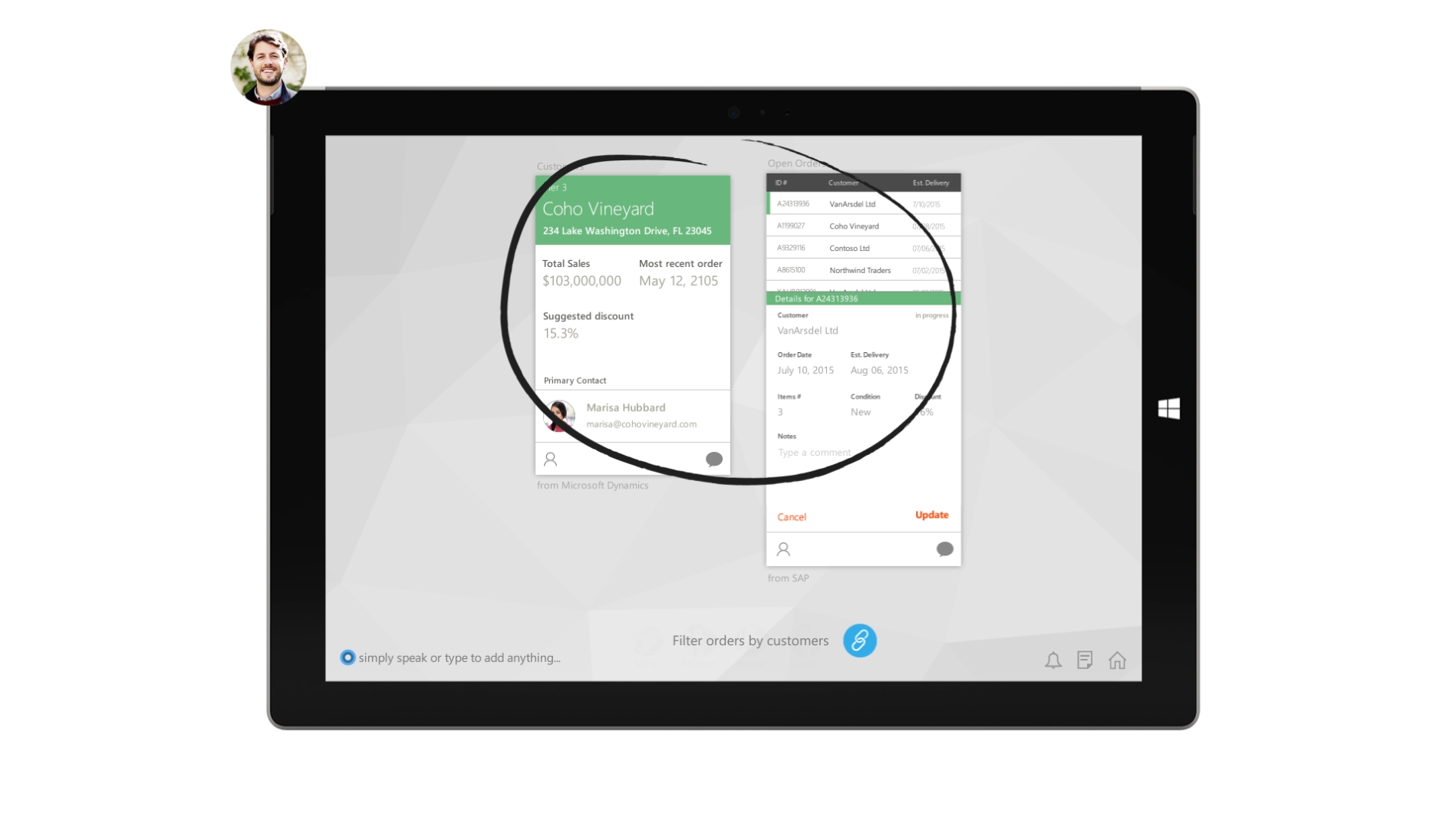
Lithium Technologies and Microsoft Corporation have signed a strategic alliance agreement to integrate Lithium social interactions and community data into Microsoft Dynamics CRM. So finally we can integrate customer records with community and social… there’s an ROI model in there! The agreement extends Lithium’s industry-leading community platform to customers who rely on Microsoft Dynamics and offers enterprises more capabilities and choice in their customer relationship management (CRM) needs. Lithium provides a community platform with more than 100 million members participating in Lithium-powered community every month. Microsoft Dynamics has distinguished itself as the leading customer engagement solution for delivering business insights that help companies of all sizes grow and delight customers. The close integration of Lithium community data within Microsoft Dynamics offers businesses greater insights from the wealth of customer signals embedded in communities that can drive better customer experiences. Will be looking for case studies of how the integration works with real customers and how they benefit.]

Rob Tarkoff, president and CEO of Lithium Technologies said, “We are proud to be a strategic community partner for Microsoft Dynamics. Our customers want to extend the power of Total Community across their intelligence and data infrastructures. Working closely with Microsoft, we now make both possible for a much broader set of our customers—and bring the power of our platform to businesses who rely on Microsoft Dynamics every day.”

Bob Stutz, Corporate Vice President, Microsoft Dynamics CRM added, “As an established leader in social interactions and community data, Lithium is an ideal community partner for Microsoft Dynamics. Our customers rely on Dynamics CRM for insights and capabilities to help them better engage with their customers.  Through this strategic alliance, we can now  offer  access to the rich customer data available in Lithium communities to enable organizations to take their digital and social efforts to the next level—and better inform other marketing and service efforts throughout the enterprise.”

MY POV: Connecting social, digital, CRM and community are key to delivering a great customer experience. These two companies are forging a great partnership. Exactly how it works and seeing it deployed will something I will look forward to. While announcements are great, its really when customers are getting an ROI from the integration that counts with me. We need a way to give attribution to digital and social and connecting these types of technologies is a great step in the right direction.

@drnatalie, Constellation Research Covering Marketing, Sales and Customer Service using CRM and Customer Analytics to Drive Amazing Customer Experiences.

Next-Generation Customer Experience Data to Decisions Future of Work Innovation & Product-led Growth New C-Suite Sales Marketing Digital Safety, Privacy & Cybersecurity Microsoft B2C CX Chief Customer Officer Chief People Officer Chief Human Resources Officer

MongoDB Adds BI Tie, Gears Up For Growth

MongoDB Adds BI Tie, Gears Up For Growth

MongoDB World 2015 Event Report: NoSQL database vendor previews connector for BI and data-visualization options like Tableau, Qlik, IBM Cognos, and SAP BusinessObject. The bigger story is behind-the-scenes preparation for growth.

MongoDB highlighted lots of new product features at this week’s MongoDB World 2015 event in New York, and it also made a point of sharing lots of code with the many developers among the 2,000 or so attendees at the event.

What was more remarkable was just how much time, effort and, clearly, money the company is pouring into the development of the business itself. The scope and scale of change was clear during analyst briefings by MongoDB’s new top-management team, led by Dev Ittycheria, who joined the company as president & CEO last August. The company has built a state-of-art, integrated sales and marketing machine to help MongoDB evolve from “a compelling alternative into the new default choice,” as Ittycheria put it.

Dev Ittycheria, MongoDB's president & CEO, promises faster innovation and a stronger company at MongoDB World 2015.

Dev Ittycheria, MongoDB’s president & CEO, promises faster innovation and a stronger company at MongoDB World 2015.

More on MongoDB’s bigger ambitions in a moment, but first here’s the lowdown on the new product enhancements, which are set for beta release this summer and general availability in MongoDB 3.2 by the end of the year:

  • Connector for BI.  This SQL-access option will open up MongoDB data for visualization and analysis within Tableau, Qlik, IBM Cognos, SAP BusinessObjects and other BI products. It’s read-only (not read/write) querying through MongoDB’s Aggregation Framework feature, so it’s strictly for analysis, not SQL-based database development.
  • Dynamic lookups. Another BI-minded feature, this feature will support joins across MongoDB collections, and it’s also supported by the MongoDB Aggregation Framework.
  • Encryption for data at rest. Aimed at healthcare, financial services, retail, and government organizations, this feature will encrypt data at rest, with keys secured via the Key Management Interoperability Protocol (KMIP).
  • Document validation. This feature lets you apply rules to verify data types, values, mandatory fields and so on. It’s strictly an option, so you don’t have to validate data, but you can apply this feature to one or more fields to enforce data quality and consistency.
  • Schema visualization. This graphical interface, code named mongoScout, will give developers and DBAs a view into the structure of documents and entire collections so they can see what fields of data are available and what percentage of documents contain those fields.

Customers heard all about these new features during Tuesday’s opening keynote by Eliot Horowitz, co-founder and CTO. On Monday, Ittycheria focused mainly on the company itself. Ittycheria came to MongoDB by way of venture capital firm OpenView Partners, but he was previously president of BMC Software and, before that, CEO of BladeLogic, a company that BMC acquired.

MongoDB raised a whopping $150 million in venture capital in 2013 and another $80 million early this year. It’s Ittycheria’s job to make sure that money is put to good use. During the analyst briefings, Ittycheria hires including Carlos Delatorre, a BMC veteran who’s now chief revenue officer, and Meagen Eisenberg, CMO, recently recruited from fast-growing DocuSign, detailed MongoDB’s sophisticated new sales-and-marketing machine.

MongoDB knows it has plenty of fans among developers, between 10 million software downloads and 35,000-plus MongoDB User Group members. The company’s paid-customer count stands at about 2,000 firms. Executives admit the biggest competitor is the company’s own, unsupported open-source software.

In recent months, MongoDB has hired armies of new salespeople to tap into scaled-up content-marketing, lead-gen and lead-nurturing efforts. The plan for converting more customers to supported MongoDB Enterprise software is roughly this:

  1. Identify and nurture the many MongoDB users and apps sprouting up, grassroots style, within companies.
  2. Spot the CIOs, CTOs and other IT managers within these companies and connect the dots among the many proof points of adoption. This naturally opens eyes to the need for support and enterprise-grade management features.
  3. Raise the level of the discussion up to the C-level, moving away from features and functions and toward agility, innovation and goals around transforming the business.

MongoDB won’t displace Oracle or any other relational database if the app is about conventional structured-data apps, Ittycheria acknowledged. MongoDB is going after next-gen apps that are about digital and mobile transformation and driving new business models. In that world, speed-to-market is everything and “slow is the new down,” as Ittycheria quipped.

MyPOV: Growing Fast Versus Growing Up

When I attended my first MongoDB World (then called MongoDB New York) back in 2012, there were only 900 or so attendees and the crowds was even more heavily skewed to developers. There were more startups and fewer Fortune 500 customers. It’s an apt metaphor for a company that moved up in the corporate and world.

On the technology front, MongoDB put a big emphasis here on its acquired WiredTiger storage engine and new ability to scale – an area where competitors including DataStax (the Cassandra developer and support firm) and Couchbase have been vocal critics. MongoDB is clearly trying to put distance between itself and these competitors, and the pluggable storage engine introduced in MongoDB 3.0 is giving the company and its customers more options to deal with scale. For example, Facebook was here demonstrating the use of its RocksDB and a storage engine teamed with Mongo to handle super-high-scale, low-latency, write-intensive applications.

The buzz, the packed sessions and the developer enthusiasm at MongoDB World 2015 were much the same as they were back in 2012. But the top executive ranks have changed, with Ittycheria bringing in new people to drive a scaled-up, more sophisticated approach as a vendor. It’s probably too early to say whether the new team has accelerated MongoDB’s already strong momentum – though they cited robust pipeline figures — but it’s clear the company is making strides mature the company, as well as the technology, to meet enterprise-grade demands at scale.

Have a question about your big data/analytics strategy? Let's talk! Contact me here. 

Data to Decisions Tech Optimization Innovation & Product-led Growth Event Report mongodb Executive Events AI ML Machine Learning LLMs Agentic AI Generative AI Robotics Analytics Automation Cloud SaaS PaaS IaaS Quantum Computing Digital Transformation Disruptive Technology Enterprise IT Enterprise Acceleration Enterprise Software Next Gen Apps IoT Blockchain CRM ERP CCaaS UCaaS Collaboration Enterprise Service developer Metaverse VR Healthcare Supply Chain Leadership Chief Information Officer Chief Technology Officer Chief Information Security Officer Chief Data Officer

From the Vault: “AAA” Rated Prospects

From the Vault: “AAA” Rated Prospects

1

As time goes on, there is more and more content buried deep in the archives of this blog, so every now and then, I like to reach into “the vault” and revisit an old post. So this week while I’m on vacation, I thought I’d bring back this piece on my system of identifying your top sales prospects. Enjoy!

—–

One of the most fundamental aspects of selling tickets is identifying the people that are most likely to purchase (the “Glengarry” leads, for those Glengarry Glen Ross fans out there). You want your sales staff to have the best leads possible in order to increase the chance that they will be able to close sales. This seems pretty straightforward, but making sure you have the best leads is not as simple as it seems.  In many situations, your list of current and former customers isn’t large enough to reach your sales goals, and purchased lead lists can be a mixed bag in terms of quality, accuracy and relevance. So what does it take for an individual to be a top sales prospect?

To make this easy to remember, I’m taking a page from “bond ratings.” If you’re familiar with finance, you probably know that AAA is the highest rating that a bond can have. Well, in order to identify the best leads, you also want to shoot for an “AAA” rating. In our case, the three A’s you need to focus on are:

  1. AFFINITY
  2. ABILITY
  3. ACTION

Let’s break this down one “A” at a time:

Affinity: This is the most fundamental element of the three A’s – clearly, your best sales prospects tend to be consumers that are already fans of your team. The degree of their affinity usually correlates with their purchase behavior. Putting aside the other A’s for a moment, the more affinity you have for a team, the more you tend to spend on tickets, either in quantity, quality or both. A more casual fan with only moderate affinity can still be a customer, but their purchases will be smaller or less frequent.

Ability: Being a fan doesn’t mean you are going to buy tickets. Unfortunately, for many die-hard fans, tickets are simply too expensive to purchase, at least with any regularity.  So having the ability to buy, meaning the prospect has the financial resources to afford tickets, is critical to identifying top leads. You can also think of this “A” in terms of “affluence,” especially when selling high-value items such as club seats and premium season tickets.

Action: This third “A” is often overlooked, but is still quite critical in identifying the best leads. Action is all about prospects that have shown a willingness to purchase your product, or a comparable product.  For example, you could have a very affluent individual that has been a fan of team X for his entire life. However, he prefers to watch his team on his 80″ super-HD TV in his “private theater” room.  In this case, he’s missing the third A since he’s never shown an interest in the act of attending a game in-person. In addition, action does not limit you to your own previous customers. Any related purchasing action (concert tickets, merchandise, etc.) can improve their quality as a prospect.

The other nice thing about this “model” is that it breaks down into components very well. We know the best prospects fit into all three categories, but you don’t always have the luxury of knowing about all three A’s.  As a rule, three A’s are better than two A’s, which are better than just one A. For example, you might know that someone is a fan and has purchased tickets, but you don’t know what they can truly afford. Or your organization might be able purchase a lead list of high-income individuals who spend money on entertainment, but you don’t know if they are fans of your team.  You should always strive to have information on all three A’s, but when that’s not possible, you can try to manage with two of the three. In these scenarios, your conversion rate will be lower, but with more quantity and time, you can still achieve your sales goals.

By the way, technically there is a 4th “A” that I haven’t mentioned, but it should go without saying – AREA.  You should always focus on the  most logical geographic area, usually a 50 to 75 mile radius around your stadium location. It is not worth the time and financial resources to extend your sales efforts beyond this area, as the likelihood of sales drops dramatically. I’ve written a bit about this before when reviewing a team’s direct mail campaign.

If you keep these three A’s in mind as you are building your lead generation and data modeling strategy, I’m confident you will see the results in your conversion rates, and in turn, in the satisfaction of your sales staff!

Next-Generation Customer Experience Chief Customer Officer

HireVue Secures $45 Million in Funding to Fuel Team Acceleration Software

HireVue Secures $45 Million in Funding to Fuel Team Acceleration Software

Right in time for its yearly Digital Disruption user conference taking part in Park City, HireVue announced a new round of funding.
Let’s dissect the press release in our usual commentary style:

SILICON SLOPES, UTAH (June 2, 2015) – Team Acceleration software provider HireVue, today announced it has closed $45 million in Series E funding led by Technology Crossover Ventures (TCV), a leading provider of growth equity for premier technology companies and investors in Zillow, Netflix, ExactTarget and Facebook. HireVue’s previous investors, including Sequoia Capital, Granite Ventures, Investor Growth Capital, Peterson Ventures and Rose Park Advisors’ Disruptive Innovation Fund also participated in the round. Nari Ansari, a principal at TCV, will join HireVue’s board of directors.

MyPOV – A great list of VC investors is putting in more money into HireVue. Good VCs are not a guarantee for success, but increase the likeliness of success. So a good sign that HireVue keeps attracting capital from successful investors.

Today, HireVue also announced the launch of its Team Acceleration Software, which puts the power to build and coach great teams, fueled by digital video and predictive data analytics, directly in the hands of business managers everywhere.

MyPOV – So HireVue is going beyond its traditional scope of video recruiting, where the vendor originally started 10+ years ago, into a larger automation space, the overall productivity of teams. And in the twenty-first century that means that teams need to accelerate, do more with less and faster. So Team Acceleration is a good name for a new category it looks like HireVue is trying to create.

“The new world is about empowering managers and teams - not slowing them down with administrative tasks like time tracking, compliance, benefits and payroll,” said Mark Newman, founder and CEO, HireVue. “Team Acceleration is the way and philosophy that today’s most successful companies are built on. The market opportunity is even bigger than talent management. HireVue customers grow faster, are more profitable, and deliver awesome customer experiences by building and coaching the world’s best teams through our platform. We’re excited to partner with TCV as we push to our next phase of growth and put the power of our Team Acceleration software in the hands of business leaders everywhere.”

MyPOV – Good to hear Newman describing that space. And he is likely right with the Team Acceleration market being bigger than the traditional Talent Management market, which struggles by itself with the failure of the first wave of Talent Management that mostly did not succeed transforming enterprises talent management practices. In the end, more managers care about their team’s productivity than about classic talent management, which in many cases is being perceived as something coming ‘from the top’ and needing to be done ‘for the boss’. Getting done with more work and getting home earlier, or to have more free time in general, are more desirable and attractive for managers.

The funding and Team Acceleration software launch capitalize on other recent company momentum including:
· Named one of the Top “10 Most Promising Companies in America” by Forbes
· Named the fourth fastest-growing cloud app of the first quarter of 2015, alongside mainstream apps including FitBit and Slack.*
· Record fiscal year 2014 growth
· Working with approximately 25 percent of the Fortune 100
· Hosted its second Annual Digital Disruption user conference


MyPOV – Congrats to the HireVue management team and employees to these accolades.

Overall MyPOV

Software vendors are often compelled to create their own category, and then trying to define it to their own advantages. Certainly legitimate and HireVue is no exception, but the more successful attempts to this approach are characterized by a substantial need for the category in the market. And here HireVue is spot on – individuals and teams need to accelerate, both out of their own, self-preserving intrinsic motivation, as well as a demands coming from the outside, from management. Even more importantly, HireVue has a very good record in the recruiting space and even more importantly in using ‘true’ analytics to its advantage (more here). 
 
Congratulations to HireVue on funding and the launch of a new category, we will be watching how well the vendor will be able to fill the vision and then execute to the advantage of its customers. 
 

Resources

Inside the Future of HCM

DOWNLOAD SNAPSHOT

Ten Trends Chief People Officers Need to Know in a Digital Age

DOWNLOAD SNAPSHOT


Future of Work Data to Decisions ML Machine Learning LLMs Agentic AI Generative AI AI Analytics Automation business Marketing SaaS PaaS IaaS Digital Transformation Disruptive Technology Enterprise IT Enterprise Acceleration Enterprise Software Next Gen Apps IoT Blockchain CRM ERP finance Healthcare Customer Service Content Management Collaboration Chief People Officer Chief Information Officer Chief Technology Officer Chief Information Security Officer Chief Data Officer

MongoDB keeps up the momentum in product and go to market

MongoDB keeps up the momentum in product and go to market

I had the opportunity to participate in MongoDB’s user conference MongoDBWorld in New York this week. The conference is well attended with approx. 2000 attendees, remarkably most of them ‘doers’ that are directly involved in bringing MongoDB projects live recently or planning to do so soon.


Here are my Top 3 Takeaways from the event:

MongoDB is growing – Though the vendor is not breaking out numbers, there are some key metrics that show how well the vendor is doing. For instance, MongoDB has broken the 10M download mark. Certainly nothing to guarantee revenue, but it makes a large qualified market for MongoDB to sell its licenses. The vendor shared that it has now 2000+ subscription customers and over 300k people have taken MongoDB education classes. The Opensource project has 35000 MongoDB user groups (MUGs)  and MongoDB now has over 1000 partners. All impressive numbers that show that MongoDB is offering an attractive product.


Key product Progress – On the product side MongoDB is making progress, with a focus on the recent addition on the storage layer, something the vendor did not have at its first MongoDBWorld a year ago (more here). All key product advances have been neatly packed into press releases (they are here) – and let’s comment on them:
  • Performance Wars to re-start - MongoDB claims the performance crown over Cassandra and Couchbase (see here) – In a test performed by United Software Associates using the Yahoo Cloud Serving Benchmark (YCSB). The test throws the performance challenge out to the two other databases and I am sure both vendors will respond sooner than later (Couchbase also has their user conference this week) – so stayed tuned.

    From my perspective: As useful and important performance tests are – they always struggle on the comparison side. And every customer situation is different, so we recommend to take them as one measurement point, but strongly recommend customers to run their own benchmarks for critical performance pieces. 
 
  • Visualization matters – In the past BI tools / visualization vendors like Tableau, SAP Business Objects, Qlik and IBM Cognos have used MongoDB as a data store for more advanced and more complex content. Now MongoDB turns this around by providing a standard connector for these tools, supported by MongoDB. Certainly a better solution for MongoDB customers as they get their database of choice being able to support a variety of front end tools. For sure this will start another discussion on back end vs. front ends in business data, but it is good to see the backend side to catch up. And showing MongoDB’s market power and customer needs, MongoDB will start with Tableau first, no surprise. But it shows the power of MongoDB, getting Tableau on stage at the Day 2 keynote (similar as having Docker CEO Gollub on Day 1).
 
  • More coming in MongoDB 3.2 – With the upcoming release of MongoDB schedule for later this year, MongoDB is pushing the yardstick further out in regards of value creation for customers. Customer want to make sure documents are being useful and valid for their purposes, so document validation is a key new capability. But when you store vital information in documents, you must secure them, so MongoDB adds encryption for data at rest. Providing the above mentioned visualization support certainly required MongoDB to create more view across collections, but why have the capability locked up for visualization only, so MongoDB exposes it as a separate capability to developers, too. And lastly souping up administration tools is never a bad choice for a technology product, the new mongoScout allows administrators and developers to understand better what is going in their MongoDB databases. 
Full Sessions at MongoDBWorld

Once again, it is land & expand – The popular go to market and sales approach of open source vendors was part of the briefings (see the Alteryx and Acumatica approach to it here and here). It was good to see both CMO Eisenberg and CRO Delatorre walk us through the go to market in synch on all key topics, such harmony is seldom found between a CMO and CRO / Head of Sales. With 10 million downloads it is clear that MongoDB needs to carefully decide where to invest marketing $s, sales resource follow up, upsell opportunities etc. It looks like the team has a good handle on the process, the investors are investing more in go to market, with the focus being business growth in Europe and Asia, with an overall goal to sell more through partners. After all CEO Ittycheria stated that a working demand side is key for the success of startups, so it is clear there is a focus on this (key) side of the business.
 
Very MongoDB Green
 

MyPOV

A very good user conference for MongoDB, that is growing well in both product and go to market capabilities. Given some executive changes, including the CEO, quite a remarkable outcome, not many startups come out strong after management changes. On the product side there has been more continuity with Horowitz at the helm and MongoDB is looking for more scale and growth of its subscription sales potential. By pointing to the popular visualization area, the vendor very likely is betting on a winner. Enterprises struggle often to make visualization tools work and to take them live in general, so making this integration easier creates value for enterprises and on the flipside revenue potential for MongoDB.

On the concern side MongoDB needs to manage growth well. A good problem to have, nonetheless a challenging one. Investors and customers are getting used to growth in market numbers and product capabilities quickly, and delivering on these consistently is not an easy task. MongoDB has shown it can tackle complex engineering projects with its storage plans, but that process is far from over and needs to be managed well with high quality releases, good knowledge dissemination as well as partner uptake and education. A lot of things to orchestrate.

The good news is that MongoDB does not face a competitor with an identical (or very, very similar) value proposition. That means that as long as MongoDB can keep up a differentiating story to the incumbent database vendors that enterprises use, and as long as MongoDB keeps executing - it will do well. We will be watching and analyzing. 


Resources

Inside the 9 Cloud Trends Every CXO Needs to Know in 2015

DOWNLOAD SNAPSHOT


Tech Optimization Data to Decisions Innovation & Product-led Growth Next-Generation Customer Experience Future of Work User Conference mongodb ML Machine Learning LLMs Agentic AI Generative AI AI Analytics Automation business Marketing SaaS PaaS IaaS Digital Transformation Disruptive Technology Enterprise IT Enterprise Acceleration Enterprise Software Next Gen Apps IoT Blockchain CRM ERP finance Healthcare Customer Service Content Management Collaboration Chief Information Officer Chief Technology Officer Chief Information Security Officer Chief Data Officer

Lithium LiNC15: Customer Experience Environment and Klout

Lithium LiNC15: Customer Experience Environment and Klout

Analyst Day Review of Lithium LiNC15

On this first day, we heard from not only the executives at Lithium but also customers. One study Lithium engaged in showed that while 49% executives thought that bad customer experience would drive customers away, the actual number is 89%. Perhaps the value of customer experience and customer service has finally come into it’s own. For someone who have covered this area for over 20 years, it’s great to see. One of the key issues with respect to this is that CEO’s are realizing that because customers will leave, they are expecting someone in their organization to step up to the plate and lead customer experience. Sometimes it’s the CMO, sometimes its the Customer Service Professionals, sometimes it’s the CIO and sometimes, when it’s not happening, the CEO will hire a Chief Digital Officer or Chief Experience Officer to make sure the customer experience is changing and the company will be around long-term. It’s an opportunity that someone inside a company needs to stand up and take on. But it is not without risk.

Rob Tarkoff (@rtarkoff) CEO of Lithium talked about why Lithium exits and why it’s so key to brands. The reason? Customers have extreme expectations. Buyers have forever changed and they want more, want it now and want it easy and enjoyable. Customers trust their peers; not brands. iGen doesn’t want to hear from brands; they want to hear from their peers they trust. They are ok hearing from and working with experts from brands but they prefer peers. The stats keep showing the same thing: 78% trust their peers, yet 14 trust advertising. Yet there is still a ton more money spent in advertising than customer experience. I hope that changes and soon.

Four Main Problems that Get Resolved in Branded Online Communities

Rob explained that Lithium exits to build trust between brands and people by solving 4 main problems:

  1. Helping brands with conversations happening on multiple digital channels –that many the brands don’t own or control
  2. Brands don’t know “who is who” –they need the identity of who a customer is and their passion and problems that the customer needs addressing. That’s why Klout was acquired and is integrated and it’s not just about one’s influence, but also scored by what people are passionate about
  3. Brands have found it difficult to scale to tame the beast of social media; volume of social customer care is escalating and increasing a preference as a channel – it’s no wonder – the contact center is necessary, but not where you will always get the best service
  4. Brands are wondering where the ROI of social is. Most software companies aren’t proving out the impact of social and digital transformation effectively. They are not answering where’s the ROI and the business impact. Lithium feels it is not about likes and impressions – it’s about dollars saved and dollars earned. What’s exciting is how many brands are making money—becoming a revenue engine- using online, branded communities.

More details on the study conducted:

  • 93% of brands believe they are adapting to digital disruption and transformation. But do those solutions really have scale and lasting impact? That’s what is really needed and more difficult to do without a platform.
  • 82% customer have higher expectations compared to just 3 years ago
  • 65% of brands have unbelievable expectations to innovate
  • 58% of brands feel increased competition from competitors.

So what’s the bottom-line?  Lithium feels customer experience is in the power of the platform –a platform that’s build to deal with the customer experience in the digital world. Lithium feels there are 3 parts to this:

  1. Connect on social channels
  2. Engage with branded communities
  3. Understand your most valuable prospects and customers

And customer answers questions and share experiences and brand thus can grow revenue , reduce costs and improve NPS.

What about the acquisition of Klout? Klout provides customer insights that are bases on what people say about themselves and what others say about them. What is important is the people with passion and express that online- it’s what is key to brands and brands need to prioritize customer’s expectations and experiences and the Klout product helps them to do this. Lithium has more than 700 M profiles. Brands need to get to know these folks.

Why Does Lithium Win Deals? Lithium deals with the complete set of stakeholders who participate in a company- everyone who delivers products or service and helps deliver a better overall customer experience. What this means is that customer service is the new marketing and the customer experience and vice versa. The key to creating better customer experiences is a community – peer to peer interactions where internal experts inside a company help customers; external experts (outside a company) also help a customer as well as people inside a brand. This is the total community – branded communities, social networks and third party social networks and what Lithium offers. It’s true that brands that have their own branded communities great better customer experiences.

It’s been a great first day. Looking forward to the actual conference, starting tomorrow! Look for the tweets at #LiNC15


The Net from Google I/O - Google wants developers to build more Android apps

The Net from Google I/O - Google wants developers to build more Android apps

Last week I had the opportunity to attend Google’s I/O conference in San Francisco, and one thing was abundantly clear: Google wants developers to build Android apps. 


The conference was sold out quickly as usual and the 6500+ attendees were treated to probably the best setup and conference floors that I have seen at Moscone West.


Open talk area that were separated by cardboard and wooden elements, created a unique atmosphere. A 270 degree video wall during the keynote was unique, too – not only could you play a mega version of Pong, but a whale swam by… More remarkably all talks were just 30 minutes long, so a huge chance for the attendees to dive into many areas of interest.


In contrast to previous editions of Google I/O, the 2015 edition was all about Android. In the past we saw the Chrome vs Android debate, we saw ‘moonshot’ projects like Loon, self-driving cars and Google Glass (saw less than a handful at the conference), major software platforoms like Wave and Google+ being unveiled. This year the only mention of Chrome was as part of a new feature in Android M. Android Auto (4 cars were in the exhibit area on level 3) didn’t get much room. It is not clear why Google was all focused on Android, see my take on it in the MyPOV section below.

Here are my Top 3 takeaways:

Developer Focus – As mentioned Google wants developers to build more Android apps and apps that are more tied into Google specific capabilities and services. Google Cloud Messaging is one example. Exposing app content to the Learning graph is another. Up taking Polymer will make developers more productive and likely expose the content ‘automagically’ to GoogleNow. The most intriguing benefit to build on the Google platform from a monetization perspective were the new capabilities to present an app differently on Google Play – testing designs, getting usage analytics and automated content management are setting Google apart. And Google has a ‘higher ground’ advantage here – as developers trust that google has the web site / Play Store analytics down.


IoT – The announcement of Project Brillo and the Weave protocol is probably the most fundamental and lasting announcement Google made at I/O. Especially as we learnt in a Q&A with Dave Burke later, that the IoT updates will roll out with the Google Play services on a regular level – so every Android device is becoming a potential control point for IoT. That makes Android the largest IoT platform from a user reach overnight. A lot of things will have to happen, many end points have to be created, but the Nest acquisition by Google now makes a lot of more sense. And ‘things’ makers will want to connect their things to widely available, starting with the leading platform – and Android is the one / one of them. That will ensure the Weave uptake from nothing today. And as Google does not want to monetize the usage of Weave and Brillo, I’d be expect if it would not see similar popularity like Android. Google competitors need to realize that Google is not on this for the software revenue, but for the data. That makes competition asymmetrical and likely in Google’s favor.


GoogleNow – As a strong believer that nothing will change our future more than ‘true’ analytics (more here) , the new availability of Google now ‘on tap’ is very powerful. We know analytics get better with more content and context – with Google now being able to take the current screen content as parameters for GoogleNow questions and services will make these (even) better. Google shares that the (neural) learning trees are now 30 levels deep. To put it in perspective: If I remember neurology correctly, human brains decision trees are 10 levels deep, but then our brain has some more tricks up is sleeve… Already Google has pushed down not understood words to 8%, and that by itself – considering the multiple languages GoogleNow supports, is very impressive. And the GoogleNow team is correctly playing in a multimodal world, so pressing the <Home> button in one app / time point vs another will run different models. When I asked when / if Google will have a neural model for each user, I did not get an answer, but I am sure that is where Google is heading – if it has not arrived there today already.


Analyst Tidbits

  • AndroidPay – Google is extending its payment platform with NFC and finger print sensor capabilities. Combining Google Wallet and Android pay gives Google a similar footprint as Apple in terms of retailers accepting payment. It will be interesting to see how fast the handset makers will jump on supporting NFC for Android devices going forward – a key piece of hardware capability that is needed for AndroidPay to take off. Smartly Google is bringing the pay capabilities back to older handsets, too.
  • GooglePhotos – In the perfect showcase of brining cloud and analytics together, Google unveiled unlimited storage for photos, up to 16MPixel and for 1080 video. The key value is the face and location recognition, e.g. getting all your Venice pictures together will be an easy feat by just asking. More below on the commercialization strategy of the feature, for now Google told us that it is all about creating a ‘sticky’ application for consumers, and a high frequency application that they will visit multiple times a day. But overall a great showcase for analytics and machine learning solving a material problem. Also photos have effectively become the center of gravity for consumers, something once upon a time music was (remember the iPod). 
  • Offline Maps – Probably one of the most practical announcements was that Google Maps will be available offline later this year. Including map data, the demo even showed restaurant reviews being cached. Ironical to a certain point as we were there already. In 2001 I drove across the country with a GPS add on to my Palm III – having to download the map data for the next day every night. 
  • Cardboard – I missed the last year announced project Cardboard. But a colleague gave me a demo this year and I was impressed how far and well such a low cost option can move virtual reality. With Expeditions Google has a nice education story. And Google cares for the not so wealthy end of the world a lot – so an interesting alternative. On the flipside this cannot match what Microsoft and Facebook are doing. Google will need a high end virtual reality option soon, too. 
  • Small footprintIt was great to see that Google cares for slow throughput and expensive data networks that are crucial for success in the not so affluent parts of the world. Thinner pages, faster load times, offline capabilities and Wifi connect may well put Google on a strong differentiator to Apple. But then we have seen that all of this did not help Blackberry, who had a lot of these capabilities already in the past, to remain a relevant player in smartphones. On the flipside the Google business model is not the smartphone… 
  • Project Jacquard – One of the more impressive ATAP projects demoed was Jacquard – very small wires embedded into textiles and allowing basic automation / control functions for e.g. lights and music. It will be a lot of textiles to be produced before this has mass appeal, but e.g. fitness applications could be in near reach. 
  • Audi Tablets – AndroidAuto was prominent with 4 cars on display. Audi seems to have a ‘Vorsprung durch Tablet’, being the first car maker to not only deploy AndroidAuto in the car dashboard, but also via 2 ‘Audi Tablets’ who serve as in seat entertainment system for the 2nd row. But also as a remote control for a number of car function and services. 


Android Device Diversity


MyPOV

A new, unique content selection by Google for I/O. Speaking with repeat attendees they were not ‘blown’ away, citing a lack of exciting announcements compared to previous editions. But when speaking to Android developers, they found the event very useful as they were able to capture significant insights and even get some hands on experience. Maybe Google is at the point where it needs to split its conferences – which to a certain point the vendor has done already with the Google Cloud Platform (GCP) roadshow. When I asked Googlers about the absence of other major topics, they cited little interest on GCP by Google I/O 2014 attendees. Interesting as the Microsoft developers hoarded into Moscone West a few week ago for BuildWin were highly interested in Azure (Event report here). But then few Microsoft developers can make a living building Microsoft mobile Apps, many of the Google I/O attendees do, and I guess that creates a certain focus on their side and demand for content from Google.

And if Google has done one thing clear, it wants developers to build more Android Apps. New tooling, better go to market, easier monetization, differentiating capabilities all are capabilities that make developers take note and care. And Google is in a battle with both Apple and Facebook on this. Apple is likely to be the #1 target, as there were numerous port, deploy and co-existence options (e.g. Google Cloud Messaging extend to iOS). It will be key to see if all the features will provide enough attraction to shift the market shares in the mobile platform competition.

At the same time Google is also under pressure to make sure Android remains attractive and create such a R&D lead that the many Android flavors that have come up in the recent years do not lead to a further defragmentation of the Android experience. On the one side it is great to see the diversity of wearables, smartphones and tablets – on the other side it hurts Google in a cross device experience for end users. Google is trying to end this conundrum by out-innovating (and likely out-spending) the handset makers, and new features like GoogleNow on tap using the Google development frameworks create the uptake through apps (developers) to ensure a more consisting Android experience.

Lastly let’s be clear that Google is a massive data gathering operation. Making Google Photos free and unlimited solves a huge pain for consumers, but also gives Google a chance to learn more about them. And overall Google needs to collect more data, because at some point in the future there may be a better search algorithm for the web than Googles. The big difference today is that scaling that algorithm is easy in the cloud age (remember Google had to developer the super computer needed for that), so better answers are powered by predictive analytics like GoogleNow. And analytics success is determined by more data always wins, in the long run. The more data Google has, the better the predictions will be the more likely it will delight consumers and with that help Google’s advertisement business model. Nothing new here, what is bugging me at the moment is, that I cannot fathom the business model beyond ‘Do good’ behind Google Photos. Combining pictures without the personal content for immersive experiences and simulations will be an option, e.g. if a consumer books travel through (a not yet existing) Google travel app – you can see the view of the hotel room, maybe even the hotel room before you request it (certainly including the rating of previous users). Google may also be able to replace the Google cars that capture Streetview. It will be very interesting to see how Google will monetize pictures – it is funny – the business model is clear, but not the how. For now. And Google says they want to create a ‘sticky’ app and an app user’s return to everyday. Photos certainly helps here to create a Google unique ‘moat’ to the competition.

But to remain relevant the Android ecosystem needs to grow, and for that it needs apps. The only statistics of significance was that there are 1B+ users of the Play Store and that in the last months 50B apps have been installed. That’s a lot of apps. But rumor is that active Android device growth has flattened out (Google offered no stats – in contrast to previous years), and that maybe the ultimate motivation to dedicate the 2015 I/O almost exclusively to Android.

If my schedule allows I will blog about the enterprise takeaways later… checkout my Keynote First Take here – including a Storify Tweet Collection and a Meerkat capture.


Resources

Inside the 9 Cloud Trends Every CXO Needs to Know in 2015

DOWNLOAD SNAPSHOT


New C-Suite Future of Work Next-Generation Customer Experience Innovation & Product-led Growth Tech Optimization Data to Decisions android Google SaaS PaaS IaaS Cloud Digital Transformation Disruptive Technology Enterprise IT Enterprise Acceleration Enterprise Software Next Gen Apps IoT Blockchain CRM ERP CCaaS UCaaS Collaboration Enterprise Service ML Machine Learning LLMs Agentic AI Generative AI AI Analytics Automation business Marketing finance Healthcare Customer Service Content Management Chief Customer Officer Chief People Officer Chief Information Officer Chief Marketing Officer Chief Technology Officer Chief Information Security Officer Chief Data Officer

A Unique Leadership Perspective defines Dimension Data

A Unique Leadership Perspective defines Dimension Data

1

Dimension Data has always been distinctive amongst the overcrowded IT infrastructure services market place due to the simple fact that it is the only global player to stake a leadership position that has originated from an emerging market.

From humble beginnings in South Africa in 1983, where it was rightly limited to operating only in the domestic market due to the political environment Dimension Data has thrived through partnerships and global acquisitions as the barriers of Apartheid were lifted.

It was one of the first 6 global partners of Cisco (who naturally refused to do business with it during apartheid) and has grown to arguably become Cisco’s strongest partner. All that is history, it is now a strong subsidiary of NTT employing 28,000 people.

In May this year, Dimension Data held the Perspective 2015 Industry Analyst Event in Prague, Czech Republic. Like the location, the event was a unique experience. When analyzing the various market players, capioIT has always believed that the strength of culture is critical from the leadership to the delivery teams.

In light of this understanding of the importance of culture, it is clear that Dimension Data has an executive team that is unique in the tech industry, particularly in the global IT firms. The leadership team of Dimension Data is consists of South African, Australian and British nationals. It does not have 8 Americans the top leadership roles.

This in itself is so differentiated from the US, European or Asian based vendors. The key determining factor of Dimension Data is the revenue split is well spread geographically. Because no one region dominates it has appeared to have developed an egalitarian approach. The level of executive team professional and social rapport that I have observed over the years is much more collegial and positive than virtually any other firm that I know.

It was amusing to watch the US and European based analysts try to understand the culture and ribbing or gentle mocking that went back and forth between the Dimension Data leadership team particularly around cricket and rugby results. No New York Yankees or Lionel Messi references at this event, it was all about Australia’s Cricket World Cup success.

Clearly NTT have identified the management approach, and the contrast with the NTT approach. It appears that the mother ship has rightly decided to leave it alone. The challenge for Dimension Data will be if the management team is disrupted. If the CEO Brett Dawson were to retire, and the successor come from within, then this of course could have a disruptive impact on the overall culture

Capture Point

What does this really mean? – Without attracting suggestions of naivety, the management team appears to work for each other and have each-others back. This is more than I can say for many more traditional management teams particularly those that are dominated by one geography or service line. The benefits for clients, employees and partners that flow from a cohesive aligned management team is significant, highly valued, yet difficult to find.


Tech Optimization Chief Information Officer

Qantas Hackathon: Feels Like Innovation

Qantas Hackathon: Feels Like Innovation

1

After a busy first day of briefings and coding, the stage was set for the last, desperate rush to the midday deadline. Pitches were scheduled and rehearsed, last minute bug fixes were released and some even found time for a relaxing morning tea. But what, really could be created in a mere 24 hours. Would it be useful? Interesting? Would there be true innovation found amongst the lines of code and discarded lolly wrappers? Only time would tell. And time was the one thing that really was in short supply.

Here’s how Day 2 of the Qantas Hackathon played out.

Marketing Transformation Chief Marketing Officer

#LiNC15 Conference Highlights – Customer Experience Rules the World

#LiNC15 Conference Highlights – Customer Experience Rules the World

Customer Experience is ruling the world. At least parts of it. The conference began with Lithium’s CEO Rob Tarkoff talking about customer expectations. Today’s customers have extreme expectations and that brands are struggling to keep pace with new ways of marketing, bigger stakeholder voices, an explosion of consumer content across every dimension of the web and competition from new (and sometimes unlikely) places. What we don’t always discuss is the right approach to address those expectations and close the brand-customer divide. Using a total community approach can do that—restoring trust between brands and people, helping everyone share better experiences and offering powerful economic rewards.

Customer Experience From Brands

We then heard from radically different brands and how they are embracing digital to exceed customer expectations, create new market opportunities and transform their business. Senior executives from Brooks Running, Comcast, Google and Sky shared their approach to digital, business outcomes and their aspirations for the future. These four companies, digital disruptors, are achieving success and leading their industries into a new era of customer experience.

Business Results

The breakout sessions were wonderful. As an ROI gal, I went to the one on Results. If you’re still focused on clicks and likes, you’re leaving money on the table. Total Community drives revenue. Several top brands talked about how they are using social to recognize purchasing cues, route sales leads and other activities that contribute to your company’s top-line. That’s Total Community approach to achieve business objectives. These brands and their leaders included: Tim Lopez, Symantec, Jared Schultheis, Comcast, Lois Townsend, Autodesk,  Gregg Baker, giffgaff, Nico Henderijckx, Sony Europe, Catherine Kaiser, ‎Webroot and Jared Young, Barclaycard US.

Salman Khan, Khan Academy

And the day ended with a wonderful look into the future of education. Khan Academy is “providing free, high-quality education” to millions of students all over the world, each with their own unique story, learning at their own pace on Khan Academy every day. Sal and the Khan Academy take “Share the experience” to a global level. We heard the incredible story of Khan Academy’s evolution from his tutoring of a cousin using online videos, to a global community of teachers, students and parents, volunteers and donors who passionately believe in inspiring the world to learn.

Are you focused on the customer experience? If not, what are you waiting for? Are you focusing on doing good in the world? It’s about we, not me… Focus on a cause…. your life will change for the better!

@drnatalie, VP and Principal Analyst, Covering Marketing, Sales and Customer Service to Deliver Great Customer Experiences

Resources

Continuity of Customer Service Drives the Future of Ecommerce

DOWNLOAD EXCERPT 

Next-Generation Customer Experience Innovation & Product-led Growth Event Report Executive Events Chief Customer Officer