


Enterprises prep for influx of personal AI agents
Personal AI agents like Meta's Muse and Instinct are appearing on earnings conference calls as an opportunity to be tapped. Enterprises are saying that traffic from personal AI agents is still small, but the growth is significant.
First, let's note the following. The fact Muse is getting attention on earnings calls from enterprises across multiple industries isn't surprising. If buzz were money, Meta wouldn't have to justify its massive AI bill to Wall Street. What was surprising is how much Instinct turned up in earnings calls given its relative low profile.
Here's a tour of the personal AI agent discussion among enterprises on third quarter earnings calls.
A promising sales channel?
Not surprisingly, business-to-consumer companies saw personal AI agents as a notable sales channel. At this stage, the enterprise actions revolve around making your data readable by personal AI agents, which are likely to cut right to the chase in the sales funnel.
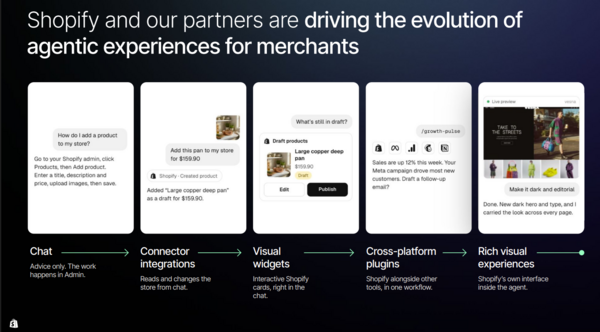
Shopify President Harley Finkelstein said the company is seeing a traffic spike from a small base. Personal AI agents land exactly at the end point in most cases. There is no customer journey for a machine. "AI channels are sending shoppers straight to product pages at 3x the rate of organic search and shoppers are converting 64% more often," said Finkelstein. "What's even more interesting is what products are being surfaced and it's not the obvious categories."
Also see: Does Airbnb have the blueprint for the AI enterprise rewrite? | Subscribe to Constellation Insights
Finkelstein noted that Shopify Catalog is built to turn 1 billion product pages into a structured data set for AI agents.
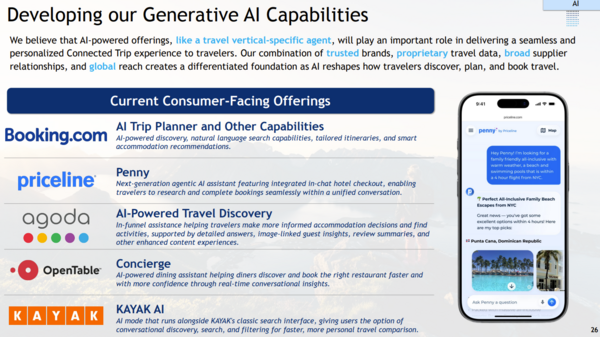
Booking Holdings, which owns Booking.com, Priceline, Kayak, OpenTable and other properties, is developing its own AI agents across its platform for travel discovery and booking, but personal agents could be a growth driver. For now, CEO Glenn Fogel said it's collecting data and monitoring.
- Does Airbnb have the blueprint for the AI enterprise rewrite?
- Shopify: Personal AI agent traffic starting to surge
- Boomi CEO Lucas: Beware your zombie AI agents
- Meta, Sierra pitch Personal Agent Protocol to govern how personal AI agents deal with business
- Personal AI assistants to proliferate and so will the governance headaches
- How Capital One evaluates, governs its AI agents
- OpenAI's Dev Day features dots, Ultrafast, GPT-6 Sol, but can it woo the enterprise?
- Agentic AI deployments: What you should, and shouldn't do
Speaking on Booking Holdings' third quarter earnings call, Fogel said:
"Over time, it may end up being another perhaps significant way that we get business. It may be making it easier for people, less friction to try and learn what they need to do. So perhaps we end up with things that are actually going to convert at a higher rate.”
Booking Holdings CFO Ewout Steenbergen said it's early days with personal AI agents, but "we have seen some acceleration in recent weeks, but it's still significantly below 1%."
"These new channels are important for us because they give us an opportunity for diversification of third-party channels, and that ultimately will drive an economic advantage to us...because (personal AI agents) like to connect to aggregators," said Steenbergen.
Christopher Nassetta, CEO of Hilton, said "we're in the very early days of this opportunity with AI, particularly in the distribution space, but I love what I see."
He added that personal AI agents could become the norm. "Humans like things to be done fast and easy, particularly when they're done well. I suspect there are going to be many more of them. They're going to be fast. They're going to be easy. They're going to be very effective, and humans are going to trend to that," said Nassetta, who said Hilton has rebuilt its tech stack and content strategy to easily connect to personal AI agents.
Aggregators build connections for AI agents
Companies that have their own ecosystems and marketplaces appear to be looking forward to becoming a hub for personal AI agents.
LendingTree CEO Scott Peyree said the company has more than 700 carriers and lenders in its network and more than half offer quote via back-end API access. A personal AI agent could hop to multiple lenders and fill out forms on the behalf of a consumer, but will likely go for the efficiency.
"Why would an LLM agent burn compute hitting 20 separate personal loan sites when they could just come to our site and get those same 20 quotes by filling out one form through us?" asked Peyree. "It's not even that they need to fill out a form. They're just communicating with our specialty agents that can provide that on their behalf."
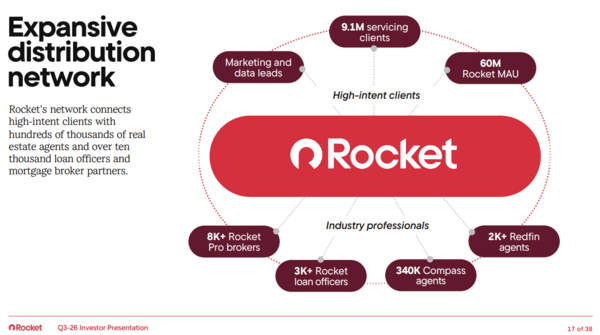
Rocket CEO Varun Krishna had a similar riff. "Consumers are starting to shop with their own AI agents that compare price, speed and ratings across lenders giving people more transparency and control. We saw that coming. Over the past 18 months, we built the APIs and protocols, those agents need to complete the mortgage process with Rocket end to end," said Krishna. "And here's the thing about agents. They don't care about your brand. They care about two things: the best price and the easiest close, and we show up well as Rocket in both."
- Rocket buys Redfin, pays $437.5 million per petabyte of data
- Rocket Companies Q2 highlights genAI, AI returns
- Rocket Companies’ genAI strategy: Playing both the short and the long game
Security and authentication concerns
The question about personal AI agents is so pervasive that it's turning up on earnings calls from companies in existence for nearly two centuries.
Michael Klein, Executive VP & President of Personal Insurance at Travelers Co., said personal AI agents are likely to be a compliance and legal headache in addition to a promising sales channel.
"There are a variety of legal and regulatory considerations as we deal with these developments and work in this space," said Klein. "If and when you're engaging with an AI assistant, you have to confirm a number of things. Is that AI assistant actually authorized by the consumer that's doing the shopping? Secondly, is the consumer affirming and confirming that the information provided is accurate? And third and most importantly, does the customer actually understand what they're buying? And those things aren't sort of particularly transparent and clear as you engage digitally in this space."
Nevertheless, Travelers is exploring the opportunities and threats. "We're going to continue to test and learn and make sure that we're prepared to respond," said Klein.
Visa CEO Ryan McInerney said the quarter was a tipping point for personal AI agents and executing real transactions without a human in the loop. Credentials will be critical as personal AI agents scale. McInerney said: "We remain very excited and have deep conviction about agentic commerce and the promise that it offers not just for buyers and sellers but for Visa. Second, we still have high conviction that Visa and our credentials will play an extraordinarily important role in enabling these experiences."
AT&T CEO John Stankey also said there's a lot that has to be unpacked with personal AI agents and how it'll impact funnel management. Stankey said AT&T is evaluating personal AI agents, but what matters is having the right products, reputation and value in the market.
"Philosophically, we believe the customer gets to make choices on what they do with their service. We also believe customers need to dictate their path forward on things. Customers have been pretty clear with us over the past number of years about account security, account management, account control before agents ever showed up. There are scenarios in real life where people will have to be really specific on who has the decision-making authority is on their account," said Stankey.
Own your customer relationship
Although Hilton's Nassetta was bullish on personal AI agents as a distribution channel, he also said the company needs to have a direct relationship with customers.
"What's really important to us is that we continue to build great and direct relationships with our customers. And I think these tools are the future, just like the internet was the future," said Nassetta.
This personal agent theme is so big that even personal storage companies are prepping for AI agents. Public Storage CEO Tom Boyle said, "we expect customers will increasingly interact with Public Storage through AI agents as well."
Boyle noted that Public Storage is tuning its digital platforms so the experience is seamless either way. "The key point here is that AI does not change the fundamental demand for storage. Storage remains need-based, local and physical. What AI changes is how customers discover, evaluate and interact with operators. In that environment, Public Storage is well positioned because of our scale, our digital foundation, our brand and our customer experience," said Boyle.
In other words, keep that customer relationship no matter what the channel.
Extra Space Storage, a rival to Public Storage, hit a similar theme. Noah Springer, president of the company, said he's been using personal AI agents and sees them as a way to land customers. However, his company owns the relationship at least until an AI agent can physically move your gear into a storage unit.
"Our customers are sticky because we provide them a great service, and the things that they put in their units are because they need them. And when they're done with the use of our product, they'll move out. We want to make sure we attract the right customers, keep them for the length of stay that's long and appropriate to their needs," said Springer.
Are you ready?
Zoom's Investor Day at Zoomtopia featured an interesting discussion about personal AI agents. The questions revolved around handling an influx of personal AI agent touch points and queries.
Chris Morrissey, Global Head of CX Sales and GTM at Zoom, said it's unlikely that he'd call Verizon or a wireless carrier repeatedly to save $15 a month, but it's not worth the effort. But if Muse is calling all day why not?
"There will be a massive influx of engagements to brands. And some of them don't know what to do with it. Some of them are just shutting it down if it's an agent calling, don't handle it. So they're trying to debate," said Morrissey. "It will get sorted out, but you never put genies back in the bottle."
Morrissey added that authentication and verification that an agent is actually representing a customer will be needed. Enterprises will also need to determine how an AI agent call is handled and whether a human gets involved.
Russell Dicker, Chief Product Officer at Zoom, said personal AI agents are going to have "a large impact on your biggest brands," but smaller businesses will need to figure out how to handle the influx of calls. "The ability for the small business to absorb that kind of impact is just not there," said Dicker.
Larry Dignan is Editor in Chief of Constellation Insights at Constellation Research, where he leads editorial coverage focused on enterprise technology, digital transformation, and emerging trends shaping the future of business. He oversees research-driven news, analysis, interviews, and event coverage designed to help technology buyers and vendors navigate complex markets with clarity and context. ...
Read morePublished
Author
