Results

Every vendor wants to be your AI agent orchestrator: Here's how you pick

Every vendor wants to be your AI agent orchestrator: Here's how you pick

The race is on to parent your soon-to-be sprawling set of AI agents with orchestration layers, AI studios and a bevy of tools to build, deploy, manage and optimize this digital workforce. Being in the pole position as an agentic AI platform is going to be lucrative for a few enterprise vendors, but choose wisely.

A set of announcements in recent days featured how the race to be the platform of AI agents is ramping.

ServiceNow outlined plans for CRM, a data partner network, an AI control tower, AI agent management tools and other key features to extend the company's workflow and automation platform to AI agents. ServiceNow CEO Bill McDermott said: "We're going to bring AI agents to every corner of your business."

A screenshot of a computer

AI-generated content may be incorrect.

IBM at its Think 2025 conference outlined its AI agent orchestration platform. IBM is looking to build, deploy and manage AI agents for multiple use cases that create a "system of intelligence."

Ritika Gunnar, GM of Data & AI Software at IBM, said: "We built systems of records. These things are like our digital vaults. We connected them through systems of engagement. We gained understanding of them with our systems of insight and our analytical dashboards, which were grounded with our warehouses and our data lakes. But knowing isn't enough. The next big step is systems of intelligence powered by AI agents. These aren't just dashboards. They're doers. They act autonomously orchestrating workflows across your enterprise."

Gunnar noted that "the explosion of AI agents across the enterprise holds immense promise, but let's be real for a minute, it also creates significant complexity."

A screenshot of a computer

AI-generated content may be incorrect.

UiPath launched its automation platform, which includes AI agents as part of a holistic approach that includes RPA, applications and the enterprise estate.

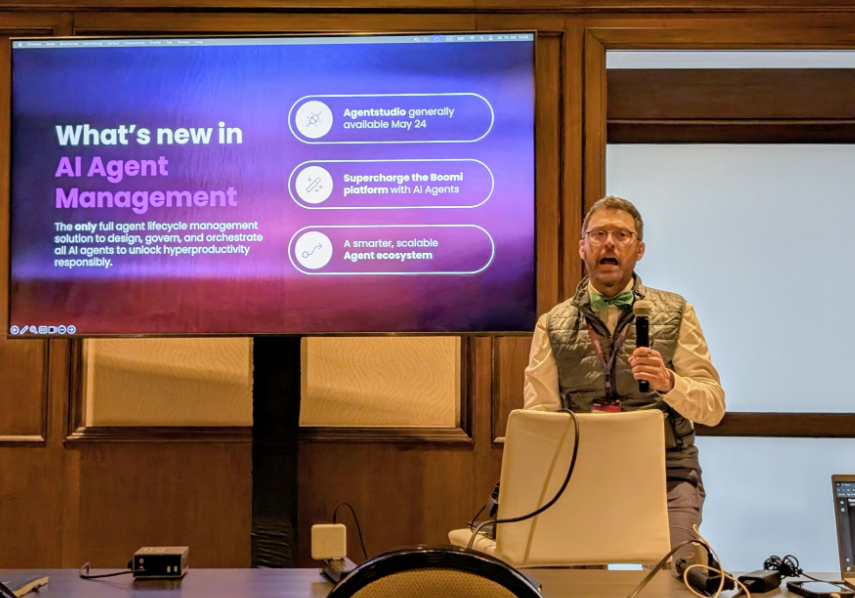
These are just a few examples of how enterprise vendors are looking to manage AI agents--their own as well as third parties. Boomi, which has its Boomi World conference this week, is also a key player in the AI agent orchestration race. Obviously, Salesforce with its Agentforce effort has another platform play for AI agents as does SAP. And of course, all the hyperscale cloud providers--Amazon Web Services, Microsoft Azure and Google Cloud--have platforms and the ambition to manage agents across enterprises.

With that backdrop, it's worth thinking through what you want in an AI agent orchestration layer. Here are some of the requirements that are bubbling up from CxOs.

Horizontal approach

Enterprise AI buyers don't want a portfolio of platforms managing their AI agents. Yes, you're likely to have agents defined by software categories such as CRM, HCM and ERP, but the aim is for enterprises to have an orchestration to manage them.

It's no secret that system integrators have done their best so far at building AI agents. These integrators are accustomed to working across systems, data silos and vendors. The base requirement for any agentic AI platform is the ability to work across systems, data stores and functions.

PepsiCo has more than 1,500 bots, agents and assistants across the company. Magesh Bagavathi, SVP, Chief Data and AI Officer a PepsiCo, said at IBM Think that the company has "a platform centric approach."

Bagavathi looks at two kinds of platforms. First, PepsiCo has built an agent orchestration platform on IBM's watsonx platform. "We're really looking at platforms for our business end to end," he said. PepsiCo started with proof of concepts and then moved to production by processes including accounts receivable and accounts payable with the aim of moving throughout the company's value chain.

Get the Constellation Insights newsletter

PepsiCo is also building its own internal abstraction layers for agents, AI and data with IBM Consulting.

Cindy Hoots, Chief Digital Officer and CIO at AstraZeneca, said during the ServiceNow Knowledge 2025 keynote that the company used ServiceNow to create a unified platform to save time and money across everything from HR to R&D. Like PepsiCo, AstraZeneca looked to automate workflows and processes with AI.

"We're finding agents are really embedded in every part of our company and using them to transform patient care as well as drive healthcare innovation," said Hoots. "It's just something that we've kind of built into every aspect of the company for research and development all the way down, and it's helping us have much more autonomous ways of working. They're helping the team to really focus on those higher value activities."

IBM and ServiceNow historically work across systems, but there are a bevy of others. Horizontal characteristics can be found in hyperscale cloud vendors (think Amazon Q), integrators and platforms that historically connect systems (Boomi, UiPath, process mining vendors and other firms).

Enterprises may choose to build their own platforms too.

Neutrality

Neutrality is a tricky topic because a vendor that has historically worked across systems naturally wants you to consume as much of its platform as possible.

Vendors that are coming from a SaaS orientation and working to become more of a broad platform have a lot to prove. Salesforce's Agentforce makes the company's various clouds more of a platform, but perceptions will take time to change. SAP can launch Datasphere and partner with Databricks to connect third party data sources, but there's little doubt that it wants enterprises on its cloud and data stores (all connected by its Joule agent).

The big vendors can be seen as neutral players that ultimately drive costs down, but CxOs will remain skeptical.

Now enterprises can opt for smaller vendors that are good at integrating platforms--think Boomi or UiPath--and get neutrality. But these smaller players could always simply be acquired by larger vendors. MuleSoft, an API platform that was acquired by Salesforce, is an example. A neutral vendor today may not be neutral tomorrow.

ServiceNow's Amit Zavery, Chief Product and Chief Operating Officer, drove home the neutral platform argument. ServiceNow provides model, infrastructure and data neutrality. IBM's CEO Arvind Krishna had a similar riff.

Connectors, data integration

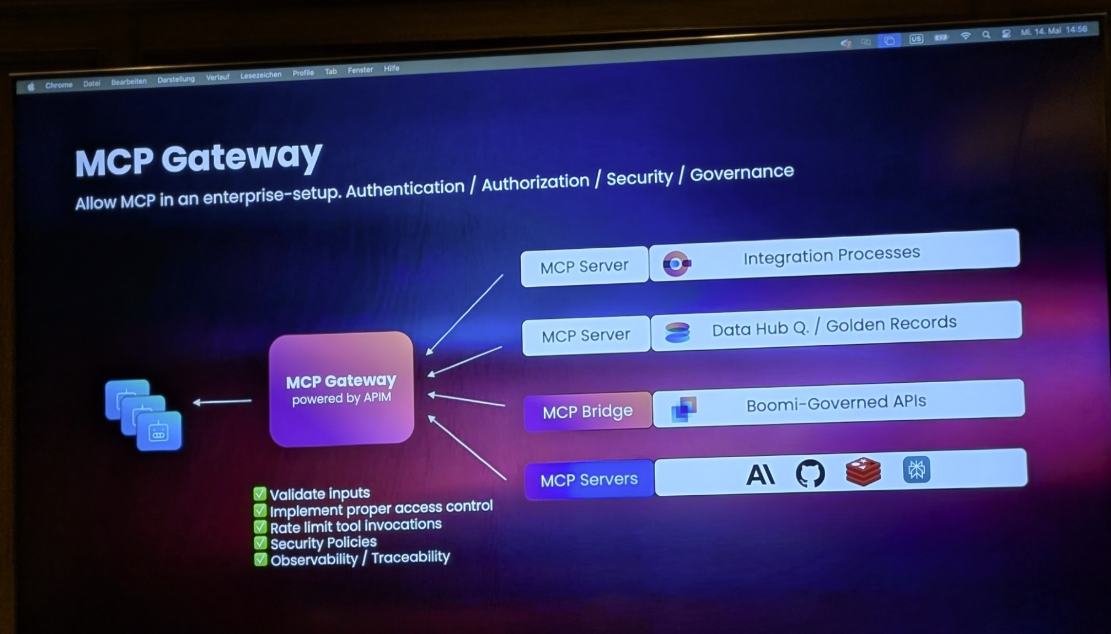
It's not hard to find CxOs who note that AI agents are largely glorified souped up APIs. As a result, you'll want vendors that have an API heritage as your AI agent control plane.

For instance, Boomi has evolved from being a pure play iPaaS vendor to a broader platform covering AI, AI agents, data app integration and automation.

Connectors are the base layer for any AI agent orchestration effort. If a vendor isn't supporting Model Context Protocol (MCP) or Google Cloud's Agent2Agent standards they aren't likely to be a good choice. Microsoft recently became the latest to support Agent2Agent and noted that AI agent interoperability is critical.

This same approach applies to data integration. Yes, it would be swell if all your data were in one lakehouse and organized. It is also fantasy. As a result, the ability to connect and access data wherever it resides is going to be critical to AI agents.

Given the importance of data integration it's not shocking that ServiceNow launched its Workflow Data Network, which is powered by RaptorDB Pro. These connections include Snowflake, Databricks, Boomi, SAP, the hyperscale cloud providers, Jira and Workday.

A screenshot of a computer

AI-generated content may be incorrect.

Process and use case knowhow

What has been most shocking about the AI agent hype is how little play process gets. If the process isn't continually optimized, AI agents are likely to simply take the screwed up processes enterprises have today and scale them.

Microsoft, ServiceNow, SAP and UiPath talk process and use cases more than the rest of the field. IBM talked about 150 pre-built agents in watsonx Orchestrate across domains ranging from HR, sales, procurement and IT and a catalog of agents for partners.

ServiceNow is looking to a suite of AI agents as an overlay of systems in HR, procurement and finance.

A screenshot of a green and white screen

AI-generated content may be incorrect.

Bottom line: Your AI agent layer should have some serious process intelligence behind it.

Integration skills

Today, AI agents don't exactly work well out of the box. There are a few prepackaged AI agents within SaaS silos, but integration across systems and data silos matters.

This enterprise-specific integration is one reason why it's quite possible that this agentic AI layer is built by companies with the help of consultants such as Accenture, IBM, Infosys, Cognizant and a bevy of others.

Start with the business problem you're trying to solve, think through the integration and then platform options.

Data to Decisions Future of Work Innovation & Product-led Growth Next-Generation Customer Experience Chief Information Officer

Shopify focuses on AI, data, agility in uncertain economy

Shopify focuses on AI, data, agility in uncertain economy

Can data, AI and agility enable merchants to navigate economic volatility and scattershot tariff policies? Shopify is betting on it.

Speaking on Shopify's first quarter earnings call, President Harley Finkelstein outlined a bevy of data and AI tools to help merchants--including a bevy of small businesses--to navigate tariffs.

For Finkelstein, economic uncertainty only highlights Shopify's data platform and AI-driven agility. "We're monitoring for potential slowdowns but our data through April shows little of that. It's still early to assess the full impact of the current environment," said Finkelstein. "We're here to help merchants of all sizes absorb change rapidly and at scale."

Finkelstein also said the goal is to make merchants more resilient. Resilience has been a common theme among enterprises.

And to build resilience, a flywheel of commerce data goes a long way. Finkelstein said that Shopify's 875 million unique buyers on the platform give the company visibility into what consumers and merchants are doing and how both sides react to economic uncertainty. "Because of our visibility, we're learning a ton," he said.

Here's what Shopify is doing to boost merchant resilience.

Product development

Shopify shipped features focused on cross-border trade and making it easier to buy local, calculate duties and ship. These features went into production days after the US announced its tariff plan, which morphed almost daily. Shopify said that when new duties are announced most merchants can be compliant within hours. Finkelstein said the goal is to allow merchants to manage markets independently.

On the Shop app, Shopify added a feature to allow buyers to filter products by country and buy local. Since the feature has rolled out "hundreds of thousands of unique sessions" have been generated said Finkelstein.

The company also launched duty inclusive pricing so merchants can set international prices including duties for transparent processing at the start of a transaction.

Shopify also launched tariffguide.ai. This tool provides duties based on a product description and country of origin so merchants can source goods based on tariff rates.

AI first

The commerce platform company took a lot of heat for its AI-first memo, but Finkelstein said Shopify is transforming its processes with AI. Finkelstein highlighted the following efforts.

Shopify built a dozen of model context protocol (MCP) servers that make the company's work accessible to AI. "Anyone within Shopify can ask questions, find resources and leverage those tools for greater efficiency. This reflects the use of AI goes well beyond internal improvement. It supercharges our team's capabilities and drive operational efficiencies, keeping us agile," said Finkelstein.

On the merchant side of AI, Shopify overhauled its AI engine for deeper reasoning, enhancing processing of large data sets and supporting multiple languages. The AI engine powers Shopify Sidekick, the AI support copilot, for merchants as well as employees. "Our monthly average users of Sidekick continue to climb more than doubling since the start of 2025," said Finkelstein. "Now this is still really early days, but the progress we are making is already yielding some really strong results from merchants, both large and small."

Shopify also closed the acquisition of Vantage Discovery, which has technology that accelerates the development of AI multi-vector search across search, APIs, shop and storefront search.

Shopify reported a first quarter net loss of $682 million on revenue of $2.36 billion, up 27% from a year ago. Adjusted net income was $226 million.

As for the outlook, Shopify projected second quarter revenue growth in the mid-twenties percentage range. The company didn't provide an outlook for 2025.

Data to Decisions Matrix Commerce Next-Generation Customer Experience Marketing Transformation Revenue & Growth Effectiveness Chief Information Officer Chief Marketing Officer Chief Revenue Officer Chief Data Officer

IBM sees quantum advantage 2026, fault tolerant quantum in 2029

IBM sees quantum advantage 2026, fault tolerant quantum in 2029

IBM said quantum computing will hit quantum advantage in 2026 starting with chemistry use cases followed by optimization and mathematical computation.

Speaking at an IBM Think keynote, Jay Gambetta, IBM Fellow and Vice President of IBM Quantum, said the industry has moved to solving problems in a hybrid way with quantum systems and classical supercomputers. The next step would be leveraging quantum computing to solve problems classical computing can't. "We believe quantum advantage will actually happen by 2026," said Gambetta. "And it's not just us. It's a community of researchers. Every month, every week new papers are put out with different examples."

Gambetta added:

"We're going to see quantum advantage in chemistry first, followed closely by optimization. And third, there is a lot of exciting work in mathematical problems where the teams are exploring AI quantum machine learning problems that could even have an impact in AI in the future."

A screenshot of a computer

AI-generated content may be incorrect.

IBM CEO Arvind Krishna noted in his Think keynote that bigger things were on tap for quantum computing and scale will occur "in the 4-, maybe 5 year time frame."

Krishna said:

"Quantum is no longer science fiction. It's now in the realm of engineering. And when you're in the realm of engineering, the question becomes, how do you get that next step? And then these systems are going to be at a scale that is going to be truly remarkable and truly surprising."

A black background with white text

AI-generated content may be incorrect.

He said IBM can bring the same engineering rigor to quantum computing that it brings to the mainframe.

"What do I mean by engineering rigor? We should stand up a quantum computer, and it runs for a full year without breaking down, without needing a room full of experts to kind of retune it after every application, and it can stay and maintain itself. People can access it with just an API. That's what I mean by the engineering rigor of making it a computer, not just a science experiment," said Krishna.

Gambetta said that "we have a roadmap to create a fault tolerant quantum computer by 2029." He said IBM will have more to say about the roadmap in the weeks ahead.

Data to Decisions Innovation & Product-led Growth Tech Optimization IBM Quantum Computing Chief Information Officer

IonQ’s plan: Quantum networks extending into space

IonQ’s plan: Quantum networks extending into space

IonQ just keeps buying quantum networking companies. The company is determined to become a leader in quantum networking as it acquired two more companies--Lightsynq and Capella Space--to flesh out its quantum internet roadmap.

The move highlights how the money in quantum computing may revolve around the network over time. After all, there are multiple types of quantum computing systems and at some point we're going to hit the VHS vs. Betamax moment. There are superconducting quantum systems (IBM, Google and Rigetti) as well as trapped ion (IonQ and Quantinuum), neutral atom (QuEra), quantum annealing (D-Wave) and topological (Microsoft).

A quantum network moves and transmits qubits and will be necessary to connect quantum computers. Quantum internet projects have been started by the US, European Union and China that are emphasizing quantum-secure links between sites.

With its first quarter earnings report, IonQ said it was acquiring Lightsynq Technologies, a startup founded by experts in quantum memory with more than 20 patents. IonQ said Lightsynq's technology will help it build repeaters to network quantum systems over longer distances.

IonQ also said it will acquire Capella Space, which has government contracts for top-secret projects, to launch a space quantum key distribution (QKD) network. IonQ is looking to have a quantum network that extends into space.

Those two purchases follow IonQ's acquisitions of Qubitekk and ID Quantique, two companies focused on quantum networking. IonQ also recently inked a memorandum of understanding with Intellian Technologies, a provider of satellite communications antennas and ground gateway technologies. In our 2025 play-by-play of quantum computing developments, IonQ has been clearly busy.

Terms of all these deals haven't been disclosed, but IonQ is strategically using its balance sheet with $687 million in cash and equivalents to pick up parts and patents to build an integrated quantum system. IonQ reported a first quarter net loss of $32.2 million on revenue of $7.6 million. Most pure play quantum computing companies talk in terms of backlog instead of actual recognized revenue.

On IonQ's first quarter earnings call, Executive Chairman Peter Chapman said the company is focused on its "path to tens of thousands and ultimately millions of qubits is to photonically interconnect qubits across the network to run applications across multiple QPUs acting as one large single quantum computer."

IonQ CEO Niccolo de Masi said:

"Whether on the ground or in space, IonQ solutions are poised to be there and lead. We believe our now near-boundless photonic interconnect scalability provides IonQ customers with the winning quantum computing and internet ecosystem, not just this decade, but we expect for the entire 21st century."

The networking play

IonQ recently put Jordan Shapiro in charge of networking as President and GM of Quantum Networking. Shapiro joined IonQ in 2020 and was previously a venture capitalist at New Enterprise Associates. Shapiro has spearheaded IonQ's networking shopping spree and will be in charge of developing the roadmap.

Like IonQ's approach with its quantum systems, the company is focused on business value today ahead of quantum supremacy that may take years--some would say decades. The pre-quantum supremacy world revolves around government contracts with the likes of DARPA, hybrid systems with classical high-performance computing, use cases in chemistry, life sciences, finance and engineering, and experimental projects.

While IonQ has a strong balance sheet it is competing with giants including all the hyperscale cloud giants, IBM, which has networked its quantum systems together into an offering, and a bevy of others.

The giants:

IonQ's de Masi said networking is a way to compete with giants. He said Nvidia's rise provides a blueprint.

"Lightsynq's technology is expected to accelerate IonQ's existing photonic interconnect activities and enable our commercial systems to scale to tens of thousands and eventually millions of qubits. The Lightsynq architecture is uniquely powerful and will underwrite our quantum computing leadership for decades to come.

The parallels are strong, so I would not be surprised if in the fullness of time, Lightsynq becomes as accretive for IonQ, as Mellanox has been for NVIDIA. Equally exciting and importantly, Lightsynq's technology will also power the future quantum internet by allowing repeaters to ultimately be spaced over 100 kilometers apart."

A close-up of a computerAI-generated content may be incorrect.

That distance de Masi referenced also highlights how early it is in quantum system development. Nevertheless, IonQ sees itself as a quantum vendor creating an entire ecosystem.

"Quantum networking will naturally be the foundation of the quantum internet, which will be a watershed achievement in creating a worldwide ultra secure communications grid," said Shapiro.

It's early

Chapman explained the quantum networking today doesn't go more than about 20 miles. Lightsynq is part of a plan to build a repeated network that could go more than 100 miles and build from there. Space is also a factor.

"Ultimately, what you need to do and you're seeing this now in China and also the EU, is to build quantum networks in space from satellite to satellite and ultimately from satellite to ground station. And protecting that with the QKD network as well," said Chapman.

He added that IonQ's purchase of ID Quantique gives it access to real world environments since it works with South Korea's SK Telecom. Capella adds the space environment.

A close-up of a computerAI-generated content may be incorrect.

However, Chapman said there's a big difference between the real-world and lab. "It's one thing to get it working in a lab, it's another thing to get it working in a busy city with trucks driving over your fiber and all the rest of that," said Chapman. "So all these things are about building out the capability and making sure they work in the real world."

Today, IonQ has four quantum networks running globally for government and commercial customers, said Shapiro.

What about quantum computing?

IonQ's first quarter earnings call was notable because executives didn't talk much about the actual deployments of its quantum computing systems and roadmap. Chapman and de Masi said IonQ can focus on both networking and compute because they're converging.

" Last year, we announced that we were doing quantum networking, but it required two quantum computers to be built. We announced it as a networking project, but we actually built two quantum computers to network the two quantum computers together," said Chapman. "You're pushing the compute side so that you can do the networking."

A screenshot of a websiteAI-generated content may be incorrect.

de Masi said:

"The business's focus on quantum computing remains. We're determined to be the ultimate ecosystem there. We've expanded our ecosystem to do quantum networking, obviously organically and inorganically. The quantum internet requires pretty much all the pieces that we've assembled. You need the nodes to be computers, you need repeaters to have any kind of distance between the nodes, you need QKD to be able to actually send information securely. And you need to be able to do that as an integrated communications network on the ground and in the heavens.

We see growing opportunities in computing and growing opportunities in networking, both short-term, medium-term and long-term."

Data to Decisions Innovation & Product-led Growth Tech Optimization Quantum Computing Chief Information Officer

AI, Economic Planning & Enterprise Innovation | ConstellationTV Ep. 104

AI, Economic Planning & Enterprise Innovation | ConstellationTV Ep. 104

Constellation ep. 104 is here! 📺 Co-hosts Martin Schneider and Larry Dignan dive into #tech news, covering ServiceNow's #CRM strategy, the #AI infrastructure investment boom, and major players navigating the current #business ecosystem. 

Next, Esteban Kolsky and Larry talk economic planning: 1?? why #CXOs need to think in 9-36 month horizons, 2?? the critical importance of business resilience, and 3?? strategies for navigating hashtag#economic uncertainty.

Larry rounds out the episode with a new monthly rundown of the top 5 transformative AI initiatives, including projects with PayPal, Bank of America, Citi, Walmart, and BNY.

Watch the full episode below! 

On ConstellationTV <iframe width="560" height="315" src="https://www.youtube.com/embed/nhCkPbvSEWk?si=TdTyAxHuFkslRMC0" title="YouTube video player" frameborder="0" allow="accelerometer; autoplay; clipboard-write; encrypted-media; gyroscope; picture-in-picture; web-share" referrerpolicy="strict-origin-when-cross-origin" allowfullscreen></iframe>

Microsoft supports Google Cloud's Agent2Agent standard

Microsoft supports Google Cloud's Agent2Agent standard

Microsoft said it will support Google Cloud's Agent2Agent (A2A) standard in Azure AI Foundry and Copilot Studio.

Microsoft’s support for A2A likely means the enterprise software ecosystem will follow.

At Google Cloud Next, Google Cloud launched A2A, a communications standard that also has some big backers. A2A complement's Anthropic's Model Context Protocol (MCP). Both standards have gained wide support quickly since vendors need their various agents to work across platforms. Anthropic created MCP as an open standard for connecting AI assistants to systems where data lives. OpenAI and a bevy of others are backing MCP.

The promise of AI agents is that they can reason, navigate work and act autonomously. As Microsoft noted in its blog, "interoperability is no longer optional” because enterprises "want their agents to orchestrate tasks that span vendors, clouds, and data silos."

Microsoft said A2A support will be in Azure AI Foundry so enterprises can build multi-agent workflows across vendors, partners and infrastructure. Copilot Studio agents will extend beyond Microsoft's platforms.

The software giant said it will contribute to A2A as well as MCP. Microsoft also joined the A2A working group in GitHub.

Data to Decisions Future of Work Innovation & Product-led Growth Tech Optimization Next-Generation Customer Experience Digital Safety, Privacy & Cybersecurity ML Machine Learning LLMs Agentic AI Generative AI Robotics AI Analytics Automation Quantum Computing Cloud Digital Transformation Disruptive Technology Enterprise IT Enterprise Acceleration Enterprise Software Next Gen Apps IoT Blockchain Leadership VR Chief Information Officer Chief Executive Officer Chief Technology Officer Chief AI Officer Chief Data Officer Chief Analytics Officer Chief Information Security Officer Chief Product Officer
SAS updates Viya platform for intelligent decisioning, AI agents

SAS updates Viya platform for intelligent decisioning, AI agents

SAS launched a bevy of updates or its Viya platform including synthetic data, tools for building and deploying AI agents, and managed cloud services. The company also launched new AI models and digital twins for manufacturing.

The news, announced at SAS Innovate, aim to position SAS more in the AI technology stack.

Here's a look at what was announced:

  • SAS Viya said its SAS Data Maker, a synthetic data generator, will be generally available in the third quarter. SAS Data Maker was announced in private preview last year.
  • SAS Viya Intelligent Decisioning, which will incorporate the ability to build and deploy AI agents. SAS' approach revolved around balancing LLMs with humans to determine the right levels of autonomy and governance based on tasks.
  • SAS Viya Essentials, a managed cloud services offering aimed at smaller enterprises, includes a hosted version of select SAS Viya products.
  • SAS Viya Copilot, a conversational assistant that's embedded throughout SAS Viya, is available in private preview with availability in the third quarter. The SAS Viya Copilot was built on Microsoft Azure AI Services.
  • SAS Viya Workbench, a cloud-based coding environment, will get support for R coding to complement Python through Visual Studio Code or Jupyter Notebook. Viya Workbench will now be available on AWS Marketplace as well as Microsoft Azure Marketplace.
  • The company launched new models for AI-driven entity resolution and documentations, medication adherence risk in healthcare, supply chain optimization in manufacturing and payment integrity for food assistance and tax compliance for sales tax in the public sector.
  • SAS Digital Twins for manufacturing. SAS has developed enhance digital twins for manufacturers in a partnership with Epic Games.  Georgia-Pacific was cited as a customer.
Data to Decisions Innovation & Product-led Growth Future of Work Tech Optimization Next-Generation Customer Experience Digital Safety, Privacy & Cybersecurity ML Machine Learning LLMs Agentic AI Generative AI AI Analytics Automation business Marketing SaaS PaaS IaaS Digital Transformation Disruptive Technology Enterprise IT Enterprise Acceleration Enterprise Software Next Gen Apps IoT Blockchain CRM ERP finance Healthcare Customer Service Content Management Collaboration Chief Executive Officer Chief Information Officer Chief Technology Officer Chief AI Officer Chief Data Officer Chief Analytics Officer Chief Information Security Officer Chief Product Officer
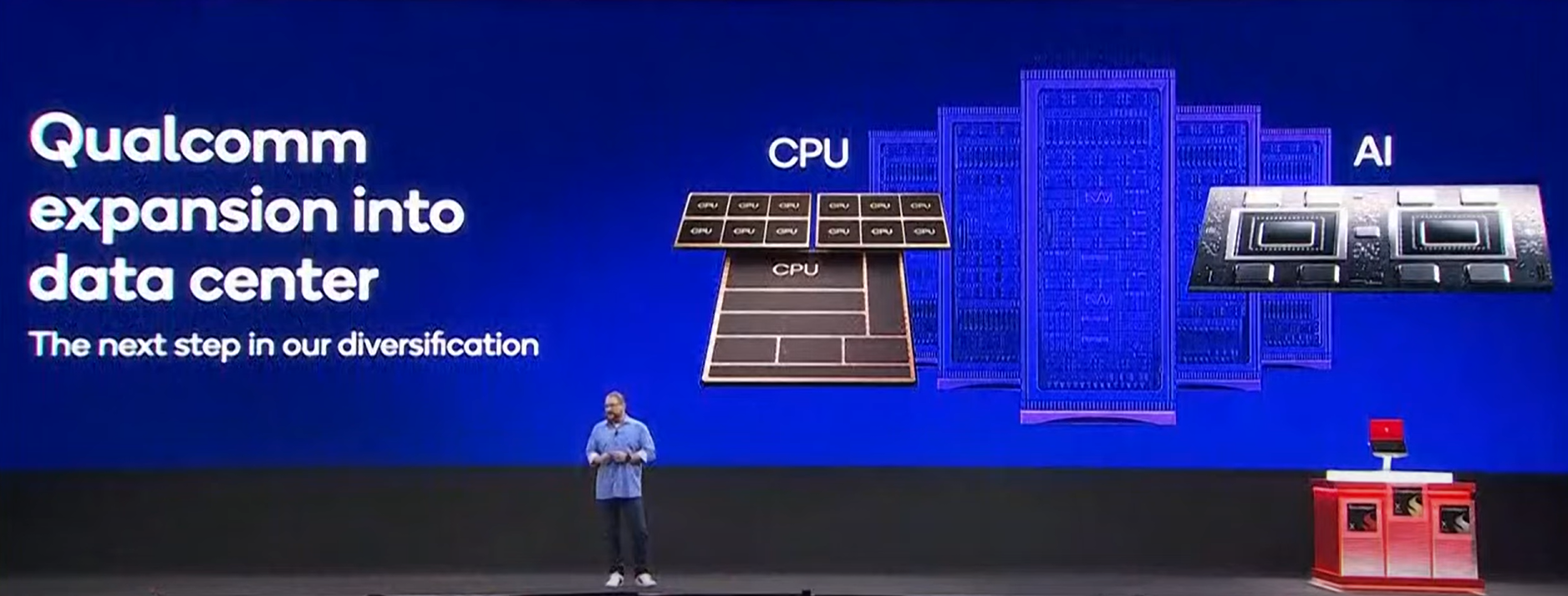
AMD’s data center sales surge in Q1

AMD’s data center sales surge in Q1

AMD saw a data center surge in the first quarter as sales grew 57% compared to a year ago. AMD's PC chip business saw sales growth of 28%.

The chipmaker, which is playing catch up to Nvidia in AI infrastructure, reported first quarter earnings of $709 million, or 44 cents a share, on revenue of $7.4 billion, up 36% from a year ago. Non-GAAP earnings were 96 cents a share.

Wall Street was looking for first quarter AMD earnings of 93 cents a share on revenue of $7.12 billion.

CEO Dr. Lisa Su said the company's growth continued to accelerate due to "strength in our core businesses and expanding data center and AI momentum." She added that the company's outlook reflects the ability to navigate "the dynamic macro and regulatory environment." What’s unclear is whether tariffs accelerated buying of AI processors.

AMD data center business continues to shine in Q4

AMD said data center growth was driven by AMD EPYC CPU and AMD Instinct GPU sales. Client revenue was $2.3 billion in the quarter, up 68% from a year ago due to demand for Zen 5 AMD Ryzen processors. The company also closed the purchase of ZT Systems.

As for the outlook, AMD projected second quarter revenue of $7.4 billion, give or take $300 million.

AMD's Su noted that AMD's fifth-gen EPYC server chip is being adopted by multiple cloud providers including new instances at Alibaba, AWS, Google, Oracle and Tencent. "Enterprise adoption of EPYC instances was very strong in the quarter. The number of EPYC-powered cloud instances activated by Forbes 2000 enterprise customers more than doubled year-over-year, including new wins with internet-native streaming, transportation, financial services, and social media companies," said Su. 

EPYC is now deployed by all of the top 10 telecom, aerospace, and semiconductor companies, 9 out of the top 10 automotive, 7 out of the top 10 manufacturing, and 6 out of the top 10 energy companies on the Forbes 2000. 

On the AI business, Su said MI325X shipments are ramping and more than 35 MI300 series platforms are in production at service providers. 

"We are actively working with multiple customers to scale Instinct from single-node deployments to distributed inferencing clusters. Training engagements also ramped in the quarter as multiple tier one hyperscale, AI, and enterprise customers scaled Instinct GPU clusters to train internal and next-gen frontier models," said Su. "In parallel, we're making meaningful progress with Sovereign AI deployments as countries expand investments to establish domestic, nation-scale AI infrastructure."

Looking forward, Su said MI350 series is garnering customer interest with second half deployments on tap. "Looking ahead, our MI400 series development remains on track to launch next year. The MI400 series is designed to deliver leadership performance for both inferencing and training, scaling seamlessly from single servers to full data center deployments. Early customer feedback has been very positive, marking a major step forward in our Instinct roadmap and significantly expanding our AI Accelerator TAM as customers plan broader Instinct deployments to power a larger share of their AI infrastructure," said Su. 

AMD will hold an event June 12 with more details about the roadmap. 

"While we face some headwinds from the dynamic macro and regulatory environments, including the recently announced export controls for Instinct MI308X shipments to China, we believe they are more than offset by the powerful tailwinds from our leadership product portfolio," said Su, who noted that AMD took out $700 million in revenue from the second quarter guidance due to the headwinds in China.

Data to Decisions Tech Optimization Big Data Chief Information Officer Chief Technology Officer Chief Information Security Officer Chief Data Officer

Distilling April 2025

Distilling April 2025

Well, my first official month as Chief Distllier is over and it has been great.

Spent a long time combing through information, research, insights, data points, and talking to my community of executives and board members around the world and I concluded two things: I am overwhelmed by the need, and overjoyed by the pace of change.  Maybe the other way around?  Nah, that's right...

First impressions from following the topics, themes, and trends? Read on...

You may recall I wrote about what companies should be focusing on in 2025 in LinkedIn before I joined Constellation (growth, resiliency, sustainability).

Resiliency quickly became the key theme for 2025 mostly derived from tariffs wars (had my say about that also...). 

Shared the topics I'd cover a couple weeks ago: Cloud infrastructure in the enterprise (this is a hot, hot, hot topic for CIOs), Cybersecurity and Compliance (CISOs like this one, me -- the more time I spend in it, the more I want to be offline), GenAI adoption in the enterprise (mainstream you say? Yay, I say), Supply Chain Optimization (apply GenAI to it and -- wowzer), and Advanced Computing (now that GenAI hype is dying, Quantum Computing is heating up... but nowhere near there -- yet; don't forget about edge computing).

Readings through everything I found in April for these topics, after I recovered from that horrible flu-like thing...man, that was nasty, led me to three key cross-tabbed, correlated talking points:

Interoperability Across Cloud, AI, and Edge Ecosystems is critical.  As enterprises increasingly build their hybrid multicloud infrastructure, resulting in private and public platforms connectivity, the need for integrated edge computing and cloud-native tools is critical for enabling real-time decision-making, especially in areas like supply chain optimization and AI deployment. Successful organizations are those building interconnected, agile ecosystems that allow AI models and data flows to operate seamlessly across environments.  Shorter? cloud infrastructure + analytics / AI + edge = next generation of enterprise architecture (which you need in place before you can successfully deploy AI across the enterprise... which is what's next).

Generative AI is Driving Transformation—But Only When Operational Foundations Are in Place.  Generative AI has moved beyond experimentation into deployment (reaching mainstream adoption means that virtually all organizations have streategic, long-term initiatives on it - past proof-of-concept), yet many projects stall due to infrastructure limitations, governance issues, and unclear ROI (a move from ROI to TTV is underway, stay tuned for this shift). Orgnizations with high operational readiness are far more likely to scale and see measurable returns (Accenture said this, I agree). This signals that GenAI's value is not just in the model but in the enterprise’s ability to deploy it effectively.  This is interlacing cloud infrastructure and GenAI (see above).

Data and Trust are Emerging as Strategic Differentiators in Advanced Computing.  As AI and edge technologies expand across enterprise functions, organizations must address trust gaps—whether related to data sovereignty in the cloud, the ethical use of GenAI, or privacy and compliance transparency. The alignment of compliance, cybersecurity, and sustainable practices is becoming central to technology adoption decisions.  If you add AI to this, watch out for the catastrophe that it can generate if you don't tackle it at the operational level (versus, each project or provider doing their own thing).  The creation of private platforms by smart CIOs over the last 5 years (and next 15 -- defining the next generation of IT investment) to power complex ecosystems is driving enterprise investment for those who pay attention and get past the shiny beads.  And -- governance.

Want data points for these? More details? See how it applies to your organization?  Ping me...

Things I am keeping my eyes + ears on for May: GenAI mainstreaming, trade wars and cybersecurity, private plaforms, and --- sigh, quantum.  

More to come...

New C-Suite Chief Analytics Officer Chief Data Officer Chief Digital Officer Chief Executive Officer Chief Financial Officer Chief Information Officer Chief Information Security Officer Chief Marketing Officer Chief Product Officer Chief Revenue Officer Chief Supply Chain Officer Chief Technology Officer

ServiceNow, UKG integrate AI agents across platforms

ServiceNow, UKG integrate AI agents across platforms

ServiceNow and UKG, a human resources and workforce management software provider, said they will integrate AI agents across their respective platforms using Google Cloud's Agent2Agent protocol.

The announcement, made at ServiceNow's Knowledge 2025 conference, is notable on a few fronts.

  • UKG has its own AI tools and UKG People Fabric will integrate with ServiceNow's AI Agent Fabric.
  • The two companies will streamline tasks and workflows across payroll, workforce management and HR.
  • ServiceNow CEO Bill McDermott and UKG CEO Jennifer Morgan both were executives at SAP at the same time.
  • For UKG, the ServiceNow partnership can give the company more exposure and reach. ServiceNow expands its HR footprint.

The integration between ServiceNow and UKG is enabled by multistep A2A that can be started and finished within either application. Each platform will also have its new agents. The news lands as ServiceNow announced its expansion into CRM.

During a keynote with Amit Zavery, ServiceNow's Chief Product and Chief Operating Officer, Morgan said UKG is already a ServiceNow customer. The goal is to connect front line workers to "the technology and insights they need."

Morgan said:

"Frontline workers feel that they're very disconnected from the enterprise, and so our opportunity is to create that single point of interaction that really connects our joint customers who are out in the field with our customers back into the enterprise. It could be as simple about a question about pay, hours and schedules. Rather than logging a ticket or figuring out how I need help, it's immediate."

Holger Mueller, analyst at Constellation Research, said:

"Enterprises want and need to use agents to achieve what matters, Enterprise Acceleration. Recreating the data islands of the past as AI agent islands is not going to achieve the transformation and deliver the return of AI that people and enterprises need. It is good to see ServiceNow and UKG partnering to provide out-of-the-box and vendor maintained agent-to-agent integration. What it will mean for the respective vendor’s agent population remains to be seen. We just heard the starter pistol for the race of the ultimate agent control plane."

As for the use cases, ServiceNow and UKG AI agents are working together as part of the AI Agent Framework.

A screenshot of a computer

AI-generated content may be incorrect.

Use cases include:

  • Employee experiences including onboarding, leaves of absence, internal job changes and time off requests.
  • Payroll that leverages AI agents to connect systems, end manual processes and keep pace with tax laws, regulations and wage mandates across jurisdictions.
  • Industry specific agents able to forecast and optimize scheduling, absences, time management and frontline workers.

Also see:


Data to Decisions Future of Work Next-Generation Customer Experience Tech Optimization servicenow AI Analytics Automation CX EX Employee Experience HCM Machine Learning ML SaaS PaaS Cloud Digital Transformation Enterprise Software Enterprise IT Leadership HR Chief Information Officer Chief Customer Officer Chief People Officer Chief Human Resources Officer