Results

Takeaways from the Salesforce and Workday Strategic Partnership

Takeaways from the Salesforce and Workday Strategic Partnership

While it was in June that Oracle surprised the ecosystem with the surprising partnerships with Microsoft, NetSuite and Salesforce.com. It was today Salesforce.com and Workday's time to announce a strategic partnership. Of course it was mere coincidence that the announcement fell on the same day as Oracle’s Q1 FY 2014 earnings announcements and equally happens 2 workdays before Oracle Openworld starts. Hony soit qui mal….

The motivation was very similar to June's announcements - customers want the vendors to play together and work on the out-of-the-box integration of cloud applications. Not surprisingly the Salesforce.com and Workday partnership reconfirmed what was already announced at Dreamforce last last fall - that Workday will integration with Salesforce.com social tool Chatter. Now that integration was taken a step further with the ability of being able to seamlesslywork with chatter out of the Workday user interface. The smart money is on that the imminent switch of Workday to a HTML5 based user interface is somewhat an enabler of this move... 

Salesforce.com HCM system product scope in flux

Lets get the easy piece out of the line first - Salesforce.com's HCM system is going through a chameleon like morph from being Workday and custom first, then adopts Oracle HCM Cloud (from the announcements with Oracle in June), back to Workday being the standard HCM package (Marc Benioff's words on the call).


Does it really matter what Salesforce.com uses internally? Not really - customers will trust Salesforce.com to make interfaces work not matter if using that product internally - or not. What remains worth noting is, that Salesforce.com remains on Oracle Financials (are they on Oracle Finance Cloud already?) and that the HCM footprint needed by an enterprise of the size of Salesforce.com cannot be fully automated by Workday alone - learning, recruitment and payroll come to mind. It's also not clear what Salesforce.com will choose to do automating these pieces of HCM automation, but Salesforce.com will certainly have some outside scrutiny on that going forward.


The future of work.com

Salesforce.com acquiredRypple a little less than two years ago and created work.com... with a strong focus on performance management. And with that Work.com has a functional overlap with Workday - and though Benioff was not clear on the topic  – and was also not asked by analysts and press on the call - we got a confirmation that work.com is alive and well from John Wookey (who has one of the coolest twitter profile pictures out there), who is in charge of the product area. 


{C}{C}


So work.com is doing well and may be up to something new and innovative - maybe Salesforce.com will leapfrog Workday’s performance management software from a best practice perspective - we will see. Partner to build – didn’t we hear and see that before? Right, it was last century and the vendor was … SAP.


Is force.com becoming the Workday PaaS?

The other interesting piece in the announcement was the part that stated that force.com users (a.k.a. developers) would enjoy the ability to build applications using data directly from Workday's applications. That would be an interesting move as right now Workday does not offer a developer environment, it actually started to offer first customization options with the introduction of custom fields in the spring release with Update 19. That certainly would be a coupe for force.com and perfect for common partners like e.g. Appirio. 


But many details remain to be clarified. Workday runs on an object model, in memory etc - so it's not the straight forward way to integrate with data. And moreover, the capabilities of these integrated applications need to be defined - e.g. will there be a single sign-on and which vendor's will it be, how will the developer seat be licensed, are the APIs (?) free etc. Enough to fill some interesting presentations at DreamForce in November.


Bi-directional data interface - or what?

So force.com developers can access data in Workday, likewise Workday HCM users will be able to access Salesforce.com data. Not clear what kind of integration that will be - it will be interesting to see if Workday will use its newly built BigData Analytics product as a integration tool - or if there will be another integration path into and out of Workday.


The same will be possible for users of Workday’s Financial’s product – with the same questions on the integration technique of choice. This is certainly a winner in the overall integration game – since it will give a further validation point and selection argument for the relatively new Workday Financials product.


Integration rules

Not surprisingly the customer’s desire for integration was presented as the catalyst for the partnership. And while pre-integrated offerings help enterprise software vendors – they are also a way for the vendors to close out other vendors – or at least make their life harder. You can have the pre-integration of product A with product B – or try yourself – good luck. And maybe Salesforce.com opened the pandora’s box with the Oracle partnership – and now customers with other products are asking for the same integration. Very well possible – it will be interesting where Salesforce.com will draw the line.


In the specific case of Salesforce.com and Workday it of course remains to be seen how open these interfaces will be – and hopefully they are – but that’s another detail to be hashed out. If these early interfaces won’t be open – then cloud vendors will be able to close out competitors. On the flip side vendor specific integration will mean increased integration efforts. Salesforce.com already faces this challenge – will e.g. it’s interfaces to Oracle HCM Cloud and Oracle Financials Cloud be the same as the interfaces to Workday’s HCM and Financials products – or another set and technology to create, maintain and support. If cloud vendors will embark into different sets of interfaces by partner – the provision and testing of these integrations will slow down the speedy cloud vendor release model significantly. It anyway creates an additional work load for the cloud vendors that will find its way into resourcing plans and timetables.

Implications for customers

This is good new for customers of both vendors. If customers have ongoing integration projects, use time to value to make a decision to proceed or wait for more details, which likely will emerge around DreamForce in November. 

If you are only a customer of one of the vendors - and your other system comes from a 3rd party vendor - it's time to ramp up the pressure on that combination to do the same. If you are using a cloud integration platform, again use time to value assessment for ongoing projects and then decide on the future strategy.

Implications for partners

Not so good news if you were planning to make a living in the integration business. .Sooner or later that will go away - so try to be part of the new integration effort or look for new revenue sources. And while clearly few things work out of the box in enterprise software - integration work will be less than it was in the future. 

If you are a partner who provide a product that was e.g. built on the force.com platform or for which you provided interfaces to e.g. Workday - than it will be less easy to get business based on the platform or integration argument, focus instead on the quality of product ad ease of implementation.

Implications for Salesforce.com and Workday

Both vendors take on significant additional work, that will most likely result in less functionality in releases and longer release cycles. Workday already moved from three to two release per year from next year on - as shared at Workday Rising the other week. Salesforce may do the same at Dreamforce. Regardless its more work that needs to be re-tested and with release dates not lining up - done more times. Even with the reduced Workday release frequence - it will mean 5 full integration tests per year - based on the three Salesforce.com and two Workday releases per year.  


MyPOV

The desire for integration is not new in the enterprise software space – the good news is, that in the cloud age the vendors are tackling this piece for their subscribers. All too willingly, as integration will add to the so much desired stickinessevery high tech vendor wants its products to have in their customer base. It’s too early to tell, if we will see proprietary vendor to vendor interfaces – or (open) standards evolving between them – allowing best of breed integration vendors to get a piece of the integration business.

In the meantime its good news that with Salesforce.com the SaaS market leader and with Workday one of the SaaS thought leaders have started to tackle the integration challenge, and continued the chapter of cloud vendor created and supported integration, that was started earlier this year by Oracle.

And finally - who will Salesforce.com partner with next? As other have pointed out - Salesforce.com will do what drives revenue - so how about SAP's Ariba? Ariba (still?) runs Salesforce.com, has a contracts application built on force.com - and what does Salesforce.com use for purchasing? Not starting any rumors, completely taken out of the air. 


New C-Suite Future of Work Tech Optimization Innovation & Product-led Growth Data to Decisions Marketing Transformation Next-Generation Customer Experience Digital Safety, Privacy & Cybersecurity netsuite workday salesforce Oracle Microsoft AI Analytics Automation CX EX Employee Experience HCM Machine Learning ML SaaS PaaS Cloud Digital Transformation Enterprise Software Enterprise IT Leadership HR Chief Customer Officer Chief People Officer Chief Information Officer Chief Human Resources Officer

Where Do You Stand With Siebel

Where Do You Stand With Siebel

The state of Siebel in 2013 J. Bruce Daley discusses options for your siebel implementation, how to evaluate your stance with siebel, & steps you can take with your siebel career. Download slides.

Tech Optimization Chief Information Officer On <iframe src="//player.vimeo.com/video/74866510" width="500" height="375" frameborder="0" webkitallowfullscreen mozallowfullscreen allowfullscreen></iframe>
Media Name: screenshotcr.png

Up Up and Away. Box Makes Their Enterprise Application Vision A Reality

Up Up and Away. Box Makes Their Enterprise Application Vision A Reality

I can still remember the first time I heard about this little startup called Box.net who decided to play David to Microsoft's SharePoint Goliath by providing a simple web based file sharing service. Fast forward a few years and not only has that startup renamed themselves to Box.com, but they have evolved far beyond their "file manager in the cloud" roots to become a powerful content centric platform that straddles (and blurs) the lines between file-sharing, enterprise content management, collaboration and more.

Today in front of approximately 3000 people at their 3rd annual BoxWorks conference in San Francisco, Box made several important announcements:

  • The introduction of Box Preview - Based on the file-viewing technology from their acquisition of Crocodoc, this new user experience dramatically improves the way people can view and interact with files stored in Box.  With Box Preview, when you click on a file stored in Box it will be displayed with full fidelity without having to open the application that was used to created it. You can zoom in on the contents, add comments, assign tasks, and more.  Box demoed this capability with pictures, PDFs and even highly detailed architectural (CAD) drawings.

MyPOV: This is a very welcome improvement to the overall user experience which will not only save people time, it will also add a little element of fun to viewing or commenting on content.  With respect to media files, Box Preview is like having your own Flickr, Youtube and Slideshare all rolled into one. I am not a fan of the name, as I think of "preview" as something you do before looking at the real thing. I'd rather see the name be Box Viewer or Box View.
 

  • Dramatically improved Box for iOS - Based on the acquisition of the mobile application Folders, Box has given their iOS (especially iPad) a complete overhaul.

MyPOV: Box has always been aware of the importance of mobile access to content, not just for viewing, but for creating, commenting and sharing. This update shows their commitment to that, ensuring that the mobile experience is front and center in their thinking.

Special MyPOV: One of the things that impressed me the most about the two items above, is how quickly Box was able to integrate the people and technology from the two acquisitions. Often acquires technology take years to integrate, or worse it never actually makes it into the product. Here both Crocodoc and Folders are key parts of enhancing the Box experience.
 

  • Introducing Box Notes for collaborative document creation. Box Notes is a web based document editor that allows people to work together in real time to co-author content.
  •  

MyPOV: Of course the comparisons to personal note taking applications like Evernote and OneNote, or collaborative editors like Google Documents are the first thing that pop to mind. That's ok, as those are all really powerful tools. It's important to note, Box's head of engineering Sam Schillace was the person behind Google Docs, so he knows a thing or two about creating collaboration tools. IMO Box Notes does two significant things: 1) Provides another touch point to keep people inside Box vs. using another tool. While it's never going to replace a full word processor, Box Notes will provide a majority of the functionality that most people need. The first release offers basic text based tools, but the roadmap does include the ability to embed rich media like videos, maps, etc. as well as tables and checkboxes. 2) It provides a huge opportunity for Business Partners to build additional functionality for Box. Just look at the hundreds of add-on products for Evernote, those partners should now be looking at Box as well.  Finally, one of the best things going for Box Notes is that it is a core component of Box, meaning in addition to the note taking features, you also get all the security, scalability, compliance, auditing, administration, etc. that comes with Box.

  •  
  • Add context to your content, Box introduces MetaData.  Coming soon people will be able to click on a file stored in Box and rather than just add generic tags, they will instead be able to input specific data. For example, image if you upload a picture of a car accident, you could then be prompted for the date and time of the incident, your insurance number, the make of the car, the intersection the accident occurred, etc.

MyPOV: This was by far the most important announcement of the day. The addition of metadata will allow customers and business partners to now build applications in Box with far more functionality than just "storing files in the cloud." By providing forms for attaching data to objects stored in Box, Box can now compete against products like QuickBase, Filemaker, Podio, or custom application platforms like Force.com as way for businesses to create workflow applications around critical business processes.  My hope is that Box will provide ways for people to choose from values using dropdown lists, radio buttons and checkboxes, not just free form text fields. For example, in a product catalogue application, if a picture is uploaded I'd like to be able to choose from a defined list of available colours and sizes, not just type them in myself.  Also, I hope this metadata will be available to create custom views and reports. Today the views in Box are displayed and sorted based on key attributes of the file itself, like filename, date created, etc.  With metadata I envision views that are not based on the file at all, but rather things like customer names, insurance number, product make and model, etc. I do think the term metadata is too technical, I wish they had named this something like Box Forms or Box Details.
 

  • Create workflows with Box Policies and Automation.  Now organizations can create rules to help control what content is in Box and what actions can be taken on it once it is there.  For example, a company could now create rules that prevent people from uploading and sharing sensitive data.
  •  

MyPOV: Along with the introduction of metadata, this announcement is significant in elevating Box miles above being just a cloud based file storage provider and is key to enabling Box to be an application development platform. Policies and Automation is the core engine for workflow applications, allowing people to set triggers and actions. If you are familiar with personal workflow tools like IFTTT or Zapier you'll understand this, if not... think of being able to easily create a rule in Box that says "if this happens, then take this action". For example, "If a file is uploaded to the Account Receivable folder and has the metadata Due for Processing then post a link to the accounting group in our social network."  In June of 2012 I posted on Twitter "I look forward to seeing who the first enterprise software vendor will be to add IFTTT like functionality into their platform.â?, it looks like the answer is Box.


Despite all the new news, there were a few things I was disappointed I did not hear about:

  • A more modern activity stream (like Facebook, Twitter, etc) or magazine (like Flickr, Pinterest, etc) looking UI. I think the main user experience is still too "file/folder" centric and could be a lot more engaging and beautiful.
  • No filtering or the files being displayed. I'd like to be able to filter down the display based on things like title, tags, author, date, etc.  One of my biggest challenges as a Box user is finding the content that I know is in there.  I think the metadata announcement mentioned above will help with this, but I'm disappointed they did not hint at what could be possible here.
  • Analytics or reporting that would help keep track of top content, most active users, etc.
  • A recommendation engine that would suggest similar content and/or subject matter experts
  • More focus on social networking features.  Yes they introduced Box Notes for collaborate note taking, but if content is at the core of helping people work together in almost every business process, I would like to have seen the collaboration aspects get far more attention in the key, demos, sessions, etc.


In summary, while this may sound cliche to say about a tech conference, the truth is the atmosphere at BoxWorks was electric. The energy level in the keynotes, the halls, the partner expo, the breakouts, etc. was so positive.  With 3000 people here on day 1, and supposably 1500 additional people coming today for Developer Day there is no denying the momentum Box currently has with their customers, prospects and partners. While it always hard for a company to break away from their original image, Box is taking all the right steps to evolve from a cloud-based file storage company to a collaborative application platform where people can create and share content within the context of the business processes they use to get their jobs done.


New C-Suite Future of Work Data to Decisions Innovation & Product-led Growth Marketing Transformation Next-Generation Customer Experience Digital Safety, Privacy & Cybersecurity box Chief Customer Officer Chief Executive Officer Chief People Officer Chief Information Officer Chief Marketing Officer

What I would like Oracle to address this OpenWorld...

What I would like Oracle to address this OpenWorld...

With one of the largest - if not the largest - user conference dawning on us in the less than a week - Oracle OpenWorld - starting September 22nd in Moscone Center in San Francisco, I thought it would be good to get the topics sorted that we all would like to know more when returning from the event.


[This post is trying to follow the structure of my May blog post about What I would like SAP to address this Sapphire... and my recent blog post about What I would like Workday to address this Workday Rising that, if interested - you can respectively find here and here.]

The Future

Despite some recent earnings challenges, Oracle has been plowing ahead on the formulated vision of becoming something like the IBM of last century for the 21st century. That is not the IBM that is moving strongly in the direction of professional services, but the traditional post World War II IBM, that built integrated systems starting with the hardware, over the operating system, development tools and sometimes even applications. Oracle is trying to achieve the same with a number of acquisitions, labeling much of that as engineered systems and combining that with its traditional software products in the area of database, middleware and applications. 

And the vision - as we have written before - is compelling - as complexity in the necessary system layers has increased since the early IBM days, making the value proposition even  more interesting - but the creation of such an offering also more challenging. The question is - can Oracle tame all this moving parts and bring them together to market in a compelling pre-integrated - designed together as Oracle may want to call it - way, that gets significant traction with customers. This has happened partially with the Oracle Exa-Machines, but they have not really taken off. We will have to see what progress Oracle can convincingly report in a few days.
 

Fusion Time...?

One similar key milestone and test case for Oracle's ability to deliver on the vision is Fusion. Originally Fusion was supposed to ship in 2008 - we know the manifold reasons for delays - the question is, when will Oracle feel that Fusion is good enough to really switch marketing, sales, services and channel efforts over to Fusion. Recently Oracle for the first time started to promote Fusion applications with its weekly, front page Wall Street Journal ad - which could be a soft indicator. 

But the Fusion story is turning a little like the fairy tale off the rabbit and the tortoise, with Fusion never quite getting there. And ironically - it has even helped Oracle to keep a low profile on Fusion as I blogged here. But at some point it will have to get there - and it will be key to take the pulse where Fusion stands in the 2nd half of 2013.

State of Apps Unlimited

Apps Unlimited has been very good for Oracle - and I have blogged about that earlier. It has kept Oracle committed to road maps for the acquired products, to which in hindsight Oracle has delivered more than most customers and pundits would have expected. Given the original 2008 Fusion date - I would even say Oracle has delivered more and longer on Apps Unlimited than it had originally planned. 
 
The things to watch is, if Oracle will push on the gas pedal in terms of new functionality committed on the road maps - and there one should take the most popular Apps Unlimited products as the bellwether - with the former Peoplesoft, Siebel and JD Edwards being the key products to watch. It would be all to obvious what is going on if we would see Oracle formalizing any migration programs from Apps Unlimited to Fusion - but I would be surprised if we would see that in 2013. Never say never though.
 

The state of HCM

Oracle has made a smart acquisition with Taleo, acquiring the leading recruitment vendor and forcing the hand of a number of smaller vendors, Workday the most prominent one, to build their own recruitment solutions. It's not clear if Oracle did not want to have Taleo partner anymore or if the former Taleo partners decided to build themselves. That does not matter at the end of the day, what matters is that that Oracle Fusion customers can see a consistent and common user interface.
 

And Oracle will also have to address how the more conventional Taleo functionalty will be enhanced and make room form some 21st century talent management functionality. With pretty much all talent management vendors building recruitment - it's going to be important to see how Oracle will make sure it is not left behind here.

The state of CRM


Similar like with Taleo for HCM - Oracle faces the challenge to integrate RightNow and eloqua - and though they are on different levels in regards of being close to best practices - it will be key to see what updates in regards of new functionality Oracle will have. The flavor between integration needs of newly acquired products with the exiting install base products vs the building of new functionality will be key test of palate for the CRM connoisseur at OpenWorld.

Will social make a plunge?


We have given Oracle consistently high marks in regards of putting the Oracle Social Network as a social foundation under its products. The uniformity and base level availability across products is the charme here. It will be key to see Oracle has made strides to productize OSN as a standalone product offering. 
 

Less quiet on Middleware


Oracle has been using and marketing Fusion Middleware a lot in the early Fusion days. More recently it has gotten more quiet in this area and it will be interesting to see if Oracle will revive this product category with corresponding investments this OpenWorld. We know it's close to the heart of development leader Thomas Kurian, being his original area of responsibility.
 

12c promises - delivered?

At last years OpenWorld Oracle made a number of announcements in regards of Oracle 12c. And Oracle has shipped and delivered 12c - but some of the announcements needs some more backup or at least qualification. The most ardent one being the claim to be able to run significantly more database instances on the same piece of hardware, a fashion of multi-tenancy seen the Oracle way - from the database up the stack. More on it can be found here

It will also be interesting to see, if Oracle will have some announcements and work for the other products in the database family, one member - mysql - has been getting less love and attention in the customer community in the past, mostly replaced my Maria DB - so it will be interesting to see if Oracle is cutting losses her - or will hold against the current exodus of mysql users.
 

In Memory and BigData


No doubt Oracle has gone from ridiculing HANA to reacting to HANA in the last 12 months. The next version of 12c is supposed to prove an in  memory option / capability - and it will be interesting to see, how Oracle will position this and deliver the new version / capability. 

Equally BigData is a threat to the Oracle database empire. It will be interesting to see how Oracle will address and embrace the challenge BigData / NoSQL databases do pose to its existing products. One has to be no fortuneteller to predict a co-existence model.
 

Cloud


After deriding the cloud as the latest marketing fashion term - Oracle has gone from critique to believer - recently even delivering Oracle Cloud Application Foundation. It will be interesting to see how many public vs private cloud announcements Oracle will make at OpenWorld and what it's interest and appetite in the datacenter capacity game are. At 13k virtual machines and 70 PB of storage Oracle is one of the medium size data center players. Like many competitors - Oracle has gotten into the data center game through acquisition and is now looking at rationalizing and monetizing data center resource that it inherited from the Taleo, RightNow, eloqua etc acquisitions. What's Oracle doing with the recent Nimbula acquisition
 

Java

And let's not forget on the Java side, that this is also the worldwide gathering of the Java community - the most used programming language around the globe and thus developer community with over 9 million developers. And Oracle has recently expanded enterprise support with Java EE 7 - the first release under complete Oracle stewardship. 

With that under the belt it will be interesting to watch if Oracle will move into a PaaS play - and what else the milestones and features in regards of EE 8 will be.  

Industry

Last but not least - Oracle has been investing and acquiring in the vertical space. No vendor has really been able to successfully provide vertical functionalty on top of a rapidly moving horizontal core - a challenge Oracle equally  needs to address. And for instance after the recent acquisition of ACME packets - it has gone more or less quiet. 
 

More mega partnerships?


Oracle kept customer, ecosystem and media on their toes with 12c and announcements of partnerships with Microsoft, Netsuite and salesforce.com. With the latter getting the most coverage - so it will be interesting to see how especially the Microsoft and salesforce.com partnerships will be featured at OpenWorld. Will we see bromance on stage or was this a one time fling? Will we see other mega announcements?
 

MyPOV


This OpenWorld is key for Oracle as it's going to be an important event to provide updates on the many, many things Oracle is working on. It will be interesting to see all of these project and products on a converging path - or not (yet). Regardless Oracle has a lot - if not too much - in its plate. We will know more in 10 days... 


P.S. Many thanks to my colleagues Alan Lepovitz (@AlanLepo), Brent Kelly (@ebkell), Bruce Daley (@BruceDaley), Esteban Kolsky (@EKolsky), Frank Scavo (@FScavo), Gavin Heaton (@ServantofChaos) and Steve Wilson (@Steve_Lockstep) for providing some valuable suggestions and topics for this post - much appreciated! And if you don't follow them - time to start following them! 

Future of Work Tech Optimization Innovation & Product-led Growth Next-Generation Customer Experience Data to Decisions Digital Safety, Privacy & Cybersecurity Openworld Oracle netsuite salesforce SAP Microsoft SaaS PaaS IaaS Cloud Digital Transformation Disruptive Technology Enterprise IT Enterprise Acceleration Enterprise Software Next Gen Apps IoT Blockchain CRM ERP CCaaS UCaaS Collaboration Enterprise Service Chief Customer Officer Chief Executive Officer Chief People Officer Chief Information Officer Chief Technology Officer Chief Information Security Officer Chief Data Officer

Spoken and Unspoken Rules of Social Media

Spoken and Unspoken Rules of Social Media

1

When I first started blogging I voraciously read Darren Rowse’s Problogger website. It seemed like every conceivable issue I was facing had already been tackled and fixed by Darren. Similarly, I followed Yaro Starak’s advice, thinking I’d tread the entrepreneurial path. And when it came to marketing, I’d look to Olivier Blanchard’s insightful Brand Builder blog.

But I wasn’t really looking for a “how to guide” – I was seeking to learn the ropes. To understand the ways of this new, digital world.

What I realised pretty quickly was that this brave new world was not so unlike the scared old world that I was leaving behind with every tap on my keyboard. The lifeblood of social was relationships and the currency of that relationship was trust. And, really, the only way to learn the ropes was to participate – voyeurism can be fine for a while but is ultimately unsatisfying.

The deep water of social media, however, can be managed effectively with a few simple rules:

  1. Don’t swim with sharks: We have an inbuilt radar for detecting danger and threat. In the real world (IRL), the hair stands up on the back of our necks, a little voice whispers in our ears and we cross the street to avoid an unpleasant person or situation. In the digital world the same approaches apply – yet we seem to turn off our threat detection system the moment we turn on our computer. Be sure to keep an eye and ear out for scammers. Trust your friends – the ones you know IRL. Don’t click random links in email or send money to people you have never met. Don’t believe strangers when they tell you how much better they can make your website.
  2. It’s not rude to ignore people: Following on from the previous point – if you don’t know someone IRL, it’s fine to ignore them. You don’t have to “friend” or “follow” someone who follows you on social networks. You don’t have to answer a random email. Develop a healthy sense of scepticism and you’ll be fine.
  3. Don’t publish anything you wouldn’t show your Nan: Yes, I did say “publish”. It’s important to realise that everything you put online is a form of publishing. That means it’s trackable, findable and traceable. Google will find it eventually. So before you go an have that argument with a stranger; before you flame your boss (when you think she’s not looking); or before you start sharing those photos of your ex that you really should delete, think again. If you wouldn’t say or show your grandmother what you are going to publish online, then your best bet is to save it for home.

But if these three rules are not enough for you, you’ll love Jeremy Waite’s 80 Rules of Social Media.

rules-of-social-media-infographic

Via BitRebels.


Marketing Transformation Chief Marketing Officer

Telling a Data-Driven Story

Telling a Data-Driven Story

1
During the last election, I was constantly amazed by the way that politicians of all persuasions bored us to death with FACTS. It was as if they were following a mantra which was to wheel out fact after fact as though they would eventually convince us through the weight of their overburdened arguments alone.

We would hear about HOW many jobs had been created. Or HOW much debt had been accumulated. But hardly, if ever, would anyone dive below the facts to discover anything deeper. Once upon a time, journalists would have done the hard work of contextualising the facts – connecting the dots, explaining the WHYs and WHEREFOREs – and otherwise telling the story that the facts alone never reveal.

But in a world where journalism has been cut to the bone, telling the story or investigating the underlying realities is a luxury that media proprietors cannot afford. And worse, the public has been lulled into accepting the shrill, scant messages that flash across our Twitter streams as though it’s some form of dyslexic gospel. Hashtag #auspol. Hashtag #outrage.

But there is another way – and it requires a more comprehensive strategy than we have seen from our politicians. It’s also far more comprehensive than we have seen from the majority of the businesses vying for our attention and our wallets. It’s a strategy that puts a little joy back into the communications and the storytelling that we share. It reminds us that for all our grievances, aspirations and needs, we remain, resolutely and wonderfully human.

Inspired by another great Leslie Bradshaw presentation:

The data is useful, but only when it tells a story. What ever you do this week, don’t get lost in the digits of digital.

FingerprintsCreative Commons License Kevin Dooley via Compfight


Marketing Transformation Chief Marketing Officer

Webinar Asks Where Do You Stand with Siebel?

Webinar Asks Where Do You Stand with Siebel?

Constellation-research
 

Constellation Research will hold a Webinar on Where You Stand with Siebel on September 18th at 9:30 a.m. US Pacific time . The webinar will cover the different directions Oracle Siebel customers, partners, and consultants can take their Siebel implementations and their careers.

Siebel technology is 20 years old this year and it shows signs of both robustness and age. With Oracle sending mixed messages about the product’s future, this webinar helps those people who making a living working Siebel determine exactly where they stand.

“Clearly Siebel technology is not dead and plays an important role in the IT infrastructure of many of our clients” noted R “Ray” Wang, CEO of Constellation Research. “Figuring out exactly where Siebel fits into the mix is challenging. We are pleased to be helping Siebel customers meet this challenge. ”

The webinar is based on the research paper “The State of Siebel in the 2013 Market: Different Strategies for Moving Siebel Implementations Forward and Methods to Assess Career Risk that will be published that week. This research helps Oracle Siebel customers understand the real position Siebel technology holds in the market, why the conventional wisdom about the product is often wrong, and what the trends driving the misconceptions in the market. The report also offers pragmatic advice for taking different Siebel implementations in different directions and how they will impact different careers. The report will be available on the Constellation website.

Webinar Information

When: Wednesday, September 18, 2013 at:

  • 9:30 a.m. US Pacific time
  • 10:30 a.m. US Mountain time
  • 11:30 a.m. US Central time
  • 12:30 a.m. US Eastern time
  • 17:30 UK time
  • 18:30 Central European time

Webinar Information: To register for this complimentary webinar, go to: https://www3.gotomeeting.com/register/578393734

Tech Optimization Chief Information Officer

What's really happening to privacy?

What's really happening to privacy?

The cover of Newsweek magazine on 27 July 1970 featured a cartoon couple cowered by computer and communications technology, and the urgent all-caps headline “IS PRIVACY DEAD?”

Is Privacy Dead Newsweek

Four decades on, Newsweek is dead, but we’re still asking the same question.

Every generation or so, our notions of privacy are challenged by a new technology. In the 1880s (when Warren and Brandeis developed the first privacy jurisprudence) it was photography and telegraphy; in the 1970s it was computing and consumer electronics. And now it’s the Internet, a revolution that has virtually everyone connected to everyone else (and soon everything) everywhere, and all of the time. Some of the world’s biggest corporations now operate with just one asset – information – and a vigorous “publicness” movement rallies around the purported liberation of shedding what are said by writers like Jeff Jarvis (in his 2011 book “Public Parts”) to be old fashioned inhibitions. Online Social Networking, e-health, crowd sourcing and new digital economies appear to have shifted some of our societal fundamentals.

However the past decade has seen a dramatic expansion of countries legislating data protection laws, in response to citizens’ insistence that their privacy is as precious as ever. And consumerized cryptography promises absolute secrecy. Privacy has long stood in opposition to the march of invasive technology: it is the classical immovable object met by an irresistible force.

So how robust is privacy? And will the latest technological revolution finally change privacy forever?

Soaking in information

We live in a connected world. Young people today may have grown tired of hearing what a difference the Internet has made, but a crucial question is whether relatively new networking technologies and sheer connectedness are exerting novel stresses to which social structures have yet to adapt. If “knowledge is power” then the availability of information probably makes individuals today more powerful than at any time in history. Search, maps, Wikipedia, Online Social Networks and 3G are taken for granted. Unlimited deep technical knowledge is available in chat rooms; universities are providing a full gamut of free training via Massive Open Online Courses (MOOCs). The Internet empowers many to organise in ways that are unprecedented, for political, social or business ends. Entirely new business models have emerged in the past decade, and there are indications that political models are changing too.

Most mainstream observers still tend to talk about the “digital” economy but many think the time has come to drop the qualifier. Important services and products are, of course, becoming inherently digital and whole business categories such as travel, newspapers, music, photography and video have been massively disrupted. In general, information is the lifeblood of most businesses. There are countless technology-billionaires whose fortunes are have been made in industries that did not exist twenty or thirty years ago. Moreover, some of these businesses only have one asset: information.

Banks and payments systems are getting in on the action, innovating at a hectic pace to keep up with financial services development. There is a bewildering array of new alternative currencies like Linden dollars, Facebook Credits and Bitcoins – all of which can be traded for “real” (reserve bank-backed) money in a number of exchanges of varying reputation. At one time it was possible for Entropia Universe gamers to withdraw dollars at ATMs against their virtual bank balances.

New ways to access finance have arisen, such as peer-to-peer lending and crowd funding. Several so-called direct banks in Australia exist without any branch infrastructure. Financial institutions worldwide are desperate to keep up, launching amongst other things virtual branches and services inside Online Social Networks (OSNs) and even virtual worlds. Banks are of course keen to not have too many sales conducted outside the traditional payments system where they make their fees. Even more strategically, banks want to control not just the money but the way the money flows, because it has dawned on them that information about how people spend might be even more valuable than what they spend.

Privacy in an open world

For many for us, on a personal level, real life is a dynamic blend of online and physical experiences. The distinction between digital relationships and flesh-and-blood ones seems increasingly arbitrary; in fact we probably need new words to describe online and offline interactions more subtly, without implying a dichotomy.

Today’s privacy challenges are about more than digital technology: they really stem from the way the world has opened up. The enthusiasm of many for such openness – especially in Online Social Networking – has been taken by some commentators as a sign of deep changes in privacy attitudes. Facebook's Mark Zuckerberg for instance said in 2010 that “People have really gotten comfortable not only sharing more information and different kinds, but more openly and with more people - and that social norm is just something that has evolved over time”. And yet serious academic investigation of the Internet’s impact on society is (inevitably) still in its infancy. Social norms are constantly evolving but it’s too early to tell to if they have reached a new and more permissive steady state. The views of information magnates in this regard should be discounted given their vested interest in their users' promiscuity.

At some level, privacy is about being closed. And curiously for a fundamental human right, the desire to close off parts of our lives is relatively fresh. Arguably it’s even something of a “first world problem”. Formalised privacy appears to be an urban phenomenon, unknown as such to people in villages when everyone knew everyone – and their business. It was only when large numbers of people congregated in cities that they became concerned with privacy. For then they felt the need to structure the way they related to large numbers of people – family, friends, work mates, merchants, professionals and strangers – in multi-layered relationships. So privacy was borne of the first industrial revolution. It has taken prosperity and active public interest to create the elaborate mechanisms that protect our personal privacy from day to day and which we take for granted today: the postal services, direct dial telephones, telecommunications regulations, individual bedrooms in large houses, cars in which we can escape or a while, and now of course the mobile handset.

In control

Privacy is about respect and control. Simply put, if someone knows me, then they should respect what they know; they should exercise restraint in how they use that knowledge, and be guided by my wishes. Generally, privacy is not about anonymity or secrecy. Of course, if we live life underground then unqualified privacy can be achieved, yet most of us exist in diverse communities where we actually want others to know a great deal about us. We want merchants to know our shipping address and payment details, healthcare providers to know our intimate details, hotels to know our travel plans and so on. Practical privacy means that personal information is not shared arbitrarily, and that individuals retain control over the tracks of their lives.

Big Data: Big Future

Big Data tools are being applied everywhere, from sifting telephone call records to spot crimes in the planning, to DNA and medical research. Every day, retailers use sophisticated data analytics to mine customer data, ostensibly to better uncover true buyer sentiments and continuously improve their offerings. Some department stores are interested in predicting such major life changing events as moving house or falling pregnant, because then they can target whole categories of products to their loyal customers.

Real time Big Data will become embedded in our daily lives, through several synchronous developments. Firstly computing power, storage capacity and high speed Internet connectivity all continue to improve at exponential rates. Secondly, there are more and more “signals” for data miners to choose from. No longer do you have to consciously tell your OSN what you like or what you’re doing, because new augmented reality devices are automatically collecting audio, video and locational data, and trading it around a complex web of digital service providers. And miniaturisation is leading to a whole range of smart appliances, smart cars and even smart clothes with built-in or ubiquitous computing.

The privacy risks are obvious, and yet the benefits are huge. So how should we think about the balance in order to optimise the outcome? Let’s remember that information powers the new digital economy, and the business models of many major new brands like Facebook, Twitter, Four Square and Google incorporate a bargain for Personal Information. We obtain fantastic services from these businesses “for free” but in reality they are enabled by all that information we give out as we search, browse, like, friend, tag, tweet and buy.

The more innovation we see ahead, the more certain it seems that data will be the core asset of cyber enterprises. To retain and even improve our privacy in the unfolding digital world, we must be able to visualise the data flows that we’re engaged in, evaluate what we get in return for our information, and determine a reasonable trade of costs and benefits

Is Privacy Dead? If the same rhetorical question needs to be asked over and over for decades, then it’s likely the answer is no.

New C-Suite Next-Generation Customer Experience Chief Customer Officer Chief Executive Officer Chief Information Officer Chief Marketing Officer
Workday powers on - adds more to its plate

Workday powers on - adds more to its plate

The Workday Rising conference has concluded and - fair to say - it was a very good event for Workday. There is something naturally exhilarating for customers, partners and vendor when their is significant growth - everything gets bigger and better including a user conference like Rising. And customer and partners are invigorated to see more companies being on board, doing the same as them.


Let's visit announcements, the findings from the keynote and Technology summit coupled with the takeaways.


Recruiting sees light of day

Workday showed the  new recruiting application, which fills a key functional gap on the talent management side, that got more sensitive to Workday with Oracle's acquisition of Taleo - the go to partner for Workday before that acquisition. And Workday deserves credit that they not only built - but delivered mobile first - with the recruiting software using the known mobile platforms that Workday has used - with native iOS and Android apps and HTML5 for the rest of devices. Potentially we may see HTML5 only here - but later more on that.

The new mobile recruiting screens look polished and it is evident that Workday spent a lot of time to get the usability right. Desite all the lipservice to mobile first in the enterprise software industry - Workday may be the first vendor delivering mobile first for a major piece  of automation. Behind the scenes recruitment, due to its circular and parallel nature, required enhancements to the Workday process management capabilities, that used to be strictly linear. An enhancement that will benefit Workday functionality beyond recruiting.


But its a first release of a major piece of business automation - so not all can be done and addressed - it will be important to understand how the roadmap of recruitment functionality will pan out beyond this first release. Major functional components like e.g. sourcing and the very start of recruiting in connection with talent pools, need to be defined and clarified further.


BigData Analyics - a new flavor

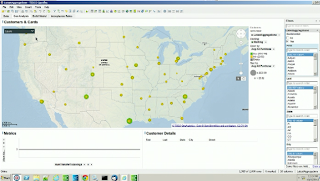
One of the key announcements was around BigData Analytics, in which Workday allows to query, import and transfer data in Hadoop clusters (the BigData component) through a business user friendly interface (with friendly support from Datameer) into the Workday object model. The analytics then are the visual representation of these imported contents in combination with the data already residing in Workday from the HCM and Financial side. And Workday builds templates that help both with the aggregation and extraction of the data and its representation in a new dashboard.


The approach makes sense for Workday in order to be able to offer the best content aggregated - or queried from an unstructured NoSQL system like a Hadoop cluster. And the examples around the compensation planning scenario, with the selection of compensation data coming from Deloitte and IBM / Kenexa is a great showcase. It will be interesting to see if customers could aggregate and mix and match across both (and  more) sources - which would be a key value add.

Workday is one of the first enterprise vendors to uptake Hadoop capabilities and deserves credit for pioneering the space - but like the classic data warehouse vendors, Workday wants the Hadoop content in their own transactional - in this case object - space. But that defeats the idea of a non structured database like Hadoop - unless you could show a dynamic and on the fly morphing of that object model into anything the result set may require. And then drive to decisions or recommended actions powered by (real) analytics - the one that do or at least suggest an action.

But we didn't see anything like this - so non surprisingly one of the Workday design partners stated that internally, what Workday fancily, buzz-wordingly calls BigData Analytics - is simply called reporting. And maybe you should call it Workday's new dashboarding capability with an ETL that can merge unstructured content into its dashboards.

So Workday deserves credit for a first start - but a lot needs to be covered to make this a BigData solution (e.g. consider to put the Workday data into the Hadoop clusters for some higher insight potential) and add real analytical capabilities. Workday will also need to address the flexible representation of the result set - in a much more visually appealing way then in this release. The best dash boarding content can look tired and old when coupled with pedestrian visualization capabilities.   Workday should think about using visualizations or risk being marginalized by the likes of Tableau and Qliktech for HCM dashboard needs.


Bye bye wheel - welcome new UI

The famous Workday wheel seems to have found the way to the scrapyard - and though odd - it was a strong unique identifier for the Workday UI. Gone with the wheel is also Adobe's flex technology, a good move of Workday to get rid of some technical debt ie thn its user interface layer.


The new UI looks clean and takes advantage of all the nice HTML5 capabilities like re-sizing, zooming and moving objects. The wheel gets replaced by a more common menue and we saw the usual search options and drop down menus.

Like all other recent HTML5 UIs shown (e.g. SAP's Fiori and Infor come to mind) the density of information seems to be a victim of the new technology. The verdict is still out on what this means for usability - but it certainly makes the life of the vendors easier. We also did not see any detailed transactional screens, and that's where the rubber hits the road as far as new user interfaces and usability are concerned.


Welcome Workday Student

The other major announcement was the creation of the first vertical application of Workday with the creation of a higher education solution. If anyone doubted how long Duffield would still be active in the business  re-watch the keynote video - there is no doubt that announcing new software is like a fountain of youth. And a ton of fun. And with Workday Student supposed to ship not before 2014 / 2015 we will see Duffield around for significant time to come.


And the move to HigherEd is a common path Duffield companies have taken - to the point that some of them are now leapfrogging from his 2nd last, over the last (Peoplesoft) company to the new Workday Student system.

One would be naive thinking that the release of the new recruiting system and the announcement of a HigherEd vertical are pure coincidence - there are nice synergies between the two - starting with the recruitment pipeline, the identification of skills and potential etc. On the flipside Workday will most likely face a set of not so usual competitors on campus - as we should not be surprised to see large internet properties like Facebook and LinkedIn pursuing the student market. Not the usual competition and Workday will have to show it can provide a consumer grade UI for the Millenial users that form today's student body and compete with a new set of competitors.

On the architecture side it remains to be seen how Worday will isolate and abstract for the new vertical functionality demand. This is particularly interesting since Workday business logic resides on an object model and given the poor track record of the overall enterprise software industry to create and maintain vertical functionality on top of moving horizontal function pools.


Little noticed... OpenStack

At the Tech Summit it was a nice surprise to see OpenStack / Grizzly on the slides. Workday had to build their own proprietary cloud tech stack when the company started out - as there were no standards and alternatives. But now these have emerged and it is key that Workday finds a way to tap into the larger (and cheaper) compute and other IT resources offered by the cloud infrastructure vendors... And while Workday has done this with AWS for development and test systems - it's still an open question for production systems. Equally we know that HP has announced that Workday will run in the HP OpenCloud - so OpenStack is a very good path for Workday to be able to run on HP's (and other) public clouds.

More importantly it gives Workday the technical capability to - yes horrible dictu - to deploy on premise. And while it may disappoint some cloud purists, this is a smart move given that we live in the age of the PRISM/NSA scandal fallout and vendors are wise to be able to deploy both to the public an private cloud. Customers may well ask and demand for that capability in the next quarters.

And as we speak about Workday and public clouds its worth mentioning that the BigData Analytics offering runs on top of AWS Hadoop service. It is better for Workday to use AWS than build up it's own infastructure. It will be interesting to see if customers care - but so far nothing critical in this regards has come up.


Less can be more

But apart from the new functionality seen - the major change affecting Workday customers will be that the company is switching from 3 to 2 releases per year. This is a good move as the previous pace put some onus on their customers, even though it's SaaS and supposedly these upgrades / updates are easy, they still take a toll on the users in the client organizations. It also equates into significant cost savings since instead of integration and regression testing the scope three times a year - Workday customers will now do this only twice a year. Certainly a welcome change. And in my experience a 6 months cycle is much more manageable for customers and is a good compromise between productive application usage and innovation in automation becoming available.


Moreover Workday will put a preview environment into the release cycle before production and after the sandbox - a good move to allow customers more time to familiarize themselves and test a new update.


Behind the scenes the company has moved to a single code line - which is a application development feat seldom achieved. Workday seems to have found a way to just flag the code and objects that need to go to a release or version. This gives Workday the ability to release functionality at will and also has the ability - shocking, too - to move off the one release lockstep mechanism for customers.

Putting my old product developer hat on, this is a key change for Workday and its customers and may certainly have been influenced by larger functional deliveries happening down the road e.g. with a new user interface, recruitment etc. and a huge flexibility win for customers and Workday. That said, it was also good to see the constant tuning and improvement mentality shared in detail at the Technology Summit - certainly a best practice and good to see it lived so well by Workday product executives.


Financials

The Financials side of the product seems to be doing well with Workday adding capabilities and scalability to qualify and play in the BigFin market space. The requirements of the Financial product are a good alternate stress test of the Workday platform compared to the HCM load.

My mayor takeaway is, that the Financials side is also a defensive move for Workday. Previously I blogged about Peoplesoft being challenged even on closed sales on the CxO level by SAP and Oracle - so the former Peoplesoft DNA does not want that to repeat this phenomena and being able to expand and own Financials as a footprint is one strategic move to avoid that Peoplesoft history repeats for Workday.

But on that front Workday missed to pitch to their predominant HCM centric user base present in the keynote audience as the value proposition of an integrated HCM and Finance system was not as clearly articulated. It will not make these HCM users go and see their Finance counterparts as soon as they are back in their office from Workday Rising. But what hasn't happened has the charme of being able to still happen in the future.


The road ahead

With recruiting shipping the major piece that Workday still misses on the HCM side is Learning - and the company for now is partnering in this area. But in a Q&A Bhusri was pretty clear that down the road Workday will address this functional gap - and not with an acquisition. That would be true to the Workday tradition of build and not buy.


On the payroll side the company plans to ship the UK and France payrolls in 2015 and 2016 respectively. The overall thinking off the management team is that with 7-8 native Workday payrolls the company can cover enough ground in terms of critical user base. The rest is planned to be addressed with partners and with plans to extend and expand the payroll interface for those partners.  This will pose still some headache to international customers who will have to look for partners and run interfaces that could break - every and any pay cycle. And what we heard more than one time from customers on stage was, that they key value for them was .... integration.


The non product challenge

Workday will have to keep growing revenues, customers and expand its global presence at a fast and steady pace to keep investors happy. Japan was announced at the conference as a new country Workday will operate in. The good news for Workday is, that it can source from its former Peoplesoft bench - but the competitive landscape is changing and the pressure to deliver numbers has not changed - but only increased.


MyPOV

If you were - like yours truly - very concerned that Workday has already a lot on its plate - then the company has certainly added more to its plate. But executives seem to be confident that they can deliver - and to their credit - they have so far delivered. Shipping a thought leading recruiting product will be a key milestone. The technical challenges seem to be under control and some weaknesses are turning to the better - so 2014 will be a key year for Workday to continue to deliver on product and master the non technical growth challenges as well.

---------------------------------------------------------------
If you missed it - check out the Storify collection here.
Wondering on my pre Rising questions - I will come back to them in a later post. 

Future of Work Tech Optimization Data to Decisions Innovation & Product-led Growth New C-Suite Marketing Transformation Next-Generation Customer Experience Digital Safety, Privacy & Cybersecurity Oracle SuccessFactors workday SAP AI Analytics Automation CX EX Employee Experience HCM Machine Learning ML SaaS PaaS Cloud Digital Transformation Enterprise Software Enterprise IT Leadership HR Chief Financial Officer Chief People Officer Chief Information Officer Chief Technology Officer Chief Customer Officer Chief Human Resources Officer Chief Information Security Officer Chief Data Officer