Results

Blending security and privacy

Blending security and privacy

The relationship between privacy regulators and technologists can seem increasingly fraught. A string of adverse (and sometimes counter intuitive) privacy findings against digital businesses – including the “Right to be Forgotten”, and bans on biometric-powered photo tag suggestions – have left some wondering if privacy and IT are fundamentally at odds. Technologists may be confused by these regulatory developments, and as a result, uncertain about their professional role in privacy management.

Several efforts are underway to improve technologists’ contribution to privacy. Most prominent is the “Privacy by Design” movement (PbD), while a newer discipline of ‘privacy engineering’ is also striving to emerge. A wide gap still separates the worlds of data privacy regulation and systems design. Privacy is still not often framed in a way that engineers can relate to. Instead, PbD’s pat generalisations overlook essential differences between security and privacy, and at the same time, fail to pick up on the substantive common ground, like the ‘Need to Know’ and the principle of Least Privilege.

There appears to be a systematic shortfall in the understanding that technologists and engineers collectively have of information privacy. IT professionals routinely receive privacy training now, yet time and time again, technologists seem to misinterpret basic privacy principles, for example by exploiting personal information found in the ‘public domain’ as if data privacy principles do not apply there, or by creating personal information through Big Data processes, evidently with little or no restraint.

See also ‘Google's wifi misadventure, and the gulf between IT and Privacy’, and ‘What stops Target telling you're pregnant?’.

Engaging technologists in privacy is exacerbated by the many mixed messages which circulate about privacy, its relative importance, and purported social trends towards promiscuity or what journalist Jeff Jarvis calls ‘publicness’. For decades, mass media headlines regularly announce the death of privacy. When US legal scholars Samuel Warren and Louis Brandeis developed some of the world’s first privacy jurisprudence in the 1880s, the social fabric was under threat from the new technologies of photography and the telegraph. In time, computers became the big concern. The cover of Newsweek magazine on 27 July 1970 featured a cartoon couple cowered by mainframe computers and communications technology, under the urgent upper case headline, ‘IS PRIVACY DEAD?’.Of course it’s a rhetorical question. And after a hundred years, the answer is still no.

In my new paper published as a chapter of the book “Trans-Atlantic Data Privacy Relations as a Challenge for Democracy”, I review how engineers tend collectively to regard privacy and explore how to make privacy more accessible to technologists. As a result, difficult privacy territory like social networking and Big Data may become clearer to non-lawyers, and the transatlantic compliance challenges might yield to data protection designs that are more fundamentally compatible across the digital ethos of Silicon Valley and the privacy activism of Europe.

Privacy is contentious today. There are legitimate debates about whether the information age has brought real changes to privacy norms or not. Regardless, with so much personal information leaking through breaches, accidents, or digital business practices, it’s often said that ‘the genie is out of the bottle’, meaning privacy has become hopeless. Yet in Europe and many jurisdictions, privacy rights attach to Personal Information no matter where it comes from. The threshold for data being counted as Personal Information (or equivalently in the US, ‘Personally Identifiable Information’) is low: any data about a person whose identity is readily apparent constitutes Personal Information in most places, regardless of where or how it originated, and without any reference to who might be said to ‘own’ the data. This is not obvious to engineers without legal training, who have formed a more casual understanding of what ‘private’ means. So it may strike them as paradoxical that the terms ‘public’ and ‘private’ don’t even figure in laws like Australia’s Privacy Act.

Probably the most distracting message for engineers is the well-intended suggestion ‘Privacy is not a Technology Issue’. In 2000, IBM chair Lou Gerstner was one of the first high-profile technologists to isolate privacy as a policy issue. The same trope (that such-and-such ‘is not a technology issue’) is widespread in online discourse. It usually means that multiple disciplines must be brought to bear on certain complex outcomes, such as safety, security or privacy. Unfortunately, engineers can take it to mean that privacy is covered by other departments, such as legal, and has nothing to do with technology at all.

In fact all of our traditional privacy principles are impacted by system design decisions and practices, and are therefore apt for engagement by information technologists. For instance, IT professionals are liable to think of ‘collection’ as a direct activity that solicits Personal Information, whereas under technology neutral privacy principles, indirect collection of identifiable audit logs or database backups should also count.

The most damaging thing that technologists hear about privacy could be the cynical idea that ‘Technology outpaces the Law’. While we should not underestimate how cyberspace will affect society and its many laws borne in earlier ages, in practical day-to-day terms it is the law that challenges technology, not the other way round. The claim that the law cannot keep up with technology is often a rhetorical device used to embolden developers and entrepreneurs. New technologies can make it easier to break old laws, but the legal principles in most cases still stand. If privacy is the fundamental ‘right to be let alone’, then there is nothing intrinsic to technology that supersedes that right. It turns out that technology neutral privacy laws framed over 30 years ago are powerful against very modern trespasses, like wi-fi snooping by Google and over-zealous use of biometrics by Facebook. So technology in general might only outpace policing.

We tend to sugar-coat privacy. Advocates try to reassure harried managers that ‘privacy is good for business’ but the same sort of naïve slogan only undermined the quality movement in the 1990s. In truth, what’s good for business is peculiar to each business. It is plainly the case that some businesses thrive without paying much attention to privacy, or even by mocking it.

Let’s not shrink from the reality that privacy creates tensions with other objectives of complex information systems. Engineering is all about resolving competing requirements. If we’re serious about ‘Privacy by Design’ and ‘Privacy Engineering’, we need to acknowledge the inherent tensions, and equip designers with the tools and the understanding to optimise privacy alongside all the other complexities of modern information systems.

A better appreciation of the nature Personal Information and of technology-neutral data privacy rules should help to demystify European privacy rulings on matters such as facial recognition and the Right to be Forgotten. The treatment of privacy can then be lifted from a defensive compliance exercise, to a properly balanced discussion of what organisations are seeking to get out of the data they have at their disposal.

Distillation Aftershots Digital Safety, Privacy & Cybersecurity New C-Suite Data to Decisions Security Zero Trust AI ML Machine Learning LLMs Agentic AI Generative AI Robotics Analytics Automation Cloud SaaS PaaS IaaS Quantum Computing Digital Transformation Disruptive Technology Enterprise IT Enterprise Acceleration Enterprise Software Next Gen Apps IoT Blockchain CRM ERP CCaaS UCaaS Collaboration Enterprise Service developer Metaverse VR Healthcare Supply Chain Leadership Chief Executive Officer Chief Information Officer Chief Digital Officer Chief Information Security Officer Chief Privacy Officer Chief Technology Officer Chief Data Officer

Atlassian Takes A Big Stride In Team Collaboration

Atlassian Takes A Big Stride In Team Collaboration

Today Atlassian unveiled Stride (not to be confused with the now defunct SocialCast Strides), their new team collaboration platform that is the culmination of several years worth of research, customer feedback (on their current portfolio), acquisitions and in-house development.

Atlassian's current portfolio may be best known in technical and development teams with products such as Jira, BitBucket and Jira Service Desk. However, Atlassian also has a robust offerings in team communication and collaboration with Confluence, HipChat and recently their recently Trello. Over the last few years Atlassian has acquired several communication and collaboration companies including Hall, Blue Jimp, DocTape, WikiDocs and HipChat... but Stride is not a duct-taped together version of those products, instead it's a new product developed by the combined engineering force from those companies.

Stride is positioned in a very competitive market, and at first glance the standard reaction is going to be "Oh, another messaging client". So how does Stride plan to differentiate from tools like Slack, Microsoft Teams, Cisco Spark, Ring Central Glip, Google Hangouts, Unify Circuit, IBM Watson Workspace and others?

1) All the forms of communication you need are included, there is no need for integrations. You get messaging, video, voice, files, tasks and more all natively built in. I agree this is a strong differentiator, and it mirrors the findings I wrote in my report Why Your Organization Should Buy a Collaboration Platform Instead of a Best-of-Breed Solution

2) Fully execute work within a room. Stride is not just about chat, or even about pulling in status updates from other products (ex: Salesforce, ZenDesk, Workday, etc). Instead, Stride allows any post to be turned into a Task or a Decision, enabling teams to not just talk about a project, but actually document the work and the final outcome right inside a Stride Room.

3) Large existing customer base to upsell into. Constellation views Atlassian's position similar to that of Salesforce a decade ago, where their existing product was mainly used by one department (Sales for Salesforce, Engineering for Atlassian) and via an expanded portfolio they plan to reach more people inside existing accounts.

MyPOV

Atlassian Stride is a very strong product for a 1.0 release. Rather than just messaging, it has many features natively built in, eliminating the need for several integrations. When a feature is missing, Atlassian has a robust ecosystem or partners that provide add-ons via their Marketplace. Their freemium model will be attractive to customers looking to get started quickly. For existing HipChat Cloud (not Data Centre) customers the migration to Stride is seamless. Install the client, log-on and all your HipChat content is there. I'd suggest HipChat customers do this sooner rather than later, as I expect Atlassian to depreciate HipChat and focus on Stride. As integration with Atlassian's portfolio (Jira, Trello, Confluence) deepens, Stride will certainly create a challenge for products like Slack which also has a strong developer following.

I was impressed that Stride already has a "While You Were Away" feature, which allows people to quickly catchup on things they've missed. This is similar to Slack's Highlights feature or IBM Watson Workspace's Moments.

I look forward to seeing how Atlassian furthers integration with Trello and Confluence, ideally creating a seemless experience for people to plan and exectute on work.

Future of Work

Digital Transformation Digest: Amazon's Plan for A Second Headquarters, MIT and IBM Team Up for AI, and Atlassian Launches Its Slack Competitor

Digital Transformation Digest: Amazon's Plan for A Second Headquarters, MIT and IBM Team Up for AI, and Atlassian Launches Its Slack Competitor

Constellation Insights

The mega-numbers behind Amazon's second HQ: Amazon is planning to build a second, but equal in scope and stature, headquarters operation and is looking for a U.S. metro area to house it. The scale of the planned project is indeed massive, as the company's press release notes:

Amazon expects to invest over $5 billion in construction and grow this second headquarters to include as many as 50,000 high-paying jobs. In addition to Amazon’s direct hiring and investment, construction and ongoing operation of Amazon HQ2 is expected to create tens of thousands of additional jobs and tens of billions of dollars in additional investment in the surrounding community.

The new headquarters will be a "full equal" to Amazon's current one in Seattle, according to a statement from CEO Jeff Bezos. 

POV: Amazon's RFP specifies interest in metropolitan areas with more than a million people; a "stable and friendly business environment"; locations with the potential to draw strong technical talent; and "communities that think big and creatively when considering locations and real estate options."

Marketwatch determined that 53 cities in the U.S. meet that criteria—or 52 when you eliminate Seattle—along with six Canadian ones. Wherever Amazon's second HQ ends up, it will make a major economic impact on that city, both directly and indirectly, as it would provide instant critical mass for the broader tech business community. 

Amazon's verbiage about friendly business environments and creative thinking suggest the obvious: It's looking for tax breaks and help obtaining land and building supporting infrastructure for the headquarters. On paper, front-runners to land the deal are East Coast cities such as Boston, New York and Atlanta, along with the likes of Denver in the middle-to-west of the nation. 

IBM-MIT team up on AI lab: Big Blue will invest $240 million over 10 years in the MIT-IBM Watson AI Lab, in a bid not only to achieve AI research breakthroughs, but also to get up close and personal with the next generation of AI talent. Here are the key details from the joint announcement:

The collaboration aims to advance AI hardware, software and algorithms related to deep learning and other areas, increase AI's impact on industries, such as health care and cybersecurity, and explore the economic and ethical implications of AI on society. 

The new lab will be one of the largest long-term university-industry AI collaborations to date, mobilizing the talent of more than 100 AI scientists, professors, and students to pursue joint research at IBM's Research Lab in Cambridge—co-located with the IBM Watson Health and IBM Security headquarters in Kendall Square, in Cambridge, Massachusetts—and on the neighboring MIT campus. 

The lab will be co-chaired by IBM Research VP of AI and IBM Q, Dario Gil, and Anantha P. Chandrakasan, dean of MIT's School of Engineering.

MIT and IBM researchers will submit research proposals in the following areas: AI algorithms, next-gen hardware and devices, including quantum computers; industry AI solutions; and how "AI can deliver economic and societal benefits to a broader range of people, nations and enterprises."

The lab's mission will also include encouraging MIT faculty and students "to launch companies that will focus on commercializing AI inventions and technologies" developed there. 

POV: One can imagine IBM being well-poised to acquire those commercialized inventions, as well as the sharp minds behind them. IBM is in a dogfight with Microsoft, Google and others for top-level AI talent; the lab helps it get in on the ground floor with top prospects and build crucial relationships.

MIT's CSAIL (Computer Science and Artificial Intelligence Lab) has been a hot bed of AI research for some time, and partnerships like the new lab will help IBM keep its fingers on the pulse, notes Constellation VP and principal analyst Doug Henschen

Atlassian tees up its Slack competitor, Stride: The modern workplace is plagued by a surfeit of communication tools that can end up overwhelming workers, rather than helping them get stuff done. That's the contention of Atlassian, which has launched Stride, a team communication tool that on a competitive basis is aimed directly at Slack. Here are the key details from its announcement:

Current workplace communication solutions force users to choose between collaboration and creation, requiring them to monitor an endless conveyor belt of conversation without providing the space for deep, focused work. The burden is on the user to prioritize the firehose of communication, manually sift through and remember where critical information is hiding, and extract team decisions and actions from the barrage of text. Compounding the problem is the absence of non-verbal communication inherent in chat-based tools.

Atlassian built Stride to help solve these issues so teams can move work forward. Our brand new communication solution has best-in-class team messaging, audio and video conferencing, and collaboration tools. Stride is the only communication product teams needs to get work done.

Stride also features something called "Focus Mode," which turns off notifications and displays a special status and user presence indicator, giving them "the mental space to go into deep work." Stride keeps collecting what it deems important information while Focus Mode is turned on, and serves it up to the user once they shut it off. 

Atlassian is offering a free version of Stride that has unlimited users but limits storage to 5GB, add-on apps or bots to 10, and up to 25,000 saved messages. A paid version adds functionality and removes storage and other limits for $3 per user per month. 

POV: Atlassian certainly is giving a lot away for free with Stride, and is dramatically undercutting Slack on pricing for the paid version. It may have no choice given how much buzz and visibility Slack has, not to mention the fact Atlassian is still in the process of shedding its image as a collaboration company aimed mostly at software development teams, rather than all types of workers. 

Microsoft Teams, which comes included with Office 365 subscriptions, is perhaps Stride's most important competitor, says Constellation VP and principal analyst Alan Lepofsky. "It's the old 20-year monopoly battle," he says. "If you're already paying for Office, why not use teams?"

Atlassian may not be trying to win large number of new customers, however; rather, the intent may be to get existing customers of its other products to buy into Stride, he adds. That may be easier than you think: Atlassian famously has no direct sales force, instead relying on word of mouth and image to sell its products, Lepofsky notes. 

However, Atlassian may need to invest in market education around Stride, given it overlaps with HipChat, Atlassian's popular team chat app. Atlassian will migrate HipChat cloud users to Stride at no charge, but will continue supporting on-premises HipChat customers. However, Stride is clearly the strategic product going forward.

Data to Decisions Future of Work Matrix Commerce Chief Customer Officer Chief People Officer Chief Information Officer Chief Supply Chain Officer

Introducing the Business Transformation 150 of Executives Leading Innovative Business Model Transformations

Introducing the Business Transformation 150 of Executives Leading Innovative Business Model Transformations

I’m happy to announce the launch of the Business Transformation 150, an elite list recognizing the top global executives leading innovative business transformation efforts in their organizations. Congratulations to the leaders named in our new program!

The Business Transformation 150 (BT-150) identifies the world’s most influential executives across a variety of industries from entertainment, finance, government, healthcare, higher education, retail and sports. They demonstrate an understanding of how the business environment is transforming in response to disruptive forces and are actively preparing their companies to excel during and after the transformation.

The industry is witnessing a shift toward leaders who are much more digitally capable when it comes to transforming the modern organization. The BT-150 highlights the exemplars of an emerging new sensibility in leadership. Common traits of the winners include a passion for productive disruption, a willingness to share lessons learned, a desire to achieve the art of the possible, and have a strong will to apply exponential technologies to improve economic, social and environmental conditions.

Nominations from peers, industry influencers, technology vendors, and analysts powered the exhaustive, six-month selection process for the BT-150. Those selected will be recognized at Connected Enterprise 2017 October 25- 27 at the Half Moon Bay Ritz-Carlton.

Congrats again to the listed leaders:

  • Robert Alexander, CIO at Capital One
  • Stuart Appley, Managing Director at CBRE         
  • Lisa Baldwin, CIO at Tiffany & Co.
  • Daniel Barchi, CIO at New York Presbyterian Hospital
  • Christophe, Beck, President at Nalco Water (an Ecolab Company)
  • Ganesh Bell, VP & CDO at GE Power
  • Tyler Best, CIO at Hertz
  • Steve Betts, CIO at Health Care Service Corporation
  • Bill Blausey, CIO at Eaton Corporation
  • Kristen Blum, CIO at Frito Lay (PepsiCo)
  • Alexander Bockelmann, CIO/CDO at UNIQA
  • Bertrand Bodson, Chief Digital Officer at Novartis
  • Michael Brady, Global CTO at AIG
  • David Bray, Chief Ventures Officer at NGA
  • Chad Brisendine, VP & CIO at St. Luke's University Health Network
  • Adam Brotman, EVP of Global Retail Operations at Starbucks
  • Julie Bushman, CIO at 3M
  • Blake Cahill, SVP, Global Head of Digital Marketing & Media at Royal Philips
  • Matt Carey, EVP & CIO at Home Depot
  • Mats Carrgard, SVP, Business Performance at Virgin Mobile Middle East & Africa
  • Bob Carrigan, Chairman & CEO at Dun & Bradstreet
  • Suja Chandrasekaran, CIO at Kimberly-Clark
  • Anil Cheriyan, CIO at Suntrust Banks
  • Andrea Chin, Executive Director PMO at Estee Lauder Companies
  • Neetan Chopra, SVP Innovation at Emirates Airlines
  • David Chou, CIO and CDO at Children's Mercy Kansas City
  • Chris Clark, CIO at Levi Strauss
  • Ted Colbert, CIO at Boeing
  • Baron Concors, Global Chief Digital Officer at Pizza Hut
  • Herve Coureil, EVP Information Systems at Schneider Electric
  • Heather Cox, Chief Technology and CDO at USAA
  • Peter Crombecq, CIO at the City of Antwerp
  • Paul Daugherty, CTO and Chief Innovation Officer at Accenture
  • Christopher Desautel, CIO & VP at Berkshire Hathaway
  • Peter Doolan, EVP, Digital Transformation & Innovation at Salesforce.com
  • Nick Drake, Executive Vice President, Marketing & Experience at T-Mobile
  • Lara Druyan, Managing Director, Head of Innovation, West Coast at RBC
  • Elie Elbaz, VP, Digital and Connected Cars at Renault
  • Richie Etwaru, Chief Digital Officer at IMS Quintiles
  • Karen Evans, National Director at US CyberChallenge
  • Sabine Everaet, CIO EMEA & Western Europe BU at Coca-Cola
  • Kim Felix, Vice President, Transportation Technology at UPS
  • Jay Ferro, Global EVP, Chief Information and Technology Office at ExamWorks
  • Victor Fetter, Chief Digital Officer at Vertiv
  • Ken Finnerty, VP, Information Services, Customer Technology at UPS
  • Miguel Gamiño, CTO of New York City
  • Gilberto García, Digital Commercial Model Director at CEMEX
  • Lisa Gelobter, Chief Digital Services Office, US Digital Service, White House
  • Gerri Martin-Flickinger, EVP and CTO at Starbucks
  • Tammy Gilbert, CIO at Fidelity Investments
  • Mike Giresi, CIO at Royal Caribbean Cruises
  • Stephen Gold, CIO & EVP at CVS Health
  • Neil Gomes, Chief Digital Officer & SVP for Technology Innovation and Consumer Experience at Thomas Jefferson University and Health System
  • Prasanna Gopalakrishnan, CIO & CDO at Boston Private
  • Margarita Gosheva, CIO at Siemens
  • Piergiorgio Grossi, CIO at Ducati
  • Mayur Gupta, VP Growth and Marketing at Spotify
  • Dan Gustafson, SVP Information Technology/CIO at Newell Rubbermaid
  • Ben Haines, SVP and CIO at OATH
  • Sami Hassanyeh, CDO at AARP
  • Christopher Heck, Chief Information Officer at Duke Energy
  • Perry Hewitt, VP Marketing at ITHAKA
  • Chris Hjelm, EVP & CIO at Kroger
  • Chris Hummel, CMO at United Rentals
  • Clay Johnson, CIO & EVP at Walmart
  • Milind Kamkolkar, CDO at Sanofi
  • Michael Keithley, CIO at United Talent Agency
  • Jay Kerley, CIO & Group VP at Applied Materials
  • Justin Kershaw, Corporate VP & CIO at Cargill
  • Peter Kim, VP Digital Consumer Engagement at Lego
  • Sunny Kim, VP Innovation at Samsung
  • Marcy Klevorn, Group VP & CIO at Ford Motor Company
  • Terry Kline,  SVP & CIO at Navistar
  • Phil Komarny, Chief Digital Officer at The University of Texas System
  • Barbara Koster, CIO at Prudential Financial
  • Carla Kriwet, Chief Business Leader, Connected Care & Health Informatics at Royal Philips
  • Rich Kylberg, VP Corporate Marketing and Communications at Arrow Electronics
  • Kenny Lauer, VP Marketing and Digital at Golden State Warriors
  • Mary Beth Laughton, SVP of Digital at Sephora
  • Martin Lippert, EVP Global Head of Technology & Operations at MetLife
  • Robert Long, Chief Innovation Officer at Coca-Cola
  • James MacLennan, SVP & CIO at IDEX
  • Dennis Maloney, Chief Digital Officer at Dominos Pizza
  • Shawn Mandel, Chief Digital Officer at TELUS
  • Martin Marcinczyk, VP of Personalization at Comcast
  • Faisal Masud, CTO at Staples
  • Michael Mathews, CIO at Oral Roberts University
  • Meg McCarthy, EVP Operations and Technology at Aetna
  • Sean McCormack, Head of Digital Growth & CTO at Harley-Davidson
  • Kathy McElligott, CTO/CIO at McKesson
  • Stuart McGuigan, CIO at Johnson & Johnson
  • Greg McKelvey, EVP & Chief Digital Officer at FOSSIL
  • Mike McNamara, CIO & CDO at Target
  • Vinay Mehta, CIO at Affinion Group
  • Diana Melick, CIO at AGCO
  • Greg Meyers, CIO at Motorola
  • Gavin Michael, Head of Global Tech at Citi
  • Jared Miller, CTO at Atlanta Falcons
  • Laurie Miller, CIO at Covestro Deutschland AG
  • Sarah Miller, CIO at Neiman Marcus
  • Tom Miller, CIO at Anthem
  • Jamie Moldafksy, CMO at Wells Fargo
  • Jim Mollica, CDO at Under Armour
  • Dennis Moore, Head of Technology at Bridgewater Associates
  • Joanne Moretti, SVP & CMO at Jabil and GM at Radius Innovation & Development
  • Darla, Morse, CIO at Arby's Restaurant Group
  • Paul Moulton, CIO at Costco
  • Patrick Naef, CIO at Emirates Airlines
  • Earl Newsome, CIO at Praxair
  • Tim O'Keefe, CEO at Symmons Industries
  • Stefan Olander, VP Global Digital Innovation at Nike
  • Teresa Ostapower, CDO at AT&T
  • Graeme Payne, CIO at Equifax
  • Steve Philpott, CIO at Western Digital
  • Marc Probst, CIO at Intermountain Healthcare
  • Scott Pulsipher, President at WGU
  • G. Nagesh Rao, CTO & Office of Investment & Innovation at US Small Business Administration
  • Neville Ray, CTO at T-Mobile
  • Jonathan Reichentel, CIO at the City of Palo Alto
  • Therace Risch, CIO at JCPenney
  • Ian Rogers, CDO at LVMH
  • Bruce Ross, CIO at Royal Bank of Canada
  • Vijay Sankaran, CIO at TD Ameritrade
  • Thomas Saueressig, CIO at SAP
  • Dieter Schmidbaur, CIO at Airbus
  • Christoph Schmutz, CIO at Austrian Railways
  • Kurt Schnieders, CIO at Dick's Sporting Goods
  • Chad Sheridan, CIO at USDA
  • Janet Sherlock, CIO at Ralph Lauren
  • Wayne Shurtz, CIO at Sysco
  • Sue Siegel, CEO at GE Ventures
  • Preston Simons, CIO at Aurora Healthcare
  • Barry Simpson, Global CIO at Coca-Cola
  • Gavin Slater, CEO at Australian Digital Transformation Office
  • Kim Smith, CDO at Capgemini
  • Dave Smoley, CIO at AstraZeneca
  • Adam Stanley, Global CIO & Chief Digital Officer at Cushman & Wakefield
  • David Stevens CIO at Maricopa County
  • Kim Stevenson, SVP and GM at Lenovo
  • Jeroen Tas, Chief innovation Officer at Royal Philips
  • Brian Tilzer, CDO at CVS Health
  • Matthew Toner, Managing Director at CBRE Institute
  • Steve Turner, CIO at Walgreens
  • Jim Umberger, VP of Digital Marketing & CRM at Allergan
  • Ron van Kemenade, CIO at ING Bank
  • Rhonda Vetere, CTO at Estee Lauder
  • Craig Walker, CIO at Shell Downstream
  • Ken Washington, VP, Research and Advanced Engineering & Chief Technical Officer at Ford Motor Company
  • Kathleen Wayton, CIO at Southwest
  • Steve Zerby, CIO/CTO at Owens Corning

For more details about the listed executives, visit: https://www.constellationr.com/business-transformation-150


New C-Suite Future of Work Innovation & Product-led Growth Leadership Chief Customer Officer Chief Digital Officer Chief Executive Officer Chief Financial Officer Chief Information Officer Chief Marketing Officer Chief People Officer Chief Procurement Officer Chief Revenue Officer Chief Supply Chain Officer Chief Experience Officer Chief Growth Officer Chief Human Resources Officer Chief Product Officer Chief Sustainability Officer Chief Technology Officer Chief Analytics Officer Chief AI Officer Chief Data Officer Chief Information Security Officer Chief Privacy Officer

Digital Transformation Digest: Oracle to Hit Gas Pedal On Java, Flat UI Design's Potential Pitfall, and More

Digital Transformation Digest: Oracle to Hit Gas Pedal On Java, Flat UI Design's Potential Pitfall, and More

Constellation Insights

Oracle's Java chief calls for faster innovation: A top Oracle employee in charge of Java says it is time to hit the gas pedal on the language's development by moving to a much more frequent release cadence. The changes are necessary to ensure Java remains competitive over the long term, chief platform architect Mark Reinhold said in a blog post.

For more than 20 years, Java SE and its counterpart JDK (Java Development Kit) "have evolved in large, ir­reg­u­lar, and some­what un­pre­dictable steps," he wrote. "Each fea­ture re­lease has been dri­ven by one or a few sig­nif­i­cant fea­tures, and so the sched­ule of each re­lease has been ad­justed as needed — some­times more than once! — in order to ac­com­mo­date the de­vel­op­ment of those fea­tures."

While this allowed the delivery of major, well-tested features, it held up the release of smaller ones, Reinhold added. Back when Java was one of a few platforms that evolved at a similar pace, this was acceptable, but the current landscape is much different, with many more nimble competitors, he argued: 

Java 9 will ship this month. Java 8 was released more than three years ago. Reinhold proposes that going forward, there should be a new Java feature release every six months, quarterly update releases and a "long-term support release" every three years.  

POV: Reinhold's proposal has been met largely with support from Java developers. It comes shortly after Oracle announced its intention to move Java Enterprise Edition to an as-yet unnamed open source foundation, a move that would significantly democratize the language's oversight.

The new release cadence for Java SE, which remains a widely used programming language, is thoughtful in that it keeps in mind the needs of early-adopter developers as well as more conservative enterprises, thanks to the inclusion of the long-term support release. It's always a good idea to balance innovation with stability and on its face, Reinhold has outlined a plan that delivers both.

Research pokes holes in flat design's efficacy: Flat design has been a preferred UI method for quite some time, first introduced broadly by Microsoft's Metro in the early 2000s and dramatically popularized with its introduction in iOS 7. 

It turns out—according to one study, at least—that flat design may have a clean, minimalist appeal, but it has a negative impact on a user's interaction with web pages and application screens. 

That's because flat design downplays the use of signifiers—elements that clearly indicate they are clickable or otherwise an interactive element of the page. UX consultancy Neilsen Norman Group decided to determine just how much. In a recent study, they wired up 71 users with eye-tracking equipment and presented them with the following:

We took 9 web pages from live websites and modified them to create two nearly identical versions of each page, with the same layout, content and visual style. The two versions differed only in the use of strong, weak, or absent signifiers for interactive elements (buttons, links, tabs, sliders).

In some cases, that meant taking an already flat page and adding shadows, gradients, and text treatments to add depth and increase the strength of the clickability signifiers. In other cases, we took a page that already had strong, traditional signifiers, and we created an ultraflat version. We were careful that the modifications we provided were reasonable and realistic.

NNG determined that users spent 22 percent more time on the web pages with weak signifiers, a finding it equated to slower task performance. 

POV: It should be noted that NNG doesn't conclude that flat design is a bad idea in all cases. Rather, it will more likely raise usability problems if a web page is crowded with many discrete elements. The full study is well worth a read and is particularly timely as enterprises refresh legacy application UIs and build next-generation applications. 

Accenture snaps up another boutique consultancy: The run on specialized tech consulting firms continues with Accenture's move to buy IBB Consulting, which provides services to communications, media and technology companies. 

Terms of the deal weren't disclosed. After its completion, Accenture will gain about 160 consultants in North America and Australia. The move will help Accenture deliver strategy services "around key industry issues such as networks, digital video and IPTV, digital transformation, next generation mobility, internet of things (IoT), M&A, cloud, advanced advertising, data analytics and insights, marketing optimization, and international growth," according to a statement.

POV: Accenture has made a string of niche acquisitions over the past year in order to better position itself as an enterprise partner for digital transformation. As with other deals, IBB is not about adding rank-and-file IT talent, but rather to bring in seasoned advisors who can help enterprises conceive a broad-ranging digital transformation strategy. IBB has worked with some of the biggest companies in its space, including Comcast and Verizon, so it certainly fits that bill. 


Marketing Transformation Matrix Commerce Next-Generation Customer Experience Tech Optimization Chief Customer Officer Chief Information Officer Chief Marketing Officer Chief Digital Officer

Digital Transformation Digest: Huawei's Global Cloud Ambitions, WhatsApp Cooking Up Business Edition, and More

Digital Transformation Digest: Huawei's Global Cloud Ambitions, WhatsApp Cooking Up Business Edition, and More

Constellation Insights

Huawei says competing clouds should work like airlines: Chinese telecom Huawei believes there will ultimately be room for five major cloud infrastructure services in the world, and it intends to be part of that select group. Here's how rotating CEO Guo Ping described the vision during a keynote at the Huawei Connect 2017 event in Shanghai:

The cloud is a cornerstone of the intelligent world," he said. "Society is experiencing a tangible Matthew effect in digital technology development. Because of this, as well as economies of scale in investment, clouds around the world will begin to converge – becoming more and more centralized.

The company will build a global cloud network based on its own public clouds, as well as clouds that it has built together with partners. Guo likened Huawei's strategy to the three major airline alliances – SkyTeam, Star Alliance, and Oneworld – which take passengers wherever they need to go in the world. Huawei Cloud, he said, will open up the world to its users.

He went on to explain Huawei's business model for the cloud, emphasizing that Huawei will monetize technology and services, not data. He said, "Huawei's Cloud DNA is made of a unique combination of technology, security, services, and shared success."

POV: It's important to put Ping's remarks in the proper context, says Constellation VP and principal analyst Holger Mueller. "He's right that probably not more than three to five global clouds will remain, but they will interoperate anyway," Mueller says. Take for example the broad uptake of the container orchestration system Kubernetes, an open-source project that originated at Google.

"The truth is that the partner concept has so fair failed for cloud," Mueller adds. "It was tried by the telcos, it was tried by VMWare, and did not work. It doesn't that it may not work in the long run in some way or shape, but at the moment it's clear that the large IaaS vendors compete, and don't share, and the vendors who don't yet have a public offering and who could partner want to sell their own gear first."

Take the situation of a Huawei customer who could offload compute load to another partner, Mueller says: "That would be good for the partner but not good for Huawei." Finally, the airline analogy doesn't quite apply to a global cloud ecosystem as Huawei envisions. "The airline world was and is heavily regulated and has seen only regionally strong carriers," he says. "That's not the case with cloud."

HPE eyes AWS business with Cloud Technology Partners buy: After shuttering its own public cloud ambitions, HPE is looking to build a business through consulting services for leading public clouds, in particular Amazon Web Services, while making money selling kit and software for private clouds. Its goal was underscored this week with the acquisition of Cloud Technology Partners, a 200-person consultancy based in Boston.

CTP is one of only a relative few AWS Premier Consulting Partners in North America, and says it has completed hundreds of AWS projects for enterprises to date. Within that, CTP has found a niche consulting for financial services firms who want to move to AWS. It says it has built and migrated production applications for "dozens of the world's largest financial services firms."

While CTP is best known for its work with AWS, it presents itself as cloud neutral, offering services for Google Cloud Platform, Microsoft Azure and OpenStack environments.

POV: CTP will be moved under HPE's Nextpoint services division and it will benefit from greater scalability and resources. Although

While CTP is small in terms of headcount, it has ample experience working with Fortune 500 companies on complex cloud transformation projects. That kind of expertise can't be grown quickly, which is why HPE opened up its pocketbook for CTP. 

The question ahead lies in how HPE communicates its intentions for CTP to its partners, many of which are also in the cloud transformation and services game and as such, may find themselves in competition with HPE for that business. Meanwhile, existing CTP customers and prospects will have to wait and see how well CTP's culture and track record is preserved as part of a much larger services organization.

WhatsApp unveils business version of messaging app: The hugely popular WhatsApp messaging service is rolling out a paid version aimed at businesses.

Purchased by Facebook for $19 billion in 2014, since then WhatsApp has served as a hugely popular counterpart—particularly outside of the U.S.—to Facebook Messenger, but until now hasn't had a clear monetization plan under Facebook's ownership. The social network giant has rolled out business-friendly features for Messenger and now is taking similar steps with WhatsApp. Here's how WhatsApp describes the plan, from an official blog post:

We know businesses have many different needs. For example, they want an official presence – a verified profile so people can identify a business from another person – and an easier way to respond to messages. We're building and testing new tools via a free WhatsApp Business app for small companies and an enterprise solution for bigger companies operating at a large scale with a global base of customers, like airlines, e-commerce sites, and banks. These businesses will be able to use our solutions to provide customers with useful notifications like flight times, delivery confirmations, and other updates.

The business versions are now in testing; WhatsApp says its goal is to maintain a high level of responsiveness and service.

POV: WhatsApp recently started a closed pilot program for verifying business accounts. The company says messages between customers and businesses will be encrypted end-to-end, although if a business uses a service provider to manage their messages, the latter may be able to read the messages.

News of WhatsApp's plans actually leaked as far back as March, but they seem much further along at this stage. Overall, the emergence of Messenger and WhatsApp as communications channels between businesses and customers is something for every sales, marketing and support organization to have on their radar.

What obviously isn't new is the notion of using electronic messages to reach customers, given the longstanding prominence of email and SMS. But WhatsApp and Messenger can provide a more robust experience, and it's an opportunity that enterprises should be careful not to squander through a lack of discipline. There's no need for spam to rear its ugly head in the multimedia messaging world.

Marketing Transformation Matrix Commerce Next-Generation Customer Experience Tech Optimization Chief Customer Officer Chief Information Officer Chief Marketing Officer Chief Digital Officer

Digital Transformation Digest: Oracle Fleshes Out Its IoT Play, Salesforce and IBM Add Integrations, and Key Takeways from Workday's Q2

Digital Transformation Digest: Oracle Fleshes Out Its IoT Play, Salesforce and IBM Add Integrations, and Key Takeways from Workday's Q2

Constellation Insights

Oracle's big IoT play: Among large software vendors, Oracle hasn't made quite as much noise about IoT as some others. That has just changed with a pair of announcements it made this week that serve to flesh out its IoT strategy in some detail. 

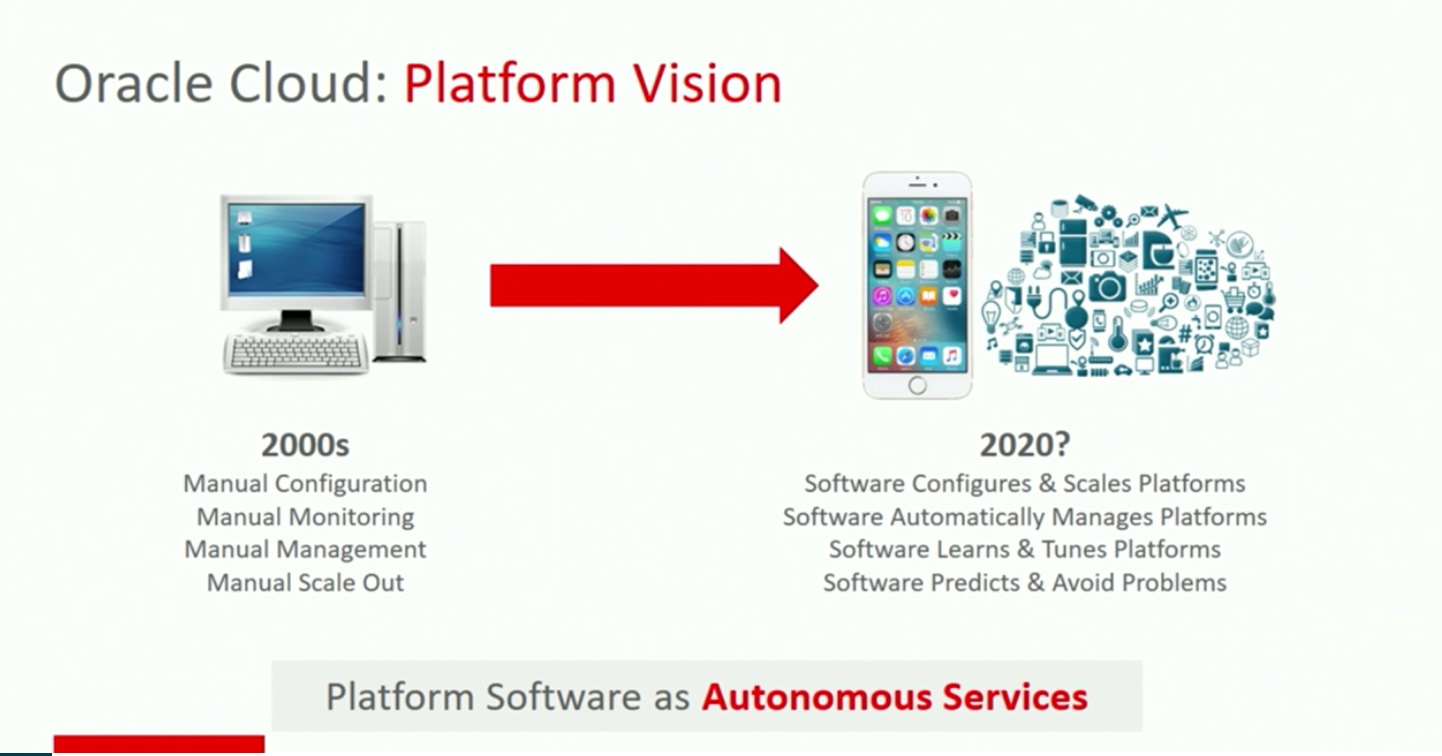
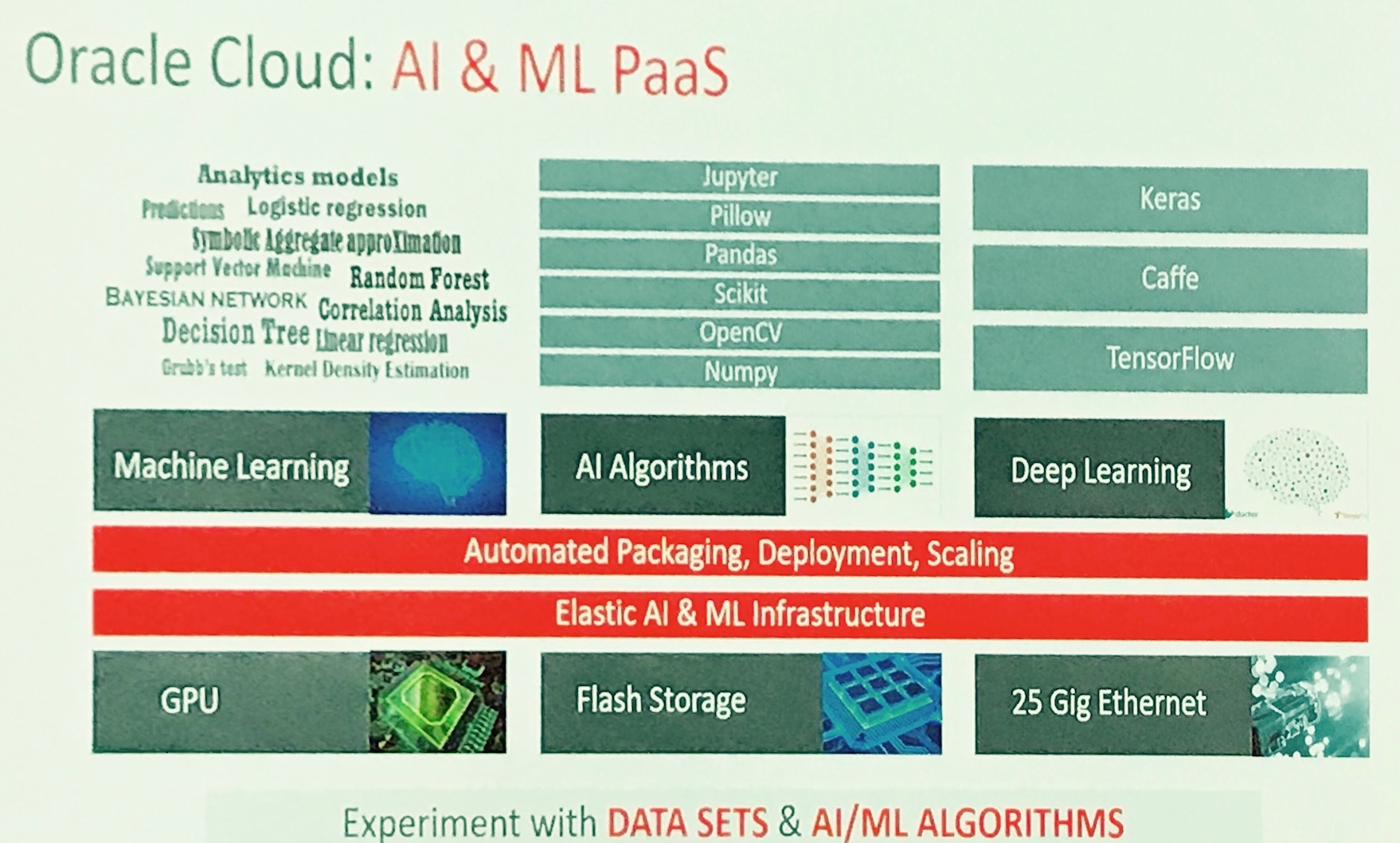
The big news concerns new AI and machine learning capabilities in Oracle's IoT Cloud service. These power so-called digital twins—digital representations of an IoT device or process—as well as what Oracle calls "digital threads," which focus on supply chain:

Supply Chain practitioners have spent millions of dollars in implementing SCM and ERP systems, but most often, data is manually fed into these systems. Digital Thread is a connected business process framework that leverages IoT and creates a "system of systems" by connecting traditionally siloed elements in real-time throughout the digital supply chain.

Oracle also unveiled three new industry IoT applications covering field service, connected factories and fleet management scenarios. These join previously released IoT apps for asset monitoring, connected workforce and other areas.

In addition, Oracle announced it has worked with Mitsubishi Electric on an IoT platform for smart manufacturing. Dubbed FA-IT Open Platform, it employs edge computing to collect and analyze data from production sites, and is built with a number of Oracle technologies including its database, Java, BI, IoT and SOA cloud services.

POV: The Mitsubishi announcement may be more of a customer win story, but it's a significant one and should provide market validation for Oracle's IoT stack. Overall, the company is a bit overdue in fleshing out its IoT story, but clearly things have been in the works behind the scenes, says Constellation VP and principal analyst Holger Mueller.

"It's good to see the digital twin concept taking hold with all ERP vendors that have IoT offerings," he adds. "The digital thread is a new concept and makes sense. We will see where it goes from here. While Oracle's plans for IoT weren't that clear and tangible, they have become clearer now."

Expect IoT to be a big focus at Oracle's upcoming OpenWorld conference in early October.

Salesforce and IBM's practical partnership: Back in March, Salesforce and IBM announced a global strategic partnership and this week unveiled some fruits of that labor, which surprisingly, don't have the words Watson or Einstein printed anywhere on them.

Rather, the companies announced three joint offerings: An tie-up between Salesforce and IBM's cloud integration platform, for creating data flows in and out of Salesforce and both cloud and on-premises sources; Salesforce Garage, new customer engagement centers backed by IBM's Bluewolf consulting group, which was one of the largest Salesforce systems integrators before Big Blue bought it in 2016; and three Salesforce Lightning components that bring IBM's Weather Insights analytics services to Salesforce users.

POV: All three announcements are "devoid of AI sizzle and focus instead on practical solutions that will make it easier for joint IBM and Salesforce customers to do more in the cloud and drive data-driven insights," says Constellation VP and principal analyst Doug Henschen.

The cloud integration has obvious appeal, Henschen adds. "Many IBM customers began their cloud journeys by embracing Salesforce for front-office functionality," he says. "IBM's emphasis has been on bringing the rest of the enterprise into the cloud." With the new integration, it will be easier to bring back-office data and systems together with Salesforce's sales, service, marketing and communities applications.

IBM signaled its intent to work more closely with Salesforce when it bought Bluewolf, and the new garages will help Bluewolf more effectively deliver its design-thinking methodologies and project delivery experience. Finally, the weather analytics components "would seem to offer easy and practical ways to put weather insights to day-to-day use in contexts as obvious as insurance claims and as routine as scheduling sales and service calls," Henschen says.

Key takeaways from Workday's Q2: Workday released its second-quarter numbers this week and they were strong, with revenue rising 42 percent to $434.5 million while losses narrowed to 40 cents a share compared to 55 cents per share in the same quarter last year. Often some of the most telling news from a company's quarterly earnings comes not in the press release, but on the conference call with analysts. Here are a few highlights.

  • More than 30 percent of the Fortune 500 and 17 of the Fortune 50 are now Workday core HR customers, CEO Aneel Bhusri said on the call.
  • Siemens is replacing its current HR system with Workday HCM, Bhusri said. A massive customer win to say the least.
  • Workday is continuously refining its implementation methodology and is now seeing Fortune 500 companies going into production in about a year.
  • In July, Workday announced its PaaS strategy. This was of note, since Workday's platform historically has been tightly closed off. Since then, Workday has held two hackathons and the interest level in those from customers and partners has validated the move toward PaaS, Bhusri said.
  • Initially, Workday will focus its PaaS on customers extending its applications, but in the longer term "we definitely see an independent software vendor opportunity," Bhusri said. "I think we will be very careful with that. We know we are not looking to get into a whole host of different areas, but as an example, if we came across a group that wanted to build supply chain and manufacturing systems or another industry-specific system that we have a long-term view on ... we know we would welcome that."

POV: The Workday Rising conference is coming up in October and that's where customers can expect to hear many more specifics about Workday's PaaS, perhaps including pricing and availability. Constellation will be in attendance; expect our full report after the event.

Data to Decisions Future of Work Next-Generation Customer Experience Tech Optimization

Oracle Differentiates its MySQL Cloud Service

Oracle Differentiates its MySQL Cloud Service

MySQL is available as a service on every major public cloud. Here’s how Oracle MySQL Cloud Service is different.

You’ll find MySQL available as a service on every major public cloud (and plenty of minor ones). So what’s different about the Oracle MySQL Cloud Service, introduced on Oracle Cloud last fall by the owner and current developer of MySQL software?

There are three key differences between the Oracle MySQL Cloud Service and other MySQL cloud services, as I’ll explain, but first a bit of background. MySQL is the most popular open-source database management system in the world, so it should be no surprise that it’s also broadly available as a cloud service. MYSQL is one of six database engines available through Amazon Web Services’ Amazon RDS database service. MySQL has been available through Google Cloud SQL since way back in 2011. Microsoft more recently saw the open source light and introduced Azure Database for MySQL and PostgreSQL in May.

Oracle MySQL Cloud Service differentiators fall into three categories.

So just how has Oracle differentiated its own cloud service? My latest report, Enterprise-Class MySQL Meets Oracle Cloud, explores key differences in three areas. For starters, Oracle MySQL Cloud Service is the only service that’s based on MySQL Enterprise Edition. This is the commercial version of the database that adds enterprise-grade features for monitoring, backup, security and support that are not available in MySQL Community Edition. On the security front, for example, Enterprise Audit tracks database access and usage, Enterprise Encryption protects data during transfer and at rest, and Enterprise Firewall guards against real-time attacks including SQL injection.

On support, Oracle MySQL Cloud Service is backed by the same team that developers and supports MySQL itself. Oracle is in a unique position to resolve technical problems tied to the database software, prioritize bug fixes and issue forward-compatible hot fixes in advance of a next MySQL release. What’s more, Oracle MySQL Cloud Service includes premier-level, consultative support with 15-minute initial response for Severity 1 cases in which the service is stopped or severely compromised. 

The second key difference with the Oracle MySQL Cloud Service (and with Oracle Cloud) is that it’s built with hybrid deployment scenarios in mind. Oracle has hundreds of thousands of customers that still have on-premises data centers, so it has developed unified administrative tooling that supports public-cloud, private-cloud and on-premises deployments and the shifting of workloads among these environments. Oracle Enterprise Manager, for example, supports “single-pane-of-glass” management across data centers, private clouds and Oracle Cloud with self-service provisioning and policy-based resource management. 

Hybrid portability is also available to companies that are interested in running MySQL Community Edition deployments on premises. There’s 100 percent file compatibility between Enterprise Edition and Community Edition, so users of the Oracle MySQL Cloud Service can simply avoid implementing Enterprise-Edition features for applications that might be migrated and run on-premises using Community Edition software.

The third differentiation for the Oracle MySQL Cloud Service is that it offers many points of integration relevant to Oracle Cloud customers. The Oracle Cloud Console, for example, provides a consistent, consolidated administrative interface to all services, including Oracle MySQL Cloud Service. DevOps teams will appreciate that Oracle MySQL Cloud Service is integrated with Oracle PaaS services including Oracle Java Cloud Service and the Oracle Application Container Cloud Service. Together, these services support development of applications in Java SE, Node.js, PHP and Python that can then be deployed in Oracle Cloud or in hybrid scenarios. Finally, Oracle-centric data-management professionals will appreciate integration with Oracle PaaS capabilities including the Oracle GoldenGate Cloud Service and Oracle Data Integrator Cloud Service. Oracle Database customers can use the GoldenGate Cloud Service to offload basic reporting workloads to the less expensive Oracle MySQL Cloud Service. Similarly, simple ETL workloads can be offloaded to the combination of Oracle’s Data Integrator Service and Oracle MySQL Cloud Service.

These are just the highlights from Enterprise-Class MySQL Meets Oracle Cloud. The full, 21-page report dives into the details and includes a competitive analysis and pricing comparisons along with my in-depth take on best-fit use cases. Click here to download a free excerpt of the full report.

Related Reading:
Constellation ShortList™ Hybrid- and Cloud-Friendly RDBMS
SAP Machine Learning Plans: A Deeper Dive From Sapphire Now
Infor Advances Data Agenda With ‘Coleman’ AI, Birst BI Integration

Media Name: Oracle MySQL Cloud Service Differentiators.jpg
Data to Decisions Tech Optimization SaaS PaaS IaaS Cloud Digital Transformation Disruptive Technology Enterprise IT Enterprise Acceleration Enterprise Software Next Gen Apps IoT Blockchain CRM ERP CCaaS UCaaS Collaboration Enterprise Service Chief Information Officer Chief Technology Officer Chief Information Security Officer Chief Data Officer Chief Executive Officer

Digital Transformation Digest: Google's New Augmented Reality Tech, Coding Bootcamp Market Feels Growing Pains, and More

Digital Transformation Digest: Google's New Augmented Reality Tech, Coding Bootcamp Market Feels Growing Pains, and More

Constellation Insights

Google introduces AR Core, its new augmented reality tech for Android: It's not often that Google finds itself playing catchup to rivals, but in the case of augmented reality, it has. Now the company has taken its AR play a significant step forward with the preview release of ARCore, a new software development kit that can be used to create augmented reality experiences on both existing and future Android phones. 

ARCore builds on Tango, an AR tech that Google had been working on for a few years. It had rolled out a phone and tablet built to work with Tango, and in 2016 Lenovo released a Tango-compatible phone. The big difference with ARCore is that it doesn't require any additional hardware, Google said in a blog post:

ARCore will run on millions of devices, starting today with the Pixel and Samsung’s S8, running 7.0 Nougat and above. We’re targeting 100 million devices at the end of the preview. We’re working with manufacturers like Samsung, Huawei, LG, ASUS and others to make this possible with a consistent bar for quality and high performance.

POV: It's not clear how long the ARCore preview period will last, but developers can get their hands on the code now. Meanwhile, Apple's iOS11 is now in beta (and expected to be generally available in conjunction with the iPhone 8 launch in a few weeks) comes with an augmented reality SDK called ARKit and there are already developers showing off new applications.

"Google at least got something out the door for Android," says Constellation founder and CEO R "Ray" Wang. "Now, to be fair, Apple had a head start, as it acquired Metaio, one of the industry leaders in AR, about three years ago," he adds. "In conversations with Apple a few weeks back, we can say that the apps on ARKit are pretty advanced."

Coding school startup lays off 11 percent of staff: A Denver startup called Galvanize, which has raised more than $60 million in venture capital for its coding schools, has laid off 11 percent of its staff as it seeks to retrench and focus more on online training programs, Reuters reports:

The layoffs come a month after two other so-called “coding boot camps,” Dev Bootcamp in San Francisco and Iron Yard of Greenville, South Carolina, announced plans to shut down by the end of 2017. In the past year, eight coding schools have closed, up from years past, according to review website Course Report. Currently there are 95 coding schools in the United States.

Course Report, which tracks the coding bootcamp industry, says the market will grow 52 percent this year, generating $266 million across 95 bootcamps in all. Nearly 23,000 students will graduate from bootcamps this year, up from about 15,000 last year.

POV: Bootcamps by nature are for-profit businesses unaffiliated with an accredited college or university. They're often positioned as a way for early or mid-career professionals to get a quick jumpstart into the coding game. The rapid growth of bootcamps in the past several years has the whiff of a gold rush about it; the closings of Dev Bootcamp and several others, along with the woes of well-established players such as Galvanize, suggests the market is seeing a correction due to saturation and quality control.

"Building learning software is a risky business," says Constellation VP and principal analyst Holger Mueller. "It's a big budget and time investment that often gets overtaken by market dynamics and reality. It looks like that's what happened here. But the opportunity and need to develop more coders remains, so more competition, innovative thinking and alternate training approaches are all welcome."

BASF advances its digital transformation with SAP: German industrial giant BASF is working with SAP on a project aimed at forging closer operational ties with BASF's business partners. Here are the details from the companies' joint release:

SAP Asset Intelligence Network, a cloud-based collaborative network, will provide BASF with a digital data connection to multiple original equipment manufacturers (OEMs) and service providers and their respective asset data. The project's goal is to establish a fully integrated and centrally managed asset information repository, helping ensure data consistency and availability.

By establishing such a single source of truth for asset information, BASF aims to further improve the efficiency of its engineering and maintenance processes throughout the asset lifecycle.

POV: The deal builds on SAP's existing relationship with BASF, which along with its close ties to Siemens gives it an even more prominent role in German and European industry.

But the broader point lies with BASF's goals for the project, says Constellation Research VP and principal analyst Andy Mulholland. " They want to develop a digital business ecosystem to support event-driven interactions around common data and business structures," he says. "That's a big issue and a strong move in the European digital business community."

(Go here for Mulholland's deep dive into how industrial technology and IT technology vendors are aligning and in some cases competing for stakes in the industrial IoT market.)


Future of Work Next-Generation Customer Experience Tech Optimization Chief People Officer Chief Information Officer Chief Supply Chain Officer Chief Digital Officer

Digital Transformation Digest: Apple and Accenture Team Up for Mobile Enterprise, VMWare and Pivotal's New Container Service, Facebook Wins Patent for Gesture Control System, and More

Digital Transformation Digest: Apple and Accenture Team Up for Mobile Enterprise, VMWare and Pivotal's New Container Service, Facebook Wins Patent for Gesture Control System, and More

Constellation Insights

Accenture and Apple's new enterprise mobility venture: Apple is making a new push into enterprise computing through a partnership with Accenture around iOS development. The deal is a true co-innovation effort and not something driven mostly by Accenture, as the companies' joint press release indicates:

Accenture will create a dedicated iOS practice within Accenture Digital Studios in select locations around the world. Experts from Apple will be co-located with this team. Working together, the two companies will launch a new set of tools and services that help enterprise clients transform how they engage with customers using iPhone and iPad. The experts will include visual and experience designers, programmers, data architects and scientists, and hardware and software designers.

“Starting 10 years ago with iPhone, and then with iPad, Apple has been transforming how work gets done, yet we believe that businesses have only just begun to scratch the surface of what they can do with our products,” said Tim Cook, Apple’s CEO. “Both Apple and Accenture are leaders in building incredible user experiences and together we can continue to truly modernize how businesses work through amazing solutions that take advantage of the incredible capabilities of Apple’s technologies.”

The release emphasizes three areas of focus for the partnership: back-end integration with iOS devices, tools and templates for IoT, and converting legacy applications to iOS.

POV: The deal is a smart move by both companies as it helps Apple drive further into the enterprise while Accenture can take advantage of the iOS skills shortage, says Constellation founder and CEO R "Ray" Wang

"The big areas are more than IoT," he adds. "Apple's augmented reality and virtual reality capabilities, and the new integrations with other devices such as HomeKit and Healthkit are where the future innovations lie ahead."

Apple's goal in lining up enterprise players like Accenture is to get more iOS devices sold into enterprises, notes Constellation VP and principal analyst Holger Mueller. "I am sure more SIs are in the wings," he adds. "But that cannot distract from the fact that the march to the enterprise for Apple is slow. Consumerization of IT via devices is one thing, getting enterprises to build on a platform is another."

VMWare, Google and Pivotal team up on container service: While software vendors involved with open-source software seek to find ways to offer commercial services around a given project, cooperation with other providers is crucial to the project's growth and customer success. That truism underlines this week's announcement from VMWare, Pivotal and Google around Pivotal Container Service (PKS), which will provide the Kubernetes software container orchestration platform on both VMWare vSphere and Google Cloud Platform.

The service is a commercial version of the open source Kubo project, which was founded by Pivotal and Google in November to bring Pivotal Cloud Foundry together with the increasingly popular Kubernetes. VMWare says it is committing significant engineering resources to the Kubo project in conjunction with the new container service's launch.

PKS will have ongoing compatibility with Google Container Engine, which is kept up to date with the latest Kubernetes releases (which to date have been rolling out every few months). VMWare plans to deeply integrate PKS with its other products, including vCloud Director, vRealize Automation and Wavefront for container monitoring. The initial release of PKS is expected in the fourth quarter. Pricing won't be available until then.

VMWare and Pivotal will be in charge of to go-to-market, aiming PKS at Global 2000 companies as well as service providers.

POV: The move looks like a good one, albeit far from surprising. While VMWare has selected Google rival Amazon Web Services as its preferred IaaS provider, Google cloud chief Diane Greene is a VMWare co-founder and former CEO, and partnering with her alma mater is an extension of her plan to push GCP deeper into enterprises. Google also remains a key player in the Kubernetes project, which it founded, despite having donated the code to the Cloud Native Computing Foundation. For VMWare, the deal reflects another step in its hybrid cloud strategy—something it needs to develop wisely as its large installed base of on-premises customers gets more comfortable with the cloud.

"It's good to see these three vendors working together to help customers," says Constellation Research VP and principal analyst Holger Mueller. "And it's another win in a long series of wins for Kubernetes to become the de facto container management standard at the moment."

Facebook awarded patent for gesture control system: While Facebook applies for more than 1,000 patents each year, it can take quite a while for a patent to be awarded This month, Facebook was awarded one it filed in 2012 for an in-air, gesture-based control system. Here are some of the key details of the invention, which is solely credited to Facebook's Robert Wang, who works on the company's Oculus VR team:

Because the system does not require instrumentation or gloves, it works well in a typical desktop computing environment. The user can switch between typing or using the mouse to gesturing by simply lifting up his or her hands, without having to put on a special glove or tracking device. Several configurations of the invention fit on top of a normal desk. The robust recognition of the pinching gesture enables the user to make comfortable input motions, reducing fatigue.

Other 3D manipulation applications include training applications for aircraft maintenance where the student virtually manipulates 3D tools to train muscle memory, design of 3D protein structures to match x-ray crystallography data for medical research, gaming applications where the user controls a virtual avatar or virtual hands, computer animation tasks where the user controls the configuration and timing of a virtual actor, and 3D sculpting for free-form modeling.

The hand tracking system described above can be used in conjunction with a variety of display systems including plasma, LCD, stereoscopic, and video wall displays. Processing can be performed either on the computer system connected to the display or on a remote networked computer system to which the camera image data is sent.

POV: You can read the patent in full at this link. A H/T goes to Patently Apple for initially spotting it. Facebook is far from the only company working on this type of technology—from startups such as Myo and Leapmotion to big players like Apple—but it's nonetheless of interest, particularly with respect to the implications it could have on application user experience.

"I believe human-to-machine interfaces will be a key component to helping us get work done more efficiently," says Constellation VP and principal analyst Alan Lepofsky. "We're quite limited by the keyboards and screens we use today. Facial recognition, eye tracing, sentiment analysis, hand motions and even things like heart rate and repository patterns will play a role in the future.

Rushed go-live blamed for rampant social service system woes: A new lawsuit alleges that potentially hundreds of Washington, D.C. residents who applied for food stamps had their benefits cancelled or delayed for months due to problems with a new computer system that federal officials warned wasn't ready for launch.

Families are going hungry as a result, says the lawsuit filed by the Legal Aid Society of the District of Columbia and the National Center for Law and Economic Justice, the Washington Post reports:

The trouble began last year, advocates for the poor say, when the city transitioned to a new computer system despite warnings of potential problems from the federal government, which pays for the program.

Before the rollout, U.S. Department of Agriculture officials recommended more testing to avoid backlogs and delays, and told the city that proceeding was “against our best advice” and that the city was moving ahead “at its own risk,” court records show.

Once the system went live, many errors were reported and it took 90 minutes to process an application, compared to 20 minutes with the old system. The added overhead has been exacerbated by the fact that the D.C. program serves 120,000 people, and lines outside agencies to apply start forming as early as 5 a.m., the Post reports.

POV: It's not clear when the matter will be resolved, but in the meantime it holds an important cautionary tale for any enterprise IT shop about the importance of testing and the need to set realistic project timelines. The manner in which testing is done is crucial as well. According to a letter from federal officials to the District of Columbia Department of Human Services, the new system was never tested with a live production pilot. Rather, the old system remained the system of record, while the new one was tested in parallel. The District's methodology was insufficient, federal officials said. 

Future of Work Next-Generation Customer Experience Tech Optimization Chief Customer Officer Chief People Officer Chief Information Officer Chief Digital Officer