Results

Event Report - SAP SuccessFactors SuccessConnect - New Leadership, Old Challenges

Event Report - SAP SuccessFactors SuccessConnect - New Leadership, Old Challenges

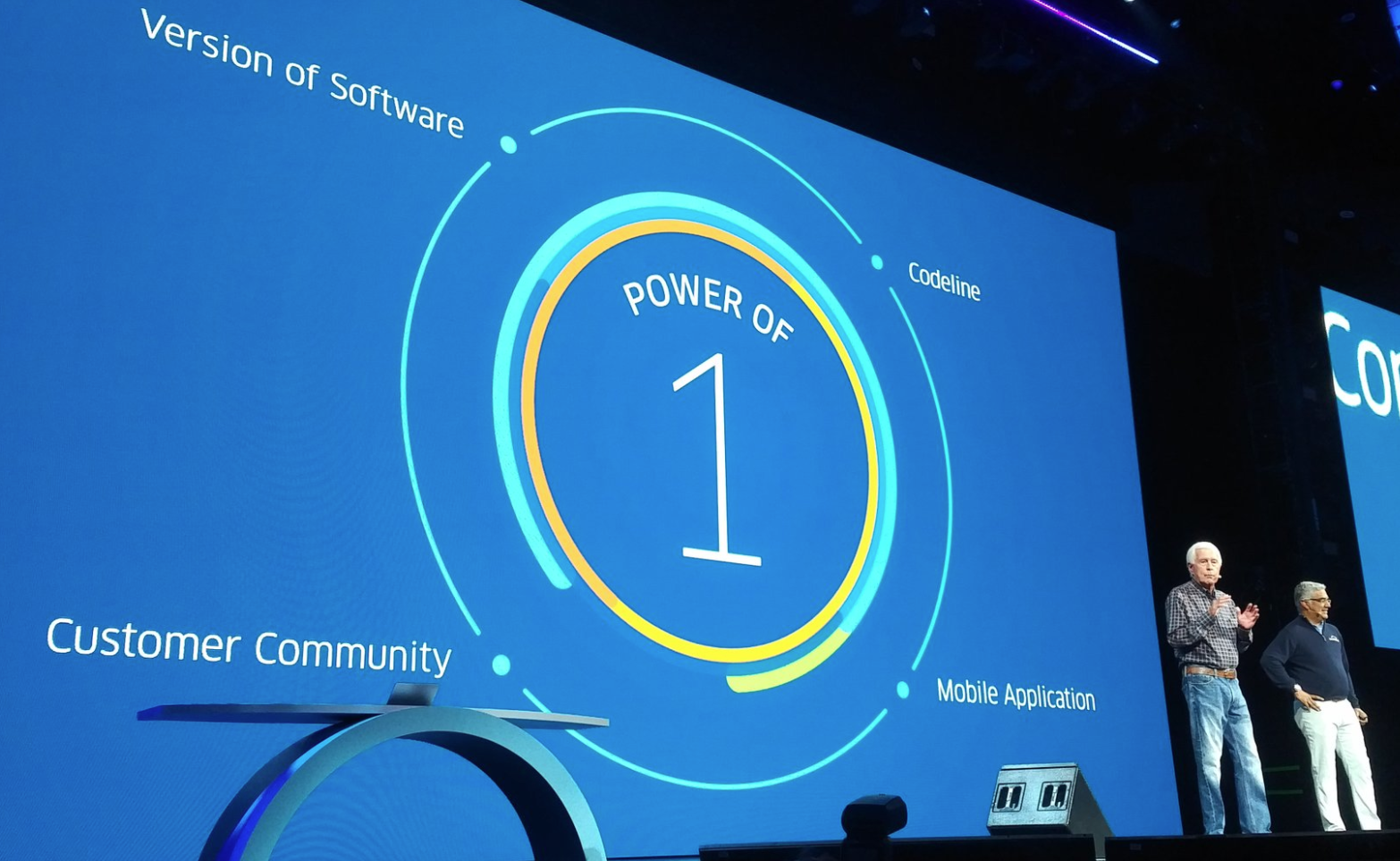
We had the opportunity to attend SAP SuccessFactors Success Connect yearly user conference in Las Vegas, held from August 29thto 31st 2017, at the Cosmopolitan in Las Vegas. The conference was well attended, SAP claimed better than the 2016 edition with over 3500 attendees. 
 
 
So take a look at my musings on the event here: (if the video doesn’t show up, check here)


No time to watch – here is the 1-2 slide condensation (if the slide doesn’t show up, check here):


Want to read on? Here you go: 

Always tough to pick the takeaways – but here are my Top 3:

Executive Changes. New leadership in place, now time to pick up speed. As documented, SuccessFactors has new leadership at the board, at the helm and at product level. And accordingly, Rob Enslin, Greg Tomb and newly hired product, engineering and delivery leaders Amy Wilson and James Harvey were on hand for the keynote. Executive transitions are never easy, and while the four executives did an ok job during the keynote, they could have done better. At the end of the day users attend user conferences … to learn about the product – and that part was thinner than at previous Success Connect editions and certainly thinner than at competitor events. Over time I am sure areas of communication will be de-lined and most importantly all executives will have setup the course and roadmap for SuccessFactors to go forward. Well intended attempts of making the keynote more personal and approachable appeared more scripted, and while I know it was all genuine, knowing most executives since many years, the team failed to pick up where the last Success Connect in the US (from a region perspective) and in Europe / London (from a temporal perspective) stood.
 
Traditional broad push, more focus on Talent Management with Onboarding. A lot is happening at SuccessFactors, as the vendor claimed 2500 product developers working on the product, a number that seemed high based on my napkin quality calculation. The new highlight was a new Onboarding module, to be built on the SuccessFactors MDF framework. Good to see the leverage of MDF, but not a critical piece of automation for Talent Management. We saw the new iOS mobile application, heard multiple times how it was designed with Apple, and it is a good implementation of a mobile HR application. That previous year pledges not to let the Android version fall behind iOS again was missed, got probably lost in the transition. And then SAP SuccessFactors is (finally) moving to HANA, a move that has been supposed to happen since a while, though the scope is not fully clear, as we heard from ‘fully’ to move of the analytics layer to HANA. Harvey showed some of the benefits of moving to HANA in early product, a good start, that focusses more on dashboards and reporting than more advanced scenarios.
 
Long term platform and positioning questions loom.Unfortunately, Success Connect provided no light on the inherent platform issues that SuccessFactors had. To start, the original SuccessFactors operated on three and a half platforms. Then SuccessFactors added the MDF framework, and some modules run on it (EmployeeCentral and soon Onboarding for instance). In the meantime, SAP overall moved to SAP Cloud Platform as its PaaS, based on CloudFoundry. And SuccessFactors still runs on competitor Oracle’s database. All nothing news, all major questions to tackle and we felt SuccessFactors was coming close to answer them – but no update on them yet. One could argue, why do these matter, it’s all SaaS, but the agility of a vendor is determined by the productivity and the number of their platforms… obviously more platforms mean more work, support and maintenance – and therefore matter for customers as well.
 

Analyst Tidbits

Progress on Bias. SAP has been pushing the elimination / reduction of bias via software since Sapphire 2016. We were updated on the progress. Masking of bias related attributes and pictures is now possible. Most efforts – not surprisingly are on the reporting side. A good area to focus on and a possible differentiator.

SAP and Diversity. SAP has met its goal for gender diversity recently, meeting its goal of 25% of women in leadership positions (1stlevel manager on upwards) early and now established a new goal of 28% by 2020 and 30% by 2022 (more here). Newly minted SAP CMO Alicia Tilman and me had a great conversation on the topic – watch it here.
 

MyPOV

A good SuccessFactors conference, with new leadership in place, finding its way ‘around the furniture’. Under 100 days in its not fair to expect Willis and Harvey to have a plan, sometimes conference schedules don’t align with plan readiness… and it is better to not share something hastily. On a board level Enslin needs to come up with a vision of the SAP SaaS business he oversees now, especially how they relate to S4/HANA, platforms and future direction. But likely also too early to address, so again, better to wait than communicate prematurely. And while those high-level questions are sorted out, there is a lot of progress and work happening on product level. Attendees were generally happy with the progress. Partners showed up in force and see more traction. But strategic direction, messages and vision matter to customers and prospects – so time for SAP SuccessFactors to deliver them.
 
On the concern side, SuccessFactors still needs to find its way inside, versus or with the SAP mainstream. The acquisition is soon more than six years ago and while SuccessFactors has delivered a compelling HR Core product with EmployeeCentral, it need to address looming payroll (no mention in keynote) and overall platform / suite level questions. The sooner, the better. And as a general conversation, HR conferences increasingly seem to be about celebrities and good vibes. All good but the product message can’t be overshadowed too much, SuccessConnect in my view reached a critical level here.
So overall, especially on product level, good progress, let’s hope for SucessFactors clients and prospects that this productivity level is not slowing down, the high-level questions get addressed soon and then SuccessFactors gets to execute toward that vision. There is practically no HCM vendor that is not working on its next generation architecture at the moment, or at least major new investments (e.g. Payroll) – SuccessFactors will have to tackle the same challenges. Customer want and deserve answers. Stay tuned.
 
 
Want to learn more? Checkout the Storify collection below (if it doesn’t show up – check here).


Future of Work Next-Generation Customer Experience Revenue & Growth Effectiveness Data to Decisions Innovation & Product-led Growth New C-Suite Marketing Transformation Digital Safety, Privacy & Cybersecurity Tech Optimization AI Analytics Automation CX EX Employee Experience HCM Machine Learning ML SaaS PaaS Cloud Digital Transformation Enterprise Software Enterprise IT Leadership HR Chief Information Officer Chief Customer Officer Chief People Officer Chief Human Resources Officer Chief Experience Officer

Ellison Reveals Oracle's Plan for 'Self-Driving' Cloud Database Service

Ellison Reveals Oracle's Plan for 'Self-Driving' Cloud Database Service

Constellation Insights

Larry Ellison teases Oracle's 'self-driving' database: Oracle chairman and CTO Larry Ellison has spilled the beans on the company's big news announcement for OpenWorld, and it's all about the database. Here's what Ellison told analysts this week during Oracle's first-quarter earnings call:

On October 1 at Oracle OpenWorld, we'll announce the next generation of the Oracle database. When we deliver it by the end of this calendar year Oracle will become the world's first fully autonomous database. Based on machine learning, this new version of Oracle is totally automated self-driving system that does not require a human being either to manage the database or tune the database.

Using artificial intelligence to eliminate most sources of human error enables Oracle to deliver unprecedented reliability in the Cloud. We will be offering public Cloud SLAs, service level agreements for the Oracle database that guarantee 99.995% systems availability time. 99.995% availability means less than 30 minutes of planned or unplanned downtime per year.

A self-driving database eliminates the labor cost of tuning, managing, and upgrading the database, plus avoiding all of the costly downtime associated with human error. ... Running Oracle's autonomous database is much, much cheaper than running traditional human-driven databases like Amazon's Redshift.

Ellison pledged that customers who move from Amazon Web Services' Redshift database service can cut their costs by at least half. Moreover, Oracle will provide SLAs guaranteeing those cost savings to customers who make the switch, he said.

POV: It was a characterially aggressive announcement and set of pledges from Ellison, who has taken to name-checking AWS regularly as Oracle tries to catch up in IaaS (infrastructure as a service) and PaaS (platform as a service).

While Oracle may never accomplish those goals, it is telling that Ellison framed the upcoming database service as a migration story. There are a great many on-premises Oracle database workloads that the company would like to see running on its cloud, not Amazon's or others, even as it offers support for doing so. 

Ellison left a number of crucial questions unanswered, in particular with regard to pricing. It's unclear how Oracle will undercut AWS so dramatically on cost while introducing a new feature set that one might presume is a premium add-on. It could be that Oracle will include the new automation capabilities as part of its baseline database service; answers should arise at OpenWorld.

Then there is the matter of what Oracle means by database automation, as Oracle has had automation features for tasks such as patching and testing for some time. "Perhaps they're bringing it to the next level, but I'm not sure how they get off calling it 'AI' or 'self-driving,'" says Constellation VP and principal analyst Doug Henschen. "I'll have to wait to see exactly what they're talking about. I'd be wary of AI-washing of what is really machine learning and automation trained on the very confined domain of database administration."

The cloud plays into the upcoming service's extremely high SLA as well. "It's not hard for Larry to promise something better than what most companies can achieve on-premises with Oracle's database or Exadata," Henschen says. "When you're doing a DBaaS for thousands or tens of thousands of customers, the administrative and workload patterns become really clear and can be automated. No one customer can amass that sort of data and metadata."

Tech Optimization Chief Information Officer

Digital Transformation Digest: Oracle's Cloud Sea Change, Microsoft Introduces Azure Confidential Computing, and a Look at Looker 5

Digital Transformation Digest: Oracle's Cloud Sea Change, Microsoft Introduces Azure Confidential Computing, and a Look at Looker 5

Constellation Insights

Oracle's sea-change moment: This week, Oracle reported that for the first time,it sold more cloud software subscriptions than new on-premises licenses in its fiscal 2018 first quarter. This should be seen as a genuine milestone from both the vendor strategy and customer buying perspectives.

Total cloud revenue for the quarter was $1.5 billion, comprising SaaS, PaaS and IaaS, with SaaS taking up $1.1 billion of that sum. Meanwhile, new license sales fell 11 percent to $966 million. Revenue was $7.4 billion overall for the quarter.

To be sure, Oracle has spared little expense and effort in transitioning its business model toward the cloud, through both a series of acquisitions and an overhaul of its sales force and compensation strategy. The single largest move Oracle has made in the cloud was the $9.3 billion acquisition of NetSuite, which gave it a nearly $1 billion annual cloud revenue boost.

POV: The numbers need to be placed into context. In its Q4 2017, Oracle reported $2.6 billion in new license revenue and $1.36 billion in cloud sales. But Oracle's Q4 is historically its largest and is when many on-premises deals are finalized.

Still, Q1's results represent "an inflection point for Oracle and the industry overall," says Constellation VP and principal analyst Holger Mueller.

Oracle says that within SaaS, ERP is the largest segment, with 5,000 Fusion ERP customers and 12,000 NetSuite customers. Now the question is how Oracle can accelerate growth in the PaaS and IaaS segments, where it lags the likes of Microsoft Azure and Amazon Web Services by a great deal.

The low-hanging fruit for Oracle lies in migrating on-premises Oracle database workloads to the cloud. In a statement, chairman and CTO Larry Ellison revealed one way Oracle will convince on-premises customers to make the switch:

"In a couple of weeks, we will announce the world's first fully autonomous database cloud service," said Oracle Chairman and CTO, Larry Ellison. "Based on machine learning, the latest version of Oracle is a totally automated "self-driving" system that does not require human beings to manage or tune the database. Using AI to eliminate most sources of human error enables Oracle to offer database SLA's that guarantee 99.995% reliability while charging much less than AWS."

A related number—Oracle's capital expenditures—is also important to watch. In its fiscal 2017, Oracle spent roughly $2 billion on capex, largely to build out its global data center footprint. The total was much higher than in previous quarters. That pace of spending continued in Q1, with $473 million in capex.

The first iteration of Oracle's IaaS was not a major success; a next-generation version rolled out this year may account for the jump in capex.

Microsoft introduces Azure confidential computing: In the wake of mega-hacks such as the Equifax incident that exposed the personal information of up to 143 million people, security is an even bigger differentiator for cloud vendors. Microsoft this week took a significant step forward in security for its Azure platform, with the rollout of Azure confidential computing. Here are the key details from a blog post by Azure CTO Mark Russinovich:

Put simply, confidential computing offers a protection that to date has been missing from public clouds, encryption of data while in use. This means that data can be processed in the cloud with the assurance that it is always under customer control.

Data breaches are virtually daily news events, with attackers gaining access to personally identifiable information (PII), financial data, and corporate intellectual property. While many breaches are the result of poorly configured access control, most can be traced to data that is accessed while in use, either through administrative accounts, or by leveraging compromised keys to access encrypted data.

Russinovich says Azure, Microsoft Research, Windows team members and Intel have been working on confidential computing for more than four years.

The software and hardware involved uses Trusted Execution Environments (TEEs) to shield data. Developers won't have to change their code to use the TEEs, which initially include the software-based Virtual Secure Mode, which leverages Hyper-V and Windows Server 2016; and the hardware-based Intel SGX TEE.

POV: The announcement comes a few weeks after Microsoft unveiled the CoCo framework, for creating large-scale, confidential blockchain networks. An early adopter program for Azure confidential computing is open now, and Russinovich is set to demonstrate the technology at Microsoft's upcoming Ignite conference.

Cloud vendors including Microsoft have already provided encryption for data at rest, or in storage, and data in transit. Adding encryption to data that's in use completes the picture. It's worth noting that Intel's SGX isn't exclusive to Microsoft, meaning it could show up in servers owned by cloud rivals sooner than later.

However, Russinovich didn't discuss pricing in his post; one would consider the confidential computing capabilities to come at a premium, but one that companies may be more than willing to pay for their most senstive data and applications.

Taking a look at Looker 5: BI and analytics vendor Looker has experienced rapid growth, coming up on the 1,000-customer mark. This week it released Looker 5, the latest version of its data platform. Here are some of the key details from its announcement:

Looker 5 delivers dozens of ... features that transform the way users experience and interact with their data, including: simplifying daily workflows by letting anyone interact with Zendesk, Salesforce, Adwords and more with the Action Hub; empowering departments with purpose-built Applications by Looker; and dramatically improving the user experience with new Viz Blocks for nearly limitless visualizations and Data Blocks to add valuable public data to any analysis.

Finally, Looker’s flagship business intelligence tool gains powerful features like Data Merge to easily combine data from different databases, 57 new statistical functions, a new SQL runner with visualizations, and many more.

Looker 5 is set for release next month.

POV: Looker has made significant progress in breaking down longstanding barriers between back-end databases and warehouses and front-end analysis capabilities, says Constellation VP and principal analyst Doug Henschen. With its human-friendly LookML language, which abstracts SQL, and its reusable Block approach, Looker is designed to make it easier for analysts and power uses to integrate, transform, model data and quickly deal with new from multiple sources without moving it – steps that used to require heavy lifting by data management professionals, he adds.

"As the names suggest, Action Hub and Applications are good examples of going beyond BI to put data-driven insights to work," Henschen says. "I like the cloud-services and SaaS-based focus of Action Hub and expect the list of data-driven Applications to fill out beyond the initial list of three over time. People forget that delivering BI and analytics shouldn’t be an end goal; they should be the means to making smarter, better-informed decisions."

Data to Decisions Tech Optimization Digital Safety, Privacy & Cybersecurity Chief Information Officer Chief Procurement Officer Chief Digital Officer

Event Review: Slack Frontiers

Event Review: Slack Frontiers

Today Slack held their first user conference, Slack Frontiers. Since jumping into the collaboration market just a few short years ago, Slack has been one of the primary catalysts in kick-starting an industry that was in a bit of a rut. Slack's rapid rise to social business stardom has resulted in a slew of competitive products, from small startups to big names like Microsoft (Teams), Google (Hangouts), Facebook (Workplace), Cisco (Spark), Atlassian (Stride) and IBM (Watson Workspace). Similarly Slack has motivated thousands of developers to build integrations and add-ons for Slack. However, fame often brings with it challenges, such as high expectations that are often hard to live up to. More on that below.

If you don't have time to read this post and watch the videos, here's a summary:

Let's start with some impressive numbers:

  • 9 million weekly active users
  • 6 million daily active users
  • 2 million paid users
  • Usage in 43% of the Fortune 100 
  • and most significant, $200M in annual recurring revenue (ARR)

It's good to see Slack continuing to grow in this highly competitive market. Now on to the product announcements.

  • Internationalization: Today 55% of Slack's usage is outside of the US with the UK, Japan, Germany and Canada being their next largest markets. However until now Slack was only available in English. Now Slack will be available in French, German and Spanish, with Japanese scheduled for release before the end of the year. Slack has done a thorough job here, as they are not just releasing the product in new languages, they are also updating documentation, customer support and purchasing currencies. While this should help Slack expand into more international customers, it's still far behind products like Microsoft Teams which is available in 25 languages.
  • Shared Channels: This allows two organizations that are using Slack to create a shared channel between them. This will help Slack customers connect with people outside of their organization such as partners, suppliers and customers. This is different than the current guest access feature, as shared channels provides more accountability and administration features. This new feature is available in beta, and is currently only available in Slack for Teams, not Slack Enterprise Grid. Shared Channels is an important architectural milestone which should pave the way to more powerful features in the future, but it's critical this be available in Enterprise Gird sooner rather than later.

I've been asked several times what the difference between Shared Channels and Guest Access is, so I made this video which I hope properly explains it:

Image: Slack Shared Channels enable two companies to work together in a shared stream

MyPOV

While the new features announced are important, especially for growth in the enterprise market, they were not as innovative as I would like to have seen from a company with so much promise and momentum. Moving people away from email is nothing new, enterprise social networks and communities have been preaching that story for a decade. Slack and its competitors have great potential to change the way people work by bringing together multiple styles of communication, diverse forms of content, improvements to business processes via workflow and automation, and more importantly inventing new versions of each of those things. I appreciate how Slack has raised the awareness of team collaboration and breathed life into the social business market, but overall I didn't feel they moved the needle at Frontiers as much as I would have liked to have seen, and I spoke to several customers and partners that felt the same way.

That said, Frontiers was a very well done event for their first conference. They brought together several great customers and partners which helps build a community. There were very useful sessions on best practices, roadmaps and customer stories. I look forward to seeing how Slack executes on product, marketing and vision as they round out the year and the journey towards Frontiers 2018.


Future of Work

Digital Transformation Digest: FCC Chair Avoids Saying 'Net Neutrality,' Oracle Shipping Java EE to Eclipse Foundation, and More

Digital Transformation Digest: FCC Chair Avoids Saying 'Net Neutrality,' Oracle Shipping Java EE to Eclipse Foundation, and More

Constellation Insights

U.S. FCC head talks about the future of networking: Federal Communications Commission Chairman Ajit Pai took the keynote stage at this week's Mobile World Congress event in San Francisco and laid out his vision for the future of networking. Pai's remarks emphasized the expansion of mobile broadband, versus fixed networks, and he also failed to say two very controversial words: net neutrality.

The FCC is considering an overhaul of the net neutrality rules passed in 2015 under the Obama administration. Net neutrality forbids ISPs from blocking or slowing down Internet traffic that points to legal content, and also from favoring traffic based on payments or other considerations. But critics, in particular Pai, say the rules classified ISPs as "common carriers" under Title II of the Communications Act, which was an anti-competitive overreach.

Pai did acknowledge the net neutrality debate by referring to the FCC's proposal, which is dubbed "Restoring Internet Freedom," and made it clear where he stands:

I believe that the FCC’s most powerful tool for expanding digital opportunity is setting rules that maximize private investment in high-speed networks. For the plain reality is that the more difficult government makes the business case for deployment, the less likely it is that broadband providers, big and small, will invest the billions of dollars needed to connect consumers. Too often, unnecessary rules make it more expensive to construct these networks than it needs to be.

POV: A transcript of Pai's full remarks is available at this link and they are well worth a read. A public comment period on the proposed changes ended on Aug. 17, and a decision is expected as early as this year. The net neutrality debate, like so many others, has been waged on partisan lines, but there is still a chance for compromise. Net neutrality—or the dissolving of it—will be a crucial factor in the development of next-generation network infrastructure and it's worth following the outcome closely.

Java EE heads to Eclipse Foundation: Oracle is relinquishing a good deal of control over Java Enterprise Edition, as Java EE's new home will be at the Eclipse Foundation, software evangelist David Delabassee said in a blog post.

Oracle announced its intentions to move Java EE to an open-source foundation in August. Since then, it has worked with IBM and Red Hat, the two next largest contributors to Java EE, on how to proceed, Delabassee said. Here's how he describes Oracle's plan for Java EE:

Relicense Oracle-led Java EE technologies, and related GlassFish technologies, to the foundation.

Demonstrate the ability to build a compatible implementation, using foundation sources, that passes existing Java EE 8 TCKs.

Define a branding strategy for the platform within the foundation, including a new name for Java EE to be determined. We intend to enable use of existing javax package names and component specification names for existing JSRs to provide continuity.

Define a process by which existing specifications can evolve, and new specifications can be included in the platform.

Recruit and enable developers and other community members, as well as vendors, to sponsor platform technologies, and bring the platform forward within the foundation.

Oracle intends to continue supporting existing Java EE licenses including ones moving to the upcoming Java EE 8. It will also support Java EE 8 in future versions of the widely used WebLogic Server.

POV: Notably, Oracle is maintaining control of Java SE, upon which EE is built. Many organizations are beginning new application projects with SE, seeing no need for the more complicated, heavier EE stack. Moreover, Java EE has been losing ground to lighter-weight frameworks such as Spring, which have also benefited from a nimbler release schedule.

While Oracle maintains the move to Eclipse will help Java EE evolve faster, one might wonder whether the vendor simply doesn't see enough of an economic opportunity for the platform. No question: There are countless custom enterprise applications out there that were built upon Java EE, but the question is whether the future holds continuous innovation or a decline into maintenance mode.

Legacy watch: Troubled Minnesota DMV system driving citizens crazy: A recently launched computer system for the Minnesota Department of Motor Vehicles is wracked with problems, despite the fact it ended up costing twice its original budget and went well over schedule.

The $90 million Minnesota Licensing and Registration System is causing long lines, erronous billing, failed transactions such as new car registrations, and holding up car sales because dealers can't obtain new titles, the St. Paul Pioneer Press reports. State officials are being apologetic, while still offering excuses:

Officials with DPS and Minnesota IT Services said Monday that they had made a number of mistakes in developing MNLARS, including poor training of deputy registrars and not being responsive to the public once issues arose.

They also said that some of the missing features were deliberately not ready, as part of the state’s software development strategy.

“The system by design did not have all functionality at launch,” said Paul Meekin, the chief business technology officer at MN.IT. “To ship a system following modern development practices, you have to pick a point and you have to pick the features you’re going to have in your first release.”

Critics said the problems with MNLARS were known well before its debut. The dealers association asked for a rollout delay in January but was rebuffed.

POV: The project dates back nine years, and the state initially contracted with Hewlett-Packard to built it. It terminated HP's contract for lack of performance in 2014 and took the project in-house. A state audit released in June pinpointed a number of issues as problematic, including a lack of communication from project leaders and failure to deliver training on the new system effectively. Overall, the situation is familiar music with respect to many large-scale IT projects in both the public and private sector.

Matrix Commerce Next-Generation Customer Experience Tech Optimization

Digital Transformation Digest: iOS 11's Enterprise Implications, Rackspace Continues Services Push with Datapipe Buy, Microsoft Adds Key Feature to Teams

Digital Transformation Digest: iOS 11's Enterprise Implications, Rackspace Continues Services Push with Datapipe Buy, Microsoft Adds Key Feature to Teams

Constellation Insights

Apple iOS 11 and the enterprise: This week, Apple held its much-anticipated launch event for the iPhone 8, iPhone X, new Apple Watch and other hardware. But for enterprises, just as much attention—if not more—to the implications of iOS 11, which will arrive on Sept. 19. Here's a look at just a few of the bullet points to consider.

  • iOS 11 supports only 64-bit devices, which means iPhone 5 and iPhone 4 users are out of luck. It also means, however, that applications written for 32-bit devices won't work on iOS 11. Apple has been discussing this since last year, but many time and resource-strapped enterprises may not be prepared. Assessing that level of readiness is a crucial task.
  • A revamped App Store is coming along with iOS 11, with the redesign said to improve discoverability. Concurrently, enterprises need to review their app restrictions policies, lest employees end up downloading a few too many undesirable apps.
  • iOS 11 introduces a large number of productivity improvements that could make the case for iPads replacing Macbooks as a primary work platform. These include a new app called Files, an expanded Dock, and Drag and Drop, which as the name implies allows users to easily move images and other files between apps.
  • Business Chat, a new feature within iMessage, lets companies communicate directly with customers on iOS devices when they opt-in. A user can start a conversation natively from apps such as Safari or Maps. The feature works in conjunction with customer service platforms from Salesforce, Nuance and other vendors. For now, Business Chat supports human-to-human conversations, not chatbots.

Microsoft Teams adds guest access to Teams: Six months after its general availability, there are now more than 125,000 organizations using Microsoft's Teams group communication software, which is included with Office 365 subscriptions, Redmond says. Now the company is hoping to build up that momentum with a much-requested new feature: Guest access. Here are some key details from Microsoft's announcement:

We designed guest access in Teams with three principles at the forefront:

Teamwork—Teams come in all shapes and sizes, and you need to be able to easily communicate and share with others you want to work with, including people outside your organization. Beginning today, anyone with an Azure Active Directory (Azure AD) account can be added as a guest in Teams. That means anyone with one of the more than 870 million user accounts—across Microsoft commercial cloud services and third-party Azure AD integrated apps—can be added as a guest in Teams.

Security and compliance—Customers have told us they expect guest access in Teams to provide enterprise-grade security and compliance assurances. In Teams, guest accounts are added and securely managed within Azure AD through Azure AD B2B Collaboration. This enables enterprise-grade security, like conditional access policies for guest user access.

Microsoft has also built in tools that enable IT to manage guest users in a centralized manner. It also places a fair number of limitations on guest users, as this document shows, but none of them are unexpected. 

POV: Microsoft needed to deliver guest access to Teams in order to keep pace with Slack, which already offered a similar feature. Nor is Slack standing still; one day after Microsoft's announcement, it unveiled Shared Channels, which allow different organizations to communicate within Slack without any need for guest accounts.

Still, Microsoft's Teams update is extremely important, since they enable external people to participate in collaborative processes with Microsoft teams, says Constellation VP and principal analyst Alan Lepofsky: "It opens a much broader range of use cases."

Rackspace buys Datapipe—the implications for CIOs: Continuing its shift away from IaaS delivery to managed cloud services, Rackspace is buying Datapipe in a deal it calls the biggest in its history. (Terms were not disclosed). Here are the key details from its announcement:

Customers have been asking Rackspace to rapidly expand its abilities in managing multiple clouds at scale, and with the acquisition of Datapipe, Rackspace will be able to meet this growing demand.

Among the new capabilities that Datapipe will bring to Rackspace are:

Experience serving high-profile public sector customers, including the U.S. Departments of Defense, Energy, and Treasury, as well as the U.K. Cabinet Office, Ministry of Justice, and Department of Transport

Professional services, software and tooling that will help better serve enterprise customers

Data centers and offices in key markets where Rackspace today has little or no presence, including the West Coast of the U.S., Brazil, mainland China, and Russia

Rackspace also cited synergies Datapipe's existing customers will enjoy, such as its experience in Microsoft, VMWare and OpenStack-based private cloud deployments as well as managed services for enterprise applications.

Datapipe has 825 employees and 29 data centers spread across nine countries. Key customers include Johnson & Johnson and McDonalds, according to a statement.


POV: The deal shows how Rackspace is transforming from IaaS to services, but there's a possibility it will rev up its IaaS play in Europe, where cloud uptake lags the Americas, says Constellation VP and principal analyst Holger Mueller. This opportunity only has a three to five-year window, he adds.

For CIOs, the deal has implications that vary depending on their role and location, Mueller says.

U.S. CIOs using Rackspace should look for the same services abroad and determine when Rackspace will offer them, he says. U.S. CIOs that aren't Rackspace customers but have operations outside the U.S. should investigate combined offerings from Rackspace. European CIOs using Datapipe should check over their contracts and be ready for a potential migration over time, Mueller adds.

Future of Work Next-Generation Customer Experience Tech Optimization Chief Customer Officer Chief People Officer Chief Information Officer

CEN Member Chat: AstroCharts for the New C-Suite and CIO Survey on Agility

CEN Member Chat: AstroCharts for the New C-Suite and CIO Survey on Agility

During this CEN Member Chat, Dion Hinchcliffe, VP & principal analyst at Constellation Research, covers his latest research and insights from a new CIO survey.

New C-Suite Chief Customer Officer Chief Executive Officer Chief Information Officer Chief Marketing Officer Chief Digital Officer On <iframe src="https://player.vimeo.com/video/233547005?badge=0&autopause=0&player_id=0" width="1280" height="720" frameborder="0" title="CEN Member Chat: AstroCharts for the New C-Suite and CIO Survey on Agility" webkitallowfullscreen mozallowfullscreen allowfullscreen></iframe>

2017 Constellation SuperNova Award Finalists Announced

2017 Constellation SuperNova Award Finalists Announced

Media Name: traffic-blurfull.jpg

We are pleased to announce the finalists for the seventh annual SuperNova Awards. The Constellation SuperNova Awards recognize leaders and teams for their innovative application of disruptive technology in business.

Now it's your turn to help the judges decide who will win a SuperNova Award. Cast your votes for the 2017 SuperNova Award winners from September 18 - October 2. 

The winners will be announced at Constellation's Connected Enterprise at the Ritz-Carlton Half Moon Bay October 24 - 27. Constellation analysts will reveal the winners during the SuperNova Awards Gala, which will be held on the second night of Connected Enterprise. 

“The competition for SuperNova Awards is really tough this year,” said R “Ray” Wang, chairman and founder at Constellation Research. “We saw some really innovative applications of emerging technologies across a wide variety of industries. Among this year's finalists are a bank employing AI to enhance customer experience, an energy company monitoring output of gas wells with IoT, a sewing machine manufacturer that doubled profits after a successful digital transformation, and a Scotch whisky distiller whose implementation of cloud ERP enabled it to produce innovative limited edition whiskies. I'm really excited to share these case studies with the world.”

2017 SuperNova Award Finalists

AI and Augmented Humanity
  • Nadeem Gulzar, Danske Bank
  • Nicolas Moch, SEB
  • Maia Schweizer, Origin Energy
  • Adam Snyder, Icebreaker
Data to Decisions
  • Alasdair Anderson, Nordea
  • Nadeem Gulzar, Danske Bank
  • Elizabeth Hayes, Vassar College
  • Alda Mizaku, Mercy
  • Maksim Pecherskiy, City of San Diego
  • Terry Kline & Dan Pikelny, Navistar
  • Maia Schweizer, Origin Energy
Digital Marketing
  • Steve Asche, SAP
  • Colin Day, FIS
  • Craig Eiter, Thompson Reuters Legal
Future of Work Productivity and Collaboration
  • Dan Gockel, MOD Pizza
  • Paul Grassel, Buckman
  • Florian Meichsner, Sablono GmbH
  • Rob Ramirez, Schlesinger Associates
  • Kerry Westland, Addelshaw Goddard
Future of Work HCM
  • Steve Alexander & Tricia Lavender, Agile•1 for AccentCare
  • Seldrick Blocker NBCUniversal
  • Ellen Jansma, Booking.com
  • Greg Malpass, Traction on Demand
  • Mark Powell, Cushman & Wakefield
Internet of Things
  • Dylan Gunatilake, ENGIE
  • Heather Miksch, Carbon Inc.
  • Siamak Nazari, HPE
  • Terry Kline & Dan Pikelny, Navistar
  • Maia Schweizer, Origin Energy
Matrix Commerce
  • Alex Lyons, The Duck Store
  • Theresa Grier, UPS
  • James Edward Johnson, Nielsen
  • Matt McLelland, Kenco Logistics
  • Prakash Muthukrishnan, Purchasing Power
Next Generation Customer
  • Ryan Bradley, Erie Insurance
  • Nicolas Moch, SEB
  • Julie Sanchez, City of Fort Wayne
  • Tilak Subrahmanian, Eversource Energy
Safety and Privacy
  • David Chou, Children’s Mercy Hospital
  • Nadeem Gulzar, Danske Bank
Technology Optimization
  • Simon Coughlin, Bruichladdich
  • Ross Hutchins & Jorge Escallion, ATP Tour, Inc.
  • Joseph Lawless, UPS
  • Charlie Merrow, Merrow Company
  • Adrian Samareanu, Volvo Financial Services
  • Kerry Westland, Addelshaw Goddard

The 2017 SuperNova Award judges, comprised of technology thought leaders and journalists, selected finalists that demonstrated success in implementing leading-edge business models and emerging technologies for their organizations.

Were you named a finalist? Learn how to register for Connected Enterprise, get more information about the public polling, and more. Check the SuperNova Award Finalist Resources page here. 

Data to Decisions Digital Safety, Privacy & Cybersecurity Future of Work Marketing Transformation Matrix Commerce New C-Suite Next-Generation Customer Experience Tech Optimization Innovation & Product-led Growth AR Executive Events

Digital Transformation Digest: Unpacking the Equifax Breach, AT&T's New IoT Push, Open Source Advocates Decry Proposed EU Copyright Reform

Digital Transformation Digest: Unpacking the Equifax Breach, AT&T's New IoT Push, Open Source Advocates Decry Proposed EU Copyright Reform

Constellation Insights

Taking measure of the massive Equifax data breach: The post-mortem on Equifax's massive data breach is just beginning, and the incident—which exposed the personal information of as many as 143 million people—won't be soon forgotten. Equifax is also getting harsh grades for how it's handling the announcement of the breach, which it says it knew of in July.

The credit reporting agency is offering consumers a free year of identity theft protection services, but those affected still face significant risks to their credit. Overall, the matter is a boondoggle of massive proportions.

But the response should include much, much more than apologies and promises by Equifax to do better. In fact, the breach demands for a broad reasessment of how personal information should be viewed, handled and protected, says Constellation VP and principal analyst Steve Wilson.

"It's simply incredible that such important data could be exposed," Wilson says. "The economics of security would suggest that no company anywhere on the planet can be safe." Say the records are worth $5 each, which is actually a conservative figure for Social Security numbers and dates of birth, which are gold to identity thieves, he adds. That means the Equifax trove was worth up to $750 million. "We have to ask, what kind of security can safeguard an asset worth nearly a billion dollars?" Wilson says.  

Knowledge-based authentication measures are dead, he adds. Rather, the world is headed toward an 'attributes economy,' where data provenance is what matters most: "How do you know it is real and current, and hasn't been stolen?"

There may also be a need for new jurisprudence over data. "It's not good enough that data brokers are left to their own devices like this," Wilson says. "In fact,we might call it market failure, given that these sorts of breaches are repeated, and clearly businesses don't seem to have adequate free market pressure to do better."

AT&T rolls out new IoT asset-tracking platform: Strategic partnerships are becoming de rigeur in the industry, and AT&T is no exception to the rule. This week the telco announced AT&T Asset Management — Operations Center, which is geared toward monitoring and managing large numbers of IoT devices. 

While the service uses AT&T's Flow, a web-based development environment for IoT applications, it is relying on Microsoft Azure for infrastructure and a number of Microsoft services, including Cosmos DB and Power BI. Here are the key details from AT&T's announcement:

AT&T Asset Management – Operations Center enables a single IoT application, which supports multiple devices, communication protocols, networks and cloud environments.  It comes with a built-in dashboard that lets customers tailor data visualization or use APIs to integrate it into existing enterprise systems.  The solution supports a plug and play environment for configuring devices, sensors on device, grouping of assets by location and type, rules for alerts and reporting.

The platform will enter beta later this year. AT&T's announcement notes that it is the "first in a series of multi-market, multi-cloud reference solutions," which suggests that it and others will end up on the likes of Amazon and Google Cloud Platform at some point.


POV: AT&T made its announcement one day in advance of the Mobile World Congress conference in Barcelona. Much more IoT-related news should come out of the event. It's important to look at the current IoT market at a high level, says Constellation Research VP and principal analyst Andy Mulholland.

"We are entering into a new phase around where and how IoT fits into digital business and this autumn we can expect to see most, if not all, major technology vendors making both announcements of significant products and on their business positioning," he says.

Meanwhile, "Microsoft Azure's strategy of being the engine room to connect and process IoT devices and together with added-value services seems to be working as this announcement proves," Mulholland adds.

Advocacy group says proposed European copyright reform could hurt OSS: Last year, the European Union introduced a set of copyright reform proposals. Open source software advocates say that Article 13 in the proposals would prove particuarly problematic for OSS.

Article 13 calls for content-scanning measures to be implemented by "information society providers storing and giving access to large amounts of works and other subject-matter uploaded by their users," in order to prevent the misuse of copyright-protected material.

Open source software communities fit that description, but an imposition of "permanent compliance assessment" measures would be burdensome to the point of inhibiting innovation significantly, OpenForum Europe argues in a white paper:

This is usually a specialised acti vity, typically reserved only to software vendors for software included in their products, intended to assess the appropriate use of code, and respect for the applicable license terms and conditions. Such compliance is painstaking and expensive, and it includes extensive human assessment. Already a specialist consulting industry has grown up around such compliance assessment (such as BlackDuck, Nexb, and Triplecheck); moreover, it is not feasible fully to automate this activity or to apply it to any piece of content uploaded to a developer platform, ranging from source code to text, audio, video.

In practical terms this would be impossible, especially because automated detection mechanisms do not exist for software as they do for audio-visual material. Licence compliance problems exist even for big companies, let alone the small ones. The impossibility of applying such recognition measures to software, and the associated legal uncertainty, could undermine the distribution ecosystem.

POV: The European Parliament is still in session, and EuroForum Europe, along with other advocacy groups, is hoping to get their attention trained on Article 13 before the session ends. OSS advocates aren't the only constituency arguing against Article 13, with more general Internet privacy and freedom voices also in the fray. But OpenForum and its peers may have more luck than other groups, given the progressive stance most EU governments have taken toward OSS for years.

Tech Optimization Digital Safety, Privacy & Cybersecurity Chief Information Officer Chief Digital Officer

Microsoft, Facebook Team Up On Deep Learning Interoperability

Microsoft, Facebook Team Up On Deep Learning Interoperability

Constellation Insights

Facebook and Microsoft have created the Open Neural Network Exchange format, which provides a means for creating deep learning models that can be moved to different frameworks. Here's how Facebook describes the value proposition, in a blog post:

When developing learning models, engineers and researchers have many AI frameworks to choose from. At the outset of a project, developers have to choose features and commit to a framework. Many times, the features chosen when experimenting during research and development are different than the features desired for shipping to production. Many organizations are left without a good way to bridge the gap between these operating modes and have resorted to a range of creative workarounds to cope, such as requiring researchers work in the production system or translating models by hand.

We developed ONNX together with Microsoft to bridge this gap and to empower AI developers to choose the framework that fits the current stage of their project and easily switch between frameworks as the project evolves.

The Caffe2, PyTorch and Cognitive Toolkit frameworks will begin supporting ONNX this month. Overall, ONNX should help AI researchers innovate faster. 

POV: Engineers and researchers do have many AI frameworks to choose from, but the frameworks that will prevail will be those that enjoy broad adoption, active use and, as a result, innovative contributions from their communities, notes Constellation VP and principal analyst Doug Henschen.  

"Engineers and researchers will flock to frameworks that are powerful yet easy to use, and ONNX is clearly an effort to make machine learning work easier by getting laborious, non-value-add grunt work out of the way," he adds. "Google’s TensorFlow framework has been getting a lot of attention and has attracted a large community, but this ONNX move could well boost interest in using Cognitive Toolkit, Caffe2, PyTorch and other frameworks that may join the exchange."


Data to Decisions Chief Information Officer