Event Report - Microsoft Ignite / Envision 2017 - Broad push - few highlights
| Nadella talks Digital Transformation |
| The three graphs at Microsof |
| Microsoft Hybrid Cloud Pillars |
| Nadella talks Digital Transformation |
| The three graphs at Microsof |
| Microsoft Hybrid Cloud Pillars |

Microsoft sets out quantum computing vision: While Microsoft has been investing in quantum computing research for more than a decade, it took a significant step forward during this week's Ignite conference, unveiling a new progamming language aimed at quantum computers that is fully integrated with its Visual Studio developer environment.
Microsoft is also releasing quantum computing simulators that can be run on local machines or on Azure. The language and tools will be available at no charge by the end of this year.
"We set out with a goal of not just achieving a few scientific milestones, but rather what would it take to build a truly scalable quantum computer," Microsoft CEO Satya Nadella said during a keynote.
While classical computers are binary, storing bits as either a one or a zero, quantum systems leverage the behavior of subatomic particles, which can hold multiple states. This phenomena, which is known as superposition, stands to give quantum systems vast amounts of processing power.
For his part, Nadella referred to that favorite fall tradition, corn mazes, to explain the difference. While a traditional computer would solve the by "brute force," checking one possible path through after another, a quantum computer introduces "amazing parallelism" and could take every path in the corn maze simultaneously, he said.
POV: Microsoft has made major investments in people for its quantum research, bringing on the likes of Fields Medal-winning mathemetican Michael Freedman. He and other Microsoft quantum researchers representing math, phsyics and computer science disciplines joined Nadella onstage for a roundtable discussion aimed at explaining how quantum computing works at a conceptual level, and showcasing Microsoft's advancements, which include a new chip.
Microsoft may have been working on quantum computing for more than 10 years, but is a bit behind the likes of IBM and Google overall. IBM has said it will have commercial quantum systems in the market within a few years. It launched Quantum Experience, which allows developers to interact with an IBM quantum computer through its cloud, in 2016. Google, among others, is close to achieving "quantum supremacy"âthe development of a quantum computer than can complete a task faster than the world's fastest supercomputers.
Notably, Microsoft made no announcements regarding the future availability of quantum computing services. But it's a safe bet that when they are available, the vast majority will be procured through Azure. General-purpose quantum computers are years away, but in the meantime, Microsoft is making a smart play by introducing a quantum software stack delivered through the familiar Visual Studio environment. Getting its vast developer community skilled up on its flavor of quantum is a good way to seed the future market.
SAP buys Gigya for customer identity management: Mass personalization at scale is a key goal of any customer engagement strategy. To that end, SAP has acquired customer identity and access management vendor Gigya for a reported $350 million. SAP's Hybris omnichannel e-commerce division had already partnered with Gigya since 2013. Here are the key details from SAP's announcement:
Gigyaâs customer identity and access management platform helps companies build digital relationships with their customers. Its platform allows companies to manage customersâ profile, preference, opt-in and consent settings, with customers maintaining control of their data at all times. Customers opt in and register via Gigyaâs registration-as-a-service, which addresses changing geographical privacy issues and manages compliance requirements such as the upcoming General Data Protection Regulation (GDPR). Gigya currently manages 1.3 billion customer identities in order to build identity-driven relationships for its enterprise clients.
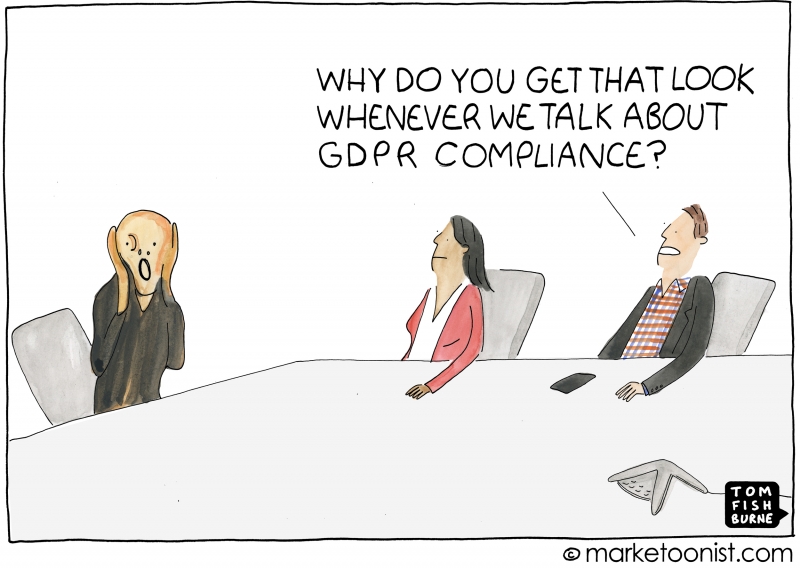
POV: While referred to almost as an afterthought in SAP's announcement, GDPR-readiness is a hugely important and pressing task for companies in or which do business in the European Union. The strict new privacy framework goes into effect in May 2018 and will be vigorously enforced. Companies in violation can be fined up to 4 percent of their annual revenue and the EU is expected to collect billions in fines during the first year of its enactment.
Amazon expands brick-and-mortar presence in India: For a mere $28 million, Amazon is gaining a presence in 80 Indian brick-and-mortar locations. That sum has given Amazon a 5 percent stake in Shoppers Stop, a national department store chain. Amazon will open "experience centers" in the stores, where shoppers can try out products that are available online. In turn, Shoppers Stop plans to open an additional 20 stores.
POV: The deal is a pittance compared to the $5 billion Amazon CEO Jeff Bezos has pledged to spend in India overall, but on a strategic basis has some echoes with Amazon's partnership with Kohl's in North America.
One difference is that while Kohl's has developed a strong omnichannel commerce plan, the vast majority of Shoppers Stop's revenue comes from in-store sales, particularly when it comes to clothing. Shoppers Stop represents a chance for Amazon to figure out the best way to convert the chain's loyal shoppers to online buyers, and in the process gain valuable insights about the Indian market overall.
Data to Decisions Future of Work Marketing Transformation Tech Optimization Chief Customer Officer Chief People Officer Chief Information Officer Chief Digital Officer
MongoDB goes public: NoSQL database vendor MongoDB has submitted its long-anticipated filing to go public with the U.S. Securities and Exchange Commission. The S-1 form includes a wealth of information about the company's current business standing and future plans. Here's a look at the highlights.
Microsoft, Facebook complete new undersea US-to-EU cable: A milestone for next-generation networking was reached this week with the completion of Marea, an undersea telecommunications cable that runs between Virginia and Spain. Marea's capacity is enormous, as described by Microsoft, who partnered with Facebook and Telefonica on its construction:
At more than 4,000 miles (6,600 kilometers) long and almost 10.25 million pounds (4.65 million kilograms) â or about the weight of 34 blue whales â the Marea cable is a feat of engineering, collaboration and innovation. The cable can transmit up to 160 terabits of data per second. Thatâs more than 16 million times faster than the average home internet connection, making it capable of streaming 71 million high-definition videos simultaneously.
POV: Google has set the pace for this type of investment among major Internet companies, building out an extensive undersea cable network over the past few years. But Marea is said to be the largest-capacity undersea cable built to date.
Moreover, any existing cables emanate from the New York area; by locating Marea further south, Facebook and Microsoft will gain latency benefits, since both companies have extensive data center operations there.
Finally Marea was built with an "open" design that will allow it to more easily take advantage of future innovations in networking, Microsoft says.
Legacy watch: How not to do procurement: In 2011, the Canadian government hired IBM to install PeopleSoft at a number of departments and agencies. The first stage of the project was contracted for $5.7 million, but through a series of contract amendments the total has ballooned to $185 milllion, the Canadian Broadcasting Company reports.
As it stands today, the project, dubbed Phoenix, will cover more than 100 departments. Since going live in 2016, it has been wracked by performance issues and there are 1,000 identified bugs remaining to be fixed, the CBC report says.
Sources quoted in the story suggest that scope creep, that familiar IT project management bugbear, was an issue. But it appears the Canadian government made a serious misstep when it agreed to one particular contract term, as former Treasury Board analyst Roman Klimowicz told the CBC:
The request for proposal details the government's right to extend the terms of the Phoenix maintenance and support contract "for a period of up to approximately 20 years."
Klimowicz wonders if it was a good idea to give IBM so much control over defining the project, implementing and operating it â and now attempting to fix it."There appears to be a conflict potentially," said Klimowicz, who was never involved in the Phoenix contract. "The statement of requirement could leave loopholes, could leave escape avenues in it ⦠then IBM basically has an open bag of money to help themselves to."
| Fulcher welcomes to Shift17 |
| Carr talks Services |
| Reeves talks Products |

Google introduces 'zero-touch' enterprise deployment for Android devices: It's going to be easier and more secure to roll out enterprise Android devices, with Google's introduction of "zero-touch enrollment" capabilities.
Under the program, companies that purchase Android devices can use EMM (enterprise mobility management) software to automatically apply configurations and policies the first time a user turns the device on. Supported EMMs include VMWare AirWatch, BlackBerry, MobileIron, IBM and GSuite.
Initially, the feature is available only on Google's Pixel phone when purchased through Verizon. Google is working with Samsung, Huawei, Sony, LG and other device makers to add zero-touch; Sony's Xperia XZ1 and XZ1 Compact will be among the first additional devices to get it. Google is also working with a variety of other carriers besides Verizon.
POV: This is certainly a desirable feature given how much it can cut down on device management and end-user support tasks. It also has security benefits, since the devices won't ever be used in an un-managed state.
However, this is also an instance where Google is playing catch-up for a change, as Apple has offered similar capabilities through its Device Enrollment Program, as has Samsung with its Knox Mobile Enrollment service. It's nonetheless a welcome addition to Google's mobile enterprise capabilities with real benefits for customers.
Red Hat updates, expands its 'patent promise': In 2002, Red Hat issued a decree saying it would not enforce its patents against free and open-source software. Fifteen years later, the company has released a new version of the Patent Promise, one it says substantially extends the original's scope. Here's how Red Hat explains the decision, from an FAQ:
We issued the first Patent Promise 15 years ago. Since then, both Red Hat and open source have changed considerably, and some aspects of the Promise became outdated. Open source is what Red Hat does, and open innovation plays an increasingly important role in technology and beyond. Our expanded Patent Promise recognizes and is designed to protect open innovation.
The new Promise is substantially clearer and broader than its predecessor. While the old Promise covered approximately 35 percent of open source software, the new version will cover more than 99 percent. It applies to all software meeting the free software or open source definitions of the Free Software Foundation or the Open Source Initiative and listed by the FSF or OSI.
Both the original and new promise covered the entirety of Red Hat's patents. But the company today has more than 2,000 patents, compared to just a handful at the time of the first promise.
Both the new Promise and the original Promise covered all Red Hatâs patents. Itâs worth noting that at the time of the original Promise, Red Hat had only a few patents, while now it has more than 2000.
POV: As a company based on open source software, Red Hat's pledge seems like a natural step. It doesn't appear that it provides any protection to companies from patent lawsuits brought by non-practicing entitiesâotherwise known as patent trollsâbut clearly puts a flag in the ground stating that Red Hat is a trusted partner to companies looking to innovate with open-source software.
IBM open-sources Websphere Liberty for agile app development: Big Blue has open-sourced the code for Websphere Liberty, the ligher-weight version of its flagship Java application server. IBM's Ian Robinson explains why in a blog post:
We created Liberty five years ago to enable developers to easily and quickly create applications using agile and dev/ops principles. It has been an incredibly successful and popular transformation for WebSphere and now is the time to take it to the next level by moving the essential Liberty code base into the open.
This week IBM launched the Open Liberty project and moved our Liberty development effort to it. The code is available in GitHub under the Eclipse Public License V1, and our ongoing development for WebSphere Liberty will be based on this project. Open Liberty is focused on creating a runtime to support Java microservices that can be frequently updated and easily moved between different cloud environments.
At any time, developers can move up to the commercial versions of WebSphere Liberty, adding dedicated technical support and more advanced capabilities. Because Open Liberty and WebSphere Liberty are built on the same codebase this transition is seamless, so thereâs no need to modify your applications.
POV: IBM is also open-sourcing its IBM J9 virtual machine implementation, which along with Open Liberty provides a full, IBM-approved Java stack.
While Open Liberty is easier to set up and manage, gets more frequent updates, and offers more deployment options than the full-blown WebSphere, it isn't as feature-rich. There are also many existing applications that would be difficult or not possible to move to Open Liberty due to feature gaps.
IBM is betting that moving Open Liberty to an open-source model will attract community support and subsequently more development resources and market traction around the code base. It's far from an unprecedented move, but still stands as another example of where open source wins, notes Constellation VP and principal analyst Holger Mueller.
"While IBM knows how to partner and work with open source, customers have to keep a watchful eye on vendors not just punting the code over," Mueller says. "I'm not saying that is the case here, but with all the struggles at IBM it's a potential risk to consider."
| Ain opens 1st Kronos Analyst Day |
| Workforce Ready Key Directions |
| Workforce Central Directions |
Stanford University professor Michal Kosinski made waves recently for research he conducted that suggested AI can determine a person's sexual orientation based on pictures of their face. Now Kosinski is going further, saying that AI could also pinpoint someone's political leanings, level of intelligence and other personal data points based on photographs, as the Guardian reports:
Faces contain a significant amount of information, and using large datasets of photos, sophisticated computer programs can uncover trends and learn how to distinguish key traits with a high rate of accuracy. With Kosinskiâs âgaydarâ AI, an algorithm used online dating photos to create a program that could correctly identify sexual orientation 91% of the time with men and 83% with women, just by reviewing a handful of photos.
Kosinskiâs research is highly controversial, and faced a huge backlash from LGBT rights groups, which argued that the AI was flawed and that anti-LGBT governments could use this type of software to out gay people and persecute them. Kosinski and other researchers, however, have argued that powerful governments and corporations already possess these technological capabilities and that it is vital to expose possible dangers in an effort to push for privacy protections and regulatory safeguards, which have not kept pace with AI.
Kosinski is also known for his controversial work on psychometric profiling, including using Facebook data to draw inferences about personality. The data firm Cambridge Analytica has used similar tools to target voters in support of Donald Trumpâs campaign, sparking debate about the use of personal voter information in campaigns.
There is much more to the Guardian's full report, which is well worth a read.
Analysis: AI advancements test, but don't rise above privacy laws
Privacy regulators increasingly recognize that the creation of personal information through computer algorithims is a form of collection, says Constellation VP and principal analyst Steve Wilson, who leads the firm's coverage of digital security and privacy issues: "If a computer program sets a flag in a database saying 'this person is right wing,' or 'this person is LGBT,' then that represents an act of collection of personal information."
This practice can be termed algorithmic collection, or synthetic PII, and is treated exactly the same under privacy laws as collecting the information by getting subjects to fill out a questionnaire. In some jurisdictions, such as Australia, PII related to sexual preference, health, political beliefs and biometrics are classified as sensitive and given extra protections, Wilson says.
"Sensitive PII cannot be collected without consent, so automated algorithmic collection of a person's sexuality or politics is a huge problem, even if it's done for research purposes," he says. "This is another nice example of how technology does not outpace the law. If most people are intuitively uneasy about computers working out their sexuality or other deep, even unconscious traits, then they can get some comfort from the fact that existing laws put restraints on this type of action."
The fundamental point is that there are limits to what personal information should be collected abotu people, and conditions on how it's collected, Wilson adds. "While new technology can create new ways to break the law, the fact is that privacy laws themselves remain as relevant as ever."
Recent client conversations indicate a desire for designing new AI Driven Smart Services. The rush to incorporate artificial intelligence into processes often requires a deeper examination of which services should be AI enabled. Constellation’s latest framework for augmenting humanity encompasses six factors (see Figure 1):
Figure 1. Constellation’s AI Powered Framework

Six factors play a significant role in identifying which AI driven smart services deliver the greatest opportunities. Early adopters have prioritized business processes using the Constellation business hierarchy of needs. Align candidates to the five categories of regulatory compliance, operational efficiency, revenue growth, strategic differentiation, and brand. Keep in mind, that AI enablement must require a strong data strategy, deep data governance, mature business process optimization, and a data driven design point.
So what will you automate first with AI? Do you have a digital transformation strategy?
Please let us know if you need help with your Digital Business transformation efforts. Here’s how we can assist:
At a live event today, Oracle Executive Chairman of the Board and CTO Larry Ellison announced new programs that lower costs by delivering increased automation and flexibility, and enable customers to get more value from their existing Oracle software investments. The new Oracle Cloud programs include Bring Your Own License to PaaS and Universal Credits.MyPOV – Nice summary. Pricing simplification has been on Ellison’s mind since a long time. In his view easier pricing accelerates sales processes, something he really wants. This move reminded me of Ellison pushing through a single global price list, published on its website, connected with the Oracle Store in the dot com era. It was revolutionary then – today it was visionary.
“We are completely transforming the way all companies buy and use cloud by providing flexibility and choice,” said Ellison. “Today, we combined the lowest prices with the highest performance and more automation to deliver a lower total cost of ownership for our customers.”MyPOV – Rationale is key to Oracle and Ellison – and his presentation was more about how automation of the Oracle database processes allows Oracle to lower prices and compete with the competition. He even said at one point that Oracle would make cost a SLA item…
While organizations are eager to move to the cloud, many have not due to obstacles that have forced them to choose between flexibility and lower costs. They have been challenged by the complexity of the cloud and the inability to rebalance spend across different services. Organizations have also been constrained by limited visibility and control over cloud spend. Until now, they have been unable to fully leverage their on-premises software investments in the cloud, having been limited to IaaS services or sacrificing key database features at the PaaS layer. Oracle’s new cloud programs address customers’ cloud adoption challenges by improving and simplifying the way they purchase and consume cloud services.MyPOV – Always good to see simplification. In a more complex and accelerated environment enterprises need all the simplification they need. And while pricing complexity is one problem, product fit and evaluation is even bigger. But Oracle is right – once enterprises have established the services they want - / need – budget risk is one of the main pre-occupations of CxOs. Though the ‘horror’ stories of early cloud days of enterprises burning through a month’s budget in few days because someone didn’t turn something off – are over – it remains a concern till today. But price is only half the equation – product / service selection remains a challenge.
Bring Your Own License to Oracle Database PaaS: Delivering Increased Value Through License Mobility
Currently, customers can bring their on-premises licenses to Oracle IaaS. Today, Oracle is expanding the offering by enabling customers to reuse their existing software licenses for Oracle PaaS, including Oracle Database, Oracle Middleware, Oracle Analytics, and others. Customers with existing on-premises licenses can leverage that investment to use Oracle Database Cloud at a fraction of the old PaaS price. Running Oracle Database on Oracle IaaS is faster and offers more features than Amazon, delivering the industry’s lowest total cost of ownership. Additionally, customers can further reduce management and operational costs required for on-premises maintenance by taking advantage of this PaaS automation.
Universal Credits: Flexible Buying and Consumption Choices for Oracle’s PaaS and IaaS Services
Oracle is introducing Universal Credits, the industry’s most flexible buying and consumption model for cloud services. With Universal Credits, customers have one simple contract that provides unlimited access to all current and future Oracle PaaS and IaaS services, spanning Oracle Cloud and Oracle Cloud at Customer. Customers gain on-demand access to all services plus the benefit of the lower cost of pre-paid services. Additionally, they have the flexibility to upgrade, expand or move services across datacenters based on their requirements. With Universal Credits, customers gain the ability to switch the PaaS or IaaS services they are using without having to notify Oracle. Customers also benefit from using new services with their existing set of cloud credits when made available.
Kohlâs cozies up closer to Amazon: Just weeks after announcing it would welcome Amazon smart home experience centers at a number of its department stores, Kohl's is adding Amazon item return services in 82 locations starting next month. It's a continuation of Amazons's brick-and-mortar strategy, which took a big leap forward with the acquisition of Whole Foods, and could conceivably lead to a purchase of Kohl's.
Here are some key details from the announcement:
âWe are thrilled to launch this unprecedented and innovative concept, allowing customers to bring in their unpackaged Amazon returns to Kohlâs and we will pack them, ship them, and return them to Amazon for free,â said Richard Schepp, Chief Administrative Officer. âThis is a great example of how Kohlâs and Amazon are leveraging each other's strengths â the power of Kohlâs store portfolio and omnichannel capabilities combined with the power of Amazonâs reach and loyal customer base.â
POV: There are a number of caveats to consider. First, the 82 Kohl's stores that will feature Amazon returns are all in Chicago and Los Angeles. One would expect, however, the initial rollout is a test run for adding the service to most or all of Kohl's stores eventually. Also, the announcement notes that "eligible" Amazon items will be accepted as returns; it's not clear what the limitations are, but for free, who can complain?
For large retailers like Kohl's, increasing foot traffic is crucial even as they build out online revenue streams. Amazon return centers certainly could drive that foot traffic and result in more in-store sales.
Kohl's has had more success than other department chains in adjusting to omnichannel realities. It also has much larger stores than Whole Foods, raising possibilities for Amazon that a typical Whole Foods store footprint cannot. Acquiring Kohl's, which has a market capitalization of about $7 billion, would be practically trivial for Amazon. While not a lock, an eventual deal looks like a strong possibility.
Hitachi creates Vantara unit for digital business: There is a newâin a senseâplayer in big data and digital transformation consulting services, with Hitachi's launch of Vantara, a new unit that combines Hitachi Data Systems, Hitachi Insight Group and Pentaho. Here's how Hitachi describes the opportunity for Vantara and customers:
The market opportunity for mission-critical data solutions has never been greater. Data has become a business's greatest assetâif they can extract actionable insights from it. Data holds the key to new revenue streams, better customer experiences, improved market insights and lower costs of doing business. However, a comprehensive offering has yet to emerge that combines both OT and IT expertise to uncover its true potentialâuntil now.
Hitachi Vantara will continue to provide superior infrastructure and analytics technologies that enterprises rely on for their mission-critical data in their data centers, in the cloud and at the edge of new innovations. The new company is targeting the emerging IoT market opportunity, in which there is no clear winner yet.
Hitachi has developed its own IoT platform, Lumada, which will be part of Vantara. The new entity is going after high-end business, focusing on the global Fortune 1000.
POV: Hitachi may have big ambitions for Vantara but the likes of IBM and Dell EMC are competing for the same business. Where Hitachi says it has an advantage is with its operational technology background, which Vantara engagements will couple with IT know-how. By any measure, Vantara is a big move by a big player, and one that bears watching.
Oracle delivers SPARC M8 systems, clarifies Solaris's future: A couple weeks in advance of OpenWorld, Oracle has announced a new series of servers based on the SPARC M8 microprocessor. It also said it plans to support the Solaris OS until at least 2034.
SPARC M8 chips include advancements for software-on-silicon based security measures; 2x faster encryption than x86 systems and SPARC M7; and superior performance for Oracle database and Java workloads compared to x86 and M7, according to the announcement:
"Oracle has long been a pioneer in engineering software and hardware together to secure high-performance infrastructure for any workload of any size," said Edward Screven, chief corporate architect, Oracle. "SPARC was already the fastest, most secure processor in the world for running Oracle Database and Java. SPARC M8 extends that lead even further."
POV: Oracle's hardware revenue fell 5 percent year-over-year in its first quarter to $943 million. But it's doubtful Oracle has true hopes for on-premises hardware sales as a growth story. Rather, it is betting that innovation in the SPARC platform can give its cloud services a performance and efficiency edge.
As for Solaris, the lengthy support commitment should please customers with legacy Solaris workloads, but it's not clear how many resources Oracle will pour into the OS going forward. Sharp eyes at the Register noted that a number of OpenWorld sessions focus on moving Solaris workloads to the cloudâpresumably, its own.
AWS adds per-second billing: The cloud pricing wars just got a new wrinkle, with Amazon Web Services' introduction of per-second billing. Here's how AWS chief evangelist Jeff Barr describes the value proposition in a blog post:
Some of our more sophisticated customers have built systems to get the most value from EC2 by strategically choosing the most advantageous target instances when managing their gaming, ad tech, or 3D rendering fleets. Per-second billing obviates the need for this extra layer of instance management, and brings the costs savings to all customers and all workloads.
While this will result in a price reduction for many workloads (and you know we love price reductions), I donât think thatâs the most important aspect of this change. I believe that this change will inspire you to innovate and to think about your compute-bound problems in new ways.
Per-second billing goes into effect in all AWS regions on October 2, for Linux instances "that are newly launched or already running," Barr wrote. Amazon is also requiring a one-minute minimum charge per instance.
POV: The move is both good for AWS customers as well as AWS, if it can recycle instances faster and loan them out more often per minute, says Constellation Research VP and principal analyst Holger Mueller. "It's like the Frankfurt airport Sheraton, which usually has 120 to 130 percent utilization, because people check in and check out of the same rooms multiple times in 24 hours," he says.
Per-second pricing isn't currently available on other major clouds, but you can expect AWS's competitors to follow suit soon.