Results

Take Visa Without Paying For It – eCommerce Comes to Offline Businesses

Take Visa Without Paying For It – eCommerce Comes to Offline Businesses

1
eWay PayThis surcharge on Xero's online invoicing
Last year cloud accounting program Xero added the ability to take payments the moment a business issued its invoice through online invoicing with Xero Pay Now. Now payment providers are building on the service with advanced features that give offline businesses the advantages of e-commerce but without the cost. 

eWay is the first provider to release a surcharge option called PayThis that lets businesses add custom surcharges for MasterCard, Visa, Diners Club and American Express cards. The Xero user sets the amount for each type of card and the surcharge is applied when a customer pays an invoice through Xero’s online invoice portal.

Xero confirmed that eWay is the first provider globally to add this service and added that other providers would soon roll out their own versions.

“If you take PayPal and credit card on an e-commerce site you’re more likely to process a payment because the customer has more options. We’ve just brought that mentality to the Xero system,” says Trent McLaren, eWay’s “Xero ambassador”.

Surcharges present a neat solution to a growing problem. Businesses complain about high fees on card payments but customers often prefer using plastic.

Despite a proliferation of alternative payments systems, credit and debit cards remain the preferred method for making payments and are expected to make up three quarters of all point-of-sale payments by 2017, market research firm Javelin Strategy & Research has reported.

Businesses that help customers to pay invoices online are likely to decrease the amount of time it takes to get paid. “Instead of that eight-week cycle you’re (getting paid) in days, not weeks,” McLaren says. Even if a customer baulks at the surcharge for a credit card and opts to pay by direct deposit, “we’ve still done our job in terms of helping that customer improve their cashflow”, McLaren adds.

Xero claimed it had statistical evidence that online invoicing and payments reduce the time to collect on invoicing by nearly three weeks, based on analysis of four million invoices lodged through Xero.

Surcharges give businesses the flexibility that customers demand without paying the credit card suppliers’ costs, and they have received a lot of support in Xero’s feature requests forum.

“Partners and users want to pass that credit card fee onto the customer paying the invoice,” McLaren says. “It allows you to recover the cost of having an online payment system.”

The surcharge process is fairly simple. Payment providers can tell the type of card from the first six digits of the card’s number. Xero displays the surcharge on the online invoice’s payment screen in red and the customer is prompted a second time to acknowledge the surcharge before paying it.

eWay charges a range of rates that drop with volume and start at 2.9 percent of the purchase price plus 13 cents. The percentage can drop to 1.9 percent or lower by paying a monthly subscription of $49 a month and up.

This compares somewhat to PayPal’s 2.4 percent plus 30 cents standard merchant rate, which reduces as monthly revenue rises.

Online invoicing, online payment and credit card surcharges fall under Xero’s Banking 2.0 concept. It builds on the work done by MYOB with its M-Powered Services which pioneered the ability to add a tearaway chit on the bottom of paper invoices to receive credit card payments. (The M-Powered Invoices service hasn’t yet yet made it across to MYOB Essentials or AccountRight Live yet.)

eWay, led by technologist Matt Bullock, is pushing ahead with the Banking 2.0 concept. It has consolidated the admin and paperwork for businesses wanting to set up a merchant account for Xero Pay Now by handling the approvals process on behalf of the Xero user’s bank.

Innovation in this space should continue as payment providers jostle for market share through unique features. eWay’s next project is to add automatic late fees to invoices paid through Xero’s online invoicing portal.

Businesses taking advantage of this burst of innovation should see their payment timeframes drop as a result.

Have a disruptive technology implementation story? Get recognized for your leadership. Apply for the 2014 SuperNova Awards for leaders in disruptive technology. 



Matrix Commerce Innovation & Product-led Growth Chief Customer Officer Chief Executive Officer

Big Privacy Webinar

Big Privacy Webinar

data map imageLearn how to get fair value for your data. 

"Big Privacy: The New Big Data Privacy Pact" 

Calling for fair, restrained, transparent use of data

June 18, 2014 1:00p.m. PT / 4:00p.m. ET

While tremendous benefits of Big Data remain unrealized, the use of big data tools for the collection, extraction, and analysis of personal information challenges the contemporary concept of privacy. It's time for businesses and users to agree on a new standard of privacy. Constellation calls for "Big Privacy" a pact between digital businesses and users in which Big Data businesses exercise restraint in their use of powerful analytic tools, practice transparency regarding their business models, and offer consumers fair value for their data.

Join this webinar to learn:

  • How digital businesses benefit from your data
  • Why current laws may not protect your privacy
  • Big Privacy - a new pact calling on businesses to grant you fair value for your data

Webinar details:

  • June 18, 2014 1:00pm PT/ 4:00pm ET
  • Speaker: Steve Wilson

Data to Decisions Marketing Transformation Matrix Commerce New C-Suite Next-Generation Customer Experience Digital Safety, Privacy & Cybersecurity Webinar AR Security Zero Trust AI ML Machine Learning LLMs Agentic AI Generative AI Robotics Analytics Automation Cloud SaaS PaaS IaaS Quantum Computing Digital Transformation Disruptive Technology Enterprise IT Enterprise Acceleration Enterprise Software Next Gen Apps IoT Blockchain CRM ERP CCaaS UCaaS Collaboration Enterprise Service developer Metaverse VR Healthcare Supply Chain Leadership Chief Customer Officer Chief Information Officer Chief Marketing Officer Chief Information Security Officer Chief Privacy Officer Chief Technology Officer Chief Data Officer

Constellation’s SuperNova Awards – Got a Great Case Study? Get Recognized for Your Innovation!

Constellation’s SuperNova Awards – Got a Great Case Study? Get Recognized for Your Innovation!

If you have implemented disruptive technology in your organization there is no time like the present to submit an application for the Constellation SuperNova Awards.  In our 4th annual The SuperNova Awards we seek to honor leaders who have overcome adversity to successfully implement disruptive technologies in their organizations. We’re looking for applications that demonstrate overcoming adversity, replicability (project’s ability to be replicated in organizations), and applications of disruptive technology that resulted in business model transformation.

The 2014 SuperNova Awards will recognize seven technology leaders in the following categories:

  • Consumerization of IT & The New C-Suite
  • Data to Decisions
  • Digital Marketing Transformation
  • Future of Work
  • Matrix Commerce
  • Next Generation Customer Experience
  • Technology Optimization & Innovation

Rewards Include Research and Invitation to Connected Enterprise

Finalists in each category will be awarded one complimentary ticket to Constellation’s Connected Enterprise.  Finalists will receive VIP admission to the event and may be selected to share their implementation story on a panel at Connected Enterprise.

Winners in each category will win a one-year “Research Unlimited” subscription, which includes access to all Constellation research and premium content. Constellation’s “Research Unlimited” subscription is valued at $120,000.

Awards Ceremony

The SuperNova Award Winners will be announced live, on stage, at the SuperNova Awards Gala Dinner on October 29, 2014 on the first night of Constellation’s Connected Enterprise.

Timeline

  • May 27, 2014 application process begins. Submit applications here: http://constellationr.com/events/supernova/2014
  • August 1, 2014 last day for submissions. Judges select finalists.
  • August 22, 2014 finalists announced and invited to Connected Enterprise.
  • September 8, 2014 voting opens to the public
  • October 1, 2014 polls close
  • October 29, 2014 SuperNova Award winners announced at the SuperNova Awards Gala Dinner, held the first night of Constellation’s Connected Enterprise innovation summit.

The SuperNova Awards honor the true industry heroes and innovators that are solving business problems by putting technology to work in new ways that are changing the outcomes of business,” said R “Ray” Wang, Founder, Constellation Research, Inc.  “The SuperNova  Awards program is fueled with the momentum of hundreds entries, and we’ll be honoring the most impressive this October at our Innovation Summit.

If you want to spread the word – here’s a tweet all ready for you:

#DisruptiveTech early adopters apply for @ConstellationRG SuperNova Award   http://constellationr.com/events/supernova/2014 #SNA2014 #ensw

Skype: drnatalie007 | LinkedIn | Google+

Catch my latest:
• Thoughts at www.DrNatalieNews.com 
• Upcoming book series: “7 Steps To Digital Customer Experience Mastery” (working title) 

SAVE THE DATE!
Constellation’s 4th Annual Connected Enterprise 
The Executive Innovation Conference | October 29th-31st


Half Moon Bay, CA | Ritz Carlton


Enhanced by Zemanta

Share

Marketing Transformation Next-Generation Customer Experience Innovation & Product-led Growth Data to Decisions Future of Work New C-Suite Tech Optimization AR Executive Events AI ML Machine Learning LLMs Agentic AI Generative AI Robotics Analytics Automation Cloud SaaS PaaS IaaS Quantum Computing Digital Transformation Disruptive Technology Enterprise IT Enterprise Acceleration Enterprise Software Next Gen Apps IoT Blockchain CRM ERP CCaaS UCaaS Collaboration Enterprise Service developer Metaverse VR Healthcare Supply Chain Leadership Chief Customer Officer Chief Executive Officer Chief Financial Officer Chief Information Officer Chief Marketing Officer Chief People Officer Chief Procurement Officer Chief Supply Chain Officer Chief Technology Officer Chief Digital Officer Chief Data Officer Chief Analytics Officer Chief Information Security Officer Chief Operating Officer

Why is Hybrid Cloud Important?

Why is Hybrid Cloud Important?

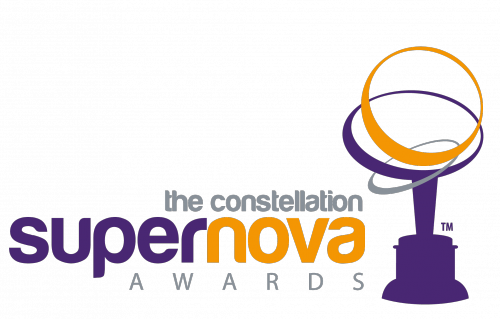
Why is hybrid cloud important and what are some use cases for it? How does hybrid cloud help companies expand globally? What's the deal with PureApplications, SoftLayer, and BlueMix? Get the answers to these questions and more in this series of videos discussing trends in hybrid cloud. 

Don't forget to check the Constellation Media Library for more great video content. 

Constellation analyst: Holger Mueller

Playlist: 

  • Trends in hybrid cloud
  • Why is hybrid cloud important? What are some use cases for it?
  • How does hybrid cloud help organizations expand globally?
  • How does PureApplication System extend to an off-premise environment?
  • Why are clients making the move to cloud?
  • What is the relationship between PureApplication Systems, Softlayer, and BlueMix?
  • How are clients using cloud to innovate?
Tech Optimization Data to Decisions Digital Safety, Privacy & Cybersecurity Innovation & Product-led Growth Future of Work IBM SaaS PaaS IaaS Cloud Digital Transformation Disruptive Technology Enterprise IT Enterprise Acceleration Enterprise Software Next Gen Apps IoT Blockchain CRM ERP CCaaS UCaaS Collaboration Enterprise Service Chief Information Officer Chief Marketing Officer Chief Technology Officer Chief Information Security Officer Chief Data Officer Chief Executive Officer
Industry Trends in Hybrid Cloud

Industry Trends in Hybrid Cloud

Learn all about trends in hybrid cloud in this series of videos. Included in this series: hybrid cloud use cases, how does hybrid cloud enable global expansion, PureApplication, SoftLayer, BlueMix, more!

Tech Optimization Chief Information Officer On <iframe width="560" height="315" src="//www.youtube.com/embed/videoseries?list=PLqZTdGs5ywRXrWittqvxc7aurgsWi7vWY" frameborder="0" allowfullscreen></iframe>
Media Name: hybrid.png

Tuesday's Tip: Five Steps To Starting Your Digital Transformation Initiative

Tuesday's Tip: Five Steps To Starting Your Digital Transformation Initiative

Cut Through The Hype and Get Started

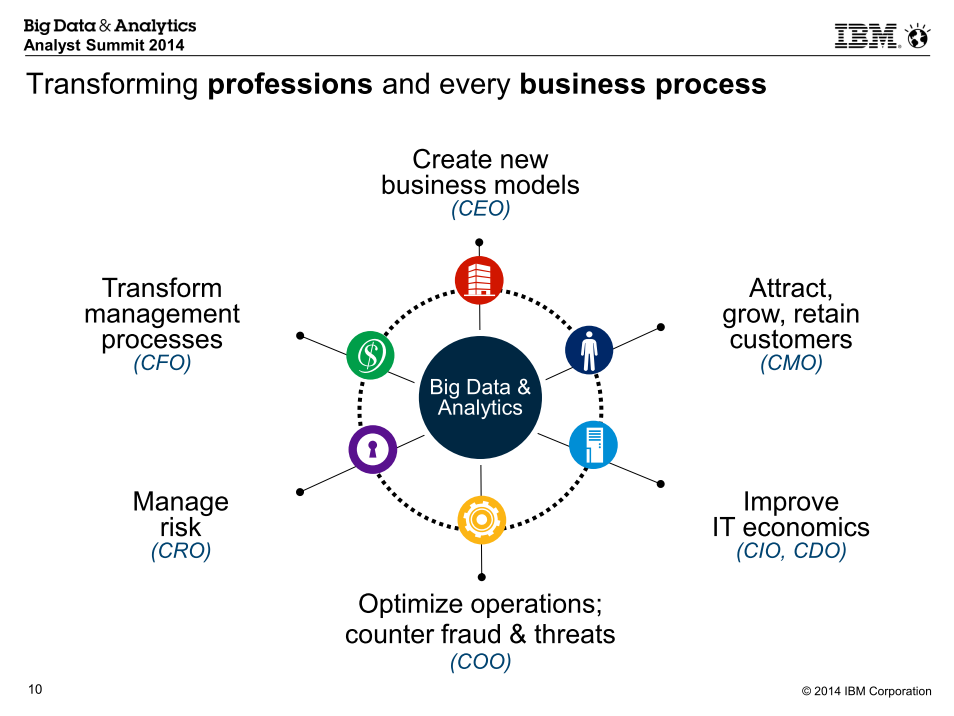
Over the past 12 months, Constellation has interviewed, researched, or assisted more than 50 market leaders and fast followers crafting a digital transformation strategy.  Regardless of industry, size of company, or geography, these early adopters share five common steps to success.  In each case, these steps provide the foundation to not only transforming their business models, but also reinventing their brand promise.  These five steps include (see Figure 1):

  1. Designing new experiences and business models. Use digital as an opportunity to craft new experiences.  Customers seek outcomes and experiences while organizations continue to sell products and services.  This gap in expectations only exacerbates in a digital world.  In fact, successful digital business models reinforce the brand promise and promote the brand mythology.  The shift to a sense and respond model requires a new design point.  Mass personalization at scale, big data business models, and augmented humanity provide a starting point to designing a new digital experience.  Early adopters all have applied concepts in design thinking from the beginning.  Over the past 18 months, Constellation has helped organizations with digital transformation workshops to set the stage or imagine how digital disruption will impact an organization’s business model.
  2. Developing a culture of digital DNA. Success begins at the top.  Digital DNA requires strong leaders who are not afraid of dips in share price, cannibalizing existing markets, and identifying new approaches.   Organizations must also assess their innate ability to thrive in a digital business environment and nurture digital artisans.  These skills go not only beyond the quant jocks who deliver hard science and engineering prowess, but also beyond the creative class who can co innovate and co-create on demand.  Consequently, organizations are rethinking the attributes a digital business should employ and embody.  Diversity in thinking means more than race or age or digital proficiency.  A balance of thought.  In an organizations with too many hard sciences, balance out recruiting with philosophers or anthropologists.  In an organization with too many thinkers, balance out the model with teams who can execute.  Using a framework for digital proficiency and a checklist on digital artisans, organizations can infuse digital DNA throughout the culture.
  3. Applying new technologies to existing infrastructure. Digital does not mean wholesale replacement of existing technologies.  Digital does not mean just putting a mobile front end or adding a social collaboration feature to a process.   The convergence of mobile, social, cloud, analytics (big data), and unified communications provide starting points.  Adding sensors to old machinery provides data and context.  Mobilizing mainframe data for use in analytics delivers new experiences and provides insight into new opportunities.  Bringing external data to internal systems creates new patterns that provide better data for testing out new business models.  Use the opportunity to rethink your technology strategy to align with the business objectives of digital transformation.
  4. Moving from gut to data driven decisions. Data is the heart of digital transformation.  Every touch point, every click, every interaction provides a digital exhaust rich in context.  The goal is to move from right time information overload, to real-time contextual relevancy.  Organizations need relevancy delivered in real time.  From asking the right questions to anticipating future beahvior, the goal is to move from data to decisions.  Every bit of data flows into upstream and downstream information aligned with business processes.  These information flows then provide the foundation to surface patterns that provide insight.  That business insight then enables people to make fact based decisions.  Serving up this next best action is the foundation of building data driven decisions.
  5. Co-creating and co-innovating with new partners.  No company can succeed on their own.  In digital transformation, an ecosystem of co-creation and co-innovation awaits.  Organizations should participate in industry consortiums and also create their own ecosystems aligned around the organization’s self-interest.  In many scenarios, an ecosystem does not exist but market leading and fast follower vendors, suppliers, and customers will join with strong leadership.

Figure 1. The Five Steps To Digital Transformation Success

The Bottom Line:  Prepare for the Rise of Chief Digital Officers Or Leaders Infused With Digital DNA

The existing leadership structure in most organizations is ill-equipped to drive the change required for dominating digital disruption. Consequently, the emergence of the chief digital officer (CDO) is essential for the new age of digital business.  Though the current debate often centers on whether the CIO or CMO will win out or whether chief digital officers may arise from an expanded role for the CIO, we see these arguments as short-sighted.  As with any other massive transformation, the skill sets required for digital will be infused throughout the executive ranks and the organization’s DNA.  The pathway forward will involve a multidisciplinary approach. However, the skills behind digital business transformation will require chief digital officers or those tasked with digital to understand how to:

  1. Translate analog businesses into digital businesses. The effort will require more than adopting the five pillars of digital convergence, but a rethink of the core business model.  The new model moves from promoting products and services to keeping promises and meeting outcomes.
  2. Manage a world of trust and radical transparency. Success will require more than fluffy statements about open leadership.  The power belongs in building relationships in the personal and corporate networks.  Leaders must expect business to move from real time to right time. Context by location, time, role, relationship, sentiment and even intent will provide a differentiator.
  3. Develop an authentic business brand. An organization must start by asking itself what the company would be like if it were a person.  Customers, employees, partners and suppliers expect an organization to live up to a brand promise.  That promise requires authenticity in a digital world.
  4. Disrupt business models with digital technologies. Keep in mind, technologies will come and go. Disruptive technologies on their own will not address regulatory requirements, optimize costs, drive revenue, differentiate markets or support the brand.  The goal is to identify the technologies that will disrupt the business model to allow for transformational change.
  5. Work with five generations of digital proficiency. Focus in on how to enable the different generations for digital proficiency.  Keep in mind, digital business brings its own culture for how you work, where you work, when you work, what you work on and why you work.  These are the key questions in the shift from a people and cultural perspective.

While we see many media, entertainment and technology organizations rapidly moving to develop a CDO role, other industries will eventually embrace a central champion who ensures the digital business principles and policies are in concert with an organization’s overall strategy.  Today’s CTO’s are also poised to be good CDO’s.

In any case, the rise of the chief digital officer is here.  Constellation research shows that digitally transofmred organizations differentiate themselves with higher margins, greater market share, increased brand relevancy and massive scale.

Join us October 29th to 31st for Constellation’s Connected Enterprise, an immersive innovation summit for senior business leaders using digital technologies to transform their organizations.  These leaders convene to discover, share, and inspire each other on how digital business can realize brand promises, transform business models, increase revenues, reduce costs, and improve compliance.

The 3-day executive retreat will include mind expanding keynotes from visionaries and futurists, interactive best practices panels, deep 1:1 20 minute interviews with market makers, rapid fire high-energy new technology demos, The Constellation SuperNova Awards event, a golf outing, and an immersive networking event.

Have a disruptive technology implementation story? Get recognized for your leadership. Apply for the 2014 SuperNova Awards for leaders in disruptive technology.


Your POV.

How are you addressing digital transformation? Is your organization ready for digital disruption?  Let us know how you are getting there and what first steps have worked.  Add your comments to the blog or reach me via email: R (at) ConstellationR (dot) com or R (at) SoftwareInsider (dot) org.

Please let us know if you need help with your Digital Transformation efforts. Here’s how we can assist:

  • Developing your digital business strategy
  • Identifying areas for business model disruption
  • Connecting with other market leaders and fast followers
  • Sharing best practices
  • Vendor selection
  • Providing contract negotiations and software licensing support
  • Implementation partner selection
Resources

Reprints

Reprints can be purchased through Constellation Research, Inc. To request official reprints in PDF format, please contact Sales .

Disclosure

Although we work closely with many mega software vendors, we want you to trust us. For the full disclosure policy,stay tuned for the full client list on the Constellation Research website.

* Not responsible for any factual errors or omissions.  However, happy to correct any errors upon email receipt.

Copyright © 2001 -2014 R Wang and Insider Associates, LLC All rights reserved.
Contact the Sales team to purchase this report on a a la carte basis or join the Constellation Customer Experience


Data to Decisions Future of Work Marketing Transformation Matrix Commerce New C-Suite Next-Generation Customer Experience Tech Optimization Innovation & Product-led Growth Revenue & Growth Effectiveness SoftwareInsider Digital Transformation AI ML Machine Learning Generative AI Analytics Automation B2B B2C CX EX Employee Experience business Marketing SaaS PaaS Growth Cloud eCommerce Enterprise Software CRM ERP Leadership Social Customer Service Content Management Collaboration LLMs Agentic AI HR HCM IaaS Supply Chain Disruptive Technology Enterprise IT Enterprise Acceleration Next Gen Apps IoT Blockchain finance M&A Enterprise Service Robotics Quantum Computing CCaaS UCaaS developer Metaverse VR Healthcare Chief Customer Officer Chief Digital Officer Chief Executive Officer Chief Financial Officer Chief Information Officer Chief Marketing Officer Chief People Officer Chief Procurement Officer Chief Supply Chain Officer Chief Data Officer Chief Experience Officer Chief Technology Officer Chief Information Security Officer Chief Analytics Officer Chief Operating Officer Chief Revenue Officer Chief Human Resources Officer
Why Long Term Vendor-Client Relationships Inhibit Outcome Based Contracts

Why Long Term Vendor-Client Relationships Inhibit Outcome Based Contracts

1

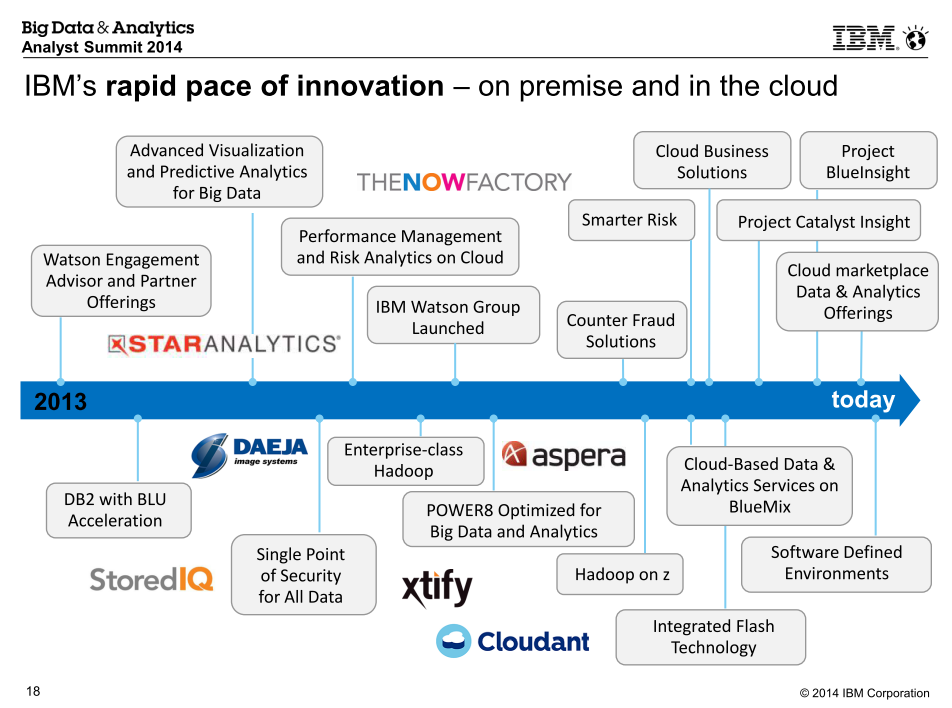
capioIT has long written about the shift towards outcomes based pricing for the management of infrastructure, application and business process engagements. This has been a slow but one directional shift that is critical for enabling a more flexible and business orientated technology and process capability.

The shift has been frustratingly slow in some quarters because put simply, the process is complicated. Successful outcomes based pricing does not tolerate secrets between provider and client. A comprehensive and pragmatic understanding of a process, its drivers and functions is critical. Once all the process components, cost and measurement are laid bare, lawyers and accountants get involved.

What capioIT has noted is that the shift towards outcomes based pricing has accelerated in markets such as China that have an aversion to up front Capex deals, and a green field relationship due to the emerging nature of the market.

In mature markets many vendors have tried to shift existing fixed price or time and materials relationships to outcome based pricing. It has proven to be difficult. One of the key reasons for this difficulty is the relationship familiarity inhibits the change regardless of whether it is in the best interests of the client organizational objectives.

I recently met with a client of a tier 2 infrastructure services provider who had given up on a shift towards outcome based pricing. There was just too much “cosiness” and interdependence to make a shift from a numbers based SLA approach to the outcomes based requirements possible. To highlight the issue, the inability to drive to change was mutual.  This is not an isolated experience, it has been  a topic for many sourcing professionals and strategy teams looking to increase the value of intnernal and external service delivery.

These difficulties also apply equally to the shared services model. Familiarity breeds a lack of willingness to change and to expose outputs to a more onerous measurement of success.

Bottom line – If you have a long term relationship that is required to shift towards an outcome based model, you need to make changes to some key personnel, shake it up and remove the cosiness and complacency.

Data to Decisions Future of Work Marketing Transformation Matrix Commerce New C-Suite Next-Generation Customer Experience Tech Optimization Innovation & Product-led Growth Chief Customer Officer Chief Executive Officer Chief Financial Officer Chief Information Officer

Dual Personas?

Dual Personas?

1

No matter where you turn these days, everyone is talking about dual personas. Everyone is said to have these 2 personas, one for home and one for work. They are vastly different and don’t overlap. You think differently, do things differently and may even look different, almost straight out of an old apple commercial. It quickly becomes a conversation about separating your home life from your work life. The only problem with this way of thinking, it’s not really how things work these days. Yes, there are cultures and a subset of people in this country where a person really has two separate identities but in the real world, we have evolved from having a separate personal vs work life to integrating our home and work lives into one persona.

dual-personaThis doesn’t mean that you necessarily behave identically for both, what it means is that there really isn’t as much separation. You may dress differently for work and use slightly different language etc but your personal life intrudes upon your day. The same thing happens when you are home. The phone rings and you answer it, it could be a friend or work. Work is no longer a place that you go but rather it is something you do that isn’t confined to an office anymore. It also isn’t confined to the work hours of 9 to 5. It may be anytime that work actually needs to get done.

The younger generations have been dealing with this for far longer than most. They have had devices in their hands since they were in elementary school that they use wherever they are. They have a single identity that spans what they do. They are the ones that get upset when technology at a company no longer meets their needs as they have already immersed it in their lives. Their Facebook/Twitter identities have advanced to Skype and Lync and they flow information through their workflows using the right tool for the right job. They don’t understand limits because they’ve never had to.

This doesn’t mean that there aren’t times/places/jobs that do require separate personas. A lot of work for the government does require completely separate identity but that is accepted as part of the work. Those jobs bring those requirements and have to work that way. You don’t expect to work for the defense department and be talking about troop movements through your Twitter account. These types of jobs that require these separate personas are few and becoming farther in-between. These personas will still slowly become integrated, just the communication methods will change a little. It will still require some thought to figure out the right channel, but more and more of it won’t require you to stop and make sure you are using proper channels.

You see, people have been integrating their personal and work life for years. Businesses have been slow to come on board but now understand the productivity gains that they see when they lessen the rigidity of the office. The sad part of this, is people tend to work more than 40 hours a week, which business’ loves, but impinges on their personal lives. Businesses also see more efficiency gains as people can get their stuff done when and where they need to. It’s no longer a matter of getting inundated when you walk into the office each morning. Chances are you looked at your email when you woke up and probably before you went to bed. Even better, that note you were waiting for doesn’t require that you be chained to your desk anymore. You may not get it until you’re at Sally’s soccer game or Johnny’s baseball game, but you can receive it and process it while watching both of them kick ass on the field.

This doesn’t mean that an integrated persona is the best thing. You still need to know when to disconnect yourself and that gets harder and harder as we have more ways to be reached and more devices to be reached on. There’s a reason people play the first device that gets picked up pays the check game when out to dinner. As we evolve to a single persona, it becomes harder to live in the moment and fully connect in real life. Businesses need to be aware of this as well since they will eventually see people burn out if they don’t disconnect. Some companies are even offering to pay part of your vacation if you leave your phone/device at home.

What this all leads to is the fact that people don’t want to think in dual modes. They work on a device and don’t want to have two different Microsoft Word apps, one for work and one for home. They don’t want to worry which Box app they open up or what is personal vs corporate Evernote. They aren’t wired to work that way except in some extreme situations.

Some enterprise software companies have already come to grips with this issue and are building their apps to take this into account. Box, for example, allows you to have a personal and a corporate account but only one app. You switch views in the app but it is very clear. The same thing can be done with Evernote. As companies begin to realize the importance of this, they will start demanding solutions from commercial app developers that secure their corporate data while allowing an individual to still use an app for their own devices.

Enterprises have to move away from the multiple personalities of Sybil and work on understanding and integrating their employees work habits into a coherent vision that they share with the employees themselves. They need to adhere to the FUN principle of Focusing on the User Needs which means understanding that employees are integrating their work and personal life into a single experience that spans their days.

New C-Suite Marketing Transformation Chief Customer Officer Chief Executive Officer Chief Information Officer Chief Marketing Officer

10 Simple Ways to Make Your LinkedIn Profile Your Epic Resume

10 Simple Ways to Make Your LinkedIn Profile Your Epic Resume

1

LinkedIn Resume

I probably joined LinkedIn sometime in 2003 or 2004 as my first recommendation dates back to 2005. So it is safe to say I have a decade of experience with LinkedIn.

Thus, from the simple length of time I have been updating, my profile is somewhat epic, sometimes I get made fun of for having a “too complete” profile.

But more recently, as the LinkedIn profile quickly becomes the golden copy of a resume more and more folks ask for tips and tricks to making profiles … epic.

Today, someone asked if I could help him make a “Sweet Resume” on LinkedIn – this was a first.

Below are some of my techniques, they go a bit deeper than the simple stuff like complete the profile, add others colleagues, or add education, etc.

  1. Get the top right – nothing is more boring than a profile without a picture, or a profile with a title that says “VP, Technology”. The reality is that the LinkedIn profile is much more than a resume, it is a personal statement of what your colleagues (and customers) can expect from you. Here are some examples “Delivers Projects Like No Body’s Business” – now there is a guy/gal I am looking to hire!
  2. Use the gallery – For every job you had and your summary, LinkedIn allows you to add videos, pictures, documents and links. This is the “rich media” that you can add to your profile to make it relevant, and go beyond a simple digital copy of your resume online. This is the "sweet" in "Sweet Resume".
  3. Use company pages – you want to link each of your jobs to the employer’s official page. This allows the logo of the company you worked for to be added to your profile enabling readers to quickly see what companies you were associate with via company logos.
  4. Publishing – LinkedIn allows you to add your publications; these can be blogs, research reports, articles, or books. One cool trick is to always co-publish, this way the faces of your co-publishers are added to your profile giving you network credence.
  5. Volunteer, honors and patents – easily the most underrated part of the LinkedIn profile, here you can add things that really tell your colleagues what lies within you, your story. For example here is a good place to showcase some of your speaking engagements, awards, recognition etc. things that never actually make the “resume”.
  6. Recommendations – this one is the no brainer, here is the trick with recommendations, get them as early as you can, waiting for five years and then asking for recommendations says “I am looking for work” – get them as projects are completed, or folks move onto other jobs.
  7. Skills – this part is a mess and tricky. Here is my simple rule; delete the skills you do not want to be associated with. Many times I see folks who are strategic thinkers, creative minds, and brilliant business men and women have their top sill listed as Lotus Notes.
  8. Think about your clan – you have to decide whether you include the “People Also Viewed” section or not. It can work for or against you. For example I have observed that attractive women, always seem to have a long list of other attractive women that have no professional affiliation to them in their “People Also Viewed” section. This is because men usually … OK I will not explain, but in cases like these where your “clan” is not helping, you may want to remove it.
  9. Update your emails – I see profiles where folks still have their @aol.com emails listed. Nothing says “I am outdated and out of touch” like having a @aol.com email address, listed on your LinkedIn profile.
  10. Be authentic – the fact that your resume is now social means that you have to abide by the rules of social. In the social construct, authenticity is the mother of all currencies. Use language that says, “hey I am real, but that does not mean I have to take myself too seriously”.


Happy Linking.


I write as a labor of love, in exchange I ask for comments that challenge my thinking.

-Richie

New C-Suite Marketing Transformation Future of Work Innovation & Product-led Growth Next-Generation Customer Experience Digital Safety, Privacy & Cybersecurity Chief Customer Officer Chief Executive Officer Chief Financial Officer Chief Information Officer Chief Marketing Officer Chief People Officer Chief Procurement Officer Chief Supply Chain Officer Chief Human Resources Officer

Constellation Kicks Off 2014 SuperNova Awards for Leaders in Disruptive Technology

Constellation Kicks Off 2014 SuperNova Awards for Leaders in Disruptive Technology

SuperNova Award Logo Constellation ResearchThe first awards to recognize leaders who successfully apply emerging technologies to transform business

Notable judging panel to select finalists

SAN FRANCISCO, CA, May 22, 2014—Constellation Research, Inc., announces the call for applications for the 2014 SuperNova Awards, the first awards recognizing early adopters of technology that have overcome adversity to successfully apply emerging and disruptive technologies within their organizations. The 2014 SuperNova Awards will recognize seven technology leaders in the following categories:

  • Consumerization of IT & The New C-Suite
  • Data to Decisions
  • Digital Marketing Transformation
  • Future of Work
  • Matrix Commerce
  • Next Generation Customer Experience
  • Technology Optimization & Innovation 

Notable Judging Panel

Esteemed judges, selected for their influence and accomplishments in enterprise technology, will evaluate applications against a vigorous set of criteria that emphasizes real-world and pragmatic applicability. The judges will select finalists who embody the SuperNova Award spirit of innovation, overcoming adversity, and disruptive technology-driven business model transformation.

Rewards Include Research and Invitation to Connected Enterprise

Finalists in each category will be awarded one complimentary ticket to Constellation's Connected Enterprise.  Finalists will receive VIP admission to the event and may be selected to share their implementation story on a panel at Connected Enterprise.

Winners in each category will win a one-year “Research Unlimited” subscription which includes access to all Constellation research and premium content. Constellation’s “Research Unlimited” subscription is valued at $120,000.

Awards Ceremony

The SuperNova Award Winners will be announced live, on stage, at the SuperNova Awards Gala Dinner on October 29, 2014 on the first night of Constellation's Connected Enterprise.

Timeline

  • May 22, 2014 application process begins. Submit applications here: http://constellationr.com/events/supernova/2014
  • August 1, 2014 last day for submissions. Judges select finalists.
  • August 22, 2014 finalists announced and invited to Connected Enterprise.
  • September 8, 2014 voting opens to the public
  • October 1, 2014 polls close
  • October 29, 2014 Winners announced, SuperNova Awards Gala Dinner at Connected Enterprise 

“The SuperNova Awards honor the true industry heroes, innovators that are solving business problems by putting technology to work in new ways that are changing the outcomes of business,” said R "Ray" Wang, Founder, Constellation Research, Inc.  “The SuperNova  Awards program is fueled with the momentum of hundreds entries, and we’ll be honoring the most impressive this October at our Innovation Summit.”

Constellation Research encourages all technology leaders and early adopters to submit for a SuperNova Award. More information about the awards can be found here: http://constellationr.com/events/supernova/2014

Apply for SuperNova Award 


Data to Decisions Future of Work Marketing Transformation Matrix Commerce New C-Suite Next-Generation Customer Experience Tech Optimization Innovation & Product-led Growth Supernova Awards AR Executive Events AI ML Machine Learning LLMs Agentic AI Generative AI Robotics Analytics Automation Cloud SaaS PaaS IaaS Quantum Computing Digital Transformation Disruptive Technology Enterprise IT Enterprise Acceleration Enterprise Software Next Gen Apps IoT Blockchain CRM ERP CCaaS UCaaS Collaboration Enterprise Service developer Metaverse VR Healthcare Supply Chain Leadership Chief Customer Officer Chief Executive Officer Chief Financial Officer Chief Information Officer Chief Marketing Officer Chief People Officer Chief Procurement Officer Chief Supply Chain Officer Chief Technology Officer Chief Digital Officer Chief Data Officer Chief Analytics Officer Chief Information Security Officer Chief Operating Officer