Results

Twitter Courts Developers with Unified APIs, Better Transparency

Twitter Courts Developers with Unified APIs, Better Transparency

Constellation Insights

It's safe to say that Twitter has had a complex and at times contentious relationship with developers that want to integrate with and build on the social messenging service. In October 2015, CEO Jack Dorsey acknowledged the problem and said Twitter wanted to "reset" its developer relationships, as Venturebeat notes:

“Somewhere along the line, our relationship with developers got confusing, unpredictable,” he acknowledged. “We want to come to you today and apologize for the confusion. We want to reset our relationship and make sure that we’re learning, listening, and that we are rebooting."

Twitter conducted fairly extensive developer outreach during 2016, but the picture blurred once again with the departure of several prominent developer advocates from the company, and Twitter's decision in January to sell its Fabric mobile development toolkit to Google. 

Now Twitter is taking measure of its developer outreach, announcing a unified API platform and increased transparency through a public development road map. Developer advocate Andy Piper laid out the landscape in a blog post:

We’re excited to announce that we’ll be unifying our API platform to make it easier for developers to build new applications that can smoothly scale as they grow. We’re also launching new APIs and endpoints that enable developers to build on the unique attributes of Twitter to create better experiences for businesses. Developers can see where we’re focusing and what we’re building with our newly-published API platform roadmap.

Twitter values developers because they can help serve new use cases and spark innovation, Piper wrote. He cited examples such as the U.S. Geological Service's use of Twitter data for earthquake tracking, and LikeFolio's consumer service for stock investors.

Of course, the broader intent—as with any developer outreach effort—is to help grow Twitter's center of gravity, user base and ultimately revenue.

What Twitter has lacked, but wants to remedy now, is an API set and strategy that's clear, stable and relevant to developers at all ends of the spectrum, from startups to large enterprises. Piper walked through some examples of the new normal:

Since 2006, we’ve had a set of broadly available REST and real-time (streaming) APIs that provide access to a range of features and functions. In 2014, we acquired Gnip, a partner who built a suite of enterprise-grade APIs for the world’s largest and most demanding software companies to create solutions with Twitter data. The Gnip APIs provide deeper access to public data from the Firehose and greater functionality than the standard REST and streaming APIs, but have a price point that is often out of range for developers just starting to scale their businesses. As we’ve met and listened to developers at events around the world and in our developer discussion forums, we’ve heard that this can be a source of frustration.

This year, Twitter will roll out a new developer experience that combines its REST and streaming APIs "with the enterprise-grade power and reliability of Gnip," Piper wrote. "The goal is to create an integrated Twitter API platform that serves everyone, from an individual developer testing a new idea to Twitter’s largest enterprise partners."

Developers will enjoy a streamlined API experience; rather than having to shift among multiple APIs as their projects scale up, there will be a single tool for a given task, such as filtering data from Twitter's Firehose. There will be tiered access, from free at the low end to paid self-service and enterprise grade, Piper wrote.

Despite his earlier mention of developer frustration over Gnip pricing levels, Piper gave no indication Twitter plans to cut those costs. Rather, he emphasized that Twitter will "clearly define the features and costs at each tier" so developers can make the plans best suiting their needs. 

Twitter also has some new products in the works that target data analytics and customer engagement scenarios. There's more detail in Piper's full post, which is worth a read.

Piper characterized Twitter's efforts as a "massive new engineering and product investment" for its platform and developer ecosystem. That may be the case, but it comes after years of missteps and fractious relations with developers, not to mention amid stagnant revenue growth and diminished buzz around the service.

"It's good to see Twitter putting order into its API strategy," says Constellation Research VP and principal analyst Holger Mueller. "It needs to regain the trust it lost a few years ago when changing and reducing API access. And as always with Twitter, monetization is the question. This could open up new alleys."

The bottom line here? Twitter needs developers—many more of them—to start regaining traction. On the face of it, Twitter's unified API plans are welcome and long overdue. The question is how well it can sustain focus on this path.

24/7 Access to Constellation Insights
Subscribe today for unrestricted access to expert analyst views on breaking news.

Marketing Transformation Matrix Commerce Next-Generation Customer Experience Tech Optimization Chief Customer Officer Chief Information Officer Chief Marketing Officer Chief Digital Officer

Executive Profile: Public Sector Chief Information Officer

Executive Profile: Public Sector Chief Information Officer

Media Name: optic-lights.jpeg
Our Constellation Research ecosystem of business leaders extends around the world, which we love. We find that our global footprint enriches the diversity of issues and challenges that need to be tackled and enables us to partner closely with executives driving digital transformation in all sizes of organizations. Disruptive technologies and developments like artificial intelligence, virtual reality, blockchain, the Internet of Things, and cyber security are among the many new additions that will drive groundbreaking change in the coming decades across multiple industries. 
 
David L. Stevens is a CIO who we're impressed with like David Chou, Healthcare VP, CIO and CDO. Both are Constellation Executive Network members. As a public sector leader with a large constituency, his focus for the next 18 months is all about the voice of customer, customer experience, and service quality.
 
If you know of a forward-thinking leader who we should consider profiling and who buys enterprise technology, we look forward to hearing from you at CEN.

David L. Stevens

Chief Information Officer
maricopa County, Arizona -Fourth Largest and Fastest Growing County in the US 

Industry - COUNTY GOVERNMENT
LinkedIn
Twitter - @MaricopaCIO & @ShadowAtNoon

David L. Stevens, Public Sector CIO

Q: Tell us about your role.
 
A:
I serve as the Chief Information Officer for Maricopa County, AZ – the fourth largest (4.2 million citizens and 9,200 square miles in size) and fastest growing County in the Nation; it is larger than 23 States by population with an overall budget of $2.2 Billion dollars and a technology budget of $200 Million dollars.  My focus is strategic technology investments that deliver value, keep the customer first, and create a winning culture.

Q: What’s your typical day like?
 
A:
Typical day starts before the office when I wake up to do a quick check of email, texts, and news.  In the office my day starts by huddling with my executive assistant to make any needed adjustments to the schedule, handle items needing my immediate attention, and also direct any action to my team.  Then I usually spend time with customers, business partners, and stakeholders.  The “end” of my work day is reviewing performance metrics, dashboards/ reports, and financials.  I go to the gym late each night, and before bed, read new research, a book, or other relevant information.
 
Q:  What are your biggest initiatives or challenges for the next 6 - 18 months?

A: 
We are making our next 18 months all about voice of customer, customer experience, and service quality – to strive to make saleable, secure, and contextually relevant services for our customers and citizens.  We spent the last 3 years building the foundation (network, security, telecommunications, metrics, ERP, culture, and financials) so we could build a reliable technology stack that will deliver first-class customer service.  Our new strategic plan can be viewed on our website.
 
Q: What do you see as the biggest enterprise disruptive technology trends?

A: My sense is that Artificial Intelligence, Machine Learning, IoT, and Data will continue to be major disruptors – the intersection of these Big Four will generate new growth, discovers, and impact business and society in profound ways.
 
Q: If you could have a different job, what would it be? 


A: I think I would either want to be an exotic vacation tour guide or a fighter pilot.
Media Name: David Stevens cropped headshot.png
New C-Suite Next-Generation Customer Experience Data to Decisions Innovation & Product-led Growth Future of Work Tech Optimization Digital Safety, Privacy & Cybersecurity B2C CX ML Machine Learning LLMs Agentic AI Generative AI AI Analytics Automation business Marketing SaaS PaaS IaaS Digital Transformation Disruptive Technology Enterprise IT Enterprise Acceleration Enterprise Software Next Gen Apps IoT Blockchain CRM ERP finance Healthcare Customer Service Content Management Collaboration Chief Information Officer Chief Executive Officer Chief Technology Officer Chief AI Officer Chief Data Officer Chief Analytics Officer Chief Information Security Officer Chief Product Officer Chief Customer Officer Chief People Officer Chief Human Resources Officer

Digital Adoption Platform WalkMe acquires Jaco

Digital Adoption Platform WalkMe acquires Jaco

WalkMe has a simple goal, they want to help companies make sure their employees and customers have the best possible experience with their applications and websites. If your Sales team is struggling using your CRM system, WalkMe will help guide them through the trouble spots. If your customers are not finding what they need on your website, WalkMe can show them the way. Think of it as the modernization of the Help file.

This week WalkMe announced the acquisition of Jaco, who’s product records the clicks people perform as they navigate around a website or web-based applications. This data can then be played back allowing administrators and designers to get insight into the trouble spots people are experiencing, then fix those problems to provide an improved experience.

Jaco’s technology will be integrated into WalkMe’s Digital Adoption Platform, providing a media player like experience, where people can replay, click by click, the interactions people take.

This is WalkMe’s second acquisition of the year, the first being ABBI.io, a tool that helps optimize the experience of mobile applications.

Helping People Get Work Done

One of the biggest challenges with applications and websites is that everyone has a different style in how they use them. Digital Adoption Platforms such as WalkMe provide a way to monitor, study, and ultimately fix the roadblocks people are having. This leads to improved workflows, less support calls, and happier users. WalkMe is aggressively improving their platform, constantly seeking new ways to help organizations improve the adoption of the tools they provide their employees and customers.


Future of Work

Anaplan Steps Up Investment In Connected Planning

Anaplan Steps Up Investment In Connected Planning

Anaplan says increased R&D investment will keep it ahead of cloud-based performance management arena. Here’s what connected planning is all about.

When Frank Calderoni, Anaplan’s new CEO, took the stage at the March 27-29 Anaplan Hub 17 event, he cited positive company statistics including signing 250 new customers in the last year (bringing the total count above 660) and more than 75 percent annual year-over-year subscription revenue growth to a $120-million-annual run rate. Just two months on the job, Calderoni also promised a “significant increase” in R&D investment, saying the company intends to stay ahead of the competition.

At Anaplan Hub 17, Frank Calderoni, who joined the company as CEO in January, promised
increased R&D investment. He was previously CFO at RedHat and Cisco, respectively.

Indeed, competition is tightening in the corporate performance management arena, in which the lion’s share of growth is going to cloud-based offerings. Incumbents including Oracle (Hyperion) and SAP (BPC) have introduced their own software-as-a-service options while SaaS rivals Adaptive Insights and Host Analytics have been courting larger and larger customers. Even partners are getting in on the act, with Workday adding Workday Planning to its cloud-based performance management application portfolio in 2016.

Anaplan stands apart among the cloud options in that it focuses on a broader range of business planning challenges than any of its competitors, most of which concentrate on the needs of finance departments. Financial planning and sales planning are Anaplan’s most mature use cases, but the company also supports supply chain, workforce, marketing, IT and other planning needs with more than 195 starting-point applications on its Anaplan App Hub. Roughly two thirds of these domain- and industry-specific apps are offered by partners, such as Accenture, Deloitte and Workforce Insight, who help customers build out and customize apps to their specific needs.

Customers typically start with one planning challenge, such as financial planning and analysis or sales planning, but Anaplan educates customers on the need for “connected planning” as part of its land-and-expand strategy. By connecting plans, companies can understand and account for interdependencies, cascading changes in plans and what-if scenarios across interconnected data, people and processes.

Why do companies need connected planning? Anaplan founder and CTO Michael Gould cited the example of U.K.-based companies that are now in the cross hairs of Brexit. Adequate preparation and forecasting demands more than a single plan; these companies need interconnected plans around possible changes in exchange rates, border tariffs, trade deals, supply costs, pricing and resulting demand. In the U.S. it’s easy to imagine the complex, interconnected planning healthcare organizations will need to come to grips with potential changes in the Affordable Care Act.

Of course, planning and forecasting challenges are more often triggered by routine business dynamics rather than legislative or geopolitical sea changes. Routine business changes such as mergers, acquisitions, digital disruption and emerging market opportunities all trigger complex planning and forecasting challenges. Anaplan customers are typically large companies and fast-growing companies – mostly in retail, banking, technology, healthcare and consumer packaged goods – that face complexity and constant change.

MyPOV on Anaplan’s Progress

There weren’t a lot of high-profile announcements at Anaplan Hub 17 in part because the company is still in the process of delivering capabilities promised at Anaplan Hub 16 (thus, Calderoni’s promise to step up R&D investment). For example, a Business Map feature announced at Hub 16 is still a few weeks away. The Business Map will support connected planning by giving customers a holistic view of all business planning activities, with tagging, searching and filtering by use case, business process and geography.

Also still in the works is a promised expansion of existing predictive capabilities to better support workforce optimization, supply planning, transportation assignment, product marketing, and risk modeling, among other forward-looking analyses. Anaplan did release a module in a limited private beta, but executives say they’re reworking the module to support mathematical optimization without requiring coding.

Late last year Anaplan did deliver on Application Lifecycle Management (ALM) capabilities promised at Hub 16. The new ALM capabilities brought an important productivity advance, enabling customers to split large models and synchronize model versions so they don’t have to replicate changes across development, testing and production instances.

At Hub 17, Anaplan did announce a new data-integration option called Anaplan HyperConnect, which is a licensed version of Informatica Cloud that Anaplan will sell and support under its own brand. It also announced reporting integrations with Tableau, and the company is days away from releasing a DocuSign integration that will take paperwork and, thus, time out of approval processes.

Anaplan didn’t play up the announcement, but in a roadmap session it unveiled plans for two important coming platform capabilities that will unlock yet more growth. A Bring-Your-Own-Key encryption requested by security-conscious banks and financial institution is due out later this year. And a lightweight workflow capability will improve planning throughput, governance and collaboration by routing tasks, approvals and alerts. Release dates weren’t disclosed, and one Anaplan executive quipped that the company wants to live down recent product delays by under-promising and overdelivering.

Anaplan has had its share of executive changes over the last year, as is common in any CEO regime change. But as Calderoni settles in and the company pours more of its considerable venture funding into development, I expect innovation to accelerate and the connected planning story to get stronger.

Related Reading:
Anaplan Scales Platform, Prepares for Prediction
SAP Feels Your Pain, ‘Storms Ahead’ on New Apps, Consumer Insights
Cloud-Based Performance Management: Why the Digital Era Demands Agile Planning


Media Name: Anaplan CEO Frank Calderoni.jpg
Media Name: Anaplan Connected Planning.jpg
Data to Decisions Tech Optimization Chief Customer Officer Chief Digital Officer Chief Financial Officer Chief Marketing Officer Chief People Officer Chief Procurement Officer Chief Revenue Officer Chief Supply Chain Officer

Google Forms New Patent Pool for Android: The Enterprise Implications

Google Forms New Patent Pool for Android: The Enterprise Implications

Constellation Insights

Google has created a new patent cross-licensing effort in the interest of stemming litigation within the burgeoning Android ecosystem. It's called PAX, which means "peace" in Latin. Here are the key details from Google's official blog post on PAX:

Under PAX, members grant each other royalty-free patent licenses covering Android and Google Applications on qualified devices. This community-driven clearinghouse, developed together with our Android partners, ensures that innovation and consumer choice—not patent threats—will continue to be key drivers of our Android ecosystem. PAX is free to join and open to anyone.

PAX members currently include Google, Samsung Electronics, LG Electronics,Foxconn Technology Group, HMD Global, HTC, Coolpad, BQ, and Allview. The members collectively own more than 230,000 patents worldwide. As more companies join, PAX will bring even more patent peace and value to its members through more freedom to innovate.  

It's important to note a couple of things here. One, there are indeed some big names signed onto PAX at launch, but they represent only a small percentage of Android OEMs. As the blog notes, the Android ecosystem now has more than 400 partner manufacturers and 500 carriers, with greater than 4,000 devices created in just the past year. There is plenty of room for PAX's ranks to grow, and no doubt they will as word gets out.

Don't expect Microsoft, which at one point was reportedly earning $2 billion per year licensing its patents to Android device makers, to join up. 

Second, PAX's launch companies may possess more than 230,000 patents but that doesn't mean all of them will pertain to PAX or Android. It also appears that PAX will focus on software, not hardware patents. 

PAX is not Google's first patent pool. Past initiatives include the LOT Network, which focuses on combating patent trolls. Google also participates in long-standing patent pools such as the Open Invention Network. 

Google has set up a website for PAX, but it contains very little specific information. In fact, visitors are asked to submit a request if they want to see a copy of the PAX license. The site offers no guarantee one will be received, but in the case one is, asks that recipients keep it confidential save for employees, board members and attorneys, or if compelled by law.

While still in its early days, the emergence of PAX is good news not only for the Android partner and developer ecosystem, but for enterprises. Despite Android's nearly 90 percent smartphone market share, it has lagged Apple dramatically in the enterprise market for a number of reasons, chief among them the Android ecosystem's rampant fragmentation and a resulting perception (or reality) of inferior security. 

While most every iOS device gets updated with new operating system versions within a matter of weeks or even days, that's never been the case with Android, with many carriers taking years to make updates available to customers. This makes BYOD initiatives much tougher to do for enterprise IT with Android devices, given users may be running earlier, less secure versions of Android. 

Google has taken significant steps in the past year to make Android more enterprise-friendly, adding an array of security features in Android 7.0 (Nougat), which was released in August. (Go here for a comprehensive rundown). Google also sees enterprise overall as its next big path to growth, and has invested accordingly. Expect Google to spend plenty of energy educating the market on where Android stands as an enterprise solution over the course of this year and beyond. 

While PAX doesn't draw a direct line toward spurring enterprise adoption of Android, if successful it can only help. An Android partner ecosystem focused more on creating new innovations than fending off intellectual property claims could help reduce fragmentation and thus coalesce around enterprise mobility opportunities, which are already vast. 

There's a broader view to consider, as well. "A digital economy built around a new generation of interactive, high-value business and consumer apps and service orchestrations calls for levels of shared and integrated technology operations that massively surpass that of the Web," says Constellation Research VP and principal analyst Andy Mulholland. "The recent battle around protecting patents on smartphone features has shown just how difficult it can be to simultaneously add patented features while in parallel allowing user interactivity with other technology and apps."

"Multiply that many times over the next several years as hundreds of successful startups add their claims to those of the established vendors in the rush to win a share of the new digital markets and the results will be at best chaotic, and at worst could lead to users find their purchases are banned from use," he adds. "Revising both patent and commercial law may not be easy but its very necessary."

24/7 Access to Constellation Insights
Subscribe today for unrestricted access to expert analyst views on breaking news.

Tech Optimization Chief Information Officer

Does Oracle and Accenture make sense - or never ever!

Does Oracle and Accenture make sense - or never ever!

So before I get more questions on Oracle possibly buying Accenture and getting back on the road this - week... better to have a blog post out there on the topic...

 
First things first - quick thoughts in the video: (if the video doesn’t show up, check here)


No time to watch - here is the one slide update:
(if the slide doesn’t show up, check here)


Definitively, because
 
  • The Future is Services - We know services are the future - vs. CAPEX style perpetual licenses. Combos of software and human services (aka BPO, more modern BPaaS) have a future, not doubt.
     
  • Accenture can bring cloud load - The idea would be that Accenture can 'persuade' most of its customers to move to Oracle products, and provide the services. Stands and falls with 'client leakage'. But Oracle needs load for its cloud to be competitive.
     
  • The 21st century "IBM" needs services - Ellison wants Oracle to become the IBM of the 21st century - what the IBM of the 20th century had was services. So Accenture is the missing piece.
     
Never ever, because
  • Product vs Services DNA - These are like fire and water - they need each other but never live well together.
     
  • Accenture dilutes Oracle's margin - It's all about P/E ratio, less E means a smaller P... not good for Oracle shareholders, who may not be happy.
     
  • Services under pressure - There is a lot of talk about digital disruption - but a function that has been thoroughly disrupted by software - is system integrator services. Gone are the 1000+ FTE projects, a dozen consultants is a large project these days. So why would Oracle acquire a player in a systematically struggling industry - and one that Oracle disrupts itself with its cloud products?
 

MyPOV

I would be very surprised if this merger would happen. It’s unlikely that Oracle / Larry Ellison will make the mistake from the 90ies twice – when the integrated product and services Oracle offering feel short in the market when competing with the SAP (product only) and SI combo (back then the Big 7 in case you remember). Basically, the Big 7 influenced customers to implement… where there would be revenue stream for them.
On the flip side one could argue that the market is no longer the same as in the 90ies. Customer want all in one shot, and want it as fast as possible, maybe even need their solution as fast as possible to keep operating. But what has not changed is the stock market: Predictable revenues with predictable margins – and that is so much more attractive with (cloud) software than with cloud related services.
 
What’s your POV?


Future of Work Tech Optimization New C-Suite Revenue & Growth Effectiveness Innovation & Product-led Growth Data to Decisions accenture SaaS PaaS IaaS Cloud Digital Transformation Disruptive Technology Enterprise IT Enterprise Acceleration Enterprise Software Next Gen Apps IoT Blockchain CRM ERP CCaaS UCaaS Collaboration Enterprise Service Chief Information Officer Chief Technology Officer Chief Digital Officer Chief Data Officer Chief Analytics Officer Chief Information Security Officer Chief Executive Officer Chief Operating Officer

Updated Constellation ShortLists - Cloud identity and Blockchain

Updated Constellation ShortLists - Cloud identity and Blockchain

Last year Constellation Research launched a new analysis product, the Constellation ShortList.  As part of the research lifecycle, our analysts periodically capture the state of play of particular vendor sub-categories, and short list the companies we think are most important at that time.  The ratings are based on the characteristics that make a certain technology transformative or disruptive.  We update the shortlists regularly not only because new products and players constantly emerge, but because the metrics themselves change as categories evolve. 

Constellation ShortLists are free to download.

I’ve recently updated two ShortLists, for Distributed Ledger Technology Labs, and Cloud Identity Management.  Both of these have been relatively stable for the past three months, but please stay tuned for a step change in the Distributed Ledger landscape.  The recent announcements of Hyperledger Fabric, IBM’s Blockchain-as-a-Service built on Fabric, and the Enterprise Ethereum Alliance prove how dynamic this field has become. 

The next Distributed Ledger Labs shortlist will almost certainly see several new players, from tech companies and the consulting houses, and maybe even a start-up.

If you have any news in the blockchain technology or identity management ecosystems, new applications we should look at, or R&D that is coming out of the labs, do let me know.  Reach me at [email protected]. And check out my latest analysis at https://www.constellationr.com/users/steve-wilson.

Digital Safety, Privacy & Cybersecurity Future of Work Matrix Commerce New C-Suite Tech Optimization Innovation & Product-led Growth Distillation Aftershots Blockchain AI Security Zero Trust SaaS PaaS IaaS Cloud Digital Transformation Disruptive Technology Enterprise IT Enterprise Acceleration Enterprise Software Next Gen Apps IoT CRM ERP CCaaS UCaaS Collaboration Enterprise Service Chief Executive Officer Chief Information Officer Chief Supply Chain Officer Chief Digital Officer Chief Technology Officer Chief AI Officer Chief Data Officer Chief Analytics Officer Chief Information Security Officer Chief Product Officer Chief Privacy Officer

Digging Into Cloudera's IPO Filing: Key Takeaways

Digging Into Cloudera's IPO Filing: Key Takeaways

Constellation Insights

Cloudera has filed its long-awaited S-1 form with the U.S. Securities and Exchange Commission, paving the way for an IPO in the next several weeks.

S-1 forms serve a dual purpose: First, they seek to sell potential investors on the company’s value and future prospects. Secondly, S-1s include a vast amount of caveats, laying out all the potential risk factors the company faces, from competitive pressure to natural disasters.

Apart from that, S-1s can shine a light on interesting, heretofore undisclosed details about a company’s operations. In all three respects, Cloudera’s S-1 delivers. Here are some of the key takeaways customers and potential prospects should know.

Profitability remains elusive: The big data platform vendor has operated at a loss and will likely continue to do so for the near term. In its fiscal years ending Jan. 31, 2016 and Jan. 31 of this year, it had revenue of $166 million and $261 million, respectively, for an impressive 57 percent growth rate. However, it posted a net loss of $203.1 million in fiscal 2016 and $187.3 million in fiscal 2017. One silver lining is that losses shrunk while revenue grew. It remains to be seen whether Cloudera can continue on that path.

Cloud revenue shift underway: Cloudera sells its platform through term subscriptions on the cloud or on-premises, as well as with a consumption model for the cloud. It focuses sales efforts on Global 8,000 enterprises, and currently 18 percent of its Global 8,000 customers are running its technology in the cloud. As Constellation Research VP and principal analyst Doug Henschen notes, cloud deployments are the fastest-growing part of Cloudera’s business. Post-IPO, cloud should come into even greater focus for the company, but it will have to navigate the revenue-model shift under public scrutiny from investors.

Cloudera noted the challenge ahead in the S-1:

[A]s an increasing amount of our business may move to our cloud‑based solutions for transient workloads and the use of our consumption‑based pricing model may represent a greater share of our revenue, our revenue may be less predictable or more variable than our historical revenue from a time period-based subscription pricing model. Moreover, a consumption‑based subscription pricing model may ultimately result in lower total cost to our customers over time, or may cause our customers to limit usage in order to stay within the limits of their existing subscriptions, reducing overall revenue or making it more difficult for us to compete in our markets.

Broad coverage: Cloudera has done a good job of spreading out its business across verticals, with “significant” revenue in banking, technology, business services, telecommunications, public sector, consumer, healthcare and life sciences, according to the S-1. More than a quarter of its revenue came from outside the U.S. in its fiscal year ended Jan. 31, and no single customer accounts for more than 10 percent of its overall revenue, the document states.

Big deals, but hard-won: Most Cloudera customers aren’t just kicking the tires. Those spending more than $500,000 on annual subscriptions represent greater than 60 percent of Cloudera’s customer base, according to the S-1.

However, Cloudera has had to work for that business, as the S-1 notes. Its sales cycles are typically four to nine months but can take more than 18 months in some cases. Post-IPO, Cloudera will be pressured to squeeze down those sales cycles.

Headcount rising fast: Cloudera added 330 employees between Jan. 31, 2016 and Jan. 31 of this year. That’s a 29 percent increase in a 12-month span—a significant number, to say the least. The S-1 does not break down the headcount into job roles, such as engineering or sales and marketing, but other numbers show that Cloudera has invested more heavily in the latter of late.

In its fiscal 2016, Cloudera spent $99.3 million on research and development. That rose only slightly, during its fiscal 207, to $102.3 million. In contrast, sales and marketing spend was $161.1 million in its fiscal 2016 and $203.1 million in its fiscal 2017.

Intel inside: Intel has invested $766.5 million to date in Cloudera stock, and is also a paying customer of its platform. The relationship goes beyond investment, as the S-1 notes:

Among many tangible examples of joint development, Intel and Cloudera collaborated on optimized data encryption speed through use of arithmetic acceleration built into the Intel architecture. Intel and Cloudera also collaborated to develop Spot (incubating project), an open source cybersecurity analytics platform built on open data models that provides advanced threat detection using big data analytics and machine learning.

Cloudera achieves “differentiated performance” on Intel architecture today and will in the future, according to the S-1.

Despite the close relationship, Intel faces some restrictions over its ultimate influence on Cloudera. Under terms laid out in the S-1, Intel can only hold up to a 20 percent share in Cloudera post-IPO. It can get around this if another investor buys more than a 20 percent stake, or by acquiring Cloudera outright.

Constellation’s Henschen recently attended Cloudera’s analyst day event in San Francisco. Go here to read his in-depth analysis of the company’s strategy, market position and the road ahead.

24/7 Access to Constellation Insights
Subscribe today for unrestricted access to expert analyst views on breaking news.

Data to Decisions Tech Optimization Chief Information Officer

Digital Business Distributed Business and Technology Models Part 3a; Distributed Service Management (Technology)

Digital Business Distributed Business and Technology Models Part 3a; Distributed Service Management (Technology)

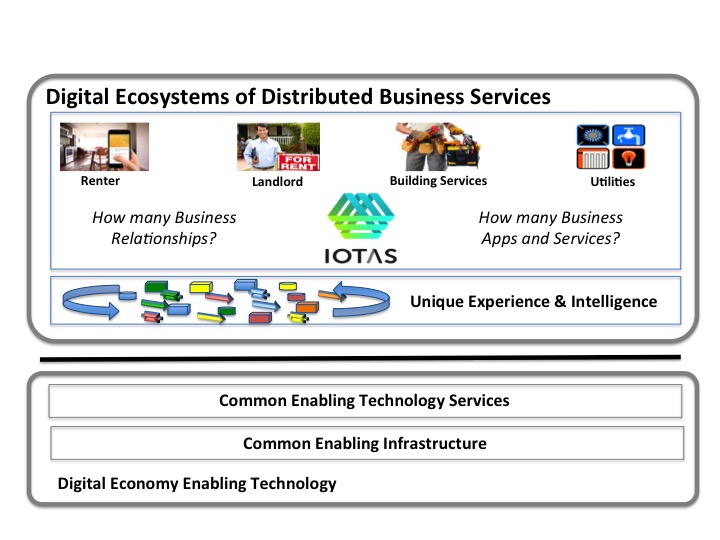
Service Management is a very broad term, and in the framework of Digital Business has a particularly broad and crucial role. A further complication is that the role is split between the Service Management of the enabling technologies, overlaid by the Service Management of distributed Business interactions/transactions. In the short term the Distributed Service Technology Management will dominate, and must support/integrate both on-premise Enterprise owned infrastructure, and the use of external ‘As a Service’ Cloud Service provider infrastructure.

However for a Digital Business, as defined in Part 1 of this series, to trade in the Digital Economy does require the implementation of an external Distributed Service Business management capability as well. Part 3b of this series provides a briefing on the requirement, and in particular, the potential role of Blockchain technologies.

The preceding part two, see appendix for details, focused on the first layer of simple four layer abstracted framework defining the technologies supporting a Digital Enterprise. Dubbed Dynamic Infrastructure’ this base layer provides on demand access to networking and computational resources with the necessary Service Management directly associated with provisioning. The Distributed Service Technology Management Layer sits above this layer to provide and manage a wide range of sophisticated functions that enable the delivery of Business value.

The separation between the Service Management of the Dynamic Infrastructure and the Distributed Service Technology Management may seem odd, but it is important. The provisioning infrastructure may be provided by the enterprise, but increasingly a large portion will be provided ‘as a Service’ by market leading vendors such as AWS, Google or Microsoft, amongst many others. Enterprises can expect to operate across both Private and Public Infrastructure, and as such their Distributed Service Technology Management must operate seamlessly across both.

Distributed Service Technology Management should be used as a term to refer to those functions that must operate in an independent manner above the Dynamic Infrastructure layer. The over used popular term ‘Platform’ is frequently used to describe these capabilities, but the differences between various Platforms is so large as to render the term meaningless as a requirement definition.

The comparison of ‘Platform’ products is difficult due to the wide range of functions contained in this layer, some of which are very focused on a particular aspect. In addition most Platforms are continually developing in line with deployment experience and market demands. Discussion on standard may be actively underway but it will take both time and market maturity before significant impact. The definition of an IoT Platform started around the connectivity of sensors with associated functionality for data management, but today a Platform are increasingly seen as an integral part of CAAST, (Clouds, Apps, AI, Services & Things). High function Platforms from leading technology vendors support the integrated operation of these technologies as the enabler for Digital Business.

Specialized Platforms, particularly as part of final mile IoT connectivity, are still required and as a further complication these are usually designed to connect into the sophisticated high function Platforms. With such wide diversity in capabilities it makes the term ‘Platform’ effectively meaningless as a capability definition. To gain an insight on the numbers of products defined as an ‘IoT Platform’ then visit a product-listing site such as Postscapes.

Platforms can be broken into four major groupings, a methodology that allows the positioning of major technology vendors to be more readily identified in alignment with their core market focus;

  1. Enterprise operated Dynamic Infrastructure; examples; Cisco, Dell, HPE
  2. Cloud Services providers+; examples; AWS, Google, Microsoft, Salesforce, SAP,
  3. IoT ‘final mile’ focused; examples; Labellum, PTC, ThingsWorx
  4. Open Source Development*; examples; AllJoyn, GE Predix, OpenIoT

+IBM, Salesforce and SAP all offer Platforms that connect to their respective Clouds, but their focus is on providing Business Apps, not Cloud capacity. They have been included to avoid questions that would occur if their names were omitted.

*See a list of 21 Open Source Projects here

As is usually the case in the initial stages of a new technology market Vendor proprietary solutions are likely to provide the most attractive solutions for the requirements of first generation deployments. Such deployments tend to be focused and do not require the full range of functions that will be required later when maturity and scale drive product selection. Not unnaturally there will be concern as to vendor lock-in, and/or, restrictions on the development of a fully functional Distributed Services Technology Management layer, but this may be less concerning then it might seem.

For any Digital Enterprise the successful implementation of an independent Distributed Service Management of Technology layer able to integrate ‘any to any’ combinations of Private or Public Dynamic Infrastructure provision into advanced operational Services in support of the higher business layers is a crucial success factor.

A great deal of Technology attention is focused upon the architecture and standards necessary to achieve this as by definition the Distributed Service Management layer be based on standardized principles to ensure ‘open’ operation. Leading technology vendors are active in addressing the requirement for standards. Almost all references to IoT Architecture are in reality references to the Architecture of the Distributed Services Technology Management layer, and have relatively little to contribute to the remaining three layers of the Digital Business framework.

If the number of Platforms, each with different features, available in the market are confusing, then the confusion is made worse when the numbers of communities developing architectural models and standards are added into consideration. This is not the place to examine, even list, each individually. This blog is aimed at providing an informed overview to build understanding of the necessary considerations for enterprise deployment and product evaluation.

Commercially sponsored standards activities often have a scope, or point of view driven by the market positioning and products of particular vendors. This often fragments the overall architecture required as well as making it difficult to use for objective evaluation. Those charged with managing the introduction of the Distributed Services Technology Management into their enterprise need a comprehensive future framework to help them ensure the various tactical deployment choices will come together in a cohesive transformation of capabilities.

Perhaps the best example of an independent approach but with a scope to cover the entire architectural framework comes from the IoT Forum. This body took over the work of the EU on IoT Architecture and extended the reach to be global, as well as to more inclusive with a series of events held around the world. EU funding has reduced reliance on technology vendor sponsorship, enabling the production of detailed report on what is required, and why, under the title of ‘Architectural Reference Model, or ‘ARM’ introduction.

The IoT Forum work on ARM provides an excellent background to understanding this complex requirement, as well as offering a strategic definition as a longer-term target for the development of an Enterprise Distributed Services Technology Management layer. Current deployment requirements can be assessed against this framework to establish requirement definitions for product choice. This is particular useful given the lack of reliable standards to guide choice.

The value of the work on Architectural Frameworks by various bodies on across the Technology industry currently provides guidance on incorporating the first standards. However, in determining how the Technology elements will support interworking internally, and externally, it is easy to lose sight of the real question. The technology aspect is there to support and enable the Distributed Services Business Management capabilities.

The Digital Business Enterprise only exists because it is part of the Digital Economy conducting business through exchanging Services with its industry ecosystem of partners. In this continuously dynamic model with ever changing Business partners and transactions a distributed, and decentralized, commercial transaction recording capability is a necessity.

In a decentralized distributed Digital Business ecosystem operating in a loose coupled, stateless format existing forms transaction management based on predefined close coupled relationships and managed state cannot be applied. The huge interest in Blockchain technology is to provide this new and radically different capability.

It should be noted that BitCoin, often quoted as an example of Blockchain, is not indicative of the overall capabilities that can de developed using Blockchain technologies. BitCoin is a particular implementation that uses the technology in a certain manner with corresponding limitations.

Part 3b of this series provides a briefing on decentralized Distributed Services Business management.


Summary; Background to this series

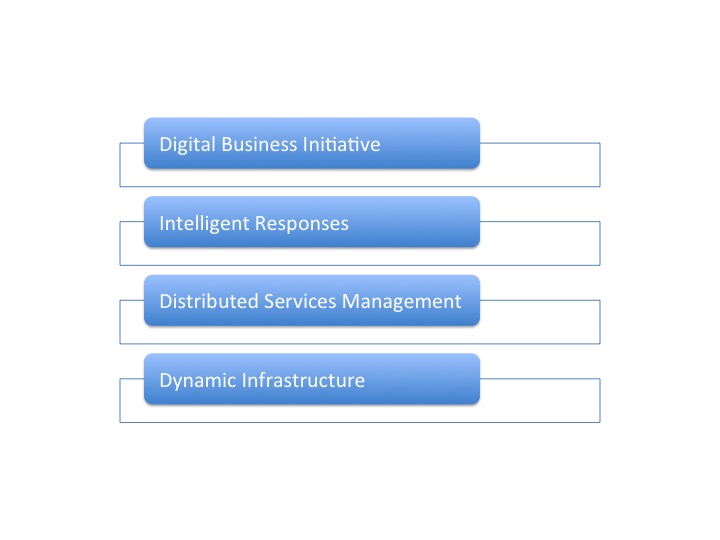
This is third part in a series on Digital Business and the Technology required to support the ability of an Enterprise to do Digital Business. An explanation for the adoption of a simple definition shown in the diagram below to classify the technology requirements rather than attempt any form of conventional detailed Architecture is provided, together with a fuller explanation of the Business requirements.


Part One - Digital Business Distributed Business and Technology Models;

Understanding the Business Operating Model

Part Two - Digital Business Distributed Business and Technology Models;

The Dynamic Infrastructure


New C-Suite Innovation & Product-led Growth Tech Optimization Future of Work AI ML Machine Learning LLMs Agentic AI Generative AI Analytics Automation B2B B2C CX EX Employee Experience HR HCM business Marketing SaaS PaaS IaaS Supply Chain Growth Cloud Digital Transformation Disruptive Technology eCommerce Enterprise IT Enterprise Acceleration Enterprise Software Next Gen Apps IoT Blockchain CRM ERP Leadership finance Customer Service Content Management Collaboration M&A Enterprise Service Chief Information Officer Chief Technology Officer Chief Digital Officer Chief Data Officer Chief Analytics Officer Chief Information Security Officer Chief Executive Officer Chief Operating Officer

Machine Learning Is The New Proving Ground For Competitive Advantage

Machine Learning Is The New Proving Ground For Competitive Advantage

1
  • 50% of organizations are planning to use machine learning to better understand customers in 2017.
  • 48% are planning to use machine learning to gain greater competitive advantage.
  • Top future applications of machine learning include automated agents/bots (42%), predictive planning (41%), sales & marketing targeting (37%), and smart assistants (37%).

These and many other insights are from a recent survey completed by MIT Technology Review Custom and Google Cloud, Machine Learning: The New Proving Ground for Competitive Advantage (PDF, no opt-in, 10 pp.). Three hundred and seventy-five qualified respondents participated in the study, representing a variety of industries, with the majority being from technology-related organizations (43%). Business services (13%) and financial services (10%) respondents are also included in the study.  Please see page 2 of the study for additional details on the methodology.

Key insights include the following:

  • 50% of those adopting machine learning are seeking more extensive data analysis and insights into how they can improve their core businesses. 46% are seeking greater competitive advantage, and 45% are looking for faster data analysis and speed of insight. 44% are looking at how they can use machine learning to gain enhanced R&D capabilities leading to next-generation products.
If your organization is currently using ML, what are you seeking to gain?*

If your organization is currently using ML, what are you seeking to gain?

  • In organizations now using machine learning, 45% have gained more extensive data analysis and insights. Just over a third (35%) have attained faster data analysis and increased the speed of insight, in addition to enhancing R&D capabilities for next-generation products. The following graphic compares the benefits organizations who have adopted machine learning have gained. One of the primary factors enabling machine learning’s full potential is service oriented frameworks that are synchronous by design, consuming data in real-time without having to move data. enosiX is quickly emerging as a leader in this area, specializing in synchronous real-time Salesforce and SAP integration that enables companies to gain greater insights, intelligence, and deliver measurable results.
your organization is currently using machine learning, what have you actually gained?

If your organization is currently using machine learning, what have you actually gained?

  • 26% of organizations adopting machine learning are committing more than 15% of their budgets to initiatives in this area. 79% of all organizations interviewed are investing in machine learning initiatives today. The following graphic shows the distribution of IT budgets allocated to machine learning during the study’s timeframe of late 2016 and 2017 planning.
What part of your IT budget for 2017 is earmarked for machine learning?

What part of your IT budget for 2017 is earmarked for machine learning? 

  • Half of the organizations (50%) planning to use machine learning to better understand customers in 2017. 48% are adopting machine learning to gain a greater competitive advantage, and 45% are looking to gain more extensive data analysis and data insights. The following graphic compares the benefits organizations adopting machine learning are seeking now.
If your organization is planning to use machine learning, what benefits are you seeking?

If your organization is planning to use machine learning, what benefits are you seeking?

  • Natural language processing (NLP) (49%), text classification and mining(47%), emotion/behavior analysis (47%) and image recognition, classification, and tagging (43%) are the top four projects where machine learning is in use today.  Additional projects now underway include recommendations (42%), personalization (41%), data security (40%), risk analysis (41%), online search (41%) and localization and mapping (39%). Top future uses of machine learning include automated agents/bots (42%), predictive planning (41%), sales & marketing targeting (37%), and smart assistants (37%).
  • 60% of respondents have already implemented a machine learning strategy and committed to ongoing investment in initiatives. 18% have planned to implement a machine learning strategy in the next 12 to 24 months. Of the 60% of respondent companies who have implemented machine learning initiatives, 33% are in the early stages of their strategies, testing use cases. 28% consider their machine learning strategies as mature with between one and five use cases or initiatives ongoing today.
Data to Decisions Innovation & Product-led Growth Future of Work Tech Optimization Next-Generation Customer Experience Digital Safety, Privacy & Cybersecurity ML Machine Learning LLMs Agentic AI Generative AI AI Analytics Automation business Marketing SaaS PaaS IaaS Digital Transformation Disruptive Technology Enterprise IT Enterprise Acceleration Enterprise Software Next Gen Apps IoT Blockchain CRM ERP finance Healthcare Customer Service Content Management Collaboration Chief People Officer Chief Executive Officer Chief Information Officer Chief Technology Officer Chief AI Officer Chief Data Officer Chief Analytics Officer Chief Information Security Officer Chief Product Officer