


Results
SEC Moves Toward Mandatory Climate Reporting: Are You Prepared?
SEC Moves Toward Mandatory Climate Reporting: Are You Prepared?

Doug Henschen is former Vice President and Principal Analyst where he focused on data-driven decision making. Henschen’s Data-to-Decisions research examines how organizations employ data analysis to reimagine their business models and gain a deeper understanding of their customers. Henschen's research acknowledges the fact that innovative applications of data analysis requires a multi-disciplinary approach starting with information and orchestration technologies, continuing through business intelligence, data-visualization, and analytics, and moving into NoSQL and big-data analysis, third-party data enrichment, and decision-management technologies. Insight-driven business models are of interest to the entire C-suite, but most particularly chief executive officers, chief digital officers,…...
Read moreDraft rules from the SEC will require public firms to report carbon emissions and climate risks. Software vendors are gearing up to help you comply.
Thousands of public companies are already reporting carbon emissions and climate risks as part of their environmental, social and governance initiatives. But what was once voluntary may soon be mandatory. Is your organization ready to follow the leaders?
The mandate is coming from the U.S. Securities and Exchange Commission (SEC), which on March 21 issued draft regulations that will require public companies to report their carbon-emissions and climate-risks. The rules are not final, but the SEC already gathered industry feedback in 2021 before coming up with the draft rules. From here there will be a 60-day public review period. The SEC is expected to issue final rules by the end of 2022, with a three-year phase-in period that would start in 2023.
So are you ready to report, let alone plan and strategize around emissions and climate-risk data? If your company is among the more than 2,600 companies that has embraced the voluntary framework put forth by the Task Force on Climate-Related Financial Disclosure (TCFD), you are in luck. Based on last year’s industry feedback, the SEC has modeled its disclosure requirements in large part on the TCFD disclosure framework, as well as the also-popular Sustainability Accounting Standards Board (SASB) industry standards and materiality guidance.
As noted in the video report posted above, some aspects of the SEC’s draft rules are likely to face legal challenges, particularly Scope 3 (indirect) emissions reporting and guidance on what is material to a company’s financial performance. But Scope 1 and Scope 2 (direct) emissions and climate-risk disclosures are likely to be instituted as soon as next year. You can also expect global requirements, as the IFRS Foundation, which guides financial reporting in more than 140 countries, is expected to introduce its own draft emissions disclosure requirements this year.
Industry leaders, fast followers, and even cautious adopters are already reporting this data. In fact, 92% of Fortune 500 companies already disclose data tied to climate issue and publish environmental reports. The problem is that they do so using a variety of voluntary formats.
The good news in regulation is that it will provide uniform requirements that will simplify reporting for business. The mandate will also ensure complete and consistent measures that will help investors and the public spot greenwashing and selective disclosures.
Technology will be crucial to not just meeting reporting requirements, but to harnessing data for strategic and operational planning and business differentiation. The vendors that have been ahead of the curve with ESG-supporting software – companies including Cervest, Envizi, Honeywell, Insight Software, Planetly, Watershed, and Workiva – will retain first-mover advantages, as they know how to gather and report data based on the leading voluntary frameworks. They know where customers are likely to struggle when it comes to compiling data and, in some cases, moving the needle on ESG goals. They will be in a good position to guide companies preparing to meet the SEC’s coming reporting requirements.
In some ways, however, new requirements level the playing field for vendors and end-users that haven't spent years working on climate and social reporting. In recent weeks I’ve had briefings and updates with several vendors that are clearly gearing up to support ESG initiatives, including Anaplan, C3.ai, Onestream, Salesforce, and SAP.
The bottom line in the SEC’s draft regulations is that it’s time to prepare – if you haven’t already – for an era in which climate-impact and climate-risk reporting will be mandatory for public companies. From my perspective, it’s best to take a proactive approach and use technology to turn requirements to your own advantage.
Data to Decisions Tech Optimization Innovation & Product-led Growth Future of Work sustainability Chief Data Officer Chief Digital Officer Chief Executive Officer Chief Financial Officer Chief Information Officer Chief People Officer Chief Procurement Officer Chief Supply Chain Officer Chief Sustainability OfficerSEC Moves Toward Mandatory Climate Reporting
SEC Moves Toward Mandatory Climate Reporting
Doug Henschen is former Vice President and Principal Analyst where he focused on data-driven decision making. Henschen’s Data-to-Decisions research examines how organizations employ data analysis to reimagine their business models and gain a deeper understanding of their customers. Henschen's research acknowledges the fact that innovative applications of data analysis requires a multi-disciplinary approach starting with information and orchestration technologies, continuing through business intelligence, data-visualization, and analytics, and moving into NoSQL and big-data analysis, third-party data enrichment, and decision-management technologies. Insight-driven business models are of interest to the entire C-suite, but most particularly chief executive officers, chief digital officers,…...
Read moreDraft rules introduced by the US Securities and Exchange Commission call for mandatory emissions and climate risk reporting. Tech vendors are gearing up to support corporate environmental initiatives.
Data to Decisions Tech Optimization Chief Executive Officer Chief Information Officer Chief Sustainability Officer On <iframe src="https://player.vimeo.com/video/695101455?h=04c6254bf3" width="640" height="360" frameborder="0" allow="autoplay; fullscreen; picture-in-picture" allowfullscreen></iframe><p><a href="https://vimeo.com/695101455">SEC Moves Toward Mandatory Climate Reporting</a> from <a href="https://vimeo.com/constellationresearch">Constellation Research</a> on <a href="https://vimeo.com">Vimeo</a>.</p>
Reclaiming Marketing’s Mojo: Lessons from Adobe Summit 2022
Reclaiming Marketing’s Mojo: Lessons from Adobe Summit 2022

About Liz Miller: Liz Miller is Vice President and Principal Analyst at Constellation, focused on the org-wide team sport known as customer experience. While covering CX as an enterprise strategy, Miller spends time zeroing in on the functional demands of Marketing and Service and the evolving role of the Chief Marketing Officer, the rise of the Chief Experience Officer, the evolution of customer engagement, and the rising requirement for a new security posture that accounts for the threat to brand trust in this age of AI. With over 30 years of marketing experience, Miller offers strategic guidance on the leadership, business transformation, and technology requirements to deliver on today’s CX strategies. She has worked with global marketing organizations to transform everything from…...
Read moreI’m about to say the quiet stuff out loud: “Modern marketing” has meant marketers accepting that sometimes, we couldn’t get “there” from “here.” We have had to sacrifice our mojo in the name of modernization—sacrifice that secret sauce that turns wildly creative moments into monetization.
For those open to hearing it, an interesting thread emerged during this year’s Adobe Summit (summit.adobe.com): Marketing is actively reclaiming its mojo. And make no mistake, integration is at the center of getting our groove back.
In Adam Grant’s main stage session discussing organizational psychology and the dynamics of a team, he explained that when you get a “room of smart people together,” instead of coming together to make the room smarter, individuals spent time proving they were THE SMARTEST of the smart. To quote Grant, “often, the whole was less than the sum of its parts.” He went on to share that failed… anything…wasn’t because of a lack of smart people thinking smart things. Rather, failure was the byproduct of not RE-thinking fast enough.
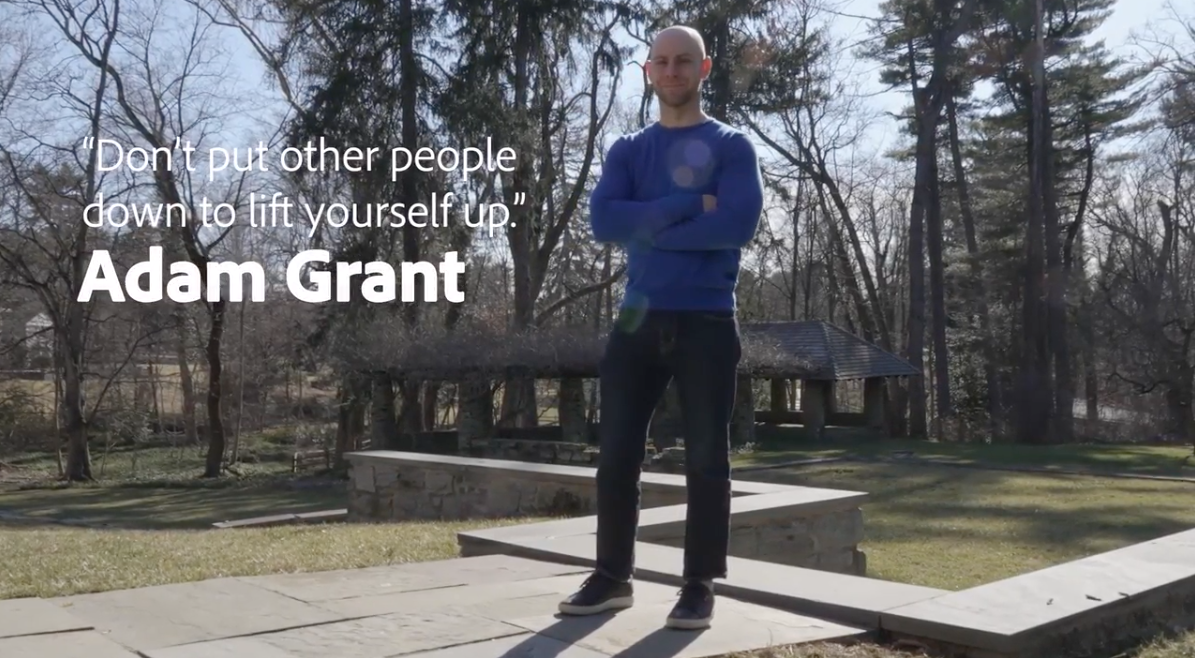 This resonated with me as a marketer…profoundly. I’ve BEEN IN that smart room watching the smartness wars demolish the best strategies and best intentions. But I’ve also understood that we marketers were forced to rethink everything in the earliest days of the global COVID-19 pandemic. We needed to quickly see the writing on the walls that something massive, disruptive and devastating could be on the way. We started to run…and being the smartest in the room didn’t matter as much as being able to be the most connected and most aligned across the organization.
Smart was nice. But smart didn’t save opportunities, recovery or growth. Smart was a bonus. Integrated was a requirement. Integrations, from teams to technologies helped us survive…and it will be integrations that will help marketing to continue to thrive and disrupt the status quo.
If there is anything that Adobe Summit 2022 showed us is that integration is the path forward for marketing. Be it integration between systems, channels, data and applications or integration across teams, people and partners, the biggest opportunities will realized and optimized thanks to collaboration, connection and integration.
Integration has taken center stage. Don’t believe me? Let’s break down three of the big Summit announcements that immediately caught my eye:
- New unified workflows between Adobe Workfront, Adobe Creative Cloud Enterprise, and Adobe Experience Manager integrate teams along the pathways of how the work of engagement gets done. This isn’t just integrating the work of approvals or collaboration, but fundamentally integrating along the continuum of storytelling and how that work forms the cornerstone of durable, profitable customer relationships.
- Data integrations align the speed of the customer with the speed of personalization as Adobe Real-Time CDP and Adobe Target come together. It is one thing to aggregate and normalize data, it is another to fully integrate fundamentally different intentnions behind data sets to craft a more holistic view of the intersection between customer, opportunity and brands. By bringing Adobe Target and Real-Time CDP together, the intentions of growth via precise delivery meets the opportunity of growth via precise personalization and contextual content.
- Integration took center stage again through key partnership announcements including commerce-centric partnerships with Walmart, FedEx and PayPal to expand a customer’s control of their buying, paying and delivery journey. Yet another partnership integration, with IBM’s The Weather Channel business, integrates a new layer of contextual intelligence bringing weather, climate and environmental contextualization to personalization.
Each announcement focused on the integration to facilitate and accelerate the work being done. Each focused on expanding the ecosystem of work to embrace the customer by ingesting the behavioral and contextual signals most directly impacting how their consumption of engagements could be shifted thanks to a more personal approach.
(Side note: There were a TON of announcements from enhancements and expansions of Adobe Sensei, Adobe’s AI, to the introduction of Adobe Experience Cloud for Healthcare and Adobe’s new cloud-based digital learning platform, Adobe Learning Manager. Check out this Adobe news announcement for a round up: https://news.adobe.com/news/news-details/2022/Adobe-Summit-2022-Make-the-Digital-Economy-Personal/default.aspx)
That isn’t to say there wasn’t plenty of that future-forward aspirational dreaming Adobe Summit is known for. This year, it wasn’t just announcements of cross-cloud integration demonstrating that connection between Creative, Experience and Document clouds…it was hearing from Scott Belsky, the Chief Product Officer and EVP of Creative Cloud sharing Adobe’s vision of the metaverse.
 Shared immersive experiences visualized in a 3-D world will be core to the metaverse economy. The vision outlined at Summit revolved around bringing the metaverse to life with Adobe Substance 3D Modeler (now in beta) that aims to bring the capacity to create AND collaborate on 3D assets out of the specialized (and complex) world of design and into the immersive, collaborative, real-time workstyle of the metaverse ready enterprise. Engagement across metaverses will not wait for brands to get up to speed with 3D, let alone the economies, commerce and experiences. Customers ready to co-create and collaborate in these shared worlds will simply move on.
I typically call Adobe Summit the annual celebration of marketing…but I’ve rethought (thanks Adam) that position and instead will leave you with this: Adobe Summit 2022 was a celebration of the work and the integrations that accelerate and empower how experiences translate into revenue. Thankfully, that work is marketing’s work. And what gets done is growth in an economy based on the power of getting personal…and THAT is marketing’s mojo. Time to go reclaim it!
Marketing Transformation Future of Work Next-Generation Customer Experience Chief Executive Officer Chief Marketing Officer Chief Digital OfficerAdobe Summit 2022: CR Event Report Showcase
Adobe Summit 2022: CR Event Report Showcase
About Liz Miller: Liz Miller is Vice President and Principal Analyst at Constellation, focused on the org-wide team sport known as customer experience. While covering CX as an enterprise strategy, Miller spends time zeroing in on the functional demands of Marketing and Service and the evolving role of the Chief Marketing Officer, the rise of the Chief Experience Officer, the evolution of customer engagement, and the rising requirement for a new security posture that accounts for the threat to brand trust in this age of AI. With over 30 years of marketing experience, Miller offers strategic guidance on the leadership, business transformation, and technology requirements to deliver on today’s CX strategies. She has worked with global marketing organizations to transform everything from…...
Read moreTwo days. Three videos. One showcase to view what got Liz Miller thinking after Adobe Summit 2022.
Marketing Transformation Matrix Commerce Next-Generation Customer Experience Chief Executive Officer Chief Information Officer Chief Marketing Officer Chief Digital Officer Chief Analytics Officer On CR Conversations <iframe src="https://vimeo.com/showcase/9402702/embed" width="720" height="405" allowfullscreen frameborder="0"></iframe>ConstellationTV Episode 30
ConstellationTV Episode 30

Holger Mueller is VP and Principal Analyst for Constellation Research for the fundamental enablers of the cloud, IaaS, PaaS and next generation Applications, with forays up the tech stack into BigData and Analytics, HR Tech, and sometimes SaaS. Holger provides strategy and counsel to key clients, including Chief Information Officers, Chief Technology Officers, Chief Product Officers, Chief HR Officers, investment analysts, venture capitalists, sell-side firms, and technology buyers. Coverage Areas: Future of Work Tech Optimization & Innovation Background: Before joining Constellation Research, Mueller was VP of Products for NorthgateArinso, a KKR company. There, he led the transformation of products to the cloud and laid the foundation for new Business Process as a…...
Read moreAbout Liz Miller: Liz Miller is Vice President and Principal Analyst at Constellation, focused on the org-wide team sport known as customer experience. While covering CX as an enterprise strategy, Miller spends time zeroing in on the functional demands of Marketing and Service and the evolving role of the Chief Marketing Officer, the rise of the Chief Experience Officer, the evolution of customer engagement, and the rising requirement for a new security posture that accounts for the threat to brand trust in this age of AI. With over 30 years of marketing experience, Miller offers strategic guidance on the leadership, business transformation, and technology requirements to deliver on today’s CX strategies. She has worked with global marketing organizations to transform everything from…...
Read moreOn Episode 30 of CRTV, Constellation analysts Holger Mueller and Liz Miller interview special guests Maggie Hulce, Executive Vice President of Indeed and Simon Harrison, CMO of Avaya. Maggie shares 2022 talent acquisition trends from the perspective of Indeed, and Simon breaks down the topic of composibility.
On ConstellationTV <iframe src="https://player.vimeo.com/video/691028517?h=c449053d44&badge=0&autopause=0&player_id=0&app_id=58479" width="960" height="540" frameborder="0" allow="autoplay; fullscreen; picture-in-picture" allowfullscreen title="ConstellationTV Episode 30"></iframe>Omnichannel. We Meet Again
Omnichannel. We Meet Again
About Liz Miller: Liz Miller is Vice President and Principal Analyst at Constellation, focused on the org-wide team sport known as customer experience. While covering CX as an enterprise strategy, Miller spends time zeroing in on the functional demands of Marketing and Service and the evolving role of the Chief Marketing Officer, the rise of the Chief Experience Officer, the evolution of customer engagement, and the rising requirement for a new security posture that accounts for the threat to brand trust in this age of AI. With over 30 years of marketing experience, Miller offers strategic guidance on the leadership, business transformation, and technology requirements to deliver on today’s CX strategies. She has worked with global marketing organizations to transform everything from…...
Read moreAre we the problem with omnichannel? Is our need to retain the last shreds of command-and-control engagement holding back a new age of commerce and selling? Liz Miller takes on one of her favorite topics, Omnichannel.
Be sure to check out Liz's blog on Catching Up with Omnichannel on PROS.com to keep the rethinking and retooling going!
CREventReport: Adobe Summit 2022 Day 2
CREventReport: Adobe Summit 2022 Day 2
About Liz Miller: Liz Miller is Vice President and Principal Analyst at Constellation, focused on the org-wide team sport known as customer experience. While covering CX as an enterprise strategy, Miller spends time zeroing in on the functional demands of Marketing and Service and the evolving role of the Chief Marketing Officer, the rise of the Chief Experience Officer, the evolution of customer engagement, and the rising requirement for a new security posture that accounts for the threat to brand trust in this age of AI. With over 30 years of marketing experience, Miller offers strategic guidance on the leadership, business transformation, and technology requirements to deliver on today’s CX strategies. She has worked with global marketing organizations to transform everything from…...
Read moreAnd just like that, Day 2 of Adobe Summit 2022 is in the books. Liz Miller shares her hot take on the ever-popular SNEAKS! and officially requests her title be changed thanks to a Day 2 speaker. To check out Day 2 of Summit for yourself, visit summit.adobe.com
Marketing Transformation Matrix Commerce Next-Generation Customer Experience Chief Marketing Officer Chief Digital Officer On CR Conversations <iframe src="https://player.vimeo.com/video/689394303?h=4b8d58aabc&badge=0&autopause=0&player_id=0&app_id=58479" width="1280" height="720" frameborder="0" allow="autoplay; fullscreen; picture-in-picture" allowfullscreen title="CREventReport: Adobe Summit Day 2"></iframe>CREventReport: Adobe Summit 2022 Day 1
CREventReport: Adobe Summit 2022 Day 1
About Liz Miller: Liz Miller is Vice President and Principal Analyst at Constellation, focused on the org-wide team sport known as customer experience. While covering CX as an enterprise strategy, Miller spends time zeroing in on the functional demands of Marketing and Service and the evolving role of the Chief Marketing Officer, the rise of the Chief Experience Officer, the evolution of customer engagement, and the rising requirement for a new security posture that accounts for the threat to brand trust in this age of AI. With over 30 years of marketing experience, Miller offers strategic guidance on the leadership, business transformation, and technology requirements to deliver on today’s CX strategies. She has worked with global marketing organizations to transform everything from…...
Read moreDay 1 of Adobe's annual celebration of experience got personal. Liz Miller shares her hot take on the kickoff keynote and some of the updates that Adobe Summit 2022 had in store. To check out Day 1 of Summit for yourself, visit summit.adobe.com
Marketing Transformation Matrix Commerce Next-Generation Customer Experience Chief Executive Officer Chief Marketing Officer Chief Data Officer On CR Conversations <iframe src="https://player.vimeo.com/video/688869458?h=d37e028338&badge=0&autopause=0&player_id=0&app_id=58479" width="1280" height="720" frameborder="0" allow="autoplay; fullscreen; picture-in-picture" allowfullscreen title="CREventReport: Adobe Summit 2022 Day 1"></iframe>
ConstellationTV Episode 29
ConstellationTV Episode 29

Hannah Mason is a marketing director at Constellation Research. She oversees brand positioning, creative direction, and content development across digital platforms, events, and campaigns. Her work spans branding and design—including graphics, sales collateral, and event presentations—along with website content management, newsletters, and Constellation Insights. Mason also manages surveys and produces Constellation’s video collateral, including ConstellationTV. Her role ensures that the Constellation brand is communicated with clarity, creativity, and consistency across all channels. Contact Hannah at [email protected]. ...
Read moreConstellationTV Episode 29 covers the latest in tech news, new Constellation research from Doug Henschen and a unique POV on the Russia/Ukraine conflict from Constellationr analysts Dion Hinchcliffe, Liz Miller and Holger Mueller.
On ConstellationTV <iframe src="https://player.vimeo.com/video/686378453?h=596b5a28f6&title=0&byline=0&portrait=0&speed=0&badge=0&autopause=0&player_id=0&app_id=58479" width="960" height="540" frameborder="0" allow="autoplay; fullscreen; picture-in-picture" allowfullscreen title="ConstellationTV Episode 29"></iframe>