This list celebrates changemakers creating meaningful impact through leadership, innovation, fresh perspectives, transformative mindsets, and lessons that resonate far beyond the workplace.
Editor in Chief of Constellation Insights
Constellation Research
Larry Dignan is Editor in Chief of Constellation Insights at Constellation Research, where he leads editorial coverage focused on enterprise technology, digital transformation, and emerging trends shaping the future of business. He oversees research-driven news, analysis, interviews, and event coverage designed to help technology buyers and vendors navigate complex markets with clarity and context. ...
Constellation Insights editor-in-chief Larry Dignan interviews Michael Storey, Chief Experience Officer at RentSpree about how the company is leveraging #AI and intelligent #automation to streamline workflows and create a more seamless experience for real estate agents and landlords managing rental properties. Michael discusses RentSpree's evolution from a screening and application provider to a full-suite rental property management platform. He explains how they use generative research and AI integration to reduce administrative tasks, personalize the experience, and help agents and landlords focus on what matters most. Hear Michael's insights on RentSpree's customer-centric approach and the role of emerging technologies in transforming the rental management industry!
Principal Analyst and Founder
Constellation Research
R “Ray” Wang is the CEO of Silicon Valley-based Constellation Research Inc. He co-hosts DisrupTV, a weekly enterprise tech and leadership webcast that averages 50,000 views per episode and blogs at www.raywang.org. His ground-breaking best-selling book on digital transformation, Disrupting Digital Business, was published by Harvard Business Review Press in 2015. Ray's new book about Digital Giants and the future of business, titled, Everybody Wants to Rule The World was released in July 2021. Wang is well-quoted and frequently interviewed by media outlets such as the Wall Street Journal, Fox Business, CNBC, Yahoo Finance, Cheddar, and Bloomberg.
Short Bio
R “Ray” Wang (pronounced WAHNG) is the Founder, Chairman, and Principal Analyst of Silicon Valley-based Constellation Research Inc. He…...
Exciting leadership changes and innovation at Zoho 🚀 Constellation founder R "Ray" Wang sat down with Zoho founders - Sridhar Vembu, Mani Vembu, and Tony Thomas - during Zoho's Analyst Day to learn more...
The team shared insights on the challenges facing the software industry, the need for true #innovation and exponential efficiency, and Zoho's vision to deliver domain-specific app platforms powered by advanced #AI and low-code development.
Sridhar has shifted from Zoho CEO to Chief Scientist, driving R&D and pioneering new AI-powered capabilities. Mani has taken on the CEO role for the Zoho.com division, focusing on platform strategy and global expansion. And Tony is leading the Zoho US market, working to strengthen customer engagement and go-to-market execution.
💡 🤠Zoho continues to disrupt the market and provide customers with exceptional value. Watch the full interview here!
Editor in Chief of Constellation Insights
Constellation Research
Larry Dignan is Editor in Chief of Constellation Insights at Constellation Research, where he leads editorial coverage focused on enterprise technology, digital transformation, and emerging trends shaping the future of business. He oversees research-driven news, analysis, interviews, and event coverage designed to help technology buyers and vendors navigate complex markets with clarity and context. ...
Workday reported better-than-expected fourth quarter earnings as the company saw strong demand for its AI products and more penetration across industries.
The company reported fourth quarter earnings of 35 cents a share on revenue of $2.21 billion, up 15% from a year ago. Non-GAAP earnings for the fourth quarter was $1.92 a share.
Wall Street was expecting Workday to report non-GAAP fourth quarter earnings of $1.78 a share on revenue of $2.18 billion.
For fiscal 2025, Workday reported earnings of $1.95 a share on revenue of $8.45 billion, up 16.4% from fiscal 2024. Non-GAAP earnings for fiscal 2025 was $7.30 a share.
As for the outlook, Workday projected first quarter subscription revenue of $2.05 billion, up 13% from a year ago. Workday projected subscription revenue of $8.8 billion, up 14% for fiscal 2026.
Workday CEO Carl Eschenbach said the company was benefiting from its platform approach as well as demand for its AI products.
CFO Zane Rowe said Workday saw good traction in industry verticals.
"With our unified platform, our customers can unlock value faster, reduce their total cost of ownership and harness the power of AI across our best in class HR and Finance solutions," said Eschenbach.
Eschenbach touted AI efforts such as its Agent System of Record. "We continue to see increasing demand for AI solutions. In fact, AI is front and center in every conversation I have with customers, prospects, and partners. They want to move beyond incremental productivity gains—they’re looking for ROI that will help drive growth back into their business," he said.
Workday also said that product and technology chief Sayan Chakraborty has retired. He will be replaced by Gerrit Kazmaier, who will be President of Product and Technology March 10. Kazmaier joints Workday from Google Cloud where he led data analytics and business intelligence. He was at SAP before Google.
By the numbers:
Workday has more than 11,000 customers.
Workday Student has more than 135 customers and half will be live by the Spring.
The company has more than 6,100 core HCM and financial customers.
30% of the customer expansion deals involve one or more AI SKUs.
15% of Workday's net new annual contract value is through partners.
Editor in Chief of Constellation Insights
Constellation Research
Larry Dignan is Editor in Chief of Constellation Insights at Constellation Research, where he leads editorial coverage focused on enterprise technology, digital transformation, and emerging trends shaping the future of business. He oversees research-driven news, analysis, interviews, and event coverage designed to help technology buyers and vendors navigate complex markets with clarity and context. ...
IBM said it will acquire DataStax in a move that will help it build out its watsonx genAI portfolio with various open source tools.
Financial details weren't disclosed.
DataStax is the company behind AstraDB, DataStax Enterprise and tools that are falling under the Apache Cassandra open source project. IBM said it will continue to support DataStax's participation in projects such as Apache Cassandra, Langflow, Apache Pulsar, and OpenSearch.
The plan for IBM is to leverage DataStax's technologies and combine them with its Granite large language models. IBM will also be a bigger player in vector databases and leveraging unstructured data for enterprises.
DataStax competes with Couchbase and MongoDB among others.
IBM will add DataStax AstraDB and DataStax Enterprise to watsonx.data.
DataStax will bring vector and graphRAG capabilities to watsonx.
IBM will also have tighter integration with Langflow via DataStax.
In a blog post, DataStax CEO Chet Kapoor said the companies have worked together on multiple joint customer projects.
"DataStax and IBM have collaborated in the market since 2020, serving customers such as T-Mobile, Audi, The Home Depot, and Intuit," said Kapoor. "Over the last year, DataStax introduced HCD and Mission Control, further bringing Cassandra into the cloud-native era, deployed on top of IBM OpenShift."
The deal is expected to close in the second quarter.
Constellation Research analyst Doug Henschen said:
"DataStax brings IBM both high-scale NoSQL software and cloud services that provide the data underpinning for online giants ranging from Netflix, Overstock and Priceline to Dataworkz, Digital River and Intuit. The press release mostly addresses GenAI opportunities, by way of DataStax's 2024 introduction of vector storage and embedding capabilities, but the underlying platform is solid and geared to massive, global-scale deployments."
DataStax has faced increased competition in recent years, primarily from Public Cloud providers, leading with AWS, which offers both DynamoDB (a similarly scalable NoSQL database) and Amazon Keyspaces (for Apache Cassandra).
It will be interesting to see whether big, cloud-native customers (Netflix, Priceline, Overstock, etc.) with skilled engineering teams turn to self-managing Cassandra in the wake of this acquisition."
Editor in Chief of Constellation Insights
Constellation Research
Larry Dignan is Editor in Chief of Constellation Insights at Constellation Research, where he leads editorial coverage focused on enterprise technology, digital transformation, and emerging trends shaping the future of business. He oversees research-driven news, analysis, interviews, and event coverage designed to help technology buyers and vendors navigate complex markets with clarity and context. ...
Qualcomm said it has launched a new brand called Dragonwing as it expands its footprint more into enterprise and industrial use cases.
The move, which comes ahead of Mobile World Congress, highlights how Qualcomm is looking to be more than a mobile computing chipmaker. Sure, it has expanded into PCs, autos and elsewhere, but the game plan is much broader.
In a blog post, Qualcomm said Dragonwing is designed to be "relevant to more industries than ever before." The company said the Dragonwing effort is designed to target industrial robots, handhelds and drones to name a few.
"Qualcomm is expanding its brand with the new Dragonwing set of processors to go wider than ever before," said Constellation Research analyst Holger Mueller. "The interesting announcement though is the work on hybrid AI, where Qualcomm gets access to the data center, a totally new total addressable market (TAM)."
Dragonwing lands at an opportune time given physical AI is kicking off as is edge AI use cases that will need low-power compute and connectivity. These technologies will sit at the intersection of AI and automation. PhysicalAI, world foundation models will move to forefront
For instance, Honeywell executives argued that the industrial automation play has been overlooked. Speaking at an investment conference, Honeywell CEO Vimal Kapur put AI in context with other technologies.
The main point is that AI is one part of Honeywell's big picture that revolves around autonomy.
Kapor said:
"The biggest trend I see is in context of Honeywell as move towards autonomy. This is something which is not discussed enough. We discuss things in isolation. There are three trends which are coming together for a company like us. First is ability to collect data on cloud. Second is 5G, which allows you to collect data without wires with many buildings and many plants. And finally, AI. How do you use the three together and build a solution which takes automation toward autonomy?"
Qualcomm said Dragonwing products will be aimed at energy and utilities, retail, supply chain, manufacturing and telecom. Qualcomm said that it is targeting $22 billion in non-handset revenue by 2029 led by AI and its applications in industries such as automotive.
"We continue to believe that industrial edge devices with connectivity, high-performance computing and on device AI will become one of our largest addressable opportunities fueled by the secular trends of digital transformation. As such, we're accelerating our investments in solutions, ecosystem and broad channel enablement to position ourselves for growth while we navigate the industry-wide inventory draw down."
Editor in Chief of Constellation Insights
Constellation Research
Larry Dignan is Editor in Chief of Constellation Insights at Constellation Research, where he leads editorial coverage focused on enterprise technology, digital transformation, and emerging trends shaping the future of business. He oversees research-driven news, analysis, interviews, and event coverage designed to help technology buyers and vendors navigate complex markets with clarity and context. ...
For Michael Storey, Chief Experience Officer at RentSpree, customer experience (CX) is intertwined with processes that can be simplified, a bevy of user experience metrics and teams across the company that realize strong CX equates to strong business results.

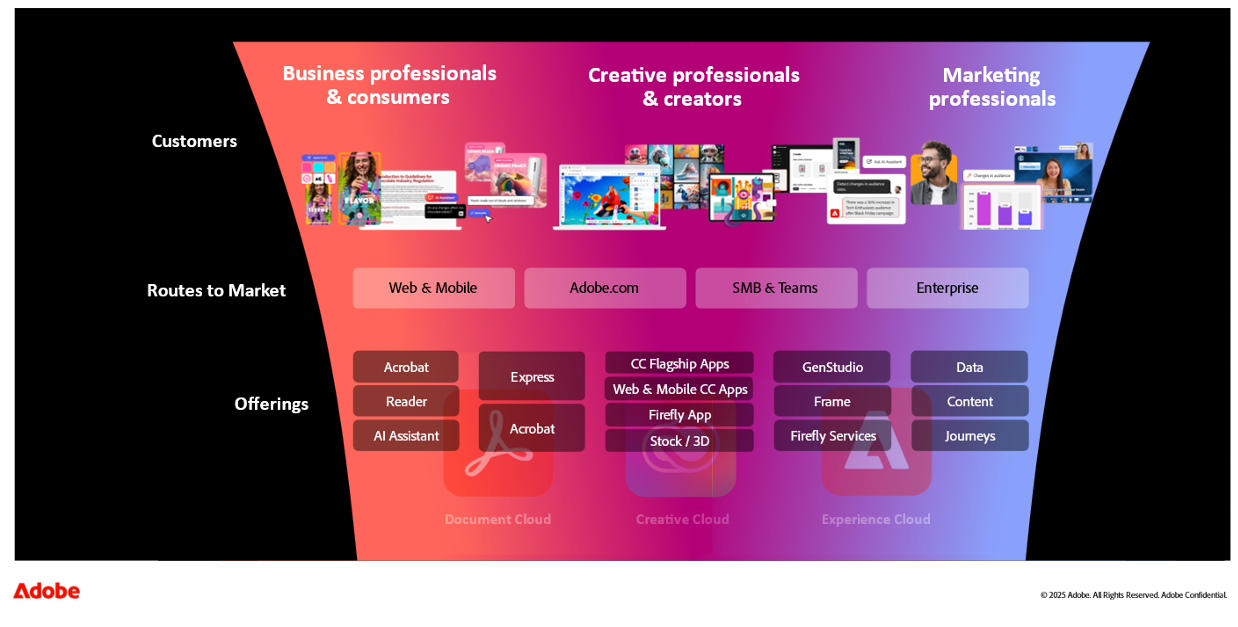
RentSpree's role. RentSpree is a rental property management software company that started out as a service for screening applications. Today, RentSpree has evolved to be more of a suite for rental property management. "We really target the smaller mom and pop type landlords for property management," said Storey.
Use cases. "When you're looking for a tenant as a landlord and you have a few properties you really want to save yourself time," said Storey. "We hone in on people who want to work with an agent. There's a lot of complexity and compliance that needs to be considered. The agent will help the landlord market the property, screen those tenants and ensure they're reliable. They also set up leases, security deposits and rent payments."
Storey added that RentSpree is designed to make sure the agent is connected to landlords and over time, the landlords can become customers too. "We can really maximize the opportunity for the agent and help landlords maintain a good reputation as well," said Storey.
The end customer. RentSpree has four main cohorts. First is the partner organizations such as MLS and brokerages and their agents. Storey said RentSpree services are traditionally for agents. More recently, RentSpree has ben bringing landlords on to collaborate and create centralized tools. Applicants and renters are also target audiences, but aren't a marketing focus.
CX and process. "Agents have a lot of admin, paperwork and tasks they have to do," said Storey. "We do a lot of generative research to find out where the problems in the process are and how we can help them." He added that the rental market lacks automation and RentSpree is focusing on how it can simplify processes for agents with automation and AI.
CX and AI. Storey noted that even though AI has a lot of potential human centric design principles are still critical. "I think AI is going to help us be much more fluid in how we personalize experiences with contextual information," said Storey. "If we understand what the customer has been doing and what needs to be done, we can automate the experience."
AI plans. RentSpree is still early in its AI journey, but has integrated AI into its chat support and knowledge base. Storey added that genAI is also writing listing descriptions based on agent details. "We're starting to explore how we integrate AI across different features to take away tasks," he said. "We want to create a connected journey so we can take somebody through what they need to do without focusing on the perfect happy path. AI is helping us have a deeper understanding of the individual customer and where they are in their journey."
Measuring CX success. Storey said traditionally Net Promoter Scores and customer satisfaction rating have gauged CX success, but they are lacking. "I've changed my perspective on whether those things are actually useful. Storey said:
"I think giving the user a chance to give you some comments or tell you their thoughts is great, but when asking them to rate something you tend to get very extreme perspectives. You get very happy people or very unhappy people and we miss a lot of the people in between who are getting on with it, but don't feel compelled to write anything or to rate anything. I tend to look at UX success metrics as being things like task success rate, time on task, error rates, daily active users and monthly active users to tell us how sticky the product is really. I'm also looking at things that that lead to potentially lost revenue, support costs and time spent fixing issues. The churn rate is really one of the big ones."
CX as a team sport. Storey said RentSpree has been infusing a customer focused approach that includes the product team and other business teams as well as research and operations. "You want these teams to have a strong voice and seat at the table when we talk about roadmaps," said Storey. "We want people to understand that good customer experience leads to a thriving business. You can't really have a successful business if you don't do something your customer loves."
Editor in Chief of Constellation Insights
Constellation Research
Larry Dignan is Editor in Chief of Constellation Insights at Constellation Research, where he leads editorial coverage focused on enterprise technology, digital transformation, and emerging trends shaping the future of business. He oversees research-driven news, analysis, interviews, and event coverage designed to help technology buyers and vendors navigate complex markets with clarity and context. ...
Zoom Video reported better-than-expected fourth quarter earnings as its enterprise revenue picked up. However, fourth quarter sales were below estimates and the outlook for the fiscal year was underwhelming.
The company reported fourth quarter earnings of $367.9 million, or $1.16 a share, on revenue of $1.18 billion, up 3.3% from a year ago. Non-GAAP earnings in the fourth quarter were $1.41 a share.
Wall Street was looking for Zoom to report non-GAAP fourth quarter earnings of $1.35 a share on revenue of $1.19 billion.
Zoom said its fourth quarter enterprise revenue was $706.8 billion, up 5.9% from a year ago. For fiscal 2025, Zoom's enterprise revenue was $2.75 billion, up 5.2%.
CEO Eric Yuan said Zoom was benefiting from Zoom AI Companion adoption and contact center and Workvivo demand.
In prepared remarks, Yuan said Zoom is uniquely positioned for agentic AI. He said:
"Zoom is a system of engagement for our users with recent information in ongoing conversations. This exceptional context along with user engagement allows us to drive greater value for customers. Our federated AI approach lets us combine the best models for each task.
We can use specialized small language models where appropriate, while leveraging larger models for more complex reasoning - driving both quality and cost efficiency."
Yuan also touted a big customer win with Amazon for Zoom Workspace. Amazon shuttered its Chime platform. "Our AI-first work platform continues to gain momentum, driven by our core strengths in meetings and expanding portfolio of integrated solutions such as Phone, Team Chat, Events, Zoom Docs, Whiteboard, and Zoom Rooms," said Yuan.
"We are excited to offer Zoom to Amazon employees and further strengthen our longstanding relationship with AWS as our preferred cloud provider. This builds on the success we’ve achieved helping customers easily procure and deploy Zoom through AWS Marketplace," said Yuan.
For contact center, Zoom said it signed its largest ARR deal in its history with a Fortune 100 company with more than 15,000 customers. Workvivo landed three deals worth more than $1 million in ARR.
For fiscal 2025, Zoom reported earnings of $1.01 billion, or $3.21 a share, on revenue of $4.66 billion, up 3.1%.
As for the first quarter outlook, Zoom projected revenue between $1.162 billion and $1.167 billion. Non-GAAP earnings are expected to be between $1.29 a share and $1.31 a share. Wall Street was expecting revenue of $1.18 billion in the first quarter and non-GAAP earnings of $1.34 a share.
Zoom projected fiscal 2026 revenue between $4.785 billion and $4.795 billion. Non-GAAP earnings will be between $5.34 a share to $5.37 a share. Zoom said that revenue in constant currency will be higher.
At the end of the fourth quarter, Zoom had 192,600 enterprise customers, 4,088 customers contributing more than $100,000 in revenue for the trailing 12 months and an online churn rate of 2.8%.
Editor in Chief of Constellation Insights
Constellation Research
Larry Dignan is Editor in Chief of Constellation Insights at Constellation Research, where he leads editorial coverage focused on enterprise technology, digital transformation, and emerging trends shaping the future of business. He oversees research-driven news, analysis, interviews, and event coverage designed to help technology buyers and vendors navigate complex markets with clarity and context. ...
Salesforce and Google Cloud have expanded a partnership that will bring Google's Gemini models to Agentforce, integrate Salesforce Service Cloud tightly with Google Customer Engagement Suite and enable handoffs between the companies' AI agents.
The deal also gives Salesforce, which historically has run on AWS, another option for its workloads. Salesforce Agentforce, Data Cloud and Customer 360 applications will run on Google Cloud and be available through Google Cloud Marketplace.
Key items in the expanded Salesforce-Google Cloud partnership include:
Salesforce can build Agentforce agents using Gemini and deploy Salesforce on Google Cloud.
Customers will be able to use data bi-directionally from Google BigQuery and Salesforce with zero copy technology.
The partnership will enable handoffs between Agentforce and Google Cloud agents.
Agentforce will use Grounding with Google Search through Vertex AI.
Salesforce Data Cloud and Google BigQuery will be tightly integrated.
The integration between Salesforce Service Cloud and Google Cloud Customer Engagement Suite will include real-time voice translation and agent connections. The companies are also planning deep integrations between Slack and Google Workspace.
Salesforce Tableau will have native integration with Looker and BigQuery.
The companies plan to roll out integrations throughout 2025.
"This is a critical Deal for both vendors. Salesforce needs access to the leading AI platform that Google has, and it needs to make Agentforce multimodal. Google Cloud is also making available the most plausible grounding service (as we humans use it all the time) - Google Search.
Salesforce has been slowly weaning itself off from its first partner AWS. For Google it's critical as it needs workloads from SaaS vendors, has invested earlier than anyone into AI and now needs to monetize that investment. Getting the Data Cloud support is critical, as it's another proof point of data gravity and the initial 'hook' for future customer spending. And it's great news for existing and joint customers. AI in Agentforce gets better, with more options. And it gets easier for Salesforce customers on Google Cloud to adopt Agentforce.
Salesforce needs the best AI for Agentforce and Google has it both on the hardware and algorithm side."
Editor in Chief of Constellation Insights
Constellation Research
Larry Dignan is Editor in Chief of Constellation Insights at Constellation Research, where he leads editorial coverage focused on enterprise technology, digital transformation, and emerging trends shaping the future of business. He oversees research-driven news, analysis, interviews, and event coverage designed to help technology buyers and vendors navigate complex markets with clarity and context. ...
MongoDB said it has acquired Voyage AI in a deal that aims to make embedding and reranking of models a native part of its database.
Voyage AI embeds and reranks models based on accuracy in retrieval augmented generation (RAG). MongoDB's bet is that these tools should be in the database layer to improve accuracy of models before they wind up in the AI agent pipeline.
In a blog post, MongoDB CEO Dev Ittycheria said Voyage AI will bring the ability to rerank results in RAG to ensure accuracy. "We believe embedding generation and reranking, as well as AI-powered search, belong in the database layer, simplifying the stack and creating a more reliable foundation for AI applications. By bringing more intelligence into the database, we help businesses mitigate hallucinations, improve trustworthiness, and unlock AI’s full potential at scale," said Ittycheria.
Here's how MongoDB sees Voyage AI working in its stack.
Voyage AI will bring the following to MongoDB:
A strong ecosystem on Hugging Face with Anthropic, LangChain, Harvey and Replit using Voyage AI.
Enhanced vector searches that capture meaning across text, images, PDFs and structured data.
Improved accuracy through advanced reranking models.
The ability to fine tune models for different industries.
As for the integration, MongoDB will continue to make Voyage AI available in AWS and Azure marketplaces. Voyage AI will be embedded into MongoDB Atlas starting with an auto-embedding service for Vector Search followed by native reranking and then industry use cases. MongoDB also is planning enhanced multi-modal tools and instruction-tuned models.
With this integration, MongoDB said developers won't need to manage external embedding APIs, standalone vector stores or complex search pipelines.
Holger Mueller, an analyst at Constellation Research, said the Voyage AI acquisition will make MongoDB a key player to curb hallucinations among models:
“Hallucination is a real AI problem, and the most relevant way of avoiding it through grounding is to query a trusted database. This is why the acquisition of Voyage AI by MongoDb is critical for MongoDB customers as it allows them in an easier and more efficient way to ground their AI models with embeddings (of code) and reranking (to find the right data) of Vector AI - all in their MongoDB data. It is critical that Vector AI remains available for 3rd party and other services as grounding demand is bigger than any single data store.”
Editor in Chief of Constellation Insights
Constellation Research
Larry Dignan is Editor in Chief of Constellation Insights at Constellation Research, where he leads editorial coverage focused on enterprise technology, digital transformation, and emerging trends shaping the future of business. He oversees research-driven news, analysis, interviews, and event coverage designed to help technology buyers and vendors navigate complex markets with clarity and context. ...
CxOs say that software-as-a-service business models that include consumption are going to require a learning curve as well as a few surprise bills. Nevertheless, there may be benefits to consumption-based models even with drawbacks.
With our monthly meeting of BT150 CxOs, consumption models were a key topic. Our CxO call, which is operated under Chatham House rules, highlighted a bevy of puts and takes about SaaS consumption models. Here's the breakdown:
Potential benefits
Cost efficiency and scalability. A few CxOs noted that consumption models force enterprises to get savvy about only paying for what they do. As a result, these companies can avoid overprovisioning. Consumption models can be more cost-effective in unpredictable usage scenarios.
Forced efficiency. If you don’t want nastygrams from your CFO, CIOs are likely to monitor and optimize usage. Consumption models force efficiency relative to three-year contracts.
Price and performance alignment. With consumption models, IT costs can be better aligned with business success. When usage is high, costs increase and in downturns you’ll get a break. A consumption model allows software pricing to mirror utilities like water and electricity.
Unpredictable budgets. Many enterprises struggle to predict costs, leading to surprise bills. Unpredictable costs were common in the early days of cloud computing adoption. Today, there are far more controls available. CIOs are likely to initially resist consumption pricing due to budgeting norms.
Governance and control issues. Consumption models requires strong cost tracking and governance to prevent runaway expenses. These controls will be even more critical with SaaS vendors because they lack the cost management tools that are common with cloud hyperscalers such as AWS, Microsoft Azure and Google Cloud
Behavioral and cultural impact on users. One CxO noted that a paradox with consumption models may be that employees avoid using AI due to cost concerns. This defeats the purpose of AI and creates inefficiencies as well as shadow IT. In addition, encouraging consumption may clash with cost-control strategies within enterprises.
Pricing confusion. GenAI and agentic AI with consumption models may introduce new costs that are difficult to quantify. Vendors are going to shift from seat-based pricing to AI-driven consumption, but customers lack the reference points to evaluate costs. There was healthy debate among CxOs about the likelihood of a cost-plus model (base cost and margin) because it torpedoes traditional software margins. Agentic AI: Three themes to watch for 2025 | Agentic AI without process optimization, orchestration will flop
Justifying AI returns on investment as well as total cost of ownership. CxOs said enterprises will push to justify returns and it’s unclear whether vendors or customers have the maturity to model returns.
What’s next?
Standardization of consumption models across SaaS vendors. There is no universal consumption pricing framework that exists and enterprises will struggle to evaluate AI and cloud service costs.
ROI-based pricing. Vendors are shifting toward outcome-based pricing, forcing companies to justify AI investments.
CFOs and CIOs need to align. Finance teams need better forecasting tools to integrate consumption models into enterprise budgets.
Market pushback. Excessive consumption-based pricing may face customer resistance, especially for AI tools without clear ROI.