Results

SAP SuccessFactors SuccessConnect 2015- Day #1 Keynote 3 Takeaways

SAP SuccessFactors SuccessConnect 2015- Day #1 Keynote 3 Takeaways

I had the opportunity to attend SAP’s SuccessFactors SuccessConnect conference being held in Las Vegas. The conference is well attended, with over 2500 attendees - an increase over last years.
 

So let’s look at the Top3 takeaways from the Day 1 Keynote:

Simplicity – In a keynote story line based on Verne’s 80 days around the world, Ettling stressed the need for simplicity – simplicity extends to run, use and engage with modern HR software. It is an incline to the overall SAP message of running simple… 


SuccessFactors SAP #SConnect15 SConnect
The Simplicity message was prominent at SConnect 

Certification – SAP has realized the need for certification – launching the self service centers a year ago. It’s good to see the traction now and in a nice move SuccessFactors welcome the first certified administrators at SuccessConnect. Certification of partners is coming, too – in general certification is critical to standardize services and capabilities so that customers can see repetitive high quality implementation and services.

 
SuccessFactors SAP #SConnect15 SConnect
Certification was a bug push. 

Next Generation HCM software – SAP shared vision of combining multiple HR transactions to make the life of HCM software users easier. A good move as in the past HR systems have been single transaction driven. With the innovation of (true) Analytics, BigData and Cloud, HR vendors can now aggregate more transaction in a more intelligent way. You can find more on my news analysis here – and my 2014 blog post on the same topic, creating the ‘transboarding’ verb (see here). 
 
 
SuccessFactors SAP #SConnect15 SConnect
Introducing SuccessFactors Intelligent Servcies
 

MyPOV

A good start for the SuccessConnect. It is clear that HCM is key for SAP, CEO McDermott called in recovering from its recent accident. With the intelligent services SAP is trying to do achieve something truly innovative – we will have to dig deeper into that the next days. Ettling also lifted the bonnet (sorry was in Scotland the last days) on plans to change Performance Management and Learning, as a preview to Krakovsky’s keynote tomorrow.

Some key tweets from the event:


And more on overall SAP strategy and products:


  • News Analysis - SAP SuccessFactors introduces Next Generation of HCM software - read here
  • News Analysis - SAP delivers next release of SAP HANA - SPS 10 - Ready for BigData and IoT - read here
  • Event Report - SAP Sapphire - Top 3 Positives and Concerns - read here
  • First Take - Bernd Leukert and Steve Singh Day #2 Keynote - read here
  • News Analysis - SAP and IBM join forces ... read here
  • First Take - SAP Sapphire Bill McDermott Day #1 Keynote - read here
  • In Depth - S/4HANA qualities as presented by Plattner - play for play - read here
  • First Take - SAP Cloud for Planning - the next spreadsheet killer is off to a good start - read here
  • Progress Report - SAP HCM makes progress and consolidates - a lot of moving parts - read here
  • First Take - SAP launches S/4HANA - The good, the challenge and the concern - read here


  • First Take - SAP's IoT strategy becomes clearer - read here
  • SAP appoints a CTO - some musings - read here
  • Event Report - SAP's SAPtd - (Finally) more talk on PaaS, good progress and aligning with IBM and Oracle - read here
  • News Analysis - SAP and IBM partner for cloud success - good news - read here
  • Market Move - SAP strikes again - this time it is Concur and the spend into spend management - read here
  • Event Report - SAP SuccessFactors picks up speed - but there remains work to be done - read here
  • First Take - SAP SuccessFactors SuccessConnect - Top 3 Takeaways Day 1 Keynote - read here.
  • Event Report - Sapphire - SAP finds its (unique) path to cloud - read here
  • What I would like SAP to address this Sapphire - read here
  • News Analysis - SAP becomes more about applications - again - read here
  • Market Move - SAP acquires Fieldglass - off to the contingent workforce - early move or reaction? Read here.
  • SAP's startup program keep rolling – read here.
  • Why SAP acquired KXEN? Getting serious about Analytics – read here.
  • SAP steamlines organization further – the Danes are leaving – read here.
  • Reading between the lines… SAP Q2 Earnings – cloudy with potential structural changes – read here.
  • SAP wants to be a technology company, really – read here
  • Why SAP acquired hybris software – read here.
  • SAP gets serious about the cloud – organizationally – read here.
  • Taking stock – what SAP answered and it didn’t answer this Sapphire [2013] – read here.
  • Act III & Final Day – A tale of two conference – Sapphire & SuiteWorld13 – read here.
  • The middle day – 2 keynotes and press releases – Sapphire & SuiteWorld – read here.
  • A tale of 2 keynotes and press releases – Sapphire & SuiteWorld – read here.
  • What I would like SAP to address this Sapphire – read here.
  • Why 3rd party maintenance is key to SAP’s and Oracle’s success – read here.
  • Why SAP acquired Camillion – read here.
  • Why SAP acquired SmartOps – read here.
  • Next in your mall – SAP and Oracle? Read here.


And more about SAP technology:
  • HANA Cloud Platform - Revisited - Improvements ahead and turning into a real PaaS - read here
  • News Analysis - SAP commits to CloudFoundry and OpenSource - key steps - but what is the direction? - Read here.
  • News Analysis - SAP moves Ariba Spend Visibility to HANA - Interesting first step in a long journey - read here
  • Launch Report - When BW 7.4 meets HANA it is like 2 + 2 = 5 - but is 5 enough - read here
  • Event Report - BI 2014 and HANA 2014 takeaways - it is all about HANA and Lumira - but is that enough? Read here.
  • News Analysis – SAP slices and dices into more Cloud, and of course more HANA – read here.
  • SAP gets serious about open source and courts developers – about time – read here.
  • My top 3 takeaways from the SAP TechEd keynote – read here.
  • SAP discovers elasticity for HANA – kind of – read here.
  • Can HANA Cloud be elastic? Tough – read here.
  • SAP’s Cloud plans get more cloudy – read here.
  • HANA Enterprise Cloud helps SAP discover the cloud (benefits) – read here.
 
Find more coverage on the Constellation Research website here and checkout my magazine on Flipboard.
Future of Work Innovation & Product-led Growth Next-Generation Customer Experience Tech Optimization New C-Suite Data to Decisions Digital Safety, Privacy & Cybersecurity Marketing Transformation Distillation Aftershots User Conference SuccessFactors SAP AI Analytics Automation CX EX Employee Experience HCM Machine Learning ML SaaS PaaS Cloud Digital Transformation Enterprise Software Enterprise IT Leadership HR LLMs Agentic AI Generative AI business Marketing IaaS Disruptive Technology Enterprise Acceleration Next Gen Apps IoT Blockchain CRM ERP finance Healthcare Customer Service Content Management Collaboration Chief People Officer Chief Technology Officer Chief Customer Officer Chief Human Resources Officer Chief Information Officer Chief Information Security Officer Chief Data Officer

Final Extension - SuperNova Award Deadline Extended to August 21

Final Extension - SuperNova Award Deadline Extended to August 21

New deadline August 21, 2015

SuperNova Award Ceremony

In response to an outpouring of demand, we've extended the SuperNova Award deadline one last time! You now have a few more days to complete your SuperNova Award application. 

All finalists of the SuperNova Awards are awarded one complimentary ticket to Constellation's Connected Enterprise executive innovation summit.* The application takes only about five minutes to complete. Gather all the information about your disruptive technology project, and submit your application now!

Revised timeline

  • August 7, 2015 August 21, 2015 last day for submissions.
  • September 2, 2015 finalists announced and invited to Connected Enterprise.
  • September 14, 2015 voting opens to the public
  • October 2, 2015 polls close
  • November 4, 2015 Winners announced, SuperNova Awards Gala Dinner at Connected Enterprise 
  •  

We're searching for the rebels, catalysts, and innovators that are shaping the future of technology! If you led the implementation of a disruptive technology for your organization, we want to hear your story!

Complete the SuperNova Award application in 3 steps

  1. Create a Constellation account
  2. Gather the information required to complete your SuperNova Award application. Preview the application and download an application checklist here
  3. Submit your application before August 21, 2015. 

*limit one per finalist. Transportation and lodging not included. 

Data to Decisions Digital Safety, Privacy & Cybersecurity Future of Work Marketing Transformation Matrix Commerce New C-Suite Next-Generation Customer Experience Tech Optimization Innovation & Product-led Growth AR Executive Events AI ML Machine Learning LLMs Agentic AI Generative AI Robotics Analytics Automation Cloud SaaS PaaS IaaS Quantum Computing Digital Transformation Disruptive Technology Enterprise IT Enterprise Acceleration Enterprise Software Next Gen Apps IoT Blockchain CRM ERP CCaaS UCaaS Collaboration Enterprise Service developer Metaverse VR Healthcare Supply Chain Leadership Chief Customer Officer Chief Digital Officer Chief Executive Officer Chief Financial Officer Chief Information Officer Chief Marketing Officer Chief People Officer Chief Procurement Officer Chief Supply Chain Officer Chief Technology Officer Chief Data Officer Chief Analytics Officer Chief Information Security Officer Chief Operating Officer

Don’t Listen to Me. Listen to MIT. Get Out of Facebook.

Don’t Listen to Me. Listen to MIT. Get Out of Facebook.

1

Short post from my phone while I get the oil changed in my car. 

Yesterday I tweeted this. 

I did some work and research on neural networks, artificial intelligence, machine learning and such back in my youth (early to mid 1980s).  Thankfully nothing that would cause the world to come to an end or machine intelligence to derail.

This article explains quite well the evolution since those early neural networks to today. And the reason why Elon Musk, Bill Gates, and Stephen Hawkins among others are sounding the bell about AI. 

It’s getting spooky. 

The reason I linked to that article is the same reason I’m staying out of Facebook. I don’t want to feed the machine. The calmness with which LeCun explains deep learning and the implications of it makes it sound like an engineering problem is being solved. 

It is.

The problem is that the engineering problem being solved is how imprecise humans are. And it will be solved in the next decade. 

I doubt that me staying out of Facebook will stop this. And I also doubt that Google (with whom I share limited information) is not doing the same. I am not stopping the evolution by doing this. 

But hopefully you get the threat a littler better. 

And stay out of Facebook. 

Next-Generation Customer Experience Marketing Transformation Digital Safety, Privacy & Cybersecurity Distillation Aftershots meta Marketing B2B B2C CX Customer Experience EX Employee Experience AI ML Generative AI Analytics Automation Cloud Digital Transformation Disruptive Technology Growth eCommerce Enterprise Software Next Gen Apps Social Customer Service Content Management Collaboration Security Zero Trust Chief Customer Officer Chief Information Security Officer Chief Privacy Officer

Google re-organizes - will it be about Alpha or Alphabet Soup?

Google re-organizes - will it be about Alpha or Alphabet Soup?

Yesterday Google surprised the industry watchers with the announcement of a new structure - Alphabet. Not surprisingly G is for... Google. Which becomes a subsidiary of Alphabet. At the helm of Google will be Sundar Pichai, who has been taking in more and more prominent roles inside the product development organization recently. Larry Page will be CEO of Alphabet, Sergei Brin will become its President. 
 
 
This is an interesting move by the two Google founders that deserves a blog post - especially since Google competitor Microsoft has not chosen the route of splitting the company (against my suggestion - more here). 

It will give Google a very different operating structure - but will also deliver some interesting benefits:
  • Synergies where Synergies are needed - autonomy where not - The Google founders have consolidated where synergies help (Google) and created autonomy where there are (at least not immediately) synergies - on the different moonshot projects that Google is running.
     
  • Setup for more valuation transparency - Google now has an easier structure that can lead to better transparency of financial performance. How much do the Moonshot businesses drag Google down? Should risks of the operating a Moonshot business drag down Google isolation All these issues can now be addressed in the new structure.
     
  • Different businesses need different talent - As mentioned also in my post on Microsoft - the businesses that Google finds itself in are very different, and require different talent, connections and experience. Cars are not Advertising, Home Automation not Search, etc. Google can now (and seems to) hire the talent to run these moonshots businesses. 
 

MyPOV

A bold move by the Google founders to keep Google aggressive on all fronts. Specialization always increases focus, and the Alphabet setup is basically agreeing that the previous organization did not work in the best way for Google and Google shareholders. We noticed e.g. the absence of the moonshots at Google I/O this year. Then we thought it was more a needed focus on Android that lead to the content selection, now we know it may have been an early indicator of changes ahead. 
 
So congrats to a bold step - normally High Tech companies cherish and hold on to synergies for very long, often too long. So now we will have to see if alpha (return for investors) will happen, or if it will be alphabet soup, a dish my kids love, but that won't create the returns Google needs. 
Tech Optimization alphabet Google Microsoft Chief Information Officer

SAP SuccessFactors Introduces Next Generation of Intelligent HCM Software

SAP SuccessFactors Introduces Next Generation of Intelligent HCM Software

This morning SAP SuccessFactors kicked off their yearly user conference in Las Vegas. As often at these events, SAP had a major product announcement to make, evolving around a next generation of HCM software. Certainly good timing and a good location to announce this. 


So let’s dissect the announcement in our customary news analysis style (it can be found here):

LAS VEGAS — August 11, 2015 — Managing changes to employee data can be costly and consume excess company resources each year. HR processes often include disparate transactions that cross multiple organizational boundaries, leading to wasted time managing the complexity and correcting errors. Most human capital management (HCM) software can’t handle this end-to-end view, forcing end users to guess what they need to do or rely on costly shared services. HR and employees need software that can quickly and easily guide them through the necessary steps when dealing with an employee change.

MyPOV – SAP is right that much of HR software has been built with single task automation in mind. The reality of business is more complex and usually even simple real world people events require a number of transactions that need to be processed by a variety of users. SAP is right at pointing at significant sunken cost of the status quo and it is good to see vendors questioning how business best practice has been performed so far and looking at new innovative ways to perform the same process – better and leaner.

Today, SuccessFactors, a leader in cloud-based human resources (HR) software and an SAP SE (NYSE: SAP) company, is introducing new capabilities in its HCM suite that transform the entire concept of HR service delivery, moving from series of individual and isolated self-services into end-to-end intelligent-services that can easily cross software modules and integrate processes. Intelligent services is designed to connect – and even predict – the impending transactions resulting from a change and automatically adjust them for the user, helping improve the employee experience and reduce reliance on – and cost of – shared services. This announcement was made at SuccessConnect 2015, being held August 10-12 in Las Vegas.

MyPOV – So here SAP opens the Pandora Box of the software innovation. It is good to see the vendor thinking about ways to improve the way how HR business should be done in the 21st century. Where it gets really interesting, when these actions can be predicted – as the above paragraph hints to – with some ‘true’ analytics (read more here), those who perform an action or at least recommend a course of action.

“We are taking the guesswork out of self-service by evolving to software-driven intelligent services,” said Mike Ettling, president: HR Line of Business at SAP SuccessFactors. “Relying on software-driven intelligence to remove complexity from typical HR transactions, employees are empowered to do more on their own, reducing expenses in shared services and Business Process Outsourcing (BPO). ”

MyPOV – A good quote, with the focus on good thing for enterprises these days, reduction of complexity, employee empowerment and cost reduction… All highly desirable goals for enterprises. Let’s see how SAP wants to achieve this.

With intelligent services, managed in the new SuccessFactors event center, individual transactions that make up common workforce events but cross multiple systems and software modules are consolidated into a single experience. Instead of managers or business partners having to guess all of the relevant tasks when a change takes place, or rely on shared services to fill the gaps, SuccessFactors does it for them, freeing up valuable manager and employee time. For example, workforce changes triggered by SuccessFactors’ core HR system, Employee Central, can be cascaded to other SuccessFactors modules such as Learning and Performance Management, as well as 3rd party systems. The end result is a simpler and more efficient employee experience, helping rapidly changing companies manage employee changes and transitions in stride and reducing the costs of shared services and BPO.


MyPOV – So now we learn a little on how SuccessFactors wants to deliver this innovation – with a new event center, that consolidates events into a single user experience. We have seen this before, the ‘magic’ will be in bringing together all the relevant steps in an easy and user friendly manner. Where today it’s the human brain serving as the integration mechanism, bridging separate information systems (unfortunately even often of the same vendor!), SuccessFactors will try to create more powerful cascaded actions and integrations.
It is good to see that SuccessFactors will also address 3rd party systems. One of the; dirty’ secrets of HR automation is that no vendor can (and will) provide all the systems that HR departments need to operate. So ‘integratability’ is a key capability, often an afterthought, good to see it here in a (very) early product stage. And also positive to see cost servings as a benefit again, the real benefit though is missing – enterprises become leaner and faster when their business users are enabled to do more in less time.


Unlike any other HCM suite, SuccessFactors enables an HR transformation from intelligent services that is:

• Integrated – An HR transaction no longer begins and ends with a Core HR system, but extends across all impacted modules to create and end-to-end, complete process.


MyPOV – Integration is probably the most used and abused term in enterprise software. Definitions are plentiful, but as the problem doesn’t go away, vendors keep stressing integration as a system design point. Rightfully so, as SuccessFactors does, too – we will have to see if and how it will be different this time.

• Intelligent – Each capability is aware of the smallest changes that happen in another and automatically responds with intelligence. It predicts the next step in the change, guiding users to the right place according to existing rules based on groups, role-based permissions and notifications.

MyPOV – This quality is much more interesting, as it applies ‘intelligence’ (aka ‘true’) analytics to a course of action. Predicting the next step(s) a user may want to take is key for user productivity. As with all analytics it has to answer the question: Does it work? Too early to tell at this point, but a very compelling vision.

• Efficient – Intuitive software fills the gaps instead of HR, shared services, or business process outsourcers, helping reduce time and expense spent on tasks that don’t drive value to the business. HR professionals can easily configure workforce changes based on rules and settings, allowing the right steps to be presented at the right time.

MyPOV – Another overused quality of enterprise software. What SAP needs to do has to be ‘uber’ efficient – more efficient than the single step. It may also grasp effectiveness (ask: Are we doing the right thing?) – but we will need to see that in software first.

“We will deploy these more intelligent capabilities from SuccessFactors to empower our HR teams to be more streamlined,” said Marc Farrugia, vice president of Human Resources at Sun Communities. “We’re looking forward to the next generation of HR software that is capable of handling business changes, providing a world-class experience and equipping HR to make more informed strategic decisions.”

MyPOV – Always good to have a customer quote on a press release for a product announcement, customers need to endorse innovation and with that the portion of change management that it requires to implement these changes.

Available now, SAP and SuccessFactors are enabling 16 pre-defined workforce changes - including Become a Manager, Leave of Absence, Hire, Termination, change in Employee Info, change in Job Info - and will add new events in future releases. The SuccessFactors HCM Suite can even be linked to external systems to enable integration with 3rd party applications. HR administrators can also easily configure intelligent services based on rules and notifications settings within the SuccessFactors event center. For more information on intelligent services and event center from SuccessFactors and SAP, visit http://www.successfactors.com/en_us/lp/intelligent-services.html.

MyPOV - Very good to see that this is not just an announcement – but real software that is available now. It will be interesting to see how well these 16 pre-defined workforce changes work in real life. And as always with announcements of the analytics nature – will they work ‘out of the box’ in production, or are they examples and the vendor is ‘only’ shipping a tool to set them up. Anyway, SuccessFactors seems to have both option open at this point.

Overall MyPOV

Good to see SAP starting to think about innovative ways to practice HCM. The timing is good, as the vendor had to solve (and finish) some homework first, e.g. delivering the EmployeeCentral product. Though SuccessFactors points out rightfully that integration will be available to the SuccessFactors Talent Management modules, too – the bulk of the first predefined actions will work on top of EmployeeCentral. Nothing wrong with that, as new HCM best practices should start at the core, and that is HR Core, for SAP and its customers that is EmployeeCentral. And overall there is a need for speed in the enterprise – that HR departments need to respond to – see more here and here.

On the concern side we have to raise the general cautions of new product announcements: What is the functional scope (SAP seems to have defined that), what needs to happen to implement the new functionality (Skills, Training etc.), what is the cost and what is the roadmap going forward. All four factors need to be factored in by HR decision makers before making the call of using the new functionality SuccessFactors has announced today. And as with all analytics offerings ‘Does it work?’ is the key question to address and SAP will have to show the benefits and savings that early adopters can reap from the new functionality.

As we have researched, blogged and spoken before – the empowerment of the business user is the real disruptor in enterprise software (see e.g. our vision of Transboarding over a year ago (see here) – combine internal transfers and onboarding of the transferee in an efficient fashion). As business users are under pressure to do more in less time, they will naturally gravitate towards enterprise software that makes them more productive and empowers them to do more. With SuccessFactors throwing in the hat early into this race of next generation applications and HCM software, we are off to a promising start. So overall a good move by SAP, that doesn’t have the reputation of being early out of the gates when it comes to software innovation pertaining business best practices. Such moves take courage and are usually not seen by the very large vendors, so kudos to SAP for the guts to come our early.

Needless to say the new software has to work, so we are off to the show floor and demos to see more of this new SuccessFactors capability in action. Stay tuned.


And more on overall SAP strategy and products:
  • News Analysis - SAP delivers next release of SAP HANA - SPS 10 - Ready for BigData and IoT - read here
  • Event Report - SAP Sapphire - Top 3 Positives and Concerns - read here
  • News Analysis - SAP and IBM join forces ... read here
  • First Take - SAP Sapphire Bill McDermott Day #1 Keynote - read here
  • In Depth - S/4HANA qualities as presented by Plattner - play for play - read here

?
And more about SAP technology:

  • HANA Cloud Platform - Revisited - Improvements ahead and turning into a real PaaS - read here
  • News Analysis - SAP commits to CloudFoundry and OpenSource - key steps - but what is the direction? - Read here.
  • News Analysis - SAP moves Ariba Spend Visibility to HANA - Interesting first step in a long journey - read here
  • Launch Report - When BW 7.4 meets HANA it is like 2 + 2 = 5 - but is 5 enough - read here

?

Future of Work Innovation & Product-led Growth Tech Optimization Next-Generation Customer Experience Data to Decisions Digital Safety, Privacy & Cybersecurity SuccessFactors SAP AI Analytics Automation CX EX Employee Experience HCM Machine Learning ML SaaS PaaS Cloud Digital Transformation Enterprise Software Enterprise IT Leadership HR LLMs Agentic AI Generative AI business Marketing IaaS Disruptive Technology Enterprise Acceleration Next Gen Apps IoT Blockchain CRM ERP finance Healthcare Customer Service Content Management Collaboration Chief People Officer Chief Technology Officer Chief Customer Officer Chief Human Resources Officer Chief Information Officer Chief Information Security Officer Chief Data Officer

Infor acquires GT Nexus to bolster supply chain offerings

Infor acquires GT Nexus to bolster supply chain offerings

The following blog post was jointly written with Ray Wang – click here for bio.

Screen Shot 2015-08-11 at 7.11.27 AM

On August 11th, 2015, Infor announced the $675M acquisition of GT Nexus, a private supply chain and procurement network solution vendor.  GTNexus brings $150M in cloud revenue, 28,000 companies on their network, 100,000 users across 66 countries, and $100B of goods each year on the procurement network. Constellation believes this will have long term consequences for both client bases. The largest impact might be in the continued transformation of Infor into a true cloud solution powerhouse. Constellation sees three main takeaways:

  1. Manufacturing is no longer an island in the digital economy. Both companies have a strong presence within manufacturing. GT Nexus completes the network economy by including a procurement network and supply chain orchestration.

Point of view (POV): Network economies require three things: content (Product) , network (distribution), and arms dealing (software).  Infor brings a huge base of manufacturers and retailers (products) while GT Nexus brings the procurement (network).  The combined clouds (arms dealer) bring technologies to the manufacturers to enable direct to customer and go from product ideation to commerce.

  1. Platform play opens up additional total addressable markets. GT Nexus has made major efforts to grow their platform – to become the network of networks.  The platform provides Infor with an untapped market opportunity.

(POV): GT Nexus has demonstrated the power of the platform via success stories such as Caterpillar who has leveraged the solution to better manage their network of products. Via the cloud based platform, Caterpillar is not only able to manage this vast range of products but is also able to pull insights from the large amount of data that is being created from the platform. Truly taking the community information and adapting new business use cases. This platform development will open up new opportunities for Infor customers.

Especially when it comes to verticals such as retail where Infor has been working hard to reworking in some cases developing an entire new suite of offerings. the knowledge and experience that GT Nexus brings to the equation will accelerate these efforts. Which could mean that Infor lwill be able to integrate this cloud based platform into their current offerings. The networks that Infor will add, such as the one exemplified by Caterpillar, will bring a tremendous asset to a company that is looking to become “the world’s first industry cloud company.”

  1. Combined force can become major player for retail. As stated during Infor’s analyst day in March of this year, the company was building “everything from scratch”  for retail.

(POV): With the addition of GT Nexus to the fold, where ever those efforts where they will only get a tremendous boost from what GT Nexus already has in the fold. Working with the likes of Patagonia, Brooks Brothers and Deckers (makers of such brands as UGG and Teva), GT Nexus has addressed a wide array of retailer issues. From better supplier relations to cross channel order management, the GT Nexus platform has been tackling major issues facing retailers. This focus on the retail supply chain is an important piece of the Infor puzzle. This is an area that Infor has expressed a strong desire to become a major player in, with this news it might just achieve that goal.

The Bottom Line: Network Economies Democratize The Disruption Of Digital Businesses

Mergers are nothing new in the world of enterprise software and customers should not be surprised.. GT Nexus was one of the few large supply chain and procurement vendors that could be an acquisition target. Others vendors such as Manhattan Associates, Logility and Kinaxis remain strong tragets for mergers and acquisition in supply chain.  On the procurement side, hot startup Coupa is giving SAP Ariba a run for the money.  The result, it makes sense for large players such as Infor to turn their eyes to such a move and iit fulfills a need that cannot be allowed to wait for development to satisfy.

Recommendations: Rationalize Your Vendors In The Cloud Post Merger

For Infor customers this should prove to be highly beneficial. GT Nexus will add a host of new offerings that Infor customers should be able to take advantage of immediately. Infor customer’s in manufacturing or retail should determine what parts of GT Nexus they can immediately address for supply chain orchestration and procurement network issues. For GT Nexus clients, things should be business as usual. However, be aware that supply chain and procurement networks are not the only priority for Infor. On the contrary, Infor has been more successful in ERP and HCM. Customers should ensure that they are clear as to how they will fit in the new organization and what efforts will be made to ensure that their solutions continue to command the attention it warrants.  As many customers overlap, they should evaluate how the merger streamlines existing contracts and improve the ability to create network economies.


Matrix Commerce Innovation & Product-led Growth Tech Optimization infor Supply Chain Automation Cloud Digital Transformation Disruptive Technology Enterprise IT Enterprise Acceleration Enterprise Software IoT Blockchain ERP Leadership Collaboration M&A SaaS PaaS IaaS Next Gen Apps CRM CCaaS UCaaS Enterprise Service Chief Information Officer Chief Procurement Officer Chief Supply Chain Officer Chief Technology Officer Chief Information Security Officer Chief Data Officer Chief Executive Officer

Google Goes Back to the Garage with Alphabet

Google Goes Back to the Garage with Alphabet

1
When a company the size of Google makes a massive change in their structure and the way that they do business, it’s big news. Today, Google announced the formation of Alphabet, a holding company that will stable the portfolio of companies formerly known as “Google” – giving the organisation potentially a new lease on life and a new direction – or series of directions.

Constellation Research’s R ‘Ray’ Wang provides a laser sharp analysis of what the announcement means in the following video.

News Analysis: Inside Alphabet - G Is For Google'}">News Analysis: Inside Alphabet – G Is For Google

Given that so many organisations grow to a size which prohibits innovation, this restructuring offers an amazing live case study of an attempt to avoid the “Kodak moment”. The new, low carb version of Google – which generates the vast majority of revenues – will look vastly different and more tightly focused on digital and internet properties:

  • Search
  • Advertising
  • Maps
  • Apps
  • YouTube
  • Android

This structure effectively hives off the “business as usual”, high velocity, transactional revenue streams into a separate unit which will continue to be called “Google”. The new CEO, Sundar Pichai will be able to keep that digital focus while continuing the optimisation and incremental improvements that keep Google at the centre of our online lives.

The high potential, future-oriented remaining businesses will become separate businesses under Alphabet. Taking a portfolio investment approach to innovation, Alphabet’s stable features near and far term innovation ventures that are:

  • Inside us: Life sciences – biotech research through new company, Calico
  • Around us: Consumer home technology – internet of things hardware for the smart home through Nest
  • Connecting us: High speed internet service through Fiber
  • Moving us: X-lab – the incubator charged with developing self-driving cars and drone technology

And Google Ventures will continue its investments in early and growth stage ventures.

While the business implications for this restructure are significant – the most interesting impact is likely to be felt at the level of culture. Creating a culture of innovation – and maintaining it over the long term is extremely difficult. This is a bold move that brings Google back into the garage from where it came from. It sets a new model for tech sector innovation and has the potential to re-invigorate Google’s innovation agenda.

Who will be the fast follower – or copycat – to Google’s lead? Time will tell.

Marketing Transformation alphabet Google Chief Marketing Officer

Inside Alphabet - G Is For Google

Inside Alphabet - G Is For Google

Alphabet Enables Google To Remain Innovative

On August 10th, 2015, Google co-founders Larry Page and Sergey Brin announced the formation of Alphabet, the holding company which will include Google and a portfolio of companies to spur innovation (see Figure 1).  A new website www.abc.xyz emerges and Google will still trade as (GOOG). Check out the parody of the HBO Silicon Valley comedy here (www.hooli.xyz)

Figure 1. The New Google Alphabet

@rwang0 @google #alphabet

For those in the know, Google has struggled with remaining focused on the existing operations which fund innovation and the new areas which have massive market potential.  Sundar Pichai will lead as the CEO of Google which includes Ads, Android, Apps, Maps, Search, and YouTube.  Eric Schmidt will serve as the Executive Chairman of Alphabet while Sergey Brin will head up Google X.  The remaining Alphabet companies will retain their current leadership.  Arthur Levinson will run Calico. Tony Fadell will still lead Nest.

Figure 2: The Run Down News Analysis: Inside Alphabet – G Is For Google

The Bottom Line: Move Spurs Focus On Innovation, Avoids Failures Of Past Innovators

History is rife with the failure of large has-been corporate giants such as AT&T, Bell Labs, General Motors, Kodak, Sony, and Xerox who failed to recognize the failure to revinvent the company.  With innovation stifled in bureaucracy, these organizations failed to retain their ability to compete and disrupt themselves.  The new holding company Alphabet gives Google an opportunity not to repeat the mistakes of past innovation and technology giants and should enable the Alphabet leadership to focus on their specific innovation mission.  Customers and shareholders should find that this new governance model will unlock the hidden potential within Google and improve the sagging morale and low productivity among the teams.

Your POV.

Are you ready to disrupt digital business?  Have you ordered the book?

Add your comments to the blog or reach me via email: R (at) ConstellationR (dot) com or R (at) SoftwareInsider (dot) org.

Please let us know if you need help with your Digital Business transformation efforts. Here’s how we can assist:

  • Developing your digital business strategy
  • Connecting with other pioneers
  • Sharing best practices
  • Vendor selection
  • Implementation partner selection
  • Providing contract negotiations and software licensing support
  • Demystifying software licensing

Reprints

Reprints can be purchased through Constellation Research, Inc. To request official reprints in PDF format, please contact Sales .

Disclosure

Although we work closely with many mega software vendors, we want you to trust us. For the full disclosure policy,stay tuned for the full client list on the Constellation Research website.

* Not responsible for any factual errors or omissions.  However, happy to correct any errors upon email receipt.

Copyright © 2001 -2015 R Wang and Insider Associates, LLC All rights reserved.
Contact the Sales team to purchase this report on a a la carte basis or join the Constellation Customer Experience

The post News Analysis: Inside Alphabet – G Is For Google appeared first on A Software Insider's Point of View.

Data to Decisions Marketing Transformation Next-Generation Customer Experience Tech Optimization Innovation & Product-led Growth Future of Work New C-Suite alphabet SoftwareInsider Google ML Machine Learning LLMs Agentic AI Generative AI Robotics AI Analytics Automation B2B B2C CX EX Employee Experience HR HCM business Marketing Metaverse developer SaaS PaaS IaaS Supply Chain Quantum Computing Growth Cloud Digital Transformation Disruptive Technology eCommerce Enterprise IT Enterprise Acceleration Enterprise Software Next Gen Apps IoT Blockchain CRM ERP Leadership finance Social Healthcare VR CCaaS UCaaS Customer Service Content Management Collaboration M&A Enterprise Service Chief Customer Officer Chief Executive Officer Chief People Officer Chief Information Officer Chief Marketing Officer Chief Technology Officer Chief Data Officer Chief Digital Officer Chief Analytics Officer Chief Financial Officer Chief Operating Officer Chief Revenue Officer Chief Information Security Officer Chief Experience Officer

It’s Not Stalking, It’s Social Selling. Three Lessons for Corporate Social Success

It’s Not Stalking, It’s Social Selling. Three Lessons for Corporate Social Success

1
A few years ago, while working with SAP, I setup a social selling program for our leading global sales team. Given their initial reluctance – and the bad wrap that social media held within corporate circles – I developed a deck with the title “It’s Not Stalking, It’s Social Selling”. The title alone got us over the first hurdle – the natural distrust of technology and social networks that almost all of us feel when first venturing into the vast social network space. But what followed was an eye-opener for both me and the teams. And those lessons continue today.

Here are three vital lessons that I learned years ago, but continue to learn from today:

1. You’re only a leader when you have followers

When I boldly pitched this program to senior executives, I had a sense that it was groundbreaking. That no one had done this before. But it also needed to succeed, so I had to tread carefully. It had to be successful. The first focus for “social selling” was Twitter. We built a program, trained the teams and gingerly began engaging with customers. What response did we get?

Crickets.

Then a couple of clients emailed to explain that they LOVED that we were engaging this way. But they were not ready yet. Don’t expect engagement. Interaction. Sales progression. The program was too early. It was worth nothing.

2. Go with your instinct but follow the data to reach a discovery

Following on from my disastrous first steps, I realised that I had followed my instincts not the data. While my instincts were correct, they led to the wrong conclusion. Yes, the shift was on for digital engagement and social selling. But no, at that stage, Twitter was not the right channel (but these, days, hmmm – maybe we should talk). When I conducted a personal branding audit, I realised that the teams had an untapped resource right at their fingertips. LinkedIn. There was a network already in place. They were comfortable in using it. And our clients were also present.

Go with your instincts – but back it up with data. Setup a hypothesis, test it and learn. Save yourself the grief of a too-soon failure.

3. We are all experts

Hardly any of us can view our skills, experience and achievements objectively. Naturally, we judge our own capability according to our own efforts and the activities of those we trust most – and if we all work, operate, collaborate and share with like minds, we often don’t end up with innovation but with “group think”. Keep this in mind.

When I began shifting the social selling program from Twitter to LinkedIn, I conducted a brief audit. I rang participants to understand their online behaviours. I asked about how they used LinkedIn, what worked for them and why. I also looked for best practices. I found there really were LinkedIn gurus within the company whose abilities and profiles were far superior to my own. They used LinkedIn in a qualitatively different way. So I canvassed their opinions and insights too.

I learned that each person’s view of expertise is limited to their worldview. The first step in transforming practice is to open that worldview to the “glare of the guru”. And this is where data comes into play again. If you have been using a social platform for years, have a few hundred followers or connections and feel like you have “joined the conversation” – then you’ll be an expert. But are you an expert at scale?

If only I had LinkedIn’s social selling index back then. It’s a daily-updated dashboard that measures how effective your personal brand is, how well connected and engaged you are on the LinkedIn platform, and how well you build relationships. Importantly, it also measures you against your existing network – as well as your industry – so you know how you compare across two measures, not one.

Of course, it’s focused entirely on driving greater use of LinkedIn, but if that is where you are starting with your social selling program, then it’s perfect.

Based on my profile, it seems I need to engage more on LinkedIn (ie consume content, comment etc) and find more prospects (no doubt with the LinkedIn Sales Navigator). At least I now have action points based on data. So look out, if we’re connected, I’m coming to talk to you about what I’m good at. But don’t worry, it’s not stalking, it’s social selling.

LinkedIn-ssi

Marketing Transformation Chief Marketing Officer

ServiceSource®: Customer Success Management for a Post-Sale, On-Demand, Attention Economy (Part 2)

ServiceSource®: Customer Success Management for a Post-Sale, On-Demand, Attention Economy (Part 2)

Welcome back to Part 2 of my vendor profile of ServiceSource® (part 1 available here). If you’d like to view the table of contents plus a few pages of the report, just scroll to the bottom of this post!

Customer Success Management Field Sees Tremendous Growth

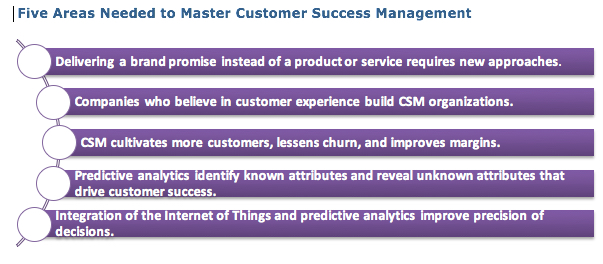
Through conversations with clients, prospective buyers, system integrators, partners, and vendors, Constellation sees five big themes in customer success management (see Figure 1)[1]:

  1. Delivering a brand promise instead of a product or service requires new approaches. The onus of delivering on the brand promise – providing great experiences with a company no matter when the customer interacts with it – is putting new pressures on brands and software vendors. This means the business model of both must shift. A company’s business model must move post-sales care to a more mature level. This evolution requires a different mindset and approach to customer lifetime value.

Figure 1. Four Areas Needed to Master Customer Success Management

4trends

[1] See “The State of Customer Success Management 2015” by Natalie Petouhoff, Constellation Research, December 22, 2014.

  1. Companies who believe in customer experience build CSM organizations. Not all CSM organizations are created equally. In an opt-in economy, the economic value of a customer is realized over time, instead of in the upfront sale. This means that organizations that want to become CSM-oriented are looking at three main areas:
  • Hiring, training and rewards for employees
  • Becoming a center of excellence for CSM
  • Strategy combined with data
  1. CSM cultivates more customers, lowers churn, and improves margins. The reason many companies have adopted the opt-in business model is that they realize, when they consistently deliver great experiences, they have loyal customers who advocate for the brand and often will make referrals. Advocating for the brand can be in the form of a post in a social network or offline in telling friends or family of their experiences.
  2. Predictive analytics identify known attributes and reveal previously unknown attributes that drive customer success. The only way to preserve a company’s revenue stream is to keep customers opting in. To become a CSM organization, a company has to actively manage customer relationships to ensure the customer is getting value. This critical step requires data in the form of real-time and predictive analytics.
  3. Integration of the Internet of Things and predictive analytics improves precision of decisions. The amount of data and analytics that CSM platforms provide is important, especially when data from sensors and other sources (that make up the Internet of Things) is integrated into the solution to provide a company with predictive analytics and actionable insights that drive better and more precise decision making throughout an organization.

Be sure to check out my vendor profile of ServiceSource®. An excerpt of the profile including the table of contents is available to download.

DOWNLOAD EXCERPT 

View part 1 of my vendor profile of ServiceSource. 

@drnatalie

VP and Principal Analyst, Constellation Research, Covering Customer Success Management, IOT, Analytics and Customer-facing Applications that Deliver Enhanced, Trust-building Customer Experiences via Customer Service, Sales and Marketing


Next-Generation Customer Experience Chief Customer Officer