Results

IBM and Cisco Announce Integrations To Help People Communicate and Collaborate

IBM and Cisco Announce Integrations To Help People Communicate and Collaborate

Today IBM and Cisco announced a new partnership that brings together parts of each vendor’s collaboration platform: IBM and Cisco Tap the Power of IBM Watson and Cisco Spark to Transform the Way People Work

"As part of the transformation, the highly secure Cisco Spark and WebEx collaborative workspace platforms will be integrated with IBM’s leading cloud collaboration solutions, including Verse and Connections, and underpinned by IBM’s cognitive computing capabilities."

On the surface, this sounds like a good opportunity for both companies.

  • IBM has been successful in the email and social networking markets (with Notes/Domino and Connections, and is now offering customers IBM Verse), but their Sametime product is not as well known as Cisco WebEx for web conferencing or Cisco Jabber for voice/video calls.
  • Cisco has been successful with WebEx and Jabber, but has a poor track record (see below) in collaboration software and does not have their own email platform.

So working together could provide each vendor a way to expand their market presence by leveraging the other to fill their gaps. But questions remain:

  • Will Cisco WebEx customers buy IBM Verse and IBM Connections based on this new integration?  
  • Will IBM Verse and Connections customers buy WebEx (vs IBM Sametime) and more importantly to Cisco, will they use Cisco Spark instead of or in combination with IBM Connections? What about IBM’s upcoming project Toscana software?


Collaboration Portfolios At A Glance

 IBMCisco
Email
  • Notes/Domino
  • Verse
 

Web-conferencing
Voice/video chat

  • Sametime
  • WebEx
  • Jabber

Collaboration/
Social networking 

  • Connections
  • Project Toscana
  • Spark

Cisco Benefits From IBM's Cognitive Computing

One of the most important aspects of today’s announcements is that Cisco plans to leverage the cognitive capabilities of the IBM Watson platform to help improve the way people work. Meetings, chat, voice calls all contain large amounts of unstructured data, making it difficult for people to easily glean insights from the content and interactions they have with their colleagues and customers. If Cisco can bring a layer of intelligence to WebEx, Jabber and Spark it will not only help their customers, but also provide an excellent reference for the power of the IBM Watson platform.


IBM and Cisco Have Been Down This Road Before

This is not the first time IBM and Cisco have partnered on integrating their collaboration offerings. In 2009 the two vendors made a very similar announcement: Cisco and IBM: Enhancing the Way People Work Through Unified Communications 

2009: "Together, the two companies are enabling a new way of  communicating and collaborating—one that’s open, timely, and effective. Using best in class unified communications capabilities from both Cisco and IBM, organizations can transform their business processes and reach new levels of productivity. Collaboration will be made easier and communications will be enhanced. Individuals and teams will work more effectively—when, where and how they choose—without sacrificing security or productivity. The integrated product offerings combine IBM Lotus® Sametime®, IBM Lotus Notes® and multiple Cisco Unified Communications products to deliver a complete unified communications solution that unify voice, data, video, messaging, and mobility technologies into a single, flexible solution."

While I do not have statistics around the number of new customers or amount of revenue this previous partnership generated, it’s safe to say it did not have substantial impact on either company. However, things are a bit different today. In theory, today’s software is easier to integrate in the cloud than older on-premises offerings were. IBM says that we’ll start to see the newly announced integrations this year, with the cognitive capabilities of Watson working their way into the Cisco portfolio in 2017.

Cisco’s Rocky Road To Collaboration

Cisco new collabroation platform Spark is being well received by customers and partners, but Cisco has had a tough time getting to this stage. Here is a timeline of Cisco’s collaboration software portfolio. As you’ll see they have tried twice to create their own offering first with Quad then WebEx Social, then tried partnering with Jive (which sounds a lot like today’s IBM announcement) and are now back in the market with Cisco Spark. 

  • Mar 2007 - Cisco acquired WebEx
  • Sep 2008 - Cisco acquired Jabber
  • 2010 - Cisco announces their social networking for the enterprise platform, Cisco Quad
  • Aug 2011 - Cisco acquires Versly: integrates collaboration capabilities via a plug-in into Microsoft Office applications 
  • Jun 2012 - Quad is rebranded as WebEx Social
  • Dec 2013 - Cisco acquires Collaborate: provides unified document sharing, task management and team communication
  • May 2014 - Cisco ends WebEx Social and announces partnership with Jive - "Today I am happy to announce that we are entering a relationship with Jive Software to deliver the best in enterprise social collaboration to our customers. By combining Jive’s enterprise collaboration platform with WebEx and Jabber, we can bring together the elements that help organizations deploy an integrated, seamless experience for their employees, customers, and partners. What really gets me excited about the Jive and Cisco integration is that we are bringing two leading collaboration and communications technology solutions together and delivering them in a single experience for our customers"
  • Jun 2014 - Cisco acquires Assemblage: real-time collaboration apps for shared whiteboarding, presentation broadcasting and screensharing.
  • Nov 2015 - Cisco acquires Acano: video and audio bridging technology that allows customers to connect video systems from multiple vendors across both cloud and hybrid environments.
  • Dec 2015 - Cisco announces Spark, cloud based messaging, meetings and voice calls
  • Jun 2016 - IBM and Cisco Combine the Power of Watson Internet of Things with Edge Analytics
  • Jun 2016 - IBM and Cisco Tap the Power of IBM Watson and Cisco Spark to Transform the Way People Work

After several different strategies around collaboration, Cisco now seems to focused on making Spark a success. They have even created $150M developer fund to entice business partners to build solutions on the new platform. It remains to be seen how Spark will compliment or compete with IBM Connections and later IBM Toscana.


Summary

  • Both vendors have held leadership positions in their respective markets, but are now facing tough competition that is stalling growth or even reducing their base. Both companies are looking for new routes to market as they compete against the likes of Microsoft, Google, SAP, Salesforce, Facebook, Slack and others, and partnering with each other could open up additional opportunities. 
  • For IBM, the more places they can have IBM Verse and IBM Connections (ex: the file sharing component) integrated with business applications that people use everyday (such as WebEx) the better.
  • For Cisco, having access to IBM Watson’s cognitive capabilities will help them compete with Microsoft and Google, each of which has their own cognitive platforms that they are leveraging in their own collaboration products.
  • I’m pleased to see the IBM Collaboration Solutions division making partnerships. This follows the modus operandi of General Manager Inhi Cho Suh, and shows she’s already having an impact in her new position. 
  • My biggest concern is IBM’s ability to deliver on this functionality. Over the last few years IBM has been heavily criticized by customers, partners and industry analysts such as myself for over-promising and under-delivering. As I’ve frequently said, code talks… not slides. IBM has struggled in delivering new features to their Notes/Domino platform, meeting customer expectations with their new IBM Verse email client, and is now talking about a new product in Project Toscana. Will they have the resources to develop all of those things, as well as this new Cisco integration, and other integrations/partnerships such as Box. Time will tell, but IBM is saying we will see the first phases of this Cisco/IBM integration before the end of this year.

I will be attending Cisco Live on July 10th, and I expect to learn a lot more about this there.

If you are a customer of both IBM Collaboration Solutions and Cisco Collaboration, I’d love to speak with you about the ways you see this partnership impacting your organization.
 

Brexit - Planning Strategically with The PESTEL Framework

Brexit - Planning Strategically with The PESTEL Framework

In this webcast, the Constellation research team uses the PESTEL framework to help you evaluate Brexit-driven risk so you may plan strategically for a post-Brexit EU.
Download the presentation slides here. This webinar sponsored by the Constellation Executive Network.

Chief Customer Officer On <iframe src="https://player.vimeo.com/video/172800308?badge=0&autopause=0&player_id=0" width="1280" height="720" frameborder="0" title="Post Brexit Analysis with Constellation Research 062916" webkitallowfullscreen mozallowfullscreen allowfullscreen></iframe>

Post Brexit Analysis Webinar Recording

Post Brexit Analysis Webinar Recording

All the uncertainty surrounding Britain's decision to leave the EU makes it difficult to decide upon how to best address Brexit risks. In this webcast, the Constellation research team uses the PESTEL framework to help you evaluate Brexit-driven risk so you may plan strategically for a post-Brexit EU. PESTEL assesses the political, economic, societal, technological, environmental and legislative trends influencing the business environment. 

Post Brexit Analysis with Constellation Research 062916 from Constellation Research on Vimeo.

Download the slides

Highlights from the webcast: 

  • Britain will likely remain in the EU for two more years. Britain will remain in the EU until Article 50, which begins the formal withdrawal process, is passed. Article 50 states, "Any Member State may decide to withdraw from the Union in accordance with its own constitutional requirements". Current British Prime Minister, David Cameron, says he will not invoke Article 50, stating he will wait for his successor to implement the action. Once Article 50 is passed, political analysts estimate at least two years for the withdrawal process to conclude.  
  • Macro Planning Assumptions: Expect a weakened pound and overall economic slowdown for the next year. Finance, pharma, VC, tech may look to relocate to other locations within the EU. 
  • Use the PESTEL framework to assess global risks and opportunities
  • Future of Work:
    • Labor Market - Expect a rise in secondary labor costs in Britain and EU
    • Compliance - Uncertainty surrounding compliance until Britain formalizes sovereign compliance regulations
    • HCM Vendor Strategy -  HCM vendors will likely scale back investment in Britain
  • Tech Optimization/ Next Gen Apps:
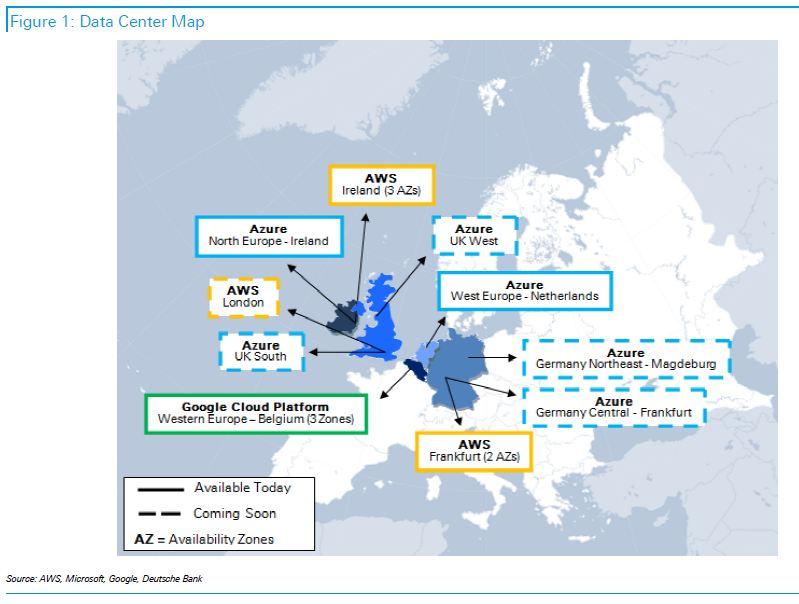
    • Data Center 
      • Expect a halt in data center investment
      • Data centers will "follow the money" - As finance industry filters out of Britain, expect data centers to follow
      • Britain will likely lose its title as the data center hub of Europe
    • Technology labor cost will rise in Britain. Expect outsourcing to follow. 
    • Internet Autobahns
      • Direct connections between US/EU now more likely
      • Connection costs will rise as UK data privacy laws are renegotiated
    • Data Privacy
      • British privacy laws no longer covered by EU policies
      • British businesses need to examine Safe Harbor challenges


Questions & Answers:

Question 1: Should EU brands evaluate their providers for data and marketing automation?
Answer - thanks to Cindy Zhou, VP & Principal Analyst: 

I don’t see any need to re-evaluate marketing automation due to Brexit.  We'll need to wait and see if there are any changes in data management/privacy rules/regulation then configure their Marketing Automation accordingly.  That can be done independent of vendor. 

Question 2: When you say direct connections between US and EU seems smart, do you mean Ireland too?
Answer - thanks to Holger Mueller, VP & Principal Analyst: 

Yes, this includes Ireland, too. While Ireland is and will remain part of the EU, latency from Ireland to the EU mainland is an area to watch. If data security and privacy is not handled right, we may also see Ireland to EU under water cable connections. 

Data to Decisions Digital Safety, Privacy & Cybersecurity Future of Work Marketing Transformation Matrix Commerce New C-Suite Next-Generation Customer Experience Tech Optimization Innovation & Product-led Growth Leadership Chief People Officer Chief Information Officer Chief Experience Officer

SAP Insider Vienna - HCP, BI and SuccessFactors

SAP Insider Vienna - HCP, BI and SuccessFactors

 
We had the opportunity to attend the SAP Insider conference held in Vienna, from June 19th till 24th 2016. The event isn’t organized by SAP but an events organizer that combined BI, GRC, HANA, HCM and more topics with the xxx2016 moniker. The conference was well attended with over 1800 participants, coming from customers, prospects, the ecosystem and SAP… defacto this makes it like the European Sapphire, an event SAP no longer has on its event calendar.


My musings on the event:


No time to watch – here is the 1-2 slide condensation:
 

Want to read on? 
 
Here you go: Always tough to pick the takeaways – but here are my Top 3:

HANA Cloud Platform (HCP) doing well – After HCP had been in a ‘Sleeping Beauty’ stage at SAP – only to be ‘kissed’ (aka mentioned in and getting keynote time) at Sapphire this year, it is making fast progress. The need for a PaaS platform for SAP customers is at hand – not only for the Integrate and Extend scenarios, but also for the Build Scenario. I had the opportunity to be on a panel with SAP customer Owens-Illinois, who use HCP as an extension tool enabling local compliance, a good use case. Generally the experienced European audience knows what to do and what to ask around integration and extension scenarios, as they have lived and worked through them for the past decades. At the same time basic questions on cloud, PaaS and security are still very common, underling the basic evangelism work SAP (and other vendors) have to do in order to get the average European enterprise comofortable on running in the cloud and using development tools that operate in and from the cloud.

Business Objects is back – As communicated at SapphireNow in Orlando (read here), SAP has brought back the venerable Business Object brand, as an umbrella brand for the many SAP BI offerings. And BI products were obviously top of mind in regards of a sales push in Europe in 2016, as most of the technology keynote was dedicated to business intelligence, and there mostly dashboards. The idea of the keynote to have a conversation of a CEO with its respective LOB leaders was a good idea, but was at times challenged as the LOB ‘leaders’ had to jump back between doing LoB work and doing the marketing / sales pitch. What I left with was that SAP has a lot of BI products, has created a lot of dashboards and now needs to harmonize the user experience across them. While it is fair to point out that many users will only work with the respective BI offering of their functional silo, the cross function insight and oversight is one of the key value propositions that SAP (as a suite vendor) brings to the table. It is going to be key for SAP to harmonize the user experience soon, but to be fair the umbrella brand “Business Objects” was only launched a few weeks ago.

SuccessFactors with local expertise – Not many news from SuccessFactors from my side, as we come back from an in depth 2 day analyst day (takeaways and more are here). SAP played though the local expertise and content card with the launch of Apprentice Management. The European apprentice system is something unique to a number of European countries and is a key HR activity that is under automated. Good to see that SAP realized the opportunity and has now the first offering of Apprentice Management, natively integrated into a HR Core product (here of course EmployeeCentral). It’s a good start for SuccessFactors and if SAP can provide a handful more of these local, region relevant offerings, while the competition may blink on providing them, it could create a solid differentiator for the product, thus creating more of a ‘HCM Fortress Europe’ vs. the usual North American based competitors.


MyPOV

A good event for SAP that has used an event organizer to handle an independent agenda, that nonetheless is very SAP dominated in both message and delivery. It is a good event for customers to check out and understand the new SAP offerings, with a decent size expo, so the ecosystem is present and attending, too. Given Vienna as the location, the attendees were not surprisingly Central / Eastern European.

On the concern side it is also clear that SAP has a long way to go in regards of getting its experienced customer base to adopt new products. Customers are highly skeptical, ask tough questions and have the average European concern towards cloud. On the flipside it is a healthy reality check for a US based analyst (like yours truly) to see and learn why European customers are still ‘clinging to their data centers’, thus having SAP do the split between cloud and on premises offerings.

But overall a good, informative event, SAP customers and prospects should use these events to come up to speed on the latest SAP offerings. With a Sapphire like presence of SAP executives and employees, it is also a good opportunity for SAP customers (and prospects) to build the relationships that often are the key success factor for a successful enterprise application implementation…

Also checkout this video on Facebook when Emily Mui of SAP, Eric Kavangh of The Bloor Group and me chatted about SAP HCP, use cases, cloud adoption and more here

Find more coverage on Holger Mueller's website here, checkout his magazine on Flipboard here, his Storify collections here, his Slideshare account here and his YouTube channel here.


Tech Optimization Data to Decisions Digital Safety, Privacy & Cybersecurity Innovation & Product-led Growth Future of Work SAP Chief Information Officer Chief Technology Officer Chief Information Security Officer Chief Data Officer

Why Should You Attend Connected Enterprise This Year?

Why Should You Attend Connected Enterprise This Year?

Constellation's Connected Enterprise is going into its sixth year in just a few short months! We are excited to welcome back many of our guests who continue to join us year after year and have become part of our network and close friends. I’m personally looking forward to also meeting all the new faces joining the conference.

Are you stuck on the fence on whether or not you should attend this year? I know what you’re thinking… “not another conference!” One of our guests from a previous year described the event as: “It’s like Hogwarts for grownups!” If that’s the case, how could you not want to attend?

In all seriousness, we formed the event to be different with a unique set of executives that come together for not just attending our exciting panels and keynotes - including Whitney Johnson and Dan Heath, but for the hallway conversations and exclusive networking opportunities. As many of our guests say, our conference is really like no other. They described it as:

  1. Very different, contemporary content that you won’t see at other conferences.
  2. No jargon.
  3. Low-key, casual environment with executives well seasoned in their careers.
  4. Passionate group of thought leaders who are motivated about innovation and changing the world.
  5. Form relationships that will pay dividends in the future.

Need to make the ask? Here’s a helpful letter to get you started! Also, you’re in luck; we extended our Super Saver pricing to July 31.

We are continually updating our list of speakers. Be sure to check back and see who will be at the event! See you at the Ritz-Carlton in Half Moon Bay on October 26-28, 2016.


Powered by the Constellation Executive Network, which helps innovative leaders stay ahead of the curve. 


Data to Decisions Future of Work Innovation & Product-led Growth New C-Suite Tech Optimization Connected Enterprise Chief Experience Officer

Amazon Web Services Cloud Speaks Hindi - Indian AWS Data Centers Available

Amazon Web Services Cloud Speaks Hindi - Indian AWS Data Centers Available

Yesterday AWS announced the availability of its new datacenter locations in Mumbai, India. The original announcement was made at the AWS Summit about a year ago in Berlin (read here).


So let’s dissect the press release in our customary way, it can be found here:
MUMBAI, India--(BUSINESS WIRE)--(NASDAQ:AMZN) — Amazon Web Services, Inc. (AWS), the world’s leading cloud computing platform, today announced the launch of the Asia Pacific (Mumbai) Region, its sixth in Asia Pacific (APAC). With this launch, AWS now provides 35 Availability Zones (AZs) across 13 technology infrastructure regions globally. More than 75,000 India-based customers are already using other AWS Regions to save costs, accelerate innovation, speed time-to-market, and expand their geographic reach in minutes. Starting today, global and India-based developers, start-ups, enterprises, government organizations, and non-profits can leverage the AWS Cloud to run their technology applications from infrastructure in India, and provide even lower latency to India-based end users. Developers can sign up to start using the AWS Mumbai Region at: http://aws.amazon.com.
MyPOV – Good intro paragraph… AWS has already business with an Indian DNA, so taking advantage of an in country instance is a significant step. As we pointed out a year ago, latency and data sovereignty implications are a key factor to consider in global data center rollouts, and with India sitting more or less half way between Frankfurt and Singapore, in one of the largest countries from a population perspective are all good reasons for AWS to be present in India.
  
[…] The new AWS Mumbai Region consists of two separate Availability Zones at launch. Availability Zones refer to datacenters in separate, distinct locations within a single region that are engineered to be operationally independent of other Availability Zones, with independent power, cooling, and physical security, and are connected via a low latency network. AWS customers focused on high availability can architect their applications to run in multiple Availability Zones to achieve even higher fault-tolerance.
MyPOV – Good to see that AWS stuck to the proven concept of only launching with two separate availability zones from the start / get go of a region… which allows for HA qualities right from the start. That is key especially in new markets, as traditional skepticism towards moving to IaaS are always present and can be reduced with the availability zone concept. Only the most prosperous Indian companies will have a similar setup to achieve business continuity for their operations.
 
“Indian start-ups and enterprises have been using AWS for many years – with most Indian technology start-ups building their entire businesses on AWS, and numerous enterprises running mission-critical, core applications on AWS,” said Andy Jassy, CEO of AWS. “These same 75,000 Indian customers, along with others anxious to start using AWS, have asked for an AWS India Region so they can move their applications that require low latency and data sovereignty. We're excited to make this available today, with the same pay-as-you-go pricing, ability to get started immediately without having to negotiate enterprise agreements or wait days for access, and unmatched functionality that customers enjoy in AWS Regions worldwide – all of which allows customers to go from idea to launch faster than ever before was possible.”
MyPOV – Good quote from Jassy, hitting the key aspect of quick start, low hassle sign up and now – with the Indian data centers - low latency and addressed data sovereignty aspects.
 
Since its founding in 2006, AWS has changed the way organizations acquire and manage technology infrastructure. With more than a million active customers worldwide, and more than 70 services across compute, storage, databases, analytics, networking, messaging, machine learning, mobile, IoT, and application services, AWS has become the new normal for companies of all sizes and across all industries to deploy their business-critical applications. All AWS Regions around the world undergo regular audits by independent third-parties that validate that each region is designed and built to meet rigorous compliance standards, including ISO 27001, SOC 1 (Formerly SAS 70), SOC 2 Security & Availability, PCI-DSS Level 1 and many more, providing high levels of security for all AWS customers. As with every AWS Region, customers have the assurance that AWS will not move their content from the region they choose. More information on how customers using AWS can meet their security, data privacy, and compliance requirements can be found at https://aws.amazon.com/security.

MyPOV – It would not be an AWS press release if not on the heels of the announcement itself, security concerns and standards would be addressed. No difference here… and as usual AWS does a big services to the industry at supporting and addressing security concern right from the get go and heads on.
 
India-based Customers Welcome AWS Asia Pacific (Mumbai) Region
“We have been working with AWS since 2012, steadily moving workloads to the cloud, such as test and development environments for our core enterprise systems – we run one of the largest CRM based Dealer Management implementations in the world – more than 90 Tata digital properties in production on AWS, and many other applications,” said Jagdish Belwal, CIO of Tata Motors Limited, India’s largest automotive manufacturer. “Tata Motors obtained 40 percent savings by running our digital properties at scale, benefitting from the tremendous agility made possible by AWS. One of the key priorities we had was around how AWS could save us costs on traditional workloads, those without much variability or demand spikes, and we are expecting to save similar amounts on traditional workloads by running them on AWS.”
Belwal continued, “We are so happy to have an AWS Region in India. AWS has allowed our IT teams to focus on innovation and become more nimble to the business demands. Environments that used to take weeks to setup can now be done in days or hours. AWS also makes it extremely straightforward for us to progress on our cloud journey utilizing a hybrid architecture, since it is important to us to leverage the past investments we’ve made in equipment and technology on-premises for a period of time; as we work to modernize and streamline our operations on the AWS Cloud. Rather than decide on ‘what workloads can move to the AWS cloud,’ we have moved to asking ‘how fast and which ones will be next in line.’”
MyPOV – Good reference statement for AWS, with one of the most recognized brands in India, Tata. What is remarkable is the mention of hybrid cloud here, something that traditionally all public cloud providers have shied away from, it is no coincidence that this is part of the quote though. If AWS can position itself as the ‘new’ data center in India, this will be a huge win for the vendor. From our conversations with Indian businesses and professionals we know though, this is a long way to go.
 
Ola, India’s leading cab aggregator and an Indian online transportation network company, is building their business on AWS. “We are using technology to create mobility for a billion Indians, by giving them convenience and access to transportation of their choice,” said Ankit Bhati, Co-founder and CTO, Ola. “Technology is a key enabler, where we use AWS Cloud to drive a superior customer experience, and innovate faster on new features and services for our customers. This has helped us reach more than 100 cities and 550,000 driver partners across India. We do petabyte scale analytics using various AWS big data services and AWS deep learning techniques, allowing us to bring our driver-partners closer to our customers when they need them. AWS allows us to make more than 30 changes a day to our highly scalable micro services-based platform consisting of 100s of low latency APIs, serving millions of requests a day. We have tried the AWS India Region. It’s world-class and should help us continue to enhance the experience for our customers.”
MyPOV – After a B2B brand use case, off to a B2C one with Ola, great quote, great use case for both Ola and AWS.
 
Shaadi.com is the world’s no. 1 matchmaking service providing a superior matchmaking experience to Indians all over the world. “As one of the key initiatives of becoming a world class tech organization, we decided to migrate to the AWS Cloud. We have many interdependent applications built over the last 15 years having unique High IOPS requirements,” said Ketan Doshi, CTO and Sr. VP, Engineering at People Interactive. “We worked closely with AWS teams and migrated ‘all-in’ to AWS successfully. We leveraged AWS Database Migration Service to reduce the time required to migrate our databases by 40 percent and also realized 55 percent cost savings by moving some of them to Amazon Aurora. We are planning to move our other databases to Amazon Aurora. We are now able to efficiently manage spiky workloads by using AWS for Auto Scaling our compute resources and improving our site’s performance by 50 percent. AWS has allowed us to exploit the potential of serverless architectures (AWS Lambda + DynamoDB) that has delivered more than 80 percent cost savings. Our Redshift data warehouse solution analyses 67 billion records to derive key business trends. Being an ‘all-in’ customer of AWS, it is exciting to see AWS launch their region in India. We will continue to adopt the latest AWS services to accelerate innovation and continue to redefine the way Indians find a companion for life.”
MyPOV – Next up – match making service shaadi.com – an example for a software based business going ‘all in’ on the AWS technology stack. Already mentioned in Jassy’s quote – AWS will cater to the readiness of Indian businesses to save investment dollars by moving from traditional on premise technology stack vendors to AWS. To get the comfort level right, AWS needs to provide references and showcases of both feasibility and differentiation of the AWS technology stack in India, and this is a good start.
 
Novi Digital, a wholly owned subsidiary of STAR India, is one of the largest media and entertainment companies in India. The company uses AWS to run Hotstar, a flagship over-the-top (OTT) broadcasting platform for delivering movies and live sporting events via the internet. “Hotstar is India’s largest premium streaming platform with more than 85,000 hours of drama and movies in eight languages, with coverage of every major global sporting event. Launched in February 2015, Hotstar quickly became one of the fastest adopted new media and entertainment apps anywhere in the world,” said Ajit Mohan, CEO, Hotstar. “It has now been downloaded by more than 68 million users throughout the world and has attracted followers on the back of a highly evolved video streaming technology, with high praise from customers on the quality of experience across devices and platforms. The reliability of the highly scalable AWS Cloud infrastructure has been a contributor to Hotstar’s ability to build and deliver a compelling streaming service for our global customers.”
MyPOV – Streaming video of ‘spiky’ events like sports and entertainment events are key cloud elasticity showcases… and Novi Digital / STAR India are a great reference for this.
 
Investing in India’s Cloud Future
The rapidly expanding AWS Partner Network (APN) is made up of tens of thousands of Independent Software Vendors (ISVs) and Systems Integrators (SIs) around the world who are building innovative solutions and services for the AWS Cloud. The APN program helps partners build successful AWS-based businesses by providing business, technical, marketing, and go-to-market (GTM) support. In India, the number of partners joining the APN program has grown over 80 percent in the past 12 months. AWS SIs such as Infosys, TCS, Wipro, HCL, Accenture, PwC, Blazeclan, Minjar, Frontier, Intelligrape, Progressive, Cognizant, and Team Computers are helping enterprises migrate to AWS, deploy mission-critical applications on AWS, and are providing a full range of monitoring, automation, and management services for customers’ AWS environments. AWS ISVs in India include SAP, Microsoft, Adobe, Druva, Freshdesk, Manthan, Indusface, Newgen, RAMCO, Seclore, Mediology, Mithi Software, Vinculum, Infor, Splunk, and many others who are providing software solutions that are either hosted on, or integrated with AWS. Customers can easily find, trial, deploy, and buy software solutions for the AWS Cloud on the AWS Marketplace.
MyPOV – And there are of course SI and ISV opportunities in India, already before the AWS region was available, there was interest and sign ups on the AWS side. The ISV opportunity is twofold: For India based ISVs to go abroad, but also for foreign ISVs to get started in the Indian Market.
 
AWS offers a full range of training and certification programs to help Indian professionals who are interested in the latest cloud computing technologies, best practices, and architectures, advance their technical skills. More than 16,000 attendees have participated in various AWS training events since January 2016 to learn about the latest in cloud technologies, AWS best practices, and get hands-on instruction with the AWS Cloud. The AWS Educate Program promotes cloud learning in the classroom and has been adopted by more than 500 universities worldwide. The program helps to provide an academic gateway for the next generation of IT and cloud professionals.
MyPOV – Good to also mention training and certification, given the Indian thirst for learning technology, key to catch and be present at the right universities. This does not only matter for AWS in India, but beyond India, as many Indian IT professional will attempt to use AWS certification and skills to launch a career abroad (as they have been for decades now).
 
The AWS Activate program provides India-based startups with the resources they need to quickly get started on AWS and scale their businesses. AWS has teamed with accelerators, incubators, Seed/VC Funds, and startup-enabling organizations such as Nascomm 10K, Sequoia Capital, Accel Partners, Nexus Venture Partners, Tlabs Accelerator, GSF Accelerator, and others that provide a range of services including training, AWS credits, in-person technical support, and other benefits.
MyPOV – What has been missing in the press release? Capital for startups to build on AWS, where AWS has the Activate program – something that could not be missing in the Indian Region announcement…
 
To further enable AWS customers to rapidly deliver their websites, applications, and content to India-based end users, AWS also recently opened a new AWS point of presence (PoP) in Delhi for its Content Delivery Network (Amazon CloudFront) and DNS service (Amazon Route 53). This is the third AWS PoP in India, joining Mumbai and Chennai, and is part of the global AWS network of 56 edge locations across the United States, Europe, Asia, Australia, and South America.
MyPOV – Good to see AWS expanding its point of presence location, it will need to add more for India, given the slow latency in the country, but three in country is a good place to start.
 
Teams of Account Managers, Solutions Architects, Technical Support Engineers, Professional Services Consultants, Technical Trainers and various other functions are available to support Indian customers from offices in Mumbai, New Delhi, Hyderabad, Bangalore, Chennai, and Pune in their use of the AWS Cloud. Through Amazon’s local selling entity, Indian customers are provided local invoices and payment options, enabling payment in rupees via credit cards or bank transfers. Additionally, AWS recently established an AWS Technical Support center in Bangalore that leverages local engineering talent to help AWS customers around the world with everything from break-fix situations to advice on application development, architectures, and best practices. The new AWS Mumbai Region, along with the various other investments for assisting Indian customers who are building their businesses and running applications on the AWS Cloud, are part of the $5 billion overall investment that Amazon announced is part of its commitment to India.
MyPOV – Amazon the retailer has seen its challenges in India, which for the moment seem to be under control. Nothing works better than local investment and the overall (incl. AWS) commitment to invest 5B in Indian is always a good start, and it looks like AWS / Amazon has turned around the conversation for the better of the vendor.
 

Overall MyPOV

The ‘monopoly’ race between public cloud providers is in full swing only that more properties are allowed in each country. But being early always helps in IaaS, as long as enough load can justify the further build out that drives economies of scale. That matters even more in countries like India, where bandwidth into the country, energy supply, weather challenges are more pronounced than e.g. Western Europe. Securing access early and growing fast maters. AWS is in a good position here. Kudos also to AWS to deliver the region right at the time it was announced.

There is little to be concerned about in India, an expansion of PoP points will be important, but is a more minor investment. It’s key for AWS to accelerate the pace in the location game though, and the vendor has announced more region to come. Likewise AWS should have / could have proactively declared the separation of its retail IT load vs its IaaS load – something the vendor needs to re-confirm again and again, especially in new markets. If there was one thing missing on the press release it is this one.

But overall a good day for AWS customers and prospects, not only if they are India based or have already an Indian business, but also for enterprises and ISVs to get a foothold in the 2nd largest country from a population perspective. Stay tuned for the uptake, my guess is we will learn that Mumbai is the fastest growing region of AWS at reinvent in fall… outpacing its next older sibling in Frankfurt.

 
More on AWS
  • News Analysis - Salesforce selects AWS as preferred Public Cloud Infrastructure Provider - Good move - read here
  • Event Report - AWS re-Invent - AWS lobbies for the enterprise - DB and IoT are the cheese - read here
  • First Take - AWS reInvent Wednesday Keynote - Good start & AWS is going for the enterprise read here
  • Event Preview - AWS re-Invent 2015 - watch / read here
  • Event Report - AWS Summit Berlin - AWS spricht Deutsch - but when will the Germans speak cloud? Read here
  • News Analysis - AWS learns Hindi - Amazon Web Services announces 2016 India Expansion - read here
  • Event Report - AWS Summit San Francisco - AWS pushes the platform with Analytics and Storage [From the Fences] read here
  • Event Report - AWS re:invent - AWS becomes more about PaaS on inhouse IP - read here
  • AWS gives infrastructure insights - and it is very passionate about it - read here
  • News Analysis - AWS spricht Deutsch - the cloud wars reach Germany - read here
  • Market Move - Infor runs CloudSuite on AWS - Inflection Point or hot air balloon? Read here
  • Event Report - AWS Summit in SFO - AWS keeps doing what has been working in the last 8 years - read here
  • AWS  moves the yardstick - Day 2 reinvent takeaways - read here.
  • AWS powers on, into new markets - Day 1 reinvent takeaways - read here.
  • The Cloud is growing up - three signs in the News - read here.
  • Amazon AWS powers on - read here.\
Find more coverage on the Constellation Research website here and checkout my magazine on Flipboard and my YouTube channel here
    Tech Optimization Innovation & Product-led Growth Future of Work amazon SaaS PaaS IaaS Cloud Digital Transformation Disruptive Technology Enterprise IT Enterprise Acceleration Enterprise Software Next Gen Apps IoT Blockchain CRM ERP CCaaS UCaaS Collaboration Enterprise Service Chief Information Officer Chief Technology Officer Chief Digital Officer Chief Data Officer Chief Analytics Officer Chief Information Security Officer Chief Executive Officer Chief Operating Officer

    DisrupTV: Standing Out in the Mounds of Life’s Content

    DisrupTV: Standing Out in the Mounds of Life’s Content

    Whether you work for a nonprofit, for yourself, or a fast-growing startup, it’s a constant battle to stay focused and fight through the noise. We read, listen, throw away, and ignore so much content every day. How do organizations and leaders stand out, while making a difference for you, your team and everyone that interacts with your brand?

    On DisrupTV last week, our guests shared their ideas, strategies, and digital techniques that shine light to their missions and craft brands that create signal among the noise.

    Jay Ferro (@jayferro)

    Ferro serves as CIO of the American Cancer Society, a nonprofit with a mission to eradicate cancer. Many nonprofits typically take their time to make disruptive decisions, but Jay leads a team with a life-saving mission that doesn’t have time to wait. With over 6,000 employees, 400+ locations, thousands of volunteers and even more individuals impacted by cancer, the American Cancer Society is a Fast Follower when it comes to digital programs and managing the content needed to provide 24/7 cancer information, research, volunteer opportunities, and supporting its numerous programs, including Relay for Life and Hope Lodges.

    Volunteers and donors are key to nonprofits, and they can decide to take their “time, talent and treasure” to any organization. Why do they choose the American Cancer Society and continue to give? Jay says his organization focuses on transparent and trustworthy programs that provide high-value, fulfilling experiences, where volunteers are truly helping solve a life-saving problem. Jay applies a mix of disruptive technologies, such as mobile, data, and security, to support his mission. He drives all of these programs their community trusts and enables the nonprofit to stand out and support personal branding initiatives.

    We also had the pleasure to chat with Dorie Clark (@DorieClark).

    Clark is an award-winning author, speaker and professor. She has owned her own business for more than a decade. In her latest book, Stand Out, Lin and Dorie recommend becoming a true expert in your field by finding your passion and building content and credibility around that niche. There may be countless others doing “shades” of what you are doing, and you have to stay focused and convey a clear message. With everyone being pulled into a “million” directions, that’s really the only way to get noticed.

    Dorie also suggests that you get your life in order and under control to be able to focus and do your best work. You need to work not only on your passion, but also on all the things that may impact who you are as a professional. Great advice from such a great influencer. (For her interview, go to 22:46.)

    In our hot enterprise startup segment, we spoke with James Norwood (@JLNorwood).

    Norwood is the Executive Vice President of Strategy and CMO at Episerver. His company has a solid product and offerings, but they are looking to create a strong brand over the next couple of years by focusing on digital commerce and digital experiences. He explains that digital transformation is not just for big companies; it’s for everyone. With changing digital models, you must master and leverage the trends - e.g., big data and IoT - while cutting through the noise. You need to deliver rich content in context to connect with people at the right time and in the right way. (For his interview, go to 40:36.)

    The bottom line? Regardless of where you work, leaders must stay focused and relevant. Embrace new technologies to disrupt your programs and yourself. Why? Your personal disruption will help you cut through the clutter and make a real impact on your goals and passions.   

    Be sure to follow Jay Farro (@JayFerro), Dorie Clark (@DorieClark) and James Norwood (@JLNorwood) on Twitter, and tune in for DisrupTV every Friday at 11 AM PT for more great advice and disruptive stories.


    DisrupTV Episode 0021: Featuring Jay Ferro, Dorie Clark & James Norwood 6.24.16 from Constellation Research on Vimeo.


    Innovation & Product-led Growth Tech Optimization Future of Work DisrupTV Leadership AI ML Machine Learning LLMs Agentic AI Generative AI Analytics Automation B2B B2C CX EX Employee Experience HR HCM business Marketing SaaS PaaS IaaS Supply Chain Growth Cloud Digital Transformation Disruptive Technology eCommerce Enterprise IT Enterprise Acceleration Enterprise Software Next Gen Apps IoT Blockchain CRM ERP finance Customer Service Content Management Collaboration M&A Enterprise Service Chief Information Officer Chief Technology Officer Chief Digital Officer Chief Data Officer Chief Analytics Officer Chief Information Security Officer Chief Executive Officer Chief Operating Officer

    The Post #BREXIT Analysis, What's Next?

    The Post #BREXIT Analysis, What's Next?

    UK Referendum Highlights Displeasure With Political Elites

    With almost 52% voting to leave, the surprise results of the June 23rd, 2016 referendum highlighted the 40 year shift from euro-centric to euro-skeptic among the average UK citizen (see Figure 1).  While many will attempt to blame the outcome on an ignorant non-urban voter,  the results showed the discontent, the average citizen has for the political and financial elites.  The vote was more than a protest vote on globalization and immigration.  In fact, the vote highlighted how the European Union had failed to improve the average non-urban UK citizen’s lives.  The vote also showed how the political elites could no longer bribe voters into submission that the EU was more positive than negative to the average UK citizen.

    Figure 1. A Look Back At The European Referendum From 1975 to 2016

    Screen Shot 2016-06-26 at 10.10.15 PM

    Keep Calm And Carry On.

    At this point, nothing has changed, yet. While the value of the pound continues to surpass a 31 year historic low and over $2 trillion has vanquished in world markets, the following facts have not changed:


    keep-calm-wall-sticker-500

    • The UK is still part of the EU until Article 50 of the Lisbon Treaty is invoked
    • The process may take up to two years to complete
    • Existing trade agreements and policy have not changed
    • Freedom of movement as expressed in Article 45 remains in play
    • Over 80,000 pages of law must be undone or renegotiated
    • 2.2M EU citizens will still be able to work in the UK for the next 2 years

    Strategic Planning Assumptions Must Consider Continued Unrest And Nationalism Within The Euro Zone

    While the power vacuum among the UK parliament adds to instability over the next three months, organizational leaders can expect the UK to lay out a longer term plan and time line much needed to calm markets.  However, the BREXIT referendum has emboldened non-incumbent EU political leaders to push back on globalization and immigration.  Renewed calls for nationalism have spread among the EU member states.   Constellation expects continued instability among European governments over the next 12 months.

    Constellation believes that in the current set of conditions:

    • An European wide slow down will continue over the next 12 months until stability has been achieved
    • UK companies with a global headquarters will benefit from a weaker Pound Sterling
    • Financial services firms will consider moving HQ from UK to Frankfurt, Paris, or Amsterdam, however, nothing will match London’s prowess as the financial capital
    • Pharm firms will consider moving HQ from UK to Switzerland, Germany, or Ireland
    • CPG firms will consider moving HQ from UK to Amsterdam or Paris
    • Tech firms will consider moving HQ form UK to Ireland as many have already located data centers and R&D
    • Overall VC investment in the UK will remain at a stand still over the next six months.

    Apply The PESTEL Model To Systemic Analysis

    Constellation’s research team uses a tried and true futurist framework that looks at the political, economic, societal, technological, environmental and legislative (PESTEL) shifts ahead. The PESTEL model is used to synthesize the major trends and provides guidance on how Constellation approaches its  key business themes.  The strategic assumptions from Constellation’s PESTEL framework form the basis for the business theme-led research.

    From that model, Constellation sees a few larger themes in the political side for 2016 that must be factored:

    • Politicians attempt to address jobs and growth but have inadequate tools and time
    • Short term fixes no longer good enough
    • Post revolution still does not yield hope
    • Western democracies continue to buy votes with debt funded services
    • Extremism grows around the world
    • Populace demands new models to address trust and transparency among a winner takes all market

    With these assumptions in place, organizations must then consider how these political attributes impact:

    • The future of work
    • Next gen customer experience
    • Matrix commerce
    • Digital safety and privacy
    • Tech optimization and innoation
    • Digital marketing and sales effectiveness
    • The new C-suite

    Bottom Line: Digital Disruption Has Not Been Kind To The Average Citizen

    Political elites in western democracies have failed the average Joe and Jane with policies that have not improved their quality of life.  Moreover, they can no longer buy votes with other people’s money in the form of a free tax break, trade deal, legislative ruling, healthcare, housing, food, or hand out.  Most western democracies are running dangerously high debt to GDP ratios.  Almost 55% of the Fortune 500 was in the red in 2015.  This digital disruption has not just created a digital divide, but also created stark winners and losers.  The social contract is broken.   Those left out of the growth and globalization have voted their consciousness.  While there may have been no plan for post revolution progress, this was the the digital shot heard around the world.

    Moving forward, global leaders must rethink the social contract in creating a playing field that equalizes the opportunity and access to the gains in digital disruption.  From education to new network economy, leaving a majority of citizens will no longer be a viable option.  Those countries and organizations who do not change can expect to be changed through unrest, revolt, and revolution.  We must create a design point for inclusion, so that humanity can overcome this social unrest and give each individual a fair opportunity (not outcome), and erase the lopsided gap in digital winners and losers.

    Your POV.

    Ready for prexit? Let us know what your experiences have been and feel free to reach out.  Add your comments to the blog or reach me via email: R (at) ConstellationR (dot) com or R (at) SoftwareInsider (dot) org.

    Please let us know if you need help with your Digital Business transformation efforts. Here’s how we can assist:

    • Developing your digital business strategy
    • Connecting with other pioneers
    • Sharing best practices
    • Vendor selection
    • Implementation partner selection
    • Providing contract negotiations and software licensing support
    • Demystifying software licensing


    Data to Decisions Innovation & Product-led Growth Leadership Chief Customer Officer Chief Digital Officer Chief Executive Officer Chief Financial Officer Chief Information Officer Chief Marketing Officer Chief People Officer Chief Experience Officer

    HireVue Digital Disruption 2016 - Introducing Coaching

    HireVue Digital Disruption 2016 - Introducing Coaching

    We had the opportunity to attend HireVue’s yearly user conference, Digital Disruption in Deer Valley, held from June 13th till 15th at the beautiful Stein Ericson lodge. The conference was well attended with over 600 participants, more exhibitors, and more sessions – a clear sign that both HireVue and ecosystem are doing well. 
    So take a look at my musings on the event here:
     

    No time to watch – here is the 1-2 slide condensation:


    Want to read on? 
     
    Here you go: Always tough to pick the takeaways – but here are my Top 3:


    Good Housekeeping – It is always important for customers to see – improved user interface has come to the product. Moreover automated actions will be powerful tools to make HireVue users more productive. In the interview process itself, HireVue has added screen share capabilities. Also multi section interviews, with the help of pictures and charts, can enrich the interview experience.

    Digital Assessments – HireVue has been on the vanguard of brining predictive analytics to the hiring process, the next step announced at Digital Disruption was to combine the Analytics / Machine Learning side with the traditional I/O Psychology side. Both Chief Data Scientist and Chief I/O Psychologist officers were on stage, showing what the combination of the two discipline can yield when applied to Recruiting: E.g. a large hotel chain was able to cut down the hiring time for large teams from 40 to 8 days. Impressive results that show there is potential of bringing the two together, but also concerns – see below.

    HireVue is more than Recruiting, moves to Coaching – When you have powerful video interview processing capabilities, you can bring them also to other processes, e.g. sales training / coaching. At the end of sales training, enterprises want to see what has been learnt and sales people want to practice. A video interview capability is handy here to show how well training has been understood and even more importantly to show if the newly trained capabilities can be demonstrated. Being able to process the learning progress of sales people in a similar way like processing candidate interviews is where the opportunity is for HireVue. And a number of large organizations have taken notice and are already using HireVue for Sales Training Effectiveness and Coaching.

    MyPOV

    Another good event for HireVue and its customers. Customers see a functional foot print expansion, more value from combining I/O psychology with data science and the mostly HR based buying center can now start a conversation with sales in regards of training and coaching. All good developments for HireVue customers.

    On the concern side the vendor needs to be careful not to ‘just’ put I/O best practices on a new ‘engine’ – but re-think and likely create the new I/O best practices and processes that 21st century technology enables.

    But overall a very good event, HireVue has established an impressive partner ecosystem, customers are excited on the existing and upcoming capabilities. With Sales Training / Coaching HireVue is in the process of getting a ‘2nd leg’ as a software provider, never a trivial process, but encouraging progress. Stay tuned.


    Want to learn more? Checkout the Storify collection below. 


    More on HireVue / Recruiting:

    More on HireVue
    • News Analysis - HireVue Secures $45 Million in Funding to Fuel Team Acceleration Software - read here
    • News Analysis - HireVue announces Insights - a key step to bring (true) analytics to enterprise software - read here.
    • First Take - 3 Takeaways from HireVue Digital Disruption Conference - Day 1 Keynote - read here

    More on Recruiting
    • Musings - How Technology Innovation fuels Recruiting and disrupts the Laggards - read here
    • Musings - What is the future of recruiting? Read here
    • Why all the attention to recruiting? Read here.

    Find more coverage on the Constellation Research website here and checkout my magazine on Flipboard and my YouTube channel here.
     
    Future of Work Data to Decisions Innovation & Product-led Growth New C-Suite Marketing Transformation Next-Generation Customer Experience Digital Safety, Privacy & Cybersecurity AI Analytics Automation CX EX Employee Experience HCM Machine Learning ML SaaS PaaS Cloud Digital Transformation Enterprise Software Enterprise IT Leadership HR Chief People Officer Chief Customer Officer Chief Human Resources Officer

    #DisrupTV on the Road at Sales Machine, Interview with Gary Vaynerchuk 6.16.16

    #DisrupTV on the Road at Sales Machine, Interview with Gary Vaynerchuk 6.16.16

    DisrupTV went on the road to Sales Machine this week. We met up with Gary Vaynerchuk, a New York Times and Wall Street Journal Best-Selling author, self-taught wine expert, angel investor, and serial entrepreneur.

    DisrupTV is a weekly Web series with hosts R “Ray” Wang and Vala Afshar. The show airs live at 11:00 a.m. PT/ 2:00 p.m. ET every Friday. Brought to you by Constellation Executive Network: constellationr.com/CEN.

    On <iframe src="https://player.vimeo.com/video/171436452?badge=0&autopause=0&player_id=0" width="1280" height="720" frameborder="0" title="#DisrupTV on the Road at Sales Machine, Interview with Gary Vaynerchuk 6.16.16" webkitallowfullscreen mozallowfullscreen allowfullscreen></iframe>