Results

Digital Transformation Digest, 6/28/17: Salesforce Courts Developers, Cisco Revs Up IoT, Google and Nutanix Tie Up on Hybrid Cloud

Digital Transformation Digest, 6/28/17: Salesforce Courts Developers, Cisco Revs Up IoT, Google and Nutanix Tie Up on Hybrid Cloud

Constellation Insights

Welcome to Digital Transformation Digest, Constellation's daily compendium of news and analysis covering forward-thinking enterprises, mega-vendors, startups and developers.

Salesforce adds AI platform services for developers, opens up DX in beta: The CRM giant has made a steady stream of announcements in recent months around its AI technology, Einstein, which is the product of a string of acquisitions and organic development. In the latest, Salesforce has unveiled new Einstein platform services for its developer base.

The services include Einstein Sentiment, for analyzing the tone of text generated by social media, web reviews and other mediums; Einstein Intent, which provides machine learning models that can classify the intent of inbound customer messages and route them appropriately; and Einstein Object Detection, for analyzing the content of images. Salesforce sees the last as ideal for retail, service and inventory management scenarios.

Go here for a deeper dive into the new services, with analysis from Constellation Research VP and principal analyst Doug Henschen.

Salesforce has also announced an open beta for DX, its new developer environment, which was first announced at last year's Dreamforce.

POV: Salesforce is betting big on expanding its already large developer base in a bid for growth. It has rolled out an extensive online training program called Trailhead, which is aimed at both those aspiring to be full-time Salesforce professionals, as well as "citizen" developers. The latter could be just as important for Salesforce's prospects given the potential for adding stickiness to its products within companies large and small.

The news is all happening in conjunction with TrailheaDX, Salesforce's second annual developer conference. Constellation Research VP and principal analyst Holger Mueller will be in attendance, so look for his coverage on his Twitter feed, Constellation's website and his blog this week.

Cisco ups its IoT ante post-Jasper acquisition: Last year's $1.4 billion purchase of IoT connectivity platform Jasper seemed like a shrewd move for Cisco, as it picked up one of the most mature and widely-used products of its kind.

Jasper was founded in 2004 and at the time of the acquisition, it already had 3,500 enterprise customers. (It now has 11,000, in a testament to Cisco's much larger channel and sales capability.) And on paper, the technical fit was sterling, with the combination of Cisco's networking gear and Jasper's software.

While there have been some incremental announcements since the deal, the big news arrived this week in the form of Control Center 7.0, which ties an array of Cisco technologies into Jasper's platform. You can go here for all the details, courtesy of Cisco.

POV: "It took some time from the acquisition of Jasper, but now we see the benefits in Cisco Control Center 7.0," says Constellation Research VP and principal analyst Andy Mulholland. "It's a combination of network topology types combined with the management experience of both Cisco and Jasper. As an example of the art of the possible in IoT connectivity spanning network types, it's well worth taking a close look."

Google teams with Nutanix for hybrid cloud: Google—technically, its parent company Alphabet—has inked a pact with hyperconvergence vendor Nutanix for hybrid cloud scenarios. Nutanix offers hardware and software for running mission-critical applications on private clouds, while providing connectivity to public cloud services for other workloads.

The integration is set to be complete in the first quarter of 2018. It will enable applications to be wrapped in Kubernetes-based containers and moved back and forth between Nutanix hardware and Google's cloud.

POV: This is certainly a big deal for Nutanix but also an acknowledgment by Google that hybrid cloud is what many enterprises want or require. Nutanix has strong credibility in its own right, with an enviable customer list using its products to build hybrid cloud datacenters.

Legacy Watch: Looming deadline for Office 2007 support: Companies and individuals still using Office 2007 have just three more months of support before Microsoft pulls the plug, as Computerworld reports. While they have the option of upgrading to a newer version of Office, such as 2013 or even 2016, Microsoft is pushing hard on the idea of jumping straight to the cloud-based Office365 or Office365 Plus, the fat-client version.

POV: It's not clear how many copies of Office 2007 are still chugging away out there, but we can be sure it's far more than one. Office365 has developed a rich feature set and is certainly worth a close look. For its part, Microsoft has a detailed end-of-life guide for Office 2007 at this link. (It also doubles as a passive but persistent product pitch for Office365).

Data to Decisions Future of Work Tech Optimization Chief Executive Officer Chief People Officer Chief Information Officer Chief Digital Officer

SugarCRM Unveils Hint, for 'Relationship Intelligence'

SugarCRM Unveils Hint, for 'Relationship Intelligence'

Constellation Insights

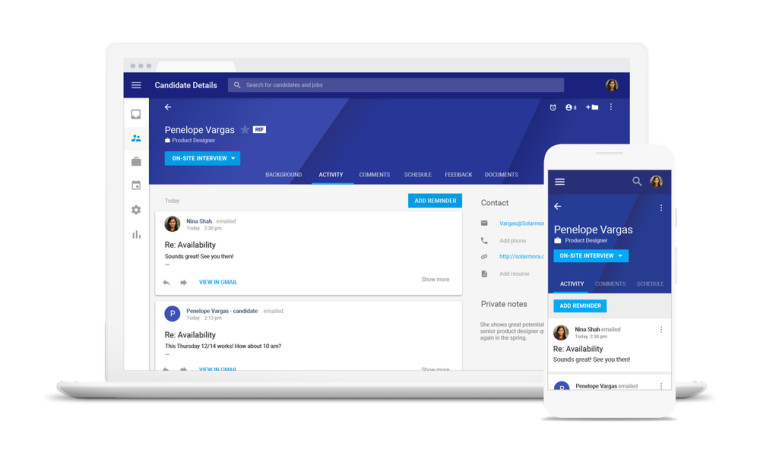
SugarCRM has firmed up its AI story with the launch of Hint, the first service from its new Relationship Intelligence product family. Hint is all about automating the task of collecting and organizing information about individual customers, as SugarCRM explains in a press release:

SugarCRM Hint reinvents enterprise applications by enabling end users to provide only a few contact details (e.g. email, name, company) for an individual and then automatically searches, tunes, and inputs the rest of the personal and corporate profile details for that contact. Hint does the work for Sugar users by gathering and analyzing customer intelligence from a broad range of social data sources so users can quickly and efficiently learn more about their prospects to establish a productive relationship.

Hint builds upon last year's acquisition of Contastic, a natural-language processing startup. It is compatible with Sugar versions 7.8 or higher and priced at $15 per user per month.

Hint represents a first step in a longer journey for SugarCRM, as the company notes in the release:

Future SugarCRM Relationship Intelligence products will rely on predictive analytics and machine learning techniques. These analysis techniques evaluate large data sets to reveal insightful patterns, prioritize opportunities, identify issues and make intelligent recommendations for next best actions in customer interactions and processes.

For what it is, Hint serves an increasingly important need, says Constellation Research VP and principal analyst Cindy Zhou. "Companies have been turning to third-party data solutions to append the missing information for both companies and their related contacts," he says. Having more complete information on the company, the decision-makers and contacts will help sellers improve their engagement with customers and prospects."

But Zhou advises clients to assess the fit and understand the depth and breadth of contacts Hint can provide. "Is there specialization in their particular target markets, industries or contact roles?"

POV: SugarCRM has chugged along over the years, despite remaining in the shadow of high-profile CRM vendors such as Salesforce and Oracle. It has differentiated itself with aggressive pricing-to-feature ratios, and the ability to run both in the cloud and on-premises.

With Hint and the upcoming Relationship Intelligence products, SugarCRM has made an initial entry into AI. While it doesn't have pockets as deep as larger competitors, SugarCRM is smartly focusing its initial AI efforts on core sales CRM capabilities—its sweet spot—compared to Salesforce's aggressive push to drive AI across every module.

Marketing Transformation Matrix Commerce Tech Optimization Chief Customer Officer Chief Information Officer Chief Revenue Officer

DNS Up-and-Comer Cloudflare Launches App Platform

DNS Up-and-Comer Cloudflare Launches App Platform

Constellation Insights

DNS service provider Cloudflare is getting serious about apps. The company has announced the Cloudfare Apps Platform as well as a $100 million fund that will distribute venture capital to startups that build apps on the platform. 

Founded in 2011, Cloudfare has now built out a network that spans 115 cities around the world, serving six million websites. Prominent customers include Uber and Fitbit. Cloudfare also offers CDN (content delivery network) services, firewalls and DDoS (distributed denial of service) protection. 

Cloudflare App Platform is a natural evolution of the business, CEO Matthew Prince wrote in a blog post:

Prior to today, if you wanted to write code that took full advantage of Cloudflare's global network you needed to be a Cloudflare employee. Our team is able to run code on thousands of servers in hundreds of locations around the world and modify our customers' packets as they flow through our network in order to make their web site, application, or API faster and more secure. Today, we open that access to the rest of the world.

The Apps Platform allows third parties to develop applications that can be delivered across Cloudflare's edge to any of our millions of customers. 

Cloudflare sits in a unique place. Our customers' packets flow through our network before reaching origin servers and in the way back to clients. That enables us to filter out bad actors, introduce new compression, change protocols, and modify and inject content. The Cloudflare Apps Platform enables developers to do the same, and produce applications that help build a better Internet.

Meanwhile, the developer fund is being backed by Venrock, Pelion and NEA, which were early investors in Cloudfare:

Building Cloudflare was a community effort. We can't wait to see what developers build now that we've opened Cloudflare's infrastructure and access to investors to a greater audience.

The App Platform stems from Cloudflare's purchase of Eager last year. Despite its name, the platform doesn't offer a full set of developer tools. Rather, it provides a way for third-party developers to wrap their JavaScript and CSS-based applications in an install.JSON file. Cloudflare's platform abstracts away complexity for website customers, allowing non-technical users to use a simple interface to configure and install apps on their sites. 

Eager's technology replaces an earlier app platform Cloudflare had built on its own. The company's app marketplace has about 50 applications so far but clearly the goal is to have many, many more. Like other stores, Cloudflare will take a piece of developers' revenue, in this case 30 percent.

POV: Surprisingly rich applications can be built with JavaScript and CSS, but you can expect the variety of applications that populate Cloudflare's store to include a fair amount of widgets, too, albeit useful ones, particularly for small and medium-sized businesses or department-level websites who want to add features quickly without engaging IT. Like any, the marketplace and platform's success will depend on developer and customer awareness, but Cloudflare's overall momentum, along with the $100 million fund, should ensure a fair amount of both.


Marketing Transformation Matrix Commerce Next-Generation Customer Experience Tech Optimization Chief Customer Officer Chief Information Officer Chief Marketing Officer Chief Digital Officer

Cisco Live 2017: Key Takeaways from CEO Chuck Robbins' Keynote

Cisco Live 2017: Key Takeaways from CEO Chuck Robbins' Keynote

Constellation Insights

Cisco kicked off this year's Live conference with a keynote from its CEO Chuck Robbins, who walked attendees through recent and upcoming news announcements while laying out the company's vision for next-generation networks. Here's a look at the key takeaways from Robbins' talk.

The new networking realities: In 2016, the world hit an inflection point as the number of machine-to-machine network activations exceeded those of phones and tablets, Robbins said. Enterprises are already using billions of connected devices for new business models, preventive maintenance and other pursuits, and the pace by which more and more devices will be connected to the Internet is set to increase dramatically, he added.

Three things will define networks going forward: Scale, simplification and security, Robbins said. Of the last, he noted: "We all know what's in the press and as we add more and more things the threat surface expands. Once a month, something major happens. We have to ensure we're building security into everything we do."

Last week, announced major updates across its Digital Network Architecture product family. These include DNA Center, a management dashboard for all network functions; Software-Defined Access, which automatically segments network traffic through policy enforcement; and a machine learning platform for predictive analytics and business intelligence.

There's also new traffic analytics that can accurately detect threats in encrypted traffic more than 99 percent of the time, without needing to decrypt the data.

Robbins also discussed a new family of switches, the Catalyst 9000 line, which he called a "beautiful box." The switches include new custom-built ASICs and are fully programmable, allowing, for example, a hospital bringing on IoT devices carrying patient data to separate that traffic from desktop networks. It's also possible to run applications in containers or VMs directly on the boxes.

To that end, "what we believe is the network has to provide you the ability not only to connect but to deal with the data at the edge," Robbins said. 

Seventy-five large companies are already conducting field trials with the new software and hardware, according to Robbins. The various aspects of the portfolio will become available over the next several months, Cisco said.

POV: Robbins kept the product pitches fairly short and free of bombast, which is always welcome. He also did a good job of speaking directly to the thousands of Cisco administrators and architects present at Mandalay Bay, highlighting the importance of their roles and responsibilites in the IoT age. 

The multi-cloud reality: Cisco, like others, tried but failed to make inroads in the public cloud market and ultimately shuttered its Intercloud service in March. Thus it was not surprising that the cloud portion of Robbins' talk discussed Cisco's new strategy, where it will support multi-cloud management. 

Cloud computing began as a quest for simplicity in enterprise IT but with companies buying into a proliferation of SaaS, PaaS and IaaS offerings now has become a problem of data control and security.

"This is a major challenge we have to solve," he said. "It's not going to the cloud, it's going to many, many clouds. And the network has a unique ability to help you navigate that by preserving your policy and your security."

POV: Constellation believes multi-cloud is the right direction for most customers. Cisco, however, is far from the only vendor trying to pivot into multi-cloud management and will have to find the right place in the market. 

Apple, Cisco cozy up a bit more: Robbins invited a surprise guest onstage in the form of Apple CEO Tim Cook. Their conversation consisted mostly of generalites about the companies' partnership, which big boost two years ago with the announcement of an enterprise-oriented "fast lane" service for validating iOS devices on Cisco networking gear. 

Cisco and Apple didn't have anything nearly as big to announce during Robbins' talk, but Cisco did unveil Security Connector, which takes functionality from its Umbrella and Clarity security products and combines it in one app. It provides features for incident investigation, blocking malicious sites and encrypting DNS requests, and can be used to manage iOS devices in conjunction with an mobile device management platform.

POV: While the fireworks weren't really there this year news-announcement-wise, Cook's appearance is some evidence the Cisco-Apple partnership has been a success. (Cook said as much, but neither he or Robbins talked numbers.) In any case, the deal always made sense for both companies on paper, with Apple gaining an inroad to enterprises through Cisco's channel and Cisco able to pitch its networking products as superior for iOS devices. 

24/7 Access to Constellation Insights
Subscribe today for unrestricted access to expert analyst views on breaking news.


Tech Optimization Digital Safety, Privacy & Cybersecurity Chief Information Officer Chief Digital Officer

Sports Event - Lessons Learned for CxOs from America's Cup #5

Sports Event - Lessons Learned for CxOs from America's Cup #5

 
We had the opportunity to attend the America's Cup (AC), currently happening in Bermuda. For any sports (and sailing enthusiast) a once in a life time opportunity. And there is always something to be learned in life - with applicability to the enterprise... here I share my top 3 lessons learned from AC 35.


Take a look at the video that I recorded in Bermuda for a start:


And of course there is a one slide summary:
 
 
And here are the three lessons learned:
 

Challenge Best Practices

AC35 Development – For the first time AC teams have members of their team called ‘cyclist’, in this case Emirates Team New Zealand even has an Olympic medalist on board. It matters as the New Zealand team creates the vital pressure for maneuvers and adjusting with … spinning on stationary bikes. Four of the six team members… pedal. Unthinkable for sailing so far – the biggest forces in sailing were generated by arms, by the so-called grinders. And while all five other teams did not want / could not react to the New Zealand innovation. The power advantage is obvious, based on the team claims that the best Emirates Team New Zealand value is averaging 800W per race, the best grinder of Oracle Team USA does… 350W per race.

The CXO Lesson – Best practices are not there to be followed blindly but questioned regularly. Lateral thinking is crucial: Find what works in other areas and can solve the problem better. Everybody knows humans have more power in their legs than their arms – so why not use it … on a sailboat. What is the lateral thinking to disrupt and innovate on best practices for your enterprise?


Make the organization a living being

AC35 Development – AC teams have traditionally been very hierarchical organizations, the buck stops with the skipper, giving the commands and the ream receiving them. The tactician was an innovation introduced decades ago, to give the skipper a second opinion, another set of eyes. Tacticians would advise, skippers sometime follow. Compare to what Emirates Team New Zealand does: The helmsman drives, another team member is the foil trimmer and another one oversees sails (ironically the formal skipper, Ashby). Full delegation, no need to communicate / coordinate (listen into the live broadcast).

The CxO Lesson – Organizations need to be reviewed regularly. Too much communication and coordination can slow down an enterprise. Autonomy is powerful, empowers people to make the right decision, focus on the job and get It done. How many of you directs can / could do with more autonomy? Do they give them directs more economy?


Show up - late and ready works

AC35 Development – Emirates Team New Zealand only made it to Bermuda in May, races started in June. Oracle Team USA was their already almost two years earlier. As it turns out – the conditions the New Zealand team trained under at home, were more the ones that are now occurring in the Great Sound of Bermuda. Maybe lucky, maybe not. For sure the other teams saw less of the cycle setup.

The CxO Lesson – You don’t have to be first. Your enterprise must be there at the right time and ready. Every move will cause a reaction by the competition. The earlier your enterprise acts, the more time for the competition to react, adapt and maybe beat you. Late and ready is better than to be early and surprised and with no potential to adapt or react.


MyPOV

There are many lessons to be learned in life and it’s nowhere cast in stone that new strategies in business have to come from lessons learned in business. Lateral thinking, questioning the status quo, bending best practices, ignoring best practices and challenging them need to be part of the daily work of a CxO. Once implemented, they need to be executed, and we know flatter, more autonomous and more diverse teams do better. Empower the organization. And have a plan over time. Leave something in the tank to change the way the game is being played and playing out. If you are ready, coming later with impact is better than be early and exhausted.

The America’s Cup is not over. More lessons maybe able to be learned. When I recorded the video, the score was 4:1 for Emirates Team New Zealand. At the time of writing this, the score is 6:1. But in 2013, Oracle Team USA came back from a 1:8 deficit. Maybe that the last lesson for CxOs from the AC: Never say never, and it’s never over till it’s over. Watch Race #9 tomorrow – there may be more – or not – but there is definitively something to learn from AC35.
Tech Optimization New C-Suite Data to Decisions Future of Work Innovation & Product-led Growth Leadership Chief Experience Officer

FinancialForce Community Live 2017 - All about Services

FinancialForce Community Live 2017 - All about Services

 
 We had the opportunity to attend Financial Force’s 2nd user conference, Community Live – the first open for influencers, held in Las Vegas, from June 19th to 21st, at Cesar’s Place. Over 700 attendees, extraordinarily well attended by the influencer community (per MSR rule). 


So, take a look at my musings on the event here: (if the video doesn’t show up, check here).


I also recorded my first impressions of the keynote with Den Howlett over at Diginomica – watch it here.

No time to watch – here is the 1-2 slide condensation (if the slide doesn’t show up, check here):


Want to read on?

 
Here you go: Always tough to pick the takeaways – but here are my Top 3:

FinancialForce doubles down on Services – Financial Force has always focused on service industries, in the keynote new CEO Tod Nielsen re-iterated the commitment, drawing a wider picture – that ‘everything’ is becoming a service. This was taken all the way to the (not so serious) example of “Puppy as a Service”. But a valid point the resonated well with the audience. Not so long ago we talked about outcomes are what matter for customers, and outcomes as a service (including services) would have been a bolder point. But that can still happen.

 
FinancialForce Community Live 2017 Holger Mueller Constellation Research Future of Work
Tod Nielsen opens FinancialForce Community Live 2017

Focus on Talent Management for Services Industries – It’s always with a grain of salt when vendors reduce their ambition – and that’s what FinancialForce has done in HCM. Instead of becoming a full-fledged HCM vendor, FinancialForce will focus on Talent Management for Services Industries (with white collar workers). It chose ADP as its part for HR Core and Payroll, certainly a good move to choose the most used payroll platform in North America. And payroll is crucial in the services industries: Professionals stop working to check their paycheck – often even at customer site – so getting this integration right is crucial. And FinancialForce and ADP plan to provide a vendor based integration, likely around the REST technology that ADP has championed with another ERP vendor recently (check my blog).

 
FinancialForce Community Live 2017 Holger Mueller Constellation Research Future of Work
Studer with Imbrogno - Partnership of FinancialForce and ADP


Financials Roadmap – With all these changes, the core of FinancialForce, Financials, almost took a backseat. But there was room in the keynote to point out to a key road map
 
items, most prominently revenue recognition, renewal risk and revenue analysis.

 
FinancialForce Community Live 2017 Holger Mueller Constellation Research Future of Work
FinancialForce uses Salesforce Wave
 

MyPOV

Always good to be at an early edition of a user conference, where the user community gets shaped, develops expectations and the vendor ecosystem goes through its first incarnations. The ‘tribal’ values of an ecosystem get established in these first conferences. It was especially interesting with the executives who shouldered the bulk of the first day keynote – Nielsen and Studer being with FinancialForce for respectively (only) six and three months. But both showed they are familiar with customers, their expectations and demands, a good sign.

On the concern side – it is always sensitive when vendors retrench in footprint plans and ambition. FinancialForce has done a respectable job at addressing these concerns and informing customers ahead of the changes in HCM and the partnership with ADP. At the end of the day it is better for vendors to realize what the can do with their R&D budgets, and better to stop too ambitious plans sooner than later What matters for FinancialForce customers is that the partnership with ADP will deliver – if and when it does – the potential FUD around this change - will all be history.

Overall a good Community Live conference for FinancialForce customers and partners, now it is time to deliver and what was announced. Stay tuned.
 
Want to learn more? Checkout the Storify collection below (if it doesn’t show up – check here).


Future of Work Revenue & Growth Effectiveness New C-Suite Data to Decisions Innovation & Product-led Growth Tech Optimization financialforce ADP business finance AI Analytics Automation CX EX Employee Experience HCM Machine Learning ML SaaS PaaS Cloud Digital Transformation Enterprise Software Enterprise IT Leadership HR IaaS Disruptive Technology Enterprise Acceleration Next Gen Apps IoT Blockchain CRM ERP CCaaS UCaaS Collaboration Enterprise Service Chief Financial Officer Chief Experience Officer Chief Customer Officer Chief People Officer Chief Human Resources Officer Chief Information Officer Chief Technology Officer Chief Information Security Officer Chief Data Officer Chief Executive Officer

IBM Launches Microservice Builder for Next-Gen Application Development

IBM Launches Microservice Builder for Next-Gen Application Development

Constellation Insights

IBM has brought together a number of developer tools into a platform for building, deploying and managing microservices in both on-premises and cloud environments. 

In a microservices architecture, an application is represented as a suite of smaller services, usually running in containers, which can be swapped in and out or ugraded as warranted. The microservices approach favors continuous delivery, easier testing, and incremental new features created as business needs arise. IBM is hoping its new Builder service will have appeal for enterprise IT shops looking for more of a turnkey way to create microservices:

Microservice Builder helps developers with each step of the development process from writing and testing code, to deploying and updating new features. It helps create and standardize common functions, such as runtimes, resiliency testing, configuration and security, so developers do not have to handle these tasks separately. Teams can also build with specific policies and protocols to ensure all services work together as a complete solution.

For example, a retailer developing a new inventory management app could use Microservice Builder to create a microservice that connects into inventory data to monitor availability of products. A second microservice could be built for a user interface to access inventory information from mobile devices, and a third could be built to analyze shopping trends based on inventory movement. Microservice Builder could help ensure all microservices work together when deployed, regardless of which developer on the team created them.

Microservice Builder uses Kubernetes for container orchestration, as well as Istio, an open source project for microservices management developed by IBM, Lyft and Google. (It's worth noting that IBM says it "plans to deepen the integration" between Istio and Microservices Builder over time, meaning this piece of the pie isn't fully baked yet.)

Other aspects of Microservice Builder includes support for MicroProfile, a programming model which optimizes Java EE for microservices, and security via OpenID Connect and JSON Web Token. IBM is offering a developer edition at no charge. Pricing for test and production versions wasn't available.

In any case, IBM is tapping into an important area at the right time, says Constellation Research VP and principal analyst Holger Mueller. 

"Despite all the hype around microservice and their inherent advantages to build next-generation applications, their uptake isn't on the fast lane," he says. "Custom software gets rebuilt at an average clip of 10 years, assuming it worked successfully. From those projects, almost all enterprises take a look at microservices, but only one third take really advantage of them." 

That's because of uncertainty, unfamiliarity and risk-aversion on the part of enterprises, he adds. "Making it easier to create, maintain and implement microservices is the right strategy to increase that adoption, and that's what IBM is doing," Mueller says. 

Big Blue is not the only option for microservices development platforms, as a cottage industry of startups has sprung up around the trend. These include Macaw, Vamp and Nanoscale. However, IBM's resources and vast account penetration in enterprises globally will certainly give Microservice Builder a foot in the door.


Tech Optimization Chief Information Officer

Event Report: FinancialForce #FFComm17

Event Report: FinancialForce #FFComm17

New Management Team and Focus Bode Well for FinancialForce

Constellation attended the FinancialForce Community Live event in Las Vegas in June 2017.  More than 1,000 attendees gathered to see the new management team and product roadmap.  The market for cloud enterprise resource planning (ERP) software remains hot as regulatory requirements and modernization efforts drive upgrades and vendor selection.  Renewed focus on services based ERP and cloud entry points give custoers more choices.

The Analysis

Catch The Full Research Report

The full report and analysis can be found here.

Selected Tweets From The Event

Here’s the Storify with the highlights from this year’s event.  Feel free to share!

The Bottom Line: Services-Based Revenue Organizations Should Consider FinancialForce on Short Lists

Constellation believes that FinancialForce is making the right investments to address mid-market requirements while also staying focused.  Though clients expressed a drop in customer service responsiveness over the past six months, conversations with customers at the Las Vegas event showed a renewed confidence with the new management team and approval of the future product direction. For this reason, Constellation recommends that the following prospects consider FinancialForce as an option in cloud ERP:

  • Mid-market organizations with a services revenue focus.
  • Large enterprises implementing a two-tier ERP strategy for services-based departments, divisions or regions.
  • Small to medium-sized enterprises seeking to graduate from products such as Intacct, Sage and Intuit QuickBooks.
  • Organizations seeking to comply with new revenue recognition requirements such as ASC606 and IFRS15.

Your POV.

What do you think of your ERP vendor?  Do you see them as a strategic partner or just a cost play?  Do you plan to move to the cloud with or without them?

Add your comments to the blog or reach me via email: R (at) ConstellationR (dot) com or R (at) SoftwareInsider (dot) org.

Please let us know if you need help with your Digital Business transformation efforts. Here’s how we can assist:

  • Developing your digital business strategy
  • Connecting with other pioneers
  • Sharing best practices
  • Vendor selection
  • Implementation partner selection
  • Providing contract negotiations and software licensing support
  • Demystifying software licensing

Reprints

Reprints can be purchased through Constellation Research, Inc. To request official reprints in PDF format, please contact Sales .

Disclosure

Although we work closely with many mega software vendors, we want you to trust us. For the full disclosure policy,stay tuned for the full client list on the Constellation Research website.

* Not responsible for any factual errors or omissions.  However, happy to correct any errors upon email receipt.

Copyright © 2001 -2017 R Wang and Insider Associates, LLC All rights reserved.
Contact the Sales team to purchase this report on a a la carte basis or join the Constellation Customer Experience

The post Event Report: FinancialForce #FFComm17 appeared first on A Software Insider's Point of View.

New C-Suite Revenue & Growth Effectiveness Innovation & Product-led Growth Event Report financialforce business finance Executive Events Leadership Chief Financial Officer Chief Experience Officer

Unpacking Oracle's Q4 Results: Turning the Cloud Revenue Corner

Unpacking Oracle's Q4 Results: Turning the Cloud Revenue Corner

Constellation Insights

There are few better ways to take the measure of enterprise software buyers' moods than by examining Oracle's fourth-quarter results, which were released this week. Q4 is always Oracle's biggest quarter of the year, and all eyes were on what numbers it would post for cloud revenue.

Put simply, it was a blowout, with cloud revenue up 58 percent year-over-year to $1.4 billion. Within that total, SaaS was up 67 percent to $964 million while PaaS and IaaS revenues, which Oracle is now counting together, were $397 million. For the full year, cloud revenue rose 60 percent to $4.6 billion. 

The results shot Oracle's stock up dramatically, lifted its market capitalization to north of $200 billion, and had executives in a even more positive mood than usual during the earnings conference call. Here are some of the key takeaways from the call and quarter. 

In the margins: Oracle's gross margin for SaaS in the quarter was 65 percent, up from 54 percent last year. The company hopes to reach gross margins of 80 percent on SaaS over time. Meanwhile, the gross margin for PaaS and IaaS fell to 47 percent from 54 percent, an outcome Oracle attributes to investments in data center buildouts. 

On-premises stability: While on-premises software revenue was flat at $7.5 billion, new software license sales fell 4 percent to $2.6 billion. Oracle made up the difference with a 3 percent rise in maintenance revenue, which was $4.9 billion. That result reflects "high attach and renewal rates" on support contracts, Oracle said—but it could also partly reflect revenue gained through license audit activities. Maintenance remains a highly profitable venture for Oracle—and all software vendors, for that matter—and the company is keen to preserve it as much as possible, even as more customers buy into cloud.

Chasing Salesforce: Oracle is going to surpass Salesforce as the number one SaaS vendor, CTO and executive chairman Larry Ellison said on the call. That's because it has a more diverse SaaS portolio, Ellison added:

The reason we are confident that we will pass Salesforce is because we have a three-fold SaaS application suites for ERP, for HCM and for CRM including financials, procurement, supply chain, manufacturing, human resources, payroll, marketing, sales and service. Salesforce in contrast only competes in three of these nine market areas.

It's not always clear how customers benefit from this sort of chest-thumping, but if the competition continues to heat up between Salesforce and Oracle, they could win out through better pricing and bundling options, as well as heightened innovation. Time will tell.

Cloud ERP crushing it: Oracle's cloud ERP revenue was up 156 percent in the quarter, a figure that does not include sales from NetSuite, CEO Mark Hurd said. (Netsuite is being positioned as Oracle's SMB option for cloud ERP, while its Fusion suite is aimed at large enterprises.)

Oracle picked up 868 cloud ERP customers in the quarter. Among others, Oracle struck cloud ERP deals with Allianz, BNP Paribas, GE, the Kraft Heinz Corporation, Juniper, MetLife, Minerals Technology, Motorola, NCR, Netflix, Newell Rubbermaid, Orange, Pearson, Sinclair Broadcast Group, Textron, the University of Maryland, Vanderbilt University and Volkswagen, he added.

More tellingly, two-thirds of cloud ERP customers in the quarter had never purchased an Oracle ERP system before, Hurd said. That suggests Oracle has assembled a strong sales organization, is successfully raising awareness outside its installed base, and most importantly is able to put viable cloud ERP solutions in front of a diverse set of companies and organizations.

Sales switchup: Hurd responded to recent reports that Oracle was planning significant layoffs in its sales force once the quarter closed. (See the Register's report here.) He denied the idea of layoffs, while acknowledging Oracle has been making some changes:

This is all just not true. So, is our sales force shrinking? No. Do we change things in our sales force? Sure. Is there any major reorg going on? No. But remember, our competitors change. We have some very simple principles how we run the sales force. We lineup our sales force by product. We line them up by buyer and by competitor. And that market tends – those dynamics can change or competitors change we have noted over the past several years. .. Second, we are building out, as we have told you over the past couple of years, big hubs that are doing a lot of our selling. And so we have the byproduct of that is that our sales force is actually increasing in numbers, but our cost per salesperson is actually declining. 

Cranking up the Cloud Machine: In May, Oracle announced an agreement with longtime customer AT&T that will, among other things, see the telco migrate thousands of its internal databases to Oracle's IaaS and PaaS. While the press release issued at the time suggested AT&T would use Oracle's public cloud, on the call Hurd revealed that the agreement will involve Oracle's Cloud Machine appliance, which replicates its PaaS and IaaS inside a customer's own data center:

[T]hey have several hundred large databases that have 70%, 75% of all of their company’s data. They have badly wanted to get the benefits of cloud, provisioning, a lot of provisioning and all the new features that come with product modernization, consolidation of that infrastructure, yet in many cases they have got regulatory pressures on what they can put in the public cloud and what they can’t. ... we take our Oracle cloud machine and we are able now to do all of that with them on their premise and give them all the benefits of the cloud, we manage, we patch, we basically run the cloud for them.

Oracle sold more 100 Cloud Machines in the quarter, and wants to ultimately deliver them to tens of thousands of customers. Hurd didn't provide any context for the quarter's results on Cloud Machine, which was launched in March 2016, such as the percentage increase or decrease in unit sales. Constellation believes that while data sovereignty and regulatory guidelines remain strong drivers for private cloud, Cloud Machine may remain of interest mostly to all-in Red Stack shops for some time to come.

24/7 Access to Constellation Insights
Subscribe today for unrestricted access to expert analyst views on breaking news.

Data to Decisions Tech Optimization Chief Executive Officer Chief Financial Officer Chief Information Officer

Digital Business is not Web Business; Competitive Implications

Digital Business is not Web Business; Competitive Implications

Back in the day when the Web was transforming business channels to market the concept of White Space was often quoted. In a 2010 article, (see link in following paragraph), on the subject Harvard Business Review stated; As a metaphor, white space is at once ubiquitous and frustratingly ambiguous. There may be as many definitions circulating, as there are business thinkers. Some people define it as a place where there’s no competition. Others as an entirely new market. Still others use it, to refer to gaps in existing markets or product lines.

The author Mark W Johnson developed the theme around a number of points, all of which are relevant to the changes, or opportunities, that Digital Business is introducing today. His comments are well worth reading, or even rereading, again. If you don’t have the time then in his concluding paragraph Mark Johnson states; but ultimately what this definition (of white space) allows you to do is map a new opportunity or impending threat against your company’s current ability to meet it.

Digital Business certainly meets this criterion as initially startups, unhindered by any existing business activities, can see and are gaining customers, in a range of new business activities. These really are White Spaces not serviced by existing Enterprises and their current Internet Web offerings, but based on Digital Business Internet connectivity to real time Services.

The easy comparison is the difference between booking a Cab through a Cab Company online using their Web service, and Uber, a real time Digital Business model. Less obvious is Amazon offering real time finance to small Enterprises trading through its online business linked to their ‘events’ that might require financing. Like Uber the real time event embeds the business activity making the ‘buy’ decision obvious, and excluding traditional Enterprises from any possibility to be involved.

If those moves make you think, then the question is do you really understand what Digital Business really is, how Digital Business models work, and what a Smart Services economy really transforms? Maybe time to check out Understanding Digital Business and Distributed Business models.

In defining White Space in terms that relate to Digital Business the phrase from HBR; “market opportunities your company may wish — or need — to pursue that it cannot address unless it develops a new business model” rings true. The threat of the Digital Economy model on current business models is becoming real, simply because the volume of new players and offers means some have to hit their industry sector sweet spot and gain impetuous.

It is easy to dismiss startups and wait until one becomes big enough to start to be a real competitor, but by then its likely to be too late as the momentum in the market will favor the new with first mover advantage. Its hard to fight back in Digital Business as the whole point is to be embedded in the event/activity in a manner that does not allow a competitor to even be aware of the opportunity. Even when forced to react the time frame to organize a traditional Enterprise into a Digital Enterprise winning in a new way, in new markets, with new business offers, is likely to be too long for a real competitive response.

The simple, and least painful, answer is to make a positive change in market and competition monitoring and assessing. An established Enterprise should start by assessing at least three startups that are aiming to enter and disrupt some element of their current market. Use Market intelligence, plus using the specialized listing companies that maintain records of Venture Capital investments and success rates for startups on an industry sector basis to decide on the three.

A likely surprise at this point is to find how many there are in your market sector, and that some are very directly targeting aspects of your current business, often the lost profitable service related elements. It was widely reported a year ago that Honeywell had thirty-two startups targeting various aspects of its business; in response Honeywell formed a new division focused on using IoT to drive its Digital Business.

The individual startups across your industry sector are shaping the new market even of they are not substantial enough to have direct impacts on your existing customers and revenues. Collectively they are educating customers to understand a wholly new business value proposition, and create a whole new market segment. A true example of white space!

An investment in rethinking competitive and market monitoring brings focus and fact to the Enterprise management when considering if they should react and how. A combination strategy starting with internal enterprise deployment of Digital Business to improve operating capabilities using IoT with AI builds knowledge and required capabilities, as well as improving the current financial bottom line. Followed by a determined set of moves to build a sophisticated Digital Business around Services and a Market ecosystem based on learning from the startup community success provides a route to mastering the necessary transformation to the Digital Services economy.

New C-Suite Innovation & Product-led Growth Tech Optimization Future of Work AI ML Machine Learning LLMs Agentic AI Generative AI Analytics Automation B2B B2C CX EX Employee Experience HR HCM business Marketing SaaS PaaS IaaS Supply Chain Growth Cloud Digital Transformation Disruptive Technology eCommerce Enterprise IT Enterprise Acceleration Enterprise Software Next Gen Apps IoT Blockchain CRM ERP Leadership finance Customer Service Content Management Collaboration M&A Enterprise Service Chief Information Officer Chief Technology Officer Chief Digital Officer Chief Data Officer Chief Analytics Officer Chief Information Security Officer Chief Executive Officer Chief Operating Officer