If CRM Is Dead, How Is the Relationship Still Breathing?
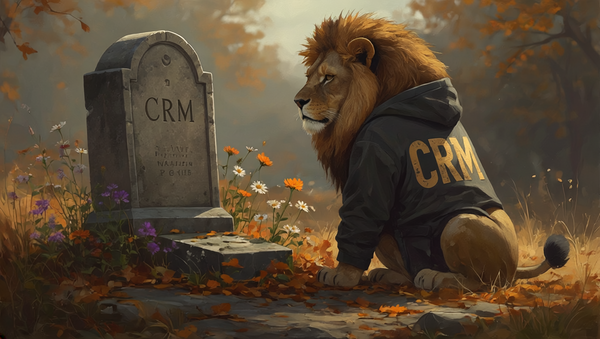
There is a conversation that ebbs and flows heralding the demise of categories of technology. One of the favorite tools to meet its grizzly end is CRM. During the rapid rise of digital and web in the 2000s, CRM met an early demise as SaaS solutions drafted a narrative that on-premises salesforce automation (SFA) and CRM tools of the 1990s were dead. Today, it is fair to estimate that on-premises CRM has dramatically shrunk to represent less than 20% of the CRM market.
CRM did not die. It moved.
CRM was once again declared dead with the rise of social media, ubiquitous mobile access, and new digital interfaces. As mobile-first solutions and social integrations transformed engagement with the customer across the 2010s, desktop-centric platforms gave rise to omnichannel engagement tools that presented across multichannel surfaces. As mobile apps rose, desktop-based CRM was declared obsolete as vendors began to imagine a world where CRM was not needed to capture the relationship a brand had with its buyers, assuming social would deliver a different surface. Fast-forward once again, and while desktop-exclusive applications have fallen out of vogue, most CRM providers offer a hybrid approach that brings CRM functionality and access to where an individual chooses to work, pulling data and journey insights from where the customer chooses to connect.
CRM did not die. It matured.
Now, we reach a new era in which AI has supposedly brought on the death of SaaS itself. CRM’s death is once again on the table as AI and autonomous, conversational, or agentic systems claim to deliver a better structure for data and workflows without the need for manual input or even an application. “Vibe coded” CRM solutions are reportedly being stood up overnight, although in fairness, these stories most often satisfy the demands of a corporate structure of one and rarely evolve into studies of successful enterprise deployments tackling complex ecosystems and even more complex revenue realities.
Systems are being challenged by an army of autonomous agents capable of curating and interrogating data in a channel-agnostic approach. Gone are the days of pesky people failing to capture process, outcomes, or results. AI is on it, without the prerequisite of a CRM system waiting for sellers to enter the outcome of their last customer call. And although this era is evolving quickly, there is something that will remain true, even in the face of such radically disruptive and innovative technology. It will not kill CRM.
CRM is not dead. It needs to evolve.
Evolution Matters. Defining What Needs to Evolve Is Critical.
The fallacy of CRM’s obituary starts with the assumption that CRM boils down to a database of customers and transactions intended memorialize a brand’s interactions across a sales journey. It narrows CRM’s role and value down to a technology that solves the problem called relationships. It assumes that the most important part of any CRM solution is the existence of a transactional database and the capacity to trigger workflows based on predefined actions. It ignores the fact that customer relationship management wasn’t intended to focus solely on the technology. CRM was always intended to be a strategy bolstered and executed with a technology. If companies bought CRM thinking it would be a silver bullet, they may not have thought to step back to define a clear vision or North Star for a relationship or engagement strategy. Organizations often fail to articulate their CRM strategy, let alone update and revise that focus and intention as platforms, technologies, and data modernized and changed.
Paul Greenberg, often called the “Godfather of CRM,” first defined CRM as “a philosophy and a business strategy, supported by a system and a technology designed to improve human interaction in a business environment.” By 2015, the definition, much like the strategy and technology, had to evolve. Greenberg updated his definition by noting that “CRM is a technology and system that sustains sales, marketing, and customer service activities. It is designed to capture and interpret customer data, both structured and unstructured, and to sustain the management of the business side of customer-related operations. CRM technology automates processes and workflows and helps organize and interpret data to support a company in engaging its customers more effectively.”
This definition still stands firm today, still accurately summarizing what role a CRM strategy and a CRM platform is intended to support across those frontline teams focused on delivering durable growth via profitable customer engagements. So, if the definition of CRM still holds, what has broken so deeply that people want to declare its demise? Simply put: lived experience!
CRM implementations have not always been easy, especially for sales teams within organizations that have used CRM as a weapon for monitoring veiled as “visibility.” CRM can often be isolated from the rest of the growth and engagement stack, pushing users to swivel between the systems that record tasks, the applications that engage with customers, and the tools where teams act. The isolation of CRM has amplified this narrative that the problem is the technology and not the isolation.
Perhaps it is time to be honest about CRM: to admit we have lived through the pain of deployment and the scars of half-baked workflows. We also must admit that CRM is not dead, not on life support, or circling the drain. It is not going to be replaced by another category of technology no matter how many similarities may exist or overlapping Venn diagrams are created. Instead, we need to architect CRM’s next and perhaps most important phase of innovation.
CRM Is Dead. Long Live CRM.
With CRM firmly among the living, determining its best path forward relies on organizations to establish where and how relationships with customers, partners, and markets will be fostered and continuously developed. As we advance across this new AI era, CRM also needs to account for customers and how their agents will expect to interact and engage with brands and the brand’s agents. Relationships will only get more complicated as agents engage with agents on behalf of humans who still expect to engage with humans.
First, Revisit the Strategy
At the heart of the matter is the strategy known as CRM. It is a time to remember that CRM, while used by many, should not be “owned” by only one team or group. Marketing is not borrowing data from CRM to power experience orchestration any more than service is syphoning insights to add meaning to experience delivery. Sellers are not forced to contribute. Instead, strategies should account for CRM to curate insights from a seller’s interactions and record critical intelligence about the customer, the process, and the outcome. AI is not the hero. AI is the tool, the additional assistant and additive agentic superpower being wielded by the organization, the team, and the individual. CRM strategy should serve as the blueprint for growth, while CRM technology is established as the foundation that strengthens the durability and longevity of that growth.
Next, Understand Where CRM Gets to Work
Truly modern CRM works where the people at the front lines of customer experience get to work. For sellers, that may mean a CRM application with rich dashboards and predictive insights detailing opportunities on a Monday, but a mobile app that Wednesday detailing prospecting actions. This flexibility is tied to ubiquity, meaning that the insights generated thanks to CRM can be surfaced where the job is being done. Say a seller lives and breathes in Microsoft Outlook or Microsoft Teams: Truly modern CRM should be showcasing account insights before, during, and after that critical call right where that seller spends time. CRM should drive the reminders to tee up the next email follow-up in the surface where a seller sends email. In a truly agentic CRM system, that email should already be drafted, in the voice of the seller in the surface the seller works, ready for the seller to send. If growth teams interact and work across collaboration engines such as Microsoft Teams, then a truly headless CRM system should surface insights and recommended actions in the Teams surface, bridging systems by updating CRM via agentic actions that update records. Truly modern CRM will take the next step and update records and recommendations in other applications. CRM strategy will account for where and how people work, empowering CRM technology to account for when and how people take action. This is not about who owns the strategy or the technology, but rather how well systems can personalize experiences for customers while contextualizing work for teams.
Then, Focus More on the Relationship Than What to Call the Tool
The real efficiency that AI has brought to CRM and the extended CX ecosystem is the capacity of compressing time while expanding margin. Decision velocity accelerates thanks to agentic flows analyzing massive expanses of data in service of the customer. Value is not just driven but extended, thanks to predictive actions and connected processes intended to establish a repeatable cadence of personalized moments for the customer. The outcome of CRM is durable growth driven by exponential efficiency. But in the end, that growth and revenue expansion is not dependent on an organizationwide embrace and loyalty to a system called CRM. It is dependent on the organization’s CRM-driven capacity to deliver brand experiences no matter which team or function initiates a specific touchpoint, be it sales, customer service, or marketing.
CRM is not dead. The strategy is alive and well for those with the willingness to build and the patience to guide it forward. The technology is alive and well for those curious enough to explore modern paths to transformation. Gone are the static systems of record, introducing growth, engagement, experience, and revenue to a more active, more contextual, and more individualized approach. Together, with AI as an accelerator and transformational supercharger, CRM can once again take its place next to the customer and shoulder to shoulder with any brand’s CX front line.
About Liz Miller: Liz Miller is Vice President and Principal Analyst at Constellation, focused on the org-wide team sport known as customer experience. While covering CX as an enterprise strategy, Miller spends time zeroing in on the functional demands of Marketing and Service and the evolving role of the Chief Marketing Officer, the rise of the Chief Experience Officer, the evolution of customer engagement, and the rising requirement for a new security posture that accounts for the threat to brand trust in this age of AI. With over 30 years of marketing experience, Miller offers strategic guidance on the leadership, business transformation, and technology requirements to deliver on today’s CX strategies. She has worked with global marketing organizations to transform everything from…...
Read morePublished
Author