


Workday CEO Bhusri on two-sided coin of agentic AI
Workday CEO Aneel Bhusri said agentic AI is more of a friend to enterprise software than a foe since it can expand the market. However, AI's displacement of human workers is going to be a big issue.
Speaking at Constellation Research's Futures Forum, Bhusri, who recently returned as CEO, said agentic AI is likely to be "all of the growth going forward." The forum features 120 public company CEOs and board members that collectively have more than $500 billion in revenue. The three-day forum is operating under Chatham House rules for many of the decision-makers and buy side.
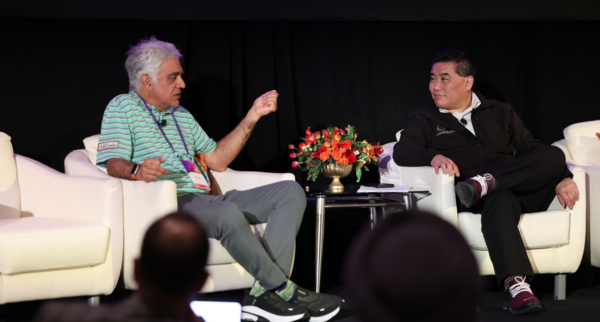
Bhusri said:
"The layer of agentic AI work that's going to get done on top of enterprise apps will be all the growth going forward. Frankly, I see it as a gift because we're 20 years into the enterprise cloud. It's maturing. There's no way around it maturing. We have over 300 of the Fortune 500 HR customers. Our opportunities are with the installed base now. We have a chance to deliver these agent solutions. I came back because we have to win at that."
He noted that Workday is using AI for financial controls, audits and closing books. AI can also go through enterprise procurement contracts and find opportunities for savings.
- Disruption coming for ERP and not from where you'd think
- Workday's fiscal 2027 subscription revenue outlook light, but Bhusri optimistic
- Workday acquires Pipedream, launches midmarket focused Workday GO
- Workday launches Workday Data Cloud, Workday Build, more AI agents
- Workday spends $1.1 billion on Sana, aims to be front door to work
- Workday buys Paradox to build out its recruiting suite
While agentic AI can be a boon to Workday, Bhusri noted that work displacement will have to be addressed. "I stay awake and because AI is going to replace a lot of low-level work," said Bhusri. "It's already happening. We're going to be part of the solution on the training. We have to be. It's too important. I wish more of the tech companies would stand up and say, yeah, we disrupt all these jobs, but we're also going to help them find jobs or retrain these folks. We've got to do that as an industry."
Bhusri said Workday is leveraging its data and research teams to get a handle on what's happening in the job market due to AI. "We have to figure out the job architecture for the next decade," said Bhusri.Workday CEO Aneel Bhusri said agentic AI is more of a friend to enterprise software than a foe since it can expand the market. However, AI's displacement of human workers is going to be a big issue.
Speaking at Constellation Research's Futures Forum, Bhusri, who recently returned as CEO, said agentic AI is likely to be "all of the growth going forward." The forum features 120 public company CEOs and board members that collectively have more than $500 billion in revenue. The three-day forum is operating under Chatham House rules for many of the decision-makers and buy side.
Bhusri said:
"The layer of agentic AI work that's going to get done on top of enterprise apps will be all the growth going forward. Frankly, I see it as a gift because we're 20 years into the enterprise cloud. It's maturing. There's no way around it maturing. We have over 300 of the Fortune 500 HR customers. Our opportunities are with the installed base now. We have a chance to deliver these agent solutions. I came back because we have to win at that."
He noted that Workday is using AI for financial controls, audits and closing books. AI can also go through enterprise procurement contracts and find opportunities for savings.
- Disruption coming for ERP and not from where you'd think
- Workday's fiscal 2027 subscription revenue outlook light, but Bhusri optimistic
- Workday acquires Pipedream, launches midmarket focused Workday GO
- Workday launches Workday Data Cloud, Workday Build, more AI agents
- Workday spends $1.1 billion on Sana, aims to be front door to work
- Workday buys Paradox to build out its recruiting suite
While agentic AI can be a boon to Workday, Bhusri noted that work displacement will have to be addressed. "I stay awake and because AI is going to replace a lot of low-level work," said Bhusri. "It's already happening. We're going to be part of the solution on the training. We have to be. It's too important. I wish more of the tech companies would stand up and say, yeah, we disrupt all these jobs, but we're also going to help them find jobs or retrain these folks. We've got to do that as an industry."
Bhusri said Workday is leveraging its data and research teams to get a handle on what's happening in the job market due to AI. "We have to figure out the job architecture for the next decade," said Bhusri.
Larry Dignan is Editor in Chief of Constellation Insights at Constellation Research, where he leads editorial coverage focused on enterprise technology, digital transformation, and emerging trends shaping the future of business. He oversees research-driven news, analysis, interviews, and event coverage designed to help technology buyers and vendors navigate complex markets with clarity and context. ...
Read morePublished
Author
