


The space race and what it means for enterprises
Amazon's move to acquire Globalstar is just the latest data point that enterprises are likely to have space as part of the IT stack with real-world use cases.
To date, space has been all about the rockets, launches and images from constellations of satellites. With Amazon acquiring Globalstar for $11.6 billion it's not a stretch to see AWS offerings for IoT, supply chain and fleet connectivity.
Meanwhile, the IPO of SpaceX is likely to bring on a lot of chatter about space-based AI data centers. AI data centers in space make a lot of sense but the logistics are complicated. Nevertheless, Nvidia had a few space data center announcements. Many of your vendors will be on the space bandwagon.
A few key developments that illustrate the enterprise-space connection.
Elon Musk announced Terafab, a project run by Tesla and SpaceX to manufacture chips for robotics, AI and space data center processes. Tesla, xAI and SpaceX would all use these processors. This manufacturing facility would be the largest ever at 1TW/year and combine logic, memory and advanced packaging in one place. Tesla's Optimus robots would help build Terafab.
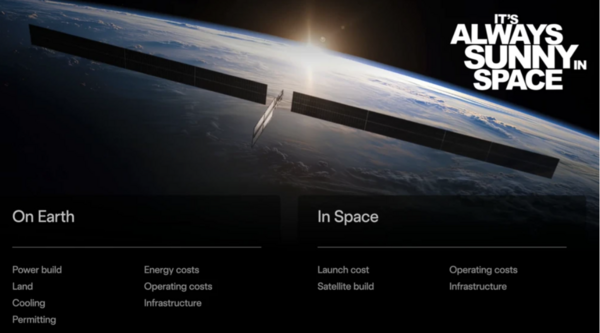
It's not hard to find skeptics since some of the math behind Terafab stretches the imagination (and possibly reality), but if Musk is going to make space data centers a reality Terafab is a good first step.
Nvidia launched its Space-1 Vera Rubin Module for orbital data centers, geospatial intelligence and space operations. Nvidia cited a bevy of space partners including Aetherflux, Axiom Space, Kepler Communications, Planet Labs PBC, Sophia Space and Starcloud.
Planet Labs is running Nvidia GPUs on its Pelican-4 satellite to enhance images and provide insights.
IonQ has been building up its space efforts via the acquisition of Capella Space. IonQ plans to leverage satellites for quantum key distribution (QKD) and secure data transmission.
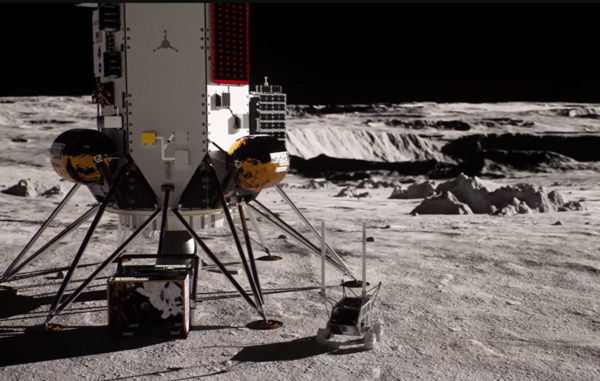
Telcom and infrastructure players already see satellite and space connected networks as part of the AI connectivity architecture. For instance, Nokia has put a cellular network on the moon via a partnership with Intuitive Machines and played a role in the Artemis II flight.
- Cisco's Patel on space data centers, AI infrastructure and hiring young workers
- Amazon CEO Jassy's 2025 shareholder letter: The big takeaways
- AWS CEO Garman said space data centers likely to take longer
Add it up and it's not a stretch to see your IT vendors today extend into space organically or via acquisition. Amazon's Globalstar purchase revolved around beefing up Amazon Leo, providing connectivity and driving returns for Amazon use cases. After all, Amazon has a lot of assets to track, a sprawling logistics network and multiple use cases where satellite connectivity could be handy.
For enterprises, this space race is worth monitoring since satellites are likely to become an extension of your cloud compute and network. Space also becomes a data layer for enterprises on multiple fronts.
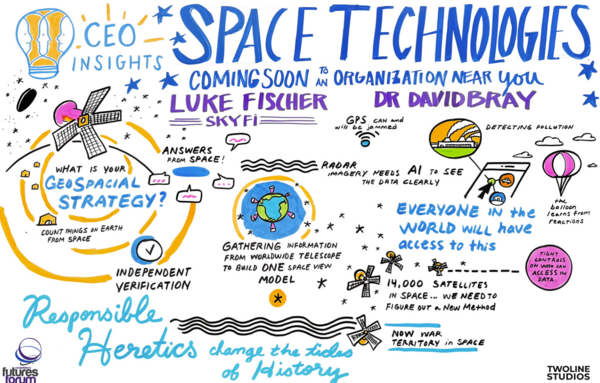
At the Constellation Research Futures Forum, CEOs talked about space and where it fits in the broader technology strategy. Here are some common themes from our CEO meetup CxOs to ponder.
- Space is becoming a data layer. CEOs and board members said geospatial has become a board-level question. For instance, space imagery and AI will equate to operational intelligence for use cases such as supply chain verification, financial signals and climate tracking.
- AI is the multiplier that will make space technology enterprise ready. Without AI, all of that imagery from space is just pictures. With AI, those images become an automated insight engine.
- Launch and imaging cost curves now make enterprise experimentation more feasible.
- Think through resilience. Space has numerous risks ranging from satellite congestion to jamming and cyberattacks.
Larry Dignan is Editor in Chief of Constellation Insights at Constellation Research, where he leads editorial coverage focused on enterprise technology, digital transformation, and emerging trends shaping the future of business. He oversees research-driven news, analysis, interviews, and event coverage designed to help technology buyers and vendors navigate complex markets with clarity and context. ...
Read morePublished
Author
