


Amazon doubles down on Leo, acquires Globalstar for $11.6 billion
Amazon is becoming a space company too. The company said it will buy Globalstar in a deal valued at $11.6 billion to build out its Leo satellite network.
The news comes a day after Amazon rolled out a Leo Aviation Antenna designed to court airlines for in-flight connectivity.
Under the terms of the deal, Amazon will give Globalstar shareholders either $90 in cash or 0.3210 shares of Amazon capped at 490 a share. The transaction is expected to close in 2027.
Globalstar will give Amazon satellites, radio frequency spectrum, expertise and direct-to-device capabilities. Globalstar provides the network that powers Apple's satellite services for the iPhone and Apple Watch. Amazon said it has reached a deal with Apple to keep Globalstar services running under Amazon's Direct-to-Device Leo service.
Amazon CEO Jassy's 2025 shareholder letter: The big takeaways
With the Globalstar purchase, Amazon Leo will more directly compete with SpaceX's Starlink service and enable it to build out its satellite network and provide cellular coverage via satellite. Amazon said that it will work with mobile network operators to provide space-based connectivity.
In a statement, Panos Panay, Senior Vice President of Devices & Services at Amazon, said Globalstar will give customers "faster, more reliable service in more places."
With the combination of Amazon Leo and Globalstar, Amazon is going to target consumers, enterprises and likely cloud customers where satellite-based connectivity can connect various devices on the edge, fleets and supply chains.
What Amazon gets with Globalstar
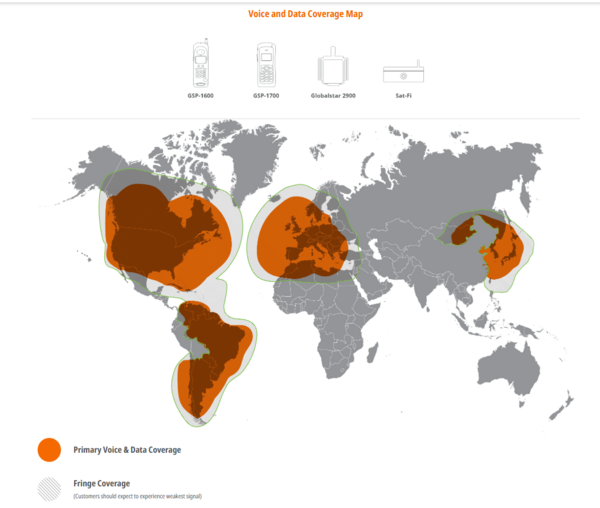
At a high level, Globalstar instantly adds satellites to Amazon Leo and an established network. Globalstar is also focused on two-way satellite IoT and government and defense accounts.
The company reported revenue of $273 million in 2025 with a net loss of $8.7 million. Globalstar ended 2025 with $447.5 million in cash and equivalents.
For 2026, Globalstar was projecting revenue of $280 million to $305 million.
Globalstar built its global ground station network, added capacity and expanded into the IoT market as well as private network services.
On Globalstar's earnings call, CEO Paul Jacobs said "2025 was a transformational year for Globalstar" and the company "focused on scaling the core business while laying the foundation for our next phase of growth."
Now that growth will fuel Amazon Leo. Holger Mueller, an analyst at Constellation Research, said:
"The reader for internet from space is in full swing and Amazon needs to step it up vs. Starlink. Getting the Globalstar frequencies and Apple as a user improves the viability and access in regulated frequencies as well as instant organic load for Leo. Amazon is catching up."
A few takeaways
Here's a look at a few moving parts.
- This deal makes sense and it wouldn't be surprising to see Amazon chase a few more deals to expand its space ambitions. Will Amazon need its own launch capabilities?
- The Globalstar purchase is a prelude to a larger space push. This push will likely include AWS at some point. Keep in mind that SpaceX is becoming focused on space data centers. Space data centers are likely years away, but will be on the radar soon enough.
- The initial model will revolve around Amazon Leo connectivity services, but you can expect Amazon's space network to reach into the businesses of AWS as well as core Amazon services.
- Look for Amazon to be its own customer to leverage Amazon Leo for efficiency. Amazon noted that Globalstar extends "connectivity to enterprises, IoT applications, fleets, and supply chains operating beyond terrestrial reach." Amazon's massive fleet and supply chain is likely to benefit from Amazon Leo efficiency gains first.
Larry Dignan is Editor in Chief of Constellation Insights at Constellation Research, where he leads editorial coverage focused on enterprise technology, digital transformation, and emerging trends shaping the future of business. He oversees research-driven news, analysis, interviews, and event coverage designed to help technology buyers and vendors navigate complex markets with clarity and context. ...
Read morePublished
Author
