


LittleHorse’s McNealy on Business-as-Code, AI agents, orchestration
AI agents are extremely popular in the enterprise, but companies need to provide context and guardrails or they will run amok like an unsupervised and untrained new hire.
"If you put agents without context and guardrails in front of the customer, that's essentially a new hire who is stubborn and overly confident without a training playbook or anything," said LittleHorse Enterprises Founder Colt McNealy at Constellation Research's AI Forum in Silicon Valley. "What goes wrong in enterprise situations is when you give agents the ability to do more than they need to in order to compensate for poor workflow architecture."
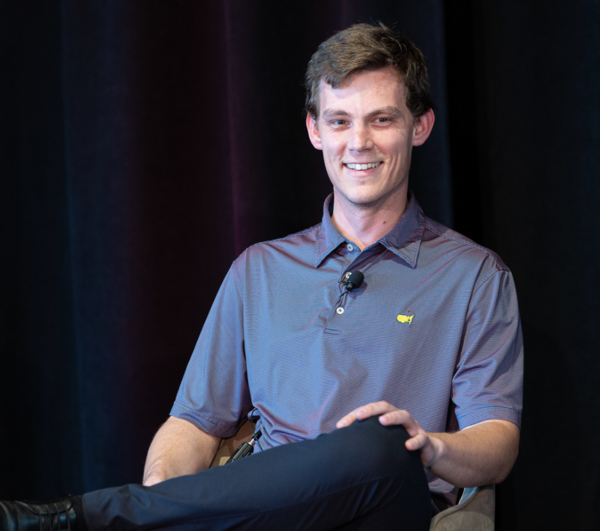
McNealy said the enthusiasm around AI agents and recent technologies like OpenClaw will require an automation scaffolding and proper infrastructure to optimize processes. There will also be security issues. "I think in a couple of years, we'll be seeing people get their affairs in order so they don't need to have YOLO security," said McNealy.
We caught up with McNealy after his AI Forum panel to get more color on LittleHorse and talk shop about the company's strategy, business as code and how enterprises need to think about orchestrating AI agents.
McNealy, a prolific writer, is the original author of the LittleHorse kernel and a thought leader on agentic patterns, orchestration and Business-as-Code.
The core problem across generations of technology is orchestration. McNealy said LittleHorse was created to solve a core enterprise issue: Orchestration of microservices and what he calls "SaaS towers," or siloed SaaS applications that don't connect well.
Today, all the talk is about AI agents, OpenClaw and its various flavors and whatever else AI development emerges. However, the problem is the same. Whether it's microservices, SaaS towers or AI agents, "no one person really understands how they talk together and interact and it's very difficult to compose, reorchestrate them and recompose them into new business processes," said McNealy.
As agentic AI emerges, this orchestration issue only grows. SaaS towers are "connected to each other in very brittle busways and you're beholden to how they work," explained McNealy, who noted now those SaaS silos have their own agents.
Simply put, LittleHorse's platform was created for what is arguably a timeless enterprise problem. "The problem we're solving is how can you customize how your business works, both customer facing or internal back office, in a way that you can trace the business process and optimize it," said McNealy.
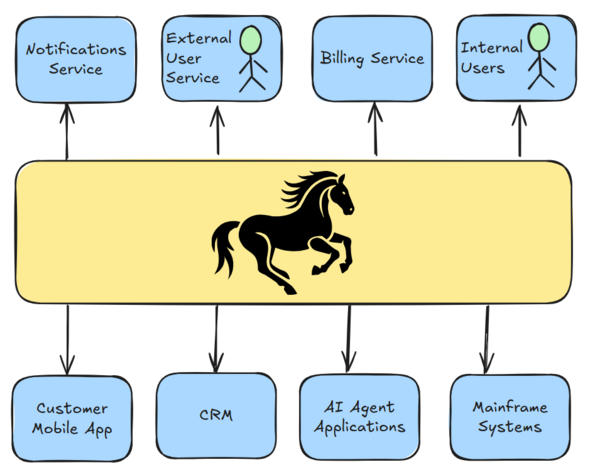
Business-as-Code meets orchestration. LittleHorse is positioned as a Business-as-Code platform that's a full-stack orchestration and execution layer that sits above existing system and allows you to define and optimize end-to-end processes.
LittleHorse enables customers to codify both their internal and customer-facing processes using high-level code. The process executions are then orchestrated by LittleHorse, which responds to events and dispatches tasks to individual pre-existing systems, agents, and people (human-in-the-loop).
"We do Business-as-Code, which lets you define your business process at a high level in code and orchestrate it and make it durable and run. And then you can get data out of your orchestration and that turns into business insights so that you can optimize your processes," said McNealy. “If your workflows aren't properly codified via Business-as-Code, unbridled agents will invent the processes for you, and you'll be unpleasantly surprised when they leave out important steps."
Implementations of LittleHorse have enabled customers to turn off SaaS modules they were paying for, streamline data and task queues and forgo purchase of software, say a work order management system, since it can be built with a little bit of code.
What enterprises are getting wrong about AI agents and OpenClaw. McNealy is skeptical about using AI agents and OpenClaw-ish systems as unconstrained orchestrators, especially for customer-facing workflows.
McNealy's view: Agents should be decision routers in well-defined, deterministic workflows and not root-access actors. Agents shouldn't be used as orchestrators. He said:
"When they try to give the agent the ability to take action as one of its tool set and then let it iterate that works wonderfully when you're trying to produce the right code for you. But when you do that in front of customers that doesn't really work. What you need to do is limit the decision surface area that the agent needs to make in order to completely automate the task.
"If you can give the agent all of the information that you need before you prompt it and ask it to choose between escalate to human or automate something then your deterministic code parses that then completes the process. Then the agent is less likely to blow up your business."
In addition, AI agents can burn through tokens and budgets if allowed to operate without limits.
OpenClaw. McNealy said enterprises need to think through the business goal and outcome more than the technology. OpenClaw is the technology of the moment, but "you can build equivalent capabilities with much higher accuracy and lower cost and lower security risk if you have properly orchestrated workflows and you have an event system," he said.
In other words, technologies like OpenClaw need grown-up scaffolding around it. "You can get the benefits that you're looking for without putting everything at risk," said McNealy.
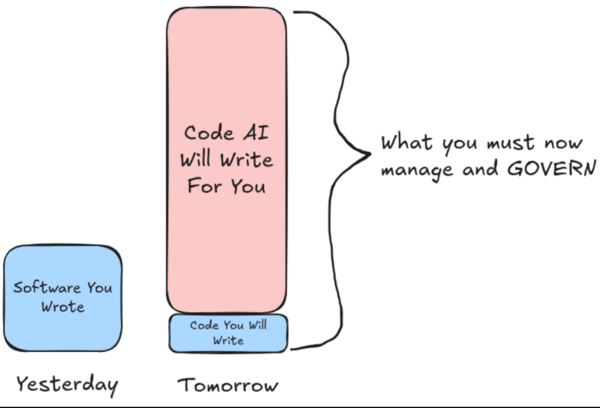
McNealy made the following observations about the Claw architecture:
- Claws are good as personal assistants who can take action on behalf of a person.
- But they come with inherent security risks.
- Attempts to mitigate these security risks, such as NemoClaw, also mitigate the usefulness of the Claws because they reduce their autonomy.
- There is so much untapped potential for agentic systems to safely and profoundly alter the way businesses function rather than simply automating one-off tasks that were done by people.
- However, this cannot be achieved by the Claw architecture; the only way to do this is to codify your business process with Business-as-Code and use agents within your process as routers to determine what action to take.
- The crucial part here is that if you just unleash a Claw as part of a backend system (e.g. a loan processing system), the agent will invent your process sometimes. That's not good: you need to first codify your process and use the agents as routers.
Architecture. McNealy said LittleHorse's platform is deeply integrated with Kafka and event-driven patterns that enable low-latency workflows. Agents enrich context and route decisions, but the platform handles orchestration, durability and observability.
"As your processes progress, they produce events into Kafka, and we have stream processors which can transform those raw events into business insights. And then we also have connectors which listen to events and external systems and in Kafka and then trigger workflows," said McNealy.
Customer use cases and deployment models. LittleHorse has a set of smaller and larger enterprises running workflows that existing SaaS platforms can't fix. Deployments range from on premises to bring your own cloud to SaaS.
LittleHorse has been finding developers via open source with enterprises typically leveraging professional services and partners. "We have people coming to us with process problems," said McNealy. "We end up selling to people who aren't in the tech organization but under the chief operating officer."
Enterprises have seen returns from LittleHorse based on canceling software modules that were replaced, automating work and streamlining customer-facing workflows.
The company generates revenue through hosted platform as a service and on-premises licenses. Cloud deployments have multiple streaming data plans with consumption models.
As for the competition, LittleHorse can be put in multiple categories, but in reality, bridges many of them. LittleHorse is a full stack platform at the development layer yet bridges the gap between a company's business logic and code. "What we really compete with is the status quo of not wanting to automate right now," said McNealy.
More from AI Forum:
Larry Dignan is Editor in Chief of Constellation Insights at Constellation Research, where he leads editorial coverage focused on enterprise technology, digital transformation, and emerging trends shaping the future of business. He oversees research-driven news, analysis, interviews, and event coverage designed to help technology buyers and vendors navigate complex markets with clarity and context. ...
Read morePublished
Author
