Results

For retailers and CPG staying alive means living on the edge

For retailers and CPG staying alive means living on the edge

A common thread I heard last week at the NRF Big Show, was the importance of the edges of the network. "Edge" in retail speak refers to pushing relevant and actionable data closer to the customer touch points – to the edges of the retailer’s network. I wrote in my #NRF15 recap about the importance of pushing data, insights and decision making to the edges of the network, click here for post. There is another aspect of the network edge that wasn’t prevalent last week in New York, but probably isn’t ready for prime time yet, and that is an enhanced ability to execute at the network's edge. When it comes to that extended level of execution, think 3-d printing, better usage of hardware and software to better service customers…at the edges of the retail network.

The one advantage brick and mortar retailers have over the likes of Amazon and Alibaba is also what has been seen as their weakness – their physical stores. Stores offer a host of issues that are well documented – inventory carrying cost, limited SKUs due to the physical constraints of a store, overhead associated with labor as well as having real estate. However this disadvantage may have a silver lining – face to face interaction. The challenge for retailers is how to make that face to face more attractive to consumers than their laptops or mobile devices to transact. That is where being able to offer greater personalized and flexible solutions is paramount for retailers. How can retailers address this?

  • Greater personalization…kind of like your online experience! We all know that the power of transaction online, other than being able to do so in your pajamas, is how customized the experience is tailored for us.  One reason Amazon is so entrenched in our consumer life is that they know what we want…sometimes before we are even aware of it! The power of Google is that they will place those banner ads based on what they know we have been looking at and interested in. Online experiences with the likes of Nordstrom or Banana Republic are littered with suggestions on what else we need. Looking for a a new Peacoat? May we suggest these styles and brands. Oh and if you like that item…you might like this other item that compliments it. Of course this is possible because in the eCommerce world our digital finger prints are everywhere and can be captured with much more ease than in the physical world. This is starting to change. Slowly. As more service providers are focused on helping retailers capture, analyze and provide insights on all the consumer related data sources, physical retail stores will have the potential to be “smarter” in their customer interactions. Companies like Oracle look to offer their retail customers the ability to empower the edges of their network, with the data and consumer persona necessary to transform the in-store experience more on par with the online world. Oracle, like other service providers, realizes for retailers to protect their brand must understand how customers want to research – interact – transact. This can only be achieved with a more complete view of the customer. There is also the need to perform greater levels of analytics at the edge of the network – brick and mortar retailers cannot afford the potential latency associated with having to push data back to a centralized location. For example, Cisco is working on providing the communication hardware, platform and necessary analytics at the edge of the network. Don’t move the data unless you have to. That ensures that the data, and the analytics, are done as close to the customer and execution point as possible. Again, when we transact online there is not much latency when it comes to our profiles and what is being suggested. Retailers are striving to bring some online shopping experience to the store front. But what about getting your product?
  • Fulfillment moved out of the traditional channels and pushed to the edges of the network. Having greater understanding of your customer and more insights at the edges of the network is 3d Key Shows Three Dimensional Printer Or Fontwonderful, but if you cannot offer the inventory diversity or fulfill at that node, what have you gained? If retailers cannot fulfill better their stores not only become showrooms, but your store associates also become pitchmen. Not what you want in the brick and mortar world! I expect retailers to continue to focus on more flexible and intelligent manners to fulfill their customers’ demand. The first step for better fulfillment is being more savvy about your inventory. I was speaking with a former P&G executive while I was at NRF and the one issue he stated is still a headache is understanding inventory positions within a store – what is on the shelf, what is in the stock room and what item is about to have a stock out? All classic issues CPG and retailers struggle with. But to fulfill better, these need to be solved, and they cannot be solved by just looking at inventory data from your POS or warehouse system. Retailers must have greater and more reliable view of their inventory. That means being more digital with the in store management of the inventory. Service providers like Panasonic are bring such shelf level visibility to the market, something I wrote about in my last post. But it is not just about greater visibility of what is available to your customer – what about greater flexibility on delivering the customized product your customer wants? The story of how Coca Cola has rolled out their Freestyle machines, that puts a tremendous amount of control at the edge of the network, with the consumer. Other CPG companies like Maille mustard and vinegar has stores that allow you to come in and fulfill your mustard and vinegar condiments in the store. These are examples of more flexible inventory and product mix being provided at the edge. There is also the infusion of digital technologies such as 3d printing. Confectionery companies like Hersheys are rolling out 3d printing – need a special chocolate for your kid’s birthday party, have it printed in the store. Luxury retailers, such as jewelry stores, can offer on site 3d printed pieces – for customized jewelery. American Pearl is offering consumers the ability to have customized pieces created via their 3d printers. Granted they are doing this via their online channel, but brick and mortar channels could offer consumers the ability to have a design rapidly prototyped in the store and then produced. That would certainly make events like purchasing a wedding ring less stressful…well maybe not.

Whether it is better visibility and greater analytics or being more savvy in product delivery at the edges, retailers must focus here to maintain relevance for their physical stores. Simple truth – at the edges is where you find the customer. Retailers must make sure that they meet customers needs: eliminate the friction between demand, relationship, fulfillment and after sales.


Tagged: CPG, Digital Disruption, Matrix Commerce, NRF15, Retail, Supply Chain

Matrix Commerce Next-Generation Customer Experience Marketing Transformation Revenue & Growth Effectiveness Innovation & Product-led Growth Tech Optimization Data to Decisions B2B B2C CX Customer Experience EX Employee Experience business Marketing eCommerce Supply Chain Growth Cloud Digital Transformation Disruptive Technology Enterprise IT Enterprise Acceleration Enterprise Software Next Gen Apps IoT Blockchain CRM ERP Leadership finance Social Customer Service Content Management Collaboration M&A Enterprise Service AI Analytics Automation Machine Learning Generative AI Chief Information Officer Chief Customer Officer Chief Data Officer Chief Digital Officer Chief Executive Officer Chief Financial Officer Chief Growth Officer Chief Marketing Officer Chief Product Officer Chief Revenue Officer Chief Technology Officer Chief Supply Chain Officer Chief People Officer Chief Human Resources Officer

NRF15: retail looks to streamline customer experience

NRF15: retail looks to streamline customer experience

index

The NRF Big Show once again did not disappoint in terms of the sheer volume of attendees as well velocity of ideas being exchanged. The 104th edition of Retail’s Big Show, saw 33,000 attendees descend on the west side of Manhattan. It seems every January after NRF my head is spinning from 48 hours of back to back meetings, hoofing around the Javits Center and meeting a number of fantastic and interesting people and companies. It felt like the last two years The Big Show was picking up momentum again after hitting some slow downs due to the general economic malaise of a few years ago.

Once again I was impressed with the number of companies on the main floor as well as the lower floors. I recall being at NRF events were the lower levels would be hosting a different conference – no longer. The big idea talks I was able to attend focused on the next generation for retail – many high lighted the new touch points that will be truly customer centric. Of course where I gained the most insights were from my numerous meetings and hallway conversations. Here are the take aways from my time spent in the Big Apple:

  • Push data to the edge of the network. How refreshing it was to not be inundated with Big Data messaging and marketing, okay it did seep its way into some conversations, but fortunately it did not dominate. What was discussed was the ability to push the relevant and actionable data closer to the customer touch points – to the edges of the retailer’s network. Companies like Infosys and Zebra, showcased how they were leveraging a number of devices from handhelds to smart phones to Google glass to bring a higher degree of intelligence and insight at the store level (during the show it was announced that Google glass was being mothballed, whether it is Google glass or another wearable the concept is out of the genies bottle). Think about using an item such as Google glass, or a similar device, to allow your store associates to better service the store shelf. By simply looking and speaking in front of the shelf, the device can give you instant access to see if you have inventory in the backroom or when it will be replenished. Other service providers such as Epicor spoke at length about how they are working to provide a robust front end platform to provide the most complete retailer view, at the edges of the network. By leveraging their platform that ties in all the solutions retailers need to run their commerce, those sitting at the edges of the network have greater intelligence in their hands, or in their tablets and smartphones. Which is crucial for better customer service. Retailers are aware that in order to compete with the online channels, they must empower their brick and mortar presences with the data, analytics and insight to provide the best customer experience. This needs to have information and analytics at the edge of the network – on the ground of the retailer.
  • Hardware is cool again. Think smart mirrors, intelligent store shelves, wearables, RFID and IoT. I was impressed with the hardware Panasonic had on display. From smarter cash registers which employed front facing cameras with facial recognition to sophisticated store cameras and audio devices. What I was really excited about was what they have to transform your store shelves from dumb to smart. Panasonic demonstrated a full turn key solution to bring beacons, shelf sensors, smarter pricing tags and video displays. The solution offers retailers the ability to have a view of what is happening at the store shelf based on a digital signal, not relying on constant human monitoring (which we know is not necessarily accurate or timely). With a smarter store shelf, the retailer and their CPG partners will get closer to a real time view of what is really happening at the shelf. Service provider Checkpoint also displayed their RFID technology, which comes from their OATsystems acquisition. The ability to leverage RFID for better monitoring of shipments is one use case. However, the potential use case for retailers is in more accurate order assembly. As an ever increasing number of consumers are looking to order online and pick up in the store, the need for accurately assembled orders by the store takes on greater degree of importance. There was also the smart mirror that Zebra demonstrated. The mirror brings some online retail functionality to the brick and mortar store. Not only will the mirror allow you to “see” merchandise on the patron, but based on what merchandise you are trying on, the mirror is smart enough to start suggesting other products. Just like the experience when we are online and get suggestions based on what we have on our basket. Talk about cross sell and up sell…and impulse buys! These are a few examples of how hardware is becoming cool again. The evolution in hardware is bringing more flexibility, intelligence and online experience functionality to the brick and mortar stores.
  • Better servicing of the customer life cycle. With customers wanting to engage anywhere and from any devices, the need for a more complete understanding of the customer is paramount. Whether this is from the fulfillment, marketing or personalization point of view. I met with many service providers that were all tackling the customer life cycle from these angles. One of the key impacts of the JDA – IBM partnership is to have a more complete view of how to manage customer fulfillment. The offering from the partnership is tackling more efficient retail fulfillment – ensuring greater customer life cycle management from the fulfillment angle. Other service providers such a Engage.cx tackle the customer life cycle needs from the CRM perspective. I think that the term CRM does not properly describe what the service provider is offering. The basic premise of pulling customer data from the wide source of available information (regardless of where it was created) and offering a richer customer profile – like what we try to do in our legacy CRM systems – is vital for next generation retail. There are also service providers such as MomentFeed that are tackling the customer life cycle from the focused marketing angle. Retailers strive to have a better profile of their customers, but also to have a more precise way in which to target these customers with their marketing efforts. Focusing on targeted campaigns and leveraging mobility, the offering is addressing a key component of the customer life cycle: making it actionable at the most precise touch point. These are just some examples of solutions that address the growing need for richer and more complete view of the entire customer life cycle. Retailers need to be savvy about how the better fulfill, manage and target their consumers. We are truly driving to personalized retail.

These observations and trends I was able to experience during my time at NRF is all driving at the same goal – reduce the friction between demand, fulfillment, relationship and after sales. Retailers must strive to this seamless relationship between themselves and their consumers. The importance is of paramount importance when it comes to competing with online merchants, who, as we all know, have created massive digital disruption in retail. Retail channels with brick and mortar presences are looking to find solutions that will allow them to compete with the eCommerce players but more importantly pivot their position in the retail landscape and dare I say recapture some of their mojo vis-a-vis the likes of Amazon and Alibaba.


Tagged: New York City, NRF, NRF15, Retail, Supply Chain, The Big Show

Matrix Commerce Next-Generation Customer Experience Marketing Transformation Revenue & Growth Effectiveness Innovation & Product-led Growth Tech Optimization Data to Decisions Event Report B2B B2C CX Customer Experience EX Employee Experience business Marketing eCommerce Supply Chain Growth Cloud Digital Transformation Disruptive Technology Enterprise IT Enterprise Acceleration Enterprise Software Next Gen Apps IoT Blockchain CRM ERP Leadership finance Social Customer Service Content Management Collaboration M&A Enterprise Service AI Analytics Automation Machine Learning Generative AI Executive Events Chief Customer Officer Chief Information Officer Chief Procurement Officer Chief Data Officer Chief Digital Officer Chief Executive Officer Chief Financial Officer Chief Growth Officer Chief Marketing Officer Chief Product Officer Chief Revenue Officer Chief Technology Officer Chief Supply Chain Officer Chief People Officer Chief Human Resources Officer

It’s Like Facebook For Work. Wait It Is Facebook For Work

It’s Like Facebook For Work. Wait It Is Facebook For Work

On Jan 14th, Facebook officially announced their much rumoured Facebook at Work offering. This private version of the popular social network is designed to provide employees a place to collaborate securely with their colleagues. This sounds like a great idea, if it were still 2010.


In the late 2000s a shift began taking place that was commonly referred to as Enterprise 2.0, or E20. In E20 companies began adopting "social tools" such as blogs, wikis and activity streams to enable employees to communicate and collaborate more openly than they were doing via email. To explain this shift to potential buyers, early vendors such as Socialtext (where I was Director of Marketing), Yammer, SocialCast, Jive Software and others would use the analogy “It’s like a Facebook for the Enterprise". Even though forums and communities have been around since the 70s (the Well, AOL, Compuserve, etc.) a great deal of credit goes to Facebook, for popularising the modern era of social networking.

Around 2011/12 the theme os “Facebook for the Enterprise” began to evolve, as it was not resonating well with executives. They assumed this type of behaviour at work would be a waste of time, sating things like "Why would I want employees sharing pictures of what they had for lunch?" The lack of understanding of how social network could benefit businesses lead to my introducing of the theme of Purposeful Collaboration, where social features were integrated directly into the business tools people use to get their jobs done. Organizations realised that employees need social to be part of the way people work, not a separate destination to go to. This has led to vendors such as SAP, Oracle, Salesforce, Infor, IBM, Microsoft (who acquired Yammer) and others have made sharing, commenting and liking native features of their CRM, ERP, HR and other business applications.

Fast forward to today, where Google has struggled to gain mainstream enterprise adoption of Google+ and vendors like Slack, Glip, Hall, Unify (formerly Siemens) and Cisco have started to blend collaboration and unified communication. So, is Facebook's announcement too little, too late? Not necessarily. Below are a few of the pros and cons of Facebook at Work.

Opportunities

- Name Recognition: Facebook is "the standard" when it comes to social networking. Like it or not, it's a household name. You know the saying "fish where the fish are", well almost everyone is familiar with Facebook to some degree. Sure the demographics are changing and younger people are avoiding Facebook because it's for old people... but those "old people" are the workers of today so why not provide them Facebook at Work?
- Familiar User Experience: Yes, Facebook has had several hiccups when it comes to the design of their timeline, but they remain one of the key influencers on how people use activity streams/news feeds. Since people are already familiar with it, employers can save time and money by avoiding education and training on a new tool. As my colleague Holger Mueller points out, Facebook's popularity forces other vendors to improve their products, which is a win for users.
- Large Partner Ecosystem: Perhaps the biggest plus Facebook has going is the massive ecosystem of developers than know their API and can build add-on tools. While most of the current apps are games, it's not a far stretch to image a shift from Farmville and Candy Crush integration to add-ons for SAP, Salesforce, file sharing, web-conferencing, and other business tools.
- Bridging Employee to Customer engagement: Today many companies already have a "business relationship" with Facebook via their company's Facebook Page. Facebook could provide a compelling solution that bridges private employees conversations with the ones taking place with customers. So for example, a support team could see a question on the company Facebook page and route it to the right product manager to get an answer. Note: I'm not saying this bridging exists today, I'm saying it could be a useful feature if Facebook delivered it.
- Application Assets: Facebook has several applications outside of the news feed that could provide the foundation for a useful business platform. These include: Messenger (for chatting/voip/video calls), Instagram (photos and videos), Paper (displaying news/content) and Events (calendar).
- Massive Mobile Usage: a very high percentage of Facebook usage comes from mobile devices such as phones and tablets. Facebook's experience in this area could be a strong selling point to organizations who's employees require anytime/anywhere access.


Challenges

- Enterprise Software Is Not Consumer Software: Often when consumer companies try and break into the business world they fail to understand that companies have different requirements than individuals. Organizations have to deal with things like auditing and compliance, accessibility, multiple language support, directory integration, administration of people and groups and billing/usage reports. Facebook will need to show that they can meet these business requirements before business will use them for work.
- No Purposeful Collaboration: As mentioned above, companies have shifted away from just wanting a social networking to wanting collaboration tools that integrate with the tools employees use to do their jobs. For Facebook at Work to be successful, they are going to need to provide integration with CRM, ERP, HR, Customer Service/Support, Marketing, Finance and other business software. They will also need to have integrated with functions such as project/task management, file sharing, and web conferencing. This con can be linked to the pro above of partner ecosystem, as the lack of these things provides opportunity for partners to fill in the gaps. The Facebook Custom Stories platform (Open Graph) already has the framework for these integrations, no people just need to build them.
- Lack of Vertical Expertise: It's not enough to just provide a single collaboration platform and try and have it fit all use-cases. Winning collaboration vendors understand the specific needs of industries such as Healthcare, Finance Services, Legal, Manufacturing, Entertainment, Government, etc.  Facebook will need to build teams in each of these areas if they hope to sell into specific industries.
- Privacy Concerns: Warranted or not, most people have concerns about what Facebook does with their information. While Facebook has stated that you will have to switch IDs between personal and work, they still have a lot of work to do to convince organizations that their sensitive and confidential corporate data will be safe on Facebook's servers. The last thing a company wants is an employee "accidentally" posting something publically that they thought was being posted internally.
- Insufficient Search: One of the most important aspects of enterprise software is search. Employees need to be able to find the people, content and conversations they need to get their jobs done. While Facebook is steadily improving their search, it is still very cumbersome compared to most enterprise software. Contrast that to the type of analytics based search and filtering that companies like Microsoft and IBM are now offering, and Facebook has a lot of catching up to do. That said, Facebook's Graph Search has the potential to be quite powerful, so let's see where Facebook takes this in their At Work offering.
- Go To Market Channel: While many business today are using Facebook for marketing, the people who are paying for those Ads and managing Brand pages are not the same people that will be purchasing enterprise wide collaboration licenses. Facebook will need to find a way to reach people with buying authority, whether they reside in IT, LOB, or the executive office.
- Customer Support:   Today Facebook support is primarily an online help knowledge base. They will need a much more robust support organization in order for organizations to feel comfortable using them for critical business communications.
- Pricing: Currently no pricing has been set, but if organizations are already paying for something like Microsoft Office 365 or Google Apps (both of which include social networking) then they will be weary of spending additional funds.
- Competition: Perhaps the biggest hurdle is that there are already so many collaboration solutions available. The list I maintain of social software vendors contains over 50 companies, and (sadly) it is very out of date. Many of these vendors have a decade or more experience providing collaboration solutions, so Facebook may have a considerable challenge on their hands winning deals against these vendors. On the other hand, even after a decade of tools being available the market is so fragmented and no one vendor dominates the space. So perhaps Facebook can capitalise on their name recognition and win a decent percentage of deals. Time will tell.

MyPOV

Overall, I support Facebook entering the business market. They have a product already used by a billion plus people at home, certainly some percentage of those people will be happy also using it for work. I think they chose the right name, "At Work" versus something like "Facebook for the Enterprise", as I don't predict any large organizations will adopt this. There are just too many other choices for them that are better suited to meet the needs or large companies.  However, the millions of small businesses that don't have IT departments and may already be using Facebook as part of their marketing efforts may be quite happy using Facebook for secure employee collaboration.

My advice to Facebook, spend 2015 partnering with large enterprise software vendors so that you can announce integrations that prove the validity of Facebook at Work as a platform people can really use to get their jobs done.

Constellation Research realises that this is just the first release, and we look forward to working with Facebook and their business customers to help move their collaboration offerings forward.
 

New C-Suite Future of Work Next-Generation Customer Experience Marketing Transformation Revenue & Growth Effectiveness Data to Decisions Innovation & Product-led Growth Digital Safety, Privacy & Cybersecurity Tech Optimization meta Marketing B2B B2C CX Customer Experience EX Employee Experience AI ML Generative AI Analytics Automation Cloud Digital Transformation Disruptive Technology Growth eCommerce Enterprise Software Next Gen Apps Social Customer Service Content Management Collaboration Chief Customer Officer Chief People Officer Chief Information Officer Chief Digital Officer Chief Marketing Officer Chief Revenue Officer Chief Experience Officer

The Brave New World of Information InSecurity: Trade PII not privacy

The Brave New World of Information InSecurity: Trade PII not privacy

Personal information and privacyOriginally published on December 13, 2011. Updated for relevancy January 14, 2014. 

There is an orthodoxy that privacy is willingly traded by people in return for some sort of reward. Try Googling "trade privacy for" (with the quote marks). I got 181,000 hits! Among other things, people are said to trade their "privacy" for convenience, security, safety, cheaper loans and free phones.

Yet there's a category error here, one we really need to be aware of, in the interests of clear thinking and good policy.

Increasingly what consumers are doing is trading their Personal Information for a gain of some sort. And in principle, that's actually fine by me, and by most privacy advocates. Because privacy and Personal Information are not the same kind of stuff.

Amongst the digerati there is a popular view that most people these days are smart enough to know what they're doing when they sign up for loyalty programs or provide their details when they enter a competition. That view may or may not be right, but it is a sensible position. The important thing is people can and should retain their privacy in the process -- because privacy and Personal Information (or PII) are different things. Data privacy is a state where parties that hold information about you respect that information, and are restrained in what they do with it. Privacy means they refrain from knowing more about you than is necessary, and from re-using PII collected for one purpose for some other purpose.

There is no inherent problem in bargaining your PII with others who happen to value it, but to preserve privacy in these transactions, we need greater visibility from retailers et al of what they intend to do with the PII they collect. We need more sophisticated tools so consumers can fully comprehend what's going on in these data transactions. And we need more precision and rigor in the way we talk about privacy. Let's be clear: there can and should be a fair trade in Personal Information, but not in privacy.

By analogy, we trade money for goods without necessarily losing value, unless the trade in question is unfair. So this is all about transparency, negotiation and fairness -- the same things consumers care about in any transaction.

One of the deep gripes privacy advocates have about today's digital businesses is their opacity. Facebook and the like harvest vast amounts of PII, without committing themselves to any Use Limitation at all, and without even telling their users what they're up to. For example, Facebook's privacy policy is silent on what they do with facial recognition in the background and with biometric templates. Infomopolies make inordinate amounts of money on the back of personal data collected from us without ever acknowledging its true value, let alone negotiating the trade.

And that's the sneaky one-sided bargain at the heart of most social media.


Data to Decisions Digital Safety, Privacy & Cybersecurity Security Zero Trust AI ML Machine Learning LLMs Agentic AI Generative AI Robotics Analytics Automation Cloud SaaS PaaS IaaS Quantum Computing Digital Transformation Disruptive Technology Enterprise IT Enterprise Acceleration Enterprise Software Next Gen Apps IoT Blockchain CRM ERP CCaaS UCaaS Collaboration Enterprise Service developer Metaverse VR Healthcare Supply Chain Leadership Chief Customer Officer Chief Information Officer Chief Information Security Officer Chief Privacy Officer Chief Technology Officer Chief Data Officer

Facebook and LinkedIn tackle the enterprise – what are the implications for the Future of Work?

Facebook and LinkedIn tackle the enterprise – what are the implications for the Future of Work?

In not really surprising lockstep social network giants Facebook and LinkedIn announced enterprise offerings. For Facebook it is ‘Facebook at Work’ – bringing all the social tools of feeds, posts, messages etc. to the world of the enterprise, limited to the employees of the same enterprise. For LinkedIn it is initially about allowing employees of the same enterprise to send InMails to each other, and then create enterprise level groups to foster content sharing.


Implications, Implications…

  • Social in the enterprises goes in round 2 – The first round and hype of social in the enterprise is over. The aftermath of the first round has left users and vendors exhausted. Good to see a new spark into this key area of productivity. The way how business users interact, share content, collaborate is ironically more fragmented and likely broken that in the world of a consumer. A Facebook user, a Skype user has likely better communication and collaboration options at their disposal than the enterprise user. Ironic and time to change that.

  • Consumerization of Enterprise software finds the next gear – If Facebook and LinkedIn are serious to put their muscle behind this, it will rev up the level of ease of use for enterprise users. Good news certainly, as despite all the talk, most enterprise solutions have not (yet) reached the same level of usability as consumer grade applications. 

  • Users may win – Especially the Facebook offering will be a big win for users. The 1B+ Facebook users are ‘suddenly’ familiar with their enterprise communication and collaboration tool. Adoption, comfort levels could reach a new height for enterprise users. 

  • Practitioners face challenges – For the HR practitioner this will be initial headaches, as another system will have to be maintained, updated and monitored. And the blur of private and professional – with all its pros – has some chunky cons, too. 

  • Established vendors need to step up – Assuming both Facebook and LinkedIn will not focus elsewhere soon – then ease of use and pricing of established vendors will be under pressure. While Facebook and LinkedIn ultimately need to find monetization alleys for this offering – they can take a more relaxed approach than the established vendors. 

  • Partnerships on the horizon – There should be no surprise of some smaller enterprise vendors and adjacent vendors (e.g. in Content Management) will gladly defer and partner with LinkedIn and Facebook as their core communication and collaboration vendor. This will help them to focus R&D investments and Facebook and LinkedIn get a step up into enterprise and open new revenue alleys. 

MyPOV

The real question is – what took Facebook and LinkedIn so long? One can argue they had to solidify their leadership position with consumers, but that as not really anymore a contest for Facebook overall and for LinkedIn for business consumers. As I have blogged earlier, LinkedIn is de-facto probably the number #2 or #3 HCM vendor already – through its personal and recruiting subscription revenues – but did not act like a HCM vendor.

Overall I see this as a good change for the Future of Work, as it will spark new life into both usability, adoption and the overall a little sleepy social market for enterprise. It also will start a new conversation on identity, something that the traditional enterprise vendors with the notable exception of Salesforce.com (Identity Connect) have largely ignored. But in the short term it creates new headache for HCM practitioners, who have another network and user setup to manage. If Facebook and LinkedIn will leave it with the personal productivity, communication functions will remain to be seen. Exciting times ahead.

My colleague Alan Lepofsky has a great take on Facebook's new offering, too - please visit his blog post here.

What is your POV? Please share!


Future of Work Marketing Transformation Innovation & Product-led Growth New C-Suite Next-Generation Customer Experience Digital Safety, Privacy & Cybersecurity Revenue & Growth Effectiveness Data to Decisions Tech Optimization meta Marketing B2B B2C CX Customer Experience EX Employee Experience AI ML Generative AI Analytics Automation Cloud Digital Transformation Disruptive Technology Growth eCommerce Enterprise Software Next Gen Apps Social Customer Service Content Management Collaboration HCM Machine Learning SaaS PaaS Enterprise IT Leadership HR Chief Information Officer Chief Marketing Officer Chief Customer Officer Chief People Officer Chief Human Resources Officer Chief Revenue Officer Chief Experience Officer

Internet of Things; what happens when ‘sense’ needs the ‘respond’ to come from an existing ‘legacy’ enterprise application?

Internet of Things; what happens when ‘sense’ needs the ‘respond’ to come from an existing ‘legacy’ enterprise application?

There seems to be a belief that the value lies in the data, the information as to what has changed or is happening, and that may be so, but surely the ‘sense’ part will only provide business value if coupled with a ‘respond’? It’s likely that this requires the IoT data to assessed, and then used as an input to start an existing internal, or Back Office, enterprise application set of processes.

Research report now available: The Foundational Elements for the Internet of Things (IoT)

The whole point of IoT is to create new, additional value to a business, and its operations, a point made in the previous blog entitled ‘Internet of Things; Enterprise Value = Integration, Automation and Scale’. The opening observation I this blog stated “Standalone IOT reporting Services have the same challenge as standalone online Web based ecommerce systems a few years back. Great for pilots and proof of concepts, but sooner, or later a victim of their own success and requiring proper integration into existing order systems”.

This blog then drew attention to the Salesforce approach to IoT integration as a ‘Front Office’ activity, best delivered within the integrated Front Office ‘services’ environment using Salesforce products and methods to ensure optimum Business alignment.

It’s an approach that makes perfect sense, certainly for a Service based industry sector where their own product will probably also be a ‘Service’. However that’s not right for every business as SAP were quick to point out in their pre Christmas briefing on the SAP approach with its focuses on a different set of industry sectors and business models.

SAP point out that there are a lot of Industry sectors with Business models that require the ‘respond’ to a fulfillment provided by a complex set of internal Enterprise processes; think of Manufacturing, Mining, or even compliance centric activities such as Insurance.

Again it’s an approach that makes perfect sense providing, as indeed does the Salesforce approach, because each offers something very different to cater for a very different business model. What this does show is just how careful an assessment is required of exactly what your business model is, and does requires in terms of functions, before considering the technology capabilities required.

This is most decidedly not making the case for everything to continue ‘as is’ with Business requirement management by IT in the familiar manner. But it is making the case for a more thoughtful approach to where and how an  Enterprise IoT strategy will add value to the business model.

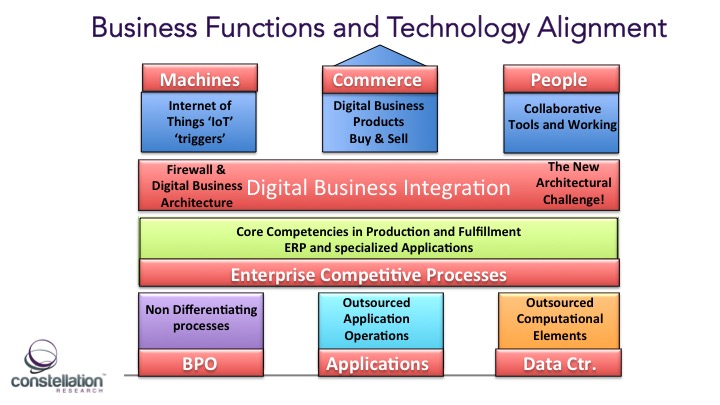
The topic of rethinking enterprise wide business functions in a genuine Digital Business model is a separate issue dealt with in the blog series; ‘Understanding your Digital Business Model by its Business Functional Requirements for Operational Technology’. In this blog the focus remains on out lining the SAP approach to IOT integration with Enterprise Applications, and of course ERP.

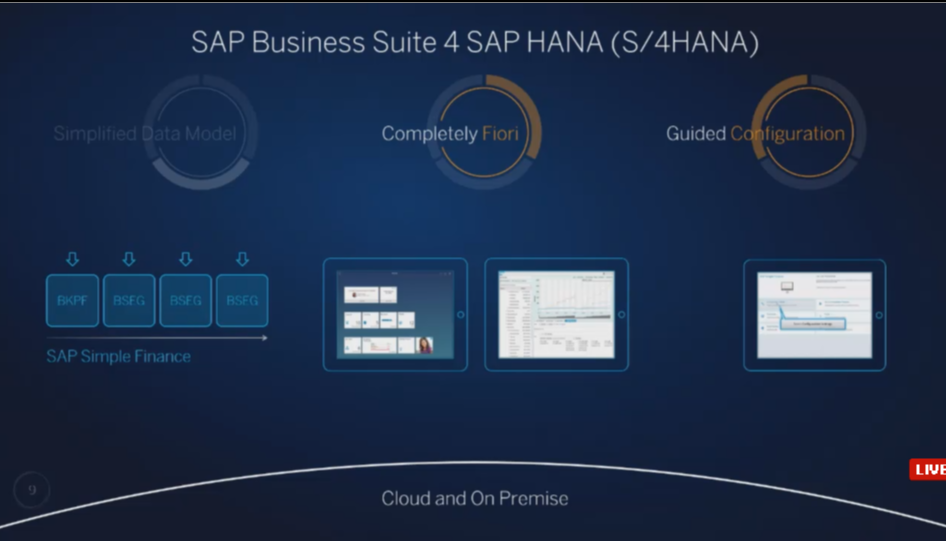
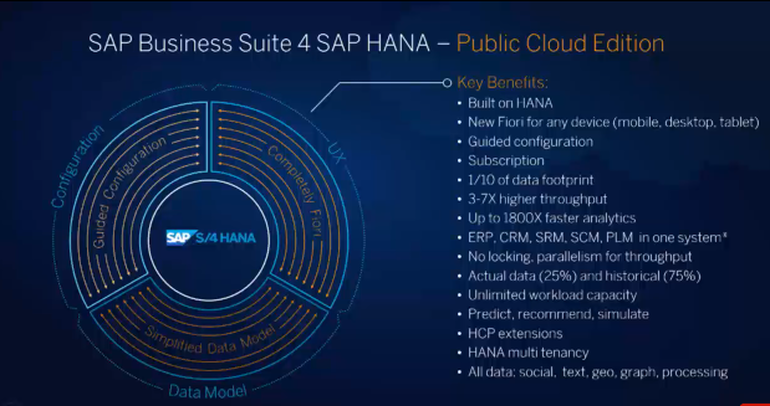
The opening statement reflected on the value of data coming from IoT sensing, and that for SAP means HANA, but it means more than the role of HANA as the classic provider of Big Data Business Intelligence.

In the mass of data that IoT sensors will pour into the enterprise lies a ‘real time’ challenge to process and sort out the ‘wheat from the chaff’, i.e. the valuable grain from the mass of straw.

SAP say that this is exactly what HANA is designed to excel in providing with its exceptional processing rates. In the IoT and Digital Business front office environment the goal for HANA is deliver ‘Smart Data’ meaning small highly valuable easily understood ‘triggers’ to people, or processes. The SAP integration model makes use of these smart data ‘triggers’ to both assess what applications and processes should be launched, as well as providing the data as the input to start the process.  Now the existing internal ERP, or other applications can provide the enterprise ‘respond’ capabilities from the existing optimized capabilities.

SAP has some excellent case studies to show how their approach works when the requirement requires fulfillment from the enterprise ERP. Two excellent examples are; Real time operations management through integrating IoT to Back Office ERP integration at Hamburg Port Authority, or HPA, and transformation of manufacturing at Harley Davidson.

HPA use IoT to sense more than 400 critical points in their port operations, which are connected to their SAP Connected Logistics enterprise ERP package. The resulting understanding of exactly what is happening ‘on the ground’ around the port has resulted in significant gains in the through put time taken to handle containers passing through the port. The result is the ability to handle more revenue-producing container through put with the same port faculties.

But the real case study that should make any senior executive realize how a well-integrated Digital Business is transformed in both its competitive capability, as well as its output, is Harley Davidson. An iconic brand that is driven by purchasers wanting their customized dream motor bike.

Harley Davidson claims to be manufacturing 25% more Motorbikes with delivery times for custom builds down from 21 days to 6 hours by integrating IoT sensing of critical points with their SAP Connected Manufacturing application.

These SAP case studies, like those of Salesforce, illustrate the huge importance that IoT to making Digital Business a reality in terms of creating a genuinely new competitive landscape. They show IoT being applied in different industry sectors, in different businesses, and in different ways, but what they all have in common is a deep understanding of the role IoT with the other new technologies can play to transform competitive, or operational, capabilities.

Today there are a selection of Case studies available that reveal much about the need to fully understand what is meant by the Digital Business transformation, and its more, much more, than just adding a set of new offerings either ‘bolted on’ to the current ‘Back Office’ IT systems, or even as a standalone ‘digital’ business operation. 

Research report now available: The Foundational Elements for the Internet of Things (IoT)

Ben & Jerry’s: Aggressive Customer Acquisition During “Low Season”

Ben & Jerry’s: Aggressive Customer Acquisition During “Low Season”

1
 

Customer Acquisition Ice Cream

You think your business has customer acquisition issues? Consider the plight of ice cream manufacturers and retailers during the winter months!  Eating ice cream – let alone buying it – during the cold winter months is about as counterintuitive as buying sunglasses in London, England, where clouds and rain are permanent symbols on the weather forecast.  Yet January to March is an important time of the year for supermarkets selling ice cream and even more so for manufacturers.

Supermarkets and manufacturers like to keep freezer shelves stocked with ice cream during the winter months as a form of advertising; the consistency of seeing the ice cream labels during low season increases product desire when the weather heats up.

It’s Hot to be Cold

Many manufacturers lay low and cut costs during the low season. Toy makers, for example, hold most (if not all) of their marketing budgets for the Thanksgiving to Christmas time period. The “strike when the iron’s hot” strategy seems to work for them. However, what  revenue or opportunity is left on the table by not actively attempting to acquire new customers during the rest of the year?

For manufacturers like Ben & Jerry’s, the low season of January to March is seen as the perfect time to acquire new customers.  Where many firms use the low season to cut costs by decreasing activity, Ben & Jerry’s becomes more aggressive. Each year it introduces new specialty flavors during the winter months to entice reticent consumers to purchase their cold treats.

Today, Ben & Jerry’s announced the launch of three new flavors, which join the brand’s existing “core” lineup of ice creams that have such fillings as fudge, caramel, and raspberry jam. The new products are Boom Chocolatta! Cookie Core, Peanut Buttah Cookie Core, and Spectacular Speculoos Cookie Core. The center of the ice cream has a texture that’s kind of like cookie dough, but crunchier, says John Henry Siedlecki, senior brand manager at Ben & Jerry’s.

Buy When the Market is Down

Real estate and financial moguls will tell you that the secret to success is  buying or investing when the market is poor, not when the market is booming.  For manufacturers, those moments when the competition is lying low or periods when a product or service is less convenient might be the optimal time to be more aggressive with customer acquisition budgets and strategies.

Low season is also a good time to experiment with new products or service offerings, which can help differentiate the brand.  At a minimum, the strategy will help maintain an ongoing dialogue with customers, just when their attention would otherwise be diverted elsewhere. When the product is back in season, the brand is top of mind.

Sensei Debates

Marketing in low season is too expensive and too risky for the possible rewards. Agree/ Disagree? Why?
Join the conversation in the comments below.

Marketing Transformation Next-Generation Customer Experience B2C CX Chief Marketing Officer Chief Customer Officer Chief People Officer Chief Human Resources Officer

A Radical Manifesto for Tech Pioneers: Peter Thiel's Zero To One is Thomas Paine's Common Sense

A Radical Manifesto for Tech Pioneers: Peter Thiel's Zero To One is Thomas Paine's Common Sense

1

Building a new world order from technology requires covert operations of today’s revolutionaries. 

Peter Thiel's Zero to One
In his provocative book, Zero To One, Peter Thiel offers a view of entrepreneurship that is radical, in the original sense of the word. That is, it goes to the root of entrepreneurship: how to take bold risks to create a better future. Thiel believes that an entrepreneur should build a lasting company, not merely a successful one. One that is, by his definition, a defensible and durable monopoly and generates significant future cash flow. In this context, monopoly is not a pejorative term but a definition of sustainable business advantage over time. And what kind of entrepreneurs are needed to build such companies? Those who have a revolutionary zeal to pursue their goals matched with the ability to bend nature and consumers to their will. This is not a hand book for building a run-of-the-mill company to cash in on the latest tech trend. It is a pamphlet for tech founders who aim to pioneer new industries and conquer new worlds in some cases literally as in Elon Musk’s ambition to colonize Mars.
 
And as pamphlets go, Thiel’s Zero To One has a few elements in common to the Thomas Paine’s Common Sense. Once you get past the obvious differences in form, content and style between the two pamphlets, you notice a common purpose: to persuade the reader to question the conventions of current rulers, to come down from the fence and embrace a new, radical order. For Paine, the purpose of his pamphlet was to rid monarchy and gain support for constitutional democracy based on liberty. He crafted his message to appeal to the commoners of his era. Similarly, Zero To One has the polemical style designed to appeal to today’s revolutionaries: the entrepreneurs. Thiel rails against the culture of risk aversion and the current obsession among founders with incremental innovations (“We wanted flying cars, instead we got 140 characters”). He asks for a bold future in which technology pioneers run global, monopolistic companies to improve and extend human life. Like Paine, Thiel offers a recipe on how to achieve this future.  
 
In brief, here is Thiel's manifesto, as I interpret it, for the tech pioneers of today. 
 

Begin with an secret

Thiel begins with an insight on how to identify the kind of company nobody else is building.  Unlike most investors who ask founders to start with a vision, he asks them to be begin with a secret. He is right in that a vision is a dangerously vacuous endeavor. When asked to espouse one, most founders are prone to hyperbole of market trends ("social meets cloud meets internet of things, kind of like Uber for mono-cyclists)”.  Others simply extrapolate their product into the future.  In most cases, the founder's vision is simply an imagined set of uses of inflated product features targeted at all and sundry.
 
However, Thiel defines a secret in more precise terms. A secret is as an insight shared by the founder about the state of the future which is not generally accepted by others, and often contrary to popular beliefs prevailing in the market. There are of two kinds of secrets uncovered by an entrepreneur: those of nature (e.g. Shockley et al invented transistor) and those of people (e.g. Zuckerberg perfected how humans share photos online).  So, the founder must invent or discover a secret, as the first step; then develop a definitive view of how the secret shall affect the future. Not surprisingly, most entrepreneurs fall short here since they are not pioneers. They would rather build a product than an industry.  
 

Build a cabal 

For the pioneer with a newly minted secret, the next step is to attract others who agree with the truth of the secret. According to Thiel, “a startup is the largest group of people you can convince of a plan to build a different future.” This shared view of a different future is what animates the cabal of early employees, investors and customers. It is the unique way the startup solves the problem that offers the basis of building a long-term monopoly - and a happy company. Happy as in successful: well payed employees, richly rewarded investors and satisfied customers. Again, think Google, Facebook and Tesla. The mantra is: "All happy companies are different: each one earns a monopoly by solving a unique problem. All failed companies are the same: they failed to escape competition.” But how exactly does a startup engineer a monopoly? 
 

Run a covert operation

Thiel lists four characteristics of a technology-based company that can create a monopoly position. Of course, the foundation should be the technology; it must be an order of magnitude better than available alternatives - and it must be proprietary. To be ten times better is a good rule of thumb in most industries. The second factor is to generate network effect; that is, the technology should be adopted rapidly among consumers through word of mouth and social recommendations, or in case of business, through enterprise endorsements and references. Ultimately, the evidence of network effect is that the value of technology increases with adoption of its usage by every new member. But to achieve this effect, Thiel suggests that founders should bootstrap companies in a niche. They should fine-tune, prove and build the positive effect of networks in a niche market for which the technology is ideally suited before casting it wider to broader but less suitable audiences. This shall keep the company under the radar, away from competitive attention. Third, once the technology and its adoption is underway, the company should build the economy of scale - that is, expand with lowest cost curve - with the goal to deepen its competitive moat. And, finally, the company should build and defend its brand to become the de facto standard for the category. While Thiel doesn’t state this, it is clear that the order of things matter. Building a brand comes last, building a 10X technology comes first. The main idea is that the company builds these operations covertly to create a monopoly position while staying away from limelight as long as possible. 


Stay in the shadows

Thiel suggests that a company hide in plain sight. Its secret should attract only the few who believe in it; its operations must run lean until it is ready to draw attention. And, as an interesting corollary, it must ignore competition and not use large established companies as foil. “The act of creation is far more important than the old industries that might not like what you create,” he writes. He observes an interesting use of signaling theory where in "monopolies disguise their monopoly by framing their market as union of several large markets” in order to appear smaller in scale and influence. As evidence, Microsoft and Google in every antitrust suit define their respective markets much more broadly to show their share of it as low as possible. Also, burgeoning monopolies don’t toot their horn and are secretive about their plans.  Incidentally, the opposite is true as well: "non-monopolist exaggerate their distinction by defining their market as the intersection of various smaller markets,” to inflate their influence in them.  They chase the sizzle, make noise in advance of success and often claim “we’re in a league of our own”.  


Aim for a new world order

Finally, Thiel’s advice for those seeking to build a new future is to keep an eye on the prize: the end game. He quotes grandmaster Jose Raul Casablanca: "to succeed, you must study the end game before anything else”.  A pioneer should aim not to be the first in the market but to be the last one standing when the game finishes, and the new order has emerged. This means understanding not just the technology innovation, but the entire ecosystem of partners who come to complement the innovation.
 
In summary, Thiel’s Zero To One is nothing short of a blueprint to build a hegemony of technology titans. Like any call to arms, most entrepreneurs - and their companies - shall never fit the bill since most innovations are derivative in nature. But for the few radical technology pioneers who wish to emblazon a bold future, this is the essential playbook. 


New C-Suite Marketing Transformation Future of Work Data to Decisions Innovation & Product-led Growth Tech Optimization Chief Executive Officer

2014 Logo Hits and Fails; How Important is a Logo to Your Business?

2014 Logo Hits and Fails; How Important is a Logo to Your Business?

1
 

Brand Logo Identity

Sensei introduced a brand and logo refresh this week to usher in a new era of service based on its new Customer Insight Analysis (CIA) platform.  The goal in redesigning our logo was to provide a visual aid that better represented the business’s unique differentiator in a crowded marketplace. The response has been overwhelmingly positive yet it begs the question: What effect will this change have on our business’s bottom line in 2015?

That question encouraged me to look back at businesses that changed their logos in 2014 and what effect it had. Do logos actually have a significant effect on customer acquisition or customer development? In fact, is a logo simply a “nice to have” element of the brand or a critical element in driving or sustaining business?

Here’s a few of the businesses that changed their logos with mixed reviews in 2014.

Airbnb

One of the most talked about logo changes of the year was Airbnb, the popular accommodation marketplace. The change was met with overwhelming negativity and ridicule.

 Airbnb logo

The new logo was intended to represent “a sense of belonging and connectivity” among community members, yet most people could not get past the sexual innuendo the logo seems to elicit. Putting the “Did they or did they not purposely choose a salacious symbol?” argument aside, one of the key aspects of the change was to add an icon to the wordmark (which was also updated) in hopes that it would become an easily recognizable symbol. The question is: What impact will the logo have on the business, which was already experiencing positive growth, unprecedented media attention, an estimated worth of $13 billion, and is heading for an IPO?

Hershey

Where Airbnb sought to create an iconic logo, The Hershey Company already had one. The logo was so iconic in fact that many called the change “un-American.”

 Hersheys Logo

The logo change went far beyond a design change; the company hid a corporate name change in the re-launch by removing the ‘S from the name. What effect, if any, will this logo change have on the business when in reality most will continue to refer to it as “Hershey’s?”

Foursquare

Foursquare finally understood what marketers were saying for years: The check-in app would only hold the public’s attention for only so long and there’s no way it could compete with Facebook when it too added a check-in functionality.

 Foursquare logo

The change, which included a flag-like pin icon, successfully represents the business’s shift from check-in app to local business reviews and suggestion app. However, will the new icon/logo have any effect on its success in tackling Yelp! and other existing businesses in this space?

Southwest Airlines

Unlike Foursquare, Southwest’s logo change seems to be contrary to the business’s operations.

Southwest logo

Southwest built its success on low fares, not superior service. The new logo, with a heart at the center of traditional flight wings, is intended to portray a brand “with heart” that puts customer experience first. Will this new icon replace less service for lower costs with a warm a fuzzy feeling in the minds of customers?

Sensei

While we’re at it, , let’s throw Sensei Marketing’s logo change into the mix.

Sensei Logo Comparison

The new icon was crafted to merge the inner Yin-Yang symbol that represents the interdependent customer acquisition and customer development disciplines of business growth, with the outer circle that represents the stages of the customer lifecycle that interface with both spheres. It certainly represents the core services that Sensei Marketing offers; however will the change inspire a change in our business?

Sensei Debates

Can a logo change, augment or reverse the fortunes of an existing business?


Sam Fiorella
Feed Your Community, Not Your Ego

 11

The post 2014 Logo Hits and Fails; How Important is a Logo to Your Business? appeared first on Sensei Marketing.

Marketing Transformation Chief Marketing Officer

Consumerization of Authentication

Consumerization of Authentication

For the second year running, the FIDO Alliance hosted a consumer authentication showcase at CES, the gigantic Consumer Electronics Show in Las Vegas, this year featuring four FIDO Alliance members.

This is a watershed in Internet security and privacy - never before has authentication been a headline consumer issue.

Sure we've all talked about the password problem for ten years or more, but now FIDO Alliance members are doing something about it, with easy-to-use solutions designed specifically for mass adoption.

The FIDO Alliance is designing the authentication plumbing for everything online. They are creating new standards and technical protocols allowing secure personal devices (phones, personal smart keys, wearables, and soon a range of regular appliances) to securely transmit authentication data to cloud services and other devices, in some cases eliminating passwords altogether.

See also my ongoing FIDO Alliance research at Constellation.

New C-Suite Digital Safety, Privacy & Cybersecurity FIDO Security Zero Trust Chief Information Officer Chief Information Security Officer Chief Privacy Officer