


Event Report - SAP Ariba Live - The quest to make Procurement awesome

Here you go: Always tough to pick the takeaways – but here are my Top 3:
Ariba is on a roll – A few years ago it seemed that Ariba (add an SAP in front of every time you read Ariba going forward) maybe in the state of a being the sleeping beauty of enterprise software. Always there – but not going anywhere. That has changed in the recent year and Ariba now has the momentum to show it: Even for SAP adding 10 of the Top 100 Global Businesses in 12 months is quite a feat – and both a testament to the market position that Ariba has achieved as well as the attractiveness of what Ariba has recently provided and plans offer soon. And suppliers will pay attention when hearing that Ariba has added B300US$ in 2016 in network volume. Similar to e-commerce we can see the networks synergies playing in favor of Ariba.
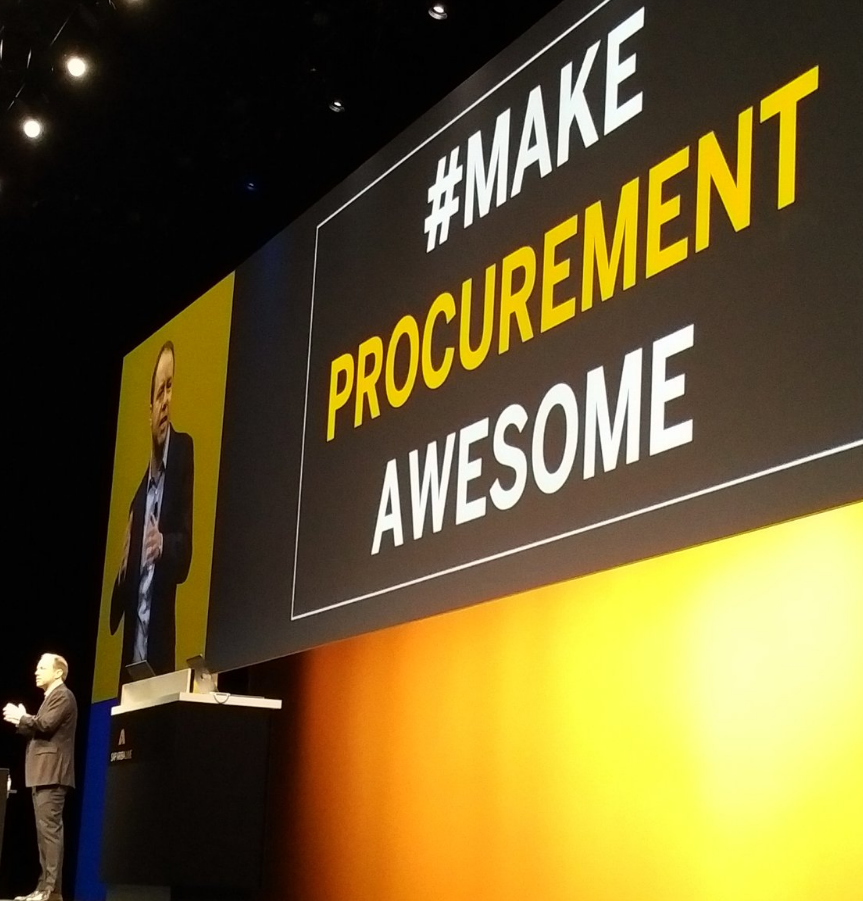 |
| Atzberger - Make Procurement Awesome |
Functionality Push – Last year Ariba unveiled the Guided Buying approach, both a simplification on the product side and usability improvement for the UX. The combination has worked well for Ariba and proven popular with customers. Spot Purchases were announced, too and are available now, the upcoming implementation at Latin American trading powerhouse Mercado Libre is a proof point that Ariba has built good functionality. When asking Mercado Libre for the reasons for selecting Ariba, they first mentioned the synergy effects of using SAP already – something that bides well for further sales of Spot Purchases into the SAP install base.
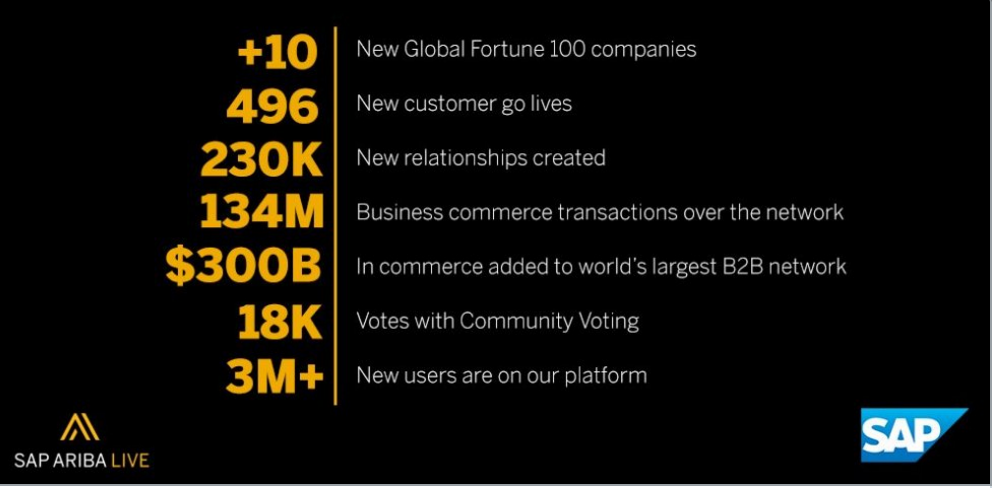 |
| Ariba 2016 Momentum |
That the combination of UX improvement and simplification is working out for Ariba, is also seen by the plans to bring the same concept to bear on the Supplier side with the Light Account: During the keynote, we saw the demo of onboarding a new supplier in 2 minutes, something as unthinkable as well as un-achievable in today’s business practice.
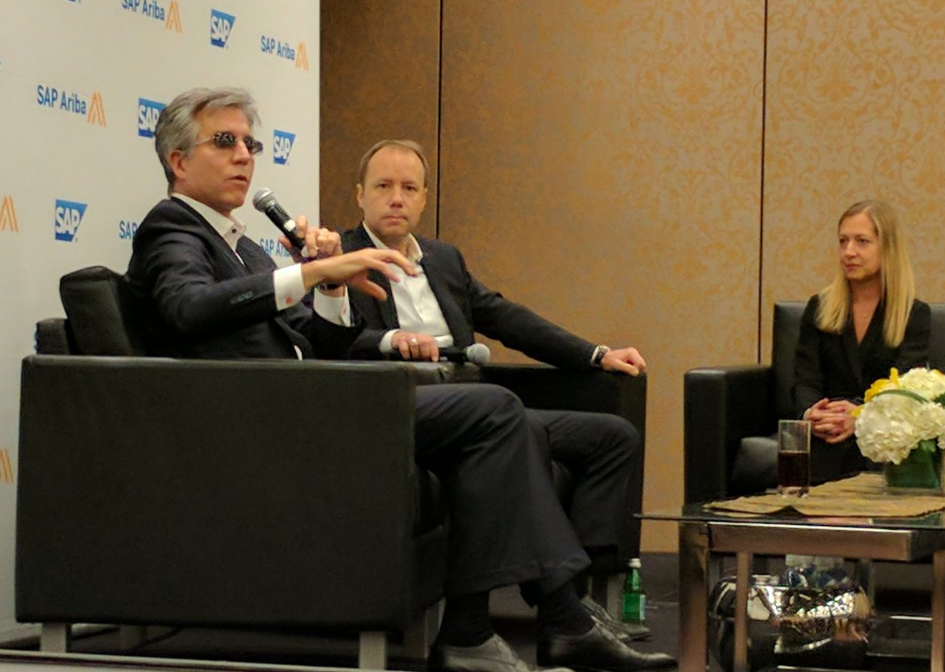 |
| McDermott & Atzberger Q&A |
Blockchain meets Purchasing – In a sign of times, this was also a conference with a Blockchain announcement, and SAP picked Hyperledger for its first dabs into distributed ledger technology. Certainly, a good choice, though SAP likely will also have to support other blockchain technologies, but Hyperledger is a good start. And few places lend themselves more to the blockchain scenario than purchasing, so it’s good to see SAP innovating.
MyPOV
Holger Mueller is VP and Principal Analyst for Constellation Research for the fundamental enablers of the cloud, IaaS, PaaS and next generation Applications, with forays up the tech stack into BigData and Analytics, HR Tech, and sometimes SaaS. Holger provides strategy and counsel to key clients, including Chief Information Officers, Chief Technology Officers, Chief Product Officers, Chief HR Officers, investment analysts, venture capitalists, sell-side firms, and technology buyers. Coverage Areas: Future of Work Tech Optimization & Innovation Background: Before joining Constellation Research, Mueller was VP of Products for NorthgateArinso, a KKR company. There, he led the transformation of products to the cloud and laid the foundation for new Business Process as a…...
Read morePublished
Author
