


Will the Nvidia debacle derail open models? Maybe not
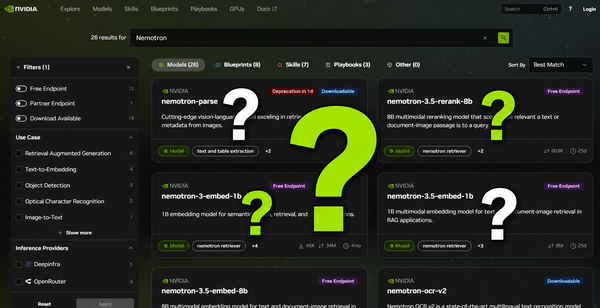
It's too early to make a call about Nvidia's Nemotron and the future of open models, but what is clear is that enterprises will need more than the GPU vendor to step up.
Nvidia was the leader of open models in the US. Nemotron, which was championed by former Nvidia CEO Jensen Huang, was the leading option in the US and software vendors like Palantir were backing it. Simply put, Nemotron has a big role in sovereign AI efforts and it would be terrible to see open models lose whatever footing they had.
Nvidia CEO Huang resigns, Kress becomes interim CEO: Looming questions abound | Nvidia’s Nemotron hit enterprise AI inflection point
In a blog post, Nathan Lambert, an open model researcher and director of Trillium Labs, argued that the resignation of Huang is a big setback to the open model ecosystem. Nvidia is going to have much larger priorities than Nemotron and open models in the months ahead.
Lambert isn't wrong. The big question is whether anyone else with compute will be willing to be an open model champion and have the trust of enterprise customers.
- BT150 zeitgeist: Pick the best model for the job, think open models
- Open models gain traction in enterprises, tech CEOs say
- Evidence Shows Enterprises Use of Open Weight Models is Mainstream
- Open-Weight Models Are Gaining Ground in Enterprise AI
- Rightsizing open models may cut your AI inference spend
Nvidia's reasoning for Nemotron makes sense in that it wanted to broaden the AI customer base from the frontier labs and hyperscalers. What's curious is why the likes of AWS, Google Cloud and Microsoft Azure haven't pushed open models since they largely monetize through infrastructure. The reason is fairly obvious: Those hyperscalers are investors in Anthropic and OpenAI and launching open models that compete well could kill their investments and biggest customers.
What's next for open models? Here are a few options.
Nvidia's next CEO sees the wisdom in the Nemotron franchise. We don't know the next Nvidia CEO, but we do know the company going forward is going to need some goodwill. The US' lack of mature open models is a national security issue. Nemotron is also important to Nvidia because it's also a customer zero marketing opportunity where the company can show off what its infrastructure can do. The logic behind Nemotron was sound and it's not too farfetched that the next Nvidia CEO could agree.
AMD steps up and takes the open model baton. AMD is the biggest beneficiary of Nvidia's troubles and can make the same customer zero point by training its own open models. With a set of good open models, AMD could also create more of a halo around its ROCm software, which competes with Nvidia's CUDA.
Any set of hardware vendors could make an open model push. Dell Technologies and HPE could be likely candidates as could IBM, which already has an open model push underway. Why enterprise hardware vendors? This set of vendors has trust and neutrality and could use open models as customer zero marketing.
Open models may have their own momentum already. There's a case that the fledgling open model companies are going to fill any Nemotron void, but the big question is whether they can be funded without Nvidia.
Mistral, Meta or someone else becomes the leader on open models. Meta appears to be on the frontier again with its Muse family of models and has promised open weight options. Trust is probably the biggest hurdle with Meta. Mistral could have an opportunity and open models could give AI in Europe a boost.
An enterprise SaaS vendor becomes an open model champion. The benefit to any SaaS vendor pushing open models would be its own operating margins and less reliance on Anthropic and OpenAI. The open model void is why SaaS vendors rallied behind Nemotron in the first place.
Bottom line: The open model ecosystem in the US is certainly entering a period of uncertainty, but options abound.
Larry Dignan is Editor in Chief of Constellation Insights at Constellation Research, where he leads editorial coverage focused on enterprise technology, digital transformation, and emerging trends shaping the future of business. He oversees research-driven news, analysis, interviews, and event coverage designed to help technology buyers and vendors navigate complex markets with clarity and context. ...
Read morePublished
Author
