Results

Press Release: Bob Zukis Joins Constellation’s Board of Advisors

Press Release: Bob Zukis Joins Constellation’s Board of Advisors

Former PricewaterhouseCoopers Partner brings social business and strategy management experience to research and advisory firm focused on disruptive technology.

LOS ANGELES, Calif --Constellation Research Inc, an award-winning research analyst and advisory firm helping clients navigate emerging and disruptive technologies, announced today the addition of accomplished international management consultant Bob Zukis to the Board of Advisors.  A pioneer in helping Boards and C-level executives understand the disruptive power of social technology, Zukis possesses a deep understanding of the relationship between information technology and business in the creation of corporate value which runs parallel to Constellation’s mission of practical applications of technology in the C-Suite. Zukis will lend this expertise to Constellation analysts in the formulation of research in the Consumerization of IT and the New C-Suite and Next Generation Customer Experience research themes.

Bob Zukis on social media technology in business management: “The social technology conversation is moving well beyond marketing, and these tools are a powerful competitive weapon that companies can use to drive revenue, productivity and profitability.”

Constellation Research also sought Zukis for membership on the board for his expertise in working with boards to improve IT governance, an area of burgeoning importance that is inadequately addressed in current research. Clients of Constellation Research, Inc. can expect development of research in this area with Zukis’ guidance.

About corporate governance of boards Zukis said: “There is an incredible opportunity being presented with this technology, but there are also new risks.  Potentially big ones.  Boards really need to wrap their arms around these issues, and quickly.”

In addition to serving on Constellation’s board, Zukis is the Social CEO of Saaskwatch Systems and an Advisor to The Center for Digital Transformation at the University of California, Irvine.  He is also on the NACD SoCal Board.  Previously, Zukis led a successful twenty-nine year career as Partner at PricewaterhouseCoopers. Zukis’ PwC career spanned four continents and twenty countries and was focused on helping global firms find their future with new products, services and markets.

Bob Zukis said, “The next chapter in business management is being written right before our very eyes with social technology.   All bets are now off.   This is the most disruptive technology development for business I’ve seen in 30 years.”

Constellation Research, Inc. CEO, R “Ray” Wang said, “We're excited to have someone of Bob's expertise and caliber join Constellation.  Bob's experience with Board of Directors and Constellation's business theme focused research, resonate well with organizations seeking a trusted partner for innovative research and advisory.  We're looking forward to improving our board of director offerings and working with Bob on making sure we provide the right level of content and service offerings.”

Constellation Research’s Board of Advisors play a key role in shaping the research agenda and providing advice and guidance to its members. Board members bring significant industry experience, represent the leaders in their field, and serve in 6 to 12 month terms. These esteemed individuals:

  • Guide research direction
  • Advise on business strategy
  • Maintain an outside-in perspective
  • Deliver mentorship from seasoned professionals
  • Garner input from clients and prospects
  • Grow the constellation of experts
  • Identify new talent
  • Maintain and exude the Constellation values in public

Advisory Board members do not have a commercial relationship with Constellation nor are they represented by Constellation. Board members do not have fiduciary responsibility.

COORDINATES
Twitter:@bobzukis
Geo: Los Angeles, California


ABOUT CONSTELLATION RESEARCH

Constellation Research is a research and advisory firm focused on disruptive and emerging technologies. This renowned group of experienced analysts, led by R "Ray" Wang, focuses on business themed research including the Future of Work; Next Generation Customer Experience; Data to Decisions; Matrix Commerce; Technology Optimization and Innovation; and Consumerization of IT and the New C-Suite. 

Constellation's collection of prestigious analysts bring real world experience, independence, and objectivity to client solutions that span cross-role, cross-functional, and cross-industry points of view. Clients join Constellation Research for a fresh and business focused perspective.

Unlike the legacy analyst firms, Constellation Research is disrupting how research is accessed, what topics are covered, and how clients can partner with a research firm to achieve success. Over 100 clients have joined from an ecosystem of buyers, partners, solution providers, c-suite, board of directors and vendor clients. 

For more information about Constellation Research, visit www.ConstellationRG.com

***

Constellation Research, Constellation SuperNova Awards and the Constellation Research logo are trademarks of Constellation Research, Org. All other products and services listed herein are trademarks of their respective companies.


2012 Technology Trends: Call for Survey Respondents

2012 Technology Trends: Call for Survey Respondents

Over at Computer Economics, we've now launched our 2012 Technology Trends survey, and we're looking for qualified IT executives to take a 15-minute survey about their technology investment plans.

What's in it for you? If you complete the survey, we'll send you a complete copy of the final report (a $995 value).


In this year's survey we're asking about your organization's adoption and experience with 13 technologies:

  • ERP
  • Customer Relationship Management (CRM)
  • Supply Chain Management
  • Human Resources Management Systems (HRMS)
  • Data Warehouse/BI
  • Social Business/Collaboration Systems
  • Legacy System Renewal
  • Software as a Service (SaaS)
  • Public Cloud Infrastructure (IaaS)
  • Platform as a Service (PaaS)
  • Unified Communications
  • Desktop Virtualization
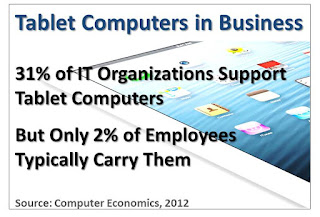
  • Tablet Computers. 

Want to know more? See a summary of the final report from last year.

Tech Optimization

Community Forums Offer New Way to Differentiate Customer Service

Community Forums Offer New Way to Differentiate Customer Service

Customer community forums provide a meeting place for customers to engage with fellow customers in order to share ideas and information, get tips on product usage and access knowledgeable subject matter experts.  Importantly, early adopters find that community forums differentiate them from competitors by providing interactive ways for customers to engage and find support.  Forums aggregate relevant product information and usage ideas and share pertinent information to online communities.   As more customers become members of a company’s community forum, it is essential to monitor sites and add fresh content to provide a wide range of valuable and actionable information to consumers. 

For many organizations the creation of community forums originates in the marketing department. However, it is also important to involve customer support in the planning stage and design a site that encourages interactive participation of customers.  A well-designed forum becomes a valuable source of information and encourages customers to resolve issues independently.   It provides advisory services and helps customers find answers through FAQs and access to product experts who may be knowledgeable customers or in-house product managers.   Additionally, community forums have a huge potential for reducing the need to speak to agents, which lowers support costs.

Companies encourage active user participation by recognizing customers who regularly support the community forum and often give them special titles such as valued advisor or company ambassador.  Customers enjoy this acknowledgement and may also receive rewards, such as special discounts or coupons.  This is enough to incent some customers to reach a top rank advisor status and continue active participation.  Engaged customers are the most loyal and forums help them identify more strongly with the company’s brand.

Although there are costs associated with developing a community forum and supporting it, the ROI for this investment can be short.  Customer loyalty and engagement are factors to consider. as well as the savings from call reduction or shorter call duration.  It is important to identify the more routine reasons customers call for support and post information on these topics.  The cross conversations between marketing and customer support can ensure that content is kept up to date and relevant.

The sponsor for developing a community forum needs to gain consensus between marketing and support departments, as well as the executive team, on the need for a forum and clearly define how it will differentiate customer engagement.   Selling the project internally is essential to getting the cross functional support needed to deliver a quality experience.   It is essential that the content plan is applicable to the customer needs and not be merely a clone of the web site.  Once the site is launched, on-going monitoring and testing will safeguard the content and make certain the users gain value.

Want more? See Social Communications and Customer Support - A Winning Combination

 
Next-Generation Customer Experience

Tuesday's Tip: Why Context Matters: Forget Real-Time, Achieve Right-Time

Tuesday's Tip: Why Context Matters: Forget Real-Time, Achieve Right-Time

The Real-Time Hype Is Filled With Flaws

The hype around big data, social media, and mobility has many folks imagining the real-time enterprise in the future of work, next generation customer experiences, matrix commerce, or the data to decisions journey.  While real-time theoretically leads to quicker information and faster response times, the reality requires closer examination for three reasons:

  1. Customers and employees only want engagement aligned with self interest.  Relevancy of information is required for customers and employees to respond.  Real-time interactions quickly evolve into noise.  Signal to noise ratios must be improved as garbage in will lead to massive garbage out.  In some cases, customers don’t want engagement. They just want the experience.
  2. No human can truly handle the volume and flow of real-time interactions. The proliferation of channels and data sources creates a data deluge.  Filtering is required in order to handle real-time.  Workers already inundated with email, sms, and chats, really just want to get work done, they don’t want to be bogged down with more interactions.
  3. Real time is not fast enough. Real-time is reactive not proactive.  Anticipation and prediction emerge as key requirements.  Reaction does not lead to a better customer experience or employee interaction.  Some customers want options to make the right decision.  The same customers may expect a system to remember a preference based on many factors including repetitive behavior.

Delivering Context Is The Secret To Right Time Success

Context provides the key ingredient in improving outcomes. Why? Context provides the relevancy required for not only anticipation, but also prediction.  For example, offering a premium channel upsell to an upset cable customer when their cable is down, may not be the wisest idea.  Unfortunately, this happens too often.  The customer is already upset that the issues have not been resolved and yet the company is still trying to sell instead of resolve an issue.  However, offering a free appetizer triggered by a location based service during the morning commute, may lead to higher sales as this is a right time anticipation of a dinner time offer .

The Bottom Line: Start With Seven Dimensions of Context Drivers.

Consequently, the key to right-time is context.  By delivering information in context, organizations can address business problems in the future of work, next generation customer experience, matrix commerce, and data to decisions.  Constellation identifies seven key triggers for context in a right-time world (see Figure 1):

  1. Relationships. An individual may serve as an employee, a parent, part of a community group, or other designation.  Understanding the relationships help brands and organizations understand a broader set of experiences that answer the question “Who and What”.
  2. Time. Time provides temporal information.  Time provides related services that answer the question”When”.
  3. Location. Placement by geo-spatial coordinates helps with narrowing geographic relevancy.  Location answers the question of Where
  4. Business process. Process helps determine flow and work order.  Process answers the question of “How”
  5. Role. While related to relationships, the role is different because it addresses eligibility.  Individuals can play different roles among a wide variety of relationships.
  6. Sentiment. Sentiment seeks to understand how an individual feels about an issue.  Sentiment answers one dimension of the question of “Why”.
  7. Intent.  Intent anticipates future behavior.  Intent answers the second dimension of the question Why”

In the design of an engagement strategy, success will require organizations to factor the seven dimensions of context drivers.

Figure 1.  Seven Drivers for Context In a Right Time World


Your POV.

Are you ready for right time?  Do you have an example of how context improves your efforts at matrix commerce, future of work next generation customer experience, and data to decisions?  What’s next for your engagement strategy?  Have a story on how you’ve achieved engagement? Add your comments to the blog or send us a comment at R (at) SoftwareInsider (dot) org or R (at) ConstellationRG (dot) com

Please let us know if you need help with your business strategy efforts.  Here’s how we can assist:

  • Assessing social business/social CRM readiness
  • Developing your social business/ social CRM  strategy
  • Designing a data to decisions strategy
  • Create a new vision of the future of work
  • Deliver a new customer experience strategy
  • Crafting a new matrix commerce strategy

Related Research:

Reprints

Reprints can be purchased through Constellation Research, Inc. To request official reprints in PDF format, please contact Sales .

Disclosure

Although we work closely with many mega software vendors, we want you to trust us. For the full disclosure policy, stay tuned for the full client list on the Constellation Research website.

* Not responsible for any factual errors or omissions.  However, happy to correct any errors upon email receipt.

Copyright © 2001 – 2012 R Wang and Insider Associates, LLC All rights reserved.
Contact the Sales team to purchase this report on a a la carte basis or join the Constellation Customer Experience!


Data to Decisions Innovation & Product-led Growth Leadership Chief Experience Officer

The Internet of Things and Change

The Internet of Things and Change

Will You Be Ready For the M2M World?

The Internet of Things, the Connected World, the Smart Planet… All these terms indicate that the number of devices connected to, communicating through, and building relationships on the Internet has exceeded the number of humans using the Internet. But what does this really mean? Is it about the number of devices, and what devices? Is it about the data, so much data, so fast, so disparate, that will make current big data look like teeny-weeny data?

I think that it's about change: the way we live our lives, the way we conduct business, the way we walk down a street, drive a car, or think about relationships. All will change over the next decade:

  1. Sensors are everywhere. The camera at the traffic light and overseeing the freeway; those are sensors. That new bump in the parking space and new box on the street lamp; those are sensors. From listening for gun shots to monitoring a chicken coop, sensors are cropping up in every area of your life.
  2. Machine to Machine [M2M] relationships will generate connected data that will affect every aspect of your life. Connected Data will be used to fine-tune predictives that will prevent crimes, anticipate your next purchase and take over control of your car to avoid traffic jams. The nascent form of this is already happening: Los Angeles and Santa Cruz police are using PredPol to predict & prevent crimes, location aware ads popping up in your favorite smartphone apps, and Nevada and California are giving driver licenses to robotic cars.
  3. Sustainability isn't about saving the planet, it's about saving money. Saving the planet, reducing dependence on polluting energy sources and reducing waste in landfills are all good things, but they aren't part of the fiduciary responsibilities of most executives. However, Smart Buildings, recycling & composting, and Green IT all increase a company's bottom line and that does fall under every executive's fiduciary goals.

Making Sense of Inter-Connectedness - Introducing My Internet of Things Mind Map

As you can tell from the mindmap associated with this post, I've been thinking about the Internet of things quite a bit lately. It's a natural progression for me. I'm fascinated by all the new sensors, the Connected Data [you heard it here first] that will swamp Big Data, the advances in data management and analytics that will be needed, the impact upon policy and regulation, and the vision of the people and companies bringing about the Internet of Things. But more, as I've been reading and thinking about the SmartPlanet, SmartCities, SmartGrid and SmartPhones, and that ConnectedData, I realized that I can never look at the world around me in the same way again.

Let's look at some of the "facts" [read guesses] that have been written about the IoT.

Looking to the future, Cisco IBSG predicts there will be 25 billion devices connected to the Internet by 2015 and 50 billion by 2020. From The Internet of Things: How the Next Evolution of the Internet Is Changing Everything by Dave Evans, April 2011 [links to PDF]

Between 2011 and 2020 the number of connected devices globally will grow from 9 billion to 24 billion as the benefit of connecting more and varied devices is realised. The Connected Life: A USD4.5 trillion global impact in 2020, [links to PDF] February 2012 by Machine Research for the GSMA.

Two different estimates, one of 24 billion devices of many different types, connected by wireless broadband, and one of 50 billion mobile devices using different types of cellular networks, all by the year 2020. And neither of these estimates include the trillions of other types of things that will deployed over the next eight years. Trillions, not billions, using a variety of personal, local, and wide-area wireless networks.

My Focus Starts at The Intersection of Sensors, Analytics and Smart Cities, with Energy Management and Sustainability

One of the things that will change over time is the way that I look at the Internet of Things. All of it is interesting. But for now, I'll be focusing on the intersection of Sensors, Analytics and Smart Cities, with Energy Management and Sustainability.

Count RFID, Zigbee, MEMS, Smartdust and more traditional sensors, Robots, autonomous vehicles, Healthcare monitors, Smart Meters and more, being distributed in cities, cars, factories, trains, farms, planes, animals and people, and the number of connected devices in 2020 will be in the trillions. Data generated by less than one billion humans using the Internet a few times a day swamped traditional data management & analytics systems, spawning "Big Data". Trillions of devices updating ConnectedData every few nanoseconds will indeed change everything.

Of paramount importance moving forward is determining how to extract business, personal and social value from the intersections, interfaces and interstices of the infrastructure, connected data, objects and people building relationships through the Internet of Things.

Come join me as I look at this convergence and the business impact ahead of us.

Creative Commons License: Attribution, Non-Commercial, Share-AlikeExcept where otherwise noted, this content is
licensed under a Creative Commons License.


Data to Decisions

Numb3rs Protyped Data Science

Numb3rs Protyped Data Science

Data Science is a new term and a new job title that has been receiving quite a bit of hype. There have been arguments over the definition of this term, and whether or not it truly describes a new field of endeavor or is just an offshoot of statistics, software programming or business intelligence. Another take is that many of the definitions of a Data Scientist can be met by few if any individuals, but really define a team. The television show Numb3rs ran with new episodes in the USA from 2005 through 2010. In many ways, the show was a prototype for such a Data Science team. Let's look at the roles on the show, and see how they might translate into your organization.

The Mathematician or Statistician

Charlie Eppes, boy genius, who grew into a young professor of Mathematics at the fictional CalSci. Like so many professors, he supplemented his income by consulting. In his case, to the FBI and his brother, applying mathematics and statistics to solving crimes of all sorts. His breadth and depth of knowledge was remarkable; unlikely to be matched in the real world. However, an applied mathematician or statistician, with knowledge of a branch of mathematics or statistics relevant to your problems is essential in either a Data Scientist or a data science team.

Computational Statistician, Computer Scientist or Software Developer

Amita Ramanujan, a student at CalSci who achieves her doctorate in computational mathematics, becomes a professor at CalSci, helps with the consultations to the FBI and, as a side note, dates her one-time thesis advisor, Charlie Eppes. In many ways, Amita is the closest to being a Data Scientist of anyone in the show. Equally adept at mathematics, physics, statistics and hacking, Amita often acquires the required data from disparate sources, and transforms Charlie's mathematical visions into working code. If you hire an Amita, you might just have all you need to get Data Science producing real solutions for you.

Over time, both Charlie and Amita gain a fairly impressive domain knowledge of criminalistics.

Subject Matter Expert (SME)

And speaking of subject matter experts, this is where Numb3rs really prototyped what is required to make Data Science valuable in solving the crimes, er, problems at your organization. There were many SMEs, both as regular characters, and as special roles for specific shows. The regular characters included the FBI agents, from Don Eppes, the lead agent, and Charlie's brother, to his team, with David Sinclair and Colby Granger surviving the entire series. By the end of the series, these two FBI agents were taking turns suggesting and explaining mathematical approaches. Other FBI agents who were on the team for one or more seasons include Terry Lake, Megan Reaves, Liz Warner and Nikki Betancourt. Megan was also a profiler.

Also of important note, was the Eppes brothers' father, Alan Eppes. Alan was a retired city planner for Los Angeles. His knowledge of building, regulations, and city's byways, processes, neighborhoods and interactions, were often instrumental in understanding the results of Charlie and Amita's calculations.

Another regular was Larry Feinhardt, holding the Walter T. Merrick chair at CalSci. It may surprise you to learn that a theoretical physicist and cosmologist, interested in studying the heavens, string theory and zero point energy was a crucial member of a crime solving data science team, but he was, other than a brief hiatus aboard the International Space Station.

More important than these regular cast members however were the guest SMEs. There were some recurring roles, such as the drop-out with a knack for baseball stats, or the mechanical engineer who was more interested in how things failed than in how to build them. Flame propagation, biology, disease control, cryptology, cognition, gaming, chemistry, forensic accounting and more specialists all are needed at one time or another to solve the crime.

Retrospective

For me, the lesson is that while you may find an individual who can be creative with the right math or statistics, find, extract and massage data, have sufficient domain expertise and write sophisticated code, turning their creative algorithms into real solutions, you're more likely to need a team. And even that team will need additional help, from within the organization or outside consultants. Your regular team and "guest stars" mathematicians, frequentists, Bayesians, engineers, scientists, accountants, business analysts, and others to bring the best decisions out of your data.

And if you want to check out how realistic the mathematics was in Numb3rs, check out The Math of Numb3rs from Cornell University. For more on the cast, characters and show, look for the CBS official Numb3rs site, and, of course, the Wikipedia article on Numb3rs.

Update: 20120722: I'm honored by the mentions and retweets on Twitter from those who love the Numb3rs analogy. Thank you all.
.

Data to Decisions

Disruptive or Enabling? Social Technologies in Talent Management

Disruptive or Enabling? Social Technologies in Talent Management

Bring up the subject of social tools to business leaders, and many will still take the position that these technologies have little to no real value in supporting daily workplace initiatives. But whether these leaders are ready for it or not, today’s workers are bringing expectations for social and mobile technologies into the workplace. Ever-connected, accustomed to instant access to information and people, social and mobile technologies are simply the way we live and work today.

cloud3In a few weeks I’ll be publishing the first in a series of reports detailing both the disruptive and enabling effects of social technologies on talent management practices and technologies. The first of these reports provides a comprehensive look across nine primary categories of talent management, highlighting the evolution and transformations taking place as a result of social, mobile and cloud technologies.

Preliminary findings from this research have already been published in the latest edition of Workforce Solutions Review, a publication of the International Association for Human Resource Information Management (IHRIM).  In that issue, I discuss a few of the emerging realities within the future of talent management:

  • Talent sourcing and acquisition has gone social;
  • Goals, initiatives and tasks are more immediate and transparent;
  • Identifying top talent benefits from richer insights;
  • The “system of record” becomes a portable, holistic profile; and
  • Concepts in customer analysis are informing HCM analytics.

The article also looks to the future and notes that social and mobile experiences
are impacting more than just processes; they’re also impacting how software is being developed, delivered and consumed.

Future of Work

Press Release: Internet of Things Thought Leader Joseph A. di Paolantonio Joins Constellation Research, Inc.

Press Release: Internet of Things Thought Leader Joseph A. di Paolantonio Joins Constellation Research, Inc.

Leading “Internet of Things” Analyst to add depth to Constellation’s disruptive technology coverage.

SAN FRANCISCO, Calif. – Constellation Research, Inc., the award-winning research and advisory firm focused on helping clients navigate emerging and disruptive technologies today announced the addition of Joseph A. di Paolantonio to the research team as VP and Principal analyst. The addition of di Paolantonio, a leading analyst in the Internet of Things, Big Data, and sustainable enterprise, signals Constellation’s commitment to providing its clients with the most comprehensive analysis of disruptive technologies.

 di Paolantonio brings a focus on the Internet of Things, applying Data Management & Analytics to Energy Management, Sustainability, Smart Planet, Smart Cities, Smart Buildings, Sensors, M2M, CleanTech and Green Business Practices. Since 1978, Joseph has been involved with renewable energy research, developing advanced statistical methods for complex system analysis, and creating analytical techniques and management methodologies for solving business, engineering and scientific problems. 

di Paolantonio commented: "A well cited white paper by Cisco claims that the Internet of Things was "born" sometime around 2008,  and estimates that there will be 50 billion devices on the Internet by 2020, just counting cell phones, smartphones and tablets. Sensors, Robots, Healthcare monitors, smart meters and other connected objects, will number in the trillions by 2020. Data generated by less than one million humans using the Internet a few times a day swamped traditional systems, spawning "Big Data". Trillions of devices updating data every few nanoseconds will change everything. At Constellation Research, I plan to help our customers prepare for and implement these disruptive technologies." 

Prior to joining Constellation Research, di Paolantonio served as President & CEO of InterActive Systems & Consulting, Inc., a consulting and research firm focused on system integration for data management and analysis. Prior to InterActive Systems & Consulting, Inc., di Paolantonio was General Manager of IT services at Capital Technologies Integration, Inc.

Constellation Research CEO R “Ray” Wang on the addition: “We're honored and excited to have Joseph on the Data to Decisions Team.  His statistical background, deep understanding of analytics, and business acumen brings a fresh perspective to the Internet of Things, Big Data, Smarter Planet, and Energy and Carbon management.   As we grow out each of our business themes, we're looking for analysts who can make the tough calls, bring clarity to new markets, and strive to represent a voice for the buyer.  Joseph brings these qualities and a strong sense of work ethic and customer centricity.”


COORDINATES
Twitter: @ JAdP
Geo: San Francisco, California
 

ABOUT CONSTELLATION RESEARCH

Constellation Research is a research and advisory firm focused on disruptive and emerging technologies. This renowned group of experienced analysts, led by R "Ray" Wang, focuses on business themed research including the Future of Work; Next Generation Customer Experience; From Data to Decisions; Matrix Commerce; Technology Optimization and Innovation; and Consumerization of IT and the New C-Suite. 

Constellation's collection of prestigious analysts bring real world experience, independence, and objectivity to client solutions that span cross-role, cross-functional, and cross-industry points of view. Clients join Constellation Research for a fresh and business focused perspective.

Unlike the legacy analyst firms, Constellation Research is disrupting how research is accessed, what topics are covered, and how clients can partner with a research firm to achieve success. Over 100 clients have joined from an ecosystem of buyers, partners, solution providers, c-suite, board of directors and vendor clients. 

For more information about Constellation Research, visit www.ConstellationRG.com

***

Constellation Research, Constellation SuperNova Awards and the Constellation Research logo are trademarks of Constellation Research, Org. All other products and services listed herein are trademarks of their respective companies.


Joseph A. di Paolantonio Biographical Information

Over his career, di Paolantonio has been a primary researcher, principal investigator, program & project manager, line & organizational manager, executive, strategic consultant and entrepreneur at startups, F100, large & small companies including Oracle, Lockheed, Martin Marietta, Thiokol and SES. He has worked primarily in the energy, renewables, aerospace, telecommunications, and information technology industries.

Joseph has been blogging since 2004 at The TeleInterActive Press, which he co-founded, on topics ranging from open source solutions to the Smart Grid. He is also the co-creator of the 8D Implementation Methodology for data management & analytics projects, declared Agile in 2002 by a Practitioner. He has been a frequent presenter and panel moderator in using Agile and Open Source Solutions in achieving decisions from data management & analytics.


Joseph A. di Paolantonio 2012 Research Agenda

Research will focus on helping organizations increase the bottom line & improve organizational efficiency, through: 

 • Smart Planet, Smart Cities, Sensors & Data

 • Sustainability best practices

 • Renewable Energy and Storage Technologies, Companies and Awarded Projects

 • Smart Grid and Enabling Technologies

 • M2M Machine Teaching to Machine Learning

 • Educating End-Users to Smart Meter [AMI] Advantages

 • AMI and HAN Impact to  Energy Management

 • Mobile/BYoD/LocationAware/FoW for Energy Management

 • Internet of Things colliding with social media

 • Carbon Footprint Management Pros & Cons

 • Related Legislation

Content Themes: 

Event Report: Microsoft's Worldwide Partner Conference 2012 #wpc12

Event Report: Microsoft's Worldwide Partner Conference 2012 #wpc12

Microsoft Provides The Passion And Products For Partners To Compete In A Post PC Era

Microsoft kicked off its Worldwide Partner Conference in Toronto, Canada amidst 16,000 partners (See Figure 1).  Attendees caught the latest news and product announcements while sharing new business models and products for a post PC era.  Key announcements for Day 1 and Day 2 include:

  • Partners given back the relationship in Office 365. Partners gain a pre-paid payment option with Office 365. The service gives partners a mechanism to deliver “packaged services with a single invoice and manage the customer relationship”.

    Point of View (POV): Partners have been clamoring for the ability to manage the customer relationship in the cloud. Microsoft proves it’s allegiance to partners by providing Office365 Open and reasserts that Microsoft will not disintermediate the partner channel
  • Windows 8 RTM/GA dates confirmed. Corporate VP of Windows Tami Reller announced that Windows 8 is on track for an early August release to manufacturers (RTM) and generally available (GA) at the end of October. Enterprise customers will receive Windows 8 as early as August. The product is available in 109 languages and 231 markets. Consumers can expect to receive Windows 8 by software upgrades and device purchases by end of October.

    Point of View (POV): Windows 8 is the most tested release in Microsoft history. Reller showed demos from Acer, ASUS, HP, and Lenovo of upcoming tablets, Ultrabooks, PC’s, and hybrid tablets, highlighting the broad and deep offerings available this fall. Microsoft may have cracked the code in better release coordination with Windows 8. Unfortunately, with Windows 7 momentum strong at 630M worldwide, the conversion to Windows 8 may take a bit longer as users have just gotten used to 7.
  • Perceptive Pixel (PPI) acquisition highlights importance of touch. Kurt DelBene, President of the Office division announced the acquisition of PPI.  The company is best known for its 82? collaborative multi-touch screen used by CNN during the 2008 elections.  While terms of the deal were not disclosed, the devices have dominated the high end at $80,000 a unit.  Perceptive’s founder Jeff Han was on stage with a trademark demo highlighting the collaborative and interactive features of the product.

    Point of View (POV): Should Microsoft succeed in driving down the cost of PPI’s flagship display technology, the Office division will have a focal point for discussion around the future of work.  PPI’s technologies have shown leadership in multi-touch user experiences and digital content display technologies.  Partners and customers can expect these innovations to quickly make their way into Windows Phone 8.


  • New apps take storm on Windows Phone 8. Attendees saw the power of integration with Windows Phone 8 and Windows 8.  A lineup of new business apps include  Words with Friends, Draw Something, Audible, Chase and PayPal.  On the game front, new titles include Asphalt 7: Heat, N.O.V.A. 3: Near Orbit Vanguard Alliance, and Batman: The Dark Knight Rises ”

    Point of View (POV): While not as robust as the Apple iStore, new titles and a growing developer ecosystem on multiple device types gives Windows Phone 8 a compelling chance.  With RIM and Nokia on life support, Microsoft has a shot to earn its place as a platform of choice.  The challenge – emphasize the interoperability between devices and prove the write once deliver any device mantra.  If Microsoft executes, Android will emerge as their number one competitor and appear as a messy platform when compared to Windows Phone 8.


  • ISV’s select Microsoft Dynamics as their core platform. Microsoft expands its presence as the core platform for several new independent software vendors.  Campus Management Corp., Cenium, Inc., Cincom Systems, Inc., PROS Pricing and Technosoft join the growing list of vendors building on the Dynamics platform.  Other notable members include Tyler Technologies and Ferranti Systems MECOM product.

    Point of View (POV): The move to open up the Dynamics platform is brilliant.  ISV’s with deep industry vertical capabilities can cut their development costs by up to 1/3.  Instead of focusing on building out the platform, the savings can go towards furthering the last-mile solution.  The catch – ISV’s become wedded to the success and failure of Microsoft Dynamics.

Figure 1. Scenes From WPC12

The Bottom Line: New Partner Types Will Emerge

The world of resellers, ISV’s, OEM’s, solution partners, and system integrators have converged.  Every partner type must face the new realities:

  • Cloud disintermediates the customer relationship and delivery
  • Products are excuses to sell services.  However, services are now an excuse to sell information
  • Customers want turnkey solutions from one source to choke
  • Deep vertical capabilities drive profitability
  • Innovation is no longer a luxury
  • Everyone is in everyone’s business

As a result, partners have made the value shift from provider to catalyst over the past 3 years (see Figure 2).  Leading partners have moved to a trusted advisor status.  Unfortunately, these activities are not enough.  Partners must start delivering intellectual property (IP) if they plan to thrive.  Why? Customers are willing to pay a premium for last-mile innovative solutions from a trusted partner.  With the overall commoditization occuring in the ecosystem, new revenues will come from IP. If a partner can deliver this in the cloud, that partner will have the ability to massively monetize across the entire ecosystem.

Figure 2. Partners Must Shift To The IP Creation Achetype To Thrive

Your POV

Microsoft Partners, ready to transform from Catalyst to Creator? What’s your view the outlook for Microsoft and your customers?  Ready to embrace Dynamics Platform, Windows 8, Office 365, and Azure?  Looking?  Add your comments to the discussion or send on to rwang0 at gmail dot com or r at softwaresinsider dot org and we’ll keep your anonymity.

Resources And Related Research:

Reprints

Reprints can be purchased through Constellation Research, Inc. To request official reprints in PDF format, please contact Sales .

Disclosure

Although we work closely with many mega software vendors, we want you to trust us. For the full disclosure policy, stay tuned for the full client list on the Constellation Research website.

* Not responsible for any factual errors or omissions.  However, happy to correct any errors upon email receipt.

Copyright © 2001 – 2012 R Wang and Insider Associates, LLC All rights reserved.
Contact the Sales team to purchase this report on a a la carte basis or join the Constellation Customer Experience!


Future of Work Next-Generation Customer Experience Tech Optimization Innovation & Product-led Growth Leadership Chief Experience Officer

Have Business Telephone Systems Become Obsolete?

Have Business Telephone Systems Become Obsolete?

We are in a BYOD era with employees clearly indicating that they want to choose the devices they use for their work.  Increased mobility among workers has led to high adoptions of smart phones and tablets as preferred communication devices.   For routine contacts with co-workers and business partners, most workers choose email and instant messaging over traditional phone calls.  Telephones still dominate for conference calls but increased use of video conferencing suggests that phone conversations will diminish as video conference calls increase.  The question on the minds of many executives is what is the long term relevance of their corporate telephone system and if it is necessary to continue to make large investments in these systems.   With funds tight for IT investments, is it time to let go of the desktop telephone as basic equipment for all employees.

Additionally, some executives question the need for telephones to support customers when they have other channels, such as email, Web and social sites to go for help.   A recent New York Times article (July 7, 2012) cited technology companies, such as Twitter, LinkedIn and Facebook  are basically ignoring customer support phone calls and steering all inquiries to online options.   These examples are early indicators of the declining role of the traditional business telephone for managing external customer communications.  However, not all customers found this lack of telephone support acceptable.

Clearly we are at a time of transition for business communications.  However, I do not believe companies should immediately get rid of their telephone systems.  What they do need to do is more effectively manage voice communications and understand the needs of workers and to develop a plan that allocates the right mix of communication devices best suited for its user population. It does not make sense to automatically give all employees a desktop telephone.   Instead consider providing workers with the right devices and applications based on their job functions.

 Industries that serve the public cannot simply refuse to support voice communications and force its customers to rely on the Internet.  Industries that rely heavily on voice conversations include government, hospitality, education, healthcare and retail.  Other industries also require voice communication connections for safety reasons and compliance.   When developing your business plan for voice communications consider job classifications and categorize requirements based on job functions.  This will enable you to provide a diversified environment that optimizes your investments in communication applications.  For some workers, this may mean a desktop telephone is essential and for others communications will take place from their mobile devices, tablets or workstations.

When determining user requirements it is important to note that many workers must collaborate closely with teammates and need the appropriate software applications to perform their work.  To improve job performance these workers require the ability to connect quickly with co-workers, see their availability for real time collaboration and access experts for faster decision-making.  Ensure that those making an upgrade decision for voice communications have cross functional conversations that will identify needs and have the flexibility to deliver the right mix of communications for all employees.

Next-Generation Customer Experience