Results

Enterprises will spend on agentic AI, but perhaps not yet

Enterprises will spend on agentic AI, but perhaps not yet

Agentic AI is dominating headlines and the enterprise technology sector, but the impact on the IT budget remains to be seen. Agentic AI is promising, but it's going to take more prototypes and proof of ROI to get the budgets rolling.

That's a takeaway from Crawford Del Prete, President of IDC, who appeared on DisrupTV. Del Prete was talking about the volatile IT budget dynamics in 2025 and said:

"The challenge I see when I talk to CIOs is when they think about AI and beyond is that they don't know where to start. This is particularly a problem with agents because when they look at agents they say, 'I'm skeptical. I know it's going to require significant human oversight. It's going to hallucinate. So, I can't just let this thing run, but I'm afraid not to run with it. I know I have to invest in it, but my budgets are under pressure.' I think we're going to see maybe a little bit of a lean back in the agent world over the course of the next couple quarters."

These comments about spending on AI agents is notable given that vendors are launching new agents and orchestration engines almost daily. Another day, another AI studio. Meanwhile, vendors are switching to hybrid models that include AI agents and genAI capabilities, but feature consumption models that may create budget volatility.

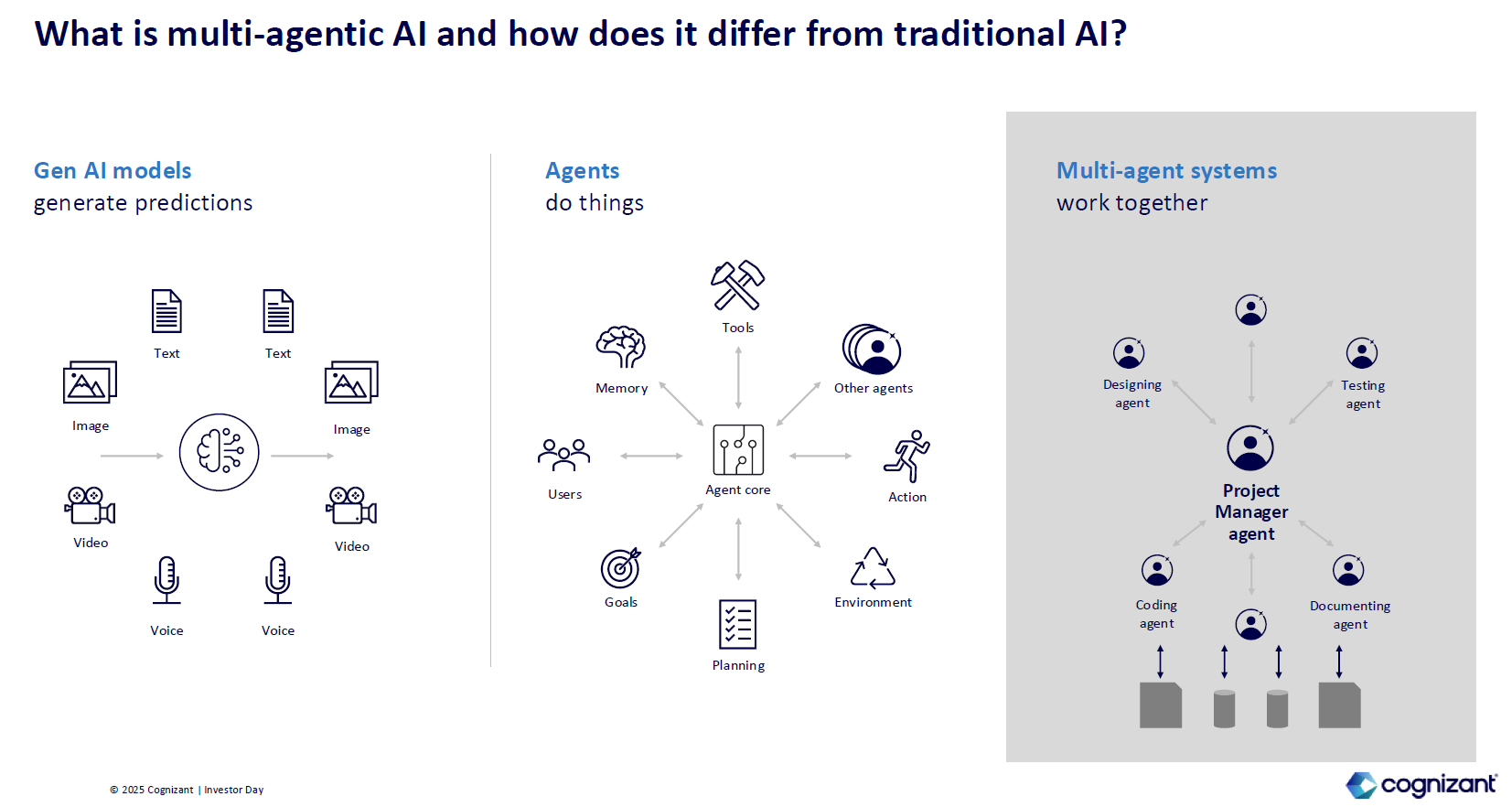
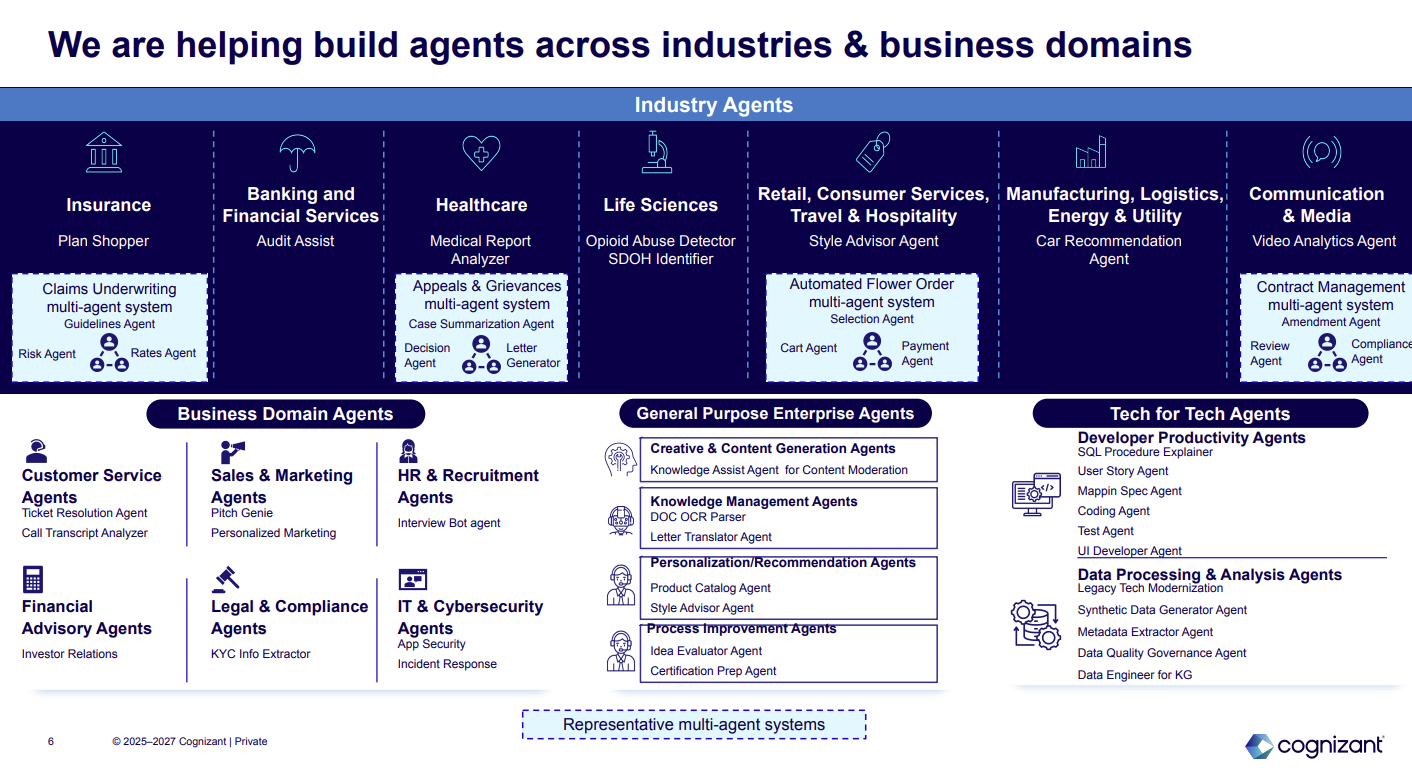
Here’s the state of agentic AI in a nutshell:

Del Prete was upbeat about AI agents. "You've finally got a technology that can unlock the value of your unstructured data in a very automated way. But I'm seeing customers not knowing how to engage, but afraid not to engage. I think we're going to see that push-pull play out over middle of this year, until people can start getting decent prototypes moving forward," said Del Prete.

Constellation Research CEO Ray "R" Wang noted that there are a lot of vendors adding agents to every marketing sentence available. Wang said agentic AI needs to get to the point where agents become an API with a decisioning engine. Agentic AI is very basic right now, said Wang.

Del Prete noted that oversight remains an issue with AI agents across multiple use cases. "We have a lot of work to do before we can set these things loose and feel like they're as in production," he said. "They're not as easy to put into production as people think based on the media that you see associated with it."

Nevertheless, agentic AI will pull budget. "I haven't found a company yet that's willing to lean back and say, yeah, I'm not going to invest. I don't think this thing is real," said Del Prete.

Gurvinder Sahni, Chief Marketing Officer at Persistent Systems, said the company is betting on agentic AI--a space where integrators that can work across multiple systems and domains can create AI agents that actually work

Wang noted that systems integrators and services companies have done well building agents relative to software vendors because they're used to cutting across departments, functions and business processes.

Sahni said:

"We recently trained about 1,000 plus people on Salesforce Agentforce. The other big part for us is the focus on our own IP and also working with the hyperscalers and the ecosystem to build products and services with them as well."

Data to Decisions Future of Work Innovation & Product-led Growth Tech Optimization Next-Generation Customer Experience Digital Safety, Privacy & Cybersecurity ML Machine Learning LLMs Agentic AI Generative AI Robotics AI Analytics Automation Quantum Computing Cloud Digital Transformation Disruptive Technology Enterprise IT Enterprise Acceleration Enterprise Software Next Gen Apps IoT Blockchain Leadership VR GenerativeAI Chief Information Officer Chief Executive Officer Chief Technology Officer Chief AI Officer Chief Data Officer Chief Analytics Officer Chief Information Security Officer Chief Product Officer

AI-Powered CSR: IBM's Strategies for Community Engagement & Impact

AI-Powered CSR: IBM's Strategies for Community Engagement & Impact

At #SXSW, Justina Nixon-Saintil, VP & Chief Impact Officer of IBM, shared with R "Ray" Wang how IBM is using #AI to drive real community impact...
 
? 1.6M volunteer hours logged
? 16M people skilled (on track to 30M by 2030)
? AI-powered solutions for climate stress communities
? 30% productivity boost with AI tools like "Ask CSR"

#Technology isn't just about innovation—it's about creating meaningful change. We're proud to see companies like IBM using AI to solve global challenges. 🌍 

On CR Conversations <iframe width="560" height="315" src="https://www.youtube.com/embed/Opudx0nh_SY?si=KzV1iGpuhHMnBJ4N" title="YouTube video player" frameborder="0" allow="accelerometer; autoplay; clipboard-write; encrypted-media; gyroscope; picture-in-picture; web-share" referrerpolicy="strict-origin-when-cross-origin" allowfullscreen></iframe>

How AI Agents Transform HR and Employee Experiences | IBM Sports Club Interview

How AI Agents Transform HR and Employee Experiences | IBM Sports Club Interview

Constellation founder and analyst R "Ray" Wang talks with IBM's Chief HR Officer Nickle LaMoreaux at the #SXSW IBM Sports Club about #AI agents transforming workplace experiences. Some key points include...

? Agents aren't replacing humans, they're augmenting our capabilities
? Agents offer personalized support for upskilling, career development, and routine tasks
? Agents enable more meaningful human interactions by handling administrative work

IBM's vision for an #HR AI agent 1) helps you explore career paths, 2) supports skill development, 3) streamlines HR processes, and 4) provides hyper-personalized guidance

Watch the full interview to learn more!

On CR Conversations <iframe width="560" height="315" src="https://www.youtube.com/embed/gCnYcCMpt0k?si=LAQq5HGjrWORkRjt" title="YouTube video player" frameborder="0" allow="accelerometer; autoplay; clipboard-write; encrypted-media; gyroscope; picture-in-picture; web-share" referrerpolicy="strict-origin-when-cross-origin" allowfullscreen></iframe>

AI infrastructure spending is upending enterprise financial modeling

AI infrastructure spending is upending enterprise financial modeling

When a technology is evolving as fast as artificial intelligence, CFOs and the finance department struggle to crowbar AI infrastructure investments into traditional depreciation models.

Typically, enterprises depreciate capital spending on IT infrastructure over multiple years. For instance, servers have a useful life of 7 years, according to the IRS. Hyperscale cloud companies tend to tweak the useful life of a server. For instance, Meta in its annual report said certain servers and network assets had a useful life of 5.5 years for fiscal 2025. Amazon now reckons the useful life of some of its servers is now 5 years down from 6 years a year ago. Alphabet depreciates over 6 years.

Here's the catch: 5 years in AI infrastructure is a lifetime. Nvidia now has an annual cadence for its GPUs and provides visibility into the roadmap through 2027. CEO Jensen Huang's bet is that Nvidia customers will continue to invest in the latest and greatest accelerated computing infrastructure because there's value and competitive advantage.

Do companies go with shorter depreciation cycles, lease gear or just provision from the cloud even though operating expenses are already stretched? As Nvidia extends more into the enterprise and industry applications, this financial planning conundrum is going to go mainstream. It's no wonder that Nvidia has teams focused on financial solutions.

With that in mind, Nvidia held a virtual panel at GTC 2025 focused on these accounting issues. What does traditional planning look like when AI is advancing too quickly for typical technology refresh cycles?

Bill Mayo, SVP for research IT at Bristol Myers Squibb, has been investing in AI and machine learning for more than a decade, but AI advances today are moving faster than ever. "The challenge is we've had this probably first and second derivative improvement in in the pace of change that has completely broken financial models up and down the stack," said Mayo.

Richard Zoontjens, lead of the supercomputing center at Eindhoven University of Technology, said "we really need compute to compete in this era and that means financial systems have to support this fast moving world."

Zoontjens noted that the current AI cycle doesn't fit in with typical depreciation schedules and financial models. "If you buy new tools every five years, well you're not competing anymore. After two years, you lose talent and you lose innovation," he said.

The solution is that financial modeling will have to move faster. Mayo noted that Bristol Myers Squibb (BMS) has seen rapid improvement in compute, but there's still not enough to reach its biology vision. "At its core, biology is computation," said Mayo.

Mayo said that if you're using today's tech stack five years from now you're behind. Mayo said BMS hasn't figured out the financial model behind AI investments yet, but did say that its first swing was to move to a four-year depreciation cycle.

Zoontjens said his group opted for a flexible two-year renewal cycle. Flexibility is key. Zoontjens said sometimes his supercomputing center can stretch the system, but sometimes has to upgrade faster.

"The system and the lifecycle management contract that we have now provides that flexibility," said Zoontjens. "It gives us control and better agility to move and stay state of the art."

Mayo said AI investment and modeling has to revolve around the patient population and have the best insights to improve lives. That alignment helps with the costs, but BMS AI infrastructure is an operating expense due to cloud delivery. The problem is that cloud provider demand for AI infrastructure is high. Mayo said:

"We can't afford to buy a new (Nvidia) Super Pod every year and just use it for a year. I can't afford it at an OPEX rate, and frankly, neither can hyperscalers afford to buy enough to make it available fast enough that we can all consume that way."

The current situation may indicate that the havoc hitting financial models may be transitory, said Mayo, who said on-prem, co-located infrastructure as well as cloud AI services are all in the mix. "The fact of matter is, I'm buying through a time window that maybe three years from now, the financing problem might have solved itself, but TBD on that," said Mayo.

Here are a few themes on financing AI infrastructure from the IT buyers and Nvidia's Timonthy Shockley, global sales at Nvidia Financial Solutions, and Ingemar Lanevi, head of Nvidia Capital:

  • Plan for data center investments that incorporate power and space savings. Nvidia systems have needed less space with each new system.
  • Plan for more agile upgrade cycles to maintain capacity to compete in industries.
  • There's no right answer that covers all the financial bases so there will be a mix of cloud and on-prem decisions to be made.
  • Long-term depreciation will be an issue for the foreseeable future.
  • Long-term cloud contracts and leases can be a challenge.
  • Cross-functional teams will have to make financing decisions based on what needs to be achieved now and then where things will move later.
  • Leasing models may make sense for AI infrastructure at the moment for cash flow purposes and building in upgrades.
  • It's possible that a secondary market for AI infrastructure emerges for what Mayo called "gently used Super Pods." The accelerated computing market is young relative to CPUs so a secondary market may take time.
  • Enterprises may look to monetize remaining residual value of AI infrastructure when it's not helpful to the buyer anymore.
  • Segment investments for what needs to be cutting edge and adjust the financial model accordingly. Non-cutting edge tech investments can be depreciated over a longer period.
  • Today's AI infrastructure spend is governed by financial systems, but may have to flip in the future to account for product cycles.

Mayo added the disconnect between financial planning and the AI opportunity is just a place in time.

"It's going to get solved. There's a right answer for the use case or the situation you're grappling with right now. Maybe it's a funding model, maybe it's a cash constraint. As long as we're open to try whatever, we're going to solve this problem, and then we're going to use this solution to solve all the other problems."

Data to Decisions Innovation & Product-led Growth Future of Work Tech Optimization Next-Generation Customer Experience Digital Safety, Privacy & Cybersecurity nvidia Big Data ML Machine Learning LLMs Agentic AI Generative AI AI Analytics Automation business Marketing SaaS PaaS IaaS Digital Transformation Disruptive Technology Enterprise IT Enterprise Acceleration Enterprise Software Next Gen Apps IoT Blockchain CRM ERP finance Healthcare Customer Service Content Management Collaboration Chief Financial Officer Chief Information Officer Chief Technology Officer Chief Information Security Officer Chief Data Officer Chief Executive Officer Chief AI Officer Chief Analytics Officer Chief Product Officer

The data wars are just starting and agentic AI may be a trigger

The data wars are just starting and agentic AI may be a trigger

Agentic AI is likely to have an unwelcome side effect: Data wars and lawsuits between platforms.

Process mining company Celonis filed a US antitrust complaint against SAP in the US District Court of California, San Francisco Division. The complaint alleges that SAP is restricting Celonis' access to data on its ERP platform in favor of SAP-owned rival Signavio.

Celonis and SAP have had a long relationship and the former was in the SAP Startup Focus program in 2012. Celonis alleged in its complaint that "SAP is leveraging its control over its ERP ecosystem and the impending forced migration of customers to SAP's S/4HANA cloud-based ERP solution to prevent SAP customers from sharing their own data with third-party providers, including Celonis, without paying prohibitively expensive fees.

The complaint further argues that SAP is bundling Signavio and preventing competitors like Celonis from extracting data from a customer's ERP system. Celonis alleges that SAP is making it impossible to use non-SAP process mining. SAP hasn’t responded to the lawsuit yet.

While Celonis is connecting to SAP for process intelligence, you can easily imagine that these data access skirmishes will proliferate as millions of AI agents start trying to complete tasks autonomously. Data ecosystems work--until they don't. Is orchestrating processes as an independent third party really that different from the emerging AI agent orchestration platforms?

There will be no shortage of neutral-ish agentic AI platforms. ServiceNow's latest release of its Now Platform has a bevy of tools to connect agents and orchestrate them. Boomi launched AI Studio. Kore.ai launched its AI agent platform, and eyes orchestration. Zoom evolved AI Companion with agentic AI features and plans to connect to other agents. Without data connections there won’t be cross platform orchestration.

Meanwhile, enterprise technology giants are all playing the platform game. When your data is on a platform you're locked in to some degree. For agentic AI to meet its promise, enterprises will need to connect agents on multiple platforms. It's not difficult to envision a world where SAP agents connect with Salesforce Agentforce and perhaps, ServiceNow, AWS and Google Cloud to autonomously execute a task.

Beyond the standards of AI agent communications there will be data handoffs. Some platforms, say Salesforce and Google Cloud or Databricks and SAP, will have zero copy data sharing arrangements. Other vendors may collect tolls from potential rivals not in an alliance. These tolls are going to the basis of future data wars.

None of these data skirmishes are surprising. Enterprise vendors have typically tried to keep your data and prevent rivals from benefiting. CIOs will tell you tales about full use vs. restricted use when it comes to extracting data from one platform and sharing it with third party applications. Procurement departments can rant about expensive API usage fees and rate limits. Tight integration is also designed to keep you on one platform and make it difficult to connect third party vendors. Hyperscale cloud vendors have played the data egress fee game.

Sure, you can connect your data to third parties and even transfer data to new platforms. Just expect some technical and financial pain.

Where the enterprise technology data playbook becomes worrisome is agentic AI. The customer should have control of the enterprise data. Enterprises should be able to connect platforms and their agents to complete processes and autonomously make decisions. Vendors today like to pretend that agentic AI will only happen on their platforms.

It's worth noting that agentic AI is going to tax transactional systems with API calls. There is SaaS scale in terms of API calls and then there's agentic AI calls, which will be a whole new ballgame. There may be a need for some pricing model to address the strain.

Either way, agentic AI is going to scale the business-as-usual data charges and the big platforms are naturally inclined to put up a few barriers to smaller vendors. Simply put, Celonis' lawsuit vs. SAP isn't likely to be a process mining one off. Agentic AI will require the same type of data access at scale. The data wars between vendors is just starting and customers are going to be caught in the middle. Just remember your data belongs to you and not your vendor.

Relevant research:

Data to Decisions Future of Work Next-Generation Customer Experience Innovation & Product-led Growth Tech Optimization Digital Safety, Privacy & Cybersecurity Big Data ML Machine Learning LLMs Agentic AI Generative AI Robotics AI Analytics Automation Quantum Computing Cloud Digital Transformation Disruptive Technology Enterprise IT Enterprise Acceleration Enterprise Software Next Gen Apps IoT Blockchain Leadership VR GenerativeAI Chief Information Officer Chief Technology Officer Chief Information Security Officer Chief Data Officer Chief Executive Officer Chief AI Officer Chief Analytics Officer Chief Product Officer

AccentCare's Heather Wilson: How customer and employee experience go together

AccentCare's Heather Wilson: How customer and employee experience go together

Heather Wilson, Senior Vice President and Chief Communications and Marketing Officer at AccentCare, sits at the intersection of customer experience, employee experience, marketing and talent recruitment.

Why the multiple roles? For Wilson and AccentCare they all blend together. AccentCare is one of the largest post-acute healthcare providers in the US covering the range of personal care to clinical services like nursing and physical therapy as well as hospice care.

The company's ability to tell a good human story and drive experiences also attracts talent amid a healthcare worker shortage. I caught up with Wilson at Constellation Research's Ambient Experience Summit. Here are some of the takeaways from our chat and the questions that followed.

Why customer experience (CX) and employee experience (EX) is critical to healthcare. "My role has both the CX and EX experience because, while our end client is physicians and healthcare systems, we also have to ensure a good experience for patients and families—they are a secondary referral source," she said.

The need for narratives. Wilson was brought on at AccentCare to tell the stories of clinicians and patients. She continually emphasizes storytelling in internal meetings, marketing and executive communications. "Storytelling is in my DNA. We have amazing stories in the everyday work that our clinicians do, but they weren’t being told," said Wilson. "Everything we do starts with a patient story. When executives speak, when they visit branches—we make sure they have real patient stories because it reminds us why we do this."

Transformation. Wilson said transformation in healthcare is often slow due to technology, legacy systems and older processes. Wilson modernized AccentCare's digital marketing strategy, but noted that "we live in an industry where paper brochures are a thing."

AI and analytics. Wilson said AI and analytics is being used at AccentCare for sales enablement, marketing targeting, and talent acquisition and recruitment. "We have to blend the traditional with the digital," said Wilson.

Digital transformation challenges. Wilson said barriers to healthcare digital transformation is hampered by the lack of interoperability between Electronic health records, regulations on patient data and aging patient demographics that keep non-digital engagement methods going. Full digital transformation is likely 10 years away at least, said Wilson. "Healthcare is still running on 1990s systems, and they’ve gotten away with it for a long time. But with AI, the pressure is on to finally modernize," she said.

The intersection of CX and EX. Wilson said word of mouth is critical to recruiting and patient care quality. "If you’re a clinician, you want to work at a place known for top-quality care. If you’re a doctor, you want to refer patients to a company you trust," said Wilson. "If we don’t have enough nurses, we can’t grow. It’s that simple."

Data to Decisions Future of Work Marketing Transformation Next-Generation Customer Experience Innovation & Product-led Growth Tech Optimization Digital Safety, Privacy & Cybersecurity ML Machine Learning LLMs Agentic AI Generative AI AI Analytics Automation business Marketing SaaS PaaS IaaS Digital Transformation Disruptive Technology Enterprise IT Enterprise Acceleration Enterprise Software Next Gen Apps IoT Blockchain CRM ERP finance Healthcare Customer Service Content Management Collaboration Chief People Officer Chief Information Officer Chief Marketing Officer Chief Digital Officer Chief Data Officer Chief Executive Officer Chief Technology Officer Chief AI Officer Chief Analytics Officer Chief Information Security Officer Chief Product Officer

Streamlining Content Delivery with AI-Powered Adobe Experience Manager Assets

Streamlining Content Delivery with AI-Powered Adobe Experience Manager Assets

💡 Adobe's #AI-powered capabilities are transforming digital asset management (DAM) from a simple repository to a strategic tool for driving content operational efficiencies. 

Constellation analyst Liz Miller sat down with product marketing expert Marc Angelinovich at #AdobeSummit to discuss the future of DAM. Here are a few ways Adobe's technology changes the game...

? Automating metadata creation and enrichment using AI to enable faster content approval and acceptable usage.
? Implementing semantic search to allow natural language queries and find assets across multiple repositories.
? Establishing a true single source of truth that isn't limited to a single inflexible system

These advancements empower #marketing teams to streamline content delivery, improve content repurposing, and create greater impact. 🚀 

Watch the full conversation below👇 and reach out to Liz Miller, who would love to answer all your DAM questions... 😏

Marketing Transformation Chief Marketing Officer On CR Conversations <iframe width="560" height="315" src="https://www.youtube.com/embed/fDWkjbvBF-Y?si=a496pdjvMAVXLZEn" title="YouTube video player" frameborder="0" allow="accelerometer; autoplay; clipboard-write; encrypted-media; gyroscope; picture-in-picture; web-share" referrerpolicy="strict-origin-when-cross-origin" allowfullscreen></iframe>

Accenture Q2 solid, but federal spending on pause and customers cautious

Accenture Q2 solid, but federal spending on pause and customers cautious

Accenture said it may start seeing the effects of a US government funding pause and enterprises growing cautious amid geopolitical and economic volatility.

Speaking on Accenture's second quarter earnings conference call, CEO Julie Sweet laid out the current conditions for the consulting giant. Accenture Federal Services accounted for 8% of the company's global revenue and 16% of Americas revenue in fiscal 2024.

She said:

"As you know, the new administration has a clear goal to run the Federal government more efficiently. During this process, many new procurement actions have slowed, which is negatively impacting our sales and revenue. In addition, recently, the General Service Administration has instructed all federal agencies to review their contracts with the top 10 highest paid consulting firms contracting with the U.S. government, which includes Accenture Federal Services.

The GSA's guidance would determinate contracts that are not deemed mission critical by the federal -- by the relevant federal agencies. While we continue to believe our work for federal clients is mission critical, we anticipate ongoing uncertainty as the government's priorities evolve and these assessments unfold."

That caution has spilled over to enterprises, which have gone from bullish at the end of 2024 to uncertain. Other vendors have also noted that enterprises have turned cautious in recent weeks.

Sweet said enterprises have only recently turned cautious and haven't paused spending just yet. See: AI? Whatever. It's all about the first party data

"We are seeing an elevated level of what was already significant uncertainty in the global economic and geopolitical environment, marking a shift from our first quarter FY ‘25 earnings report in December," said Sweet. "Businesses are trying to process what this (volatility) might mean."

The forecast from Accenture lands as its results for the second quarter were solid excluding new bookings growth.

For the second quarter, Accenture reported earnings of $2.82 a share on revenue of $16.7 billion, up 5%. Both top and bottom lines beat estimates. Accenture saw $1.4 billion in generative AI bookings in the quarter.

The issue for Accenture is that new bookings for the second quarter were $20.91 billion, down 3% from a year ago. New bookings growth in the first quarter was only 1%. That slowdown in new bookings may indicate a great pause amid uncertain economic conditions.

As for the outlook, Accenture said its third quarter revenue will be between $16.9 billion and $17.5 billion compared to estimates of $17.22 billion. For fiscal 2025, Accenture projected revenue growth of 55 to 7% compared to 4% to 7% last quarter.

AI projects to save the day?

Sweet said Accenture is still seeing strong demand for AI services. Enterprises are focused on their "digital core with more AI being built-in."

"For our clients, the twin themes of achieving both cost efficiency and growth continue. The number of clients embracing Gen AI is increasing significantly and we are starting to see some tangible examples of scale in data and AI," said Sweet.

Accenture is also scaling its AI Refinery platform that focuses on business processes and agentic AI. Sweet cited customer wins in manufacturing, automotive, food and telecom via a partnership with Telstra, a leading telecom in Australia.

Sweet added that Accenture is using its AI Refinery platform and automation to cut costs with AI.

In the end, Accenture may be seeing a tale of two businesses. AI and data projects will get funding and everything else is downgraded. Sweet said the US geopolitical and economic picture is uncertain and it's unclear how customers will react, but spending in Europe could pick up. Sweet said:

"Everyone is well aware that in the last few weeks, there's been an elevated level of what was already significant uncertainty and there's a couple of big themes around that, obviously tariffs, and that's a global discussion that is not just an Americas discussion.

And there’s consumer sentiment, which is a little bit more of an Americas discussion. We're already in the heart of the discussions of clients globally who are talking about it."

Data to Decisions Future of Work Innovation & Product-led Growth New C-Suite Tech Optimization Next-Generation Customer Experience Digital Safety, Privacy & Cybersecurity accenture AI GenerativeAI ML Machine Learning LLMs Agentic AI Analytics Automation Disruptive Technology Chief Information Officer Chief Executive Officer Chief Technology Officer Chief AI Officer Chief Data Officer Chief Analytics Officer Chief Information Security Officer Chief Product Officer

Oracle launches AI Studio to deploy agents, expands Microsoft Azure pact

Oracle launches AI Studio to deploy agents, expands Microsoft Azure pact

Oracle launched Oracle AI Agent Studio for Fusion Applications in a move designed to enable enterprises to customize AI agents across its platform.

The move, announced at Oracle Cloudworld in London, is the latest in a series of vendor announcements aimed at creating, deploying and orchestrating AI agents.

There is not shortage of AI agent platforms. ServiceNow's latest release of its Now Platform has a bevy of tools to connect agents and orchestrate them. Boomi launched AI Studio. Kore.ai launched its AI agent platform, and eyes orchestration. Zoom evolved AI Companion with agentic AI features and plans to connect to other agents. Salesforce obviously has Agentforce.

According to Oracle, AI Agent Studio will enable customers to create and manage their own AI agents. Oracle already has more than 50 AI agents embedded into its Fusion applications.

Oracle AI Agent Studio is available at no additional cost and includes testing, validation and security to create agents within Oracle Fusion Applications.

Holger Mueller, analyst at Constellation Research said:

"The new Oracle AI Agent Studio is an impressive next step for Oracle's AI strategy. To truly optimize the impact of AI agents, organizations need to be able to customize the way they work to fit their unique business needs. The evolution of AI across the enterprise is moving at a rapid pace and by enabling agents to be created, extended, deployed, and managed across the entire enterprise, Oracle will help its customers accelerate adoption and automation.

It's good to see Oracle delivering on a consistent architecture strategy for its AI platform and Fusion Application portfolio as AI can't be built overnight. Oracle's vertical stack depth – from the cloud infrastructure over the database makes this a compelling offering for its customers."

Oracle AI Agent Studio includes:

  • Agent pre-built templates.
  • Orchestration tools and agent extensibility with documents, tools, prompts and APIs.
  • LLM choice via models optimized for Fusion via Llama and Cohere or third-party options.
  • Native integration with Fusion tools.
  • Connections to third party agents.

Oracle Database@Azure expands

Separately, Oracle said Oracle Exadata Database Service on Exascale Infrastructure on Oracle Database@Azure is generally available.

Oracle also said Oracle Base Database Service on Oracle Database@Azure will be available soon.

The company also said Oracle Database@Azure is available in the Microsoft Azure Ease US 2 region and now available in 14 regions. Oracle plans to roll out 18 regions on Azure in the next 12 months.

Data to Decisions Future of Work Next-Generation Customer Experience Innovation & Product-led Growth Tech Optimization Digital Safety, Privacy & Cybersecurity Oracle ML Machine Learning LLMs Agentic AI Generative AI Robotics AI Analytics Automation Quantum Computing Cloud Digital Transformation Disruptive Technology Enterprise IT Enterprise Acceleration Enterprise Software Next Gen Apps IoT Blockchain Leadership VR business Marketing SaaS PaaS IaaS CRM ERP finance Healthcare Customer Service Content Management Collaboration Chief Information Officer Chief Executive Officer Chief Technology Officer Chief AI Officer Chief Data Officer Chief Analytics Officer Chief Information Security Officer Chief Product Officer

Softbank buys Ampere for $6.5 billion, says complements Arm, AI infrastructure push

Softbank buys Ampere for $6.5 billion, says complements Arm, AI infrastructure push

Softbank said it will acquire chipmaker Ampere Computing in a $6.5 billion all-cash deal. Oracle and Carlyle, Ampere's primary investors, have agreed to sell their stakes.

Carlyle owned 59.65% of Ampere, Oracle owned 32.27% and Arm owned 8.08%. Arm is a subsidiary of Softbank Group and Ampere is a licensee of Arm.

According to Softbank, Ampere, founded in 2018, will operate as a wholly owned subsidiary of the company. Softbank has been doubling down on AI infrastructure and has invested in the Stargate project and Cristal Intelligence in partnership with OpenAI and has venture funding spread across multiple startups.

Ampere designs high-performance, energy efficient processors for cloud and AI workloads. Softbank said: "Ampere's expertise in developing and taping out ARM-based chips can be integrated, complementing design strengths of Arm Holdings."

Softbank CEO Masayoshi Son said in a statement that Ampere accelerates its vision for "Artificial Super Intelligence" and "deepens our commitment to AI innovation in the United States."

Ampere's processors are Altra, Altra Max and Ampere One family. The company has focused on cloud-native energy efficient processing, but has pivoted to AI workloads too.

Data to Decisions Tech Optimization Innovation & Product-led Growth Future of Work Next-Generation Customer Experience Digital Safety, Privacy & Cybersecurity Big Data ML Machine Learning LLMs Agentic AI Generative AI AI Analytics Automation business Marketing SaaS PaaS IaaS Digital Transformation Disruptive Technology Enterprise IT Enterprise Acceleration Enterprise Software Next Gen Apps IoT Blockchain CRM ERP finance Healthcare Customer Service Content Management Collaboration Chief Information Officer Chief Technology Officer Chief Information Security Officer Chief Data Officer Chief Executive Officer Chief AI Officer Chief Analytics Officer Chief Product Officer