


Workforce Software continues investment in Workforce Management but needs to watch the fundamentals
Here are my Top 3 takeaways from the analyst meeting / conference:
Workforce Management Pure Play – It was made more than clear that Workforce Software sees itself and will remain a Workforce Management pure play – and not venture into other areas of HCM automation. Instead better and deeper Workforce Management (WFM) automation and more global support are on the roadmap. Workforce Software changed its release numbering and jumped from 9 to 15 – to better reflect – you guessed it – the release year. The vendor roadmap plans for 3 releases per year – with 15.1 being available now, the highlights being new KPIs, improvements in usability, more powerful admin tools and more data capture options on external clocks (see the press release here). From the more detailed WFM capabilities shift swapping and group messaging stood out in my view.
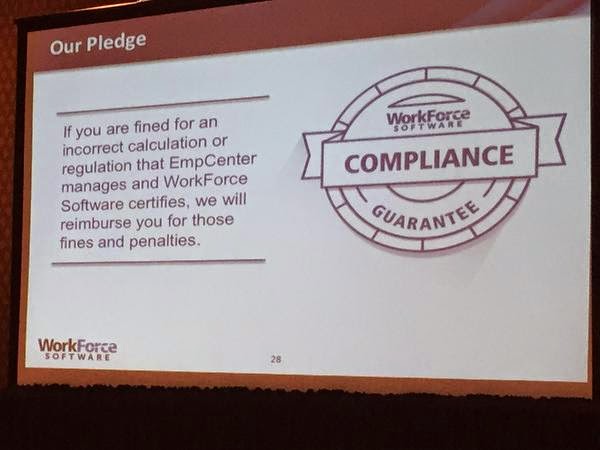 |
| The Workforce Software compliance guarantee (credit to +Mark Stelzner who sat much better to take pictures than me) |
Compliance – with a Guarantee – Basically Workforce Software sees itself as the ‘compliance tool’ in the hand of the HR professional. Workforce Software monitors legislation and makes sure it supports all necessary workplace time and labor rules from currently 400 legislative bodies in North America. That the vendor does this with confidence became clear as Workforce Software used the conference to announce a compliance guarantee. So if a Workforce Software client “gets fined for an incorrect calculation or regulation that EmpCenter manages and Workforce Software certifies, Workforce Software will reimburse the client for fees and penalties”. Customers were understandably excited about this guarantee. And kudos to Workforce Software for extending its level of service beyond working software (all software vendors do this) to uptime (all SaaS vendors do this) and to legislative compliance of its software in form of a guarantee (no vendor in the HCM space is doing this to my knowledge). So we may see the dawn of CaaS – Compliance as a Service, well done by Workforce Software to be at the forefront of this potential trend.
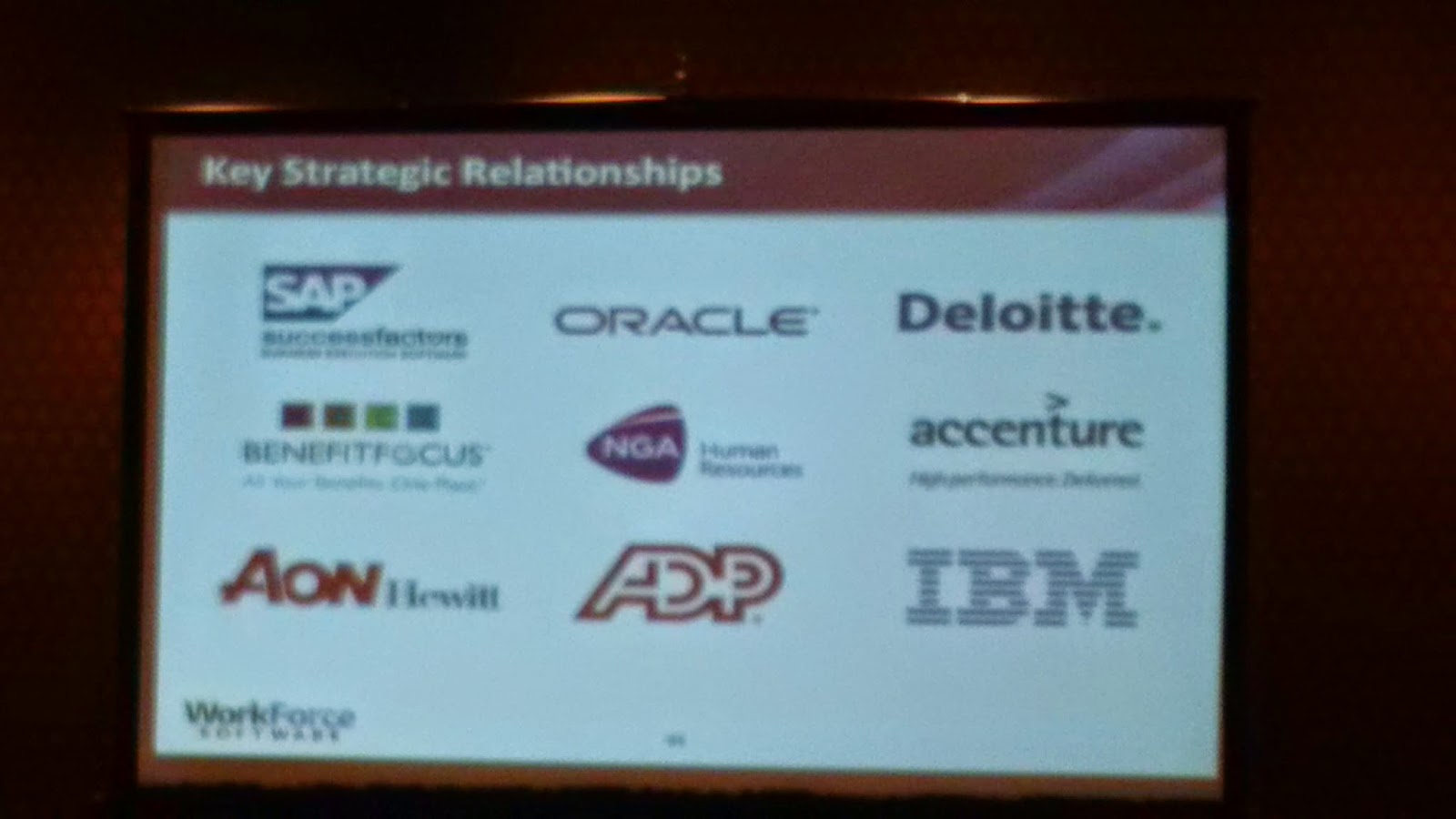 |
| Picture of the most prominent Workforce Software partners |
Partner Ecosystem – WFM usually cannot stand alone and lives with the integration with other key HR systems, most notably HR Core, Payroll and to a lesser extent Talent Management. As such Workforce Software needs to partner with these vendors and the vendor has done well in this space, having partnerships with SAP / SuccessFactors, Oracle and integration capabilities with ADP, Ceridian, CloudPay, Ultimate and Workday. Maintaining and operating these partnerships is always a tricky endeavor, especially when you are the ‘junior’ partner in the relationship that Workforce Software most of the time happens to be. But Workforce Software can play well on the partner field, e.g. the vendor competes with ADP in North America, but partners with ADP in Australia. Moreover it looks like Workforce Software is smart enough to stay out of the implementation business, partnering with e.g. NGA HR, Aon Hewitt, Aasoon and many more. Not getting involved too much into implementations has double benefits for software vendors – on the one side they can focus on product – on the other side they need to make product, documentation and training robust enough for the partners to succeed.
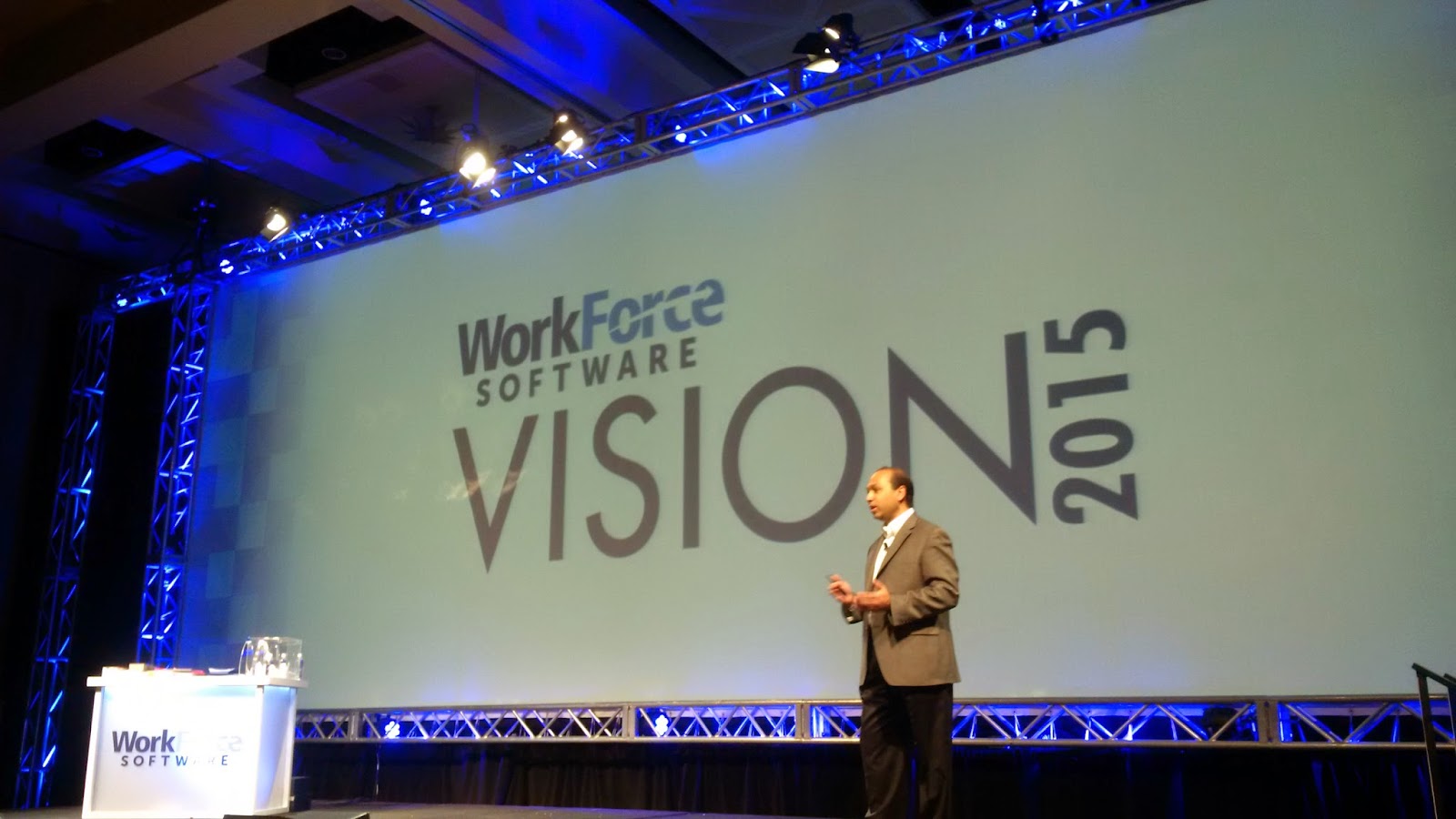 |
| Workforce Software CEO Koksi closes VisionWFS |
MyPOV
You can find more coverage on the Constellation Research website here.
Holger Mueller is VP and Principal Analyst for Constellation Research for the fundamental enablers of the cloud, IaaS, PaaS and next generation Applications, with forays up the tech stack into BigData and Analytics, HR Tech, and sometimes SaaS. Holger provides strategy and counsel to key clients, including Chief Information Officers, Chief Technology Officers, Chief Product Officers, Chief HR Officers, investment analysts, venture capitalists, sell-side firms, and technology buyers. Coverage Areas: Future of Work Tech Optimization & Innovation Background: Before joining Constellation Research, Mueller was VP of Products for NorthgateArinso, a KKR company. There, he led the transformation of products to the cloud and laid the foundation for new Business Process as a…...
Read morePublished
Author
