Results

Press Release: Constellation adds Award Winning Outsourcing Analyst Phil Fersht to Board of Advisors

Press Release: Constellation adds Award Winning Outsourcing Analyst Phil Fersht to Board of Advisors

Constellation Research, Inc., an award-winning research analyst and advisory firm helping clients navigate emerging and disruptive technologies, announced today the addition of Phil Fersht to the Board of Advisors.  Fersht is the founder and CEO of the acclaimed IT services and business process outsourcing analyst advisory organization, HfS Research. He will provide valuable guidance and insight to Constellation Research, Inc. analysts as their research deals with IT services, Business Process Outsourcing, shared services, and global business operations management.

Constellation Research’s Board of Advisors play a key role in shaping the research agenda and providing advice and guidance to its members. Board members bring significant industry experience, represent the leaders in their field, and serve in 6 to 12 month terms. These esteemed individuals:

  • Guide research direction
  • Advise on business strategy
  • Maintain an outside-in perspective
  • Deliver mentorship from seasoned professionals
  • Garner input from clients and prospects
  • Grow the constellation of experts
  • Identify new talent
  • Maintain and exude the Constellation values in public

Advisory Board members do not have a commercial relationship with Constellation nor are they represented by Constellation. Board members do not have fiduciary responsibility.

Phil Fersht is a recognized industry expert, practitioner, advisor and strategist across Business Process Outsourcing and global IT services.  Fersht’s services are often sought on complex industry-specific issues that impact how enterprises manage their global business operations. He was recently, for the second successive year, recognized as "Analyst of the Year 2011” by the Institute of Industry Analyst Relations (IIAR). This is the most prestigious global award for industry analysts in technology and services.  

Fersht has advised on more than 150 major outsourcing, shared services and offshoring engagements and consults regularly with senior operations and IT executives on their global sourcing strategies. Previously, Fersht led AMR Research’s (Gartner Inc) BPO and ITO practice. He also served as market leader for Deloitte Consulting’s BPO Advisory Services, where he led numerous outsourcing and offshoring advisory engagements with Fortune 500 enterprises. He also worked for outsourcing advisor Everest Group leading the company’s BPO research practice. Phil began his career at IT analyst IDC across its European and Asia/Pacific operations.

Phil is a frequent author and speaker on IT services, Finance, HR and Procurement Business Process Outsourcing trends and issues. He was named both an "FAO" and "HRO Superstar" by FAOToday and HROToday Magazines for 2005, 2006, 2007, 2008, 2009 and 2010 and was featured as the cover story for the December 2006 issue of FAOToday as one of the outsourcing industry's most prominent advisors. He was also nominated for “Advisor of the Year” at the FAOSummit 2008.  He was also recognized, in 2011, by Globalization Today (the official magazine of the International Association of Outsourcing Professionals) in their first ever "Powerhouse 25" list.

He speaks regularly at many leading industry conferences, which have included The Conference Board, NASSCOM, IDC Directions, the Sourcing Interests Group, the Shared Services & Outsourcing Network and the Council of Supply Chain Management Professionals. He is also a regular columnist for several industry publications, including Global Services Media, SSON, FAOToday and Finance Director Europe.

Phil received a Bachelor of Science, with Honors in European Business & Technology from Coventry University, United Kingdom and a Diplôme Universitaire de Technologie in Business & Technology from the University of Grenoble, France.

“Ray has consistently proven himself as a game-changing industry analyst with his unique and energetic approach to research and his prolific use of social media to communicate his insights to industry.  His vision for a collaborative and influential research model that engages the best and brightest in the technology industry is to be applauded, and it’s both a pleasure and privilege to serve on the Advisory Board for Constellation Research” stated Fersht

Constellation Research, Inc. CEO, R “Ray” Wang said, “Phil’s leadership over the past 3 years is evident by his customer base and following.  It’s important for the next generation analyst firms to work together. As the legacy analyst firms continue to deliver a substandard product, there is huge opportunity for synergies. Having Phil on our Board of Advisors is the first step to better coordination among the next gen analyst firms.” 


COORDINATES

Twitter@pfersht

HfS Research website: http://www.hfsresearch.com

?Blog: http://www.horsesforsources.com

LinkedIn: http://www.linkedin.com/in/pfersht

Geo: Boston, Massachusetts, USA

About HfS Research

HfS Research (www.HfSResearch.com) is the foremost global analyst advisory organization and peer research community, focused on helping enterprises make complex decisions with their business process operations, governance, IT services, outsourcing and shared services strategies.

HfS Research has rapidly developed an industry-leading reputation for providing the most compelling, in-depth research, benchmarking data and insight and boasts a huge global community of 65,000 opt-in research subscribers, which regularly partake in ongoing studies.  No other research entity has the real-time insight into ongoing business operations and outsourcing dynamics across industries, business functions and regions. 

In 2011, HfS was awarded Outsourcing, BPO and Services Analyst Firm of the Year by the International Institute of Analyst Relations (IIAR), the premier body of analyst-facing professionals, and runner-up for overall Analyst Firm of the Year. Led by recognized industry expert Phil Fersht, the HfS Research team is a multi-disciplinary group of analysts across North America, Europe and Asia/Pacific regions, with deep domain knowledge in business process outsourcing, information technology services and shared services strategies.

Launched in 2007, HfS Research's acclaimed blog Horses for Sources has more than 120,000 monthly visitors across the global services industry, and is widely-recognized as the leading destination for collective insight, research and open debate of industry issues and developments. The HfS LinkedIn community, The BPO and Offshoring Best Practices Forum, is thriving with over 15,500 industry professionals sharing views and information daily. You can access information about HfS at www.HfSResearch.com and on Twitter at www.twitter.com/horses4sources.

To learn more about HfS Research, please email [email protected]


ABOUT CONSTELLATION RESEARCH, INC.

*?Constellation Research is an award winning, specialty research and advisory firm that serves business leaders who seek to unleash the power of emerging and disruptive technologies.  Our analysts start by understanding the business objective, applying real world experience and insights, and then incorporating disruptive technologies and business models as appropriate.  We cater to board of directors and c-suite executives looking for an edge in business model and technology innovation.  Research outputs always provide an insightful buy-side point of view.

Why Your Mission Is Our Mission

In today’s business environment, the rate of change is not only constant, but also rapidly escalating.  New business models by upstarts disrupt competitors with increasing frequency in all industries and markets.  In just 10 years, even 5 years, or dare say 24 months, many established companies have been left vulnerable, beaten down, and toppled by new upstarts.  Why? Business leaders have been too slow to react to their customers and the changes happening in the societal, technological, environmental, economic, and political fronts.

In business models, products are now excuses to sell services.  Product innovation cycles have shortened from years to months to weeks.  On the work front, five generations in the workforce disagree on where to work, how to work, when to work, and why to work.  Add the current trend of consumerization of IT  to the pace of change and business leaders must strategically determine which new technologies should be considered.

Unfortunately, the legacy research analyst firms and advisory firms continue to fail their clients when faced with these new challenges. Why? Their myopic focus on an IT centric point of view ignores the realities of the market.  In fact, Constellation estimates that the average IT budget is down 5% year over year and at best up 2% among the most innovative companies.  However, tech spending is up on average 18 to 22% at the most innovative firms.  What’s happened? The buying power has shifted and business leaders increasingly take control of how they are applying technologies to their business while whittling down the corporate IT budget for operational efficiencies.

Why Your Success Is Our Objective

We’re business leader and business value focused. Constellation differentiates itself in the market in two ways by:

  • Focusing on the board room and C-suite point of view.  Constellation’s research addresses the needs of boards, CEOs, CFOs, CIOs, CMOs, CHROs, CPOs, CSCOs, and COOs.
  • Addressing the business problem first.  Research starts by addressing business value and then applying where disruptive and emerging technologies may play a role.

The result – Constellation serves as a coach and advisor to senior business leaders working on tough business problems including:

  • The future of work
  • Next generation customer engagement
  • Matrix commerce across the supply and demand chain
  • Digital marketing transformation
  • New organizational models including People-to People Networks
  • The new C-suite
  • Big data, decision systems, and information management
  • Business value frameworks and metrics for success
  • Energy management and green tech
  • Legacy technology optimization

We look forward to serving you with Insight, Inspiration, and Impact.

*Constellation Research, Constellation SuperNova Awards and the Constellation Research logo are trademarks of Constellation Research, Inc. All other products and services listed herein are trademarks of their respective companies.


Press Contacts:

Contact the Media and Influencers relations team at Press (at) ConstellationRG (dot) com? for interviews with analysts.


Sales Contacts:

Here’s how to reach our sales team:

Alexandre Mesquita

?Email: Alexandre (at) ConstellationRG (dot) com

Phone: +1 786.383.4241

Twitter: @amesquit


David Stanley?

Email: David (at) ConstellationRG (dot) com 

Office: +1.719.357.7826

?Twitter: @kiwigate


Avaya Flare - The Real Story is What's Under the Hood

Avaya Flare - The Real Story is What's Under the Hood

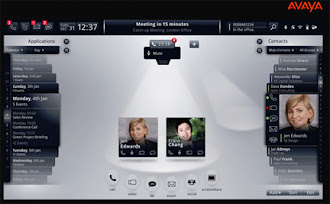
On 24 January, 2012, Avaya announced availability of Avaya Flare Communicator for iPad. At the same time, the company gave indications of when Flare Communicator would be available for Windows PCs as well as when the entire Flare Experience would be available on both devices.


Flare Communicator presently supports only a subset of the entire Flare Experience collaboration capabilities. However, by the end of the 2012, the entire Flare Experience will be available on Windows, iPad, and on Avaya's own Android-based tablet branded the Avaya Desktop Video Device.


The Flare interface is impressive, and having used it, I find it very intuitive and user friendly. What may be missed in all the excitement about Avaya Flare, however, is the underlying collaboration model that gives Flare its capabilities. This is a model in which every communication interaction is created from its inception as a conference supporting ad hoc, multimodal communications capabilities.

It is this unique way of looking at collaboration that makes Flare so compelling, giving it the ability to instantly set up and tear down IM, voice, video, or web collaboration with one or more parties. And that's not all. Users are able to create sub-conferences on the fly to allow breakout meetings or private chat sessions at will.

Avaya's collaboration model is itself an instantiation of the capabilities available through the Avaya Session Manager, the software that sets up SIP communications sessions and tears them down. Without this Session Manager, the Flare Experience could not have been built.

Fast forward several years into the future. I can imagine this communications model embedded into other applications and work flows, each with its own unique interface. The Flare Experience is only one possible interface that could be built using the underlying collaboration model and session manager. Many others could readily be built using web services through Avaya ACE.

Flare Communicator seems to have been long in the making, given that Flare Experience on the Android appeared clear back in September 2010; however, Avaya indicated that the solution had to be rebuilt almost from scratch to take advantage of the PC and iPad capabilities. Hence, the length of time developing and testing.

The Flare interface stimulates the mind through a clever and well designed GUI; however, understanding the underlying communication model and session management capabilities can excite the imagination with what could be in next gen CEBP and communications solutions.


New C-Suite Next-Generation Customer Experience Tech Optimization

Vendor Events - Webinar: Demystifying Enterprise Gamification

Vendor Events - Webinar: Demystifying Enterprise Gamification

Constellation Research, Inc. believes that by 2013, more than 50 percent of all social business initiatives will include an enterprise gamification component. Brands and enterprises know that motivation and incentive programs can help produce revenue and productivity gains among internal users and external communities. These business leaders also know it can be time-consuming and difficult to streamline, manage and implement such programs. Join Constellation Research, Inc. CEO, R "Ray" Wang for an exploration on how organizations can leverage game mechanics to turbo charge engagement, loyalty, and profitability.

When: February 1, 2012 at 10:30am PST

Register here.

Vendor Events: Webinar & Putting Big Data Streaming and Analytics to Work

Vendor Events: Webinar & Putting Big Data Streaming and Analytics to Work

Big Data Tuesday Webinar

Date:
Tuesday, February 7, 2012
Time:
9:00am  PT / 12:00pm ET

Real-time analytics on big data is one of the hot topics for many organizations. Given that the traditional information infrastructure for analytics has evolved from a batch-oriented approach, it is challenging for IT to augment the existing environment to meet the low latency and reliability requirements. It demands a new approach: highly scalable, real-time data acquisition and availability with a publish/subscribe messaging infrastructure and solution accelerators.

Your business can gain faster insight against petabytes of data at lower cost, risk and complexity across diverse initiatives including compliance, risk management, trade analytics, and real-time monitoring.

Join Ray Wang & Neil Raden of Constellation Research and Big Data analytics experts from Greenplum – A Division of EMC and Informatica for the kick-off session of the Big Data Tuesdays Webinar Series to learn:

  • What big data streaming is and why your business would care
  • Analytics requirements you need to consider to tackle big data
  • How to evolve your current architecture
  • Benefits to expect with low latency, high volume big data analytics

REGISTER HERE


Data to Decisions Innovation & Product-led Growth Leadership Chief Experience Officer

IBM To Offer Hosted Sametime and Connections?

IBM To Offer Hosted Sametime and Connections?

In a session titled, “Private or Public? Take Your Social Business to the Cloud with IBM Sametime and IBM Connections”, IBM spoke about *possible* plans to make cloud versions of Sametime and Connections. They emphasized that they were not announcing anything definitive, but you can bet there is some competitive activity behind this non-announcement.
It turns out that if an offering does materialize that Sametime Unified Telephony will also be included. IBM has identified “cores” of software that can be virtualized and provided in the cloud. Possible cores would include:

·         The Sametime Community Server
·         Connections Server
·         Sametime Unified Telephony TAS Server
·         Sametime Unified Telephony TAC Server
·         A/V Multiway Server (providing Sametime Meetings Server and Conferencing)
·         Audio/Video Infrastructure (provides SIP proxy/registrar, SIP Edge Proxy, TURN Server)


Deployment options include 1) On-premises (the traditional deployment), 2) Public shared cloud (multi-tenant environment), 3) Public dedicated or Private cloud (virtual instances in public data centers), or 4) Hybrid (a combination of these previous three to allow for a customized, optimized deployment).

Possible customers would be service providers who would offer these capabilities either as a hosted solution or as a dedicated offering. The most compelling offerings would come from those who are also network service providers who can take advantage of Sametime Unified Telephony’s capabilities.
This ties in neatly with IBM’s initiatives to get mobile carriers to support Sametime Unified Telephony as a call routing engine. The mobile carrier would intercept outbound calls from a person’s mobile device at the MCD and route the call signaling to the Sametime Unified Telephony server to apply call routing, least cost routing, toll by-pass, and other routing logic to the call. In addition, this would provide single number reach for people because inbound calls either to a person’s corporate number or directly to the mobile device would be directed to the Sametime Unified Telephony server as well. In this scenario, a user could also do call redirect to a preferred device.

Although no announcement was made, I suspect that this capability will be forthcoming in 2012 and that it will likely be made available first by mobile carriers. IBM Global Technology Services may also offer it to select customers.
New C-Suite Next-Generation Customer Experience Tech Optimization

Dolby Enters the Audio Bridging Market

Dolby Enters the Audio Bridging Market


This week at Lotusphere I experienced Dolby's forthcoming audio conferencing solution firsthand. Dolby is applying its renowned signal processing technology along with a proprietary wideband audio codec to the audio conferencing market. This is the same technology the Dolby uses in its gaming solutions which are used by millions of users simultaneously.
 
A distinguishing feature of this technology is that it uses off the shelf servers, which gives Dolby the potential to completely disrupt the current audio conferencing bridging market. A single server can handle up to 2,500 users, and adding more users is simply a matter of provisioning additional servers. Clearly there must be some logic as to which server to host a conference on, but Dolby has that software.

The cost implications for conferencing service providers are enormous, with the possibility of an order of magnitude cost reduction in conferencing infrastructure costs. Dolby has not announced what it intends to charge for its solution.
 
In addition to providing a wideband audio experience, Dolby's solution provides spatial audio so that a participant can detect the location of the speaker, much like one would experience when sitting at a conference table. Dolby says that each  talker is given a "unique space", allowing listeners to understand what is being said even if multiple people speak over one another. This is a very different mixing model than is traditionally done in audio conferencing bridges in which the bridge detects the loudest speakers and then mixes their voices together, which makes it much more difficult to understand when multiple people are speaking.
 
The noise cancellation in the system is outstanding. In the demo, one of the rooms had a noisy college basketball game displayed on a television set. Those on the far end listening to the call were unable to hear the basketball game at all.
 
If there's a fly in the ointment, it comes from the fact that participants require a stereo headset or stereo speakers in order to obtain all the benefits the Dolby's audio conferencing system can provide. Stereo audio is necessary to give the spatial orientation effect for locating the  participants. It's not clear to me that users would be willing to buy a stereo headset to use this system. Most of the Bluetooth headsets in use today for telephones and mobile phones are mono only. A mono headset would still get the benefit of the noise cancellation and the wideband audio codec, but the spatial audio capability would not be present.
The demo we saw was using the regular IBM Sametime Connect client with the Dolby audio bridge simply replacing Sametime's own media server. The implication is that Dolby's audio solution can integrate in with other systems. There does need to be some type of a gateway function in order to convert the audio from codec embedded within standard SIP to Dolby's proprietary codec. PSTN users will be able to call in to the bridge through gateway provided by third parties.
Dolby intends to license the technology to conferencing service providers and others who will embed it in their own systems.
 
After participating in the demo, in order to get a true sense of how good the system actually is, I would need to have a setup in which I could hear side-by-side 1) a regular audio conference, 2) an audio conference using a different wideband codec, and 3) an audio conference using Dolby's technology.

I have heard some wideband audio that is very, very good; hence, to really judge how good Dolby’s audio is, I would need to hear it in side-by-side comparisons with these other options. That being said, my initial impressions are quite positive, and the audio conferencing market may be in for quite a shakeup given that Dolby has a reputation big enough and the resources required to get the product to market.

New C-Suite Next-Generation Customer Experience Tech Optimization

Executive Profiles: Disruptive Tech Leaders In Social Business: Randy Guard, SAS Institute

Executive Profiles: Disruptive Tech Leaders In Social Business: Randy Guard, SAS Institute

Welcome to an on-going series of interviews with the people behind the technologies in Social Business.  The interviews  provide insightful points of view from a customer, industry, and vendor perspective.  A full list of interviewees can be found here.

Randy Guard – Vice President of Sales Development and Product Management, SAS Institute

Biography

As Vice President of Sales Development and Product Management, Randy Guard leads the product strategy and business development efforts across SAS. Randy and his Product Management teams work closely with SAS’ Research and Development organization to define and manage product road maps based on market needs and customer input. Randy’s Global Practice teams drive revenue growth by delivering market-driven offerings and supporting strategic customer engagements. These teams of product and industry domain experts help customers and partners apply SAS software to solve their critical business problems.

Before joining SAS in 2000, Randy served as Manager of e-Business Solutions for BuildNet, a provider of builder management solutions to the residential and commercial building industry. He also served as Regional Director for Spectrum Technology Group, specializing in building e-business and data warehousing solutions. Randy began his career with Andersen Consulting (Accenture), where he led systems development and implementation efforts for clients across financial services, retail and consumer packaged goods, utilities and public sector industries.

Randy holds a bachelor’s degree in electrical engineering from Duke University.

The Interview

1. Tell me in 2 minutes or less why Social Computing is changing the world for your customers.

Randy Guard (RG): From our standpoint, social computing and social media present a completely new set of interactions. These interactions range from direct to indirect and include customers, prospects, and even competitors. Social computing is more than just a set of new data or just another channel. Our early customers and prospects are truly dealing with an exposure dilemma and figuring out how to best engage in this new social world, and integrate social computing in many aspects of their business.

Valued customers/prospects are talking online about the companies and products they like or dislike. In many cases, the company is not present in the dialog and definitely not leading the conversation. Consequently, a brand’s reputation is out there in the open and vulnerable. Everything that they have spent years and years building now has a different level of exposure. More importantly, a company has less control over the brand reputation now. They have to develop a good listening habit and build an environment where they can influence and support. Companies need to be able to answer new questions like … How do they understand what’s going on in the social world? Whats’ the volume of activity? And who are the influencers? At SAS there is heavy emphasis on the analytics component to understanding social media – more than just volume, we like to understand influence and the dynamics of the social network itself.

So, organizations now have to figure out how to more effectively engage their customers immediately given the accelerated maturity cycle that exists in a social computing world. Engagement must account for a diverse set of sources such as social media blogs, forums , and company hosted environments … and all of this across the broad spectrum of computing devices.

The social view is not 2 to 3 or 4 years out. These fundamental shifts are underway now. Organizations can expect very rapid change amidst a new set of interactions and increased level of exposure. As we talk to customers about social computing and social media analysis they can all rapidly comprehend the impact, and the value of being present and engaged in this new set of interactions.

2. What makes social computing disruptive?

(RG): Ray, as you know, the content in social is all about you or your product or service, and it is not owned by the company. It truly comes from the marketplace. Everyone wants feedback, and in some cases companies can’t deal with the deluge. Two things drive the disruptive nature. One is the speed in which you get feedback. This is achieved when people talk about your product or service, and quickly build momentum (both positive and negative). The other dimension is the pervasiveness of the information and how it travels through the network. Pre-social computing, you might have a bad experience at a retail store. You might have told your friends and family. Now that same feedback and negative experience not only can be commented on to thousands, but it can also be shared in audio and video. Suddenly, a whole new form of influence emerges and propagates very quickly. Now, an individual store issue with a single customer can quickly evolve into a corporate or a brand issue. Again, it works on the positive side too. The potential customer can see how an average person is passionate about a company’s product, and that can make a huge impact in sales. Customer testimonials are often more genuine and impactful than those from a corporate spokesperson or ad.

3. What is the next big thing in Social Business software?

(RG): Integrating social content with enterprise data is critical to go to the next level. Right now many of the initial gains are isolated successes to “listening” and some are focused 2-way engagement. We’ll continue to evolve with integrated social content and analysis that ties back to even more enterprise systems. Our first level of this integration has already driven value to our customers plus added new features to coming releases. Listening in the social world is obviously important, but then you need the right engagement plan to address the situation. For example, we have seen issues in a company’s supply chain (e.g. an increase in backorders) drive a rapid spike in negative sentiment in the social world. The product was positive in the eyes of the customer, but the availability issue was getting massive negative attention. They quickly needed to put out a message to the customers plus added some promotions on shipping, and alternative products, etc. They also needed to fix the backorder issue asap.

4. What are you doing that’s disruptive for Social Computing?

(RG): From a SAS point of view, we have done several things. We start by leveraging our analytic capabilities. This spans from managing the massive amounts of data and categorizing it, determining sentiment, and even visually associating it with social networks and the key influencers. This wasn’t around a few years ago. Just getting the data is one thing. Analyzing and understanding it is another aspect and this is what really drives the value. The goal is to distill massive amounts of data for the business user – we call it putting the data into business context. Success requires good analytical processes, like sentiment analysis, influence scoring, and content categorization. The bottom line is that we make it approachable for the business users to better accomplish their goals of product delivery, customer service, competitive analysis, etc.

We leverage our world class analytics and embed them into the applications. You don’t have to be a programmer to analyze and act on social media data. You can point to data sources like blogs and forums and company web sites and a variety of data streams, and we can put all this information into context. Another key is that we provide a highly interactive visual interface for the users. Both on the web and on mobile devices. We have apps built for tablet devices that are part of our overall social media offering set.

5. Where do you see technology convergence with Social?

(RG): We definitely see convergence with mobile, big data, and cloud. While users do expect valid and cleansed data, more importantly, users want to get the data (and analysis) in front of them at the right time (i.e. whether they are in the office or on the go) and be able to take action. Social sets a new bar of user experience. We’ve moved beyond the expectation of building large user manuals for this kind of business application. The applications are intuitive and ready to “walk up and use”. In addition, big data plays a role as we capture information that is persistence or in a stream and in many forms (structured, semi-structured, text, video, etc). The data volumes are enormous and continue to grow, therefore the analytical loads are getting bigger as well.

6. If you weren’t focused on Social Computing what other disruptive technology would you have pursued?

(RG): I’m sure that I would be working in the area of renewable energy. A combination of strong personal interest and a background in electrical engineering, I try to keep up with the innovation in this space … from wind, to solar and fuel cell technologies. From a business aspect, there is a pretty impressive start up community in this area and some very cool technologies out there and under research.

7. What’s your favorite science fiction gadget of all time?

(RG): Ray, that’s easy the Star Trek transporter, though I’m sure that’s a popular one. I’m also quite fond of the neuralizer from Men In Black, used appropriately for meetings of course!

(Photo courtesy: Men In Black)

Your POV

What do you think? Got a question for Randy?  Add your comments to the blog or reach me via email: R (at) ConstellationRG (dot) com or R (at) SoftwareInsider (dot) com.

The Tech Vendor series is closed.  To be considered for the Business and Tech Innovators series, please reach out to Elaine (at) ConstellationRG (dot) com.

Reprints

Reprints can be purchased through Constellation Research, Inc. To request official reprints in PDF format, please contact sales (at) ConstellationRG (dot) com.

Disclosure

Although we work closely with many mega software vendors, we want you to trust us. For the full disclosure policy, see the full client list on the Constellation Research website.

Copyright © 2011 R Wang and Insider Associates, LLC All rights reserved.


Tech Optimization Innovation & Product-led Growth Leadership Chief Experience Officer

Press Release: Constellation Research, Inc. adds Unified Communications Expert, E Brent Kelly as VP and Principal Analyst

Press Release: Constellation Research, Inc. adds Unified Communications Expert, E Brent Kelly as VP and Principal Analyst

Salt Lake City, Utah - January 18, 2012

9:47 AM (GMT -8:00) Pacific Standard Time

Constellation Research, Inc., an award winning, specialty research and advisory firm that serves business leaders who seek to unleash the power of emerging and disruptive technologies, announced today that Dr. E. Brent Kelly has joined as a Vice President & Principal Analyst. He will focus on the unique intersection of Unified Communications, Collaboration, Social Business, and Mobility serving buy and sell-side clients by offering an unbiased, holistic view of the trends and transitions impacting the business communications and collaboration marketplace.


Dr. Kelly is an experienced analyst bringing years of experience in the communications and collaboration space to Constellation Research, Inc. Previously, while serving as principal analyst at KelCor, Inc. and simultaneously as a partner at Wainhouse Research,  Dr. Kelly was the primary author of all of Wainhouse Research's unified communications reports and forecasts, building Wainhouse into one of the premier unified communications analyst firms in the world. His research has been published in BCR Magazine, NoJItter.com, and the Wainhouse Research Bulletin. He has produced numerous UC market forecasts and vendor reviews, and has compiled research reports on every aspect of unified communications, focusing most recently on the emerging cloud-based unified communications solutions market.

Kelly will also bring to Constellation Research, Inc. hands on industry experience as a developer and marketer of highly technical products. Previously, Kelly worked as the VP of Marketing for Sorenson Vision, an early innovator in the IP communications space focusing on voice, video, and data collaboration. He was also part of the Schlumberger team that built the devices Intel used to test their Pentium microprocessors. Kelly also led teams developing real-time data acquisition and control systems, and expert design systems in several Schlumberger Oil Field Services companies.

He has worked as a research engineer for Conoco, implementing more efficient mathematical convergence methods for oil reservoir simulators, and as a process engineer for Monsanto.

Kelly’s research will explore key business themes such as “Technology Optimization”, “Next Gen Customer Engagement” and the “Future of Work”. Coverage areas will include:


  • Unified communications – emphasizing on cloud-based offerings
  • Social business
  • Collaboration
  • Mobility’s effect on customers and the workforce


Kelly will produce research reports, research notes (quarks), market forecasts, end user surveys, thought leadership pieces, case studies, and presentations all designed to inform, educate, and assist clients with strategy, tactics, market approaches, and end user attitudes to help each identify and capitalize on opportunity. He will help buy-side clients understand options, strategies, competitive vendor offerings, and best practices engaging his collaborative process engineering expertise, all designed to improve organization efficiency while increasing top line revenues or bottom line profits.

"The future of work and next gen customer experiences all depend on key technologies such as unified communications and social business.  Brent's extensive expertise in collaboration strategy and understanding the tradeoffs buyers must make in selecting solutions will greatly add to the growing demand from our clients.  I'm looking forward to having Brent on our team," said R "Ray" Wang, CEO and founder of Constellation Research, Inc.

Kelly said, ”Constellation Research, Inc. is emerging as a source for thought leadership and excellence, engaging sell-side and buy-side clients through thought provoking and actionable research and advice. Ray Wang has built an incredible organization, and I am very pleased to join it.”

Please welcome Dr. E Brent Kelly to the Constellation Research family!


COORDINATES

Twitter: @ebkell
Geographical Location: Salt Lake City, Utah, USA


ABOUT CONSTELLATION RESEARCH, INC.*?Constellation Research is an award winning, specialty research and advisory firm that serves business leaders who seek to unleash the power of emerging and disruptive technologies.  Our analysts start by understanding the business objective, applying real world experience and insights, and then incorporating disruptive technologies and business models as appropriate.  We cater to board of directors and c-suite executives looking for an edge in business model and technology innovation.  Research outputs always provide an insightful buy-side point of view.

Why Your Mission Is Our Mission

In today’s business environment, the rate of change is not only constant, but also rapidly escalating.  New business models by upstarts disrupt competitors with increasing frequency in all industries and markets.  In just 10 years, even 5 years, or dare say 24 months, many established companies have been left vulnerable, beaten down, and toppled by new upstarts.  Why? Business leaders have been too slow to react to their customers and the changes happening in the societal, technological, environmental, economic, and political fronts.

In business models, products are now excuses to sell services.  Product innovation cycles have shortened from years to months to weeks.  On the work front, five generations in the workforce disagree on where to work, how to work, when to work, and why to work.  Add the current trend of consumerization of IT  to the pace of change and business leaders must strategically determine which new technologies should be considered.

Unfortunately, the legacy research analyst firms and advisory firms continue to fail their clients when faced with these new challenges. Why? Their myopic focus on an IT centric point of view ignores the realities of the market.  In fact, Constellation estimates that the average IT budget is down 5% year over year and at best up 2% among the most innovative companies.  However, tech spending is up on average 18 to 22% at the most innovative firms.  What’s happened? The buying power has shifted and business leaders increasingly take control of how they are applying technologies to their business while whittling down the corporate IT budget for operational efficiencies.

Why Your Success Is Our Objective

We’re business leader and business value focused. Constellation differentiates itself in the market in two ways by:

  1. Focusing on the board room and C-suite point of view.  Constellation’s research addresses the needs of boards, CEOs, CFOs, CIOs, CMOs, CHROs, CPOs, CSCOs, and COOs.
  2. Addressing the business problem first.  Research starts by addressing business value and then applying where disruptive and emerging technologies may play a role.

The result – Constellation serves as a coach and advisor to senior business leaders working on tough business problems including:

  • The future of work
  • Next generation customer engagement
  • Matrix commerce across the supply and demand chain
  • Digital marketing transformation
  • New organizational models including People-to People Networks
  • The new C-suite
  • Big data, decision systems, and information management
  • Business value frameworks and metrics for success
  • Energy management and green tech
  • Legacy technology optimization

We look forward to serving you with Insight, Inspiration, and Impact.

*Constellation Research, Constellation SuperNova Awards and the Constellation Research logo are trademarks of Constellation Research, Inc. All other products and services listed herein are trademarks of their respective companies.


Press Contacts:

Contact the Media and Influencers relations team at Press (at) ConstellationRG (dot) com? for interviews with analysts.


Sales Contacts:

Email: Sales[at]ConstellationRG[dot]com


News Analysis: Tidemark Gains $24M in Series C Funding, Redpoint Ventures Leads Round

News Analysis: Tidemark Gains $24M in Series C Funding, Redpoint Ventures Leads Round

Big Data, Cloud Based Performance Apps, Drive Interest In Additional Investment

Redwood City, California based Tidemark announced that it raised $24 M in Series C funding from Redpoint Ventures, Greylock Partners, Andreessen Horowitz, and Dave Duffield.  Key points include:

  • Redpoint Ventures leads the round and Geoff Yang joins the board. To date Tidemark has raised $35M with $6.3M in its Series A and approximately $5M in its Series B.  Tidemark will add Geoff Yang, a founding partner of Redpoint Ventures to the company’s board of directors.

    Point of View (POV): Redpoint Ventures has had a great history with investments in enterprise software and cloud computing.  Success stories include Concur, Documentum, Fanfare, FileNet, Heroku, Metreo, Polycom, Responsys, Sybase, and Zimbra.  More importantly, current board of director Phil Wilmington, the former CEO of OutlookSoft and co-CEO of PeopleSoft, has been named Executive Chairman of the company.
  • Funding will enable Tidemark to expand both sales efforts and expand initial EPM use cases. Today Tidemark offers a suite of EPM applications that include metrics management; strategic, financial, and operational planning, budgeting, and forecasting; and profitability modeling.  With additional funding, Tidemark plans to build out its enterprise sales force and target the growing market for business intelligence systems that address both big data and real-time data driven decision management.

    Point of View (POV): Tidemark’s solution provides forward looking analysis and real-time performance management.  While the first set of use cases address the cloud based enterprise performance management market, the core software provides a key foundation in bringing applications away from transactional systems and into a new world of engagement and experience systems.  Key features include parallelized in memory analytics, native cloud data integration, native HTML 5 interface, mobile first UI, and real-time collaboration.

The Bottom Line For Customers: Tidemark Brings Real-Time Data Driven Decisions To The Cloud

The rise of big data, aging BI systems, and the need for cloud based approaches lead many organizations to rethink their business intelligence (BI) and business analytics strategies.  As BI continues to evolve from fragmented and historical reporting to pervasive, predictive, and real-time decision support, an organization’s success increasingly depends on the support for an expanding information matrix.  Tidemark represents the next class of solutions that can address the big data challenge in the cloud, while delivering real-time and actionalbe solutions that are easy for line of business users to consume in a social, mobile, and collaborative fashion.  Consequently, organizations such as Acosta and US Sugar are already moving in this direction.

The Bottom Line For Technology Vendors: Expect Investors To Increase Funding For Enterprise Class Solutions

The buzz and rage over the past three years has focused on consumer plays in the valley.  However, activity in the past six months suggest that investors are making the shift to enterprise focused start-ups.  Why? With 1 out of every 1000 consumer plays making a successful exit, the pivot to enterprise appears to be a safer and less crowded bet.  Investors and enterprise class technology companies can expect 2012 to be an exciting year of mergers, acquisitions, investments, and IPO’s.

Your POV.

Are you ready for next gen analytical apps? If you are an existing EPM user, what will make you make the switch? Are your current applications cutting it?  Got a question?  Add your comments to the blog or reach me via email: R (at) ConstellationRG (dot) com or R (at) SoftwareInsider (dot) com.

Related Research:

Reprints

Reprints can be purchased through Constellation Research, Inc. To request official reprints in PDF format, please contact sales (at) ConstellationRG (dot) com.

Disclosure

Although we work closely with many mega software vendors, we want you to trust us. For the full disclosure policy, see the full client list on the Constellation Research website.

Copyright © 2012 R Wang and Insider Associates, LLC All rights reserved.


Data to Decisions Innovation & Product-led Growth Leadership Chief Experience Officer

Geography More Important than Industry in IT Salaries

Geography More Important than Industry in IT Salaries

Over at Computer Economics, we've just published our 2012 IT Salary Report, as we've been doing for over 20 years.

The headline this year is that IT workers in the U.S. will only receive a 2.8% pay increase, at the median, as shown in the Figure nearby. Even organizations at the 75th percentile are budgeting for only a 3.0% wage increase for IT professionals. That lags well behind the 3.4% rise in the Consumer Price Index for the 12-month period through November 2011.

A short summary of these top line trends can be found a post on the Computer Economics website.


Influence of Industry Sector on IT Pay Scales

Although the general trend for U.S. IT salaries is interesting, what I find more interesting is an analysis of factors that affect IT salaries. After we published this report this morning, we received a media inquiry from a reporter covering healthcare IT. She wanted to know, did we have any data on IT salaries specific to the healthcare industry?

Fortunately, this year for the first time, we provided an analysis of IT salaries by industry sector, based on data we acquired from the U.S. Bureau of Labor Statistics. These "pay relatives" by industry sector complement those that we also provide for over 400 metropolitan areas.

So, to answer her question directly: according to the industry sector data, IT compensation in the healthcare sector is about 82% of the national median. For example, if you are a desktop support technician in the healthcare industry, you can expect to make only 82 cents on the dollar, compared to desktop support personnel nationwide.

A Misleading Statistic

These "pay relatives" by industry sector can be misleading, however. In this example, healthcare organizations tend to be located in all metropolitan areas, both urban and rural, that vary widely in their cost of living. Other industries--financial services firms for example--tend to be concentrated in large metropolitan areas, like New York, Boston, and San Francisco, which have higher cost of living indexes. Low and behold, when we look at the pay relative for the finance and insurance sector, we see that it is 104% of the national median.

So, in our opinion, IT workers in financial services firms on average across the U.S. are paid more than their counterparts in healthcare organizations, not because financial services firms pay more, but because they tend to be located in metropolitan areas with higher costs of living.

Implications for IT Managers

Therefore, if you are using the Computer Economics salary tables to evaluate pay scales in your organization, you are better off to put most of your emphasis on the geographic cut of the data than the industry sector cut.

There are exceptions to this rule, of course. For example, business analysts or applications developers with experience implementing electronic medical records are in high demand right now. Healthcare organizations will likely need to pay a premium to recruit and retain IT professionals with this experience. Likewise, financial institutions are likely to be at the top of the pay scale for IT security professionals with experience in financial transaction processing environments. In the applications area, IT management, business analysis, and other business-oriented positions, industry-specific experience almost always commands top dollar.

But for most other IT positions, such as data center operations, system administration, help desk, desktop support, and other jobs that are not highly industry-specific, consider the geographic dimension as the most important in benchmarking IT pay scales. Essentially, if the person holding the job can move from one industry to another, with little or no retraining, the pay scale for that job is highly dependent on the geography, not the industry.

A full description of the Computer Economics 2012 IT Salary Report, with free sample pages is available.

Related Posts

IT Budgets vs. Tech Industry Spending: What's the Difference?

Tech Optimization