Constellation Research Releases Details of New Research Theme – Technology Optimization
Constellation Research Releases Details of New Research Theme – Technology Optimization
Constellation Research, Inc. analysts Charles Brett, Alea Fairchild and Frank Scavo to advise CIOs seeking to invest in innovative technology by increasing efficiency and reducing costs of existing systems.
Constellation Research Inc., a next-generation research analyst and advisory firm helping clients achieve business value from emerging and disruptive technologies, released the details of a new research theme today: Technology Optimization.
Technology Optimization overview
New economic realities and shrinking IT budgets necessitate that IT organizations become better at justifying new projects, more efficient in delivering IT services, and smarter in adopting new technologies that can deliver business value while reducing costs. The Technology Optimization theme will provide research and advisory services to CIOs that are seeking to invest in fostering innovation in the organization and gaining strategic advantage—all while operating within the confines of limited IT budgets.
Focus on the CIO
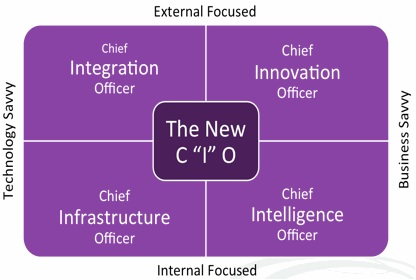
Over the past decade, the introduction of disruptive technologies meant that the CIO would fulfill the role of not only the “Chief Information Officer” but also the “Chief Integration Officer,” the “Chief Innovation Officer,” the “Chief Infrastructure Officer” and the “Chief Intelligence Officer.” Technology Optimization research and advisory services, while beneficial to the entire C-suite, provide research of particular benefit to CIOs as they seek to perform the aforementioned roles.
Technology Optimization team leads
Constellation's Technology Optimization research theme will be led by three Vice Presidents and Principal Analysts:
Charles Brett, whose expertise includes mobility, virtualization, data storage factors, and software/middleware integration and infrastructure.
Alea Fairchild, who will focus on IT service management, cloud computing and compliance, privacy and identity management, and platform infrastructure management.
Frank Scavo, who covers IT strategy, IT budgeting and planning, application portfolio optimization, software-as-a-service, business case development and enterprise software vendor selection. ?
Comments on the news:
“One of our focal points is on consolidation and efficiency of IT resources so the CIO can drive organizational innovation”, said Alea Fairchild. “With network optimization still underway, advances in data center management automation and better utilization of resources through system virtualization are aiding the CIO’s efforts. I am pleased to be sharing research activities with Frank and Charles in this regard.”
"With our forecast for limited IT budget increases this year and next, technology optimization is really critical for CIOs to free up money for innovation," said Frank Scavo. "I'm excited to be working with Charles and Alea in identifying opportunities up and down the technology stack to become more efficient and effective in fostering innovation."
Current reports under Constellation's Technology Optimization research theme can be found on the firm's website. In addition, a free webinar is available: “Eight Trends In Technology Optimization for 2012”.
Eight Trends in Technology Optimization for 2012
ABOUT CONSTELLATION RESEARCH, INC.
*?Constellation Research is an award winning, specialty research and advisory firm that serves business leaders who seek to unleash the power of emerging and disruptive technologies. Our analysts start by understanding the business objective, applying real world experience and insights, and then incorporating disruptive technologies and business models as appropriate. We cater to board of directors and c-suite executives looking for an edge in business model and technology innovation. Research outputs always provide an insightful buy-side point of view.
Why Your Mission Is Our Mission
In today’s business environment, the rate of change is not only constant, but also rapidly escalating. New business models by upstarts disrupt competitors with increasing frequency in all industries and markets. In just 10 years, even 5 years, or dare say 24 months, many established companies have been left vulnerable, beaten down, and toppled by new upstarts. Why? Business leaders have been too slow to react to their customers and the changes happening in the societal, technological, environmental, economic, and political fronts.
In business models, products are now excuses to sell services. Product innovation cycles have shortened from years to months to weeks. On the work front, five generations in the workforce disagree on where to work, how to work, when to work, and why to work. Add the current trend of consumerization of IT to the pace of change and business leaders must strategically determine which new technologies should be considered.
Unfortunately, the legacy research analyst firms and advisory firms continue to fail their clients when faced with these new challenges. Why? Their myopic focus on an IT centric point of view ignores the realities of the market. In fact, Constellation estimates that the average IT budget is down 5% year over year and at best up 2% among the most innovative companies. However, tech spending is up on average 18 to 22% at the most innovative firms. What’s happened? The buying power has shifted and business leaders increasingly take control of how they are applying technologies to their business while whittling down the corporate IT budget for operational efficiencies.
Why Your Success Is Our Objective
We’re business leader and business value focused. Constellation differentiates itself in the market in two ways by:
- Focusing on the board room and C-suite point of view. Constellation’s research addresses the needs of boards, CEOs, CFOs, CIOs, CMOs, CHROs, CPOs, CSCOs, and COOs.
- Addressing the business problem first. Research starts by addressing business value and then applying where disruptive and emerging technologies may play a role.
The result – Constellation serves as a coach and advisor to senior business leaders working on tough business problems including:
- The future of work
- Next generation customer engagement
- Matrix commerce across the supply and demand chain
- Consumerication of IT and the new C-suite
- Big data, analytics, and performance management
- Legacy technology optimization and innovation
- Digital marketing transformation

We look forward to serving you with Insight, Inspiration, and Impact.
*Constellation Research, Constellation SuperNova Awards and the Constellation Research logo are trademarks of Constellation Research, Inc. All other products and services listed herein are trademarks of their respective companies.
Press Contacts:
Contact the Media and Influencers relations team at Press (at) ConstellationRG (dot) com? for interviews with analysts or call +1.650.918.6619
Sales Contacts:
Here’s how to reach our sales team:





 Alan Lepofsky, backed by almost two decades of experience at IBM and Socialtext, serves as Constellation’s resident social business and enterprise collaboration expert. Alan will provide research and advisory services centered around the technological and cultural changes that are impacting the way people author content, share knowledge and engage with both internal and external communities. His research will educate organizations on how they can enhance their core business processes with social features, empowering employees to get work done more efficiently and effectively.