


Apple's new Siri AI highlights capex-light approach
Apple unveiled its revamped Siri, which is powered in part by Google Gemini, and may finally have an AI story via Apple Intelligence and Siri AI for real. Yes, Apple has lagged on the AI front, but there's a strong argument to be made that the company's capex light AI strategy is a winner.
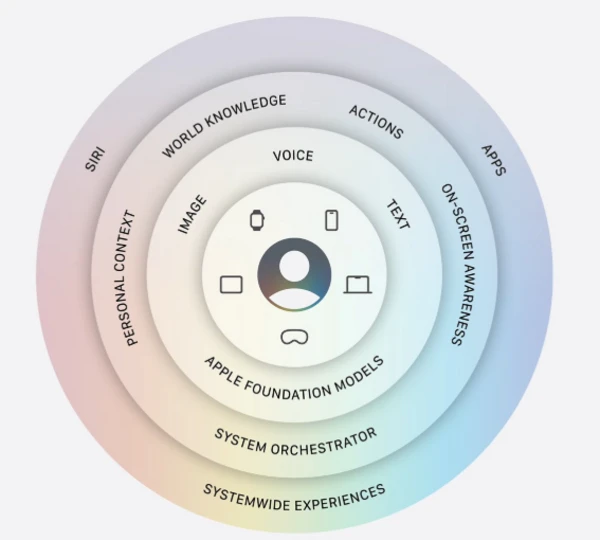
Is Apple going to be an AI juggernaut? Probably not. But it continues to own its experience layer, rents AI expertise and keeps its role as toll collector for AI behemoths. At WWDC 2026, Apple highlighted a standalone Siri app, a complete overhaul and an architecture that blends Apple's foundation models and Google Gemini.
Bottom line: The new Siri is a big catch-up play and Siri AI looks good enough. Remember the path of least resistance in the Apple ecosystem is still Siri. And perhaps more importantly, Apple has spent over three years on capex what the hyperscalers burn through in a month or two. If Siri AI is good enough, Apple will have acquired AI parity on the cheap.
Here's a look at what the big guns are spending on AI this year.
2026 capex forecast
- Meta: $125 billion to $145 billion.
- Alphabet: $175 billion to $185 billion.
- Microsoft: $190 billion.
- Amazon: $200 billion.
And then there's Apple's last three fiscal years as disclosed in regulatory filings under "payments for acquisition of property, plant and equipment."
- Fiscal year 2025 (ended Sept. 27, 2025): $12.7 billion.
- Fiscal 2024: $9.45 billion.
- Fiscal 2023: $10.96 billion.
Yes, Apple will pay Google billions of dollars, but has avoided tens of billions of dollars in capex. And working with Google, simply is a new spin of Apple's existing search arrangement with the company. In the long-running Apple and Google partnership each company has complementary strengths. Google's strengths are Gemini, TPUs, search, AI research and cloud operations. There's no need for Apple to chase.
Apple's advantages are devices, silicon, operating system, distribution, apps, payments and trust. It's a healthy split: Apple keeps the experience layer. Google provides the AI infrastructure. During the WWDC keynote it was clear Apple is keeping the experience layer.
Here's a look at the Apple and Google win-win scenario.
Apple gets the following:
- Faster Siri catch up and a fix to Apple's most visible AI weakness.
- Lower infrastructure burden and capex pain.
- Model quality.
- Optionality because Apple can still use other models.Apple's Core AI can be used with multiple models.
- Time to focus and perhaps develop its own models.
Google gets:
- Gemini distribution beyond Android.
- AI validation for Gemini.
- Revenue and monetization of AI infrastructure.
- Defense in case search economics fail due to AI.
- Competitive positioning vs OpenAI in Apple's ecosystem.
Simply put, Apple is renting frontier capability instead of replicating the AI data center strategies of the likes of Google, Amazon, Microsoft and Meta. It's kind of elegant that Apple can close the Siri intelligence gap without committing to an AI capex quagmire. Investors at this juncture may rather have the dividend.
Time will tell how these strategic decisions play out, but for now Apple appears to have a solid fast-follow AI strategy.
Here are my Apple Intelligence and Siri AI takeaways:
- Craig Federighi, senior vice president of software engineering, said AI is incredibly powerful technology that, with proper care, can "unlock meaningful benefits for people everywhere." But some appear to be racing forward to pursue AI for the sake of AI without care or concern for the people it's meant to serve, he said. Nice jab.
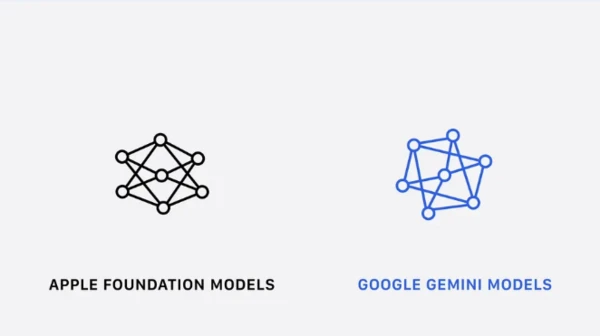
- Federighi said Apple Foundation Models were combined with Google Gemini models to run on device and in private cloud. I'd love to see what models are doing what. Over time, I could see Apple doing what Microsoft did with OpenAI and build in-house options.
- Siri AI rides shotgun with Apple Intelligence. Apple Intelligence is a horizontal play where Siri is more independent product. These launches are mostly US focused for now. Apple issued a statement outlining an EU delay.
- Apple launched a second version of on-device Apple models that use Apple Silicon and a new system orchestrator.
- Federighi is clearly hanging its AI hat on privacy and on-device compute.
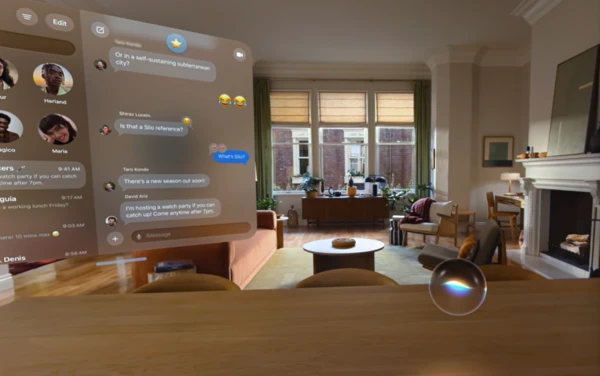
- Mike Rockwell, the VP of Siri engineering, unveiled the new Siri. Siri is now more capable, more conversational and with the dedicated Siri app you can refer to previous conversations. Siri can be used for writing and multiple tasks.
- Siri is also getting Visual Intelligence and has a new design. Demos highlighted how Siri can understand what's on screen and answer questions about pictures and navigation. Siri's voice can be adjusted.
- Siri can also adapt to each device and operating system. Demos highlighted Siri AI on iPhone and Mac as well as iPad OS. There's also customization for Apple Watch and VisionOS.
- The whole Apple Intelligence and Siri AI dance appears to put Apple models as the lead, but it's also clear that every new feature demonstrated is most likely Gemini underneath. Otherwise, Siri would be up to AI speed already.
- Apple Intelligence is also being outlined as an improvement to all of Apple's apps.
- Overall, Apple only has to be good enough with its approach to AI. With a big assist from Google, the mission appears to be accomplished.
Larry Dignan is Editor in Chief of Constellation Insights at Constellation Research, where he leads editorial coverage focused on enterprise technology, digital transformation, and emerging trends shaping the future of business. He oversees research-driven news, analysis, interviews, and event coverage designed to help technology buyers and vendors navigate complex markets with clarity and context. ...
Read morePublished
Author
