


Schneider Electric acquired Cognite for $3.1 billion in a deal that'll beef up its industrial AI efforts. The plan is to combine Cognite with Scheider Electric's AVEVA industrial software unit.
June 30, 2026 11:42:22 AM




Schneider Electric acquired Cognite for $3.1 billion in a deal that'll beef up its industrial AI efforts. The plan is to combine Cognite with Scheider Electric's AVEVA industrial software unit.
Genesys said it will acquire Pinkfish, an agentic orchestration workflow company. Genesys said the acquisition will expand its Genesys Cloud AI efforts with MCP tool integration and workflow automation. Terms of the acquisition weren't disclosed.
California said state agencies will use Anthropic's Claude across operations at a 50% discount with free workforce training. Local government in California will also have access to Claude.
CoreWeave launched CoreWeave ARIA, an AI research and iteration agent designed to continuously improve models and AI agents. ARIA is designed to accelerate the AI research loop by analyzing thousands of runs and tens of thousands of metrics in mnutes.
In the big picture, CoreWeave ARIA is another data point indicating that the AI neocloud is building out its software game.
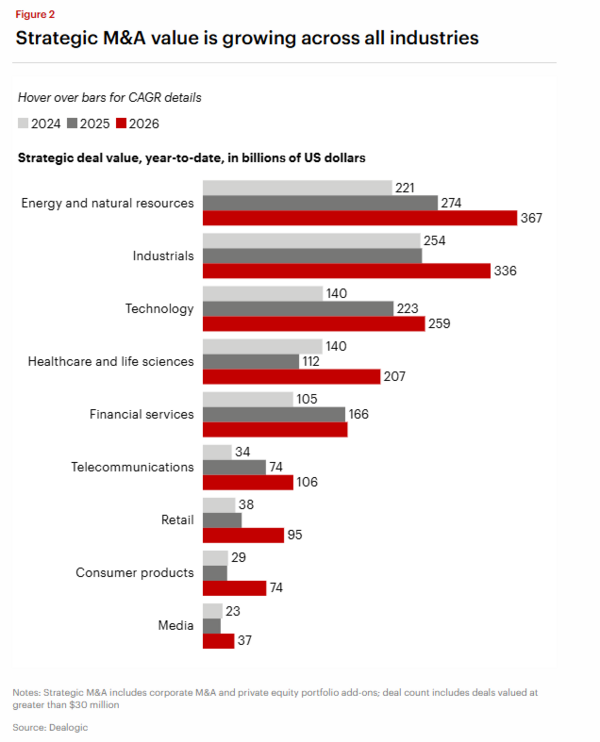
Bain said the first five months of 2026 has led to a 41% surge in deal value to $2.4 trillion. That's the second highest tally ever.
In its 2026 M&A Midyear Report, Bain said these massive deals create a "winners paradox" where companies need to pair an M&A agenda with AI transformation programs. In other words, executives need to integrate two businesses and manage an AI transformation at the same time.
Key stats on M&A:
Comcast is breaking up with plans to spin off NBCUniversal and Sky within a year. Mike Cavanaugh will be CEO of NBC Universal and Comcast former CFO Michael Angelakis will become CEO of Comcast. CEO Brian Roberts will "continue to be actively involved in the leadership of Comcast and NBCUniversal."
Here's a deep dive on the all-CPU Chinese LineShine supercomputer.
SK Hynix said it will accelerate its Yongin Semiconductor Cluster for completion in 2033 instead of 2045 to address AI memory demand. The company will expand its facilities in South Korea and invest more than $714 billion based on today's currency rates.
The effort is part of a Samsung, SK Hynix and South Korea plan to create an AI memory giant via four new memory chip making plants. The combined investment for South Korean companies is $1 trillion.
SK Hynix said:
"Originally scheduled for completion in 2045, the Yongin Semiconductor Cluster now aims to complete its fourth fab by 2033, bringing its construction schedule forward by 12 years. With phased investments in manufacturing facilities and production equipment, total investment in the Yongin Cluster is expected to reach KRW 600 trillion.
In addition, SK hynix will expand its production base in Cheongju(through an investment of KRW 100 trillion), while investing KRW 400 trillion in the Southwestern Region to develop a new semiconductor cluster, as the region is expected to provide the large-scale site and supporting infrastructure—including reliable electricity and water supply—required for the company’s next manufacturing hub."
Although the increased capacity is nice, if current demand holds you have years of memory price increases ahead.
The New York Times is reporting that OpenAI may put off its IPO because it may not be able to land a $1 trillion valuation. The tech industry goes crazy. Apparently, SpaceX's IPO, which popped and dropped and is holding above the IPO price for now, worries OpenAI. Keep in mind that SpaceX's math is ridiculous even if it is halved from the IPO price.
Simply put, OpenAI isn't ready for its confessional with investors, sure isn't ready for quarterly reports and sure isn't ready to encounter non-believers on Wall Street. I'm bummed though, I really wanted to financial gymnastics on paper (pixels).
Onsemi said it will acquire Synaptics in an all-stock deal valued at $7 billion. Onsemi said Synaptics will boost its total addressable market and position the company better in physical AI deployments.
Adobe said it will acquire Topaz Labs, which develops image and video enhancement models. Topaz Labs will be combined with Adobe's Firefly and Firefly Services as well as Creative Cloud apps.
Apple's online store went down today as if new products were launching. When the store returned, Apple had new prices. The company raised prices for most products excluding the iPhone, but the AI tax is probably coming for Apple's iconic smartphone too.
Not surprisingly, most of the price increases were tied to the Mac lineup where some models saw a $500 increase and another saw a $1,300 jump. MacRumors had the changes by product.
The reason for the price increases is simple: Memory costs. Memory is in tight supply and all you have to do is look at Micron's latest earnings report to see pricing power goes a long way.