Results

What Should the Major Tech Companies Do If They Want to Get into Healthcare?

What Should the Major Tech Companies Do If They Want to Get into Healthcare?

Buying another technology company, like an EMR company, is not the ideal method for a technology organization to tap into the healthcare market. There was a lot of buzz recently when Jim Cramer made a comment on his show Mad Money recommending Apple buy the electronic medical record vendor, Epic Systems. While that is one approach to gain the market share, it will not transform the industry.

Instead, Apple or another major technology company must buy a hospital or a small health system to transform operations and take advantage of the latest technology solutions. Buying another healthcare technology company, like Epic Systems, will not have the same impact if the operating model and processes do not change. Here are the benefits of having a technology company operate a hospital.

  1. Every hospital is a digital technology company now. One of the highest operating department expenditures in a hospital operation is IT.  A technology company mentality in a hospital will maximize the use of every toolset to drive organizational efficiency. This approach will change the culture by viewing the technology portfolio as a competitive advantage. Technology vendors have all made investments toward agile while hospital systems have invested heavily on the LEAN process. Incorporating agile will complement an organization's LEAN transformation journey to drive the efficiency goal.
  2. Opportunity to fast track technology debt. The lack of cutting-edge technology is a problem in every hospital. Historically, technology is viewed as an expense. This mentality prevents the organization from keeping up with the technology trends that result in technology debt. A typical scenario in an organization to save on cost is extending the technology solution beyond the warranty support period. This practice makes it difficult to maintain the latest solution. Having a technology company as the hospital operator will ensure that the organization is technically prepared for the future.
  3. Use technology to eliminate waste. Every hospital organization is going through an exercise to decrease their expenses and look for opportunities to improve efficiencies. This is a prime target for using technology as a lever to create automation and promote the usage of robotics to create greater efficiencies. The goal is to allow the workforce to practice at the top of their skillset while shifting the manual work efforts to an automated process.
  4. Design thinking for the patients. Hospitals need to do a better job of accommodating the patient's demand as a consumer. The patients expect the same experience as the retail consumer with a personalized experience. This is the prime opportunity for a technology company to incorporate personalized design thinking principles to improve patient engagement. 
  5. Address the technical talent gap. Healthcare industries have a talent gap specifically around digital solutions. The future IT workforce must be proficient in cloud, data analytics, mobile first, and social technology. The benefit of having a hospital operated by a technology company will eliminate the talent gap that exists today.

I have highlighted the five benefits of a technology company acquiring a hospital. We need a takeover like this in the market to improve the technology companies' understanding and appreciation for the hospital's operations. Without a massive change in the business operation, we will continue to see healthcare struggle and play catch up. I am a firm believer that for a major transformation to occur, there has to be a willingness to change the entire operating model. In this case, the influence of a major technology company will be a game changer.

Tech Optimization Data to Decisions Future of Work Innovation & Product-led Growth Next-Generation Customer Experience AR Chief Executive Officer Chief Financial Officer Chief Information Officer Chief Marketing Officer Chief Digital Officer

DisrupTV Turns Three! Digital Leadership, Future of Cities and The Latest Tech Commentary

DisrupTV Turns Three! Digital Leadership, Future of Cities and The Latest Tech Commentary

DisrupTV turned three this month! To celebrate, we brought back a few of our heavy-hitting alumni to share their latest innovative projects, learn from their experiences, and talk about the biggest tech trends impacting us as we move further into 2019.

If you do what you’ve always done, you’ll get what you’ve always got.” Great commentary from Perry Hewitt, Marketer, Digital Strategist and Board Member.

During Hewitt’s interview, she explained that you can’t just throw something over the wall and check the box anymore. We are in the messy middle, and everyone from marketing, product development and across the entire organization needs to collaborate in new ways. This is especially important when it comes to building new programs or fully transforming an organization.

To help with this culture shift and make real impact, it’s critical to bring diversity and different perspectives to the table. Having “echo” chambers or continuing to build programs based on outdated processes will not make the type of impact needed in today’s business environment. Similarly, to continue to grow as a leader, be sure to evaluate the power of your personal network and look for diversity through age, gender, experience, ethnicity, and location, for example.

Joining the Public and Private Sector to Make Change

Beyond individual organizations, cities are also facing major disruption due to the mass increases in population and changing needs of people in these areas. The days of going it alone are over, and partnerships are needed between the public and private sectors to better serve the people living in the city centers, explained former CTO of New York City and now Executive Vice President, Global Cities at Mastercard Miguel Gamin?o Jr.

His interview covered some of the pressing issues facing cities – including major stress on the infrastructure and the difficulties keeping up with the demand. He explained what leaders and organizations need to do to have a better understanding and make real changes in the public sector. It’s not just companies experience digital disruption and transformation.

While technology advancements help in many ways, it’s important to realize that not everyone has access to the technology. We must ensure tech serves people in an inclusive way. Let it follow but not lead the discussion, he explained.

What Tech Trends are Dominating the News and Leadership Discussions?

The show closed out with a very entertaining and blunt discussion with Jon Reed, Co-Founder at Diginomica. He covered Davos, retail and immersive experiences, the skills gap, Facebook, privacy, and more. The segment is worth the time to watch as he dove into some of the biggest themes impacting businesses, communities and maybe even you personally.

This is just a small glimpse at the great advice shared during the show. Please check out the full discussions in the video replay here or the podcast.

Tune in every week for DisrupTV, hosted by Vala Afshar and R “Ray” Wang, on Fridays 11 AM PT/2 PM ET. Bring diversity to your planning team as well as who the end results may impact.


DisrupTV Episode 135, Featuring Perry Hewitt, Miguel Gamino, Jon Reed from Constellation Research on Vimeo.

Data to Decisions Digital Safety, Privacy & Cybersecurity Future of Work Marketing Transformation Matrix Commerce New C-Suite Next-Generation Customer Experience Tech Optimization Chief Customer Officer Chief Executive Officer Chief People Officer Chief Information Officer Chief Marketing Officer Chief Digital Officer

Inclusion

Inclusion

Infosys held the first Asia-Pacifc leg of their regular Confluence partner & customer event recently in Melbourne, over the weekend of the Australian Open.  Confluence APAC was a terrific conference, showcasing Artificial Intelligence, Virtual Reality, real time analytics, learning platforms, and blockchain-as-a-service. There was a great many highly relevant customer stories, novel and truly gripping keynote speeches about Antarctica and the Thai soccer team cave rescue, and tennis. As a major sponsor of the Open, Infosys was able to access behind-the-scenes tours and tickets for all delegates to the women’s and men’s singles finals. It was really superb. 

Yet what struck me the most about Confluence was its formal recognition of Australia’s first peoples, the Aboriginal and Torres Strait Islander peoples.  

It’s normal these days for public events in Australia to open with a formal acknowledgement of the original custodians of the local land, calling out the first nation and language group of where the meeting is taking place.  What’s much rarer is the full Welcome to Country.  This ceremony can take 20-30 minutes and must be led by Aboriginal Elders. At Confluence on January 26, we were treated to dancers, the music of the unique didgeridoo, and a beautiful speech by Wurundjeri Elder Uncle Ian Hunter. He told us at length about his local culture, the classic Aboriginal sense of humour, and he touched frankly and calmly on the sensitive issue of Australia Day, a contentious national holiday which fell that very day.  

Now, while a Welcome to Country is rare, what followed was absolutely unique in my thirty years experience in the Australian tech sector. Australia-New Zealand Regional Head Andrew Groth gave his opening address and took time – indeed he took up most of his speech – to celebrate our first peoples.  He called out their care of the land over tens of thousands of years, their innovation and their technology, which they deployed at continental scale.  Groth made special mention of the Brewarrina fish traps which are thought to be the oldest surviving artificial structures anywhere on the planet.

Bravo Infosys! May more of us in technology come to embrace indigenous science and innovation, wherever we’re from, as a mark of respect, and because we all have so much more to learn. 

New C-Suite infosys Chief Customer Officer Chief Digital Officer Chief Executive Officer Chief Information Officer Chief Information Security Officer Chief Marketing Officer Chief Privacy Officer

Former Healthcare CIO David Chou Joins the Constellation Team

Former Healthcare CIO David Chou Joins the Constellation Team

We're excited to welcome former healthcare CIO David Chou to the Constellation team. He joins us as vice president and principal analyst to research and advise healthcare institutions and practitioners on how to maximize their technology investments while digitally transforming their operations.

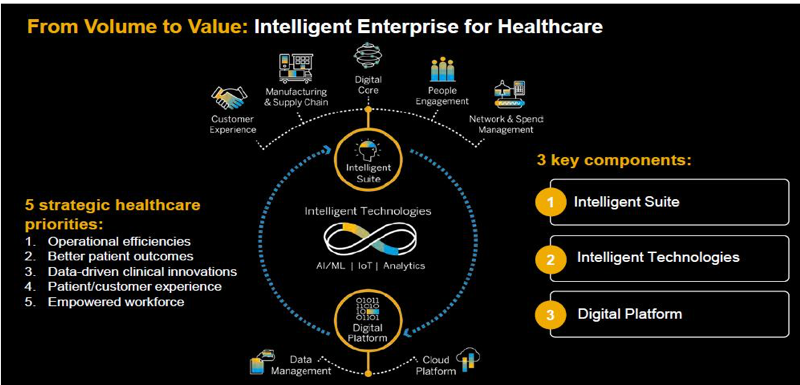
He will focus his analysis on the intersection of the healthcare systems’ stringent processes and regulations and the transformational power of technology. David will initially cover big themes around the new digital enterprise for Healthcare, how to build a playbook for leading innovation at the C-Level, and making an enterprise-wide technology investment and how to avoid common mistakes.

 “We have yet to realize the potential of digital transformation in the healthcare space. The key is understanding how an organization takes the innovation from concept to operation,” said Chou. “Technology has to be at the core of every company. My motivation for joining Constellation is the opportunity to help CXOs and vendors refocus to make an impact together on creating a better healthcare industry.”

With nearly 20 years of experience as a senior IT executive across various health systems, David brings a CIO’s practicality to his advisory practice on emerging technologies and disruptive innovation. He has held executive roles with the Cleveland Clinic, Children's Mercy Hospital, University of Mississippi Medical Center, AHMC Healthcare and Prime Healthcare, and he has advised many academic medical centers and healthcare startups. His expertise is helping a health system transition toward becoming a digital enterprise. He's worked on building a digital hospital from the ground up and also turned financially distressed health systems profitable with the use of technology.

“We’re excited to bring on David Chou to begin coverage for one of the most important industry verticals. David’s expertise as a C-Level practitioner executing in the $3.5T U.S. Healthcare Industry is much needed as this sector represents 17.9% of the U.S. GDP,” said R “Ray” Wang, founder and CEO at Constellation Research. “His broad understanding of how exponential technology can be used to transform existing business models is key as this sector seeks cost savings to fund innovation. David has the industry expertise to bring together the ecosystem of change agents and innovative vendors who seek to craft a patient-centered approach to healthcare.”


What's going on beneath the FaceTime listening bug?

What's going on beneath the FaceTime listening bug?

There’s a bug in the Apple iPhone in which, during the establishment of a FaceTime session, the caller can activate the receiver’s microphone and camera, without the receiving user knowing. It turns the iPhone at the far end into a old-fashioned bug. Apple will fix this bug quickly, but let’s take time to ask how is such a fault possible, and what does it mean for operating system integrity? 

When Alice’s iPhone A tries to connect to Bob’s iPhone B, it appears that iOS allows a software process running on A to access the microphone and camera services on B, without asking Bob’s permission or even letting him know it’s happening.  Contrast this permissionlessness with the normal Windows experience where PC users are asked constantly to give permission for processes to access their machine.  

As a former real-time systems software engineer, this feels to me like the multi-tasking features of iOS are allowed to run amok.  

Why would one iPhone allow a process running on another iPhone to access the mic & camera without the user's permission? How is that even possible? 

You have to wonder what else can happen, if processes on one iPhone can gain privileged access to another.  Can A load malware onto B? Can A capture the keyboard strokes on B and thus intercept Bob’s PINs and passwords? Can Alice insert herself into the data flows between the camera and the face recognition process on B, to spoof Bob’s biometric? 

Developers and tech company managers love to claim the slogan "Privacy by Design" but if programmers are designing operating systems without any partitioning or permissions, then PbD is just lip service. What are they thinking?

Digital Safety, Privacy & Cybersecurity Distillation Aftershots Security Zero Trust Chief Information Security Officer Chief Privacy Officer

Royal Dutch Shell Spreads Data Science Success

Royal Dutch Shell Spreads Data Science Success

Shell center of excellence grows data science talent, masters funding and innovation challenges.

Sometimes the value of a case study is in learning about what was achieved, while in other cases it’s all about how it was achieved. I think my latest case study, about the Data Science Center of Excellence (COE) at Royal Dutch Shell (Shell), works on both levels, but the most interesting nuances relate to how Shell’s COE is organized and funded.

If you’ve attended recent Alteryx Inspire or Microsoft Ignite events, you might have heard a bit about Shell’s achievements. I first learned of Shell’s efforts to spread data science capabilities at Alteryx Inspire 2018 in Anaheim, where Deval Pandya, a Shell data scientist, gave an great talk on how the COE is helping to spread the power of advanced analytic methods without hiring armies of hard-to-find data scientists. COE execs work with line-of-business and supporting tech teams for a few days at a time, helping to spearhead innovation projects. They then coach these teams and help to harden the technologies so that can be sustained in production. Pandya cited successes including an inventory optimization project – detailed at great length in my case study – that has since been leveraged globally and is saving Shell millions of dollars annually.

I encountered Shell again at Microsoft Ignite 2018, where keynote attendees heard a bit about Shell’s use of Azure cloud service and advanced capabilities including machine vision and Internet-of-Things-style sensor monitoring. Several of these projects, as well as the associated business benefits, are also detailed in my case study.

It’s always great to hear about innovative tech projects and to see and meet customer executives at vendor events, but for Constellation Research, that’s just the beginning of the conversation. Where vendors tend to highlight just how their products were used, Constellation aims to share holistic insight on every aspect of innovation, including all relevant technologies and how the project – or, in this case, the COE -- was organized.

I’ve written about plenty of centers of excellence, competency centers and innovation centers, but two things struck me as being atypical about the Shell Data Science COE. For one thing, Shell has separated the tasks of data science innovation, which is led by the COE, and that of handling ongoing operational execution of completed data science applications. The latter task is handled by Shell’s Business Service Center. The key point is that innovation is often disruptive, whereas those in the ongoing operational role naturally seek out continuity and proven best practices.

“If you want a group that’s going to stay ahead of the latest trends, you can’t ask them to also operate everything,” observes Daniel Jeavons, general manager of data science at Shell and the key figure quoted throughout my report. “Our role is up front trying to identify the technologies that need to be developed and built out to the point of maturity.”

The second way in which Shell’s COE stands out has helped it avoid budget hardships. Because it’s under Shell’s Technology Group, which is tasked with driving innovation and differentiation, the COE has what Jeavons describes as a healthy mix of research-and-development and project-based funding.

“We need to be a catalyst for change within the organization, but that’s hard if you’re constantly trying to justify your existence with project funding,” he explains. “The business is paying us to run projects that deliver value now or in the near term, but at the same time we have the opportunity to innovate” [because of the funding dedicated to R&D and innovation].

There’s much more to learn in the Shell case study, including insight on its analytics stack and how and why it makes use of two major public clouds. There’s also insight on AI and IoT initiatives that are bearing fruit. But my key takeaway on Shell’s success is that it has found a way to balance stable execution that delivers value and, through the COE, breakthrough innovation that might be disruptive, but that is helping Shell to change its industry and the very foundations of its business.

Data to Decisions Tech Optimization Microsoft Chief Customer Officer Chief Information Officer Chief Digital Officer Chief Analytics Officer Chief Data Officer

Super Nova Awards

Super Nova Awards

CCE 2012

On <iframe src="https://player.vimeo.com/video/313489991?badge=0&autopause=0&player_id=0&app_id=75194" width="1280" height="720" frameborder="0" title="Super Nova Awards" allow="autoplay; fullscreen" allowfullscreen></iframe>

DisrupTV: Strong Leaders Elevate Inclusiveness and Empathy

DisrupTV: Strong Leaders Elevate Inclusiveness and Empathy

“Everyone wants to earn, learn and belong. These are universal human hungers.”

Great comment from Angela Blanchard, President Emerita at BakerRipley & Senior Fellow at Brown University, last week on DisrupTV. The show themed around inclusiveness, not just in business but through every aspect of our lives.

Angela works with displaced individuals brought or forced into new communities (due to natural disasters for example) and helps government entities and other organizations effectively integrate and serve them. She explained that people don’t want handouts; they just want to be part of the story.

As leaders in these types of situations or even in business, the biggest piece is empathy. Clear and simple. Be thoughtful and sensitive to what came before you and understand every new project we take on is also an end to someone else’s story, hard work or livelihood. It’s all about trust in leading through disruption.

She also explained the importance of improvisation and understanding the resources in your arena. What you did last time may not work, so be nimble and work with what you have at hand. This interview is a must-watch; I even got goosebumps!

Digital Inclusiveness

The theme of inclusiveness continued with Tim Springer, Founder & CEO at Level Access. His organization focuses on digital inclusiveness and making technology a profound force in the lives of individuals with disabilities. We have to ask ourselves, “how can WE change the world and outcomes of people’s lives?” Again, empathy and understanding are key to making our products, organizations and world better for everyone.

The term disability seems to mean “worse” or “not normal” in our society. We need to flip the script. It’s not about solving problems but enhancing the skills they bring to the table. While each individual may have a shortcoming, they also have advanced skills that should be empowered with the right tools in place. Leaders should embrace these unique qualities in their workforce and also work with companies like Level Access to ensure their products and offerings are accessible and optimized for everyone. It’s not just the law but also an essential piece for building a stronger, more inclusive world.

Tim also shared some great advice as an entrepreneur on building a business and the process and decisions behind VC funding.

Workplace Inclusiveness

“Leadership comes from all walks of life, not just the C Suite,” explained Dion Hinchcliffe, VP and Principal Analyst at Constellation Research. Sometimes it comes from outside with change agents or from team members fresh out of school. Be inclusive in your brainstorming, planning, and programs. The traditional hierarchy of companies is not the best way to succeed in today’s environment. With the impact of technology, digital transformation and shifting business models, our environments are changing faster than we realize, and sometimes it’s too late. 

With big change, there’s certainly a high failure rate. Break things down into manageable programs and projects and be ready to shift when the window opens. Get out there quickly with what’s working and cut what’s not. Dion shared some great case studies on effective leadership and programs that are thriving in this new exponential and constantly changing business ecosystem.

This is just a small glimpse at the great advice shared during the show. Please check out the full discussions in the video replay here or the podcast. Special thanks to our guest host this week, Alan Lepofsky, VP and Principal Analyst at Constellation Research.

Tune in every week for DisrupTV, hosted by Vala Afshar and R “Ray” Wang, on Fridays 11 AM PT/2 PM ET. Ensure inclusiveness is at the center to build a strong, rewarding environment for all of us.  

DisrupTV Episode 134, Featuring Angela Blanchard, Tim Springer, Dion Hinchcliffe from Constellation Research on Vimeo.


Data to Decisions Future of Work Marketing Transformation New C-Suite Next-Generation Customer Experience Chief Customer Officer Chief Digital Officer Chief Executive Officer Chief Financial Officer Chief Information Officer Chief Marketing Officer Chief People Officer Chief Procurement Officer Chief Revenue Officer Chief Supply Chain Officer

DisrupTV at Davos – It’s all about the People; Three Trillion Reasons & Investment

DisrupTV at Davos – It’s all about the People; Three Trillion Reasons & Investment

DisrupTV broadcasted live from the World Economic Forum’s annual meeting at Davos this morning to discuss some of the major themes and initiatives coming from the event. The show’s hosts R “Ray” Wang and Vala Afshar interviewed Tifenn Dano Kwan, CMO at SAP Ariba, and Ron Cao, Founder & Partner at Sky9 Capital about the conversations they’re having and what they hope to get from being in Davos this year.  

Beyond the trust, globalization and leadership topics the show covered yesterday (also echoed by today’s guests), Kwan shared her company’s “3 Trillion Reasons” campaign and movement, which aims to inspire and raise awareness around the world. Companies can make real social, global and human impact by pushing strong values of transparency, human rights and sustainability through the partnerships and practices they choose in thier supply chains. We are at a pivot point, and global leadership needs to take a stance to make positive changes for the future.

Conversations around the global economy, investments and China are also part of this year’s topics. Cao works with early stage startups and touched upon the investment scene in China. While we may get excited and distracted by the “hot” tech, such as blockchain, AI, 5G (all discussed during the interview), it still comes down to the people creating, governing, and buying these products. People are at the heart of impacting where we are headed for the future, which is why he focuses on investing in talent and working with smart entrepreneurs who have great ideas.

This is just the highlights! Check out the full, insightful interviews here and on the podcast.

Future of Work Matrix Commerce New C-Suite Next-Generation Customer Experience Tech Optimization Chief Customer Officer Chief Digital Officer Chief Executive Officer Chief Financial Officer Chief Information Officer Chief Marketing Officer Chief People Officer Chief Procurement Officer Chief Revenue Officer Chief Supply Chain Officer

DisrupTV On the Road at Davos 2019 – Trust, Skills Gap & Culture

DisrupTV On the Road at Davos 2019 – Trust, Skills Gap & Culture

DisrupTV is on the road this week at the World Economic Forum’s annual meeting at Davos. R “Ray” Wang and Vala Afshar interviewed a few guests live at the event to share some of the major themes coming out of this historic gathering of some of the most influential leaders around the globe.


Where is the trust? 


There’s this feeling of gloom around technology, especially as it relates to trust with our data, according to David Kirkpatrick, founder and editor-in-Chief at Techonomy. He explained that the attendance of the event has shifted with more technology leaders, and there are increased discussions around the impact of privacy, distrust of Facebook and the fear of losing our data completely with the developments of technology, such as IoT, Alexa, 5G, blockchain, etc.


One of the biggest themes of the show is trust.  It’s wrapped into all of the discussions from business and technology leaders alike. Citizens are looking to business leadership to help solve the issues of our time, including political, economic, ethical and societal topics. They are looking for other options as they don’t think governments are solving these issues effectively.


It’s time to reskill our workforce


With the advancements in technology, there’s a major skills gap that we need to address as we move into a new wave of multiplied innovation. Hosting challenges is a great way to inspire innovation and diversity of thought, explained Mike Morris, CEO at Topcoder


Another wave of change elevated at the event includes globalization and the realization that the world is flat where everyone should get paid fairly for their intellectual capital regardless of location. To disrupt in this exponential era, companies need to compete for the same talent as Apple and Google, for example. The next generation will not be sitting in cubes, and remote working from anywhere in the world will be the typical work environment. His company already is 100% remote and can recruit the top talent from anywhere. How companies and countries look at and produce talent will be a big theme at next year’s event, Morris explained.


Build a Strong Culture that Instills Trust


To close out the discussion, DisrupTV caught up with Gurvinder Singh Sahni, Chief Marketing Officer at Appirio, a Wipro Company. Echoing the sentiments earlier in the show, there is a deficit of trust in the tech sector. It’s important to work on a strong culture and understand that it correlates to how much your customers and community trusts you. Actions truly speak louder than words.


This is just the highlights! Check out the full interviews here and on our podcast. Tune in tomorrow for more interviews and takeaways from Davos.

New C-Suite Future of Work Tech Optimization Chief Customer Officer Chief Digital Officer Chief Executive Officer Chief Financial Officer Chief Information Officer Chief Marketing Officer Chief People Officer Chief Revenue Officer