


OpenAI's SaaSageddon fears need perspective
OpenAI is eyeing software as a service as it aims to build applications around ChatGPT and has to be a software-as-a-service disruptor to justify at least some part of its valuation. Enterprises should take note of OpenAI's potential role, but keep perspective.
In a blog post on Monday, OpenAI's Giancarlo Lionetti outlined how OpenAI is running on OpenAI. Anyone familiar with enterprise software knows this vendor-running-on-itself marketing pitch. The general theme is that a software vendor is its own first customer. Salesforce will highlight how Agentforce is running the company. ServiceNow has been doing ServiceNow on ServiceNow for years. Pick a vendor and there's some version of the you are your first customer narrative going on.
So OpenAI's move to look a bit more SaaS-y isn't surprising. The LLM players have been working on apps to surround quickly commoditizing foundational models for most of 2025. What's changed is Wall Street has noticed and took DocuSign and HubSpot out to the woodshed this week.
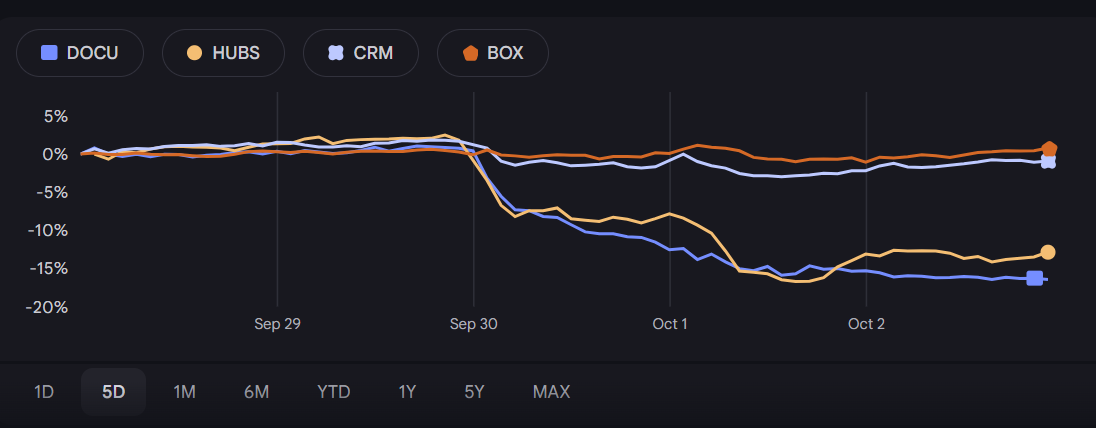
Here's what OpenAI's Lionetti outlined in a post:
- OpenAI has been able to move from pilot to production and feels your pain. "While our models improve in speed, cost, and capability, adoption rarely moves in a straight line. Deployments often outpace the change needed for organizations to leverage this technology," he said.
- "Our GTM, product, and engineering teams study their everyday workflows, define what good looks like and deliver changes in weeks instead of quarters. We decided to focus on a few high-leverage systems with outsized impact," said Lionetti.
- OpenAI highlighted GTM Assistant, DocuGPT, Research Assistant, Support Agent and Inbound Sales Assistant. These were viewed as Salesforce, Box, HubSpot, DocuSign and possibly ServiceNow killers. These tools aren't that different than what has been discussed in enterprise technology for months. In fact, many SaaS vendors have these ChatGPT-ish features already.
- Enterprises will hear more about OpenAI's SaaS adventures on Oct. 6 and its developer day.
What was more notable in OpenAI's SaaS ambitions is that it has been gaining compliance certifications that enterprises will actually care about. OpenAI isn't competing with SaaS vendors for LLM interfaces as much as it is for compliant workflows and trust.
- Google DeepMind’s Danenberg on emerging LLM trends to watch
- For AI agents to work, focus on business outcomes, ROI not technology
Some perspective
Remember history. Not that long ago in the 1990s and early 2000s, some big whale entered a market and it was widely assumed it would be successful. Who remembers SAP talking about chasing smaller enterprises? How about Microsoft and mobile?
Microsoft may be the best example. Every time Microsoft entered a market there was a storyline that the software giant was going to kill some vendor. The reality is that those smaller vendors survived and thrived most of the time.
Microsoft didn't kill Google and Android, Apple, MacOS and iOS, Amazon Web Services, Sony, Adobe, Oracle, Salesforce, SAP, Linux, Zoom, VMware or even IBM. I could go on but you get the idea.
OpenAI is an enterprise whale in valuation only. The SaaS vendors it will allegedly killing have more than just a fancy enterprise search tool. Many SaaS vendors serve as de facto workflow engines.
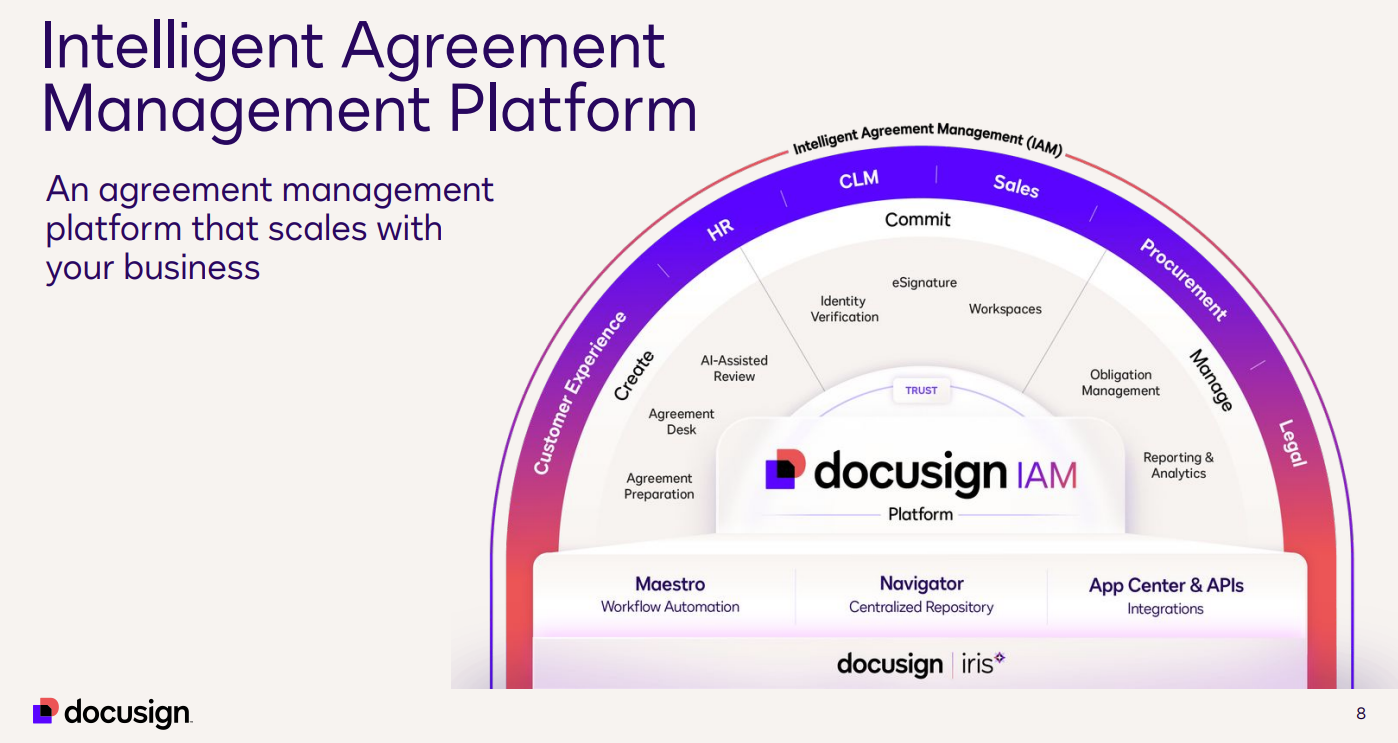
Let's roll a few slides:
DocuSign manages the agreement lifecycle. See: Docusign launches AI contract agents
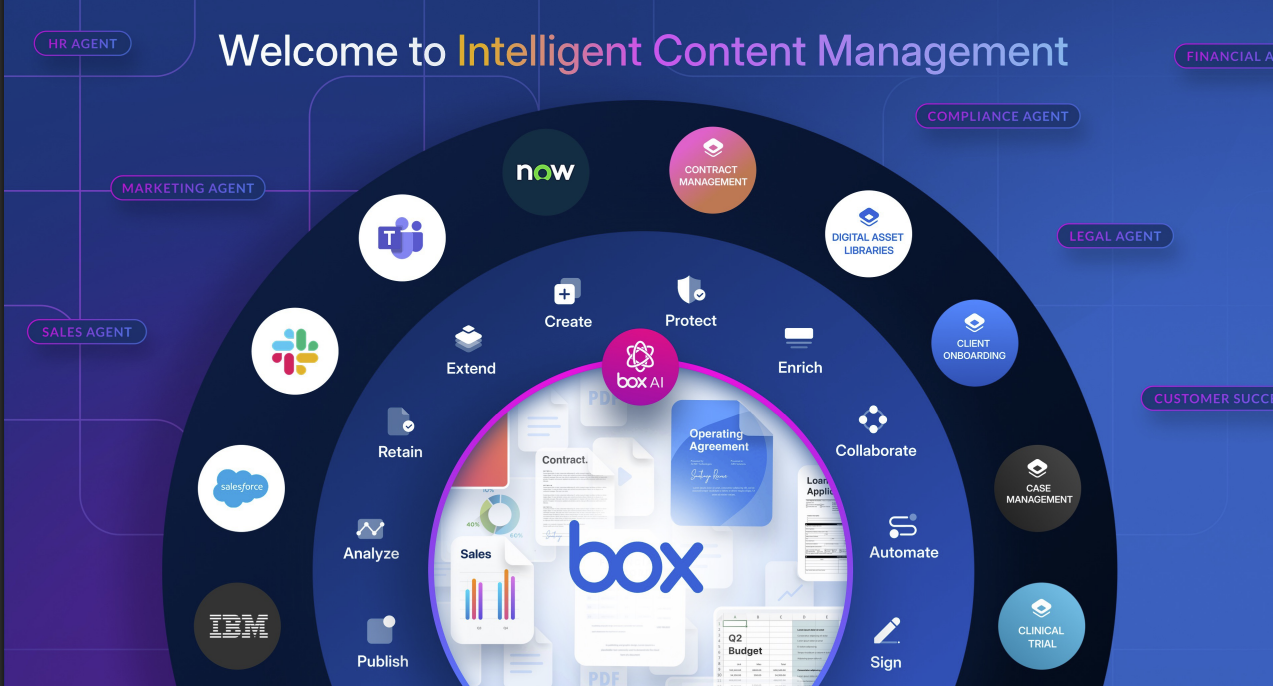
Box is on the content lifecycle. See: Box launches Box Extract, Box Automate, Box Shield Pro
HubSpot is disruptive in its own right as it moves upmarket. See: HubSpot’s strategy: Use AI to deliver work, not software
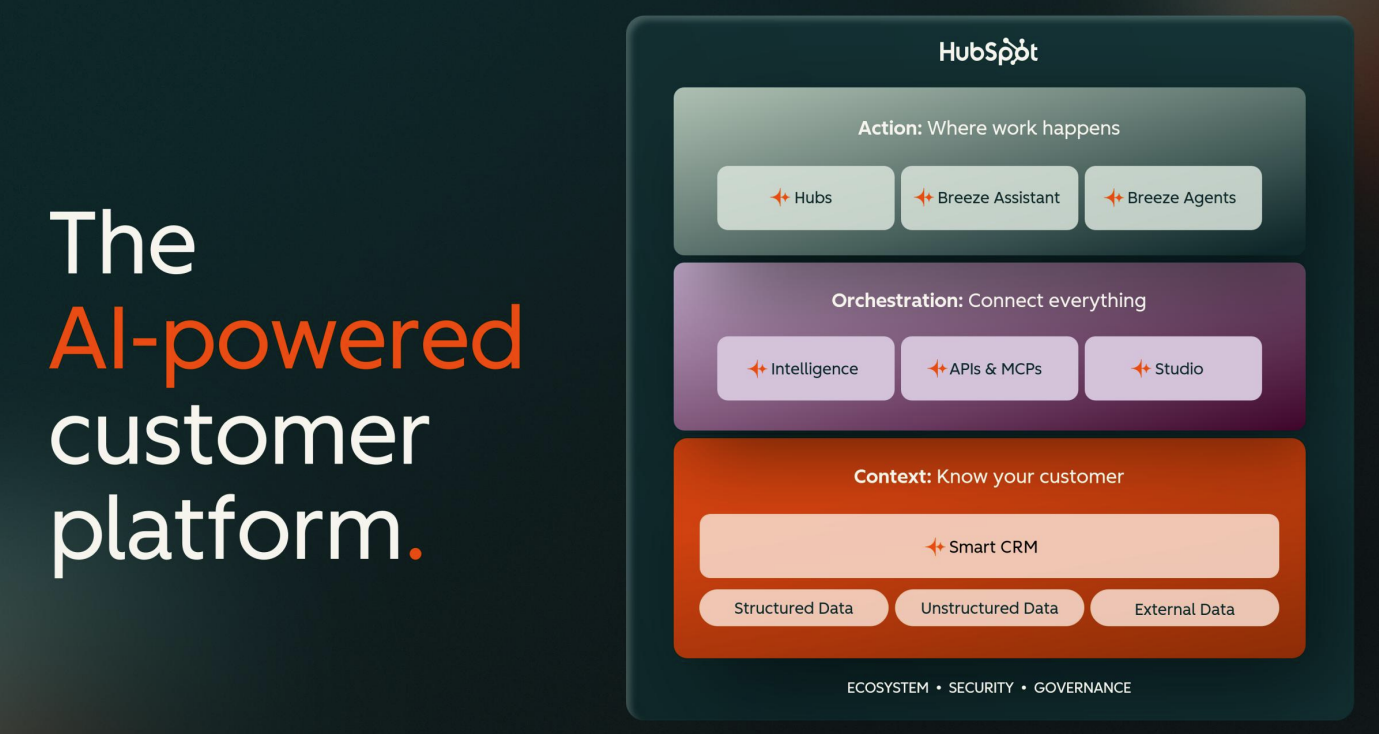
It's quite possible you'll rip out your SaaS vendor for OpenAI, but not sure why you'd lock in without a few more layers on the platform slide. You'd be better off looking at a disruptive force like Soul of the Machine that'll build you something or ensuring that you're model agnostic. OpenAI could be an ingredient brand for SaaS vendors, but it's just one ingredient of a broader multi-model mix.
The debate isn't about why you'd leave one vendor to lock in with OpenAI. The debate is why you couldn't just build what OpenAI has done internally with a cheaper model.
- AI is your new co-founder, core and creative and engineering muse
- AI Exponentials Will Rule the World
- Exponential Efficiency in the Age of AI
- The road to AI Exponential will be bumpy
Your play
Whether you believe OpenAI is your SaaS savior is up to you. But one thing is clear: You can use it.
OpenAI has given you an option for negotiations. OpenAI's timing with its SaaS play is pretty good. Why? Customers are beyond annoyed with their SaaS vendors. We hear it from CxOs all the time.
R "Ray" Wang, CEO of Constellation Research, frequently notes how CxOs tell him all the time that the two most inflationary things enterprises see are healthcare costs and their SaaS bill.
Here's how you can use this OpenAI kerfuffle to your advantage.
- Threaten to "explore" using OpenAI as a layer to your enterprise operations. You can always use a second supplier.
- Actually explore what OpenAI outlines in its operations and build it yourself with Anthropic, Cohere or any other LLM provider.
- Evaluate your SaaS strategy as if you had a clean slate. Would you really bet on these SaaS silos--i.e. wannabe platforms--today?
- Map your platform strategy. A member of Constellation Research's BT150 recently said that when you have a green field a vendor like ServiceNow is the choice over a series of SaaS vendors.
- Evaluate your hyperscaler. In the end, the real impact of LLMs is going to be as a user interface and vehicle to access your data, processes and workflows quickly. AWS, Google Cloud and Microsoft Azure are all in the mix for building agents and models that traverse enterprise apps.
In the end, OpenAI hasn't even earned the benefit of delivering FUD because it hasn't done anything yet. Nevertheless, OpenAI just gave you a bit of leverage. Use it.
Larry Dignan is Editor in Chief of Constellation Insights at Constellation Research, where he leads editorial coverage focused on enterprise technology, digital transformation, and emerging trends shaping the future of business. He oversees research-driven news, analysis, interviews, and event coverage designed to help technology buyers and vendors navigate complex markets with clarity and context. ...
Read morePublished
Author
