


IBM launches IBM Quantum Nighthawk processor
IBM launched its most advanced quantum processor, IBM Quantum Nighthawk, and announced its IBM Quantum Loom, an experimental processor that demonstrates all of the processor components for fault-tolerant quantum computing.
Big Blue announced the roadmap additions at its annual quantum developer forum.
The news from IBM lands as Quantinuum launched its Helios system and Google highlighted its advances. In addition, pure play quantum computing companies have been able to build up their balance sheets as they develop systems.
- Google claims quantum advantage with Willow breakthrough
- Quantinuum launches Helios quantum computer, touts fidelity, enterprise customers
For IBM, the goal is to deliver quantum advantage by the end of 2026 and fault-tolerant quantum computing by 2029. IBM has offered frequent updates about its quantum computing roadmap with two in 2025.
- IBM outlines quantum computing roadmap through 2029, fault-tolerant systems
- IBM sees quantum advantage 2026, fault tolerant quantum in 2029
- IBM launches Flex Plan for quantum computing, aims to expand use cases
Here's a look at the key announcements from IBM.
IBM Quantum Nighthawk is designed to complement the company's quantum computing software stack and architecture to deliver quantum advantage. IBM Quantum Nighthawk will be delivered by the end of 2025.
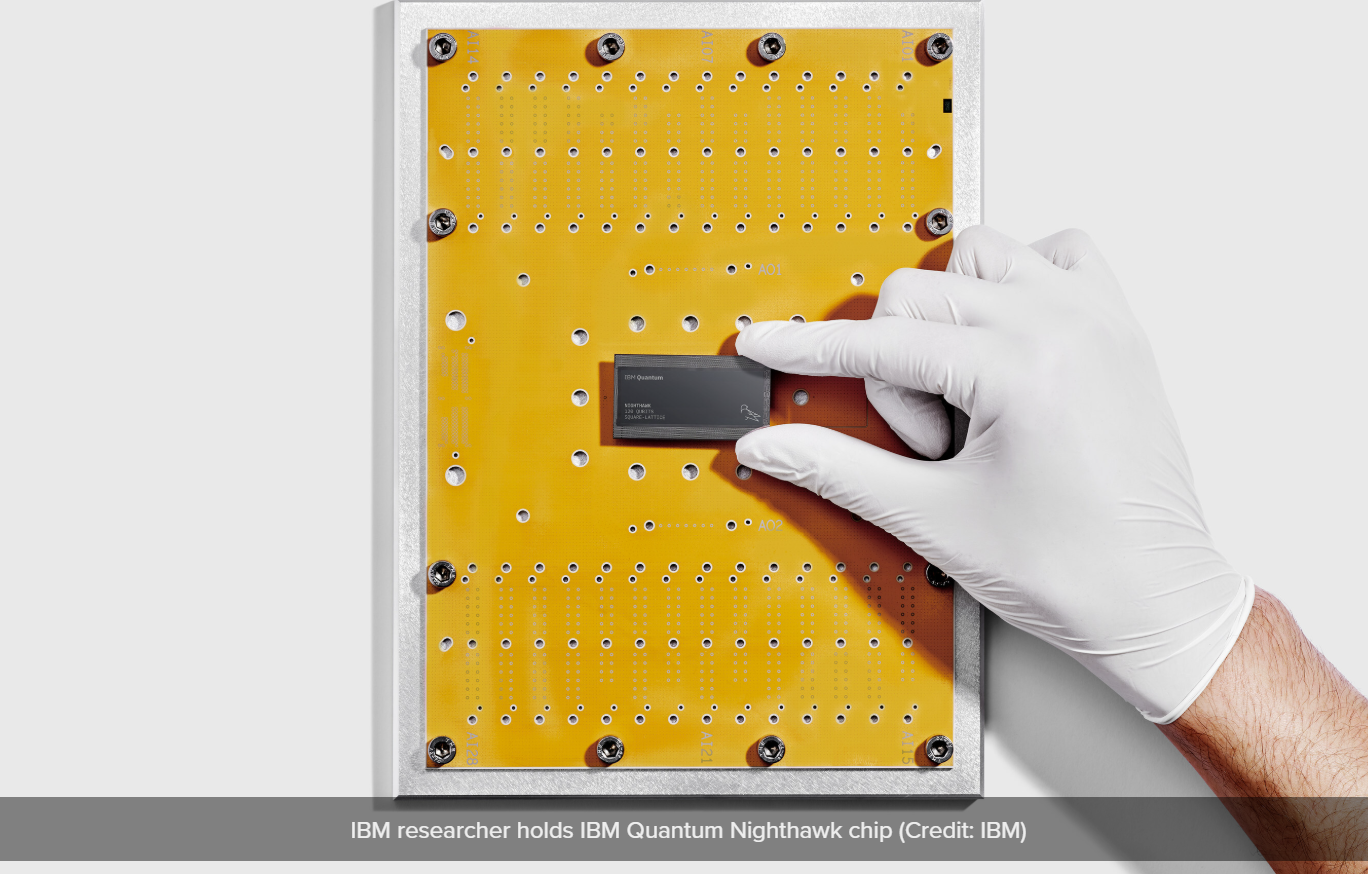
Key points:
- The quantum processor will be 120 qubits linked together with 218 tunable couplers. Nighthawk will have more than 20% more couplers compared to IBM Quantum Heron.
- Nighthawk will be able to execute circuits with 30% more complexity than Heron with low error rates.
- IBM's latest architecture gives users the ability to explore more demanding problems that require up to 5,000 two-qubits gates.
- By the end of 2026, IBM said IBM Quantum Nighthawk will deliver up to 7,500 gates and up to 10,000 gates in 2027.
- By 2028, Nighthawk systems could support up to 15,000 two-qubit gates with more than 1,000 connected qubits extended through long-range couplers.
Quantum advantage will be reached by the end of 2026 and be verified by the broader ecosystem. IBM contributed three experiments for quantum advantage to be verified by the broader ecosystem.
Qiskit, IBM's quantum computing software, will get a new execution model to enable fine grain control and a C-API for HPC-accelerated error mitigation.
IBM will deliver a C++ interface to Qiskit to help developers bridge HPC and quantum computing. By 2027, IBM noted that it will extend Qiskit with computational libraries for machine learning and optimization.
The company also said that it will move toward a large-scale fault-tolerant quantum computer by 2029. The effort will be led by IBM Quantum Loon, an experimental processor. Key items for IBM Quantum Loon:
- Loon has a new architecture to implement and scale components for high-efficiency quantum error correction.
- IBM has proven it is possible to use classical computing hardware to accurately decode errors in real-time (less than 480 nanoseconds) using qLDPC codes. That ability will be coupled with Loom to scale high-fidelity superconducting qubits.
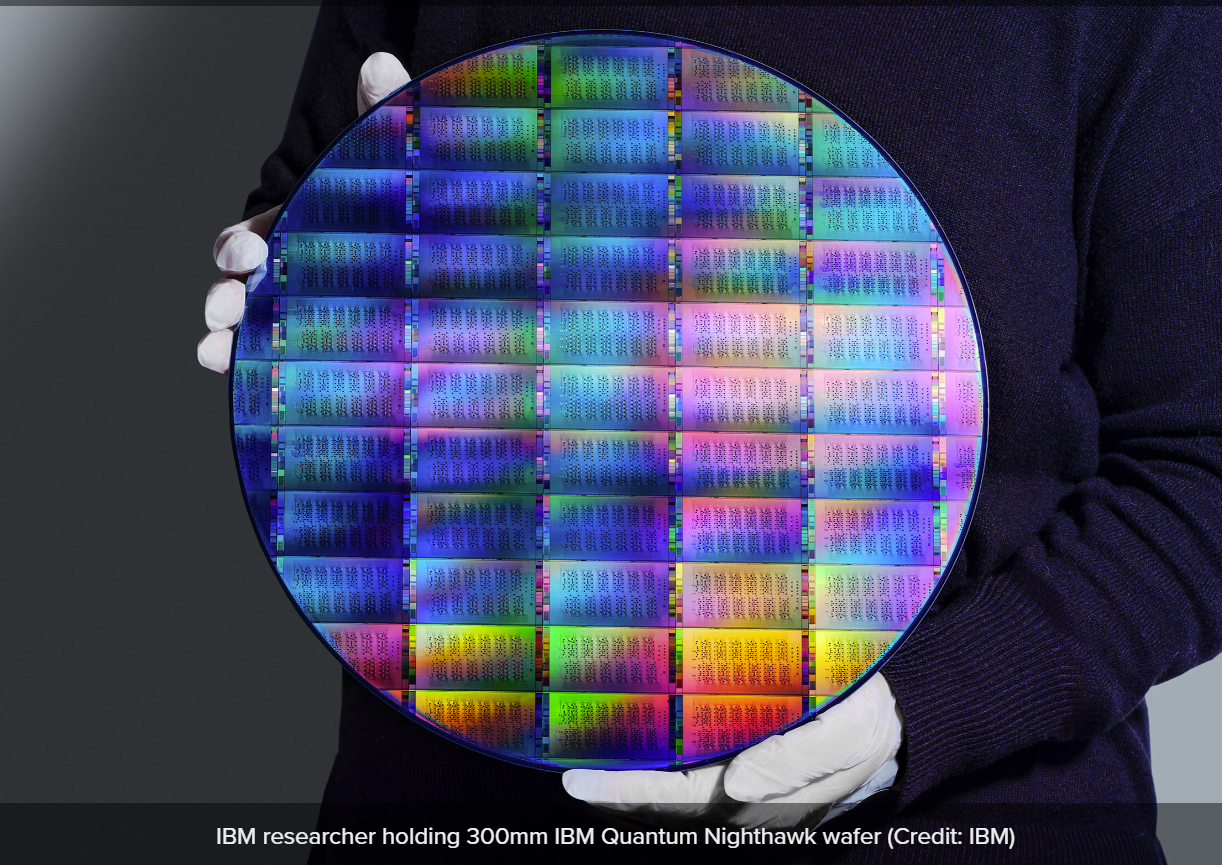
The company said that it will scale its 300mm quantum wafer fabrication in the Albany NanoTech Complex in New York. The lab will be used to expand its quantum processor development and wafer manufacturing.
Larry Dignan is Editor in Chief of Constellation Insights at Constellation Research, where he leads editorial coverage focused on enterprise technology, digital transformation, and emerging trends shaping the future of business. He oversees research-driven news, analysis, interviews, and event coverage designed to help technology buyers and vendors navigate complex markets with clarity and context. ...
Read morePublished
Author
