


Microsoft outlines Quantum OS, Quantum Development Kit
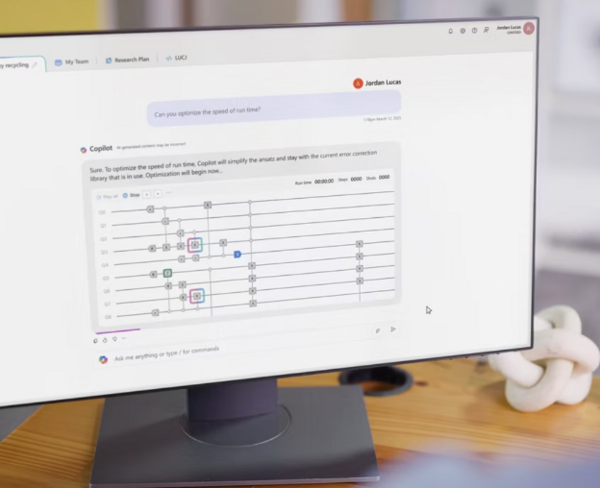
Microsoft outlined its Quantum OS architecture and Quantum Development Kit, which will include versions for chemistry and error correction.
In a nutshell, Microsoft is creating an abstraction layer for quantum computing and connecting it to classical high-performance systems. Although Microsoft is betting on neutral atom quantum computing its Quantum OS can ride on top of multiple flavors of quantum computing.
Microsoft's Quantum OS architecture includes a quantum plane connected to the hardware layer, a quantum engine with qubit virtualization, control, calibration and readout, quantum drivers that meld quantum and classical execution and quantum compilation and OS services for governance and security and copilot agents.
Constellation Research analyst Holger Mueller said Microsoft's Quantum OS efforts are "another sign that quantum is getting real."
- Microsoft to build quantum center in Maryland
- 2025 year in review: Quantum computing development accelerates
- Quantum computing pure plays duel with giants, rivals
"The investment by Microsoft to create an abstraction layer with Quantum OS to bring all of the non-quantum parts (data, AI, error correction) to quantum to maximize the effectiveness of the overall setup," said Mueller. "It was clear that hybrid setups will happen and now they are physically available for the first time. Remarkable is also the ease of development for QDK, which sets a new bar for quantum developer velocity."
Matt Zanner, Senior Director of Microsoft Quantum, said in a briefing that "our North Star is to build a stack that is as portable and flexible as possible for a given QPU layer."
Microsoft's Quantum OS will be part of the Magne quantum computer, which is being developed with QuNorth, Microsoft and Atom Computing. The quantum system will be available for Nordic researchers and companies.
Zanner added that Microsoft is building on top of Atom Computing's hardware, but each modality of quantum computing have strengths that can be leveraged. Quantum OS is about "how can we deliver a stack that serves the best right, being agnostic and portable while also being as customized as needed," said Zanner.
Microsoft is planning to leverage an agentic AI interface that will lead into the quantum OS. The system will visualize qubits, logical qubit plans and types of error rates. "We can be portable without giving up on optimization," said Zanner.
For Microsoft, the quantum OS effort is about leveraging the quantum developer ecosystem, which also leverages software platforms such as IBM's Qiskit and Classiq.
Larry Dignan is Editor in Chief of Constellation Insights at Constellation Research, where he leads editorial coverage focused on enterprise technology, digital transformation, and emerging trends shaping the future of business. He oversees research-driven news, analysis, interviews, and event coverage designed to help technology buyers and vendors navigate complex markets with clarity and context. ...
Read morePublished
Author
