


Microsoft rolls out quantum safe plan, timelines
Microsoft laid out its plans to roll out post-quantum cryptography across its products and platform in a multi-year effort.
In a blog post, Microsoft introduced its Quantum Safe Program (QSP), which is a broad transformation to secure its infrastructure, customers and ecosystem against future quantum threats.
Holger Mueller, analyst at Constellation Research, said:
"The real quantum use case in 2025 is to make data centers quantum safe, which is a top priority for CxOs who need to fear that state actors will be spying on them. Microsoft is now making a key move by making all of Azure quantum safe. This move will make deployments for enterprises easier and get every Azure customer to the top level of safety. It also simplifies things for Microsoft as it can manage all its datacenters consistently."
Microsoft's QSP components include the following:
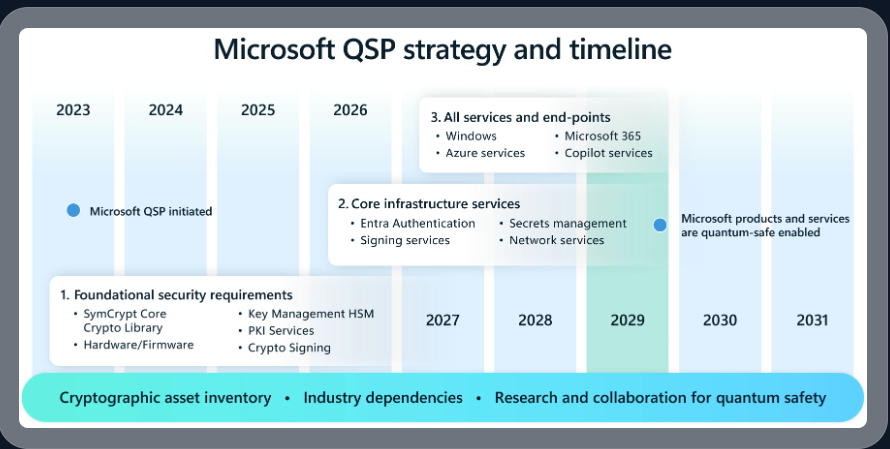
- Integrating post-quantum cryptography into foundational components.
- Updating products and services to prevent future quantum risks. Microsoft said it will integrate post-quantum cryptography across Azure, Entra Authentication, Microsoft 365 and more.
- Align QSP with US government requirements and timelines for quantum safety.
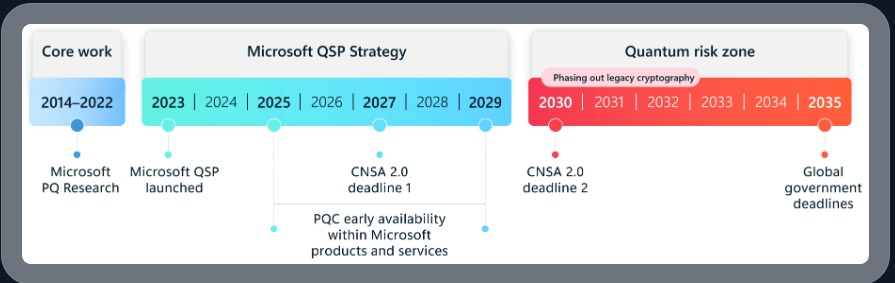
- Complete the transition to post-quantum cryptography by 2033, two years ahead of the deadline set by most governments.
In the blog post, Microsoft noted:
"Migration to post quantum cryptography (PQC) is not a flip-the-switch moment, it’s a multiyear transformation that requires immediate planning and coordinated execution to avoid a last-minute scramble.
It is also an opportunity for every organization to address legacy technology and practices and implement improved cryptographic standards. By acting now, organizations can upgrade to modern cryptographical architectures that are inherently quantum safe, upgrade existing systems with the latest standards in cryptography, and embrace crypto-agility (the ability to easily change algorithms) to modernize their cryptographic standards and practices and prepare for scalable quantum computing."
Here's a look at where Microsoft sits today and the roadmap ahead.
Larry Dignan is Editor in Chief of Constellation Insights at Constellation Research, where he leads editorial coverage focused on enterprise technology, digital transformation, and emerging trends shaping the future of business. He oversees research-driven news, analysis, interviews, and event coverage designed to help technology buyers and vendors navigate complex markets with clarity and context. ...
Read morePublished
Author
