


A peek at IBM's practical approach to quantum computing
An IBM executive said the company's steady and practical approach to quantum computing will win out over the bluster that's emerging from multiple vendors.
Speaking at an investor conference, Ric Lewis, senior vice president at infrastructure for IBM, was asked about Big Blue's approach to quantum computing. Lewis said quantum computing isn't about pumping out press releases as much as it is practical use cases and believable roadmaps.
"We are taking a very practical, rational approach to it," said Lewis. "We're not expecting some scientific breakthrough at this point. It's a matter of engineering and execution to get where we need to go."
- IBM, Cisco aim to scale, network quantum systems
- IBM launches IBM Quantum Nighthawk processor
- Quantum computing pure plays duel with giants, rivals
Lewis added:
"When I watch other quantum people and what they're saying I watch for a few things. One, do they have a believable roadmap. Not a roadmap, not just an aspiration but have you shown through your progress over the last five years that's you're on a certain trajectory. Do you have a believable roadmap for the next several steps?"
IBM's roadmap revolves around delivering quantum advantage in the next year and error correction and other capabilities later in the decade. "In '28, '29 we believe we'll be transacting on a system kind of level," said Lewis. "We're already transacting and we have clients that are buying cycles of quantum."
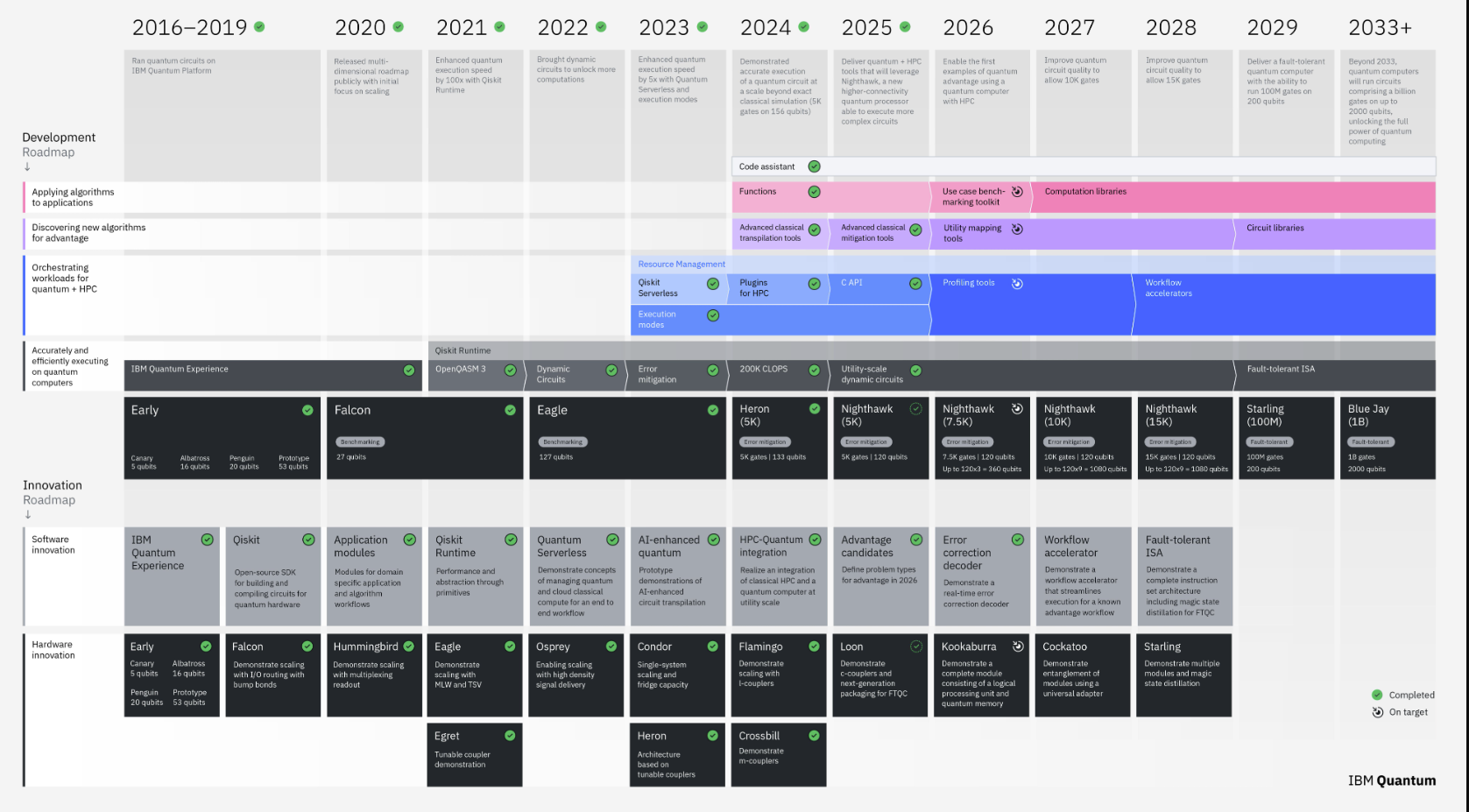
Lewis said IBM's roadmap is predictable and features an ecosystem of partners and a software stack. IBM features Qiskit, quantum computing software that has solid adoption.
Holger Mueller, an analyst at Constellation Research, said:
"Technical breakthroughs in commercial production do not happen overnight, but are the result of a string of successful completions of architectural advances that get delivered on time and functionally working. That is what IBM has done over the last 2-3 years. That is the progress and fidelity enterprises want to see when adopting a new technology platform is no exception."
Overall, Lewis said quantum computing is fragile and systems will need more resilience. He argued that combining classic and quantum techniques for error correction in quantum computing will be a practical approach to solving big problems.
- IBM Boosts the Software Side of Quantum
- IBM Embarks on a Fault-Tolerant Quantum Voyage
- Constellation ShortList™ Quantum Computing Platforms
- Constellation ShortList™ Quantum Full Stack Players
"I also look for a philosophy that says quantum is not a replacement to classical," said Lewis. "When you combine them together, you end up with something very strong. And since we play strong in classical, we play strong in AI, and I think we're the leader in quantum, we're really well positioned for as the industry gets to this kind of 2030 time frame and all that TAM. So we're pretty bullish and excited about it, though cautious and practical. Just keep executing the road map, make our steps, and we're going to be in a really good spot."
My take
Lewis has a point regarding the bluster meter in quantum computing. I'll tend to listen more to executives that refrain from the trash talk.
The reality is deployments at scale and returns on investment are probably five years away. Compute, networking and hybrid HPC-quantum systems are in the nascent stages. If you listen to quantum executives and the leading players, most companies are talking the same timelines.
Bluster has led to bigger valuations for some of the pure plays and enabled them to build strong balance sheets despite paltry sales. I'm willing to bet we're entering a new quantum computing phase where being more understated plays better. In the end, you need to deliver the qubits, error correction, software stack and scalability over the press release count.
Larry Dignan is Editor in Chief of Constellation Insights at Constellation Research, where he leads editorial coverage focused on enterprise technology, digital transformation, and emerging trends shaping the future of business. He oversees research-driven news, analysis, interviews, and event coverage designed to help technology buyers and vendors navigate complex markets with clarity and context. ...
Read morePublished
Author
