


Palo Alto Networks acquires Koi, adds AI agent endpoint security, reports Q2
Palo Alto Networks said it will acquire Koi in a move that will add endpoint security to AI agents.
The move, announced ahead of Palo Alto Networks' second quarter earnings report, will add agentic AI security to the company's security platform.
Koi specializes in securing AI agents and the tools they connect to. Palo Alto Networks said agent frameworks are expanding the attack surface with techniques including authentication bypass, API-based remote code execution and spoofing agents.
Palo Alto Networks' plan is to expand Koi Agentic Endpoint Security to its Prisma AIRS platform. The integration will also extend to Cortex XDR.
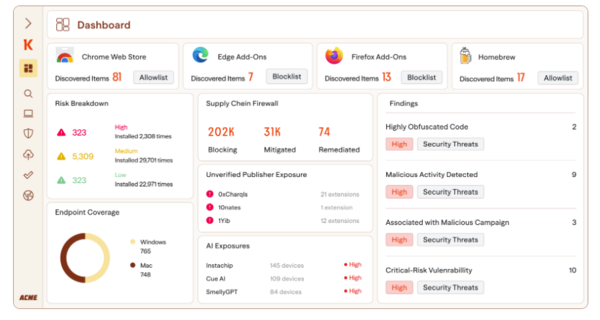
In a statement, Palo Alto Networks Chief Product and Technology Officer Lee Klarich said, "AI agents and tools are the ultimate insiders" and that the Koi acquisition will close that gap and improve endpoint security and visibility. Koi's platform covers agents, plugins and scripts.
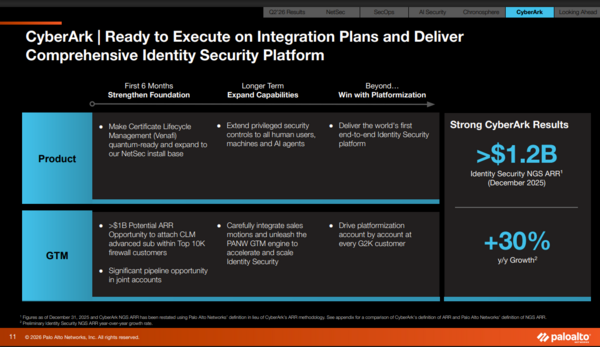
The Koi acquisition was announced a week after Palo Alto Networks closed its CyberArk purchase. See Chirag Mehta: The Platform Story Meets Privilege Reality: CyberArk as Palo Alto’s Missing Control Plane
Palo Alto Networks also rolled out Unit 42 Managed XSIAM 2.0, its managed security operations center service.
- The Platform Story Meets Privilege Reality: CyberArk as Palo Alto’s Missing Control Plane
- Palo Alto Networks acquires Chronosphere for $3.35 billion, reports strong Q1
- Palo Alto Networks buys CyberArk in $25 billion bet on identity
- Secure browsers will matter more with AI agents
Palo Alto's second quarter and outlook
Palo Alto reported better-than-expected second quarter earnings, but its third quarter earnings outlook was lighter than expected.
The cybersecurity vendor reported second quarter earnings of $432 million, or 61 cents a share, on revenue of $2.6 billion, up 15% from a year ago. Non-GAAP earnings for the quarter were $1.03 a share, 9 cents a share better than estimates.
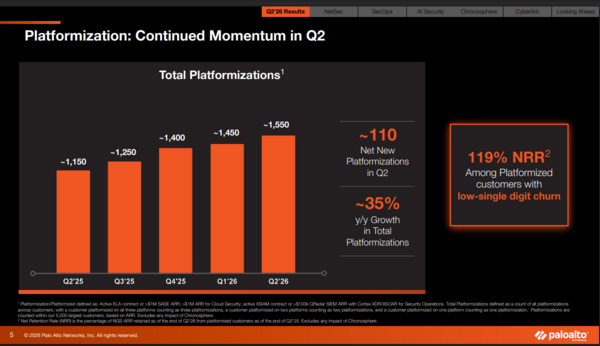
CEO Nikesh Arora said the company "saw continued strength in platformizations, a trend that is accelerating due to AI." He added that Palo Alto Networks saw steady adoption of its AI security, which is now strengthened by the acquisition of Koi.
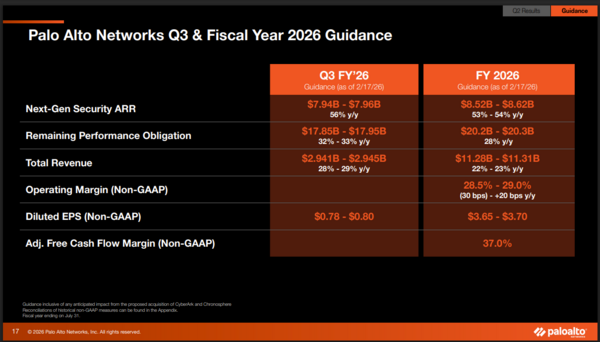
As for the outlook, Palo Alto networks projected third quarter revenue between $2.941 billion and $2.945 billion, up 28% and 29% due to the acquisitions of Chronosphere and CyberArk. Non-GAAP earnings for the third quarter are expected to be 78 cents a share to 80 cents a share.
Wall Street was looking for third quarter non-GAAP earnings of 92 cents a share on revenue of $2.6 billion, but the sales comparison likely didn't account for two new acquisitions.
For fiscal 2026, Palo Alto Networks projected non-GAAP earnings of $3.65 a share to $3.70 a share on revenue of $11.28 billion to $11.31 billion, up 22% to 23%.
Key points from Palo Alto Networks CEO Arora on the conference call:
- "We believe we are now entering the next phase of AI adoption. Large enterprises are moving beyond experimentation and beginning to integrate foundational models into real workflows. As AI becomes embedded in day-to-day work, the central question that organizations face is shifting from capability to control. That shift has meaningful implications for security. As AI becomes more pervasive across the enterprise, it expands the attack surface area, more agents, more infrastructure, more machine-to-machine activity and new classes of risk that simply did not exist before."
- "We remain focused on where the market is going, and that includes preparing our customers to the post-quantum era. The threat is already here. Adversaries are using a harvest now decrypt later strategy, stealing encrypted data today to break in the future. We're seeing this become a C-level priority in our early customer conversations,"
- "Palo Alto Networks has been a customer of Koi since summer of 2025. On my recent trip to Israel in December, Lee Klarich and I met with the Koi team and were immediately impressed by their foresight into the next generation of endpoint threats. Since then, we've seen the risk pattern intensify, including security concerns that have been recently popularized by the widespread adoption of open cloud. We believe this is the latest example of what the future of an AI attack surface will look like and Koi will help our XDR platform remain well positioned."
- "As enterprises start putting more critical functionality in the hands of AI, they will want control of AI agents or of their AI infrastructure. That requires more security. So I think generally, it's a positive trend towards more security adoption. I particularly believe it's a bigger trend towards platformization and consistency of data and harmonization of data in the enterprise. We're not collecting enough data right now to get good security outcomes."
Key slides include:
Larry Dignan is Editor in Chief of Constellation Insights at Constellation Research, where he leads editorial coverage focused on enterprise technology, digital transformation, and emerging trends shaping the future of business. He oversees research-driven news, analysis, interviews, and event coverage designed to help technology buyers and vendors navigate complex markets with clarity and context. ...
Read morePublished
Author
