


Anthropic launches Claude Opus 4.6, OpenAI rolls out GPT-5.3-Codex
Anthropic and OpenAI rolled out dueling models as both large language model providers go after a broader spectrum of professional work.
The duel between Anthropic and OpenAI lands as Wall Street increasingly questions the future of enterprise software. OpenAI already made its move to be an AI agent orchestrator with OpenAI Frontier.
Also note that Google will be updating Gemini in months ahead.
The broad theme for both Anthropic and OpenAI is that they are aiming LLMs at more work tasks and organizing teams of AI agents.
Anthropic Opus 4.6
In a blog post, Anthropic said Claude Opus 4.6 improves on its predecessor's coding skills, but the real win is broader work tasks.
Anthropic said Opus 4.6 can excels at running financial analyses, doing research, and using and creating documents, spreadsheets and presentations. In Cowork, Claude can multitask with Opus 4.6.
Here's a look at the benchmarks.
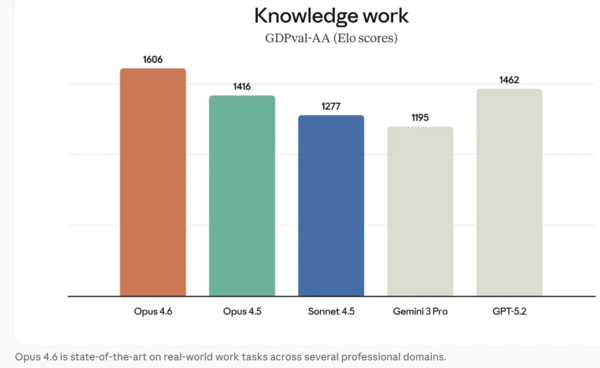
Anthropic added that it has upgraded Claude in Excel and releasing Claude in PowerPoint in research preview.
GPT-5.3-Codex
As Anthropic was comparing Opus 4.6 to GPT-5.2, Open AI launched GPT-5.3-Codex.
According to OpenAI, GPT-5.3-Codex is its most capable agentic coding model with 25% more speed and ability to handle longer tasks without losing context.
OpenAI said:
"GPT?5.3?Codex is our first model that was instrumental in creating itself. The Codex team used early versions to debug its own training, manage its own deployment, and diagnose test results and evaluations—our team was blown away by how much Codex was able to accelerate its own development.
With GPT?5.3-Codex, Codex goes from an agent that can write and review code to an agent that can do nearly anything developers and professionals can do on a computer."
The expansion of GPT-5.3-Codex takes it beyond ode to more of the software lifecycle. Now slide decks and spreadsheets are also in the mix.
Larry Dignan is Editor in Chief of Constellation Insights at Constellation Research, where he leads editorial coverage focused on enterprise technology, digital transformation, and emerging trends shaping the future of business. He oversees research-driven news, analysis, interviews, and event coverage designed to help technology buyers and vendors navigate complex markets with clarity and context. ...
Read morePublished
Author
