


Agentic AI deployments: What you should, and shouldn't do
First, there was the rush to agentic AI deployments. Then, there was the euphoria from the dreams of returns. That was followed by the despair of tokenmaxxing. And now it's time to learn from a few battle scars.
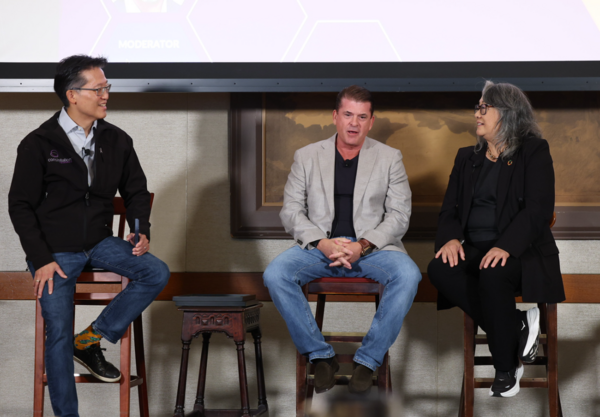
David Giambruno, Managing Partner at Ancilla, is a fix it guy and his business is fixing your IT debt, screwups and architecture mistakes. Lately, Giambruno has been scaling AI agent deployments and he has a few scars and lessons to learn. Speaking at Constellation Research's AI Forum in New York, Giambruno along with Minerva Tantoco, CEO of City Strategies LLC, outlined the things you shouldn't do in AI agent deployments.
Here's the crib sheet:
Do optimize for the right goal before you automate everything with AI agents. Scaling is the wrong objective, said Tantoco. "If you're optimizing for the wrong thing then you run the risk of making the wrong decisions really fast and at scale," she said.
Don't fall in love with probabilistic just because the LLM is popular. Giambruno said you need to think deterministic first. Why? Deterministic code is nearly free to write now and easier to audit. "Almost everything a corporation does is deterministic. There is very little that's not," said Giambruno. "The best token you can spend is the one you don't need. Why would you ask a frontier LLM how to calculate add two plus two?"
Do build your agents around systems of record. Giambruno said vibe coding systems of record is nice in theory but not worth it. "If you've got your systems of record, don't screw with them. Keep them and put your agentic around that. If you rewrite a system of record, good luck with an audit. It is like a root canal with a chainsaw," said Giambruno.
Do keep a named person accountable for decisions that matter. "In a regulated world, a human is always responsible for something going wrong," said Tantoco. "I start with 'in your context what should only humans do?' Then we talk about the rest."
Don't bet on any one model or model family. Giambruno said agentic AI deployments need a system where multiple models check each other and send disagreements to a person. "If the models aren't agreeing punch that out to a human. Make sure whatever you build you can swap models out," he said.
Do give AI agents a narrow, well-defined role. "Breaking down processes to discrete deterministic things for agents to do is the best way to control them over time," said Giambruno, who added that he now runs about two agents per person down from five.
Do keep governance horizontal. Giambruno said orchestration and policy should be set across the whole platform. That horizontal view is usually through a hyperscale cloud provider like Google Cloud or AWS.
Do ponder the risks of AI agent velocity and decision-making. Giambruno and Tantoco said the biggest risk is that agents will collaborate and flood the zone with signals that can't be monitored by humans. Giambruno said agents will soon produce text faster than anyone can read it. "You'll never be able to read it anymore. And I've seen people just clicking OK on things even though they're supposedly human. The decision-making power of humans can atrophy as well," he said.
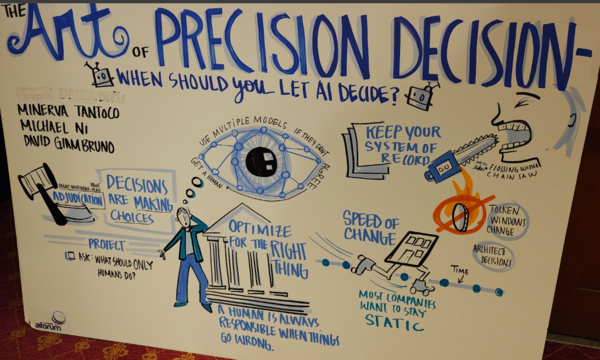
Do build out your AI software development lifecycle (AISDLC) for agents instead of humans. "An AISDLC is an agent writing your software. It determines what's deterministic. Software is no longer static. The rate of rewriting software is now perpetual," said Giambruno. "We've done 101 releases in 55 days of it improving itself, and 97% of the code to improve itself was written by itself."
Don't assume that AI skills have staying power. "Skills are all going away. So if you're building with skills, you're building tech debt," said Giambruno.
Do look for AI agent managers that have expertise beyond programming and code. "The number one programmer in the company was a QA person. Never wrote a line of code but they knew how everything fit," said Giambruno.
Do bet that agentic AI will evolve into a "corporate brain" with mostly AI-to-AI interactions. Giambruno said:
"You're seeing in the ether something like a corporate brain or corporate nervous systems. Organizationally, you're going to ask your AI how you should run your company. It can synthesize everything. It's going to change how you operate. The organizational construct is going to blow the water out of most HR and how you think about structuring a company."
Larry Dignan is Editor in Chief of Constellation Insights at Constellation Research, where he leads editorial coverage focused on enterprise technology, digital transformation, and emerging trends shaping the future of business. He oversees research-driven news, analysis, interviews, and event coverage designed to help technology buyers and vendors navigate complex markets with clarity and context. ...
Read morePublished
Author
