Thiel's Zero To One: Are All Entrepreneurs Pioneers?
December 3, 2014
In his manifesto Zero to One, Peter Thiel laments this simple fact about technology startups: most firms are not innovative enough.
 Most technology companies innovate through what he calls "horizontal progress” where an innovation, once created, is expanded to new domains, markets and niches. He calls this 1 to n progress: going from something that already exists to something more, better or different. In his view, most companies usually start with modest ambition to solve a narrow problem and grow through iteratively discovering different pathways by working closely with customers. This approach is commonly advocated by a few popular methods like Eric Reis' the lean startup and Steve Blank's customer development model of innovation.
 Thiel is not against this horizontal progress, but he does not consider this category of innovation transformative. His focus is on creating innovative companies that solve truly hard problems through technology. Companies that create entirely new industries or radically alter existing ones. His poster children for such companies are Google, Facebook, Apple, eBay, PayPal and Tesla. He calls this category of innovation “vertical progress”, going from 0 to 1 - from nothing to something.
In Thiel's view, most entrepreneurs today simply emulate an already proven idea and expand it from one realm to another. Indeed, there may be many realms of expansion, such as across geography (Baidu copied Google in China); across segments (e.g. Facebook spawned social media companies for enterprises like Jive and Yammer); and across business functions (Salesforce success prompted hosted software for HR such as WorkDay).
Most of such expansions rely on major innovations already in place. Today, new companies acquire customers through paid search by Google, gain visibility by social advertising through Facebook, engage users with mobile apps which are distributed by devices and app stores of Apple & Google. Even in business software, companies are built on top of the new cloud-based storage, data and infrastructure technologies such as Amazon AWS. In summary, Thiel contends that most entrepreneurs are innovating on the margins. They are playing variations of themes established by others.
His book is a call to arms for entrepreneurs to dream big and for all of us to support a culture that celebrates the bold visionary, the risk taker, the game changer, in short: the pioneer. His contention is that, as a culture, we have forgotten how to dream big. We have settled for the incremental, the safe and the sure; we hedge our bets even before we place them; we worry and regulate before we explore.
I find this contrast of pioneers versus mere entrepreneurs to be very insightful. However, this is likely to be misunderstood in popular lore. Here is why: many people assume that these two types of innovation are at odds with each other.
In setting up his thesis, Thiel downplays an obvious truth: most new products in the world are variations on a theme. It’s true that the “vertical" innovation gets created by a few pioneers and prime movers like Bezos, Musk, Jobs, Gates, Zuckerberg, etc. We rightly admire their visions and contributions. In technology, every major seismic shift produces a pioneering company (microprocessor, Intel; desktop software, Microsoft; online commerce, Amazon; search, Google; social, Facebook; database, Oracle; to name a few). Thiel captures that eloquently in his discussion of the power law. However, for every one of these companies, there are hundred others that grow around the core innovation to bring its full potential to market, and in some cases, even threatening the major player in the long run. There is a market need for both the handful of entrepreneurs who are pioneers of new businesses and the rest of successful entrepreneurs who support, extend, ferret out and apply these innovations in all the other niches and markets. There is no conflict between these two types of innovations - one feeds the other - or the two kinds of innovators - the pioneers and the rest of the entrepreneurs who support them.
Thiel omits this effect because his cri du coeur is to wish for more inventors, pioneers and bold creators. I agree wholeheartedly with his plea that we need more pioneers who send rockets to planets, create cheap and sustainable energy and increase our life spans by decades. It is also clear that his cultural exhortation to dream big needs to be brought center stage, applauded and celebrated. The truth still remains that most entrepreneurs are not pioneers: most spend their life building companies which are deemed variations on a theme. Billion dollar companies are being spawned right now by successful and passionate entrepreneurs who expand upon existing technologies, such as mobile devices, storage, cloud computing and social media. The risk of Thiel's omission is that it may deter many entrepreneurs to pursue and create companies that extend existing innovations.
We may lament the lack of "vertical" innovations from bold pioneers but we need to have all kinds of entrepreneurs to fuel our economy and deliver on the full vision of the brilliant few.
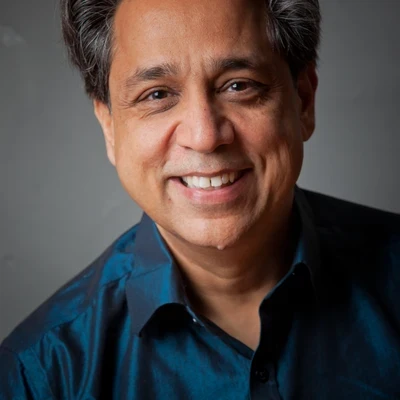
Anurag Wadehra has led marketing at several private and public software companies in the technology areas of mobile, eCommerce, advertising and data management: such as at LivePerson (LPSN) and Siperian (acquired by Informatica INFA) among others. Prior to that, Anurag was CEO & Co-founder of Chingari, a software company designed to help businesses improve success rates of new product launches. Additionally, he served in senior marketing positions at Kraft Foods and Procter & Gamble. Anurag has an MBA from the University of Chicago and B.Tech in Electrical Engineering from the Indian Institute of Technology. He is a lead mentor at Stanford's accelerator StartX and an avid film buff. ...
Read morePublished
December 3, 2014
Author